| 
Gen info
- Alstonia is a widespread genus of evergreen trees and shrubs, of the family Apocynaceae. Alstonia consists of about 40-60 species native to tropical and subtropical Africa, Central America, Southeast Asia, Polynesia and Australia, with most species in the Malesian region. The type species is Alstonia scholaris.
-
The plant was originally named Echites scholaris by Carl Linnaeus in 1767. It was renamed Alstonia scholaris by Robert Brown to commemorate of Prof. Charles Alston (1685-1760), who was professor of botany at the University of Edinburg, scientific writer and keeper of King's garden at Holyrood, and one of the few botanists who resisted the Linnaean taxonomic classification when it was introduced. The species epithet scholaris derives from the use of the wood in making blackboards and wooden slates for schools in South East Asia (Arulmozhi et al., 2007c; Baliga, 2010). (45) (46)
- Etymology: The genus name Alstonia honors the botanist Charles Alston, and the species epithet scholaris refers to the traditional use of the timber of the tree for blackboards in Myanmar.
- The name Devil's tree is based on a belief in Western India that the tree is an abode of evil spirits. (50)
Botany
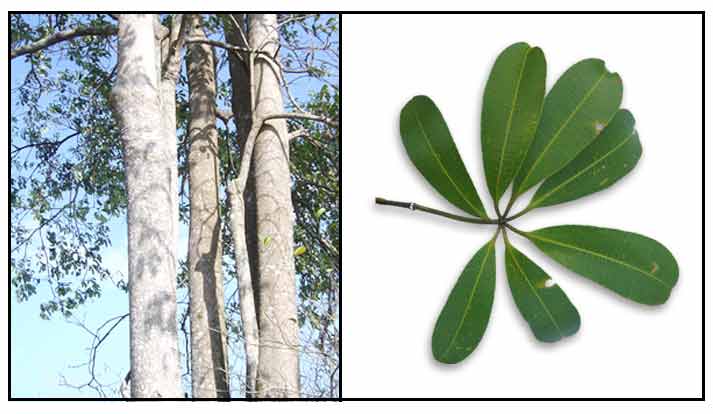
• Dita is a smooth tree growing 6 to 20
meters high. Branches are lenticellate. Bark is dark grayish, somewhat rough, yielding an abundant, bitter, and milky sap. Leaves are in whorls,4 to 7in a whorl, leathery, narrowly obovate to spatulate, 10 to 20 centimeters long, 3 to 4.5
centimeters wide, pointed at the base, rounded at the apex, glossy green on the upper
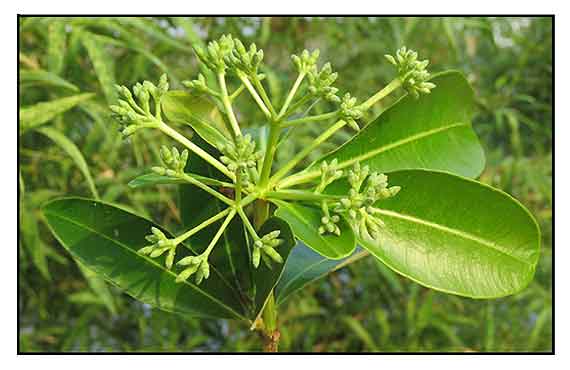
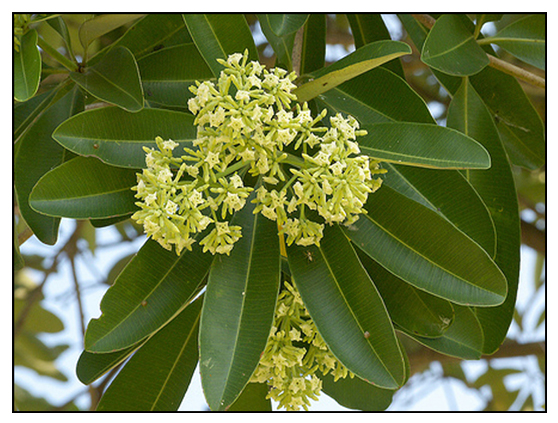
surface, white or grayish on the underside. Lateral nerves are very numerous, parallel, and terminating in a intramarginal vein. Flowers are crowded, numerous, somewhat hairy, greenish-white,
about 1 centimeter long, hairy in the throat, borne in compact, hairy cymes about 10 centimeters long. Fruits is made up of two slender follicles which are pendulous
and cylindric follicles, 20 to 40 centimeters long, 4 to 5 millimeters in diameter. Seeds
are 3 to 4 millimeters long, with brown ciliate hairs on the ends.
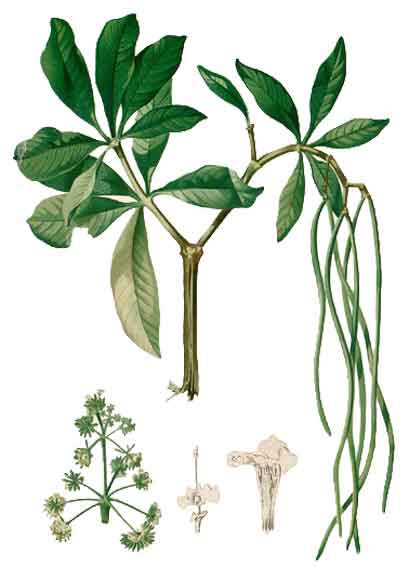 • Growth form: A tree, up to 50 (– 60) m tall and 80 (– 130) cm diameter. It can be fluted at the base or develops buttresses which can reach up to 10 m tall and spreading for up to 4 m at the base. It produces white sap when any parts of the plant are injured. Foliage: Leaves are narrowly elliptic to obovate, measuring 5 – 22 cm long and 1.5 – 8.5 cm wide, and arranged in whorls of 4 – 8 (– 9). Each leaf has 25 – 45 (–55) pairs of lateral veins which are almost straight and form an angle of 80–90º with the midrib. The leaf tip can be obtuse, rounded or retuse in mature trees while young trees are observed to have tapering leaf tip of up to 1 cm (shortly acuminate). The leaf base is usually decurrent onto the petiole and sometimes acute or obtuse. Petiole is 0.5 – 2 cm long, slightly winged with intrapetiolar stipule at the base and deltoid colleters in the axils. Flowers: Inflorescence is branched (cymose), measuring 4 – 13 (– 17) cm long, and occurs at the terminal ends. The flowers are white, yellow or cream and are fragrant. The flower lobe is broadly ovate or suborbicular (3 – 5 mm long and 2.5 – 4.5 mm wide) and overlaps to the left. The flowers are strongly scented and have the potential to cause sensitivities in certain individuals during intense flowering periods. Fruit: Fruit consists of a pair of follicles, each measuring about 20 – 40 (– 63) cm long and 0.2 (– 0.25) cm wide. It splits open at maturity to reveal winged seeds inside. (Flora & Fauna Web) • Growth form: A tree, up to 50 (– 60) m tall and 80 (– 130) cm diameter. It can be fluted at the base or develops buttresses which can reach up to 10 m tall and spreading for up to 4 m at the base. It produces white sap when any parts of the plant are injured. Foliage: Leaves are narrowly elliptic to obovate, measuring 5 – 22 cm long and 1.5 – 8.5 cm wide, and arranged in whorls of 4 – 8 (– 9). Each leaf has 25 – 45 (–55) pairs of lateral veins which are almost straight and form an angle of 80–90º with the midrib. The leaf tip can be obtuse, rounded or retuse in mature trees while young trees are observed to have tapering leaf tip of up to 1 cm (shortly acuminate). The leaf base is usually decurrent onto the petiole and sometimes acute or obtuse. Petiole is 0.5 – 2 cm long, slightly winged with intrapetiolar stipule at the base and deltoid colleters in the axils. Flowers: Inflorescence is branched (cymose), measuring 4 – 13 (– 17) cm long, and occurs at the terminal ends. The flowers are white, yellow or cream and are fragrant. The flower lobe is broadly ovate or suborbicular (3 – 5 mm long and 2.5 – 4.5 mm wide) and overlaps to the left. The flowers are strongly scented and have the potential to cause sensitivities in certain individuals during intense flowering periods. Fruit: Fruit consists of a pair of follicles, each measuring about 20 – 40 (– 63) cm long and 0.2 (– 0.25) cm wide. It splits open at maturity to reveal winged seeds inside. (Flora & Fauna Web)
Distribution
- Native to the Philippines.
-
Found from Cagayan in northern Luzon to Palawan and Mindanao, in most or all islands
and provinces, in primary and secondary forests at low and medium altitudes.
- Also native to Andaman Is., Assam, Australia, Bangladesh, Bismark Archipelago, Borneo, Cambodia, China, Himalaya, India, Jawa, Laccadive Is., Laos, Lesser Sunda Is., Malaya, Maluku, Myanmar, Nepal, New Guinea, Nicobar Is., Northern Territory, Pakistan, Queensland, Solomon Is., Sri Lanka, Sulawesi, Sumatera, Thailand, Vietnam. (42)
 Constituents Constituents
• Contains alkaloids,
tannins, glycosides, triterpenoids, flavonoids and phenolic acid.
• Bark yield the alkaloids echitenine, ditamine; crystalline and toxic echitamine; ditaine; and an uncrystallizable and bitter principle.
• Study isolated from the mother-liquors of echitamine hydrochloride, a crystalline alkaloid, echitamidine.
• A petroleum ether extract yielded echikautschin, echicerin, and echiretin.
• The bark contains indole alkaloids, including reserpine, echitamine,
alstonine, tetrahydroalstonine, alstonidine, yohimbine and others.
• Antihypertensive effect due to reserpine and echitamine.
• A study revealed three new indole alkaloids: nareline ethyl
ether, 5-epi-nareline ethyl ether and scholarine-N(4)oxide.
• Phytochemical screening of stem bark fractions yielded the presence of alkaloids, carbohydrates, tannins, terpenoids, saponins, flavonoids, steroids, fixed oils and fats. (35)
• Phytochemical screening of extracts of bark, stem, and leaves yielded alkaloids, saponins, terpenoids, flavonoids, phenolic compounds, tannins, steroids, and glycosides. The bark showed higher amounts of glycosides, alkaloids, gums and mucilage. (see study below) (43)
• Phytochemical screening of crude precipitate yielded steroids and triterpenes, fractions yielded alkaloids, saponins, flavonoids, tannins, glycosides and resins, and triterpenoid compounds. (see study below) (47)
 • Study of hexane fraction of leaf extract
yielded ursolic acid (1), oleanolic acid (2), betulinic acid (3), betulin (4), 2ß,3ß,28-lup-20(29)-ene-triol (5), lupeol (6), • Study of hexane fraction of leaf extract
yielded ursolic acid (1), oleanolic acid (2), betulinic acid (3), betulin (4), 2ß,3ß,28-lup-20(29)-ene-triol (5), lupeol (6),
ß-amyrin (7), α-amyrin (8), poriferasterol (9), epicampesterol (10), ß-sitosterol (11), 6ß-hydroxy-4-stigmasten-3-one (12), and ergosta-7,22-diene-3ß,5α,6ß-triol (13). (see study below) (49)
• GC-MS study of essential oil of flowers
yielded 60 compounds. Main constituents were 2-Dodecyloxirane (31.83%), Benzene, 1,2-dimethoxy-4-(2-propenyl)- (8.49%), Spinacene (6.09%), 1,54-Dibromotetrapentacontane (5.13%), 2,6,10,15-Tetramethylheptadecane (4.91%), Terpinyl acetate (3.74%), Linalool (2.22%), Tritetracontane (2.17%), 1-Cyclohexanol, 2-(3-methyl-1,3-butadienyl)-1,3,3-trimethyl- (1.58%). (51)
• Seeds yield indole alkaloids
alstovenine, venenatine, chlorogenine, reserpine, ditamine and echitamine. (54)
• Study of leaves yielded two C13-norisoprenoids identified as megastigmane-3β, 4α, 9-triol (1) and 7-megastigmene-3,6,9-triol (2). Compound 1 is a new compound. (56)
• Study of trunk bark isolated a new indole alkaloids, akuammiginone (1), a new glycosidic indole alkaloid, echitamidine-N-oxide 19-O-ß-D-glucopyranoside (2), and five known alkaloids, echitaminic acid (3), echitamidine N-oxide (4), Nb-demethylalstogustine N-oxide (5), akuammicine N-oxide (6), and Nb-demethylalstogustine (7). (62)
• Study of dichlormethane extract of leaves yielded mixtures of erythrodiol (1a), uvaol (1b), and betulin (1c) in a 1:1:1 ratio, oleanolic acid and ursolic acid in a 2:1 ratio, ß-amyrin acetate (3b) and α-amyrin acetate (3b) in a 1:4 ratio, and ß-sitosterol (4a) and stigmasterol (4b) in a 3:2 ratio; squalene (5), ß-sitosteryl-3ß-glucopyranoside-6"-O-fatty acid esters (6), and chlorophyll a (7). (68)
• Study of dichlormethane extract of leaves yielded six pentacyclic triterpenoids, namely: lupeol (1), betulin (2), 3-hydroxy-11-ursen-28,13-olide (3), betulinic acid (4), oleanolic acid (5), and ursolic acid (6). (see study below) (71)
• Study of leaves of A. scholaris isolated two rearranged triterpenoids, alstoscholarinoids A and B, representing subtypes of pentacyclic triterpenoids with unique ring systems. (see study below) (73)
• Study of non-alkaloids fraction of A. scholaris isolated four new triterpenoids, alstolarnoids A-C and D (1-3 and 10) and seven known analogues (4-9 and 11). (see study below) (80)
- GLC study of fatty acid content of hexane extracted oil from mature seeds yielded content of 239 g/kg (weight per kg of dry seeds), containing four fatty acids accounting for 100% of total fatty acids. Unsaturated fatty acids identified were oleic acid (65.66%) and linoleic acid (12.15%), while saturated fatty acids were palmitic acid (13.77%) and stearic acid (8.42%). (see study below) (84)
Properties
• Reported as antimicrobial, antiamoebic, antidiarrheal, antihypertensive, antimalarial,
febrifuge, stimulant, hepatoprotective, immunomodulatory, anti-cancer,
antiasthmatic, antioxidant, analgesic, anti-inflammatory, anti-fertility,
anti-diabetic, cardiotonic.
• Bitter bark and latex considered tonic and antiseptic.
• Ditamine or ditanin considered to possess antiperiodic properties equal to the best sulphate of quinine without the latter's disagreeable side effects.
• Studies have suggested antidiabetic, radioprotective, anticancer, chemomodulatory, antidiarrheal, antimalarial, immunostimulatory, antioxidant, antibacterial, antitussive, antiasthmatic, expectorant, antidiarrheal, spasmolytic, antihyperlipidemic, antimycobacterial, anti-inflammatory, analgesic, anti-aging, antifungal, antiviral, hepatoprotective, anticonvulsant, antihypertensive, radioprotective, antiarthritic, gastroprotective, antiplasmodial, antihyperuricemic, antistress, antimutagenic, anticonvulsant, sedative, pulmoprotective, wound healing, anticholinesterase properties
Toxicity
• At high doses, plant extracts have been shown to cause damage to all major organs of rats and mice The degree of toxicity appears to depend on plant organ studied, season of the year harvested and used. Bark collected in the monsoon season is least toxic; the summer bark, the most. Intraperitoneal administration is more toxic than oral. Rats are more susceptible to the poison than mice, and pure-bred mice strains more susceptible than crossbred. Toxic effects may be due to echitamine, an alkaloid in the bark. (16) (see rituals below) (also see 52, 72, 75)
Parts used
Bark, leaves.
 Uses Uses
Folkloric
- In the Philippines, the bark is regarded as a remedy for fevers, chronic diarrhea, dysentery.
- Earlier Spanish
records report the dita bark alkaloid was used in hospitals as a quinine substitute.
- Tonic wine was prepared by macerating 25 grams on the bark in a bottle of muscatel or sherry.
- Milky latex from the bark placed on cloth and applied as poultice to developing boils.
- Milky juice is applied to ulcers and rheumatic pains.
- Milky juice, mixed with oil, used as drops for earaches.
- Juice of leaves, mixed with fresh ginger root or zedoary, is given to women after confinement.
- Tender leaves, roasted and pulverized,
are made into a poultice for unhealthy ulcers and foul discharges.
- Chronic diarrhea, fever: 1% decoction of bark as tea.
- Malaria: 5% decoction of bark as tea.
- Tincture of the bark occasionally used as galactagogue.
- Decoction of the bark used as tonic, febrifuge, emmenagogue, anticholeric
and vulnerary.
- In eastern Malaysia, decoction of leaves used for beriberi.
- Decoction of leaves given for liver congestion.
- In Java, bark used as stomachic and is used as ingredient into mixtures used for coughs and as vermifuge.
- Bark used as antidote for Antiaris poisoning.
- Late applied to hollow tooth for toothache.
- Powder of Alstonia cortex used for patients with paroxysmal attacks and those positive for malarial parasites in the finger's blood. (A clinical investigation in Queensland
showed contrary results, that the drug has little or no demonstrable action in malaria induced in monkeys or naturally occurring in humans.)
- In India, dita bark is used as astringent, tonic, anthelmintic, alterative, antiperiodic and remedy for diarrhea and dysentery.
- In India, ripe fruits used in treatment of syphilis insanity and epilepsy. Milky juice used for treatment of ulcers. Stem bark used as bitter tonic and febrifuge, and for treatment of malaria, diarrhea, and dysentery.
- In India,
leaves used for asthma, dropsy, dysentery, fever, headaches and ulcers. Roots used for leprosy and as anthelmintic. Latex used for rheumatism, skin diseases, toothache, tumors, and ulcers. In Indonesia, used for diarrhea, diabetes, and hemorrhoids. In Malaysia, used for beriberi, stomatitis, malaria, fever, and yaws. In Burma, latex used for toothache and ulcers. In Vietnam, bark used for malaria and leaves for lactation. (45)
- In Ayurveda, used in phosphaturia and as blood purifier. (43) Also, infusion of bark soaked overnight used in diabetes. Bark is an essential constituent in many polyherbal preparations.
- Tribal people of Sikkim use bark decoction Saptaparna for treatment of hypertension and cardiac disease. (29)
 - Poultice of young leaves used for ulcers. - Poultice of young leaves used for ulcers.
- Bark paste applied to skin ulcers.
- In India, used for treatment of malaria, jaundice, intestinal maladies, cancer and other ailments. (45)
- Australian aborigenes used the bark for treatment of abdominal pains and fevers and the latex for neuralgia and toothache. (65)
- In Karnataka, India, used for treatment of fever, asthma, leucorrhea, eczema, indigestion and spider bites. (82)
Others
- Wood: Used for making coffins in Sri Lanka and school boards in Myanmar. (65) The Blaan people of South Cotobato use the wood for construction of 2-stringeds boat lutes, faglung or fuglung, relatives of the kudyapi. Used for making plywood core.
- Ethnoveterinary: Used for fever in cattle (Harsha et al., 2005). (43)
- Ritual:
In Kannada and Karnataka in India, on a new moon day (Ati amasé in Tulu), there is a mass annual ritual of drinking the bitter bark decoction, believed to boost the immune system and prevent diseases. (50) Studies have indicated that toxicity of the bark was minimum during monsoon season and the concentration of the active principle was maximum in the bark juice on the particular new moon day, which justifies the timing of the described annual medicine drinking event. (82)
- Superstitions: In India, Tulu-language speaking indigenous communities consider the tree a reincarnation of a mythological demon called Bali and worship its branch during the festival days of Deepavali. (82)
- Culture: In India, it is called Saptaparna, the sacred tree of the 2nd Jain tirthanka Ajitnatha. (16)
- Fuelwood: In Sri Lanka, recommended as fuelwood for the patana lands. (65)
- Fiber: Bark yields a fiber which is suitable for pulp and paper production. (65)
- Gum: Latex provides source for good quality chewing gum. (65)
Studies
• α-Glucosidase
inhibitors / Diabetes: Study
showed potent α-glucosidase inhibitory activity in the extract of dried
leaves. It suggests further examination of A. scholaris as a medicinal
supplement for the treatment and prevention of diabetes. (2)
• Radioprotective: The study showed that A. scholaris extract
protected against radiation-induced hematological and biochemical changes
in mice. (3)
• Radioprotective / Bark: A study on Alstonia scholaris bark extract to evaluate its radioprotective effect on cytogenetic alterations in the form of chromosomal aberrations and micronuclei induction in the bone marrow. Results showed pretreatment provides a radioprotective effect.
• Anti-Cancer / Chemomodulatory / Enhancement of Berberine Effect: Study evaluated the chemomodulatory effect of A. scholaris extract in combination with berberine hydrochloride (BCL), a topoisomerase inhibitor, in Ehrlich ascites carcinoma-bearing mice: The study on
the chemomodulatory activity of ASE showed it was effective in the early
stages with decreased efficiency in the later tumor developmental stages.
(4)
• Anti-Cancer : Study showed the efficacy of AS in inhibiting mutagenic changes
induced by benzo(a)pyrene induced fore-stomach carcinoma in female mice. (7)
• Anti-Cancer: An anticancer study of various doses of an alkaloid fraction was done in cultured human neoplastic cell lines (HeLa, HepG2, HL60, KB and MCF-7) and in Ehrlich ascites carcinoma bearing mice. Results showed a time dependent increase in antineoplastic activity. There was also a dose-dependent decline in viable cells.
• Anti-diarrheal: Study
showed the aqueous and alcoholic bark extracts of AS significantly reduced
the diarrhea in mice. (6)
• Anti-malarial: A
study of extract of bark of AS was found to be devoid of antimalarial
activity in mice infected with P berghei. However, a dose-dependent
improvement of conditions and delayed mortality was found in animals
receiving the methanol extract. (8)
• Immunostimulatory: A
study of bark extracts of AS cellular immune response and inhibited a
delayed type hypersensitivity reaction. (9)
• Anti-diabetic / Hypoglycemic:
Study evaluated the hypoglycemic effect of powdered leaves in normal volunteers and non-insulin dependent diabetic patients. In NIDDM patients, treatment with with 3 g of powder showed highly significant (p<0.001) decrease in blood glucose on days 1, 8, and 15. The hypoglycemic effect was attributed to insulin triggering
mechanisms and direct insulin-like actions. (10)
• Antioxidant / Free Radical Scavenging / Nitric Oxide Scavenging Activity: Study of ethanolic extract showed AS possess antioxidant properties
with significant free radical scavenging, superoxide anion radical scavenging
and significant ferric thiocyanate reducing activities. (11) Of 17 Indian medicinal plants, A scholaris showed the most potent NO scavenging activity. (12) Study evaluated various extracts of bark, stem, and leaves. Aqueous and/or methanolic extracts from bark showed potent antioxidant activity, and at every concentration studied the superoxide radical scavenging was higher than those of standard gallic acid. (see constituents above) (44)
• Comparative Antibacterial Study on Bark: Comparative study was done on the phytochemical and antibacterial activities of the bark of A. scholaris and A. macrophylla. Different solvent extracts showed alkaloids, saponins, phenolics, and tannins in both species. The chloroform extract of A. macrophylla showed broader spectrum of antibacterial activity than A. scholaris. (13)
• Antitussive / Anti-Asthmatic / Expectorant / Picrinine: Study of alkaloid fractions of Alstonia scholaris leaf showed antitussive, anti-asthmatic and expectorant activities. The main antitussive and antiasthmatic effect were attributed to picrinine. (14)
• Anti-Inflammatory / Analgesic: Study of alkaloid fraction of Alstonia scholaris leaf yielded three main alkaloids - picrinine, vallesamine and scholaricine which may produce anti-inflammatory and analgesic effects peripherally based on in vivo assays. In in vitro testing, the alkaloids exhibited inhibition of inflammatory mediators (COX1, COX2 and 5-LOX. (15)
• Antidiarrheal / Spasmolytic: In a castor oil-induced diarrhea model, a crude extract of Alstonia scholaris exhibited antidiarrheal and spasmolytic effects, mediated possibly through the presence of calcium channel blocking constituents, a mechanism that provides mechanistic basis for its medicinal use in diarrhea and colic. (17)
• Antidiabetic / Antihyperlipidemic / Bark: A study of an aqueous extract of AS bark in STZ-induced diabetic rats showed significant amelioration in fasting glucose, serum triglycerides, liver glycogen, glycosylated hemoglobin and body weight in diabetic rats. (19)
• Antimycobacterial / Bark and Flowers: Study was done to evaluate the susceptibility of Mycobacterium tuberculosis to butanolic extracts of bark and flowers of Alstonia scholaris. Results at doses of 100 and 500 µg/ml for flowers and bark, respectively, showed moderate bactericidal activity against clinical strains of sensitive and drug resistant M. tuberculosis. An invitro bioassay showed complete inhibition of the the fast grower MTB. Results show a clear indication of a potent anti-tubercle effect. (21)
• In Vitro Cytotoxicity / Roots: Least studied of the plant parts, an in vitro study investigated the cytotoxic properties of the roots of the plant. Results showed time dependent effect. The cell viability was found to decrease with the increase in concentration of the isopropanol extract. (22)
• Anti-Aging / Anti-Skin Irritation: A. scholaris decreased retinol-induced skin irritation, increased the ability of the retinoids to inhibit matrix metalloproteinase-1, which is strongly associated with anti-aging effects. Results suggest a potential compound that may increase the anti-aging function of retinoids while reducing its ability to cause skin irritation. (23)
• Aerobiological / Clinical / Immunobiochemical Properties: A West Bengal study showed A. scholaris pollen to be present 8.57% in the air from September until November. Among allergic patients, 28.57% showed positive skin reaction to the pollen extract, seven IgE-binding proteins were found; one component of 29.9 kDa was most important, which can be purified and help in the diagnosis and treatment of AS pollen-susceptible patients. (26)
• Radioprotective / Effects against Radiation-Induced Biochemical Alterations: Study evaluated the radioprotective potential of A. scholaris extract in Swiss albino male mice exposed daily to 7.5 Gy of gamma radiation for 5 consecutive days. Radiation induced augmentation in lipid peroxidation and cholesterol was significantly amelioration by ASE and deficit produced in protein and glutathionne by radiation was mitigated. Results suggest pretreatment provides protection against radiation-induced biochemical alterations in mice. (27)
• Anticonvulsant / Sedative: Study concluded an ethanolic extract of A. scholaris possesses antiepileptic and sedative potential, probably through alteration in the GABA mediated chloride channel of neurons associated with sleep activity. (28)
• Antihypertensive Effect: Study of bark decoction of Saptaparna on 30 patients with essential hypertension showed beneficial effects in reducing elevated diastolic blood pressure. (29)
• Analgesic / Anti-Inflammatory: Study of a dichlormethane fraction of leaves showed peripheral analgesic activity, anti-inflammatory activity and lack of ulcerogenicity. (30)
• Antibacterial / Bark: Study investigated the in vitro antibacterial activity of various extracts of trunk bark of Alstonia scholaris. The extracts showed a broad spectrum of activity against both Gram-negative and Gram-positive bacteria. The aqueous extract showed the best antibacterial activity. (31) Study of various concentrations of a methanol bark extract showed significant inhibition zones against gram-positive Bacillus coagulans and gram-negative Escherichia coli. (48)
• Anticancer / Skin Carcinogenesis / Bark: Study evaluated bark extract of Alstonia scholaris for chemopreventive and anti-oxidative properties on two-stage process of skin carcinogenesis induced by DBMA in Swiss albino mice. Results showed decreased tumor incidence, tumor yield, tumor burden and cumulative number of papillomas along with significant increase in reduced glutathione, SOD and catalase and decreased lipid peroxidation. Results demonstrated chemopreventive potential of bark extract in DMBA-induced skin tumorigenesis in Swiss albino mice. (32)
• Antidiabetic / Antihyperlipidemic / Leaves: Study evaluated an ethanol extract of leaves for antidiabetic activity in STZ-induced diabetic rats. Blood glucose level, body weight, HbA1c, muscle and liver glycogen, lipid profile, lipid peroxidation and antioxidant status were measured. (33)
• Echitamine Chloride / Inhibition of Glycolysis of Sarcoma 180 Cells: Malignant tumors are reported to exhibit a high degree of glycolytic activity. Echitamine chloride, an indole alkaloid from the bark of A. scholaris, has been reported to have promising anticancer activity against fibrosarcoma in rats. Study showed echitamine chloride affects both cellular and mitochondrial respiration, leading to a reduction of cellular energy pool and loss of viability of S-180 cells. (34)
• Enhanced Radiosensitivity in Various Neoplastic Cell Lines: Study demonstrated the radiosensitizing effect of an alkaloid fraction of Alstonia scholaris in various neoplastic cell lines. Pretreatment enhanced cell killing, the greatest observed for HeLa and KB cells. Results showed enhancement of effect of radiation which resulted in disease-free survival of the mice. (36)
• Antifungal: Study of different concentration of alcoholic extracts of Alstonia scholaris, A. mexicana and Datura alba showed concentration dependent inhibition of radial growth of Candida albicans. (37)
• Antiviral: Study investigated the anti-viral activity of various solvent extracts of Alstonia scholaris. In in-vivo assays, results showed longer survival in mice infected with Coxsackie virus B2. There was also considerable anti-viral activity against polio virus, Herpes simplex, and Hepatitis B virus. (38)
• Anti-Arthritic / Antioxidant / Gastroprotective / Leaves: Study of an ethanolic extract of A. scholaris leaves against Freund's Complete Adjuvant (FCA) induced arthritic rats showed prominent antiarthritic activity which may be attributed to its analgesic, anti-inflammatory, immunosuppressant, and antioxidant activities. The extract also significantly reduced gastric lesion indices and gastric juice secretion in ethanol and sodium salicyate induced gastropathy. (39)
• Hepatoprotective -Arthritic / Antioxidant / Gastroprotective / Leaves: Study in rats showed hepatoprotective effect of A. scholaris on liver injuries induced by carbon tetrachloride, ß-D-galactosamine, acetaminophen and ethanol. (40)
• Anti-Stress / Bark: Study evaluated the effect of stress and its modulation by a methanolic extract of bark of Alstonia scholaris using acute restraint stress model in mice. Results provided support for the anti-stress (adaptogenic), antioxidant, and nootropic activities of A. scholaris. (41)
• Antioxidant / Root-Bark: Study evaluated various solvent fractions of a methanol extract for DPPH radical scavenging activity. The precipitate, fraction, and compound showed a dose dependent inhibition of DPPH radical. An ethyl acetate fraction showed better antioxidant activity with IC50 of 54.25 µg/mL. (see constituents above) (47)
• Antiproliferative
/ Triterpenoids and Sterols / Non-Small Cell Carcinoma Cells / Leaves: Study evaluated the active components of A. scholaris leaf extract for anti-proliferative effects against non-small cell carcinoma cells. Study yielded eight triterpenoids and five sterols. Ursolic acid (1), betulinic acid (3), betulin (4), and 2β,3β,28-lup-20(29)-ene-triol (5) showed anti-proliferative activity against NSCLC with IC50 of 39.8, 40.1, 240.5 and 172.6 µM, respectively. (see constituents above) (49)
• Toxicity Study / Teratogenic Effect: Study evaluated the teratogenic effect of a hydroalcoholic extract of A. scholaris in pregnant Swiss albino mice at various doses (0-480 mg/kg). Doses up to 240 mg/kg did not induced mortality, congenital malformations or alter normal growth patterns. Doses of 360 or 480 mg/kg resulted inn dose dependent increase in mortality, growth retardation and congenital malformations, characterized by bent tails and syndactyly, along with significant delay in other morphological parameters. (52)
• Antibacterial / Mixture of Latexes of A. scholaris and Calatropis gigantia: Ancient Ayurvedic texts record the use of mixture of latexes of Saptaparna and Arka for dental caries pain. Study evaluated the antibacterial activity of the mixture against E. coli and gingivitis bacteria. Results showed the mixture was as effective as control drug ampicillin. The mixture was found more effective than individual samples. (53)
• Cytotoxicity / Stem Bark: Study evaluated the bioactivities and cytotoxicity of various extracts of three medicinal plants from India viz. Alstonia scholaris, A. venenata and Moringa oleifera. Amon the extracts tested for cytotoxicity on DLA cells, the most active were extracts from A. scholaris and A. venenata. A hexane extract of stem bark of A. scholaris showed an EC50 of 68.75 µg/mL. Results suggest a potential for anticancer drugs against leukemia and lymphoma and use as antioxidants in dietary supplements. (55)
• Antioxidant / Flowers and Fruits: Study investigated the antioxidant potential of inflorescence and fruits of A. scholaris. A methanol extract of flower showed powerful antioxidant activity by DPPH and Beta-carotene assays, higher activity than the fruit extract. (57)
• Antidiabetic / Stem Bark: Study evaluated the ameliorative properties of bioactive compounds of an ethanolic extract of A. scholaris stem bark extract in alloxan induced diabetic rats. Results showed highly significant reduction (p<0.005) of blood glucose. (58)
• Antiplasmodial / Bark and Leaf: Study evaluated various plant parts viz. leaf, stem, bark, root, and fruit of A. scholaris against malarial parasite Plasmodium falciparum. Among the plant parts tested, the bark and leaf exhibited IC50 <3.125 µg/mL followed by stem extract with IC50 3.125 µg/mL. (59)
• Antihypertensive / Vasorelaxant
/ Stem Bark: Study of stem bark extracts and fractions of A. scholaris showed blood pressure lowering activity in a male spontaneously hypertensive rat model and vasorelaxant effect on pre-contracted aortic rings probably via endothelium independent mechanisms. Potent negative chronotropic and ionotropic effect may also augment its antihypertensive effect. (60)
• Antimicrobial: Study showed A. scholaris is rich in secondary metabolites such as flavonoids, alkaloids, tannins, terpenoids and saponin which exhibited antimicrobial activity. Crude extracts showed significant antibacterial effect against selected pathogens i.e., Bacillus subtilis, Staphylococcus aureus, Escherichia coli, Klebsiella pneumonia, Pseudomonas aeruginosa and Streptococcus pyogenes. (61)
• Protective Against Bleomycin Induced Chromosomal Damage / Bark: Study evaluated the protective effects of aqueous and methanolic extracts of A. scholaris bark, stem and leaves against bleomycin induced clastogenicity. Bark extract treatment significantly (p<0.01) reduced total chromosomal aberrations. Results suggest certain compounds in the bark extract enhance DNA repair capacity. (63)
• Broncho-Vasodilatory Activity / Leaves: Study of an ethanol extract of A. scholaris leaves showed pronounced induction of bronchodilatory activity in anesthetized rats with probably mediated by prostaglandins, calcium antagonisms and endothelium-derived relaxing factor/s. (64)
• Ameliorative Against Acetic Acid Induced Colitis / Anti-Inflammatory / Antioxidant / Leaves: Study evaluated an alkaloidal fraction of leaves of A. scholaris against acetic acid induced inflammatory bowel disease (IBD) in a male Wistar rats. Results showed amelioration of colitis through its anti-inflammatory and antioxidant properties by inhibition of production of oxido-inflammatory mediator and pro-inflammatory cytokines. (66)
• Anticarcinogenic / Antimutagenic: Study evaluated the anticarcinogenic and antimutagenic activity of A. scholaris on bone marrow cells and peripheral human lymphocyte culture against methyl methane sulfonate induced genotoxicity in mice. Extracts of A. scholaris significantly reduced the number of immature cells and frequency of aberration per cell. (67)
• Silver Nanoparticles / Bactericidal / Leaves: Study reports on the green synthesis of AgNPs using a 10% leaf extract of A. scholaris. The antibacterial property was tested against Escherichia coli with minimum inhibitory concentrations of 0.08 nM of AgNPs, suggesting therapeutic efficacy. (69)
• Antioxidant / Anticholinesterase / Bark: Study evaluated the in-vitro antioxidant and anticholinesterase potential of bark extracts of A. scholaris by DPPH assay and rat brain cholinesterase assay. Ethyl acetate and methanolic extracts showed significant antioxidant and cholinesterase inhibitory activity. Results suggest a potential for use in neurological disorders like Alzheimer's disease. (70)
• Antibacterial Synergism with Pentacyclic Triterpenoids / Leaves: Study evaluated constituents of leaf extract, antibacterial activity and synergism with pentacyclic triterpenoids against bacterial pathogens. Oleanolic acid (5) and ursolic acid (6) showed antibacterial activity limited to gram-positive bacteria. Ursolic acid showed synergistic effect with ampicillin and tetracycline against both Bacillus cereus and Staphylococcus aureus. The synergism of ursolic acid with antibiotics presents a therapeutic potential. (see constituents above) (71)
• Acute and Sub-Acute Toxicity Study / Stem Bark: Study evaluated the acute and sub-acute oral toxicity of methanol extract of A. scholaris stem bark. A single dose and short term oral intake of bark extract caused no toxicity up to a dose of 2000 mg/kbw. Toxic effects manifested in long-term treatment at highest dose (500-1000 mg/kg), which was associated with alterations in hematological compositions and end-organ damage to the liver. Study suggests prolonged use of high doses orally should be discourages and lower doses encouraged. (72)
• Antihyperuricemic / Altoscholarinoids / Leaves: Study of leaves of A. scholaris isolated two rearranged triterpenoids, alstoscholarinoids A and B, representing subtypes of pentacyclic triterpenoids with unique ring systems. Both compounds exhibited potent antihyperuricemic bioactivity in vitro and in vivo. (73) Study evaluated the antiuricemic property of A. scholaris and bioactivity of non-alkaloid fraction and compounds in a mice model in vivo and MSU-induced human renal tubular epithelial cells (HK-2) in vitro. Study of non-alkaloids fraction isolated four new triterpenoids, alstolarnoids A-C and D (1-3 and 10) and seven known analogues (4-9 and 11). The non-alkaloid fraction significantly decreased serum uric acid in mice at doses of 100 and 200 mg/kg. Compounds 1, 4, 5, 6, and 10 from the bioactive fraction exhibited antihyperuricemic effect in vitro by promoting excretion of UA in MSU-induced HK model at concentration of 5µM. Compounds 1 and 4 also reduced serum UA in mice at 5 mg/kg in vivo. (see constituents above) (80)
• Genotoxicity and Safety Pharmacology Studies / Indole Alkaloids from Leaves: Study evaluated indole alkaloid from leaves of A. scholaris (IAAS) for genotoxicity and safety using mice and dogs. Results showed no abnormal neurobehavioral effects in mice up to 960 mg/kbw of IAAS. In dogs, there were no difference in blood pressure, heart rate, ECG parameters, and respiratory rate and depth up to dose of 60 mg/kbw. Results suggest IAAS did not induce mutagenicity, clastogenicity, or genotoxicity, and not pharmaco- toxicological effects in respiratory, cardiovascular, or CNS systems. (74)
• Acute and Sub-Acute Toxic Effects / Stem Bark: Study evaluated the acute and sub-acute toxic effects of various doses of hydroalcoholic extracts of stem bark in mice and rats. Swiss albino mice were found most sensitive followed by DBA and C57BL. The extract administered orally was non toxic up to a dose of 2000 mg/kbw, while maximum number of deaths occurred after administration of 1100 mg/kg of extract by intraperitoneal route. Rats were more sensitive than mice as LD50 of ASE was less for rats than mice. In sub-acute toxicity testing, 240 mg/kg was more toxic than 120 m/g in measures of mortality and deformity in various organs. The toxic effect of ASE may be due to the presence of echitamine. High doses resulted in marked damage to all major organs. (75)
• Anticancer Effect on Mammary Carcinoma / Leaves: Study evaluated the anticancer effect of leaves of Alstonia scholaris using cytosolic marker enzymes (AST, ACP, ALP, LDH, GGTP, and 5'-NT) in vitro over breast cancer tissue. These are key enzymes in metabolic pathways and are the target of drugs in chemotherapy. Elevation of these enzyme concentrations signals the presence of malignancy. Study revealed the leaves of ME of A. scholaris o cancer cells/tumor cells in vitro has been justified by its cytotoxic and antiproliferative effect. (76)
• Antimicrobial / Leaves and Bark: Study evaluated various extracts of leaves and bark for antimicrobial activity. Isopropanol and methanol extracts showed significant antibacterial activity and was more pronounced against Gram-positive than against Gram-negative bacteria. Bark and leaf extracts showed activity against Enterobacter cloacea. The isopropanol extract showed maximum activity against selected human pathogenic fungus. The isopropanol fraction showed highest antibacterial, antifungal, antiviral, and anti-mycobacterial activities. (77)
• Toxicity Study on Indole Alkaloids / Leaves: Study evaluated evaluated the toxicity profile of indole alkaloid from leaves. The half-lethal dose (LD50) in mice was 5.48 g/kbw, almost 2740 times the clinical dose in humans. Among five indole alkaloids, the maximum tolerance dose in mice ranged from 0.75 to 4 g/kbw. TA-treated rats did not die nor showed adverse effects of dose-dependent changes in weight, food consumptions, and no gross or histopathological abnormalities in any organ. With daily oral administration, non-observed-adverse-effect-level of TA was 100 mg/kbw. Results indicate TA is safe for clinical use. (78)
• Silver Nanoparticles / Antimicrobial / Bark: Study reports on the synthesis of silver nanoparticles using bark extract of A. scholaris as reducing and capping agent. The AgNPs showed very strong inhibitory activity against fungal sp., Gram-positive and Gram-negative bacteria. Results suggest potential for commercial use of phytomedicine-coated AgNPs in biomedical applications and agricultural fungicides and as coating material in drinking water PVC pipelines to control the microbial contamination of water. (79)
• Anti-COVID-19 Ayurvedic Herbs / Mini-Review: Review provides pharmacological details on Ayurvedic herbs viz. Alstonia scholaris, Picrorhiza kurroa, Swertia chirata and Caesalpinia crista on symptoms of COVID-19 through information obtained on ethnomedicinal uses, phytochemistry, and pharmacology. Major symptoms include pro-inflammation, inhibition angiotensin converting enzyme II (ACE2) and reactive oxygen species. All herbs under study are potent against two or more symptoms of COVID-19. All four Ayurvedic herbs present as therapeutic treatment option/supplements. (81)
• Pulmoprotective / Total Alkaloids on Airway Inflammation / Leaves: Study evaluated the protective activity of total alkaloids (TA) extracted from leaves against lipopolysaccharide (LPS)-induced airway inflammation (AI) in rats. Total alkaloids decreased the percentage of neutrophil, number of WBC, levels of ALB, AKP, and LDH in BALF (bronchoalveolar lavage fluid), and increased ALB in serum. Total alkaloids inhibited the production of inflammatory cytokines TNF-α and IL-8 in the BALF and lung. Histopathological exam showed attenuation of tissue injury of lungs in LPS-induced AI. (83)
• Antibacterial Fatty Acid / Seed Oil: GLC study of fatty acid content of hexane extracted oil of mature seeds showed antibacterial property. The seed oil contained four fatty acids: two unsaturated and two saturated. The oil exhibited profound activity against Bacillus subtilis, Escherichia coli, Salmonella sp., and Bacillus sp. High content of linoleic acid suggests potential for the cosmetic industry. (84)
• Wound Healing / Leaves: Study evaluated the wound healing potential of crude methanol extract of A. scholaris leaf using three wound models in rats: incision, excision, and dead space wound models, measuring parameters of wound contraction, epithelization time, tensile strength, hydroxyproline content and granuloma weight. Enhanced wound contraction and decreased epithelization time was seen in the excision wound model. There was significant increase in tensile strength. Granulation tissue weight and hydroxyproline content in dead space wounds were significantly increased. (85)
• Neuropharmacological Effects / Healing / Leaves: Study evaluated the neuropharmacological and cytotoxic potential of M. elengi and A. scholaris leaves. Hole cross and hole board tests were used for assessing sedative effect, thiopental sodium induced sleeping time for hypnotic effect, elevated plus maze (EPM) for anxiolytic potential, tail suspension test for antidepressant effect, and brine shrimp lethality bioassay for cytotoxic potential. Results showed the A. scholaris and M. elengi leaf extracts revealed significant neuropharmacological activities and impressive cytotoxic potential. (86)
• Zinc Oxide Nanoparticles / Antimicrobial / Stem Bark: Study reports on the synthesis of zinc oxide nanoparticles using bark extract of Alstonia scholaris. Using disc diffusion method, the ZnONPs were evaluated against fungi, Gram-negative and Gram-positive bacteria isolated from biofilm formed in drinking water PVC pipelines. Results showed ZnONPs exhibit good antifungal activity than bactericidal effect towards all pathogens tested. (87)
• Safety and Tolerability of Alkaloid Capsules / Clinical Trial: CALAS is a new investigational botanical drug (capsule of alkaloids from the leaf of Alstonia scholaris) used for bronchitis, post-infectious cough, and asthma. A single-center, randomized, double-blind, placebo-controlled phase I clinical trial evaluated the clinical safety and tolerability of CALAS. Results showed CALAS is safe and well tolerated with no unexpected or clinically relevant safety concerns up to a single dose of 360 mg, and three times daily for 7 days up to 120 mg, supporting further phase II studies. (88)
Availability
Wild-crafted.
Plants, extracts, seeds, and bark extract powder in the cybermarket. |




.jpg)


_leaves_&_flowers_in_Kolkata_W_IMG_0534.jpg)

