|
 Botany Botany
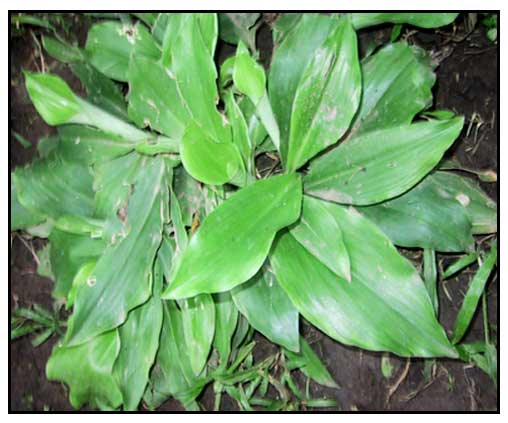
Dusol is a smooth, stemless
herb arising from tuberous aromatic rootstocks with fibrous cylindric
roots. Leaves are horizontally spreading, orbicular to broadly
ovate, 7 to15 centimeters long, with rounded base. Flowers are few, about
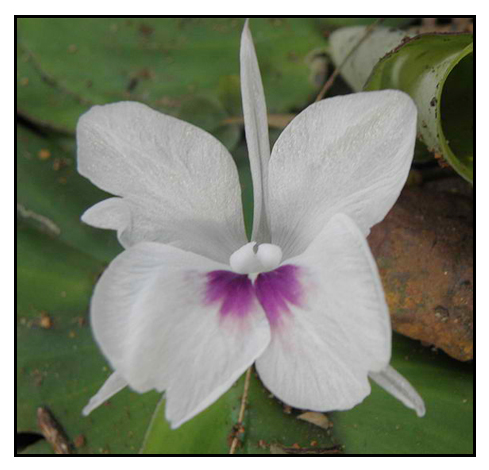
4 to 6 or more, with lanceolate bracts which are about 3.5 centimeters long. Corolla tube is slender, 2.5 to 3 centimeters
long; with a lip cleft to the middle, about 2.5 centimeters wide, white or pale pink spotted with violet. Staminodes are obovate,
about 1 to 2 centimeters long. Staminal crest is quadrate, and 2-lobed.
 Distribution Distribution
- In open grasslands at
low and medium altitudes, in the Bontoc and Baguio areas, the Rizal
provinces, and in Mindanao.
- Occurs in India through Malaya to the Moluccas.
- Cultivated in Java, Malaya and India for culinary and medicinal purposes.
Constituents
• Phytochemical screening of various extracts yielded sterols, triterpenoids, resins, flavonoids, alkaloids, carbohydrates, saponins, proteins.
• Rhizome contains
a volatile oil and small amounts of cinnamic acid ethyl ester, borneol,
camphene, cineol, paraumarin, cinnamic acid, and anisic acid.
• Also yields a small amount of alkaloid. Also, a considerable amount of starch,
gum, and mineral matter.
• Malaysian study showed the essential oil to contain 54 components,
of which major constituents were: ethyl trans-p-methoxycinnamate (51.6%),
ethyl cinnamate, and pentadecane among others.
• Terpenoid constituents
amounted to 16.4%.
• Study analyzed leaf and rhizome oils of K. galanga. The leaf oil yielded 108 compounds, the major components of which were linoleoyl chloride, caryophyllene oxide, cubenol, and caryophyllene. Rhizome oil yielded 81 components, main components were 2-propenoic acid, 3-(4-methoxyphenyl)-ethyl ester, ethyl cinnamate, 4-cyclooctene -1-methanol, caryophyllene oxide and limonene. (21)
• Study of various extracts of rhizomes yielded carbohydrates, cholesterol, protein, amino acids, steroids, alkaloids, flavonoids, cardiac glycosides, saponins. tannins, terpenoids, phlobatinins, fatty acids, coumarins and phenols. (36)
• Analysis of rhizome essential oil yielded 28 components. Major compounds were
ethyl-ρ-methoxycinnamate (38.6%), ethyl cinnamate (23.2%), 1,8-cineole (11.5%), transcinnamaldehyde (5.3%), and borneol (5.2%). (see study below) (39)
• Study of rhizome essential oil yielded
50 constituents constituting 97.19% of the oil. Major constituents were ethyl cinnamate (29.48%), ethyl-p-methoxycinnamate (18.42%), γ- cadinene (9.81%), 1, 8-cineole (6.54%), δ- carene (6.19%), borneol (5.21%), ethyl-m-methoxycinnamate (2.15%), camphene (1.58%), linoleoyl chloride (1.35%) and α-pinene (1.32%). (41)
- GC-MS study of rhizomes for essential oil yielded 38 aroma compounds representing 96.4% to 98.9% of the total oil. Two major compounds were trans-ethyl-p-methoxycinnamate (28.4-70.0%) and trans-ethyl cinnamate (11.5%-26.6%) constituting 50.3% to 84.8% of total oil. Other chemical compounds present were δ-3-carene (0.1–6.5%), 1,8-cineole (0.2–5.2%), borneol (1.0–2.4%), pentadecane (6.0–16.5%).
(42)
- Hexane fraction of ethanol extract isolated two new isopimarane diterpenes, 1α‐hydroxy‐14α‐ methoxyisopimara‐8( 9),15‐diene (7) and 1α,14α‐dihydroxyisopimara‐8(9),15‐diene (9) and eight known isopimarane diterpenes including (‐)‐sandaracopimaradiene (1), 6β‐acetoxysandaraco- pimaradiene‐9α‐ol (2), sandaracopimaradiene‐7β,9α‐diol (3), sandaracopimaradiene‐1α,9α‐diol (4), 6β‐acetoxysandaracopimaradiene‐9α‐ol‐1‐one (5), 6β‐acetoxysandaracopimaradiene‐1α,9α‐diol (6), 6β,14α‐dihydroxyisopimara‐8(9),15‐diene (8), and 6β,14β‐dihydroxyisopimara‐8(9),15‐diene (10). (see study below)
(43)
- Study of rhizomes yielded ten phenolics: trans-4- Methoxy ethyl cinnamate (1), ferulic acid (2), trans-p-hydroxy-cinnamic acid (3), trans-4-methoxycinnamic acid (4), methyl (2R,3S)-2,3-dihydroxy-3-(4-methoxyphenyl) propanoate (5), ethyl (2R,3S)-2,3-dihydroxy- 3-(4-methoxyphenyl) propanoate (6), p- hydroxybenzoic acid (7), p-methoxybenzoic acid (8), vanillic acid (9), and methyl 3,4- dihydroxybenzoate (10). (see study below) (51)
Properties
• Rhizomes considered aromatic, carminative, diuretic, stimulant, expectorant.
• Studies on extracts suggest anti-inflammatory, analgesic, nematicidal, repellent, larvicidal, vasorelaxant, sedative, antineoplastic, antimicrobial, antioxidant, antiallergic and wound healing properties.
Parts utilized
Rhizomes, leaves.
Uses
Edibility / Culinary
- Plant used for flavoring rice.
- Young leaves and tender young rhizomes can be eaten raw, steamed, or used in curries or cooked with chili paste as side dish. (52)
- In Thailand, rhizome is an ingredient for
soups and curries.
- In Indonesia, used as a spice.
Folkloric
- In the Philippines, the rhizome mixed with oil is an effective cicatrizant (healing by scar
formation). Internally, decoction rhizome decoction used as tonic and carminative, for dyspepsia, headaches and ague. Decoction used as gargle and for alleviating coughs.
- In the Visayas, rhizomes given to women after childbirth.
- Leaves, topically, for sore throat.
- For mumps, rhizomes are chopped and applied as poultice on the swollen
glands for 30 minutes 3 times daily.
- Sliced rhizomes topically to furuncles to hasten ripening.
- Hot roasted rhizomes are applied on rheumatic afflictions.
- Poultice and lotions of leaves and rhizomes for sore throat, fevers,
swellings, rheumatism, sore eyes.
- Rhizomes used as wash for dandruff or head scabs.
- Leaves used as perfume in washing hair.
- Internally, decoction of rhizomes used as a tonic; also, for dyspepsia, headache,
and malarial chills.
- Rhizomes have been used postpartum.
- Rhizomes when chewed are useful for alleviating coughs.
- Rhizome decoction applied to wounds with purulency and coagulated blood.
- In India powder or ointment of rhizome applied to wounds and bruises to reduce swellings; also, to mumps and cancerous swellings.
- In China, decoction or powder used for
indigestion, colds, abdominal pains, headache and toothache.
- In Malaysia, used for stomach pains and
cough.
- In Ayurveda, used for inflammatory diseases,
diabetes and obesity.
- In Thailand, rhizomes used for toothaches, abdominal pain, muscular swelling and rheumatism (Ridtitid et al. 2008) (37)
Others
- Cosmetics: Rhizome is used for cosmetics, making of perfumes and protecting clothes
from insects.
- In Borneo, used in the preparation of yeast and dyes.
- Repellent: Rhizomes used to preserve cloths from insects.
- Incense: An ingredient of many Tibetan and Japanese incense formulas, believed to promote awareness and overcome physical exhaustion. (28)
 Studies Studies
• Volatile Oil / Antimicrobial: Study showed the essential oil of K. galanga could be used for
treatment of microbial infections which supports the traditional use
of the plant for the treatment of some fungal and bacterial skin diseases. (1)
• Larvicidal: Methanol extracts
of the plant shown to have larvicidal activity
against dog roundworm Toxocara canis.
• Amebicidal: Found to be effective
as an amebicide against Acanthamoeba.
• Antiviral: Found to inhibit
activity of Epstein-Barr virus.
• Wound Healing / Flavonoids:
Phytochemical screening revealed the presence of flavonoids in K galanga
with enhanced wound contraction effect that could be used in the healing
of open wounds. (3)
• Sedative: Sedative
activity of hexane extract of Kaempferia galanga L. and its 2 active aromatic compounds (ethyl trans-p-methoxycinnamate and ethyl cinnamate). Study results showed considerable sedative and relaxant effects suggesting
a potential for its application in aromatherapy. (4)
• Antitumor: Zingiberaceae
rhizomes used in traditional Malaysian medicine, including K. galanga,
were screened for antitumor promoter activity. Seven, including K galanga,
were found to possess inhibitory activity towards TPA-induced EBV activation
with not cytotoxicity effect. Study results suggest a potential for
the development of cancer prevention methods at the tumor-promoting
stage. (5)
• Toxicity Studies / Rhizome: Ethanolic
rhizome extract of K galanga was evaluated for acute and subacute toxicities in rats. In acute toxicity testing, oral administration of 5g/kg produced no mortality or changes in body or organ weights, with no gross or histopathological changes. In subchronic toxicity testing, no mortality was noted at varying doses from 25 to 100 mg/kg with no changes in hematological parameters. No sign of irritation was observed in the dermal irritation test of the hexane fraction. (6)
• Hypolipidemic: Oral administration
of extracts in high-cholesterol fed wistar rats lowered the serum and
tissue levels of total cholesterol, triglycerides, phospholipids, with
an increase in HDL. (7)
• Antinociceptive / Rhizome and Leaves: Methanol
extract of KG markedly demonstrated antinociceptive action in experimental
animals, probably through b both peripherally and centrally mediated mechanisms
involving opioid receptors. The results support its traditional use
for pain in various disorders. (8) Study evaluated the antinociceptive activity of various extracts of rhizomes and leaves of K. galanga using acetic acid-induced writhing, hot plate and tail immersion test in Swiss albino mice. Results showed the acetone extract and fractions of rhizome and leaves exhibited antinociceptive property. (31)
• Anti-Inflammatory / Analgesic : Study of alcoholic extract of K. galanga in rats exhibited significant anti-inflammatory activity in the carrageenan and cotton pellet granuloma model and significant analgesic activity in the tail flick model. (10)
• Mosquitocidal / Phenylpropanoids : KG rhizome-derived materials, esp ethyl-p-methoxycinnamate showed activity against the larvae of three mosquito species. Results suggest potential and further study as a mosquito control agent. (11)
• Larvicidal / Repellent: Hexane fraction was found to exhibit the highest larvicidal effect toward fourth instar Culex quinquefasciatus. In a lab study, it showed repellency against Aedes aegypti. In a field study, it could protect against certain mosquitos. Also, the hexane fraction showed no dermal irritation when applied to human skin. (12)
• Nematicide / Fumigant: Study of rhizome-derived material, esp a methanol extract, suggest a potential for KG as a nematicide and hatching inhibitor for control of M. incognita as fumigant with contact action. (13)
• Cosmetic Use / Sun Protection: 100% extract from roots of KG suggested as all-natural source of ethyl-methoxycinnamate with its sun-protecting property. A patented application has been made on its action against ultraviolet rays and its augmenting boost on the activity of conventional sunscreens.
• Anti-Acne: An extract preparation from the roots of KF using a proprietary extraction process has been found to be active against Propionibacterium acnes, with a potential benefit in the management of acne. (14)
• Phytochemistry and Medicinal Properties / Antinociceptive: Studies on extracts suggest anti-inflammatory, analgesic, nematicidal, repellent, larvicidal, vasorelaxant, sedative, antineoplastic, antimicrobial, antioxidant, antiallergic and wound healing properties. The pharmacologic properties are attributed mostly to ethyl-p-methoxycinnamate and ethyl-cinnamate. The antinociceptive effect is comparable to aspirin. The nematicidal effect is more potent than Carbofuran and metham sodium. (18)
• Anticarcinogenic Effects: Three compounds isolated from K. galanga were studied for anti-carcinogenic effects. Results on various assays and testing showed both -cis and -trans ethyl-p-methoxycinnamate exert a relatively strong anti-carcinogenic potential. (19)
• In vitro Antimicrobial Effects: Various extracts were tested for antimicrobial activity against ten human pathogenic bacteria. All extracts showed significant antibacterial and antifungal properties. The highest zone of inhibition was an ethanolic extract against Staphylococcus aureus. (20)
• Ethyl-p-methoxycinnamate / Anti-Inflammatory / Anti-Angiogenic: Study investigated the mechanisms for the anti-inflammatory and anti-angiogenic effects of ethyl-p-methoxycinnamate isolated from Kaempferia galanga. Results suggest significant anti-inflammatory potential by inhibition of pro-inflammatory cytokines and angiogenesis, thus inhibiting the main functions of endothelial cells. (22)
• Effect on Cytochrome P450 Enzymes Expression: Study investigated the effect of ethyl-p-methoxycinnamate (EPMC) extract from the rhizome of Kaempferia galanga on cytochrome P450 expression in mouse primary hepatocytes. Results showed EPMC, a major component of the K galanga rhizome, is a weak inducer of CYP1A subfamily and it can modulate the inductive effect of some typical CYP1A inducers. (23)
• Dental Plaque Prevention: Study evaluated the potency of Kaempferia galanga extract and essential oil as anti-plaque agent based on their inhibitory activity against planktonic growth and biofilm of Streptococcus mutans. The ethanol extract and essential oil antibacterial and antibiofilm activity towards S. mutans. The essential oil showed higher antibiofilm activity while the ethanol extract showed more potent antibacterial activity. The compound responsible for antibacterial activity was ethyl para methoxy cinnamate. (24)
• Increase Apoptosis Activity in Colon Cancer Cells / Oil Fraction: Study showed an oil fraction from K. galanga alcoholic extract increased apoptosis activity in mice colon cancer. The most effective dose of oil fraction containing ethyl p-methoxycinnamate was 23.4 mg/kg body weight of mice. (25)
• Green Synthesis of Nanoparticles: Study showed silver nanoparticles (Ag-NPs) were rapidly synthesized by treating silver ions through a simple and green synthetic route using water extract of the rhizomes of Kaempferia galanga Linn.(KG), which acted simultaneously as a reductant and stabilizer. (26)
• Vasorelaxant Active Compound: A crude dichlormethane extract of K. galanga on brine shrimp lethality testing showed potent bioactivity with an E[D.sub.50] value of 7.92 [+ or -] 0.13 [micro]g [ml.sup.-1]. The extract induced a dose-related reduction of basal mean arterial pressure (MAP) (130 [+ or -] 5 mm Hg) in the anesthetized rat, with maximal effects seen after 5-10 min of injection. (27)
• Sedative / CNS Depressant Activity / Rhizome and Leaf: Study investigated the sedative activity of different extracts of rhizomes and leaf of K. galanga by thiopental sodium induced sleeping time, hole cross and open field tests in Swiss albino mice. Results showed acetone extracts of rhizome and leaf including fractions exhibited CNS depressant effects. (29)
• Antidiarrheal Activity: Study evaluated the antidiarrheal activity of acetonic extract of K. galanga and ethanolic extract of o G. paniculata in a castor oil-induced diarrhea model in mice. Both extracts showed significant inhibition (p<0.05-0.001) and a dose-dependent decrease in total number of faecal dropping in castor oil-induced diarrhea. (30)
• Anthelmintic / Insecticidal / Rhizomes: Study evaluated the anthelmintic and insecticidal activities of various extracts of K. galanga rhizome. Extract exhibited dose-dependent anthelmintic activity against Pheretima posthuma. Insecticidal evaluation showed potent activity with 100% mortality of rice insects Sitophilus oryzae in a dose-dependent manner. (32)
• Sunscreening Activity / Volatile Oil Formulation / Rhizomes: Study evaluated a sunscreen oil-in-water cream incorporated with volatile oil isolated from K. galanga for sun-screening property with sunscreen preparations containing 3 5, and 7% w/w of volatile oil. Major chemical ingredients of the volatile oil were ethyl-p-methoxycinnamate (43.35%) and ethyl cinnamate (29.56%). The SPF (sun protection factor) of the 7% volatile oil was 0.67 unit /1% volatile oil which is comparable to marketed sunscreen products. The volatile oil extracted from the rhizomes of Kg is an all-natural source of cinnamate derivatives shown to enhance sun protection. (33)
• Hypopigmentary Effects / Ethyl P-Methoxycinnamate: Ethyl p-methoxycinnamate, isolated from the chloroform fraction of an ethanol extract of K. galanga, was found to significantly decreases melanin synthesis in B16F10 murine melanoma cells stimulated with a-melanocyte stimulating hormone (a-MSH). Results suggest the pigment-inhibitory effect results of E-pM results from downregulation of tyrosinase. Ethyl p0methoxycinnamate from K. galanga has potential as skin whitening agent to treat hyperpigmentary disorders. (34)
• Antifungal
/ Pathogenic Fungus Saprolegnia parasitica from Fish: Ethanol crude extract of roots of K. galanga showed high antifungal activity against fish fungus S. parasitica H2. (35)
• Wound Healing Activity / Dexamethasone Suppressed Wound Healing: Study evaluated the effect of an ethanolic extract of Kaempferia galanga in dexamethasone suppressed wound healing in Wistar rats. Co administration of extract with dexamethasone showed significant reduction in the epithelialization time with significant increase (p<0.001) tissue breaking strength. In the excision wound model, K. galanga significantly increased (p<0.05) percentage of wound contraction. (37) (38)
• Repellent / Insecticidal / Essential Oil / Rhizomes: Study evaluated the chemical composition and repellent and insecticidal activities of essential oil of K. galanga rhizomes against book louse, Liposcelis bostrychophila. Bioactivity-guided fractionation yielded four active components viz. 1,8-cineole, ethyl cinnamate, ethyl ρ-methoxycinnamate, and trans-cinnamaldehyde. The essential oil showed contact toxicity against the book louse with LC50 of 68.6 µg/cm2. The essential oil also showed fumigant toxicity against the booklouse with LC50 of 1.5 mg/liter air. Results suggest a potential for the oil as source of natural insecticides or fumigants and repellents for control of insects in stored grains. (39)
• Suppression of Melaninogenesis: Study evaluated a methanolic extract of K. galanga on melanogensis and signaling pathway in B16F10 cells. The extract significantly inhibited a-melanocyte stimulating hormone (a-MSH)-induced melanin synthesis and tyrosinase activity. Results suggest inhibition of phospho-CREB and MITF expression may lead to suppression of melanogenesis in MKG-treated B16 cells. (40)
• Isopimarane Diterpenoids / Anti-Inflammatory: Study of hexane fraction of ethanol extract isolated two new isopimarane diterpenes and eight known isopimarane diterpenes. Compounds 5, 6, 8, and 9 exerted good anti-inflammatory effect on lipopolysaccharide-stimulated nitric oxide production from RAW264.7 cells wit IC50s of 11.2, 7.7, 14.3, and 12.1 µM, respectively. These four compounds also inhibited nitric oxide synthase (iNOS) mRNA expression. compounds 5 and 6 also suppressed COX-2 mRNA expression. Compound 6 also showed mild inhibitory effect on TNF-α mRNA expression. (43)
• Anti-Dabetic: Study evaluated the antidiabetic and anti-cholesterol activity of K. galanga rhizome on albino rats. Results showed potential as antidiabetic medicine on certain dose. However, it did not show potential as an anti-cholesterol medicine. (44)
|• Effect of Essential Oil on Sensory and Physical Properties of Dark Chocolate Bar: Study showed the addition of 0.3% kaempferia galanga essential oil to dark chocolate bar resulted in highest panelist acceptance on sensory properties with insignificant effect and lowest hardness with very small color difference. (45)
|• Antithrombotic / Rhizomes: Study evaluated the antithrombotic effect of rhizome extracts of Kaempferia galanga and Curcuma xanthorrhiza in a mouse thrombotic model. Results demonstrated a potent effect of K. galanga and C. xanthorrhiza extracts as evidenced by significant bleeding time prolongation. Both extracts significantly protected mice from thromboembolic death. Results suggest potential for development of antithrombotic agents against platelet thromboembolism. (46)
• Anti-Inflammatory / Inhibitory Effect on Prostaglandin H2 Synthase: COX or Prostaglandin H2 Synthase is the enzyme that catalyzes the first two steps of biosynthesis of prostaglandinds from arachidonic acid. Study evaluated the inhibitory activity of kaempferia rhizome and roselle calyx on the rate of prostaglandin formation. Both K. galanga and Hibiscus sabdariffa showed inhibition of PGH2 formations. The rate of PGH2 formations on COX-1 was lower than on COX-2. Results suggest potential for the development of anti-inflammatory drugs. (47)
• Aromatic and Protective Potential as Functional Food: Phytochemical analysis have yielded protein, fiber, and high amount of essential minerals (potassium phosphorus, and magnesium). Study demonstrated the anticancer potential of the rhizome on MDA MB-231 and WRL-68 cells. Ethyl-p-methoxy cinnamate (EPMC) was responsible for inhibiting the proliferation action by intracellular reactive oxygen species (ROS) production. Study demonstrated K. galanga rhizome as a safe and high energy value medicinal spice with chemopreventive action, without toxic phytochemicals. (48)
• Nematicidal / Essential Oil of Rhizomes: Study evaluated the nematicidal activities of essential oil of K. galanga rhizomes against nematode Heterodera avenae. GC-MS analysis of essential oil yielded 41 components. Results indicated the essential oil of K. galanga and its isolated constituents have potential for development into natural nematicides for control of cereal cyst nematodes. (49)
• Antibacterial / Lactobacillus acidophilus: Lactobacillus is one of the bacteria that causes dental caries. Study evaluated the antibacterial effect of extracts of K. galanga on Lactobacillus acidophilus (LA). Results showed K. galanga can kill LA. The extract showed better antibacterial activity than penicillin. (50)
• Antioxidant / Phenolics / Rhizomes: Study evaluated the phenolics from K. galanga rhizomes and their antioxidant effect. Ten phenolics were isolated. All compounds exhibited various degrees of antioxidant effects in radical scavenging. Compound 3 exhibited pronounced inhibitory effects in DPPH radical scavenging. (see constituents above) (51)
Availability
- Wildcrafted.
- In the cybermarket, as dried rhizome or powdered form.
|