|
 Botany Botany
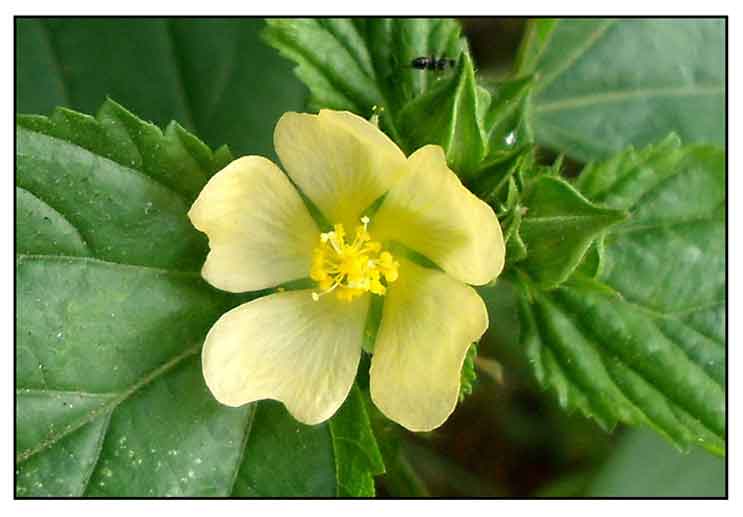
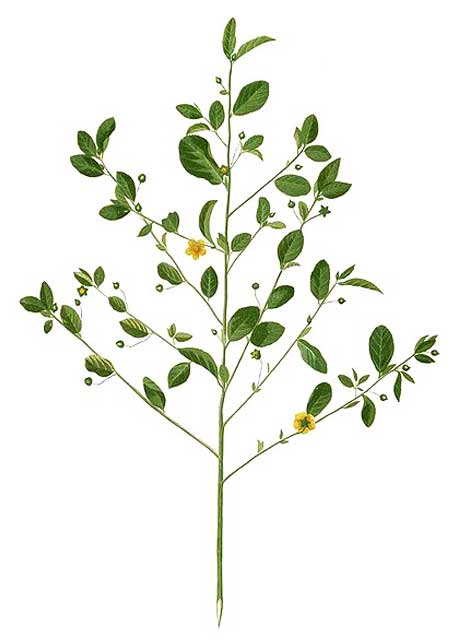
Ualis-haba is an erect, branched
shrub reaching 0.5 to 1.5 meters in height. Leaves are oblong
to rhomboid, 1 to 4 centimeters long, the apex rounded or pointed, the
margins toothed, and the lower surface covered with very short
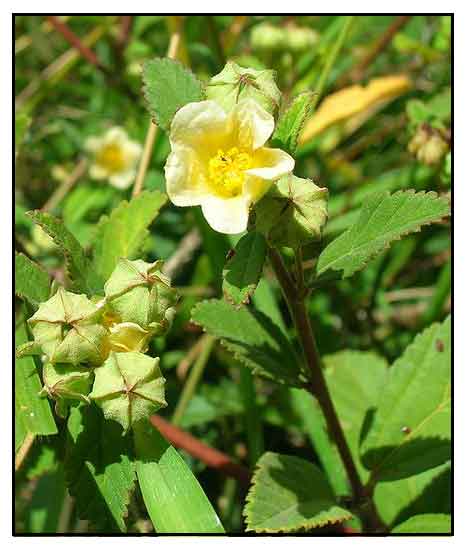
pale hairs. Flowers occur singly in the axil of the leaves. Calyx
is green. Corolla is yellow, about 1.5 centimeters diameter. Fruit has
8 to 10 carpels which are smooth or somewhat wrinkled, about
2.5 millimeters long and awned.
Distribution
A very common weed in
the Philippines.
 Properties Properties
- Plant considered anti-rheumatic, antipyretic, analgesic, appetite stimulant, anti-asthmatic, CNS depressant, laxative, demulcent, diuretic, emollient, hypotensive, stomachic, sudorific, tonic, vasorelaxant.
-
Roots are
considered febrifuge, cooling, astringent, tonic, hepatoprotective, antibacterial, anti-inflammatory and antioxidant.
Constituents
• Seven ecdysteroids, including three new compounds were isolated. Four – ecdysone, 20-hydoxyecdysone, 2-deoxyecdysone, 2-deoxy-hydroxyecdysone-3-O-ß-D-glucopyranoside and 20-hydroxyecdysone-3-O-ß-D-glucopyranoside–were reported for the first time.
• Phytoscreening of a methanol extract yielded alkaloids, flavonoids, and reducing sugars.
• Study yielded eleven secondary metabolites: sitosterol (1a) and stigmasterol (1b), sitosterol-3-O-b-D-glucopyranoside (2a) and stigmasterol-3-O-b-D-glucopyranoside (2b), phaeophytin A (3), 173-ethoxypheophorbide A (4), 132-hydroxy phaeophytin B (5), 173-ethoxypheophorbide B (6), 5,7-dihydroxy-4'-methoxyflavone (7), cryptolepinone (8) and a salt of cryptolepine (9). (See study below) (15)
• An aqueous-methanol extract yielded tannins, polyphenols, alkaloids, glycosides, flavonoids, and saponins. (16)
• Crude chloroform extracts yielded n-hexacos-11-enoic acid, stigmasterol and β-sitosterol. (see study below) (25)
• Proximate analysis of roots yielded moisture 7.5%, total ash 7.8%, crude protein 5.7%, crude fiber 36.7%, crude fat 2.8%, and nitrogen free extract 47%. Inorganic mineral analysis yielded calcium 0.85%, sodium 0.28%, zinc 371.1 ppm, and magnesium 0.32%.
• An n-hexane extract of whole plant yielded palmitic acid, linoleic acid and y-sitosterol. (see study below) (32)
• Phytochemical screening of yielded steroids, flavonoids, terpenoids, alkaloids, phenols, saponins, glycosides, and tannins. (see study below) (20)
Parts used
Whole plant, roots, bark, leaves.
Uses
Folkloric
- In the Philippines decoction of the roots is
used as a gargle for toothaches; internally, as a stomachic.
- Decoction of bitter bark used for fever.
- A decoction from any plant part used for irregular menses.
- Plant used for poulticing ulcers, boils, swellings, broken bone, cuts, herpes.
- Plant poultice used as application for chicken pox.
- Pulped leaves applied externally for stomach aches.
- Pulped leaves with Blumea balsifera (dalapot) applied externally for
headaches, and to the gums for toothaches.
- Plant parts with coconut oil applied externally for itches and scurf.
- In Cuba, decoction of roots used for infantile diarrhea.
- The roots when crushed with ginger, held in the mouth, for toothaches.
- The leaves and juice, taken by mouth for stomach cramps.
- Fresh leaves are mucilaginous and emollient and a cataplasm used to promote maturation of abscesses.
- Pulped roots applied to sore breasts.
- In Amboina, crushed roots held in mouth for toothaches; also, chewed with ginger.
- Juice swallowed for abdominal cramps.
- In Borneo, reported use as abortifacient.
- Juice of pounded leaves used for fevers.
- Flowers applied to wasp stings.
- The leaves have been used as tea.
- The flowers are used for wasp stings.
- Mucilage used as emollient and for scorpion stings.
- In India, mucilaginous roots used as demulcent and emollient.
- Root decoction has been used for bronchitis and asthma; also for fevers and various abdominal troubles.
- In Johore medicine, used for rheumatism.
- Australian aborigines use the herb to treat diarrhea.
- Decoction of old root used to relieve constipation.
- Hindus use it for fever, nervous and urinary diseases.
- In Ayurveda, widely used in the treatment of fever; also, as diuretic.
- In Indonesia, a traditional medicinal plant for the treatment of gout.
Edibility
- Tea: In some parts of Mexico, leaves reportedly used as substitute for tea.
Others
- Fiber: Stem yields a good fiber; considered a good substitute for jute. (•) In Niger, fibers are used for making fishing nets and lines. In Central African Republic, used for making large hunting nets. In Cameroon, fiber is used in making ropes to lash firewood. (33)
 Studies Studies
• Cytotoxicity / Antibacterial: Cytotoxicity and antibacterial activity
of Sida rhombifolia (Malvaceae) grown in Bangladesh: The
ethyl acetate extract showed potent cytotoxicity. Extracts showed weak
antibacterial activity against both Gram-positive and Gram-negative
test organisms. (1)
• Antioxidant: Study evaluated
Sida rhombifolia (L.) Ssp. retusa
(L.) for in- vitro antioxidant activity. All the extracts showed effective free radical
scavenging activity, reducing activity, and superoxide scavenging activity.
The results indicate S. rhombifolia is a potential source of natural
antioxidants. (2)
• Antibacterial / Antifungal: In a study of nine Zairean medicinal plants, six extracts, including Sida rhombifolia, demonstrated marked antibacterial activity against K pneumonia, S aureus, Strep mutans and significant antifungal activity against A niger, C albicans and M gypseum. Most of the bactericidal and fungicidal constituents were found in the ethyl acetate and aqueous fractions. (4)
• Anti-Arthritic: Results of study of aerial parts of Sida rhombifolia on adjuvant-induced arthritis, motor performance, distance traveled and histopathological findings showed it to be useful in the treatment of arthritis. (5)
• Antinociceptive / Anti-Inflammatory: Results showed the leaves of S rhombifolia possessed antinociceptive and anti-inflammatory activities confirming its traditional uses for pain and inflammatory ailments. (6)
• Anti-Gout / Xanthine-Oxidase Inhibitor: Earlier studies have reported that flavonoids from the crude extract possessed in vitro inhibitory activity against xanthine oxidase. Study results showed the crude extract flavonoids had an inhibitory effect from 48 to 71%. (7)
• Toxicity Studies: Acute and subchronic toxicity studies of the water extract of the root of Sida rhombifolia failed to show toxicity evidence in male and female rats. (8)
• Antibacterial / Fruit Extracts: Study of fruit extracts showed significant in vitro antibacterial activity against most of the test bacteria. Phytochemical screening yielded alkaloids, flavonoids, and reducing sugars in the methanolic extract. (9)
• Hypoglycemic: Study of aqueous extract of S. rhombifolia ssp. retusa leaves showed significant hypoglycemic effects in normal rats but marginal activity in STZ-induced diabetic rats. (10)
• Bioactive Components / Antibacterial: Study yielded major phytochemical compounds such as vasicinol, Ephedrine vasicinone, and Hypaphorine. The methanol extract was effective against all phytopathogens. Results suggest a potential source of compounds against bacterial diseases in humans and plants. (11)
• Anthelmintic: Study results showed potent antioxidant and anthelmintic activity. Antioxidant activity was tested using DPPH, NO scavenging and hydrogen peroxide scavenging assays. Anthelmintic activity was evaluated using the Indian earthworm Pheretima posthuma. (12)
• Secondary Metabolites / Cryptolepinone / Vasorelaxant Activity: Phytochemical study of Sida rhombifolia L. yielded eleven secondary metabolites. Their structures were identified by 1H- and 13C-NMR using one- and two-dimensional techniques. Cryptolepinone (compound 8) was reported to show vasorelaxant activity in rat mesenteric artery rings. (15)
• Antibacterial / Acute Toxicity Study: Study investigated the in vivo antibacterial activity of methanol and aqueous-methanol extracts of S. rhombifolia against seven pathogenic bacteria involved in diarrhea. The aqueous-methanol extract exhibited moderate antibacterial activity. In the acute toxicity study, some toxic effects were observed at dose of more than 8 g/kbw of extract. (16)
• Acute and Subchronic Toxicity Studies / Roots: Roots have been found to have antioxidant properties. Study of a water extract from the roots of Sida rhombifolia administered orally did not cause acute or subchronic toxicities to male and female rats. (17)
• Antidiarrheal / Acute Toxicity Study: Study investigated a methanolic extract of roots for antidiarrheal activity in castor-oil induced diarrhea. Results showed significant antidiarrheal activity. A single dose of 400 mg/kbw of extract produced a significant decrease in the severity of diarrhea. (18)
• Anti-Inflammatory / Leaves: A hydroalcoholic extract of leaves showed anti-inflammatory activity in an carrageenan-induced model. ß-sitosterol, a sterol isolated from different species of Sida, reported to have anti-inflammatory properties, might be responsible for the activity shown by the extract. (19)
• Anti-Tubercular Activity / Leaves and Roots: Study evaluated the susceptibility of Mycobacterium tuberculosis to ethyl acetate and ethanolic extracts of leaves and roots of S. rhombifolia. An LRP assay showed the EA extract of leaves and roots at concentrations of 100 and 500 µg/ml showed good activity against standard strain of M. tuberculosis H37R and clinical isolates of M. tuberculosis resistant to streptomycin, isoniazid, rifampicin, and ethambutol. (20)
• Cytotoxic / Analgesic / Aerial Parts: Study evaluated an ethanol extract of dried aerial parts for analgesic and cytotoxic activities in animal models. Results showed significant writhing inhibition in acetic acid-induced writhing in mice, comparable to diclofenac. The extract also produced prominent cytotoxic activity against brine shrimp Artemia salina. (21)
• Anti-Inflammatory / Antioxidant / Stems and Roots: Study evaluated the antioxidant potential of Sida rhombifolia extracts on adjuvant induced arthritis in experimental rats. Results showed hematological parameters reverted to near normal levels, especially ESR. There was significant increase of thiobarbituric acid reactive substances and catalase and glutathione peroxidase activities. Free radical scavenging activity was evidenced by histological and electron microscopy observations. (22)
• Toxicity Evaluation / Acute and Sub-Acute Studies: Study evaluated the hematological and biochemical toxic effects of aqueous acetone extracts of Sida rhombifolia in Swiss mice and albino Wistar rats. SR was well tolerated on acute administration, with no mortality even at highest dose of 6 g/kg (LD50 is greater than 5000 mg/kg). In subacute administration, biochemical parameters showed a significant (p<0.05) increase in ALT, AST, and ALP, with significant decrease in other biochemical parameters i.e., glucose, creatinine, BUN, triglycerides, total and direct bilirubin. Study suggests it may not be toxic at low dosage in subacute administration, and with reduction in plasma glucose and lipid concentrations, there may be a potential application as antidiabetic and hypolipidemic agent. (24)
• Antibacterial / Roots: Study evaluated crude extracts from three solvents of roots of SR and isolated compounds for antibacterial activities against S. aureus, E. coli, P. aeruginosa and S. typhimurium. The antibacterial activities were comparable to each other, although weaker compared to reference drug ciprofloxacin. Crude chloroform extracts yielded n-hexacos-11-enoic acid, stigmasterol and β-sitosterol. (25)
• Anti-Diabetic / Anti-Hyperlipidemic / Antioxidant / Aerial Parts: Study evaluated an alcoholic extract of aerial parts for hypoglycemic, anti-hyperlipidemic and antioxidant potential in STZ-induced diabetic rats. At 400 mg/kg, results showed a significant anti-diabetic effect, a significant decrease in TC, triglycerides, and LDL, with a significant increase in HDL, and a significant increase in antioxidant enzymes. The therapeutic potential was attributed to the presence of bioactive compounds such as glycosides, resins, alkaloids, sterols, saponins and flavonoids. (26)
• Anti-Anxiety / Roots: Study of whole plant extracts of Sida rhombifolia using Elevated Plus Maze model in albino mice showed significant anti-anxiety activity. (27)
• Anti-Malarial / Aerial Parts: Study evaluated hydroalcoholic extract of leaves of Sida rhombifolia and Gardenia lutea for in vivo activity against Plasmodium berghei. Extracts showed significant antimalarial activity with acceptable margin of safety. (28)
• Amelioration of Cadmium Effects: Recent studies confirmed cadmium significantly reduces body weight probably due to increased catabolism of body protein and improper nutrient digestion and absorption. Animals treated with S. rhombifolia root extract significantly increased body weight. The amelioration of body weight might be attributed to the antioxidant property of the root. (29)
• Cardioprotective: Study investigated whether S. rhombifolia would attenuate the acute myocardial infarction in isoproterenol (ISP)-treated rat model. Results showed SR extract caused myocardial adaptation by augmenting endogenous antioxidants and protects rat hearts from decline in cardiac function and oxidative stress associated with ISP induced myocardial injury. (31)
• Anti-Inflammatory / Cytotoxic / Anti-Cholinergic: Study evaluated the anti-inflammatory, cytotoxic, and anti-cholinergic activities of whole plant of S. rhombifolia. An ethyl acetate extract exhibited the most significant antioxidant activity via scavenging of DPPH radicals and ferrous ions with EC50 of 380.5 and 263.4 µg/mL, respectively. An n-hexane extract showed strongest anti-inflammatory activity by NO and protein denaturation inhibition assays with IC50 of 52.16 and 146.03 µg/mL, respectively. Same extract at 100 µg/mL showed strongest anti-cholinesterase activity with 58.55% AChE enzyme inhibition and cytotoxic activity against human cancer cells SNU-1 and HepG2 with inhibition of 68.52% and 47.82%, respectively. (see constituents above) (32)
• Bamboo Combined with Sida rhombifolia / Disposable Diapers: Vegetable fibers are biodegradable, economical, with no health hazards and potential to ameliorate environmental pollution by use of plant waste materials. Preliminary studies on tensile strength of S. rhombifola reveals similarities with jute, hemp, and kenaf fibers. The study reports on combination of S. rhombifolia fiber / bamboo fiber as absorbent product in the making of disposable diapers, at the same time exploiting the medicinal antibacterial value of both plants. (33)
• Anti-Inflammatory / Analgesic / Roots: Study evaluated the anti-inflammatory and analgesic properties of ethanol extract of S. rhombifolia roots using carrageenan induced acute inflammation in rats and hot plate method on mice, respectively. Results showed anti-inflammatory and analgesic activities and potential to be developed as a dentistry formula. (34)
Availability
Wild-crafted.
|




_flower_at_Madhurawada.JPG)


