Gen info
- Araceae is a family of monocotyledonous flowering plants in which flowers are borne on a type of inflorescence called a spadix. Also known as the arum family, members are colloquially known as aroids. The family contains 114 genera and about 3,750 known species. (42)
-
Colocasia is a genus of flowering plants in the family Araceae, native to Southeast Asia and the Indian subcontinent. Some species are widely cultivated and naturalized in other tropical and subtropical regions. (42)
- Etymology: The genus name Colocasia is a Latinization of the Greek word kolokasion, which was used, according to the first-century Greek physician and herbalist Dioscorides, for the root of lotus, Nelumbo nucifera, and borrowed for use with the scientific name for Taro. The species epithet, esculentum, means "esculent, edible or fit to be eaten."
- Historical snippet: In the Levant, Colocasia has been used since the time of the Byzantine Empire. Leaves are shown in mosaics from Palestine as a platform, such as a plate or bowl, for serving of fruit to eat. Colocasia is also mentioned in Meitei mythology and Manipuri folklore. (43)
- Taro is ranked as the 5th most important root crop, storing a considerable amount of starch, more than potatoes, sweet potatoes, cassava, and other similar crops. The underground corms of taro contain about 70-0% starch. (49)
Botany
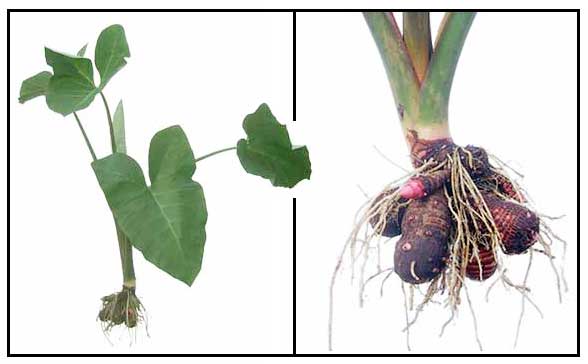
• Gabi is a long-stalked herbaceous plant with
huge leaves, growing to a height of 30 to 150 centimeters. Rootstock is tuberous,
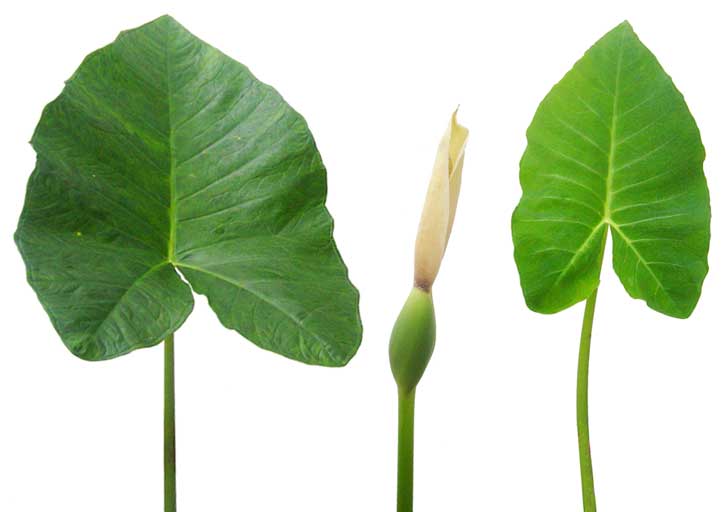
up to 10 centimeters in diameter. Leaves, in groups of two or three, are long-petioled, ovate, 20 to 50 centimeters long, glaucous, with entire margins, with
a broad, triangular, basal sinus extending one- third or halfway to the insertion
of the petiole, with broad and rounded basal lobes. Petioles are green
or purplish, 0.2 to 1 meter long. Peduncles are usually solitary. Spathe is variable in length, usually about 20
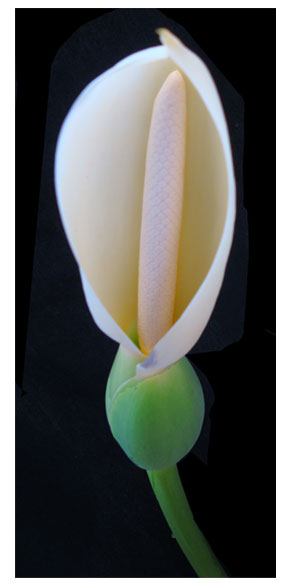
centimeters long, the tubular part green, usually about 4 centimeters long, with the lanceolate, involute yellow limb about 20 centimeters long. Spadix is cylindric, half as long as the spathe, green below
and yellowish above; male and female inflorescences are each 2.5 to 5 centimeters long, separated by intervals and covered with flat, oblong neuters.
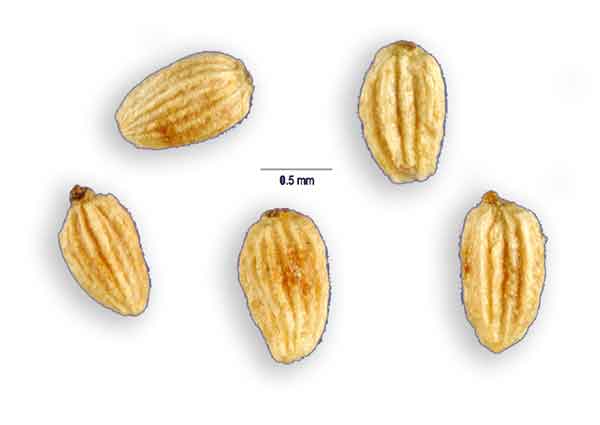
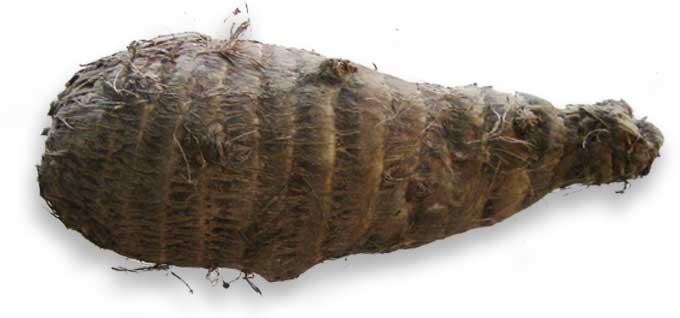
• Growth form: A large evergreen herb that grows up to 1 – 2 m tall. Foliage: Leaves are large, smooth, heart-shaped to arrow-shaped, drooping downwards. The thick fleshy petiole is green, sometimes purple. It is attached near the centre of the leaf (peltate), measuring 25 – 80 cm long. Stems: It produces a short thick tuber that is round, elongated or cylindrical of up to 35 cm long and 15 cm wide. The skin of the tuber appears rough, fibrous with presence of ring-like scars. Flowers: Its flowers are borne on a spadix inflorescence. The inflorescence occur in solitary or up to clusters of 3. The spathe is longer than the spadix, cream to golden yellow in colour, measures between 13 – 24 cm long. Fruit: Fruits are berry-like, yellow-brown when ripe. (Flora & Fauna Web)
Distribution
- Cryptogenic. (44)
-
Generally cultivated throughout the Philippines but is not a native of the Archipelago.
- Matthews et al (2017) consider some populations of Colocasia esculenta to be native to the Philippines. (44)
- Pantropic cultivation.
- Native to Assam, Bangladesh, China South-Central, China Southeast, East Himalaya, India, Laos, Malaya, Myanmar, Nepal, Sumatera, Taiwan, Thailand. (23)
- C. esculenta (taro) is invasive in wetlands along the Gulf Coast of the United States, where it threatens to displace native wetland plants.
Constituents
- Plant has yielded flavonoids, ß-sitosterol, and steroids.
- An ethanol extract showed alkaloids, flavonoids, saponins, and tannins as major constituents.
- Good source of calcium, phosphorus, and iron.
- Young leaves are rich in vitamin C, roots are rich in starch.
- Tubers yield amino acids.
- Ethyl acetate and n-butanol fractions of leaves yielded 10 compounds, namely (1), orientin (2), isoorientin (3), vitexin (4), isovitexin (5), luteolin-7-O-glucoside (6), luteolin-7-O-rutinoside (7), rosmarinic acid (8), 1-O-feruloyl-D- glucoside (9) and 1-O-caffeoyl-D-glucoside (10). (see study below)
(18)
- Phytochemical screening of ethanol (E), methanol (M) and chloroform (C) extracts of leaves yielded tannins (EMC), phlobatannins (EM), saponins (M), flavonoids (EMC) and terpenoids (EMC). (see study below) (30)
- Nutrient analysis of Taro (Colocasia esculenta), raw, per 100g yielded: (Principle) water 70.64g, energy 112 kcal, carbohydrate 26.46 g, protein 1.50 g, total fat 0.20 g, cholesterol 0 mg, dietary fiber 4.1 g; (Vitamins) folates 22 µg, niacin 0.6 mg, pantothenic acid 0.303 mg, pyridoxine 0.283 mg, riboflavin 0.025 mg, thiamin 0.095 mg, vitamin A 76 IU, vitamin C 4.5 mg, vitamin E 2.38 mg, vitamin K 1 µg; (Electrolytes) sodium 11 mg, potassium 591 mg; (Minerals) calcium 43 mg, copper 0.172 mg, iron 0.55 mg, magnesium 33 mg, manganese 0.383 mg, selenium 0.7 µg, zinc 0.23 mg. (USDA National Nutrient Database) (33)
-
Corms contain anthocyanins such as pelargonidin-3-glucoside, cyanidin-3-glucoside, and cyanidin-3-chemnoside.
- Chemical composition of taro corm: starch 99.7%, moisture 11.5%, ash 0.28%, protein 0.35%, amylose 19.2%, crude fiber 0.94%. (49)
- Study of ethanol extract of corm revealed high moisture, ash, fat, and protein, and low carbohydrate levels, vitamin C at 417.73 mg/100g, total phenol content of 833.43 mg GAE/100g, total flavonoid content of 1178.82 mg QE/100g, and quercetin at 261.76 mg/100g. UHPLC-HRMS/MS revealed amino acids, lipids, phenolics, and minor cyanogenic glycosides. (see study below) (50)
 Properties Properties
- Leaves and petioles are excellent
to taste, also rich in minerals.
- Leaf juice considered expectorant, astringent, styptic, stimulant, rubifacient.
- Juice of corm is considered laxative, demulcent and anodyne.
- Tubers are digestive, laxative, diuretic, lactagogue, and styptic.
- Pressed juice of petioles are styptic.
- Acridity of leaves, petioles and tubers is due to raphides which easily
disappear on boiling or cooking. These crystals may cause irritation.
- Studies have suggested analgesic, anti-inflammatory, anti-cancer, hypolipidemic properties.
Parts utilized
Roots and leaves.
 Uses Uses
Edibility / Nutrition
- Prized for its large corms or underground stems, used as staple food in many localities.
- Fresh edible leaves and petioles are a rich source of protein, ascorbic acid, dietary fiber, and some important minerals.
- The corms, petioles and leaf blades are good sources of vitamin B.
- To the early Hawaiians, grown mainly for poi production: a Hawaiian dish made by boiling the starchy underground stem, then mashing it into a paste.
- Its easy digestibility makes it a great nutritional supplement for weight
gain needs in cancer-cachexia, AIDS, pancreatitis and a miscellany
of weight-loss conditions.
Folkloric
- Used for asthma, arthritis, diarrhea, internal hemorrhage, skin disorders.
-
Juice of petioles sometimes used for
earache and otorrhea.
- Juice of the corm used in alopecia.
- Macerated leaves used as poultice on infected sores.
- Leaf juice also used for internal hemorrhages, otalgia, adenitis.
- Internally, a good laxative. Also, used for piles.
- Also, used as antidote for wasp and insect stings. Leaf juice applied to scorpion stings and snake bites.
- Heated tubers are applied locally to painful rheumatic joints.
- Ash of the tubers, mixed with honey, is used for buccal aphthous stomatitis.
- Raw juice of gabi, mixed with sugar, used as febrifuge.
- In Hawaii, end of petioles
used to stop wounds from bleeding.
- Stem leaf used on insect bites to prevent swelling and pain.
- In India, leaves used as anthelmintic.
- Borl tribal people of Goalpara district, Assam, use the leaf juice for boils and pains.
- Poultice of roots used on infected sores.
- In Ayurveda, plant pacifies vitiated vata and pitta, constipation, stomatitis, alopecia, hemorrhoids, and debility.
- Juice consumed to reduce fever.
- In Venezuela,
the corm is used as an abortifacient and to treat tuberculosis, pulmonary
congestion, crippled extremities, fungal abscesses in animals and as
an anthelmintic. The Warao use the stem sap for wasp stings. Poi, a
ferment from corm shavings, is used to bathing the sickly to improve
muscle tone.
- In Bangladesh, leaves used for treatment of pain, inflammation, and lowering of blood sugar. (36)
- Leaf juice mixed with salt used for treatment of inflamed glands and buboes. Cooked taro contains mucilage, which is considered an effective nervine tonic. Peel decoction used for treatment of diarrhea. Taro believed to promote weight gain and reduced excesive sputum secretion in asthmatic individuals. Corm juice applied topically to treat alopecia. Internally, corm used to treat hemorrhoids, and used as laxative, demulcent, mild analgesic, and galactagogue.
(44)
- In the Caribbean, used as traditional food for treating diabetes mellitus.
(44)
- In Chinese traditional medicine, used as component of tonic formulations and as therapeutic agent for gastrointestinal disorders, especially following tumor resection procedures. (44)
Others
- Rituals: In the Philippines, the gabi is required for Ibaloy rituals as an essential offering, along with kamote, one or more pigs, a big jar of rice wine, and cooked rice, to invite unseen spirits, ancestors and family member who have gone ahead, to join the ritual festival and to partake of the food. (37)
- Phytoremediation: Has phytoremediation potential; reported to accumulate mercury.
Studies
• Lactobacillus / The Medicinal
Uses of Poi – The possibility of poi being a probiotic
in medical nutrition therapy was raised. Investigation has determined
that the predominant bacteria in poi are Lactobacillus lactis (95%)
and Lactobacilli (5%), containing more lactobacilli per gram than yogurt.
It was also considered for use in infants with allergies and failure-to-thrive.
This review suggests a need to confirm these results. (3)
• Anti-Colon Cancer: The
anti-cancer effects of poi (Colocasia esculenta) on colonic adenocarcinoma
cells in vitro: The study results suggest that poi may
have a novel tumor specific anti-cancer activities and suggests further
animal studies and human clinical trials. (4)
• Anti-inflammatory: An ethanol extract study of the leaves of Colocasia esculenta in wistar
rats showed significant anti-inflammatory activity with inhibition of carrageenan induced rat paw edema and leukocyte migration and reduction of pleural exudates. (5)
• Antioxidant / Flavonoid Glycosides: Study isolated 6 C-glycosylflavonoids and one O-glycosylflavonoid from
the shoot system of Taumu (CE) identified as schaftoside, isoschaftoside,
orientin, isovitexin, isoorientin, vitexin and luteolin 7-O-sophoroside.
Some of the compounds showed strong antioxidant activity. Study results
suggest the potential of the leaf of Colocasia esculenta as a source
of dietary antioxidant. (6)
• Antihepatotoxicity: Study evaluated the antihepatotoxic and hepatoprotective activity of C. esculenta against two well known hepatotoxins - paracetamol and CCl4. Results showed the leaf juice to possess antihepatotoxic and hepatoprotective efficacy in vitro using rat liver slice method. (9)
• Anti-Diabetic: Study of an ethanol extract of leaves for antidiabetic activity in alloxan-induced diabetic rats showed antihyperglycemic activity. Phytochemical screening yielded alkaloids, flavonoids, saponins, and tannins as major constituents in the extract. (10)
• Antimicrobial / Anti-Vibrio spp / Aquaculture: Study evaluated the antimicrobial property of C. esculenta against 5 strains of Vibrio spp. Resistant pathogenic bacteria has posed a problem in the aquaculture industry. Results showed only the leaf aqueous extract showed antimicrobial activity against all tested bacterial strains (Vibrio alginolyticus, V. cholera, V. harveyi, V. parahaemolyticus and V. vulnificus). (11)
• Antioxidative / Response to Arsenic Stress: Study showed an increase in antioxidant stress enzyme activities in response to arsenic exposure may be taken as evidence for an enhanced detoxification capacity of C. esculentum towards reactive oxygen species that might be generated in the stressed plants. (12)
• Antihelmintic / Leaves: Study evaluated aqueous and ethanolic extracts of leaf for antihelmintic activity against earthworm. Piperazine citrate was used as standard drug reference. Results showed significant anthelmintic activity at highest concentration, 50 mg/ml extract. (14)
• Anti-Lipid Peroxidative Activity in CCl4 and Acetaminophen Mediated Damage: Study using a rat liver slice method showed C. esculenta whole leaf juice prevented lipid peroxidative reactions caused by free radicals generated by the hepatotoxins (CCl4 and acetaminophen). Results showed the whole leaf contains free radical scavenging efficacy. (15)
• Antimicrobial / Antioxidant / Anti-Cancer: Study evaluated extracts of different plant parts--corm, stem, and leaf-- for antimicrobial, antioxidant, and anti-cancer activities. Study showed antimicrobial activity against against Aeromonas hydrophila, Escherichia coli, Edwardsiella tarda, Flavobacterium sp., Klebsiella sp., Salmonella sp., Vibrio alginolyticus, V. parahaemolyticus, V. cholerae and Pseudomonas aeruginosa. Antioxidant activity was revealed using a DPPH radical scavenging assay. Anticancer activity was done with Colorimetric MTT assay against human breast adenocarcinoma (MCF-7). (16)
• Poi / Probiotic Potential: Poi is the pasty starch made from cooked, mashed corm of the taro plant. Study has hypothesized that poi has potential use as probiotic. No scientific studies have explored the potential of poi as a probiotic in medical nutrition therapy. An investigator reports the predominant bacteria in poi are Lactococcus lactis (95%) and Lactobacilli (5%), both lactic-acid producing bacteria. Also, poi contains more bacteria per gram than yogurt. A literature search produced documented evidence that poi shows promised for use in infants with allergies or failure-to-thrive. Study suggests further research for poi as potential probiotic. (17)
• Aldose Reductase Inhibition / Anti-Diabetic: Ethyl acetate and n-butanol fractions of leaves yielded 10 compounds. Orientin (2) and isoorientin (3) significantly inhibited rat lens aldose reductase. Results suggest flavonoid derivatives from C. esculenta possess compounds with the potential for prevention and/or treatment of diabetic complications. (18)
• Antibacterial / Leaves: Ethyl acetate extract of leaves showed the highest activity against pathogenic bacterial strains tested and recommends potential use for treatment of typhoid, pneumonia, otitis, urinary tract infections and diarrheic infections. (19)
• Antimetastatic Effect / Immunostimulation: Study extracted a crude polysaccharide from the Taro. The purified active compound, Taro-4-I activated the complement system through classical and alternative pathways. Taro-4-I significantly increased production of interleukin-6 and tumor necrosis factor. Administration of taro-4-I also significantly inhibited the lung metastases of B16BL6 melanoma cells. (20)
• Antibacterial / Antifungal / Leaves: Aqueous extract of leaves was tested for in-vitro antimicrobial activity against gram positive bacterial strains (Streptococcus mutans, B. subtilis), gram negative bacterial strains (K. pneumonia, Pseudomonas fragi, E. coli) and fungal strains (Aspergillus niger and C. albicans). The extract showed good antimicrobial activity against some of the tested bacteria and fungus, with maximum activity against Streptococcus mutans. (21) An ethanolic extract of C. esculenta showed antibacterial activity against S. aureus, P. aeruginosa, E coli, Klebsiella sp. and antifungal activity against C albicans in a dose dependent manner.(25)
• Anti-Compulsive Activity / Leaves: Study evaluated the anti-obsessive-compulsive disorder activity of hydroalcoholic extract of leaves using marble-burying behavior test in mice. Results showed anti-compulsive activity comparable to reference drug fluoxetine. Both HECE and fluoxetine do not produce overt motor dysfunction. (22)
• Immunomodulatory / Compulsive Activity: Study evaluated the in vitro and in vivo immunomodulatory potential of protein extract from taro corms on haematopoietic cells of C57BL/6 and BALB/c mice. Crude taro extract (CTE) promoted total splenocytes proliferation in vitro and in vivo. Inoculation of CTE in BABB/c and C57BL/6 resulted in B220 splenocytes increase. The CTE caused in vivo reduction of B220+IgM+ and B220+IgM from bone marrow. Taro corms are a natural source of immunomodulatory protein. (24)
• Neuropharmacological / Anxiolytic / Leaves: Study evaluated the neuropharmacological activities of hydroalcoholic extract of leaves of C. esculenta in adult Wistar albino rats using Behavior Despair and Elevated Plus Maze (EPM) tests. Results showed neuropharmacological activity. Anxiolytic activity was characterized by increase in time spent and number of entries in open arms in the EPM paradigm. There was dose-dependent significant reduction in duration of immobility in the behavior despair test. The HECE produced significant reduction in motor coordination and prolongation of thiopental-induced sleeping time. Phytochemical screening yielded flavonoids, ß-sitosterol, and steroids. (26)
• Anthelmintic / Rhizome: Study evaluated phytochemical content and anthelmintic activity of hydroalcoholic and aqueous extract of powdered rhizome of Colocasia esculenta. Percentage yield was 7.33% w/w and 4.15% w/w, respectively. Phytochemical screening yielded alkaloids, glycosides, amino acids, protein, and saponins. The aqueous extract showed more significant anthelmintic activity against earthworms compared to the hydroalcoholic extract, comparable to standard drug albendazole. (27)
• Hematological Effects / Leaves: Study evaluated the hematological effects of C. esculenta leaf extract in anemic and normal Wistar rats. Results showed dose- and time-dependent increase in Hb, Hct, and RBC in normal Wistar rats and leukocytosis in both normal and anemic Wistar rats. Results indicate hematopoiesis in normal Wistar rats (28)
• Cytotoxicity / Antimicrobial / Tubers and Leaves: Study evaluated the cytotoxic, antimicrobial, and antioxidant activities of tuber and leaves of C. esculenta. Anticancer study was done on human osteosarcoma cell line (MG63). A methanol extract of tuber and leaves showed characteristic zone of inhibition against all test pathogens. The methanol extract of taro leaves showed higher antioxidant activity by DPPH assay than the tuber extract. Phytochemical screening yielded a wide range of phytocompounds including flavonoids, ß-sitosterol, and steroids. (29)
• Antioxidant / Leaves: Study evaluated various leaf extracts for antioxidant activity using DPPH assay. Ascorbic acid was using as standard. DPPH scavenging activity was 84% ascorbic acid, ethanol 78.92%, methanol 76.46%, and chloroform 72.46%. The high antioxidant activity suggests potential medicinal applications. (see constituents above) (30)
• Antidiabetic / Ameliorative Effects / Cocoyam and Unripe Plantain: Study evaluated the ameliorating potentials of cocoyam (C. esculenta) and unripe plantain (Musa paradisiaca) incorporated feeds on the renal and liver growths of diabetic rats induced with streptozotocin. Administration of test feeds resulted in decrease of hyperglycemia and amelioration of elevated urinary protein, glucose, SPGR, and relative kidney weights. Results showed cocoyam incorporated feeds contained higher antioxidants, minerals, and phytochemicals except alkaloids than unripe plantain feed. Results showed cocoyam and unripe plantain flours has potential in the dietary management of diabetes and could prevent development of diabetic nephropathy (31)
• Tain / Immunomodulatory / COX-1 Inhibitor Lectin / Corm: Taro corm yields small starch granules, fibers, and bioactive constituents flavonoids, alkaloids, sterols, tannins, phytates, micronutrients and proteins, including tarin, a GNA-related lectin. Tarin has recognized biocide activities against viruses and insects, antitumoral properties and immunomodulatory potential. In a murine model, tarin, stimulates in vivo and in vitro proliferation of total spleen and bone marrow cells, especially B lymphocytes. As a potential immunomodulator, tarin attenuated cyclophosphamide-induced leukopenia in immuno-suppressed mice. Tarin, in its purified form, could be a promising adjuvant in chemotherapeutic treatment in animal and clinical trials support its effectiveness with no serious effects to human cells associated with protein preparation. (32)
• Increased Testosterone Levels / Taro Flour: Study evaluated the effects of a diet containing taro flour on hormone levels and seminiferous tubules morphology of rats. Results showed increase in testicular parameters (p<0.05) as suggested by increase in mass, body length, testicular weight, histomorphometric parameters and testosterone levels.(34)
• Hepatoprotective / Saponin / Leaves: Study investigated the effects of saponins and alkaloid-rich fractions of C. esculenta leaves on thioacetamide-induced hepatic injury in rats. Administration of leaf saponins significantly prevented TAA-induced elevated levels of ALT, AST, and ALP. Histology showed marked preservation of hepatic parenchyma comparable to standard hepatoprotective drug, silymarin. Results suggest the saponin content of C. esculenta leaves may be responsible for the hepatoprotective effects. (35)
• Antihyperglycemia / Antinociceptive / Leaves: Study of methanolic extract of leaves in glucose-loaded Swiss albino mice showed statistically significant and dose-dependent reduction of blood sugar concentrations. In antinociceptive activity tests with intraperitoneally administered acetic acid-induced gastric pain model in mice, the extract showed statistically significant dose-dependent reduction in number of writhings. (36)
• Anticancer / Immunomodulatory / Corms: Taro activities are attributed to the combination of tarin, taro-4-I polysaccharide, taro polysaccharides 1 and 2 (TPS-1 and TPS-2), A-1/B-2 α-amylase inhibitors, monogalactosyldiacylglycerols (MGDGs), digalactosyldiacylglycerols (DGDGs), polyphenols, and non-phenolic antioxidants. Study suggests popularization of taro intake as a dietary intervention strategy to improve overall health status of the organism and as supportive therapy to manage tumorigenesis. (38)
• Analgesic / Leaves: Study evaluated the analgesic activity of ethanolic leaves extract of C. esculenta using hot plate, tail immersion, and acetic acid induced writhing models in mice. Phytochemical screen yielded alkaloid, tannin, and high amount of flavonoids. Analgesic activity was highest at the dose of 400 mg/kg in both hot plate and tail immersion model. Maximum inhibitory effect was observed at dose of 400 mg/kg in the acetic acid induced writhing model. (39)
• Antioxidant Taro Ice Cream / Stem: Nutritional food study evaluated stems of C. esculenta and its possible benefits in improving the antioxidant activity by addition in ice cream. Results showed the stem extract had antioxidant activity at 675.283 pg/ml. The extract contained flavonoid, terpenoid, saponin, and steroid, which have proven potent treatment for oxidative stress. Based on nutritional minerals test, C. esculenta contained vitamin C and E, potassium and calcium. Results suggest addition of C. esculenta in ice cream could improve antioxidant activity. (40)
• Novel Food Ingredient / Industrial Applications / Prebiotic Potential / Review: Taro starch has many and varied potential in the food industry. It is a novel ingredient in use as emulsifier, stabilizer, and prebiotic and is a rich source of mucilage. Study suggests that taro has promising prebiotic potential and is linked to the modulation of healthy gut microbiota. Review focuses on the nutritional, therapeutic, biological, pharmacological, and functional properties of C. esculenta. (41)
• Antitumor Activity Against Gastric Cancer: Study evaluated methanolic extracts of corms and leaves, and fractions via molecular exclusion chromatography (RP-HPLC) for anti-tumor activity in an in vitro model of gastric adenocarcinoma (AGS) cells. Corm extract and isolated fractions II and III affected AGS cell vitality in a dose-dependent manner via modulation of key proteins involved in cell proliferation, apoptosis, and cell cycle processes, such as caspase 3, cyclin A, cdk2, lkBα, and ERK. Study suggests the whole Colocasia phytocomplex has intriguing anti-tumor activity against gastric cancer. (46)
• Antidiabetic / Diuretic / Flower Activity: Study evaluated the antidiabetic and diuretic potentials of methanolic extracts of C. esculenta flowers in a Wistar rat model. In hypoglycemic assays, the CEF-ME exhibited strong inhibition of α-amylase and α-glucosidase, with IC50s of 466.92 and 633.53 µg/ml, respectively, comparable to standard acarbose. At 750 mg/kg, the CEF-ME showed a 95% increase in urine excretion, comparable to furosemide, and promoted electrolyte balance with increased Na+ excretion. Molecular docking studies revealed Cyclohexane-12-diol as a potent bioactive compound in CEF-ME, exhibiting strong binding affinities with responsible targets. Results suggest CEF-ME as a potential natural therapeutic agent for management of diabetes and hypertension, with a dual action of glycemic control and fluid-electrolyte regulation. (47)
• Clot Activator / Leaves: Clot activators are substances added to blood collection tubes to initiate the coagulation cascade. Study evaluated different concentrations of leaf extract to determine its effect on blood clotting. A 50% concentration showed most significant effect. Results suggest the taro leaf extract dose dependently affected clotting time, blood sample integrity, and electrolyte values, suggesting potential to act as clot activator. (48)
• Gastroprotective / Attenuation of Ethanol-Induced Gastric Ulcer / Suppression of NF-kB: Study evaluated the gastroprotective activity of ethanol extract of C. esculenta corm (EECE) in ethanol-induced gastric ulcer in rats. EECE significantly reduced the percentage of ulcer area, increased mucosal thick-
ness, reduced polymorphonuclear cell infiltration, and decreased NF-kB p65 expression. The gastro-
protective effects highlights the potential of EECE as gastroprotective adjunct therapy. (see constituents above) (50)
Availability
Cultivated as ornamental or for its edible corms.
Wild-crafted. |