 Gen info Gen info
- The genus Lonicera belongs to the family Caprifoliaceae, along with Abelia, Kokwitzia, and Weigela.
- While it is a highly desirable ornamental with its fragrant and beautiful flowers, it has become invasive in some parts of the world.
- Lonicera japonica has been placed on the Florida Exotic Pest Plant Council's list of invasive species.
(32)
 Botany Botany
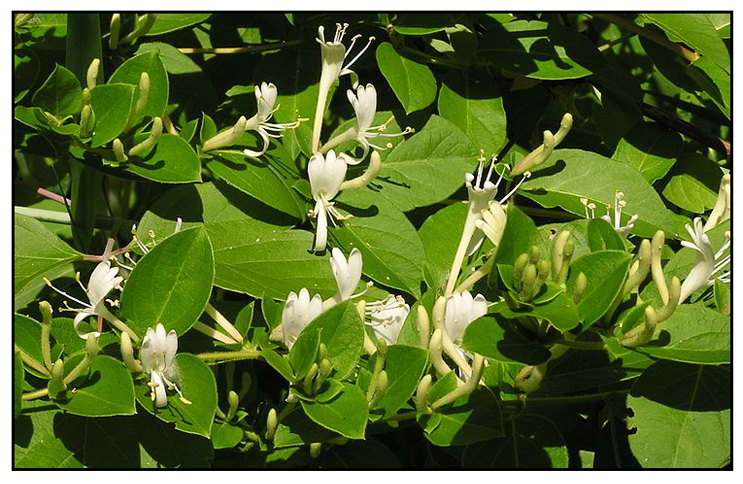
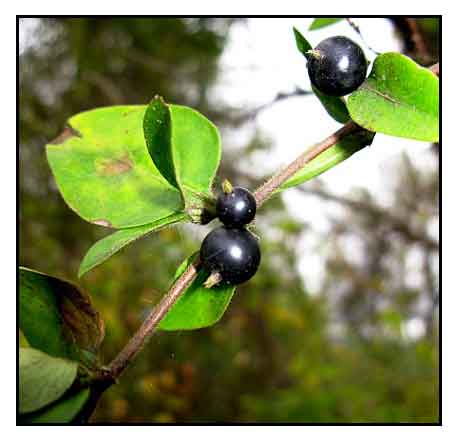
Japanese honeysuckle, an ornamental plant, is a hardy, low-climbing or trailing shrub, up to 5 meters or more in length. Leaves are oblong, oblong-ovate, or ovate, 3 to 6 centimeters long, 1.5 to 2.5 centimeters wide, pointed or blunt at the tip, blunt at the base and borne on short petioles. Flowers are tubular, 3 to 4 centimeters long, white, but turning yellow with age, borne in pairs in axils of the leaves on young shoots. Corolla is smooth, the tube slender and widening gradually, the limb has two lips, the upper lip broad, erect and divided into four-strap segments, and the lower lip having one linear-strap-shaped recurved segment. The berries are black.
Distribution
- Ornamentally cultivated for its fragrant, attractive and profuse flowers.
- A recent introduction.
- Native of Japan.
Constituents
• Vine contains saponin, tannin and ash.
• Vine, leaves and flowers considered antifebrile, corrective and astringent.
• Volatile oils in the flower and stems were highly similar to each other – palmitic acid and linoleic acid are the highest principles.
• Study yielded seven compounds: luteolin, luteoloside, quercetin, quercetin-3-0-beta-D-glucoside, quercetin-7-0-beta-D-glucoside, rutin, chlorogenic acid.
• Study of fractions of methanol extract of leaves yielded nine compounds identified as 5-O-caffeoylquinicacid (1), chlorogenic acid (2), 4-O-caffeoylquinicacid (3), luteolin-7-O-[α-L-arabinopyranosyl-(1 --> 6)] -β-D-glucopyranoside (4), luteoloside (5), 3,4-di-O-caffeoylquinic acid (6), 3,5-di-O-caffeoylquinic acid (7), 4, 5-di-O-caffeoylquinic acid (8) and luteolin (9). (see study below) (17)
• Study of stems and leaves isolated four new iridoid glycosides, viz., L-phenylalaninosecologanin (1), 7-O-(4-b-D-glucopyranosyloxy-3-methoxy- benzoyl)secologanolic acid (2), 6 -O-(7a-hydroxyswerosyloxy) loganin (3) and (Z)-aldosecologanin (5), together with known compound (E)-aldosecologanin (4). (24)
• A total of 71 metabolites were identified, with eight candidate compounds i.e., lonicerin, kaempferol-3-O-rutinoside, loganin, isochlorogenic acid B, isochlorogenic acid C, secologanic acid, luteoloside, astragalin, as optimal chemical markers. (see study below) (30)
• Studies have isolated 212 components from L.onicerae japonicae flos, including 27 flavonoids, 40 organic acids, 83 iridoids, 17 triterpenoids, and 43 other compounds. (33)
• Study of roots isolated 17 compounds, identified as: 1-oxo-(1H)-cyclopenta [b] benzofuran-7-carbaldehyde (1), 4-hydroxycinnamic acid (2), chlorogenic acid (3), loganin aglycone (4), caffeic acid (5), secologanin dimethyl acetal (6), korolkoside (7), coniferin (8), sweroside (9), secoxyloganin (10), 5-O-caffeoylquinic acid (11), chlorogenic acid methyl ester (12), chlorogenic acid ethyl ester (13), 3,5-O-dicaffeoylquinic acid (14), 4,5-O-dicaffeoylquinic acid (15), grandifloroside (16), and 4,5-O-dicaffeoylquinic acid (17). (see study below) (35)
• Study evaluated flowers of L. japonica for volatile chemical constituents at different stages of development i.e., freshly opened, overnight, and 24h. GC-MS analysis yielded 27 compounds, in the three developmental stages. Germacrene-D was a major component at all stages; linalool and a-farnesene were a high concentrations in fresh and 24 h flowers but greatly reduced in overnight flowers. There was marked diurnal influence on the biosynthesis of volatile constituents involving two modes of action: phenylpropanoid and lipoxygenase derivation. (40)
P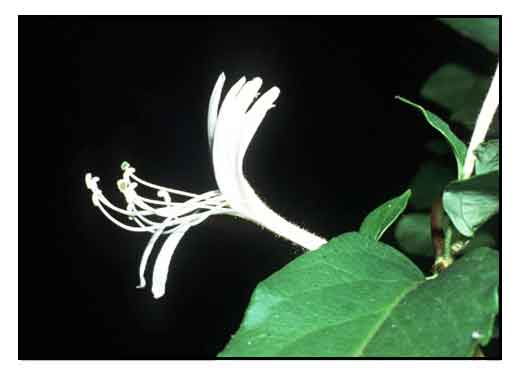 roperties roperties
• All aerial parts (leaf, flower bud, flower, and caulis) are used in Chinese traditional medicine.
• Considered antibacterial, anti-inflammatory, antispasmodic, antiviral, depurative, diuretic, febrifuge.
• Studies have shown antipyretic, anti-inflammatory, analgesic, anti-angiogenic, anticancer, antibacterial, wound healing, antidiabetic properties.
Parts
utilized
Vine, leaves and flowers.
Uses
Edibility
• Flowers and leaves are edible.
• Tea made from leaves, buds and flowers.
• Leaves cooked as vegetable. (See toxicity concerns below)
Folkloric
• In ancient Chinese medicine, use during the Qing dynasty as skin moisturizer and rejuvenator. (39)
• Over 500 prescriptions containing Lonicera japonica are listed in the People's Republic of China Pharmacopeia. When the SARS virus hit China in 2003, it was the most popular plant used in traditional Chinese medicine to treat the disease. (39)
• In Chinese medicine, vine, flowers and leaves are used to increase vitality and lengthen life.
• Used for infections and poisoning.
• Considered anti-syphilitic.
• Infusion of stems and flowers used for common colds, upper respiratory infections and flu-like symptoms.
• Infusion used in lotions for ulcers and abscesses.
• Flowers applied as wash for skin inflammations, rashes and sores.
• In Brazil, used as depurative and to facilitate childbirth.
Studies
• Biflavonoids / Anticancer:
Biflavonoids isolated from Lonicera japonica and Benincasa hispida displayed different patterns of growth inhibition among the human cancer cell lines. (2)
• Acute and Subacute Toxicity Studies:
The ethanol extract of leaves of Lonicera japonica showed no toxicity on hematologic, blood chemistry and gross and histopathologic parameters. (3)
• Luteolin / Anti-Inflammatory:
Luteolin, isolated from the flowers of Lonicera japonica, inhibited the induction of inflammatory cytokines, exerting a regulatory effect on mass cell-mediated inflammatory diseases, such as IBD, RA and allergy diseases. (4)
• Antipyretic:
Study showed L japonica to have obvious antipyretic effects on IL-1ß-induced febrile rabbits and acts by inhibiting expression of EP3 mRNA in the POAH. (5)
• Anti-Angiogenic / Antinociceptive / Anti-Inflammatory:
Study on the ethanolic extract of L japonica showed antiangiogenic, antinociceptive and anti inflammatory activities. (6)
• Growth Hormone Release:
Study showed induction of rat growth hormone (rGH) by addition of methanol extract in rat pituitary cell culture. (7)
• Rottlerin / Apoptosis:
Study results suggested the photoactivated Lj extract-induced apoptosis is mediated by change in distribution of cytoskeleton. Rottlerin inhibited the photoactivated Lj-induced decrease in protein expressions of various kinases of prosurvival signaling pathway. Pretreatment with rottlerin prevented actin microfilaments and microtubules from damage during the photoactivated Lonicera japonica-induced CH27 cell death. Results indicate the cytoskeleton is the potential target in the photoactivated Lonicera japonica extract-induced CH27 cell apoptosis. (11)
• Volatile Oils / Flowers and Stems:
Study for volatile oils in flowers and stems of Lonicera japonica yielded 36 constituents. Palmitic acid and linoleic acid are the highest principles. (12)
• Inhibition of Lipopolysaccharide Induced Lung Inflammation: Study showed a protective effect of L. japonica against lipopolysaccharide (LPS) induced lung inflammation, which resembles a COPD-like acute disease. (13)
• Phytoremediation / Cadmium: L. japonica has been reported as a new Cd-hyperaccumulator. Study investigated he effect of Cd stress duration on growth, photosynthesis and mineral nutrition of L. japonica was investigated. Study showed L. japonica could be used for phytoremediation contaminated soils by Cd. (14)
• Alteration of Antigen-Stimulated T Cell Functions: Studies investigated the effect of L. japonica dried herb extract on T cell function in vitro. Lj inhibited proliferation, altered protein expression, and increased death of antigen-stimulated T lymphocytes. Lj may serve a role in regulated T cell function, but may also contribute to an ineffective immune response if used inappropriately. (15)
• Antioxidant / Leaves: Studies of fractions of methanol extract of leaves yielded nine compounds. Antioxidant activity of the nine compounds by DPPH assay from high to low were 5 > 9 > 2 > 8 > 7 > 6 > 1 > 3 > 4. Compound 5, luteoloside, showed the strongest antioxidant activity with IC50 of 0.018 18 g x L (-1). Antioxidant activity of luteoloside and luteolin were stronger than ascorbic acid (IC50 0.027 54 g x L. (see constituents above) (17)
• Anti-Upper Respiratory Tract Infection Action: Study evaluated active constituents and mechanism of its anti-upper respiratory tract infection action in children using experimental animals. Three Lonicera japonica decoction groups showed inhibition of xylene-induced ear edema in mice suggesting an anti-inflammatory effect. (18)
• Metabonomic Study / Hepatoprotective Effect: A metabonomic approach evaluated the protective effects of L. japonica extract on acute liver injury induced by DMN (dimethylnitrosamine) in 21 male Wistar rats. Results showed a protective effect on the liver, with clear and consistent biochemical changes. (19)
• Wound Healing / Anti-Inflammatory / Aerial Parts: Study evaluated an ethanol extract of aerial parts for healing efficiency in a rat excision wound model using a simple ointment base, 10% (w/w) LJEE ointment, with reference drug 0.2% (w/w) nitrofurazone ointment. Results showed the LJEE ointment possessed anti-inflammatory activity, which enhanced the production of anti-inflammatory cytokines that suppressed proinflammatory cytokine production. Antimicrobial and anti-inflammatory activities acted synergistically to accelerate wound repair. (20)
• Amelioration of Nutritional Steatohepatitis: Non-alcoholic steatohepatitis (NASH) is characterized by fat accumulation in the hepatic tissue with varying degrees of inflammation and progressive fibrosis. Study evaluated the effect of an ethanol extract on mice fed with methionine-choline-deficient diet to promote the development of NASH. LJEE significantly reduced hepatic malondialdehyde level and ameliorated hepatic inflammation and fibrosis in MCDD-fed mice, which was associated with down-regulation of cytochrome P450 2E1 suppression of proinflammatory and profibrotic genes. Study showed a protective role for LJEE in ameliorating nutritional steatohepatitis. (21)
• Antibacterial / Leaves: Study evaluated an ethanolic extract from leaves and flowers for antibacterial activity against strains of Staphylococcus aureus, Bacillus subtilis, Vibrio cholerae and Salmonella typhi. Leaf extracts and essential oil of flower showed potential activity against tested microorganisms. Phenolic compounds may significantly contribute to the antibacterial activity. (22)
• Antidiabetic / Flower Buds: Study evaluated the protective effect of alcoholic extract of L. japonica flower buds in STZ-HFD-induced diabetic rats. Results showed significant decrease in blood glucose levels, plasma insulin, serum cortisol, as well as significant increase in hepatic glycogen, 11ß-HSD1 index. At 500 mg/kg, there was return of islets close to good vascular patters and improvement of endothelial dysfunction. (23)
• Cardioprotective / Caffeoylquinic Acids: Study evaluated the protective effects of caffeoylquinic acids (CQAs) from Jin Yin Hua against hydrogen peroxide (H2O2)-induced hypoxia and hypoxia-induced cytotoxicity using neonatal rat cardiomyocytes. Seven CQAs (C1-C7) were isolated. Results showed C4 and C6 protect cardiomyocytes from necrosis and apoptosis during H2O2-induced injury, via inhibition of the generation of ROS and activation of caspase-3 apoptotic pathway. The CQAs may be a class of compounds which possess potent myocardial protective activity against ischemic heart disease related to oxidative stress. (25)
• Nephroprotective / Leaves: Study evaluated the nephroprotective activity of ethanolic extract of Lonicera japonica leaves on gentamicin induced nephrotoxicity in Wistar rats. Results showed significant nephroprotective activity which could be due to the presence of phytochemicals, antioxidant and free radical scavenging activity. (26)
• Silver Nanoparticles / Antimicrobial: Study evaluated the combination of silver nanoparticles (AgNPs) and extracts of Lonicera japonica for antimicrobial activity against pathogenic E. coli CCC44113. Results showed the antimicrobial activity of AgNPs-HWE (honeysuckle water extract) against E. coli was significantly enhanced. The mechanism may be due to AgNPs causing cell wall lysis and damage to cell membrane integrity, thus increasing the penetration of HWE into the bacterium and causing more damage to bacterial cells. (27)
• Anti-Inflammatory / Downregulation of Cytokines: Study evaluated the anti-inflammatory effects of L. japonica and the underlying molecular mechanism in lipopolysaccharide (LPS)-stimulated BV-2 microglial cells. Results showed LJ significantly inhibits LPS-stimulated production of nitric oxide (NO) and prostaglandin E2 (PGE2), among others. Collectively, findings indicate the anti-neuroinflammatory properties of LJ is LPS-induced BV-2 microglial cells is due to downregulation of proinflammatory cytokines and chemokines and downstream inhibition of NF-kB activation. (28)
• Anti-Diabetic / Silver Nanoparticles / Leaves: Study reports on the green synthesis of silver nanoparticles (AgNPs) using aqueous leaf extract of L. japonica. The synthesized AgNPs exhibited strong antioxidant activity. Antidiabetic activity was shown by effective inhibition against carbohydrate digestive enzymes such as α-amylase and α-glucosidase with IC50 of 54.56 and37.86 µg mL, respectively. Results suggest a potential nanomedicine for nanobiomedical application. (29)
• Metabolite Profiling / Aerial Parts: A total of 71 metabolites were identified, with eight candidate compounds i.e., lonicerin, kaempferol-3-O-rutinoside, loganin, isochlorogenic acid B, isochlorogenic acid C, secologanic acid, luteoloside, astragalin, as optimal chemical markers. Metabolite profiling defined chemical markers among different aerial parts and laid foundation for elucidation of phytochemical differences between LJ flos and caulis. Study suggests that L. japonica leaf has potential as alternative medical resource for LJF and provide reference for exploitation and utilization of LJ resources. (30)
• Phytoremediation / Chromium: A two-phase study using solid and water culture evaluated the Cr-resistance and Cr-accumulation of Lonicera japonica. Results suggest L. japonica could be a novel Cr-accumulating plant, with an average CR(III) content of 1297.14 mg/kg in its leaves, with Cr-enrichment and Cr transport coefficient of 5.19 and 1.79, respectively. The results of L. japonica as a Cr-accumulating plant opens potential opportunities in phytoremediation. (31)
• Lonicera japonica Flos: Studies have isolated 212 components from L.onicerae japonicae flos, including 27 flavonoids, 40 organic acids, 83 iridoids, 17 triterpenoids, and 43 other compounds. LJF is widely used in Chinese medicine, for the treatment and prevention of severe acute respiratory syndromes, H1N1 influenza, and hand-foot-and-mouth disease. Of the components, only chlorogenic acid and luteoloside are used as biomarkers in Chinese Pharmacopoeia in the 2015 edition for evaluating the quality of LJF. (33)
• Skin-Permeating Components: Locinera japonica is used in traditional medicine, cosmetics and personal care products. Its absorbable components have been poorly studies. This study evaluated the skin permeability coefficient (log Kp) of known chemical components of Lj. Study showed potential skin permeating components (SPCs) whose log Kp exceeded -7.0 included flavonoids, essential oils, phenols and phenolic acids, and triterpenoids, but only a few glycosides. Results showed the flavonoids and essential oils in LJF can enter the body through the skin with good skin permeability and relatively high contents, as effective components of the external preparations. On the other hand, the chlorogenic acids, iridoid glycosides and triterpenoids (mostly present as saponins) are delivered only marginally even when high doses are applied. (34)
• Anti-Inflammatory / Roots: Study evaluated the chemical composition and anti-inflammatory activities of honeysuckle roots. Seventeen compounds were isolated. Compounds 1, 3 14-17 showed significant anti-inflammatory activity against macrophage in zebrafish. (see constituents above) (35)
• Protective Effect on Depression / Inhibition of Inflammasome / Polysaccharide: Study evaluated the effect of L. japonica polysaccharide (LJP) on depressed mice treated with unpredictable emotion stress stimulation. Assessment of depression behavior included open field, elevated plus maze, tail suspension, and forced swim test. The LJP exhibited strong protective effect by inhibiting NLRP3 inflammasome. Results provide better understanding of the potential use of LJ polysaccharide in pharmaceutical and food applications. (36)
• Immunomodulatory / Cyclophosphamide Induced Immunosuppression / Polysaccharide: Study evaluated the immunomodulatory function of LJ polysaccharides in cyclophosphamide (CTX) induced immunosuppressed mouse models. Results showed LJP exhibited characteristic absorption of typical polysaccharides, significantly increased organ index, splenic lymphocyte proliferation, macrophage phagocytosis, and natural killer (NK) cell activity in CTX-treated mice. LJP restored the levels of serum cytokines interlukin (IL-2), TNF-a, and interferon-y (IFN-y) in CTX-treated mice. Results suggest potential use of LJP as immunomodulatory agent. (37)
• MIR2911/ Antiviral / Influenza A Viruses: Influenza A viruses (IAVs), particularly H1N1, H5N1, and H7N9, pose substantial threat to public health worldwide. Study reports on MIR2911, a honeysuckle (HS)-encoded atypical microRNA, that directly targets IAVs with broad spectrum activity. MIR2911 is is stable in honeysuckle decoction, and continuous drinking or gavage led to a significant elevation of MIR2911 level in mouse peripheral blood and lung. The MIR2911 could target IAVs, including H1N1, H5N1, NS H7N9. It significantly inhibited H1N1 viral replication and rescued viral infection-induced weight loss. Results suggest the MIR2911 is the first active component identified in TCM and may be a novel natural product that effectively suppresses viral infection. (38)
• Honeysuckle Extract for Alternative Preservation: The cosmetic industry is always in search for alternative preservation systems tat are broad spectrum, dermatologically and toxicologically safe and consumer friendly. Study reports on honeysuckle extract from Lonicera japonica and Lonicera caprifolium flowers used in Plantservative WSr, its chemistry, application, extract combination, safety data, parabens and formaldehuyde content (or lack of). Study suggests Plantservative WSr produced from wildly cropped Japanese honeysuckle and Italian honeysuckle, without use of synthetics, contains novel phytochemicals based on lonicerin complex with excellent dermatological profile, broad spectrum antimicrobial properties for various cosmetic applications. (39)
• Apoptosis by Photodynamic Therapy / P38-Associated Pathway / Human Lung Squamous Carcinoma CH27 Cells: Photodynamic therapy (PDT) is an effective therapy for local malignant tumors. Lonicera japonica was found to have anti-tumor effect. Study evaluated the mechanisms of apoptosis induced by PDT in lung CH27 carcinoma cell. L. japonica exhibited significant phytocytotoxicity in CH27 cells at concentration range of 50-150 µg/ml, with 0.4-1.2 J/cm2 light dose. P38-associated pathway may be involved in apoptosis induced by PDT with LJ extracts in CH27 cells. PDT with LJ extracts-induced CH27 cells apoptosis was probably related to its ability to change the protein expression and distribution of the shock protein 27. (41)
• Anti-Inflammatory / Inhibition of Type 1 Interferon: Study investigated the ability of L. japonica to inhibited LPS-induced type I interferon production. L. japonica inhibited type I IFN expression of mRNA and increased IL-10 expression of mRNA. LJ reduced the activation of STAT-1,3 which are involved in continuous secretion of immune cytokines. Results suggest L. japonica inhibits LPS-induced production of type 1 IFN by IL-10. Study provides clinical basis for the anti-inflammatory properties of LJ. (42)
• Antiviral: Study evaluated the in vitro antiviral effects of Lonicera japonica water extract against selected influenza A virus H1N1 strain (Flu-A-H1N1). Results showed L. japonica has good effect as anti-Flu-A-H1N1, with some samples superior to ribavirin control group. The extract showed no antiviral effect on HSV-1 and EV71 (human enterovirus 71). (43)
Toxicity
• Leaves contain saponins; although toxic, they are poorly absorbed and cooking, changing the water once, remove most of the saponins.
Availability
- Wild-crafted.
- Seeds, extracts, essences in the cybermarket.
|