| 
Botany
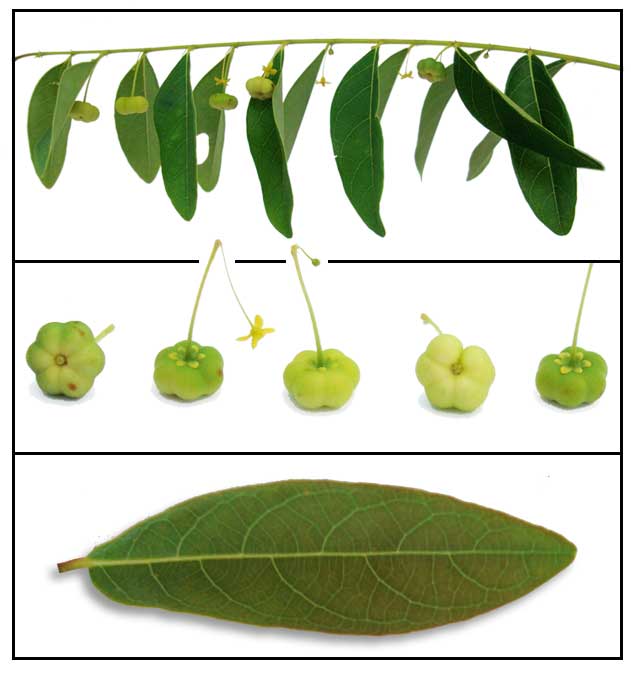
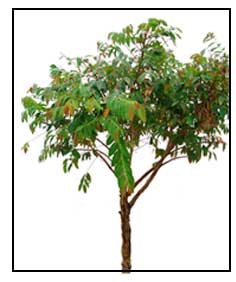
Iba is a small, smooth, deciduous
tree growing to a height of 4 to 9 meters. Branches are thickened with
nodules in the axils of the fallen leaves. Leaves are unequally pinnate,
crowded at the ends of the branches, 20 to 40 centimeters long. Leaflets are alternate,entire,
oblong-ovate, 2 to 7 centimeters long. Flowers are pink, small, and crowded in many-flowered fascicles
along the racemes. Male and female flowers are usually on separate plants. Fruit is fleshy, acidic, edible, greenish white, rounded,
1 to 1.5 centimeters diameter, angled, with a hard, bony, 6- to 8-grooved, 3-
or 4-celled stone, each cell with a single seed.
 Distribution Distribution
- Planted in most parts
of the Philippines for its acid, edible fruit, but nowhere abundant.
- Of prehistoric introduction.
- Also occurs in India to Malaya and Polynesia.
- Introduced in tropical America.
Constituents
- Fruit contains dextrose 0.33 per cent, levulose 1 percent, and saccharose.
- 18 % tannin is reported in the root-bark, with saponin and gallic acid.
- Study isolated active constituents from the roots: phyllanthusols A
and B.
- Food value per 100 g of edible portion: Moisture, 91.9 g; protein, 0.155 g; fat, 0,52 g; fiber, 0.8 g;
ash, 0.51 g; calcium 5.4 mg; phosphorus, 17.9 mg; iron, 3.25 mg, carotene, 0.019 mg; thiamine, 0.025 mg; riboflavin, 0.013 mg, niacin, 0.292 mg; ascorbic acid, 4.6 mg. (6)
- Studies have isolated phyllantusols A and B,and aglycon.
- Phytochemical screening of root bark yielded carbohydrates, saponins, and tannins.
(see study below) (12)
- Phytochemical screening of leaf extract yielded
alkaloids, flavonoids, steroids, and phenols, with an absence of terpenoids, anthroquinone, saponin and tannin. (see study below) (13)
- HPLC analysis of bark extracts yielded known antioxidant molecules viz. gallic acid, ellagic acid, coumaric acid, hydoxyl benzoic acid, rutin, quercetin, myrcetin and luteolin. (see study below) (31)
- Acetone extract of fruit yielded flavonoids, tannins, phlobatannin, saponin, terpenoids and glycosides. (see study below) (36)
- Study isolated 19 new highly oxygenated norbisabolane sesquiterpenoids, phyllanthacidoid acid methyl esters (1), C-T (4-21) and two known phyllanthusols A (2) and B (3). (see study below) (40)
- Study of leaves yielded a new derivative kaempferol glycoside, kaempferol-4-O-(2-α-L-rhamnopyranosyl)-ß-D-glucuronopyranosyl methyl ester (3), together with six known kaempferol glycosides, kaempferol-3-O-[α-L-rhamnopyranosyl (1--> 2)]-ß-D-galactopyranoside (1), kaempferol-3-O-(2-α-L-rhamnopyranosyl)-ß-D-glucuronopyranoside (2), rutin (4), isoquercetrin (5), quercetrin (6) and myrcitrin (7). (see study below) (44)
- Study of P. acidus leaves for essential oil by hydrodistillation and GC and GC-MS identified 29 compounds representing 92.8% of the oil. The most abundant components were t-muurolol (20.4%), α-cadinol (14.6%), ß-cadinene (8.9%) and α-muurolene (7.5%). (47)
Properties
- The plant does not resemble the gooseberry, except for the acidity of the fruits, which taste sour and tart
-
Fruit is acid and astringent.
- Root is purgative.
-
Juice of root bark
is weakly poisonous. (21)
- Seed is cathartic.
- Leaves are diaphoretic, mucilaginous and demulcent.
- Studies have shown antibacterial, antiviral, antinematodal, antitumor, antioxidant, hepatoprotective, diuretic, analgesic, hypoglycemic, hypolipidemic, neuroprotective, anti-inflammatory, anti-depressant, antipyretic, anti-diarrheal properties.
Parts used
Leaves, seeds, bark, roots.
Uses
Edibility / Culinary
- Unripe fruit is cooked
and used as a sour flavoring.
- Can be pickled or made into jams and jellies.
- Young leaves are cooked as greens.-
- In the Philippines, used for making vinegar.
Folkloric
- Decoction of leaves is
used externally for urticaria, the fruit given at the same time to eat.
- Decoction of the bark used for bronchial catarrh.
- Some believe the roots to be poisonous, but the Malays boil it for steam
inhalation in use for coughs.
- In Java, root infusion used for asthma.
- In Borneo, used with pepper
- Poultice of leaves for lumbago and sciatica.
- Root used for psoriasis.
- Used in chronic liver diseases.
- Decoction of leaves is diaphoretic.
- Leaves used for gonorrhea.
- In Burma, fruits are eaten to promote appetite ; sap swallowed to induce vomiting and relieve bowel costiveness. In Indonesia, leaves are used as counterirritant in sciatica and lumbago. In Malaysia, vapors from boiling of roots inhaled for coughs and headache. (11)
- In Bangladesh used for skin diseases - eczema, abscesses, acne, etc.
- In India, fruits are taken as liver
tonic. Leaves, with pepper, are poulticed for sciatica, lumbago or rheumatism.
Leaves taken as demulcent for gonorrhea.
- In Maharashtra, India, decoction
of seeds used twice daily for asthma and bronchitis.
- In Malaya, root infusion, in small
doses, taken for asthma. The root is used for foot psoriasis.
- Latex is emetic and purgative. (37)
- In Bangladesh,
mix of leaf juices of P. acidus, Centella asiatica, and Solanum verbascifolium used for the treatment of jaundice. (51)
Others
- Tanning: In India, bark used as tanning agent. (21)
- Wood: Used for fuel. Also, for making small utensils. (21)
- Poison: Plant extract used as nematicidal against pine wood nematode, Bursaphelenchus xylophilus. Juice of root bark is weakly poisonous. (37)
Studies
•
Cystic Fibrosis: Previous studies have reported that flavonoids and
nutraceuticals correct defective electrolyte transport in cystic fibrosis (CF) airways.
Study evaluated P. acidus extracts for potential effects on epithelial transport. No cytotoxic effects were detected. Results showed P. acidus corrects defective electrolyte transport in CF airways by parallel mechanisms viz (1) increasing the intracellular levels of second messengers cAMP and Ca2+. with subsequent activation of Ca dependent Cl- channels and residual CFTR-Cl conductance; (2) stimulating basolateral K+ channels; (3) redistributing cellular localization of CFTR; (4) direct activation of CFTR; and (5) inhibition of ENaC through CFTR activation. The combination of these effects on epithelial transport may provide a potential novel complementary nutraceutical treatment
for CF lung disease. (2)
• Antibacterial: Antibacterial
properties of tropical plants from Puerto Rico:
In the study, Phyllanthus acidus was one of the plants that showed the
highest antibacterial activity against E coli and Staphylococcus aureus. (3)
• Antinematodal:
Methanolic extracts of 79 Malaysian plants were assessed
for antinematodal activity against Bursaphelenchus xylophilus. Cicca
acida showed strong antinematodal activity. (4)
• Analgesic / Anti-Inflammatory / Antioxidant / Leaves: Study evaluated leaves extracts showed significant dose-dependent anti-inflammatory and analgesic activities. Extracts also showed significant antioxidant activity correlating with the flavonoids and phenolic compounds content. (8) Study of PA leaves extract showed significant the analgesic (acetic acid induced writhing method, formalin induced paw licking, tail immersion and eddy's hot plate methods) and anti-inflammatory (carrageenan induced hind paw edema) potential of ethanolic extract of PA leaves on Swiss albino mice. (33)
• Diuretic / Leaves: Study evaluated the diuretic effect of an ethanol extract of P. acidus leaves in female Wistar rats. Results showed a significant diuretic and saluretic effect at doses of 22.5, 45, and 90 mg/kbw compared to control, but significantly less than furosemide 3.6 mg/kbw. (10)
• Antioxidant / Cytotoxicity / Root Bark: Study showed free radical scavenging activity on DPPH assay. Brine shrimp lethality assay showed an LC50 of 35.48 µg/ml. (see constituents above) (12)
• Antimicrobial / Leaf: Study of leaf extract showed antimicrobial activity. The presence of alkaloids in the solvent fractions may correlate with the antimicrobial activities. (see constituents above) (13)
• Hepatoprotective / Carbon Tetrachloride Toxicity / Antioxidant: Phyllanthus acidus and silymarin exhibited significant hepatoprotective effect as evidenced by enzyme parameters. Study also showed remarkable DPPH scavenging activity. The hepatoprotective effect of P. acidus against CCl4-induced oxidative damage may be related to its antioxidant and free radical scavenging potentials. (14)
• Hepatoprotective / Acetaminophen Mediated Hepatic Injury / Fruit: An ethanolic extract of fruit showed hepatoprotective activity against APAP-induced hepatotoxicity likely mediated through the inhibition of P450-mediated APAP bioactivation, free radical scavenging and antioxidant activities. (15)
• Cytotoxic and Anti-Tumor Activity / Leaf: Study evaluated the cytotoxic and anti-tumor activity of an EA extract of leaves. Results showed significant in vitro cytotoxic activity against Hep G2 and DLA cell lines. The anti-tumor activity using DLA cell line induced solid tumor model in Swiss albino mice showed significant reduction of tumor volume. (16 )
• Antimicrobial Synergism / Anti-Tubercular: Study evaluated the synergistic antimicrobial and anti-tubercular activities of methanol extract of P. acidus. The extract was used in combination with oxytetracycline. Results showed a broad antimicrobial activity spectrum for possible use in antiseptic and disinfectant formulations. The anti-tubercular activity was compared with standard drug Rifampicin. (17)
• Remedial Effect on Bleomycin Provoked Pneumopathy: Study investigated the salubrious role of P. acidus against bleomycin provoked pneumopathy in a rat model. Results suggest P. acidus has curative effects in Bleomycin induced pulmonary fibrosis. (18)
• Inhibition of Platelet Aggregation / Enhanced Phagocytic Function / Folk Wisdom Boiled Herb Concoction: Study evaluated the effects of a boiled herb concoction (folk wisdom boiled herb) of Phyllanthus amarus, Phyllanthus acidus, and Pandanus amaryllifolius on neutrophil, RBC, and platelet functions. Results showed the folk wisdom boiled herb extract could enhance phagocytic cell function and inhibit platelet aggregation. (19)
• Pharmacologic Activities / Pulp: Study evaluated a methanolic extract of P. acidus pulp for pharmacological activities. Results showed: (1) Significant hypoglycemic activity (p<0.05) by glucose tolerance test. (2) Anti-diarrheal activity by castor oil induced diarrhea inhibition method showed inhibition of defecation. (3) Significant analgesic activity (p<0.05) by Tail-immersion method, and (4) Good CNS anesthetic activity in experimental animal. (23)
• Hepatoprotective / Acetaminophen and Thioacetamide Mediated Hepatic Injury / Leaves: Study of crude ethanolic extract and aqueous extracts of leaves showed hepatoprotective activity against acetaminophen (APAP) and thioacetamide-induced hepatotoxicity. The aqueous extract showed more potency than the ethanolic extract and also showed better DPPH radical scavenging potential than the ethanolic extract. The hepatoprotective activity may be attributable to high phenolic and flavonoid content and antioxidant properties. (24)
• Immunopharmacologic Activities / Aerial Parts:Study
of a methanolic extract of aerial parts for anti-inflammatory activity using LPS-treated macrophages, HVl/EtOH induced gastritis model and acetic-acid-injected capillary permeability mouse model. Results showed anti-inflammatory activity in vitro and in vivo by suppressing Src, Syk, and their downstream transcription factor, NF-kB. (25)
• Antibacterial / Cytotoxic / Antioxidant / Fruit: Study of a methanolic extract of fruit
showed antibacterial activity with moderate to good zones of inhibition against B. megaterium, B. subtilis, S. typhi, ad S. dysenteriae. It showed good results on brine shrimp cytotoxicity assay with LC50 of 4.46 µg/ml and LC90 of 70.79 µg/ml. It showed good dose dependent antioxidant activity with DPPH IC50 of 2063.42 µg/ml compared to ascorbic acid of 52 µg/ml. (26) Study evaluated fruit extracts of P. acidus or antioxidant and antibacterial activities. At higher concentration, a crude extract showed moderate to good inhibition of E. coli and P. aeruginosa. Phenolic content was 122.22 mg/g GAE and flavonoid content was 163.15 mg/g quercetin equivalent. DPPH radical scavenging activity increased with concentration with IC50 of 7.31 µg/mL compared to ascorbic acid IC50 of 8.65 µg/ml. (see constituents above) (36)
• Cholinesterase Inhibitory / Neuroprotective / Antioxidant / Fruit: Study of methanolic extract of fruit revealed considerable amount of antioxidant activity and anti-acetycholinesterase and anti-butyrlcholinesterase activity suggests a potential for use in Alzheimer's disease and neurodegenerative disorders. The ME showed considerable total antioxidant activity and reducing capacity. (27)
• Enzymatic Extraction
of Star Gooseberry juice with High Antioxidant Level / Fruit: Study evaluated Pectibex Ultra SP-L preparation with preparation with pectinase activity was used in extraction of star gooseberry juice. Application of pectinase preparation to fruit juice extract was potential for improvement of antioxidant level of the product. (28)
• Antioxidant / Leaf and Fruit: Study
evaluated the antioxidant value of P. acidus leaf and fruit methanolic extract. Results showed moderate to good antioxidant activity. On DPPH assay, there was 13.85% inhibition in leaf methanol and 12.2% inhibition in fruit methanol. Ascorbic acid standard was 12.03. (29)
• Neuroprotective / Memory and Learning Impairment: Study evaluated the neuroprotective effect of methanolic extract of PA on learning and memory impairment in scopolamine-induced dementia and oxidative stress in rats using EMP, PA, and NOR tests and various antioxidant enzyme values. Results showed neuroprotective effect as via improvement in cognitive functions and reduction of oxidative stress as evidenced by increase in brain antioxidant enzymes and decrease in lipid peroxidation and acetylcholinesterase activity. Results suggest potential for use in enhancing learning, memory, antioxidant potentiality and anti-acetylcholinesterase activity in neurodegenerative disorders like AD. (30)
• Antioxidant / Bark: Study evaluated P. acidus bark for antioxidant activity. Results showed high phenolic content of 152.12 ± 0.079 µg/mg (PAE) and 219.81 ± 0.19 µg/mg (PAA) gallic acid equivalent. The extracts scavenged >90% of ABTS radicals at low concentrations. Extracts showed potential electro catalytic effect during during electro chemical oxidation of dopamine. (see constituents above) (31)
• Anticancer Activity / MCF-7 and SSC-40 Cancer Cell Lines
/ Leaves: Study evaluated the cytotoxic potential of various extracts of PA leaves against two human cancer cell lines. SRB assay showed a chloroform plant extract showed maximum anti-cancer properties against both Human Breast Cancer (MCF-7) and Human Oral Cancer (SSC-40) cell lines. Results suggest a potential candidate for anti-neoplastic drug development. (32)
• Hypolipidemic / Leaves: Study of leaves of P. acidus showed hypolipidemic activity in hypercholesterolemic diet fed rats. (34) Study evaluated the effects of ethanolic extract of ceremai leaves (P. acidus) on malondialdehyde (MDA) levels and heparhistopathology of hypercholesterolemic rats. Results showed reduction of malondialdehyde and improvement of histopathology of hepar after therapy. Study suggests leaves have potential use in hypercholesterolemia therapy. (38)
• Antioxidant / Cytotoxic / Fruits: Study evaluated fruit extract of P. acidus for antioxidant and cytotoxic activity. A water extract showed high antioxidant activity with IC50 of 26.06 µg/mL. Brine shrimp lethality assay showed LC50 ranging from 473.26 to 908.98 µg/mL, with water extract showing lowest value. (35)
(39)
• Hepatoprotective / Inhibition of Macrophage Function: Study evaluated the molecular mechanism of P. acidus methanolic extract on AP-1 activation pathway and its hepatoprotective potential. The Pa-ME significantly suppressed the production of LPS-induced pro-inflammatory cytokines and strongly inhibited activator protein (AP-1) activation and mitogen-activated protein kinase (MAPK) phosphorylation in LPS- stimulated RAW264.7 macrophages cells and U937 monocyte like human cell line. Results suggest a potential ethnopharmacological role as hepatoprotective herbal remedy via suppression of MAKP signaling and activity of downstream transcription factor AP-1. (39)
• Anti-Hepatitis B Virus Norbisabolane Sesquiterpenoids: Study isolated 19 new highly oxygenated norbisabolone sesquiterpenoids together with two known phyllanthusols (A and B). Compounds 1-5, 7-9, 10 and 14 displayed potential anti-hepatitis B virus (HBV) activities, with IC50 of 0.8-36 µM against HBV surface antigen (HBsAg) and HBV excreted antigen (HBeAg). (see constituents above) (40)
• Toxicology Study / OGTT / Leaves: Study evaluated the toxicity and oral glucose tolerance test (OGTT) of P. acidus leaf extract in Wistar rat. All test doses of the extract did not show any sign or symptom of toxicity The blood glucose levels of treated group were not different from control and Glibenclamide treated. Results the extract is practically non toxic at a lower dose. (42)
• Antioxidant / α-Glucosidase / NO Inhibitory Activities / Leaves and Fruit: Study evaluated the leaves and fruit extracts of P. acidus for α-glucosidase and nitric oxide inhibitory and antioxidant inhibitory activities. Leaves extracted with 50% ethanol exhibited lowest IC50 for α-glucosidase at 1.5 µg/ml, and moderate nitric oxide scavenging and inhibitory activities with IC50s 160 and 180 µg/ml, respectively, and the highest total phenolic content with 33 mg GAE/g extract. From the leaf extract, 30 compounds were identified, which included derivatives of quercetin, kaempferol, epicatechin,coumaric, and cinnamic acids. Results suggest potential for use in the treatment of diabetes and inflammation associated diseases. (43)
• Hepatoprotective / Kaempferol Glycoside / Leaves: Study of leaves isolated a new derivative kaempferol glycoside from the leaves of P. acidus, along with six other known kaemperol glycosides. Compound 1 showed antioxidant activity by DPPH assay. Compounds 2 and 3 showed antioxidant activity by DPPH and thiobarbituric acid reactive substances assays with IC50 > 100 µM. Compound 2 also showed anti-inflammatory activity through inhibition of interleukin 6 and tumor necrosis factor alpha production (p<0.05_. Compound 3 also exhibited cytokine modulating activities such as inhibition of tumor necrosis factor alpha and activation of interleukin 10. Compound 3 might confer hepatoprotection in the acute-phase response by activating the signal transducer and activator of transcription 3 (STAT3) through cytokine modulation. Results suggest the new derivative compound and other kaempferol glycosides may mediate hepatoprotective activity. (see constituents above) (44)
• Hypotensive / Leaves: Study evaluated the hypotensive activity of n-butanol extract of leaves of P. acidus in rats. The PA extract caused a decrease in blood pressure of anesthetized rats that was not modified by atropine or propranolol. The extract caused persistent dilatation of thoracic aortic rings preconstricted with either phenylephrine or KCl. Adenosine, 4-hydroxybenzoic acid, caffeic acid, hypogallic acid and kaempferol were isolated from the extract.\ Results suggest the hypotensive activities of the PA extract are likely due to the direct action of the five compounds on blood vessels by stimulating release of nitric oxide from the vascular endothelium, partly via stimulation of soluble guanylate cyclase and opening of Katp and Kca channels in the vascular smooth muscle. (45)
• Antidepressant / Antidiarrheal / Antipyretic / Leaves: Study evaluated the CNS depressant, antidiarrheal and antipyretic activities of ethanolic extract of leaves of P. acidus L. The extract showed dose-dependent CNS depressant activity in Swiss albino mice using hole-cross, hole-board and open-field models. In castor-oil induced diarrhea and gastrointestinal motility test with barium sulfate milk, the extract reduced the time of onset and severity of diarrhea with significant inhibition (p=0.05) inhibition of 42.86% and 64.29%, respectively, with loperamide showed 71.43% inhibition. In yeast-induced pyrexia, the extract showed dose dependent protection, similar to standard drug, paracetamol. (46)
• Silver Nanoparticles / Anti-Inflammatory / Fruits: Study reports on green synthesis of AgNPs using aqueous fruit extracts of Phyllanthus acidus. The synthesized silver nanoparticles showed potent anti-inflammatory activity by scavenging nitric oxide and superoxide anions, along with blunting of the expression of pro-inflammatory cytosine IL-1ß. The viability of peritoneal macrophages was not affected. Results suggest potential for the green-synthesized AgNPs for the treatment of inflammatory diseases. (48)
• Hypoglycemic / Hypolipidemic / Antioxidant / Leaves: Study investigated the hypoglycemic and hypolipidemic properties of leaf extracts from P. acidus, L. leucocephala and P. guajava. The extracts significantly decreased (p<0.05) blood glucose level, total cholesterol, triglyceride, LDL, BUN, and creatinine and increased levels of HDL and serum insulin in the diabetic treated rats. P. acidus showed antioxidant activity with EC50 values of 232.37 ± 15.27 µg/ml. At dose of 2000 mg/kg, the extracts did not exhibit any sign of acute toxicity or mortality. The hypoglycemic and hypolipidemic effects seen related to hyperinsulinemia and antioxidant activities. (49)
• Alpha Amylase Inhibitory Activity / Antioxidant: Study evaluated the antioxidant and alpha amylase inhibitory potentials of methanolic extracts of Phyllanthus acidus. The extract showed free radical scavenging activity by DPPH assay and showed total phenolic content of 150.3 mg/g. The extract showed good alpha amylase inhibitory activity in a dose dependent manner, with highest activity of 72.06% with IC50 of 22.8 µg/ml. Phytochemical screening yielded flavonoids, steroids, saponins, and tannins. (50)
Toxicity !
Juice of the root-bark
is used as poison to produce headache, sleepiness, abdominal pains,
and sometimes, death.
Availability
- Wild-crafted.
- Seeds in the cybermarket.
|