| 
 Gen info Gen info
- There is an estimated total of 1200 species of Piper in the pantropical and neotropical regions. Works on Philippine wild Piperaceae have been extensive. Candole (1910) reported 133 species of Piper and 26 of Peperomia; Merill (1923), 115 Piper, 25 Peperomia, and Quisumbing (1930), documented 87 Piper and 21 Peperomia.
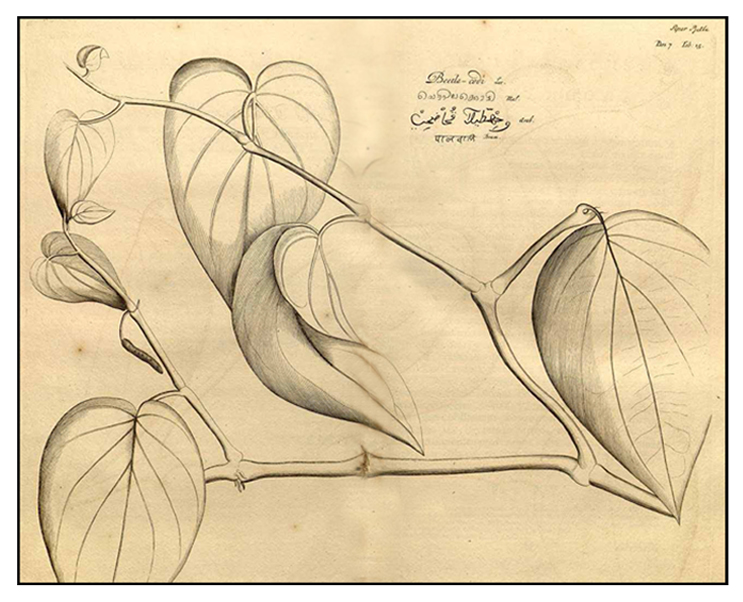
- Etymology: The term betel derives from the Malayalam word vetilla via Portuguese.
- Historical snippet: The primary use of betel leaf is as a wrapper for the
chewing of areca nut, or in modern times, tobacco. The practice originated in the Philippines about 5,000 years ago: Oldest remains of areca nuts ad calcium from crushed sea shells have bee found in the Duyong Cave archaeological site.
- While the practice of Betel leaf chewing dates back to the 3rd century CE, the ingredient mix has changed over time. The historic ingredients were areca nut, calcium hudroxide, and catechu. Tobacco became a 20th century substitute. The quid consisting of tobacco, areca nut, and limewater, known as gutka, is becoming popular. (85)
Botany
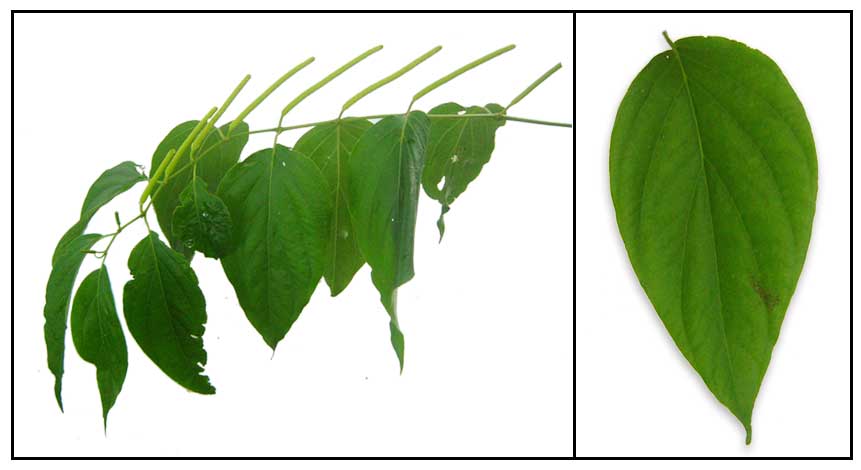
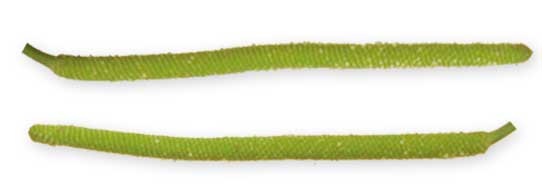
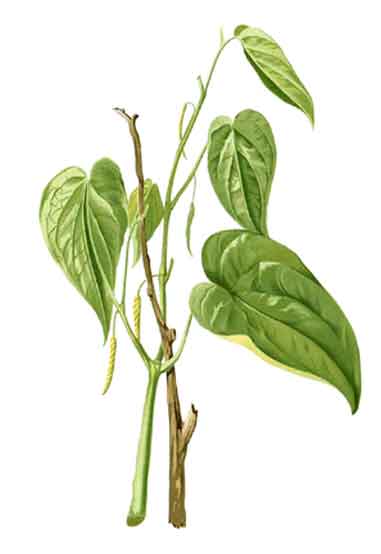
Ikmo is a dioecious, smooth climbing
vine reaching a height of 2 to 4 meters. Upper leaves are usually oblong-elliptic, oblong-ovate or ovate, 6 to 17.5 centimeters long, 3.5 to 10 centimeters wide, mostly 7-plinerved, smooth on both surfaces. Male spikes are subpendulous, slender, 7 to 13.5 centimeters long, and 2 to 3.5 millimeters in diameter. Rachis is hairy. Stamens are two, stalked, 0.75 to 1 millimeter long; and the anthers reniform. Female spikes, when mature, are red, fleshy, oblong to elongated oblong, 3 to 8 centimeters long, and 0.5 to 1 centimeter thick. Rachis is hairy, and the bracts stalkless, peltate, with a smooth disk, transversely oblong to suborbicular, and about 1 centimeter wide. Fruit is coalescing, fully embedded in the pulp and concrescent with the rachis. Seeds are smooth, oblong to globose-obovoid, 2.25 to 2.6 millimeters long, and about 2 millimeters in diameter. Stigmas are 4 to 6, and rarely, 3.
 Distribution Distribution
- Native to the Philippines.
-
Cultivated throughout
the Philippines.
- Occurs wild in to most provinces of Luzon.
- Also native to Cambodia, Laos, Lesser Sunda Is., Malaya, Myanmar, Thailand, Vietnam. (48)
Constituents
- Chief constituent of the
leaves is the volatile oil, Betel oil.
- Contains two phenols, betelphenol (chavibetol) and chavicol.
- Leaves reported to yield an alkaloid: arakene, with properties similar to cocaine.
- Volatile oil, 0.8 - 1.8% - chavicol, betelphenol, eugenol, allyl pyrocatechin,
terpene, cineol, caryophyllene, cadinene, menthone.
- Chemical compositions of essential oil differ: safrole in the leaf, stalk, stem and root, ß-phellandrene in the fruit.
 - Younger leaves reported to yield more essential oil. - Younger leaves reported to yield more essential oil.
- Leaf and other plant parts have yielded active compounds: hydroxychavicol, hydroxychavicol acetate, allypyrocatechol, chavibetol, piperbetol, methylpiperbetol, piperol A and piperol B.
- Study of essential oil and ether soluble fraction of leaves yielded fourteen components including eight allypyrocatechol analogs. Major constituents were chavibetol (53.1%) and chavibetol acetate(15.5%). Other constituents were allypyrocatechol diacetate (0.71%), campene (0.48%), chavibetol methyl ester (methyl eugenol 0.48%), eugenol (0.32%), α-pinene (0.21%), ß-pinene (0.21%), α-limonene (0.14%), safrole (0.11%), 1,8-cineole (0.04%) and allypyrocatechol monoacetate. (28)
- Hexane fraction of leaf stalks yielded four alipathic compounds in pure form i.e.
pentadecyl 6-hydroxytridecanoate, pentatriacontanol, methyl hexacos-7-enoate and 6, 9-heptacosa diene. (36)
- Sri Lankan study on essential oil yielded saffrole as the major compound from the leaf, stem, stalk, and root and ß-phellandrene from the fruit. The composition of some contents changed with maturity of the leaf. (49)
- Nutrient analysis of powdered Piper betel leaves yielded carbohydrates 63.92%, moisture 9.45%, protein 3.30%, fat 1.10%, fiber 10.15%, vitamin C 1.11%, ash 6.87%, iron 2.57%, and calcium 1.53%. (82)
Properties
- Pungent tasting
and warming.
- Leaves considered antitussive, carminative, astringent (juice of leaves with oil), stimulant, expectorant, antiseptic, sialagogue, stomachic, febrifuge and aphrodisiac.
- Chavicol considered an antiseptic, twice as strong and isometric with eugenol.
- Characteristic odor of leaves and oil is due to chavicol.
- Betel oil is a light-yellow to dark-brown liquid, often aromatic, somewhat creosote-like in odor, with a sharp burning taste.
- As a masticatory, leaves described as warm, aromatic and bitter.
- Studies have shown an
antibacterial, antitumor, antioxidant, hepatoprotective, anti-platelet aggregating, anti-leishmanial, pro-apoptotic, antidiabetic, anthelmintic, anticancer, antigenotoxic, neuroprotective, antihistaminic, insecticidal, antihyperglycemic, neuroprotedtive properties.
Parts
utilized
Vines, leaves, roots, fruits.
 Uses Uses
Folkloric
· In the Philippines, fresh, crushed leaves used as antiseptic for cuts and wounds.
· Leaves, together with lime and betel nut, constitute the Filipino's masticatory. Its use believed to help preserve the teeth and a prophylactic against stomach complaints.
· Leaves greased with with lard or sesame oil, used by Filipinos as carminative; applied to the abdomen of children suffering from gastric disorders.
· Relieves gastrointestinal disorders. Juice of leaves used as stomachic.
· In China, roots, leaves and fruits considered carminative, stimulant, corrective, and prophylactic; used for the prevention and treatment of malaria.
· Used for rheumatic bone
pains
· Gastric pain due to exposure to wind, indigestion.
· Flatulence or tympanism: Spread oil on leaf, warm, and apply
on abdomen.
· Warm poultice of leaves and oil (coconut) applied to chest of children for catarrhal and pulmonary affections, congestion and other affections of the liver.
· Leaves used as resolvent for glandular swellings.
· Oil used as gargle or as inhalant in diphtheria.
· In India, leaves are warmed and applied in layers to arrest secretion of milk.
· Leaves applied to the temples to relieve headache.
· Chewing betel leaves early in the morning done to remove foulness of the mouth, sweeten the breath and improve the voice.
· In China, oil used as counterirritant in swellings, bruises, painful sores and enlarged glands.
· Used for bronchial asthma.
· Dosage: use 9 to 15 gms dried material or 30 to 60 gms fresh
material in decoction.
· Juice of leaves used as stomachic and febrifuge.
· Applied as a poultice (dikdik-tapal) on the stomach of infants for
colic; for skin inflammation.
· In India, leaves used for treating eczema, lymphangitis, asthma and rheumatism.
· Paste of crushed leaves applied to cuts and wounds.
· Roots with black pepper used to produce sterility in women.
· Oil used for inflammation of the throat, larynx and bronchi; also, used as a gargle and inhalation in diphtheria.
· In Bangladesh chewing of betel quid with or without tobacco used to alleviate toothache, lower blood sugar, and aid the digestive processes. (52)
· In Ayurveda, the leaf juice is utilized as adjuvant and combined with different medicines. The chief preparations of the plant are Lokantha Rasa, Puspadhava Rasa, Brhat sarwajwarahara, lanha, laghu sutaseknara Rasa, Rrhat visamaaj warantaka Rasa. (61)
· In India, paste of leaves in salt and hot water used for filariasis. Leaf mixed with Piper nigrum prescribed for two months in treatment of obesity. Juice is honey used to treat cough, dyspnea and indigestion in children. Topical used for inflammatory swelling of orchitis, mastitis and arthritis. (61)
- In Sri Lanka, freshly squeezed juice of P. betel leaves is used as remedy for skin ailments. (76)
Others
• A ritual masticatory / Nga-nga: The Filipinos, Hindus, Malays, Siamese, Cambodians, Annamites and Chinese use the leaves as a masticatory. In the Philippines, it is dabbed with small amounts of apog (lime)
and wrapped around a (scraped) betel nut, chewed as "nga-nga." Also known as buyo or hitsu.
- The use of betel nut is a time-honored custom for 10-20% of the world population. The WHO estimates that around 600 million people use some form of betel nut. It is one of the most popular psychoactive substance, fourth after nicotine, alcohol, and caffeine.
(78)
• Cultures and rituals:
In India and Sri Lanka, a sheaf of betel leaves is traditionally offered as a mark of respect and auspicious beginnings. It is offered in wedding ceremonies, New Year celebrations, and as payment to physicians and astrologers. In Bengal weddings, the bride is brought to the groom, seated on a platform with her face covered with betel leaves. (85)
Studies
• Anti-Platelet Activating
Factor: Results showed antagonistic activity towards the PAF (platelet activating
factor) in rabbit platelet receptor binding studies.(1)
• Phenolics / Anti-Photosensitizer:
Inhibitory property of the Piper betel phenolics against photosensitization-induced
biological damages: PB phenolics,
allylpyrocatechol (APC) may play a role in protecting biological systems
against damage by eliminating O2 generated from certain endogenous photosensitizers. (2)
• Antioxidant / Hepatoprotective:
Influence of Piper betle on Hepatic Marker Enzymes and Tissue Antioxidant
Status in Ethanol-Treated Wistar Rats: Results indicate P. betle provide
a significant hepatoprotective and antioxidant effect. (3)
• Antibacterial:
Study showed PB had a broad spectrum of antibacterial activity against
all test pathogens, including Rastonia, Xanthomonas and Erwinia. Test
also showed that PB solvent extract had an action superior to streptomycin. (4) Study of crude aqueous extract of P. betle showed activity against most of the test bacteria, with the greatest zone of inhibition by the ethanol extract against Gram negative and Gram positive bacteria, with maximum bactericidal activity against E. coli, P. aeruginosa, and S. aureus. (56) Study evaluated various leaf extracts for antibacterial activity against Gram positive (B. subtilis, S. aureus, M. luteus) and Gram-negative (E. coli, P. putida, S. typhi, V. cholerae, K. pneumonia, P. mirabilis) bacterial strains. The ethanolic extract showed optimum activity against nearly all chosen strains; the chloroform extract showed moderate antibacterial activity; and the petroleum ether extract was least effective against most of tested organisms. Levofloxacin was used as standard. (71)
• Hepatoprotective / Chemopreventive / Anti-Liver Fibrosis: Protection
effect of piper betel leaf extract against carbon tetrachloride-induced
liver fibrosis in rats: Study supports
a chemopreventive potential of PB leaves against liver fibrosis. (5)
• Antioxidant / Leaves: Study showed a leaf extract to inhibit the radiation-induced
lipid peroxidation process effectively, attributed to its ability to scavenge free radicals involved in initiation and propagation steps. with elevation of the antioxidant
status in the study animals. (7) In a study of ethanol extracts of three varieties of P. betel (Bangla, sweet, and Mysore), the Bangla showed best antioxidant activity that correlated with total phenolic content and reducing powers. Column chromatography isolated chevibetol (CHV), allylpryocatechol (APC), and respective glucosides. APC showed the best results in in vitro experiments, preventing FE(II) induced lipid peroxidation (LPO) of liposomes and rat brain homogenates. The ability of APC to scavenge O2 radicals and H2O2 may account for superior anti-LPO and radioprotective properties. (71)
• Antioxidant / HbE-beta Thalassemia:The frequent blood transfusions in HbE-beta thalassemia cause an iron overload that triggers an enhanced generation of free radicals. The study showed the ethanolic extract of Piper betle has promising antioxidant activity against erythrocytes from patients with HbE-beta thalassemia.(13)
•
Chemical Constituents / Insect Attractant
Property: Study yielded chavibetol and
B-sitosterol from the petroleum ether extract and allylpyrocatechol
from the methanol extract. Field tests in a cornfield using traps containing
the extracts did not detect adult moths of Ostrinia salentialis. (8)
•
Pro-apoptotic Effect / Anti-Leishmaniasis:
In a comparative in vitro anti-leishmanial activity
of methanolic extracts from two landraces of Piper betle. The PB-BM
(P betle landrace Bangla Mahoba) selectively inhibited both stages of
Leishmania parasites without macrophage cytotoxicity. The efficacy mediated
through apoptosis is probably due to higher content of eugenol.(9)
•
Bacteriostatic / Dental Plaque:
(1) A study investigating the bacteriostatic effect
of Piper betle and P guajava showed both extracts have bacteriostatic
effect on the plaque bacteria through suppression of growth and propagation
of cells. Results suggest the decoction of plants would be a suitable
if used in the control of dental plaque. (2) Results of study showed the crude extract of P betle leaves may exert anticariogenic activities related to a decrease in acid production and changes to the ultrastructure of S mutans.(10)
• Antihyperglycemc / Leaves Consumed as Betel Quid: Study evaluated the effect of P. betel on glucose metabolism as betel quid consumed after meals on STZ-induced diabetic rats. Results showed significant reduction in blood glucose and glycosylated hemoglobin and decreased activities of liver glucose-6-phosphatase and fructose-1,6-biphosphatase with increase liver hexokinase (p<0.05). Effects were compared with standard drug glibenclamide.Results
showed that P betle intake influences glucose metabolism beneficially. (11)
• Antioxidant
in STZ-Diabetic Rats: Study showed the leaf suspension of P betle showed significant antioxidant effects in STZ diabetic rats.(14)
• Potential Natural Antioxidant: Study was carried out on CEE (cold ethanolic extract), HWE (hot water extract) and EO (essential oil) of the leaves of P betle grown in Sri Lanka. The initial free radical scavenging activity was higher in CEE. There were no deviation sin the the antioxidant activity of the 3 extracts up to 12 months. CEE extended the shelf-life of potato chips and increased the stability of Aloe gel. (15)
• Carcinogenicity: Study of rats on rats fed a dry powder of betel nuts, leaves and lime showed epidermal thickening in the upper digestive tracts in rats fed the betel nut mixed with lime and the betel leaves diet. A forestomach papilloma was seen in one rat on betel leaves diet. The epidermal changes were scarcely seen in rats on either betel nut or normal diet alone.(16)
• Allypyrocatechol / Gastroprotective / Anti-Ulcer: The piper betel phenol, allypyrocatechol, its major antioxidant constituent, showed it can protect against indomethacin-induced gastric ulceration due to its antioxidant and mucin protecting properties.(17)
• Neuroprotective in Brain Alcohol Toxicity: The brain of ethanol-treated rats exhibited increased levels of lipids, lipid peroxidation and disturbances in antioxidant defenses. Study showed neuroprotective effects of P betle in experimentally induced alcohol toxicity.
• Antibacterial / Antifungal / Essential Oil: Essential oil from common betel was against against E coli, Pseudomonas aeruginosa, Staph aureus and Strep pyogenes. The major compound in the oil from the leaf, stem, stalk and root was saffrole; from the fruit, ß-phellandrene. Antifungal activity against Clodosporium sp. indicate the essential oil possesses at least one fungicidal compound.
• Antihistaminic / Essential Oil: Study was done of P. betel ethanolic extract and essential oil on its effects on histamine aerosol-induced bronchoconstriction in whole guinea pig. Results conclude the ethanolic extract and essential oil possess antihistaminic activity.(21)
• Skin Antiseptic / Leaf Infusion: Study evaluated the effectiveness of a 20% Piper betle leaf infusion as an antiseptic solution in pre-surgery cataract patients. Results showed the infusion to have an antiseptic potential. However, the 10% povidone-iodine solution was more effective antiseptic capability.(22)
• Anti-Ulcer / Wound Healing / Antioxidant: Study showed a significant healing effect on NSAID-induced peptic ulcer in albino rats. The healing action was attributed to the free radical scavenging activity of the plant extract. APC, one of the phenol constituents showed significant protection against indomethacin-induced ulcers in Sprague-Dawley rats. The protection was correlated with antioxidative and mucin-protecting properties.
• Antioxidant / Antiproliferative: An ethyl acetate extract showed the highest ferric reducing activity and radical scavenging activities against DPPH, superoxide anion and NO radicals, which was attributed to its high phenolic content. Analyses yielded catechin, morin, and quercetin in the leaves. The plant extract also showed highest inhibitory effect against proliferation of MCF-7 cells, with increased activities of catalase and superoxide dismutase. (25)
• Antidermatophytic: An ethnoveterinary study evaluated crude ethanolic extracts of P. betle leaves, A. galanga rhizomes, and A. escalonicum bulbs against selected zoonotic dermatophytes (M. canis, M. gypseum, and T. mentagrophytes) and yeast-like Candida albicans. All the extracts caused concentration-dependent suppression of fungi growth. Testing showed Pb cream formulation with a potential therapeutic values for treatment of dermatophytosis.(26)
• Anti-Adherence Effect of Dental Plaque on Saliva-Coated Glass Surfaces: Study evaluated aqueous extracts of P. betle and P. guajava for anti-adherence effect on adhesions of early plaque settlers (Strep. mitis, Strep sanguinis and Actinomyces sp.) using saliva-coated glass surface to simulate the pellicle-coated enamel surface of the oral cavity. Results showed adherence of early plaque settlers was inhibited to a certain extent by Piper betle and Psidium guajava extracts. The mechanism may involve the modification of hydrophobic bonding between bacteria and buccal salivary components.(27)
• Antimicrobial / Leaves: Study evaluated an aqueous extract of fresh leaves for antimicrobial activity. Results showed effective inhibitory action against the tested organisms (E. coli, Vibrio cholera, S. typhi, and S. parathyphi A and B). (29)
• Antigenotoxic / Gamma Irradiation and Cyclophsphamide Treatment: Study evaluated the antigenotoxic effect of P. betle leaves in gamma irradiation and cyclophosphamide treated animals. Results showed not drug toxicity at tested doses. A methanol extract 1/2 hour prior to irradiation protected the animals against gamma irradiation and cyclophosphamide treatment. (30)
• Cytotoxicity / Anticancer Potential: Study evaluated an aqueous extract of leaves to cytotoxicity studies on Hep-2 cell line. The mean CTC50 was 96.25 ug/ml suggesting potent cytotoxicity and probable anticancer property. (31) Piper betle leaf extract showed significant LC50 values of >100 µg/mL towards A. salina. The presence of cytotoxic compounds also suggests potential antitumor or anticancer property. (59)
• Potential Anti-Diabetic / Leaves: Study evaluated the possibility of P. betle as a neutraceutical for diabetes mellitus patients. Patients were treated with either P. betle or triphal (an herbal antidiabetic drug). Results demonstrated the ability of P. betle capsules made from spray dried powder of betel hot water extract as a potential treatment for type 2 diabetes patients. (32)
• Antimalarial / Antioxidant: Study evaluated the phytochemical and antioxidant potentials of a crude extract for possible antimalarial effects. Phytochemical screening yielded antiplasmodial chemical constituents. The extract exhibited potent ability to scavenge free radicals and demonstrated significant schizonticidal activity in all three antimalarial evaluation models. (33)
• Antifungal / Hydroxychavicol: Hydroxychavicol, isolated from the chloroform extraction of the aqueous extract of P. betle, was investigated for antifungal activity against 124 strains of selected fungi. Hydroxychavicol exhibited inhibitory effects on fungal species of clinical significance. It also exhibited an extended post antifungal effect for Candida species and suppression of mutant emergence. Results suggest a potential antifungal agent for topical applications, as well as a gargle for oral candida infections. (35)
• Antimicrobial / Antioxidative / Anti-Hemolytic Activities: A study of leaf extract showed antibacterial, antioxidative, and anti-hemolytic activities. The bioactive molecule for antibacterial activity was presumed to be sterol, which was obtained in large quantities. The antioxidative and antihemolytic activities were attributed to the high concentration and combined activity of flavonoids and polyphenols.(37)
• Anticholesterolemic / Eugenol: Study evaluated the antihypercholesterolemic and antioxidative properties of an ethanolic extract of Piper betle and its active constituent, eugenol, in experimental hypercholesterolemia in Wistar rats. Results showed that eugenol possesses antihypercholesterolemic properties. (38)
• Tumor Inhibitory Effect / Melanoma: Study of hydroalcoholic extracts of leaves showed a tumor inhibitory effect on transplanted mouse melanoma, by delaying tumor growth and prolonging mean survival time. (39)
• Antidiabetic / Leaves: Study of Piper betle leaves in STZ-induced diabetic rats showed both hot water extract and cold methanolic extract to have strong antidiabetic activity. The extracts were devoid of unacceptable side effects on chronic administration. (40)
• Immunomodulatory / Leaves: Study evaluated the immunomodulatory effect of an ethanol extract of leaf of Piper betle. Results showed immunomodulatory activity with dose dependent increased in antibody production and enhanced the production of RBC, WBC, and Hb. (41) Study evaluated the immunomodulatory activity of methanolic extract of P. betel. The MPb yielded phenols, flavonoids, tannins and polysaccharides. Decrease in antibody titer and increased suppression of phytohemagglutinin stimulated peripheral blood lymphocyte proliferation in a dose-dependent manner. Results suggest MPb can be explored as therapeutic agent to treat various immune disorders. (74)
• Piper betle-Mediated Green Synthesis of Gold Nanoparticles: Study reported the novel use of ethanolic leaf extract of P. betle for gold nanoparticle (AuNPs) synthesis. The AuNPs were nontoxic and presents a potential for an effective drug delivery tool and other biomedical applications. (42)
• Anti-Cholinesterase Inhibitory Activity / Leaves: Study evaluated three leaf varieties—Kaliganga, Meetha, and Haldi— for acetylcholinesterase inhibitory properties. Aqueous extracts of both fresh and dry leaves of all varieties inhibited acetylcholinesterase activity in a dose dependent manner. The AChE inhibitory property of P. betle may have a beneficial effect on memory function. (43)
• Larvicidal on Screwworm Fly (Chrysomya bezziana) / Essential Oil / Leaves: Study of essential oil of Piper betle showed effective larvicidal activity for first and second instar larvae in vitro, suggesting a potential for a natural and novel larvicide. (44)
• Antihistaminic Activity / Essential Oil / Leaves: Study evaluated the antihistaminic activity of P. betle. Results showed antihistamine activity, with a right shift of dose response curve of histamine and disturbed histamine induced bronchoconstriction in whole guinea pig. Chlorpheniramine was used as reference. (45)
• Radioprotective: Study evaluated the radioprotective activity of Piper betle ethanolic extract using rat liver mitochondria and pBR 322 plasmid DNA as two model in vitro systems. Results showed prevention of g-ray induced lipid peroxidation and radiation-induced DNA strand breaks in a concentration dependent manner. The radioprotective effect was attributed to its hydroxyl and superoxide radical scavenging property along with its lymphoproliferative activity. The radical scavenging activity was attributed to constituent phenolics chevibetol and allyl pyrocatechol. (46)
• Gastroprotective / Allylpyrocatechol / Antioxidative and Mucin Protecting: Study evaluated the gastroprotective activity of allylpyrocatechol (APC), the major antioxidant constituent of Piper betle, against indomethacin-induced stomach ulceration in a rat model. Results showed both APC and misoprostol effectively healed stomach ulceration. The protective activity was attributed to antioxidant activity and the enhancement of mucin content of gastric tissues. (47)
• Antimicrobial / Essential Oil: Antimicrobial screening of essential oil showed antibacterial activity against E. coli, Streptococcus pyogenes, and S. aureus and antifungal activity against Colletotrichum sp., Fusarium oxysporium sp., Corynospora cassicola, and Rigidoporous sp. (49)
• Mosquito Repellent / Topical Mixture Leaves with Patchouli Oil / Ae Aegypti: Study evaluated the repellency, potency and safety of piper betel (leaves) and patchouli oil modified gel against Aedes aegypti mosquitoes. Irritation test showed no safety concerns. The modified gel showed the same protective percentage as DEET. Results suggest betel vine oil with modified formulation has a potential as Aedes aegypti mosquito repellent. (50)
• Anticariogenic Effect / Action on Salivary pH: Study on the anticariogenic efficacy of Piper betle showed efficacy in resisting salivary pH change comparable to 0.05% sodium fluoride. Piper betle showed an anticariogenic effect through effective inhibition of acid production by salivary bacteria. (51)
• Glucose Lowering / Analgesic / Leaves: Antihyperglycemic activity evaluation of methanol extract of leaves in glucose-loaded Swiss albino mice showed dose-dependent and significant lowering of blood sugar. Antinociceptive evaluation in gastric pain models in mice showed significant and dose-dependent reduction in the number of gastric writhing in gastric pain-induced mice. (52)
• Antitumor / Antioxidant: Study evaluated a methanolic extract of Piper betle leaves and fractions for antitumor activity against Ehrlich ascites carcinoma in Swiss albino mice. Results showed significant antitumor activity, which may be attributed to augmentation of endogenous antioxidant potential. (53)
• Biologic Activities of Extractives / Antibacterial / Anti-Termite: Study isolated and evaluated the biologic activities of extracts of leaves. Fractionation isolated a pure compound, amorphene. In anti-termite toxicity test, a crude extract was found to be most toxic with 100% mortality. Antibacterial testing showed growth inhibition at 10.0% concentration. (54)
• Antidepressant / Leaves: Study evaluated the antidepressant activity of ethanolic extract of P. betle leaves in Swiss albino mice. Results showed significant antidepressant effect as indicated by reduction in duration of immobility. The 100 mg extract dose effect was greater than that of imipramine. (55)
• Membrane Stabilizing / Antioxidant / Leaves: Study examined the effect of P. betle leaf extract on lipid peroxidation, antioxidant enzymes, and membrane-bound ATPases in mice. Results showed the leaf extract provided better dose-dependent antioxidant potential and membrane stabilizing action in Swiss mice over controls. (57)
• Analgesic / Leaves: Study evaluated the analgesic activity of piper betel leaf using eddy's hot plate and heat conduction method. Results showed a dose-dependent response. The aqueous extract of leaf was safe up to 1000 mg/kbw p.o. dose. (58)
• Anti-Adipogenic / Weight Reducing Potential: Out of 480 herbal extracts, Piper betle and Dolichos biflorus were chosen and evaluated for synergistic anti-adipogenic effects. The herbal formulation LOWAT was significantly better than the individual extracts in terms of adipogenic inhibition. In vitro studies showed inhibition of pre-adipocyte differentiation and potentiation of lipid breakdown in mature adipocytes. In vivo studies showed reduced weight gain with increased serum adiponectin levels in rats on a high fat diet. Results suggest the formulation has potential as a weight management agent. (60)
• Anti-Prostate Cancer / Leaves: Study showed oral feeding of betel leaf extract significantly inhibited the growth of human prostate xenografts implanted in nude mice. Bioactivity-guided fractionation of methanolic extract yielded 15 fractions. One fraction, F2, showed a 3-fold better in vitro efficacy in inhibiting proliferation of prostate cancer cells than the parent leaf extract. Study confirmed the presences of phenols, hydroxychavicol (HC) and chavibetol (CHV). HC-containing F2 subfraction was found to be 8-fold more potent than CHV-containing F2 subfraction. Results suggest isolating HC from the BLE plant matrix open potential windows into unveiling of its anticancer mechanisms. (62)
• Antioxidant / Anti-Inflammatory: Study investigated a methanolic extract of nine varieties of Piper betle leaves for free radical scavenging activity and anti-inflammatory activity. All nine varieties showed highest antioxidant activities at concentration of 1 mg/ml. Five of nine showed anti-inflammatory activity, with the F variety showing most effective activity at 250 µg/ml, close to control and Dexamethasone control. (63)
• Cancer Preventive Effects / Review: Betel leaves are an integral component of betel quid (areca nut, tobacco and slaked lime), considered a highly abused agent with carcinogenic properties. Regular betel chewing has been associated with oral cancer and individual components of the quid i.e., tobacco and areca nut are considered carcinogenic. Unlike the other constituents of betel quid, the leaves are devoid of carcinogenic effects and has been attributed cancer preventive effects against the carcinogens present in tobacco. This review provides information on its cancer preventive effects and the various mechanisms that may be involved. (64)
•
Effect on Obese Treated Animal / Leaf Extract: The presence of a large quantity of diastase in betel leaf is considered to play an important role in starch digestion. Study evaluated the effect of leaf extracts on weight loss activities and metabolite profile on rats fed with high fat diet. Results showed PB treated group demonstrated inhibition of body weight gain without effect on the food intake. There was an increase in glucose and cholesterol levels, a decrease in LDL and increase in HDL level. Results suggest use of PB extracts leads to increase in oxidation process in the body thus maintaining body weight with effect on appetite. (66)
• Wound Healing / Leaves: Study investigated the healing efficacy of methanol leaf extract of P. betel on proliferation of fibroblast NIH3T3 cells as well as full thickness burn and excision wounds in Swiss mice. Results showed increased proliferation of NIH3T3 cells and promotion of wound healing in vitro and in vivo with both burn wound and excision wound models. There was significant decrease of malondialdehyde (MDA) level in liver of treated mice. Study suggests P. betel can be used as ingredient in the development of natural drugs for treatment of cutaneous wounds. (67)
• Antioxidant / Cytotoxic / Leaves: Study investigated the antioxidative, cytotoxic, and phytochemical properties of ethanol extract of P. betel leaves. The leaf extract showed significant DPPH free radical scavenging effect compared to ascorbic acid, with IC50s of 151.36 µg/ml and 1.81 µg/ml, respectively. In brine shrimp lethality bioassay, the ethanol extract showed an LC50 of 274.638 µg/ml. Phytochemical analysis yielded alkaloid, glycosides, terpenoids, flavonoids, tannins, and saponins. (68)
• Xenohormetic Nutraceutical / Cancer-Fighting Properties / Leaves: Piper betel leaves are great reservoirs of phenolic compounds with antiproliferative, antimutagenic, antibacterial and antioxidant properties. Leaf constituents modulate an extensive array of signaling molecules such as transcription factors as well as ROS to control multiple nodes of various cellular proliferation and death pathways. Review provides an update on how ROS levels exist in normal versus cancer cells and how they can be strategically modulated and exploited for therapeutic gains. Study emphasizes the untapped potent of the betel leaf for chemopreventive and chemotherapeutic managed of cancer. (69)
• Antibacterial / Phytochemicals / Leaves: Study investigated the phytochemical constituents, antibacterial activities against nine fish pathogenic bacteria and composition of antibacterial compounds in a methanolic extract of leaves. TLC-bioautography assay revealed the inhibitory action of two compounds identified as hydroxychavicol and eugenol at concentrations of 374.72 ± 2.79 mg/g and 49.67 ± 0.16 mg/g respectively. Inhibitory activity correlated with the amount of compounds in the extract. Results suggest an alternative source of potent natural antibacterial agents for aquaculture disease management. (70)
• Modulation of Senescence-Associated Genes Expression in Human Diploid Fibroblasts: Study evaluated the effect of PB aqueous extracts on replicative senescent human diploid fibroblasts (HDFs) through expressions of senescence-associated genes. Results showed PB extracts modulated expressions of genes involved in antioxidative defense (DOS1, GPX1, and PRDX6), DNA damage, and cell cycle arrest signaling pathways during replicative senescence of HDFs. (72)
• Biochemical Profiling of Antifungal Activity / Leaves: Study evaluated the secondary metabolite in leaves that contributes to its anti-fungal activity.
Ethyl acetate extracts showed highest antifungal activity. Study identified a molecule as derivative of the phenyl propanoid family akin eugenol. Results suggest a commercial potential of the plant extract in agricultural pest management and food spoilage. (73)
• Insecticidal / Fungicidal / Volatile Oil / Leaves: Study showed crude volatile oil from P. betel leaves showed insecticide and fungicide effects on selected cotton pests. CVO and its fractions and formulated volatile oil (FVO) effectively controlled sucking pests of cotton, especially Aphis gossypii and Amrasca biguttula. In the laboratory, the extracts effectively inhibited growth of Sclerotum rolfsii, Fusarium oxysporum, Rizoctonia solani. CVO was more effect than any of the fractions. GC-MS analysis of fractions yielded monoterpenes and sesquiterpenens, notably allylpyrocathechol, eugenol, phenols, cineol, cadinene and methone as active substances. (75)
• Effect of Betel Cream on Skin Ailments / Leaves: Study formulated incorporating essential oil and cold ethanolic extract of betel leaves in Vaseline and evaluated the cream in a double blind, vehicle controlled randomized study for a period of 14 days. Results showed significant healing effect on skin ailments. (76)
• Free Radical Scavenging Effects in Patients with Vitiligo / Leaves: Study evaluated an ethanolic extract of P. betel leaves on generation of reactive oxygen species in erythrocytes sourced from vitiligo patients. Generation of ROS in erythrocytes was higher in vitiligo patients (n=23) compared to healthy controls (n=18). Results showed patients with active vitiligo demonstrate enhanced generation of ROS in erythrocytes, which was significantly reduced following ex vivo treatment with P. betel. (79)
• Dental-Cleansing Gel Formulation / Combination of Betel Leaf and Gambier: Study formulated a dental cleansing gel, combination of betel leaf extract and gambier which has antibacterial activity against Streptococcus mutans. Results showed betel and gambier extracts had antibacterial activity. The combination was not synergistic. (80)
• Anthelmintic / Stem: Study evaluated the anthelmintic activity of ethanolic and aqueous extracts of stems of P. betel against Indian earthworm Pheretima posthuma. Results showed potent anthelmintic activity that was more effective compared to standard drug albendazole. (81)
• Antibacterial / Wound Healing / Leaves: Study assessed leaf extracts for antibacterial property against microorganisms resistant to brad spectrum antibiotics isolated from skin and soft tissue infections in patients. Hot and cold alcoholic extracts were most effect against both resistant and sensitive bacterial strains. Phytochemical components of the extract were identified and the extract was formulated into an ointment base and showed wound healing effects in an incision model using Sprague Dawley rats. (83)
• Effect on Human Sperm Mitochondrial Activity: Studies have suggested that certain ingredients in Piper betel and Calendula officinalis have contraceptive properties. Study evaluated the contraceptive properties of the plant extracts, evaluating the mitochondrial activity of sperm after treatment of the sperm with different concentrations of P. betel and C. officinalis. Results showed that as concentration of the extract increased, mitochondrial activity significantly decreased (p<0.001). Study suggest both P. betel and C. officinalis have properties to decrease mitochondrial activity in human sperm. (84)
• Antibiotic Potentiating Activity / Essential Oil: Study evaluated the antimicrobial properties of essential oils (EOs) from seven medicinal plants in Maritius against 18 microorganisms (bacteria andf fungi) and their ability to potentiate conventional antibiotics. Synergistic effects of EOs of Piper betel, Pimenta dioica, and Psiadia arguta were observed against Escherichia coli and Staphylococcus epidermis when combined with gentamycin. (86)
• Potential for Oral Care: The presence of active molecules in Piper betel, such as fluoride, eugenol, hydroxychavicol, chlorogenic acid, etc., with potent antibacterial, antifungal, anti-carcinogenic properties signifies tremendous potential for formulation of natural product based drugs for maintaining hygiene and cure of diseases of the oral cavity. Eugenol is a constituent of betelvine; its average content in extracts range from 0.659 to 1.110%, and has been reported to have antibacterial and fungal activities. Eugenol was shown to reduce acid production by Streptococcus mutans in culture. Betelvine also has potential for healing of infections inside the buccal cavity. The plant contains a number of cariostatic agents such as fluoride, eugenol, hydroxylchavicol, chlorogenic acid, etc. which can be constituents of plant-based antiplaque formulations. Piper betel is a potential source for oral hygiene and dental care. (87)
Concerns
• Contact Dermatitis: Betel quid assembly is commonly causes contact dermatitis, most
of it is irritant caused by alkaline slaked lime (apog). Occasional
cases are caused by the P. betle inflorescence.
• Betel Chewer's Cancer: Chronic users have been warned on risks of developing head and neck cancers, oropharyngeal squamous cell carcinoma, and esophageal and liver cancers. The risk appeared to be higher when tobacco is used as ingredient.
Availability
- Wild-crafted.
- Betel leaf essential oil in the cybermarket.
|






.jpg)