|  Gen info Gen info
- Monoon is a genus of plants in the family Annonaceae and tribe Miliuseae.
- As of 2020, POWO lists 71 species. A number of species have been moved to the genus from the genus Polyalthia.
- Etymology: The genus name Polyalthia derives from the Greek words poly meaning "many" and althia, referring to the flowers, which were thought to have medicinal properties. The specific epithet longifolia derives from Latin longus and folium, meaning long leaves. (45)
- False asoka: The common name False ashoka derives from its similarity to Ashoka (Saraca asoka), also a Sanskrit name in Ayurveda for a drug used for treatment of uterine disorders. The bark of P. longifolia is still available as an adulterant and used as Ashoka due to easy availability in nature.
- Mast tree: The flexible, straight, and light-weight trunks were once used for making masts for sailing ships.
 Botany Botany
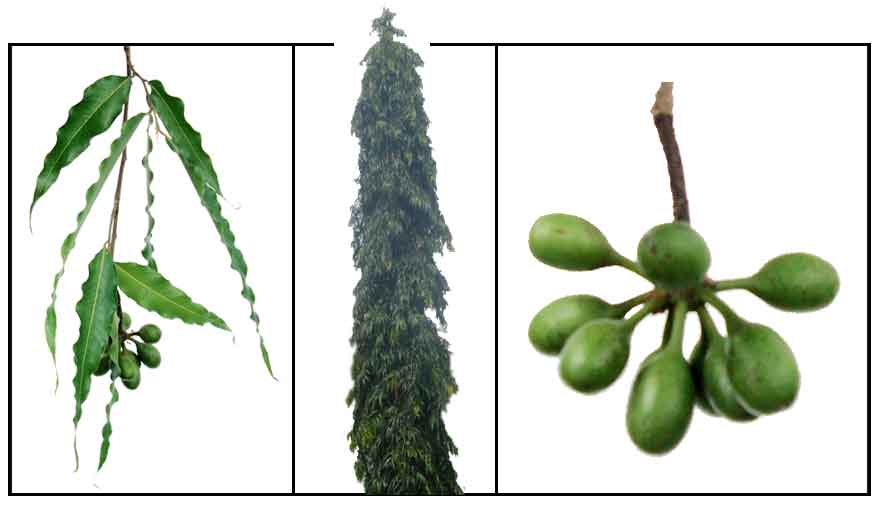
• Polyalthia longifolia is a small- to medium-sized evergreen tree
growing up to 15 meters. Young plants have straight trunks and weeping
pendulous branches, longest at the base and shorter at the end of the
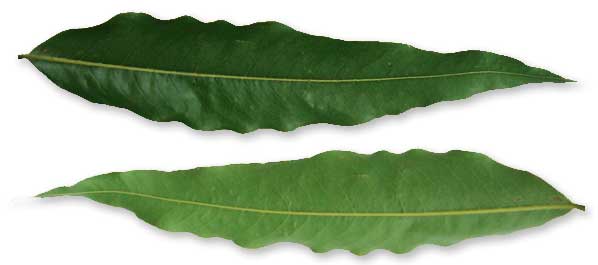
trunk. Leaves are long, narrow and oblanceolate, dark green, glossy
and wavy margins. Flowers are delicate pale green with wavy petals.
Fruits are ovoid, black when ripe.
• Growth form: Small to medium-sized, evergreen tree with narrow, columnar crown and weeping branches. It typically grows up to 8 - 12 m in cultivation, but can reach 20 m in the wild. Trunk: Straight trunk has smooth, grayish brown bark. Foliage: Smooth, glossy leaves are lanceolate with distinctly wavy leaf margins (11 - 31 cm long, 2.5 - 8 cm wide). Leaf tip is long and thin, while leaf base may be wedge-shaped or rounded. New foliage is yellowish to light brown, while mature foliage is dark green. Leaf arrangement is alternate with branches having one leaf per node. Flowers: Pale green to greenish yellow flowers are star-shaped with 6 thin, linear petals. Fruit: Smooth, ovoid to ellipsoid fruits (2 - 2.5 cm long, 1.5 cm wide) have fleshy pulp and occur in clusters of 20. Yellowish green, immature fruits ripen to become purplish black. Each fruit contains a single, large seed that is light brown and ovoid to ellipsoid with a curved, longitudinal groove along the surface (2 cm long, 1.4 cm wide). (Flora & Fauna Web)
Distribution
- Cultivated, not naturalized.
-
An ornamental street tree.
- Recently
introduced in the Philippines and widely cultivated in metro Manila,
planted in parks, gardens and roadsides.
-
Native to India and Sri Lanka.
 Constituents Constituents
• Leaf oil composed of sesquiterpene
derivatives: allo-aromadendrene, caryophyllene oxide, ß-caryophyllene,
ß-selinene, α-humulene and ar-curcumene. (4)
• Phytochemical study on the hexane extract of the stem bark led
to characterization of clerodane and ent-halimane deiterpenes, two of
which have shown antibacterial and antifungal activities.
• Preliminary studies of seeds showed a rich source of alkaloids, tannins, phenols, flavonoids, and carbohydrates. (16)
• Elemental analysis of seeds and leaves revealed large amounts of zinc, copper, iron, and manganese, in larger amounts in the leaves than in the seed. Nitrogen, phosphorus, and potash were present in negligible amounts. (23)
• Elemental analysis of leaves (L) and seeds (S) yielded nitrogen 1.05% L, 0.91% S; phosphorus 0.08% L, 0.11% S; potash 0.31% L,
0.40%; zinc 42.0ppm L, 44.0ppm S; copper 163.0ppm L,120.0ppm S; iron 204.0ppm L, 125.0ppm S; and manganese 312.0 ppm L, 8.0 ppm S. (29)
• Phytochemical screening of ripe and unripe pericarp yielded the presence of flavonoids, saponins, steroids, glycosides, and tannins in both extracts. Terpenoids and alkaloids were not detected. (see study below) (31)
• Study of P. longifolia for essential oil
showed the leaf oil to be almost exclusively composed of sesquiterpene derivatives, represented by allo-aromadendrene (19.7%), caryophyllene oxide (14.4%), ß-caryophyllene (13.0%), ß- selinene (7.9%), α-humulene (7.0%), and ar-curcumene (6.8%). Major oil constituents in the bark were α-copaene and α-muurolol (approx. 8.7%), ß-selinene (8.6%), viridiflorene (8.1%), α-guaiene (7.8%), allo-aromadendrene (7.4%), and δ-cadinene (7.0%). (38)
 Properties Properties
• Studies have shown antibacterial, antifungal, cytotoxic, antiulcer, hypotensive, laxative, antipyretic, anti-inflammatory, analgesic, antidiabetic, hepatoprotective, antidiabetic, wound healing, antimalarial, anticancer, larvicidal, immunomodulatory, antioxidant, phytoremediative properties.
Parts used
Bark, leaves.
 Uses Uses
Edibility
- No reports found on edibility.
Folkloric
- No reported folkloric medicinal use
in the Philippines.
- In India's traditional system of medicine,
used for fever, skin diseases, hypertension and helminthiasis.
- Bark used as febrifuge.
- In Nigeria, plant is used for skin disease, fever, diabetes and hypertension.
- In Ayurveda, used for the treatment of hysteria, influenza, edema, respiratory diseases, inflammation, skin diseases, diabetes, hypertension, and worm infestations.
(47)
Others
- Fiber: Bark is a good source of fiber.
- Wood: Flexible, straight and light-weight trunks were once used for making masts for ships; thus, the mane Mast Tree. Today, the wood is used mainly for making small articles such as pencils, boxes, matchsticks, etc. (41)
- Decorative: In India, leaves used for ornamental decoration during festivals.
- Noise pollution: The tree is known to grow over 20 m in height and is commonly planted due to effectiveness in alleviating noise pollution.
Studies
• Amino Acids: Study
showed the seeds of Polyalthia longifolia to be a rich source of various
amino acids - proline, L-glutamic acid, and methionine among others. (1)
• Phytochemical: Study
isolated a new clerodane diterpene from the bark of P. longilofia. (2)
• Antimicrobial / Alkaloids: Study
showed the root extract of P. longifolia var. pendula to possess significant
antibacterial activity. Study also led to the isolation
of three new alkaloids: pendulamine A, pendulamine B and penduline along
with other known compounds. (3)
• Hepatoprotective / Anti-Inflammatory:
Study evaluated various solvent extracts of leaf for anti-inflammatory and hepatoprotective potency. Study showed
the methanol extract as the most potent, showing significant anti-inflammatory
(comparable to Diclofenac sodium) and hepatoprotective activity. (5)
• Antifungal: Diterpenoids
isolated from the hexane extract of the seeds of P. longilfolia demonstrated
significant antifungal activity.
• Cytotoxic: Study
isolated a new halimane diterpene and a new oxoprotoberberine alkaloid
along with 20 known compounds, several of which were evaluated for cytotoxicity
toward a small panel of human cell lines.
• Anti-ulcer: Study
showed the ethanol extract of Polyalthia longifolia to have significant
antiulcer activity through reduction of gastric volume, free acidity
and ulcer index. It showed 89.71% ulcer inhibition in HCl-ethanol induced ulcer and 95.3% ulcer protection index in stress-induced ulcer. (6)
• Antibacterial: Study
of ethanol extract showed promising antibacterial activity against thirteen
Gram-positive and nine Gram-negative organisms. (7) Study evaluated in vitro antibacterial activity of various leaf extracts against six pathogenic bacteria viz. Bacillus subtilis, Sarcina lutea, Xanthomonas compestris, E. coli, K. pneumonia and Pseudomonas sp. The MIC values of all extracts against the six tested bacteria were almost 15.625 µg/10 µl. (17)
• Antibacterial / Phytochemicals: Study
revealed the presence of steroids, alkaloids, biterpenoids, carbohydrates, amino acids, essential oil, phenolics and flavonoids. Highest antibacterial activity was seen with the hot aqueous (HAE) and methanol extract (ME) against K pneumonia, followed by E coli (HAE) and B subtilis (ME). (12)
• Hypotensive / Phytochemicals: Phytochemical studies yielded kolavenic acid, clerodane, liriodenine, lysicamine and bisclerodane and its isomer. Study
showed the defatted 50% methanol extract of P longifolia root bark with significant ability to reduce blood pressure. (13)
• Nanoparticles / Antibacterial / Leaves: Study reports on the synthesis of silver nanoparticles using Polyalthia longifolia leaf extract as reducing and capping agent along with D-sorbitol. The synthesized silver nanoparticles were found to be highly toxic against Gram-positive bacteria than Gram-negative bacteria. (15)
• Laxative / Bark: Study evaluated the laxative activity of P. longifolia bark in albino Wistar rats. Results showed the ethanolic extract to have significant laxative activity with enhancement of wet feces production. The activity was similar to reference drug sodium picosulfate (5 mg/kg p.o.). (18)
• Antipyretic / Bark: Study evaluated the antipyretic activity of methanol extracts of leaves, stem bark, and root of P. longifolia in Wistar rats against lipopolysaccharide (LPS)-induced pyrexia. All extracts exhibited significant dose-dependent antipyretic activity with the root extract showing most activity. (19)
• Antiulcer / Anti-Inflammatory / Fresh Leaf Extracts: Study of ethanolic and aqueous extracts for antiulcer activity showed dose dependent decrease in gastric content, total acidity, ulcer index, and increase pH in a gastric pylorus ligation ulcer method. EtOH and aqueous extracts showed maximum anti-inflammatory activity on cotton pellet granuloma induced inflammation in rats. (20)
• Antimicrobial / Leaf and Pericarp: Study evaluated the antimicrobial activity of leaf and pericarp extracts of Polyalthia longifolia against S. aureus, S. typhi, K. pneumonia, and Sclerotium rolfsii. Results showed an inhibitory potential which could be attributed to the presence of secondary metabolites in the extract. (21)
• Corrosion Inhibition / Mild Steel / Leaves: Study investigated the inhibition efficiency of dry P. longifolia leaves on corrosion of mild steel in 1N H2SO4 medium. Results showed the leaves act as a good corrosion inhibitor with efficiency of 92% at 1.5% inhibitor concentration. (22)
• Anti-Diabetic / Leaves: Study evaluated the α-amylase and α-glucosidase enzyme in vitro inhibitory activity of ethanol and chloroform extracts of leaves and in vivo antidiabetic activity against STZ-induced diabetes in rats. Results showed α-amylase and α-glucosidase enzymes inhibitory activity, together with an protective effect against STZ-induced type 1 diabetes in rats. (24)
• Anticancer / DEN/PB Induced Hepatocellular Carcinoma / Fruits: Study showed the anticancer potential of methanolic extracts of fruits of P. longifolia in N-nitrosodiethylamine induced and phenobarbital promoted hepatocellular carcinoma in male albino Wistar rats. (25)
• Gastroprotective / Antimicrobial: Study evaluated the gastroprotective potential of P. longifolia on ethanol and ethanol/HCl-induced ulcers. Results showed reduction in ulcer index in a dose dependent manner. On antimicrobial testing, gram positive bacterial showed more susceptibility to P. longifolia than gram negative bacteria and fungal strains. (27)
• Analgesic / Anti-Inflammatory
/ Leaves: Study evaluated the anti-inflammatory and analgesic activities of a hydroalcoholic extract of leaves of P. longifolia using albino rats. Results showed significant inhibition of rat paw edema in carrageenan testing and marked analgesic activity when tested against acetic acid induced writing response. (28) Study evaluated three different solvent extracts of P. longifolia leaves for analgesic potential by acetic acid induced writhing experiment in Swiss albino mice. The methanol extract the most potency followed by ethyl acetate and benzene extracts. (32)
• Acute Oral Toxicity / Leaves: Study evaluated the acute oral toxicity of Polyalthia longifolia var. pendula leaf extract in Wistar albino rats. The methanol leaf extract did not produce any toxic effects up to the dose level of 3240 mg/kbw, with no dose dependent changes in parameters of organ weight, biochemistry and hematologic analysis. (30)
• Antibacterial / Cytotoxic / Larvicidal
/ Ripe and Unripe Pericarp: Study evaluated the mineral content and bioactivities viz., antibacterial, cytotoxic, and larvicidal activity of ripe and unripe pericarp of P. longifolia. Elemental content except for copper was highest in the ripe pericarp. Extracts showed dose dependent inhibition of test bacteria and concentration dependent cytotoxic effect. Cytotoxicity was more pronounced against HT-29 than MDA-MD-231. The ripe pericarp extract showed potent larvicidal activity against 2nd instar larvae of Aedes aegypti. (see constituents above) (31)
• Antioxidant / Hepatoprotective / Paracetamol-Induced Injury / Leaves: Study evaluated the in vitro antioxidant, free radical scavenging, and hepatoprotective activity of methanol extracts of leaves of P. longifolia and Cassia spectabilis. Phenolic and flavonoid content correlated with antioxidant capacity. P. longifolia extract showed better in vitro antioxidant activity. Treatment with PL extract showed in vivo hepatoprotective effect in paracetamol-intoxicated mice. (33)
• Immunomodulatory Potential / Leaves: Study evaluated the immunomodulatory potential of Polyalthia longifolia leaves by Haemagglutination Antibody (HA) Titer and Delayed-Type Hypersensitivity (DTH) response using sheep red blood cells as antigens. Complete Freud's Adjuvant (CFA) induced arthritis models was used for estimation of rat paw edema, arthritic index, and biochemical parameters. Results suggest the ethanol extract of leaves exerted immunostimulatory effect on B and T lymphocytes. Study suggests a potential as immunostimulatory for treatment and prevention of immunodeficiency disorders. (34)
• Antimalarial: Study evaluated the antimalarial activity of three medicinal plants used in Nigerian folklore for the treatment of malaria infection. Polyalthia longifolia showed 53% chemosuppression of parasites at day 4 in mice infected with Plasmodium berghei. (35)
• Antidiabetic / Wound Healing / Bark: Study evaluated the antidiabetic and wound healing activity of a bark extract of Polyalthia longifolia against alloxan induced diabetic rats. A methanolic extract showed significant antidiabetic effect. The extract also showed strong wound healing effect through enhanced wound contraction either through enhanced contractive property of myofibroblasts or increased number of myofibroblasts recruited in the wound area. (36)
• Antimicrobial / Leaves: Study evaluated the antimicrobial activity and phytochemical constituents of aqueous leaf extract of Monoon longifolium. Via agar well diffusion method, the extract showed signifiant activity against Pseudomonas aeruginosa and moderate activities against Staphylococcus aureus and Escherichia coli, with MICs of 200, 200, and 100 mg/ml respectively, with MBC pf 400 mg/ml for S. aureus and P aeruginosa. (39)
• Hepatoprotective Against Lead-Acetate Induced Liver Damage / Seed: Study evaluated the protective effects of methanol seed extract (MLSE) against lead acetate-induced liver damage in adult female Wistar rats. Co-administration or post-treatment with MLSE significantly ameliorated biochemical alterations. Histological evaluation of MLSE-treated group showed reduced hepatic degeneration inflammation, and fatty changes. Results suggest the seed extract possess antioxidant and hepato-
protective effects against lead-induced hepatic injury. (40)
• Protectant Effect on Cowpea Storage / Leaves: Study evaluated the protectant activities of M. longifolium leaf hexane and acetone extracts for Cowpea (Vigna unguiculata) against weevil attacks. Cowpea is an important legume species for food consumption and animal feed worldwide. Storage is often threatened by the cowpea weevil or cowpea seed beetle, Callosobruchus maculatus. The hexane and acetone extracts exhibited oviposition deterrence and adult insect emergence inhibition in a concentration-dependent manner, with the hexane extract showing greater efficiency. Extract efficiency exceeded that of permethrin at 3 mg. The hexane extract of M. longifolium leaves may be included in pest management strategies for cowpea weevil in stored cowpea seed. (42)
• Zinc Oxide Nanoparticles / Antimicrobial / Antioxidant / Leaves: Study reports on the biosynthesis of zinc oxide nanoparticles using Monoon longifolium leaf extract. The synthesized ZnO NPs exhibited significant antibacterial activity against Staphylococcus aureus and Escherichia coli, as well as antifungal activity against Cancida albicans. Antioxidant activity of the NPs ranged from 0 to 78% (IC50 of 12.5 µg/mL). Results suggest potential of the synthesized ZnONPs as effective antibacterial, antifungal, and antioxidant agents. (43)
• Potential for Management of Menstrual Problems: Study in mice evaluated the activity of Monoon longifolium petroleum ether extract of leaves in the management of menstrual problems associated with pain, irregularity, etc during the menstrual cycle. Analgesic effect was evaluated using the hot plate method, which showed increase in reaction time. Results showed good effect over menstrual problems via inhibition of arachidonic acid pathway. The arachidonic acid pathway regulates many physiological problems like generation of prostaglandins with the help of COX enzyme. Thus, inhibition of the pathway is a therapeutic route for management of menstrual problems. (44)
• Hydroxyapatite Nanoparticles / Phytoremediative / Removal of Fluoride from Aqueous Solution: Hydroxyapatite (Ca10(PO4)6(OH2) calcium phosphate is a robust and viable magnetic material for the treatment of polluuted air, water, and soil. Results suggest that synthesized HAp NPs were an efficient adsorbent for removal of fluoride ions. The overall process can be an economical alternative for scaled-up water treatment processes. (46)
Availability
- Cultivated.
- Seeds, trees in the cybermarket.
(DS) (UpR) (JM)
|




_flowers_W2_IMG_7047.jpg)