Gen info
- Ipomoea batatas (sweet potato) is a dicotyledenous plant belonging to the bindweed or morning glory family, Convulvulaceae.
- Of the approximately 50 genera and more than 1000 species of Convolvulaceae, Ipomoea batatas is the only crop of major importance (I. aquatica, kangkong, is used locally), and many are poisonous.
- Some researchers suggest sweet potatoes have been present in Polynesia thousands of years before humans arrived there. However, scholarly consensus favors the pre-Columbian contact model.
- In the Philippines, sweet potatoes were first introduced during the Spanish colonial period (1521-1898) via the Manila galleons, along with other New World crops.
(6)
- Sweet [potatoes have been part of the U.S. diet for most of its history, especially the Southeast. Average per capita consumption in the U.S. is only about 1.5-2 kg per year, down from 13 kg in 1920.
- Global production was 89 million tonnes in 2020, led by China with 55% of the world total. Secondary producers were Malawi, Tanzania, and Nigeria. It is the 5th most important food crop in developing countries. (6)
 Botany Botany
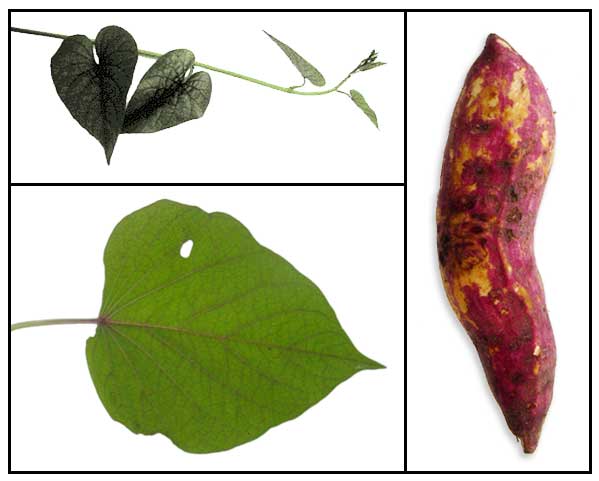
Kamote is a spreading, prostrate, herbaceous, smooth or somewhat hairy vine. Stems or runners, sprawling several meters long, take root when
in contact with soil. Leaves are ovate to oblong-ovate, 6 to 14 centimeters long, somewhat entire, with alternate heart-shaped or palmately lobed leaves, pointed at the tip, and heart-shaped at the base.
Flowers are sympetalous like that of morning glory, 5 centimeters long, funnel-shaped, purple, self sterile, and rarely producing seeds. Stamens are 5, of different lengths attached to corolla (epipetalous)
with hairy filaments. Sepals are about 1 centimeter long and greenish with pointed lobes. Corolla is funnel shaped, 4 to 5 centimeters long, pink, purple, and whitish. The edible and sweet-tasting tuberous root is long and tapered with a
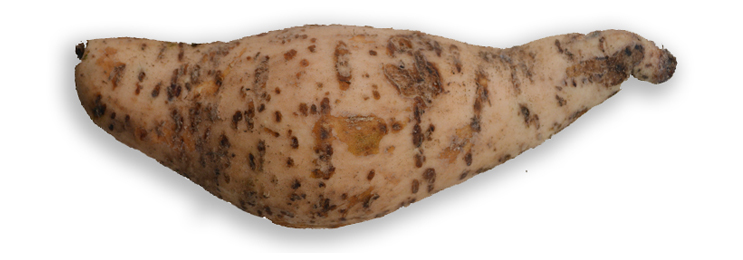
smooth skin of varying colors from red, purple, brown and white. The
flesh varies from white, orange, purple and yellow.
Distribution
- Introduced by the Spaniards from Mexico in the early colonial period.
- Cultivated in all warm countries.
- A warm season crop extensively cultivated in the Philippines.
- Can be planted any time of the year.
- Easily propagated from stem cuttings.
 Constituents Constituents
• Leaves have a high content of polyphenolics - anthocyanins and
phenolic acids, with at least 15 biologically active anthocyanins with
medicinal value. (1)
• Polyphenols have physiologic functions, radical scavenging activity,
antimutagenic, anticancer, antidiabetes and antibacterial activity in
vitro and vivo.
• Study isolated four compounds: citrusin C, caffeic acid, 3,4-di-O-caffeoylquinic acid and 1,2,3,4-tetrahydro-beta-carboline-3-carboylic acid.
• Nutrient and anti-nutrient study of leaves yielded: crude protein, 24.85%; crude fat, 4.90%; crude fibre, 7.20%; ash, 11.10%; carbohydrate, 51.95%; moisture contents, 82.21%; and calorific values, 351.30. Vitamin composition showed: vitamin A, 0.672 mg/100g; vitamin C, 15.20 mg/100g. Elemental analysis showed appreciable levels of zinc (0.08), potassium (4.05), sodium (4.23), manganese (4.64), calcium (28.44), magnesium (340.00) and iron (16.00). It showed low levels of toxicants. (See studies below) (29)
• Nutrient value of sweet potato per 100 g yields energy 360 kJ (86kcal), starch 12.7 g, sugars 4.2 g, dietary fiber 3.0 g, fat 01 g, protein 1.6 g, vitamin A equivalent 709 µg, thiamine (B1) 0.1 mg, riboflavin (B2) 0.1 mg, niacin (B3) 0.61 mg, pantothenic acid (B4) 0.8 mg, pyridoxine (B6) 0.2 mg, folate (B9) 11 µg, vitamin C 2.4 mg, vit E 0.26 mg, calcium 30.0 mg, iron 0.6 mg, magnesium 25.0 mg, phosphorus 47.0 mg, potassium 337 mg, sodium 55 mg, zinc 0.3 mg. (46)
- Qualitative analysis of ethyl acetate and methanol extracts of tubers and aerial parts revealed presence of phenols, flavonoids, tannins, anthocyanin, saponins, coumarins, terpenoids, and betacyanin. Quantitative analysis showed maximal TPC (304.32 µg GAE/mg dry extract) and TFC (214.77 µg QE/mg DE) from the ethyl acetate extract. (see study below) (60)
 Properties Properties
• Considered antioxidant, antimutagenic, antibacterial, antidiabetic.
• Considered hemostatic, spleen invigorating.
• Studies have suggested
antioxidant, antidiabetic, insulin sensitizing, hemostatic, wound healing, immunomodulatory, nutritive and antinutritive, anti-sickling, antitumor, neuroprotective, hypolipidemic, antiproliferative, hemostatic, antiulcer, anticancer, anti-lithiatic. hypolipidemic, anti-atherosclerogenic, aphrodisiac, gonadoprotective properties.
Parts utilized
Tops, leaves and edible roots.
 Uses Uses
Edibility
- Leaves and roots are edible.
- Has a higher nutritional value than the common potato. It is an average calorie starch food, which provided 90 calories/100 g vs 70 calories/100g of other types of potatoes (Solanum tuberosum). (46)
- Good source of vitamins A, B and C, iron, calcium and phosphorus.
- High in complex carbohydrates and dietary fiber; deficient in protein.
- Leafy tops eaten as vegetables.
- A component of many traditional cuisines.
- A staple food crop in some countries.
Folkloric
- Tops, especially purplish ones, used for diabetes.
- Crushed leaves applied to boils and acne.
- Boiled roots used for diarrhea.
- In Southwest Nigeria, hot water infusion of the whole plant used in the management of diabetes mellitus.
- In Pakistan, traditionally used as aphrodisiac, antiprostatic, anti-inflammatory, antidiabetic and anticancer agent. (60)
Others
• Dengue: Like gatas-gatas
(Euphorbia hirta), there have been anecdotal reports of the use of Ipomoea
batatas in dengue, with improvement in platelet counts being
attributed to decoctions of kamote tops.
Preparation: kamote tops are boiled in water for 5 minutes to extract
the juice.
• Wine: Study reports on preparation of herbal purple sweet potato wine with 18 other medicinal plant parts. (see study below) (56)
• Commerce: Starch and alcohol production.
Studies
• Diabetes:
Despite its "sweet" name, it
may be beneficial for diabetes as some studies suggest it may stabilize
blood sugars and lower insulin resistance. (•) Study showed the flavone
extracted from IB leaf could control blood sugar and modulate the metabolism
of glucose and blood lipid, and decrease outputs of lipid peroxidation
and scavenge the free radicals in non-insulin dependent diabetic rats. (•)
• Hematologic / Hemostatic: Hemostatic mixture
of ipomoea batatas leaves, methods of preparation and use thereof —
a Jinshuye styptic plant preparation, an invention made from the extracts
of leaf and stems of Ipomoea batatas has qi and spleen invigorating
effects, cooling the blood and stopping bleeding. Such a composition
has the potential of use for ITP (idiopathic thrombocytopenic purpura),
radiotherapy- and chemotherapy-induced thrombocytopenia. (8) Study evaluated the hemostatic activity of sweet potato leaf aqueous and ethanolic crude extracts primarily on platelet count, clotting time and prothrombin time on white rabbit model. Both extracts significantly increase (p<0.05) the platelet count and significantly decrease (p<0.05) the clotting time and prothrombin time. Results suggest interaction with both intrinsic and extrinsic pathways and suggest potential for the prevention of bleeding tendencies. (50)
• Root Crops as Antioxidant: A
2006 study of commonly consumed roots crops in the Philippines (Kamote,
Ipomoea batatas; ubi, purple yam, Dioscorea
alata; cassava, Manihot esculenta; taro or gabi, Colocasia esculenta;
carrot, Daucus carota; yacon (Smallanthus sonchifolius) showed them
to be rich sources of phenolic compounds with antioxidant activity,
highest in sweet potato, followed by taro, potato, purple yam and lowest
in the carrot.
• Antioxidant: Study results suggest the total phenolic content was positively correlated
with radical scavenging activities of the sweet potato leaves.
• Antioxidant / Anthocyanins:
Purple Sweet Potato anthocyanins have antioxidative activity in vivo
as well as in vitro.
• Diabetes / Anti-Diabetic and Lipid Effects / White Skinned Sweet Potato:
Results suggest the white skinned sweet
potato has antidiabetic activity and and improves glucose and lipid
metabolism by reducing insulin resistance. (2)
• Diabetes: Study to isolate the antidiabetic component
of white-skinned sweet potato suggested the active component to be an
acidic glycoprotein because it contained a protein and sugar and adsorbed
onto the QA column at pH 7.0.
• Caiapo:
Study confirmed the beneficial effects of
Caiapo (a neutraceutical) on plasma glucose with a decrease in Hb A1c,
as well as cholesterol levels, in type 2 diabetes patients. (10)
• Sweet potato root with antioxidant
activities in vitro / Mucilage: Mucilage might contribute its antioxidant
activities against both hydoxyl and peroxyl radicals. (4)
• Flavonoids:
Leaf extract study isolated five news compounds:
tiliroside, astragalin, rhamnocitrin, rhamnetin and kaempferol. (11)
• Chitinases:
Study identified new chitinolytic enzymes
in sweet potato leaves. Chitinases catalyze the hydrolysis of chitin,
the main structural component of fungal walls and arthropod integuments.
Studies suggest it has other functions and has been proposed to play
a role in the defense against pathogens. Chitinases are also useful
in the production of biomedical and biotech products; used in the production
of chitooligosaccharides, glucosamines and GlcNAc. Other applications
are found in mosquito control and pathogenic plant fungi control. (13)
• Antioxidant
/ Antiproliferative: Study demonstrated that the phytochemicals
in sweet potato may have significant antioxidant and anticancer activities.
The antioxidant activity was directly related to the total amount of
phenolics and flavonoids in the extracts. The additive roles of phytochemicals
may contribute to its ability in inhibiting tumor cell proliferation
in vitro. (14)
• Antidiabetic
/ Adiponectin / Natural Insulin Sensitizer: Study confirms the beneficial effects of Caiapo on glucose and HbA1c in T2DM. The improvement in insulin sensitivity was accompanied by increased levels of adiponectin and a decrease in fibrinogen. (15)
• Antiulcer: Study in cold stress and aspirin-induced gastric ulcers in Wistar rats showed Ipomoea batatas tubers possess gastroprotective activity as shown by inhibition of mean ulcer score and ulcer index and a marked increase in GSH, SOD, CAT, GPx, and GR levels and reduction in lipid peroxidation in a dose-dependent manner. (17) An ethanolic extract of Ipomoea batatas showed antiulcer activity as evidenced by significant inhibitory effects on pylorus ligated and cold restraint stress induced ulcer. (28)
• Antiproliferative / Antioxidant: Study examined the antioxidant and antiproliferative activities of different extracts of sweet potato. In the DPPH staining, the ethanol extract of vein had the highest radical-scavenging activity. Among the extracts the ethanol extract showed the highest amount of total phenolic and flavonoid compounds. The water extract of the vein showed the highest antiproliferative activity with an EC50 of 449.6 ± 27.73 ug/mL. (18)
• Comparative Antioxidant Properties / Natural Yellow Dye: Study showed the carotenoids extraction process retained most of the antioxidant capacity from the leaves. It is also a potential source of natural yellow dye with antioxidant property that can be beneficial to human health, as an alternative to the artificial coloring dye currently used in the market. (19)
• Anthocyanins / Antitumor Effect: Study showed Ipomoea batatas Poir Cv anthocyanins could have an inhibitory effect on transplantation tumor of mice, with no toxicity and no mutation. (21)
• Wound Healing / Peels: In an incision wound model, high tensile strength of the wounded skin was noted in animals treated with peel extract gels and the peel bandage when compared to controls. There was also significant wound closure by the 4th day, a significant increase in hydroxyproline and ascorbic acid and decrease in malondialdehyde content. The wound healing activity was attributed to possible underlying antioxidant mechanism. (22)
• Hypoglycemic Effect: Study in STZ-induced hyperglycemic rats fed oral doses of extracts showed significant dose-related reductions in FBG. Phytochemical analysis of the extract showed alkaloids, flavonoids, tannins, saponins, anthraquinones and reducing sugars. (23) In a study on hypoglycemic effects of cooked and uncooked methanol and aqueous extracts of sweet potato tuber, results showed the active principles responsible for the antihyperglycemic effect are concentrated in the methanolic extract and aqueous suspension of the uncooked tuber. (41)
• Thyroid-Gonadal Axis Effect: Study investigated the effect of a leaf extract on the thyroid gonadal axis of male rats. Results showed follicles hypertrophy and hyperplasia and reduction of colloid in the follicular lumen. Testes morphology showed oligospermia, asthenospermia and abnormal sperm morphology. Results suggest a male contraceptive property of the plant extract, the mechanism possibly as both a direct effect on the gonads of indirectly via the hypothalamo-hypophyseal axis. (25)
• Mode of Action in Type 2 Diabetes: Study describes the underlying mechanism responsible for improvement in metabolic control following administration of Caiapo in type 2 diabetic patients. Results suggest that in short term use of Caiapo, improved metabolic control of T2DM was achieved by decreasing insulin resistance without affecting body weight, glucose effectiveness or insulin dynamics. (26)
• Reduction of Food Intake, FBS, and Body Weight: Study evaluated the effect of aqueous extract of Ipomoea batatas on food intake, fasting blood glucose and body weight in male wistar rats. Results showed reduction in food intake probably by increasing satiety and reduction in weight gain by using up the body's reserve of fat as a result of low blood glucose. (27)
• Nutritive and Anti-Nutritive Evaluation: Study evaluated levels of some nutrients and antinutrients of sweet potato leaves. Results showed leaves contain an appreciable amount of proteins, minerals, fat, fibre, carbohydrate, caloric values (energy) and low levels of toxicants except for oxalate whose value is reduced by cooking. Results suggest leaves can contribute significantly to nutrient requirements of man. (See constituents above) (29)
• Antioxidant Activity / Phenolic and Flavonoid Contents / Leaves: Study evaluating six leafy varieties of Ipomoea batatas showed the presence of total flavonoids, total phenolics, reducing activity, and the ability to scavenge free radicals, and suggest leaves can be used as a potential source of natural antioxidants. (30)
• In Vitro Cytotoxic and Antioxidant Activity: An ethanolic extract of Ipomoea batatas showed potent cytotoxic activity in trypan blue dye exclusion method using DLA cell lines and exhibited a dose dependent decrease in cell count. The extract exhibited potent antioxidant activity by DPPH free radical assay. (31)
• Effects on Hematological and Biochemical Parameters: Study of leaf aqueous extract of I. batatas showed no significant changes in hematological parameters. There were not significant changes in activities of serum enzymes. The pentobarbitone sleeping time showed significant ( p < 0.001) increase in the mean sleeping time when the group that received the extract was compared with the control. (32)
• White-Skinned Sweet Potato / Hypoglycemic Effect / Mechanisms: Study investigated the mechanism of white-skinned sweet potato (Ipomoea batatas) on reducing blood glucose in STZ-induced diabetic rats. Results showed hypoglycemic activity by inducing pancreatic beta cells regeneration and increasing insulin expression. (33)
• Anti-Hyperglycemic Effect of Diacylated Anthocyanin: Study evaluated a postprandial glucose suppression effect of diacylated anthocyanin with α-glucosidase (AGH) inhibitory activity in Sprague−Dawley rats. Results showed the anti-hyperglycemic effect of the anthocyanin was achieved by maltase inhibition, not by sucrase or glucose transport inhibition at the intestinal membrane. (34)
• Effect on Haematological Parameters / Leaves: Study showed sweet potato leaves (Ipomoea batatas) significantly increased PCV, WBC, and platelet count, while the differential white cell count remained the same. The results could be a direct effect on haemopoietic tissues. (35)
• Wound Healing / Antiulcerogenic / Tuber Flour: Study evaluated the wound healing and anti-ulcerogenic potential of tuber flour of Ipomoea batatas in vivo in animal model. Tuber flour potentially prevented ethanol-induced gastric ulceration by suppressing edema formation and partly protecting gastric mucosa wrinkles. Ointment based formulation effectively triggered the healing of cutaneous wound with increased number of cells undergoing metaphase and tissue re-epithelialization. Crude extracts also exhibited potential as free radical scavengers. (36)
• Starch Binder Healing for Meat Products: Study showed sweet potato starch could be used up to 4% inclusion in meat products, to minimized formulation costs and consumer concerns about excessive used of chemical ingredients in meat products. (37)
• Effect on Malondialdehyde and Nitrous Oxide Levels in Smokers: Cigarette smoke is an exogenous source of free radicals containing more than 400 chemical compounds triggering the formation of free radicals associated with disease and the aging process. Study evaluated the effect of I. batatas as a source of antioxidants that decrease malondialdehyde (MDA) and increase nitrous oxide (NO) in plasma of moderate smokers. There was a decrease in MDA and increase in NOx plasma levels in the treatment groups. Study suggests IB syrup contains 8 mg/mL anthocyanins, which probably play a role in reducing free radicals and provide benefits in reducing risk of disease and slowing the aging process. (38)
• Reduced Food Intake: Study investigated the effect of an aqueous extract of sweet potato on food intake in male Wistar rats. Results showed consumption of IB extract caused a reduction in food intake probably by reducing appetite and increasing satiety. (39)
• Antisickling Activity / Leaves: Study evaluated the antisickling activity of Ipomoea batatas leaves through an in vivo bioassay. Results showed significant antisickling effect. Effect was attributed, partly, to anthocyanins. Study advised that leaves of the edible plant must not be overcooked or exposed to sunlight for a too long time. (40)
• Attenuation of Amyloid ß Peptide-Induced Neurotoxicity: Study evaluated the protective effects of 17 Korean native plants against amyloid ß peptide (Aß)-induced oxidative stress in ICR mice. Ipomoea batatas showed the highest protective effect against oxidative stress. In ICR mice with Aß-induced neuronal deficits, Ipomoea batatas significantly reversed Aß-induced neurotoxicity, reduced the level of lipid peroxidation, and increased catalase activities in biochemical studies of mice brain tissue. (42)
• Increased Neutrophil Phagocytic Function / Cell-Mediated Immune Effect / Roots: Study of a methanol extract of roots showed stimulation of cell mediated immune system by increasing neutrophil phagocytic action. (43)
• Anti-Neuroinflammatory / Antioxidant: Study evaluated the protective effects of purple sweet potato extract in stimulated BV-2 microglial cells and its anti-oxidant properties. Results showed IBE attenuated neuroinflammatory responses in LPS-activated BV-2 microglia by inhibiting excessive production of pro-inflammatory mediators such as NO, iNOS, COX-2 and TNF-α. The effect can be related to its strong antioxidant properties. (44)
ª No Effect of Leaves Extract on Induced Traumatic Oral Ulcers / Leaves: Study showed Ipomoea batatas leaves extract had no significant effect on percentage healing of traumatic ulcer in oral mucosa of male rat model. (46)
• Anti-Lithiatic Potential / Leaves and Tuberous Roots: Study evaluate the in vitro anti-lithiatic effect of ethanolic extract of Ipomoea batatas leaves and tuberous roots. The leaves and roots showed significant (p<0.01) capability to dissolve calcium oxalate The extracts also significantly (p<0.01) inhibited both nucleation and aggregation of calcium oxalate crystals in a concentration-dependent manner. (47)
• Anti-Inflammatory / Anticancer / Purple-Fleshed Sweet Potato: Purple-fleshed sweet potato (PFSP) has been known to possess high amount of anthocyanins which contribute to its antioxidant property. In this study, extracts of PFSP exhibited anti-inflammatory activities by suppressing production of NO and pro-inflammatory cytokines. Anticancer activities were displayed by ability to inhibit the growth of cancer cell lines, such as MCF-7 (breast), SNU-1 (gastric) and WiDr (colon adenocarcinoma) in concentration- and time-dependent manner. The SP extracts could induce apoptosis in MCF-7 and SNU-1 cancer cells through intrinsic and extrinsic pathways. (48)
• Platelet Raising Effects / Leaves: Studies have revealed platelet increasing effect of Sweet Potato leaf extract in experimental animals. Study investigated the effect of an aqueous extract of Ipomoea batatas leaf on platelet count. Results showed a dose dependent platelet raising effect, and may be of benefit in the management of thrombocytopenia. Antioxidant activity of tannins component of the extract might protect stem cells and platelets from free radical induced injury. (49)
• Potential Anticancer Activity of Bioactive Compounds / Review: The review is a critical compilation of current information on research that evaluated the antitumor and antiproliferative activity of Ipomoea batatas. Studies show a diversity of bioactive compounds such as phenolic compounds, anthocyanins, flavonoids, coumarins, and sterols, along with isolated compounds such as pectin, peptides and glycoproteins that can be related to its biologic activity. (51)
• Nummularic Acid / Anticancer: Study isolated and characterized nummularic acid (NA), a potent pentacyclic triterpenoid (PT) from Ipomoea batats. Study evaluated the in vitro antiproliferative potential of NA against PCa (prostate cancer) cells (DU145 and PC3) in Sprague Dawley rats. Significant (p<0.05 and p<0.01) time- and dose-dependent reductions in proliferation of PCa cells, reduced migration, invasion, and increased apoptotic cell population were observed after NA treatment (3-50 µM). NA treatment considerably increased the cleavage of caspases and downstream PARP, upregulated BAX and P53, and downregulated BCL-2 and NF-kB, inducing apoptosis in PCa cells. NA-treated groups showed substantial restoration of hematological and histological parameters, reinstatement of serum hormones, and suppression of inflammatory markers. Study suggests that NA has potential to induce apoptosis and death in PCa cells. (52)
• Hypolipidemic / Anti-Atherosclerogenic / Leaves: Study evaluated the hypolipidemic and anti-atherosclerogenic properties of aqueous extract of I. batatas leaves in a rat model of diet-induced hypercholesterolemia using cholesterol-enriched (1%) standard diet for four weeks. Hypercholesterolemic animals showed increase in body weight, blood glucose and lipids, HLL, LDL, VLDL cholesterol and increase in aorta thickness and atherosclerotic plaque sizes. Extract treatment mitigated these alterations and restored blood glucose and lipid levels to normocholesterolemic levels. (53)
• Inhibition of Dengue Virus NS2B/NS3 Protease / Leaves: Study evaluated the potential of bioactive compounds of sweet potato leaf as inhibitory agent to dengue virus (DENV) NS2B/NS3 using computational study. Results showed that δ-Selinene and α-Caryophyllene have potential as dengue disease medication through inhibitory mechanism against DENV. Specifically, the ligands are binding to one catalytic triad of residual amino acid. The interaction inhibits activation of targeted protein when virus replication occurs. (54)
• Silver Nanoparticles / Antioxidant, Antidiabetic, Cytotoxic / Outer Peels: Study reports on the novel cost-effective and eco-friendly synthesis of silver nanoparticles using outer peels of two varieties of Ipomoea batatas (Ib-1AgNPs and Ib2-AgNPs). Biopotential of the NPs were investigated by antidiabetic (alpha glucosidase assay), antioxidant (free radical scavenging assays), antibacterial (disc diffusion method) and cytotoxicity assays (cell viability against HepG2 cells). Results showed Ib2-AgNPs showed relatively higher functional activity than Ib1-AgNPs, which may be due to greater amount of bioactive substances acting as reducing and capping agents in the synthesis of NPs. Results suggest potential for utilization in biomedical and pharmaceutical industries. (55)
• Herbal Purple Sweet Potato Wine: A herbal purple sweet potato (PSP) wine was prepared from purple-fleshed sweet potato (Ipomoea batatas) and 18 medicinal plant parts) by fermenting with wine yeast, Saccharomyces cerevisiae. The starch in PSP was enzymatically saccharified to fermentable sugars. The herbal wine had this composition: total soluble sugar (TSS), 4.0 Brix; starch, 0.24 g/100 mL; total sugar (TS), 0.95 g/100 mL; reducing sugar, 0.38 g/100 mL; titratable acidity (TA), 1.25 g tartaric acid/100 mL; phenol, 0.19 g (caffeic acid equivalent)/100 mL; anthocyanin, 59.90 mg/100 mL; lactic acid (LA), 1.92 mg/100 mL; ethanol, 8.61% v/v; and pH, 3.34. The herbal wine was presumed to contain the therapeutic and antioxidant properties of PSP as well as those of the medicinal parts added as adjuncts. The wine is rich in antioxidants such as anthocyanin and phenols and presumably possesses biological active ingredients as remedies for common ailments like colds, cough, skin diseases, and dysentery. (56)
• Anti-Inflammatory / Tuber and Roots: Ethyl acetate and methanol extracts of dry powder of I. batatas tuber and roots were evaluated for anti-inflammatory activity in Sprague-Dawley rats. All extracts showed dose-dependent response in invitro antioxidant assays. EA extract of tubers showed best inhibition (76.92%) of albumin denaturation. EA extract of roots showed highest edema inhibition in carrageenan-induced paw edema model (79.11%) and croton oil-induced and anal edema (72.01 and 70.80%, respectively). EA of roots showed significant inhibition of CFA-induced arthritic edema. EA extracts of roots and tubers showed suppression of pro-inflammatory cytokines (IL-1ßm IL-6) and NO levels. Results suggest therapeutic potential as an anti-inflammatory and antiarthritic agent. (57)
• Effect on Glucose Uptake / Secondary Metabolites from Purple I. batatas Leave: Study evaluated four crude extracts and water-soluble fractions from methanolic extract of purple I. batatas leaves. Twenty-four pure compounds (1-24) were isolated and antidiabetic activity was evaluated by glucose uptake assays in differentiated 3T3-L1 adipocytes and rat primary hepatocytes, as well as western blot analysis. The n-hexane crude fraction, with methyl decanoate (22) as major and active compound, showed greatest effect on glucose uptake, likely via activation of Glut4 and regulation of the PI3K/AKT pathway. Quercetin 3-O-β-d-sophoroside (1), quercetin (3), benzyl β-d-glucoside (10), 4-hydroxy-3-methoxybenzaldehyde (12), and methyl decanoate (22) could be important components contributing to the antidiabetic effects. Results suggest potential as antidiabetic source. Active constituents 1, 3, 10, 12, and 22 are promising lead candidates for further investigation. (58)
• Antidiabetic / Leaves: Study evaluated the possible antidiabetic activity of Ipomoea batatas leaves extract (IBLE) in STZ-induced diabetic male adult albino rats. IBLE administration significantly reduced blood glucose level, MDA and anti-inflammatory cytokines (IL-1ß and TNF-α. Levels of insulin, GSH and SOD were significantly increase. The extract showed significant amelioration in pancreatic cells structure. Results suggest IBLE possess antidiabetic properties. (59)
• Aphrodisiac / Gonadoprotective Against BPA-induced Testicular Toxicity / Leaves: Study evaluated the aphrodisiac potential of ethyl acetate and methanol extracts from tuber and aerial parts, using behavioral and biochemical tests, and the protective role in BPA (Bisphenol A)-induced gonadotoxicity at dose of 300 mg/kbw in male Sprague Dawley rats. The extracts enhanced sexual excitement, improved semen quality, levels of testosterone, FSH, LH, and estradiol and successfully attenuated toxic effects of BPA. Levels of endogenous antioxidant enzymes (CAT, SOD, POD and GSH) were restored and NO abundance minimized. The potential as aphrodisiac alternative and gonado-protective agent was suggested by the significant stimulation in sexual behavior, amelioration of toxicity symptoms, maintained endogenous enzymes, genoprotection and reformed testicular histology. (see constituents above) (60)
• Mechanism of Antidiabetic Activity / Review: The comprehensive literature search through 269 articles provides an overview of compounds found in sweet potato that contribute to its antidiabetic activity and mechanisms. Four varieties were identified as having potential antidiabetic properties viz. white, purple, orange and Japanese green sweet potatoes. Phenolic acids, flavonoids, flavanones, an anthocyanidins are responsible for the antidiabetic activity. The antidiabetic mechanism was determined used a combination of components with multi-target actions. The type and concentration of bioactive compounds are influenced by many factors such as genetics, time of harvest, post-harvesting process, and extraction process. The quality marker (Q-marker) concept emphasizes the relationship between chemical components, manufacturing processes, and efficacy and safety of herbal medicines. Further studies are suggested to determine the Q-marker for quality control of Ipomoea batatas as an antidiabetic agent and to investigate the bioavailability of its active components. (61)
• Mechanism of Antidiabetic Activity / Safety Concerns / Review: Paper provides an overview of reported effects of I. batatas, focusing on invitro and invivo trials on reducing high glucose levels and regulating dyslipidemic conditions. While classified as a medicinal food, safety concerns exist for certain conditions. Ipomoea batatas contains oxalic acid, an organic compound that may form oxalate stone in the urinary tract in dehydration condition. In invivo trials, no toxicity was encountered up to 5000 mg/kg of extract ingestion. However, long term administration of extract at doses greater than 1000 mg/kg has been shown to have deleterious effects on the liver and kidney. While clinical trials have shown no serious adverse effects, I. batatas is not recommended for patients with hypersensitivity reactions such as generalized urticaria, hypotension, edema, dizziness, vomiting, sensation of tickling in the throat, loss of consciousness on consumption. (62) (see study below 63)
• Toxicity Studies: In vivo, studies have shown the plant extracts did not reveal significant changes in behavioral patterns, toxicity, or mortality during specified period of acute toxicity evaluation. Doses ranging from 100 to 2000 mg/kg in rats were considered safe as no deaths were recorded in the experimental groups, and no observed signs of toxicity noted. Studies were also done in rats with doses of 300-4000 mg/kg. Some extracts (IPY-EA, IPT-M. IPR-EA, and IPR-M were found safe up to highest 4000 mg/kg (Majid et al.2018). LD50 of purple sweet potato is greater than 5,000 mg/kbw (Damayanti et al. 2022). (63)
Availability
- Wild-crafted.
- Common market produce.
- Caiapo, in the cybermarkets, an extract of
white sweet potatoes.
|