Gen info
- Ipomoea aquatica, widely known as water spinach, is a semi-aquatic, tropical plant grown as a vegetable for its tender shoots. It is believed to have been first domesticated in Southeast Asia. It grown abundantly near waterways and requires little or no care.
Botany
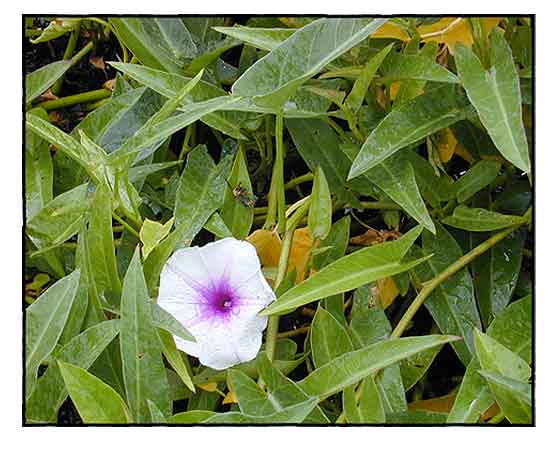
Kangkong is a smooth, widely spreading
vine, with the stems trailing on mud or floating on water. Leaves are
oblong-ovate, 7 to 14 centimeters long, with a pointed tip and heart-shaped or arrow-shaped
base, long petioled, the margins entire or angular, and sublobed. Peduncles are erect, 2.5 to 5 centimeters long, with 1 or 2 flowers, borne in the
axils of the leaves. Sepals are green, oblong, about 8 millimeters long. Corolla
is narrowly bell-shaped, about 5 centimeters long, and purplish; limb nearly white or pale pink purple, about 5 centimeters in diameter, the tube
deeper purple inside. Capsules are smooth and ovoid, about 1 centimeter long.
D istribution istribution
- Native to the Philippines.
-
Throughout the Philippines
in stagnant streams, fresh-water swamps, and pools.
- Also native to Angola, Assam, Australia, Bangladesh, Borneo, Botswana, Burkina, Burundi, Cambodia, Cameroon, Caprivi Strip, Caroline Is., Central African Repu, Chad, China, Comoros, Congo, Eritrea, Ethiopia, Fiji, Gabon, Gambia, Ghana, Gilbert Is., Guinea, Gulf States, Himalaya, India, Ivory Coast, Jawa, Kenya, KwaZulu-Natal, Laos, Lesser Sunda Is., Liberia, Madagascar, Malawi, Malaya, Mali, Maluku, Marianas, Mauritania, Mozambique, Myanmar, Namibia, Nepal, New Guinea, Nigeria, Northern Territory, Oman, Pakistan, Queensland, Saudi Arabia, Senegal, Sierra Leone, Somalia, Sri Lanka, Sudan, Sulawesi, Sumatera, Tanzania, Thailand, Togo, Uganda, Vanuatu, Vietnam, Yemen, Zambia, Zaïre, Zimbabwe. (18)
- Extensively cultivated in southern China.
- An invasive species in many parts of the world and designated as a noxious weed, forming ragged mats that choke and stagnate in streams and swamps.
 Constituents Constituents
- Plant contains protein 1.6 %, fat 0.2%, and vitamins C3 and B2.
- Some major compounds from the plants are: nortropane alkaloids, calystegines B1; phenolic compounds N‐cis-Feruloyltyramine, N‐trans-feruloyltyramine, 3α,7β-O-D-di glycopyranosyl-dihydroquercetin and Isochlorogenic acid a, b and c. (see study below) (19)
- Compositional analysis of leaves yielded moisture 90%, protein 3%, fiber 0.9%, fat 0.4%, carbohydrate 4.3%, mineral matter 2%, nicotinic acid 0.6 mg/100g, riboflavin 120 mg/100g, vitamin C 137 mg/100g, vitamin E 11 mg/100g, and ash 1.4%. (20)
- Nutrient analysis of leaves (based on % dry weight) showed the leaves contained 3% protein, 4.5% total carbohydrate, 0.3% lipids, 78% moisture, 1.6% ash, 1.4% fiber and gross energy value of 141.4 Kj/g. Leaves yielded high amounts of essential amino acids (per 100g) 4765 mg: leucine 1365 mg/100g, tyrosine+phenylalanine 1124 mg/100g, lysine 682 mg, and threonine 606 mg. Minerals (per 100 g) were potassium 444 mg, calcium 163, sodium 159.8 mg, phosphorus 86, magnesium 52 mg, copper 5.3 mg, zinc 4.1 mg, iron 3.2 mg, and manganese 2.3 mg. (see study below) (23)
- Study of leaves yielded 18 compounds of which 13 were tentatively identified as quercetin‐3‐O ‐sophoroside, quercetin‐3‐O ‐glucoside, quercetin‐3,7‐di‐O ‐glucoside, nomilinic acid glucoside, 4,5‐di‐O ‐caffeoylquinic acid, 3,5‐di‐O ‐caffeoylquinic acid, luteolin‐7‐glucoside and 3,4,5‐tricaffeolquinic acid, fatty acid together with quercetin, and tricaffeoylquinic acid derivatives. (see study below) (36)
- GC-MS and FT-IR analysis of methanol leaf extract of Ipomoea aquatica for bioactive compounds yielded eight compounds identified as:(1) BenzylL-2, 3, 4-tri-o-(3methyl butyl)-a,L-aribinopyranoside, (2)
2-Methyl-2-tert-butoxypropane-1,3-diol, (3 )neophytadiene, (4) (1S,3R)-7’-Methoxy-3,4’dimethylspiro(cyclohexane-1,2’-(1’H)- quinoline), (5) 2-Hexadecen-1-ol,3,7,11,15-tetramethyl-,[R-[R*R*-(E)]-(CAS), (6) 9,12,15-octadecatrienoic acid, methyl ester (z,z,z)., (7) hexadecanoic acid, and (8) linolenic acid. (44)
Properties
- Considered purgative, diuretic, antiepileptic, CNS depressant, anti-inflammatory, hypolipidemic, antimicrobial, anthelmintic, antidiabetic.
- Studies have suggested antidiabetic , antioxidant, antiproliferative, antimicrobial, diuretic, anti-ulcer,
anxiolytic, memory-enhancing, antiepileptic, CNS depressant, hepatoprotective, nephroprotective, membrane stabilizing, α-glucosidase inhibitory, antiurolithiatic, acetylcholinesterase enzyme inhibiting properties.
Parts
used
Young leaves, stems, latex, juice.
 Uses Uses
Edibility / Nutritional
- Young leaves and shoots
eaten raw in salads, or steam and boiled like spinach, or stir-fried.
- Young stems popular as achara (native pickles) ingredient.
- A very versatile vegetable in Philippine cuisine.
- Good sources of iron, calcium, vitamins B and C and amino acids.
- Caution: Studies caution on fecal and protozoan parasite contamination of water spinach from urban wastewater. (see study below) (26) (27)
Folkloric
- Tops are mildly laxative.
- The purplish variety used for diabetes because of assumed insulin-like
principle it contains.
- Juice used as emetic.
- Dried latex is purgative.
- Poultice of buds used for ringworm.
- Used as laxative and sedative; used for piles, nervous conditions, headache, insomnia.
- In Burma, the juice is employed as an emetic in cases of arsenical or opium poisoning.
- In Cambodia, used as poultice for fever with delirium; buds applied to ringworm.
- In Ayurveda, extracts
of leaves are used for jaundice and nervous debility.
- Juice used as emetic in opium and arsenic poisoning.
- In Sri Lanka, used for
liver disease, eye problems, constipation.
Others
- Fodder: Leaves used as food for gurami fish and pigs. Use in animals limited by laxative effect.
(•) In Cambodia and Myanmar, used as poultry feed. (see study below) (48)
Studies
• Hypoglycemic / Anti-Diabetic:
Study evaluated the oral hypoglycemic activity of single and multiple doses of Ipomoea aquatica in healthy male Wistar rats after a glucose challenge. Results showed significant reduction in glucose concentrations in both single (33%, p<0027) and multiple (25%, p<00.02) doses. (1)
• Hypoglycemic / Comparable to Tolbutamide: An aqueous extract of the green leafy vegetable
Ipomoea aquatica is as effective as the oral hypoglycemic drug tolbutamide
in reducing the blood sugar levels of Wistar rats. (3)
• Hypoglycemic / Glucose Absorption Inhibitory Effect: Inhibitory effect
of Ipomoea aquatica extracts on glucose absorption using a perfused
rat intestinal preparation: Study showed a significant inhibitory effect
on glucose absorption. Furthermore, results suggest the inhibition of
glucose absorption is not due to the acceleration of intestinal transit.
(4)
• Hypoglycemic / Oral Consumption Study showed the consumption of shredded, fresh, edible portion
of IA for one week, effectively reduced the fasting blood sugar of Streptozotocin-induced
diabetic rats. (5)
• Antioxidant / Antiproliferative: Antioxidant and antiproliferative activities of water
spinach (Ipomoea aquatica Forsk) constituents: Study showed the water
extract of stems had the highest antiproliferative activity. The ethanol
extract of the stems had the highest total phenolic compounds. The ethanol
extract of leaves had the highest amount of flavonoids. (2)
• Diuretic: Study on the diuretic activity of the methanol extract
of Ipomoea aquatica in Swiss albino mice showed good diuretic activity.
In all cases, the excretion of electrolytes and urine volume increase
was higher than the standard diuretic, furosemide. (7)
• Antioxidant: Study of a methanol extract yielded a compound ( 7-O-B-D-glucopyronosyl-dihydromquercetin-3-O-a-D-glucopyranoside)
that exhibited antioxidant activity with an EC50 value of 83 and showed
very strong lipid peroxidation-inhibitory activity in a liposome model
system. (8)
• Antimicrobial: Study investigating the antimicrobial efficacy of the leaf extract of three herbs – A longifolia, I aquatica and E fluctuans – on four pathogenic bacterial strains (E coli, P aeruginosa, S aureus and M luteus). Ipomoea aquatica exerted the higher amount of antimicrobial activity against the bacterial strains, better than the two other herb extracts. (9)
• Antiulcerogenic: Study in an aspirin-induced ulcer model in rats found Ipomoea aquatica to possess potent anti-ulcerogenic and ulcer-healing properties and can act as a potent therapeutic agent against peptic ulcer disease. (10)
• Cytotoxicity / Leaf: Study isolated a purified bioactive compound from the leaf of Ipomoea aquatica – 7-O-B-D-glucopyranosyl-dihydroquercetin-3-O-a-D-glucopyranoside (DHQG). Results showed DHQG showed cytotoxicity towards cancer cell lines tested.
• Nootropic / Memory Enhancing Potential: Study suggests that MEIA markedly improves brain Ach level. MEIA treatment may be of value in reinforcing depressed cholinergic transmission in certain age related memory disorders and to improve memory and learning in normal individuals. (11)
• Anxiolytic / Leaves: Study evaluated the anxiolytic activity of Ipomoea aquatica leaves. A methanol-ethanol extract significantly potentiated ketamine-induced sleep by reduction in latency to sleep and increased duration of sleep, suggesting the interaction of I. aquatica with CNS depressants. (12)
• Hypoglycemic/ Antioxidant / Leaves: Study evaluated the hypoglycemic and antioxidant activity of methanolic extract of leaves in Swiss albino mice. Results showed potent hypoglycemic activity compared with control. Extract also showed potent free radical scavenging activity with vitamin C as standard. (14)
• CNS Depressant / Antiepileptic / Leaves: Study on various animal models evaluated the CNS depressant and antiepileptic activities of a methanol extract of leaves of Ipomoea aquatica. Results showed dose-dependent and significant increases in onset to clonic and tonic convulsions or complete protection against seizures induced by strychnine and picrotoxin. There was also dose-dependent prolongation of pentobarbitone sleeping time and suppression of exploratory behavior. (15)
• Hepatoprotective / Thioacetamide-Induced Hepatotoxicity: Study evaluated the protective effects of ethanol extract of I. aquatica against liver damage induced by thioacetamine in rats. Results showed a protective effect in TAA-induced liver damage probably by contributing to its modulation on detoxification enzymes, antioxidant, and free radical scavenger effects. (17)
• Lead and Cadmium Content: Study was conducted to determine the concentrations of lead (Pb) and cadmium (Cd) in the top, middle, and bottom of edible portions of I. aquatica. Pb concentration showed a decreasing trend from the roots to the leaves, and from bottom to top section to shoot apex. The concentrations of Pb and Cd in the edible portions were far below the maximum tolerable daily intake for man set by the WHO. The bottom of the edible portion of the plant should be removed to minimize Pb intake. (13)
• Constituents and Pharmacological Potentiality: Some major plant compounds are: (1) Calystegines B1, a nortropane alkaloid, with potent inhibitory activity against rat lysosomal ß-glucosidase, (2) N‐cis-feruloyltyramine and N‐trans-feruloyltyramine, phenolic compounds isolated from the roots, considered potent inhibitors of prostaglandin synthesis, (3) 3α,7β-O-D-di glycopyranosyl-dihydroquercetin, a compound that has shown cytotoxicity against cancer cell lines viz. Hep-2 and A-549, and (4) Isochlorogenic acid a, b and c, phenolic compounds with collagenase inhibitory activity, antioxidant activity, anti-HIV activity. (19)
• Protective Against Cadmium-Induced Toxicity: Study evaluated two aquatic vegetables, aqueous extracts of Ipomoea aquatica and Enhydra fluctuans, traditionally used against heavy metal toxicity in traditional medicine in India, for protective role against Cd-intoxication. Results suggest both extracts offered protection against Cd-induced toxicity by counteracting oxidative stress and ROS mediated apoptosis and/or promoting the elimination of Cd by chelating. (21)
• Toxicity Studies / Safety Profile / Leaves: Study evaluated the safety of an hydroalcoholic extract of Ipomoea aquatica Forsk. leaves in acute and sub-acute administration in a rodent model. Results showed no sign of toxicity during the study period—no change in general behavior, adverse effects and mortality. No significant changes were observed in organ weights and histopathological exam showed not morphological alterations. Results suggest a wide margin of safety for therapeutic use of the plant. (22)
• Antioxidant / Leaves: Ethanolic extract of leaves exhibited good antioxidant activity with IC50 values of 0.387 and 0.394 mg/mL against DPPH and ABTS radicals, respectively. Vitamin C content was 50 mg/100g and total phenolic content was 561 mg gallic acid equivalent per 100 g, both of which could be main contributors to the antioxidant capacity of the leaves. (see constituents above) (23)
• Nephroprotective / Gentamicin-Induced Toxicity / Leaves: Study evaluated the nephroprotective effect of water spinach ethanol extract of leaves on gentamicin-induced nephrotoxic rats. Results showed significant decrease (p<0.01) in the elevated serum creatinine and urea levels compared to gentamicin treated group. (24)
• Amelioration of Lead Toxicity: Study evaluated the protective role of edible aqueous extract of I. aquatica against experimentally induced Pb-intoxication. Pb-acetate treated hepatocytes showed gradual reduction of cell viability dose-dependently with IC50 of 6.8 µM. There was significantly enhanced levels (p<0.01) of ROS production, lipid peroxidation, protein carbonylation, along with depletion (p<0.001) of antioxidant enzymes and GSH. The protective effect may be through counteracting with Pb mediated oxidative stress and/or promoting elimination of Pb by chelation. Flavonoids, phenolics, and saponins may be responsible for the overall protective effect. (25)
• Fecal and Protozoan Contamination / Wastewater Cultivation: Study sought to identify the level of contamination with thermotolerant coliforms (ThC), intestinal helminth eggs and protozoan parasites in water spinach (I. aquatica) cultivated in wastewater-fed lake in Phnom Penh, Cambodia.
Water spinach cultivated in the lake was highly contaminated with feces as evidenced by high ThC concentration and presence of protozoan parasites. A reduction of ThC to WHO guidelines for irrigation water occurred through natural biological and physical processes in the lake. (26)
• Effect of Drying Treatments and Solvents / α-Glucosidase Inhibitory Activity:
Study evaluated the effect of various ethanol solvent rations and drying methods on phytochemical constituents. The highest α-glucosidase inhibitory activity was seen with absolute ethanol extract from oven drying method with IC50 of 204.0 ± 59.0 µg/mL and total phenolic content of 22.0 ± 0.7 µg GAE/mg extract. Metabolites responsible for the activity were quercetin derivatives, chlorogenic acid derivatives, sucrose, and fructose. Study highlights I. aquatica as food source with potential for nutraceutical enhancement and as ingredient in medicinal preparation (28)
• Ameliorative in Induced Arsenic Toxicity: Ipomoea aquatica is traditionally used against As poisoning in India folk medicine. Study evaluated the therapeutic role of aqueous extract of IA against As-intoxication. Results showed aqueous extracts of edible aerial parts of I. aquatica could attenuate toxic manifestation caused by NaAsO2. Data suggested that As-mediated generation of ROS principally contributed in the toxicosis of As. The extract protected against NaAsO2-induced toxicity by counteracting oxidative stress and associated toxic manifestations and promoting As clearance from tissues via metal chelating. The presence of antioxidants viz., flavonoids, phenolics, and ascorbic acids may contribute in overall protection against arsenicosis. (29)
• Antidiabetic: Study evaluated the oral hypoglycemic activity of various fractions of I. aquatica in streptozotocin-induced diabetic male rats.
Results showed significant reduction of fasting blood glucose (p<0.05). Histologically, islets area and normal cell population were preserved in treated animals. Most biochemical parameters returned to nearly normal levels. DCM:EtOAc (75:25 v/v) showed more potent activity than other fraction EtOAc:MeOH. (30)
• Membrane Stabilization / Cytotoxicity: Study evaluated of water spinach leaf and stem ethanol extracts for possible antioxidant activities, membrane stabilizing potential and cytotoxicity. In DPPH radical scavenging assay, leaf and stem extracts showed IC50s of 672.376 and 33.188 µg/ml, respectively. Membrane stabilizing activity compared favorably with standard indomethacin. Leaf and stem extracts were less toxic (LC50 160.866 and 111.419 µg/ml) compared to standard potassium dichromate (LC50 of 44.20 µg/ml). (31)
• α-Glucosidase Inhibitory Activity / Phenolic Content: Study evaluated of effect of various ethanol ratios (0, 20, 50, 80, and 100) as extraction solvent and various drying methods on phytochemical constituents of Ipomoea aquatica. Effect on α-glucosidase inhibitory activity and total phenolic content was examined. Highest α-glucosidase inhibitory activity was seen with 100% ethanol extract from the oven drying method with IC50 of 204.0 ± 59.0 µg/ml and total phenolic content of 22.0 ± 0.7 GAE/mg extract. Activity was attributed to quercetin derivatives, chlorogenic acid derivatives, sucrose and fructose. (32)
• Comparative Study / Water and Land Spinach: Water spinach and land spinach are two varieties of I. aquatica in Indonesia. Water spinach showed higher antioxidant activity than land spinach, with a correlation between antioxidant activity and total phenol/flavonoid content. Based on TLC results, the antioxidant activity was attributable to flavonoid. (33)
• Anti-Urolithiatic: Study evaluated the in-vitro anti-urolithiatic activity of an ethanolic extract of Ipomoea aquatica. Neeri was used as standard drug. Results showed significant dissolution of calcium oxalate crystal, which was more efficient than Neeri. (34)
• Toxicity Studies / Leaves: Study evaluated the safety of a hydroalcoholic extract of I. aquatica leaves by determining its potential toxicity after acute and sub-acute administration in rodent. In acute study, single doses of 500, 1000, and 2000 mg/kg po was used, while in sub-acute toxicity study, 200 and 400 mg/kbw was used for four weeks. In both studies, there was no change in general behavior, adverse effects, signs of toxicity, and mortality. Histopathological evaluation showed normal profile with no morphological alterations. (35)
• α-Glucosidase Inhibitory / Antioxidant:: Study evaluated the effect of water and methanol extracts of three cultivars of Ipomoea aquatica on total phenolics, antioxidant capacity, and α-glucosidase inhibitory activities. Results showed the 70% methanol extract of K-11 cultivar showed higher total phenolic content and α-glucosidase inhibitory and antioxidant activities than two other cultivars. Eighteen compounds were detected
• Anti-Ulcer / Leaves: Study evaluated the antiulcer effects of aqueous, chloroform, and ethanol extracts of I. aquatica leaves in pylorus-ligation, stress-induced and aspirin-induced rat models. Results showed the chloroform extract significant (p<0.001) decreased volume of gastric acid secretions, free acidity, total acidity, and ulcer index. (37)
• Nephroprotective / Cisplatin-Induced Kidney Damage / Leaves: Cisplatin antineoplastic efficacy and its nephrotoxicity is dose-dependent. Study evaluated the protective effect of ethanolic extract of leaves against a rat model with CPT-induced kidney damage. CPT-induced nephrotoxicity effects were significantly (p<0.01, 0.05) and dose-dependently reversed in extract pretreated rats. (38)
• Effect on Hematocrit / Leaves: Study evaluated the effect of 100% kangkong leaf extract on the hematocrit levels of male albino mice. Results showed a significant (p<0.05) increase in hematocrit levels. (39)
• Comparative Antioxidant Activities / Leave and Stems: Study evaluated leaves and stem extracts of I. aquatica for antioxidant activities. Phenolic and flavonoid contents of stems and leaves were 18.00 ± 1.20 and 20.00 ± 1.40 µg CEQ/g DW and 16.00 ± 1.10 and 1.40 µg/g DW for stems and leaves, respectively. (40)
• Acetylcholinesterase Enzyme Inhibition / Antioxidant / Potential for Alzheimer's Diseases: Alzheimer's disease (AD) is a primary degenerative disease of the CNS, characterized by dementia, behavioral and cognitive impairments, and increased level of AChE. Study evaluated AChE inhibition and antioxidant activity of I. aquatica leaves extracted with chloroform, n-hexane, ethanol, and a mixture of ethanol/water (6:4). All four extracts showed promising acetylcholinesterase inhibition activity, with the hydroalcoholic extract showing best inhibition potential (IC50 49.03 µg/ml. All extracts showed significant antioxidant activity in DPPH and hydrogen peroxide assays. (41)
• Antibacterial / Acne-Producing Bacteria: Study evaluated the antibacterial activity of herb extracts against Propionibacterium acnes, a gram-positive human skin commensal involved in the pathogenesis of acne. An ethanol-water spinach extract showed best antibacterial activity against P. acnes. MIC was 1280 µg/ml while MBC was >5120 µg/ml. (42)
• Cardiovascular Effects: Study evaluated a 95% ethanol extract for cardiovascular effects. Data showed the IAE had no effect on blood pressure and heart rate i anesthetized rats. However, IAE showed suppression of NA (noradrenaline)-mediated aortic contraction in a dose-dependent manner. Results suggest the I. aquatica extract acts via adrenergic receptors in vascular smooth muscle. (43)
• Water Spinach Powder / Characterization: Study evaluated the feasibility of I. aquatica as ingredient in other food products and its nutritional attributes. Powders were made by drying leaves and stems using sun drying, freeze-drying and tray drying. The freeze-dried powder showed most significant result. Physicochemical analysis showed the lyophilized water spinach powder has good amount of carbohydrates (58.15%), ash (12.39%), protein (4.01%), and fat (4.46%) content. The powder also exhibited high antioxidant property of 77.25% and total phenolic content of 32 µg/ml. SEM and XRD results showed the water spinach powder was amorphous in nature. (46)
• Cytotoxic / Antidiabetic / Antioxidant: Study evaluated various fractions of methanolic extract for cytotoxic, antiradical, and antidiabetic properties. Qualitative phytochemical analysis revealed alkaloids, terpenoids, phenols, and flavonoids in the EA-M fractions. Hexane-dichloromethane fraction showed most toxicity by brine shrimp lethality assay. Antioxidant assays showed the ethyl acetate-MeOH fractions as more potent, while α-glucosidase and α-amylase assays revealed the hexane-dichloromethane fraction as most potent antidiabetic agent. (47)
• Forage Potential: Study evaluated the potential of Ipomoea aquatica hay as alternative of forage for ruminants and its effect on production performance and ruminants health. Ruminants prefer feed in hay form rather than fresh plant. High production with its high amount of unsold waste products has potential for processing as feed forage/ A pelleting technology that breaks down cell wall of forage will make it easier to be degraded by microbes in the rumen. A dietary hay formulation, as main or additional feed ingredient could have a positive effect on production performance and health of both dairy ruminant and meat ruminants through its high nutritional content of protein, metabolizable energy, dry matter, digestibility, palatability, and bioactive compounds. (48)
• Hepatoprotective / Acetaminophen Toxicity: Study evaluated the hepatoprotective effect of Ipomoea aquatica methanolic extract against acetaminophen-induced liver damage in Sprague Dawley rats. Results showed hepatoprotective effect evidenced by histopathologic absence of cloudy swelling or cytoplasmic granulation. (49)
In the news
• Fasciolopsis buski: StarOnLine reports on the health benefits of a noxious weed. The weed may be contaminated with Fasciolopsis buski, a large intestinal parasite that is laid on water spinach as larval cysts. In humans and pigs, the cysts release the fluke that anchors to the intestinal wall and cause indigestion, allergic reactions, and abdominal pain. Untreated cases may be fatal. Infection is prevented by proper preparation, frying or boiling. (27)
Availability
- Cultivated.
- Wildcrafted.
- Seeds in the cybermarket.
- Ubiquitous market vegetable. |