 Gen info Gen info
- Calotropis is a genus of flowering plants in the family Apocynaceae, first described as a genus in 1810.
- They are commonly known as milkweeds because of the latex they produce.
- The flowers are favored by the Hawaiian Queen Liliuokalani, who considered them a symbol of royalty and wore them strung in leis. (57)
-
In Cambodia, the flowers are used to decorate funereal urns or sarcophagus and the interior of the house holding the funeral. (57)
- According to Shiva Purana, the flower is much liked by Lord Shiva, and if offered to him for peace, prosperity, and stability in society. The flower is one of the major parts of the nine astrological trees (Navagrah tree). (57)
Botany
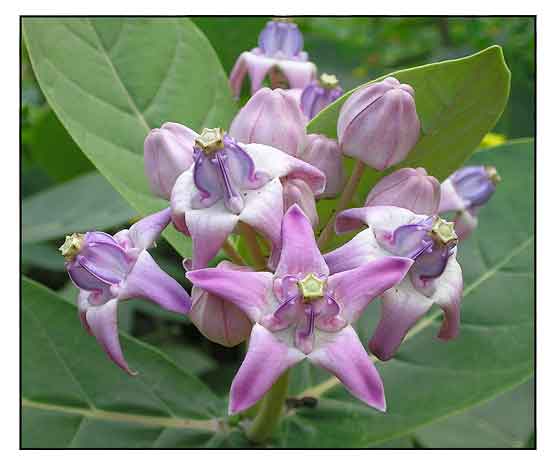
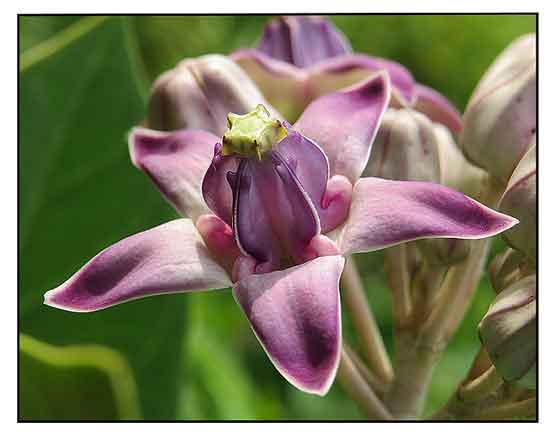
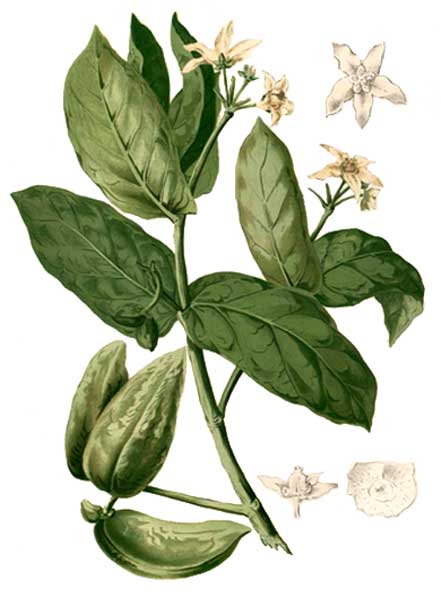
• Kapal-kapal is a medium-sized shrub growing to a height of 2 to 4 meters, the young parts covered with appressed white hairs. Bark is pale. Leaves are obovate or oblong, 10 to 20 centimeters long, 3 to 8 centimeters wide, cottony beneath, pointed at the tip, heart-shaped at the base. Flowers have a faint odor, not unpleasant, downy on the outside, arranged in axillary or subterminal, simple or compound, inflorescences. Corolla is 1.5 to 2.5 centimeters across, usually white, sometimes dull-purple or purplish-lilac; the lobes are ovate-lanceolate, and spreading. Fruit is a follicle, recurved, 7.5 to 10 centimeters long. Seeds are ovate, 5 to 6 millimeters long, with a bright, silky-white coma.
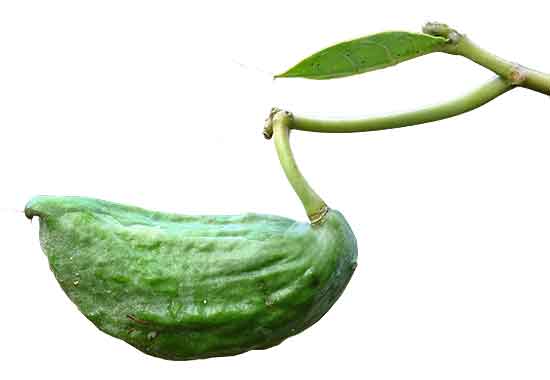 • Calotropis gigantea is a large shrub growing to 4 m (13 ft) tall. Stems are rect, branched, cylindrical, solid, contains milky latex. Leaves are 100–200 mm (4–8 in) long, decussate, obovate or elliptic-oblong, shortly acute, subsessile, cordate or often amplexicaul at the base. Inflorescence in umbellate cymes. Flowers are large, white or lavender in color, not scented, peduncles arising between the petioles. Flower-buds ovoid, angled, Calyx lobes 5, divided to the base, white, ovate; corolla broadly rotate, valvate, lobes 5, deltoid ovate, reflexed, coronate-appendages broad, obtusely 2-auricled below the rounded apex which is lower than the staminal-column. Stamens 5, anthers short with membranous appendages, inflexed over the depressed apex of the pentagonal stigma. Pollinium one in each cell, pendulous caudicles slender. Carpels 2 distinct, styles 2, united to the single pentangular stigma, ovary 2-celled, ovules many. Fruit is a pair of follicles with many, hairy seeds. • Calotropis gigantea is a large shrub growing to 4 m (13 ft) tall. Stems are rect, branched, cylindrical, solid, contains milky latex. Leaves are 100–200 mm (4–8 in) long, decussate, obovate or elliptic-oblong, shortly acute, subsessile, cordate or often amplexicaul at the base. Inflorescence in umbellate cymes. Flowers are large, white or lavender in color, not scented, peduncles arising between the petioles. Flower-buds ovoid, angled, Calyx lobes 5, divided to the base, white, ovate; corolla broadly rotate, valvate, lobes 5, deltoid ovate, reflexed, coronate-appendages broad, obtusely 2-auricled below the rounded apex which is lower than the staminal-column. Stamens 5, anthers short with membranous appendages, inflexed over the depressed apex of the pentagonal stigma. Pollinium one in each cell, pendulous caudicles slender. Carpels 2 distinct, styles 2, united to the single pentangular stigma, ovary 2-celled, ovules many. Fruit is a pair of follicles with many, hairy seeds.
Distribution
- Recent Introduction from tropical Asia.
-
Cultivated for its flowers, about dwellings in Manila and other large towns in the Philippines.
- Now pantropic.
now pantropic in cultivation.
- Native to Assam, Bangladesh, Cambodia, China South-Central, China Southeast, East Himalaya, Hainan, India, Jawa, Laccadive Is., Laos, Malaya, Maldives, Myanmar, Nepal, Sri Lanka, Sulawesi, Thailand, Vietnam. (18)
 Constituents Constituents
- Active principle appears to be a yellow, bitter resin.
- Root bark contains two substances closely resembling alban and fluavil found in gutta-percha.
- Leaves yield amyrin, amyrin acetate, ß-sitosterol, urosolic acid, cardenolides, calotropin, calotropagenin.
- Early studies of latex yielded an amorphous, bitter principle, calotropin, identical to mundarin.
- Latex contains cardiac glycosides, calotopin, uscharin, calotoxin, calactin and uscharidin; gigantin. Also contains the protease calotropin DI and DII and calotropin FI and FII.
- Ethanolic extract of latex yielded flavonoids, alkaloids, triterpenoids, steroids, saponins, phenols, and glycosides.
(see study below) (23)
- Leaves yielded steroids, triterpenoids, glycosides, flavonoids, carbohydrates, and proteins. (see study below)
(29)
- Chemical analysis of bark and seed fibers show the main components as holocellulose 76 and 69%, cellulose 57 and 49%, lignin 18 and 23%, and alkali soluble substances 17 and 15%, respectively. (see study below) (38)
- Various extracts of roots and latex yielded alkaloids, glycosides, tannins, saponins, and flavonoids. Latex yielded terpenoids. (see study below) (41)
- Study of active fractions of leaves yielded a new lignan, 9-methoxypinoresinol (1) and two new glycosylated 5-hydroxymethylfurfurals, calofurfuralside A and B (2 and 3), along with nine known compounds (4-12). (see study below) (42)
- GC-MS analysis of flower extract yielded alkaloids, tannins, phenol, flavonoids, sterols, anthraquinones, proteins and quinones. (45)
Properties
- Root bark considered emetic, used as substitute for ipecac.
- Latex is considered bitter, heating, purgative, caustic, acrid, expectorant, depilatory, anthelmintic.
- The latex calotropin, gigantin and uscharin have digitalis-like action on the heart.
- Latex used to induce abortion and infanticide.
- Flowers are considered digestive, stomachic, tonic.
- Studies have suggest analgesic, antimicrobial, antioxidant, antidiarrheal, anti-pyretic, antivenom, cytotoxic, insecticidal, hepatoprotective, wound healing properties.
Parts used
Root, root-bark, leaves and flowers.
 Uses Uses
Edibility
- In Java, the central part of the flower used to make sweetmeat.
- Inner part of the flower used for flavoring.
Folkloric
- Bark in small doses, dried and powdered, used as alterative and tonic; in larger doses, an emetic.
- Root-bark reported to promote secretions and used for skin diseases, enlargement of the abdominal viscera, intestinal worms, coughs, ascites, anasarca.
- In India, pulverized root made into ointment, used in the treatment of old ulcers.
- Root bark and inspissated juice used for leprosy, syphilis, cachexia, idiopathic ulcerations, dysentery, diarrhea, and chronic rheumatism.
- Leaves, warmed and moistened with oil, used as dry fomentation for abdominal pains; also, as rubifacient.
- In India, the acrid milky juice from bruised leaves and stems used for skin affections and as depilatory.
- Fresh or dried juice from the root-bark taken internally as alterative or purgative.
- Juice taken internally or locally as abortifacient. A stick smeared with the juice is pushed into the os uteri and left there until uterine contractions are induced.
- For toothaches, milky juice mixed with salt used for toothache; or juiced cotton inserted in the decayed tooth.
- Juice of young buds used for earache.
- Milky juice used for ringworm of the scalp, sinus problems and anal fistula; also used for pile, and mixed with honey for aphthae of the mouth.
- Flowers used for coughs, asthma, catarrh, and loss of appetite.
- In Ayurveda, used for the treatment of diabetes, bronchial asthma, rheumatoid arthritis, and nervous disorders.
- In Bangladesh, leaves used for treatment of diabetes and pain.
Others
- Ornamental: Flowers are strung into rosaries.
- Fiber: Fiber from inner bark once used in the manufacture of cloth for the nobility. The durable fiber commercially known for bowstrings. Stems yield a durable fiber for products for underwater use: nets, halters, lines, ropes and for making sewing threads.
- Seed hair said to have been used in making thread in Borneo.
- Gunpowder charcoal made from young branches.
- Floss of seeds used for stuffing mattresses.
- Salted acrid milky juice used to remove hair from hides.
- Root makes a good tooth cleanser.
- Root utilized in making charcoal and gunpowder.
- Infanticide: As poison, the juice, forced down the throat of infants, was a reported method of infanticide employed by castes, with the purpose of putting the girl babies to death.
Studies
• Anti-Diarrheal / Aerial Parts / Roots: Study of the hydroalcoholic extract of aerial parts of C gigantea on castor oil-induced diarrhea model in rats showed remarkable anti-diarrheal effect. (1) Study evaluated the in vivo anti-diarrheal activity of ethanolic extract of C. gigantea root extract in wistar rats by castor oil-induced diarrhea, enteropooling and small intestinal transit models. Results showed dose dependent decrease in diarrhea at three doses of 100, 200, and 400 mg/kg in all three experimental models. Results suggest some prostaglandin inhibitory effect and an anti-motility effect. (37)
• Latex / Wound Healing: Study using an excision and incision wound model showed to latex to have significant wound healing activity, similar to the standard FSC (Framycetin sulphate cream). (2) Study evaluated the wound healing potential of CG latex on excision wound induced model in rats. Topical application of 10% w/w latex ointment in petroleum gel for 14 days significantly improved wound contraction compared to control group of rats. The wound healing effect may be due to the high content of glycosides, flavonoids, phenolic compounds, and triterpenoids with antimicrobial and antioxidant properties. (31)
• Antibacterial / Latex: Study showed the latex to possess potent bactericidal activity attributed to the presence of biologically active ingredients with antimicrobial activity of the ethanolic extract. (3)
• Anti-Inflammatory: Anti-inflammatory studies of extracts of T procumbens and C gigantea showed greater anti-inflammatory action with the combined effect of CG and TP with ibuprofen than ibuprofen alone, probably through the potentiation of its inhibitory effect on the synthesis and release of various inflammatory mediators. (4) Study evaluated in-vitro anti-inflammatory activity of various extracts of leaves of C. gigantea. The ethanol extract of leaves showed significant inhibition using the albumin denaturation technique, with a degree of denaturation comparable to that produced by ibuprofen. (24)
• Vasodilation: Effect of latex from C gigantea in the green frog R hexadactyla showed a significant increase in cardiac output. Evidence suggests the prime action of latex on the cardiovascular system involves changes in the cation (Ca, Na) permeability, with consequent excitation of Ca channels in the heart muscle and an increase coronary flow. Therefore, dilatation property is likely responsible for the pharmacologic actions of the latex. (5)
• Hepatoprotective / Stem: Preliminary screening yielded triterpenoids, steroids, flavonoids and glycosides. Study showed C gigantea stem extract reduced lipid peroxidation and significantly improved biochemical parameters in CCL4-treated rats. (6)
• Cytotoxic / Pregnanone: Study yielded a new pregnanone, named calotropone, together with a known glycoside, from the ethanolic extract of the roots of C gigantea. The compounds exhibited inhibitory effects toward chronic myelogenous leukemia K562 and human gastric cancer SGC-7901 cell lines. (7)
• Antipyretic: Study showed the extract of C gigantea to have potent antipyretic activity against both yeast-induced and TAB-vaccine induced fever, suggesting a potential source for a cheaper and potent antipyretic agent. (8)
• Insecticidal / Root Bark: Study evaluated methanol extract and soluble fractions of root bark of C. gigantea against several instar of larvae and adult Tribolium castaneum. The methanol extract showed lowest LD50 values against several instar of larvae and adult TC. No fumigant toxicity was found. (10)
• Antimicrobial Activity / Cytotoxicity / Leaves: Various extracts of leaves were evaluated for antimicrobial and cytotoxic activity. The n-hexane, carbon tetrachloride, chloroform, ethanol and water extracts showed antimicrobial activity against most of the test organisms. On Brine Shrimp Lethality Bioassay, the crude extract induced significant cytotoxic activity. (13)
• Free Radical Scavenging Activity: Study evaluated the effects of chloroform extracts of leaf and flower on free radical scavenging activity and lipid profile in STZ-induced diabetic rats. Extracts caused a significant decrease in lipid peroxidation, SGPT, SGOT, alkaline phosphatase, and triglyceride levels. (14)
• Hepatoprotective / Flowers: An ethanol extract of flowers showed antioxidant and hepatoprotective activity against carbon tetrachloride-induced liver damage in mice. The hepatoprotective activity was comparable to silymarin. (15)
• Antihyperglycemic / Antinociceptive / Leaves: Study evaluated a methanol extract of leaves for antihyperglycemic and antinociceptive activity. Results showed significant dose-dependent reductions of blood glucose in oral glucose tolerance tests in glucose loaded mice. The extract also showed antinociceptive activity comparable to aspirin. (16)
• Protease Inhibition / Modulation of PLA2 Activity / Leaves: Study showed Calotropis gigantea acts as protease inhibitors containing plant compounds, applicable as targets in molecular therapies. Both white and violet verities of Calotropis gigantea have also shown good PLA2 inhibition activity. (17)
• Antibacterial Against Cariogenic Bacteria / Latex: Study evaluated the in vitro antibacterial potential of various extracts of C. gigantea against five cariogenic bacterial viz. Actinomyces viscosus, Lactobacillus acidophillus, L. casei, Streptococcus mitis, and S. mutans. The chloroform extracted fraction showed inhibitory effect against S. mutans and L. acidophilus. Study yielded a bioactive compound, methyl nonanoate, a saturated fatty acid. (19)
• Active Metabolites / Antifungal: Study evaluated solvent extracts of leaves, flowers, and buds of C. gigantea for active metabolites against pathogenic fungi viz. Aspergillus niger, Rhizoctonia oryzae-sativae, Fusarium solani, and Trichoderma viride. Ethanol bud extracts showed highest growth reducing activity against F. solani, while aqueous bud extract showed growth reduction activity against R. oryzae-sativae. Results showed mixed results for the solvent extracts as antifungal drugs. (20)
• Anhydrosophoradiol-3-acetate / Antitumor / Flower: Flower investigated the anti-tumor effect of anhydrosophoradiol-3-acetate (A3A), isolated from the flower of C. gigantea against Ehrlich's ascites carcinoma in Swiss albino mice. Results showed inhibition of EAC growth with improvement in cancer induced complications. (21)
• Toxicity Studies: Study investigated acute and subacute toxicity of ethanolic extract of C. gigantea flower. Acute toxicity study at oral dose of 2000 mg/kg did not produce mortality or changes in behavior or gross appearance of internal organs of mice and rats. In subacute toxicity studies with various doses up to 1000 mg/k/d for 30 days, there were no signs of toxicity during the experimental period, with no changes in biochemical or hematologic parameters. Results suggest safety in single dose acute and repetitive subacute toxicity studies. (22)
• Antifungal / Latex: Study evaluated the ethanolic extract of latex for in vitro activity against human pathogenic fungi. The extract yielded flavonoids, alkaloids, triterpenoids, steroids, saponins, phenols, and glycosides. The latex showed significant zone of inhibition in a dose dependent manner. (23)
• Lupeol / Latex: Study isolated lupeol, a triterpenoid, from the latex of C. gigantea for the first time. Lupeol is a potent bioactive compound, which is vastly used as an anti-inflammatory compound. (24)
• Anti-Asthma / Latex: Study evaluated the effect of a methanolic extract of root of C. gigantea on ovalbumin induced asthma and arachidonic acid induced paw edema in rats. Results showed anti-inflammatory, anti-lipoxygenase and antioxidant activity with therapeutic potential in the treatment of asthma. (25)
• Anti-Diabetic / Flowers: Study evaluated the anti-diabetic activity of a chloroform extract of flowers in alloxan-induced hyperglycemia in vivo and inhibition of α-amylase and α-glucosidase in vitro. Results showed moderately significant anti-diabetic potential in reducing fasting glucose in the diabetic rats, and statistically significant maintenance of the serum marker antioxidant enzymes. The overall effect at 200 mg/kg was moderate as compared to standard drug glibenclamide. (26)
• Antioxidant / Leaves: Study evaluated the in vitro antioxidant properties of hydroalcoholic extract of leaves against DPPH, reducing power assay, and NO scavenging activity. Results confirmed the antioxidant properties of the extract of leaves. Phenolic content was 63.08 ± 4.17 mg gallic acid equivalent per gram of extract. Total tannin was 0.52% expressed as tannic acid. Total flavonoid content was 46.97 46.97±1.95 µg/mL. (27)
• Apoptosis / Human Hepatocellular Carcinoma / Roots: Study evaluated three root extracts of C. gigantea for antiproliferative activity on human hepatocellular carcinoma cells, HepG2, and human breast cancer cells, MCF-7. Results showed the methanolic root extract induced apoptosis of HepG2 cells by altering bax/bcl-2 expression. (28)
• Anti-Arthritic / Leaves: Study evaluated the anti-arthritic activity of various extracts of leaves of C. gigantea in adjuvant induced arthritis model. The aqueous extract inhibited rat paw edema by 67.04% compared to diclofenac 68.29%, with significant suppression of leucocyte migration into the inflamed areas. Results suggest potential for anti-arthritic activity. (29)
• Female Antifertility Effects: Study evaluated the antifertility and ovaro-uterotoxic activities of extracts of C. gigantea in animal models. Results showed the extracts were strongly antiestrogenic and antiprogestagenic. Although toxic at higher doses, the extract have the potential as female antifertility agents with proper control of toxicity. (30)
• Silver Nanoparticles / Antibacterial Activity: Study reports on the green synthesis of silver nanoparticles from leaf extract of C. gigantea. In antibacterial testing, increasing concentrations of silver nanoparticles effectively reduced the number of colonies of V. alginolyticus isolated from wild Artemis franciscana cysts. (32)
• Larvicidal, Repellent, and Ovicidal / Culex spp / Leaves: Study screened C. gigantea leaves for larvicidal, mosquito repellent and ovicidal activity against Culex gelidus and C. tritaeniorhynchus mosquitoes. Results suggest C. gigantea has potential as a natural source for a new, safe, and eco-friendly insecticide for control of CG and CT mosquitoes. (33)
• Neuropharmacological Activity / Roots: A methanol extract and ethyl acetate fraction of C. gigantea roots exhibited statistically significant anti-anxiety, anticonvulsant, antidepressant, sedative, antistress and analgesic activities in experimental mice models. Flavonoids was the major class of phytoconstituents. (34)
• Antivenom Activity: Study evaluated the antivenom activity of C. gigantea plant extract against Vipera russelii snake venom. Oral administration of CG plant extract at dose levels 200 and 400 mg/kbw effectively neutralized the lethal effect of 2LD50 and 3:D50 of V. russelii venom in in-vivo neutralization in mice. Plant extract at dose levels of 200 and 400 mg/kg showed significant anti-inflammatory activity at 240 min, an effect comparable with that produced by antivenom. (35)
• CNS Activity / Toxicity Study / Leaves: Study evaluated the CNS activity of ethanolic extract of leaves of Calotropis gigantea. Results showed anticonvulsant, sedative, and muscle relaxant effect. Acute toxicity study showed safety of the extract up to a dose of 2000 mg/kg. (36)
• Raw Material for Fiber-Reinforced Composite: Study evaluated the feasibility of applying two kinds of mudar fibers (seed fibers and bark fibers) as alternative raw material for fiber-reinforced composite. Findings suggest both types of fibers have the potential for replacing or supplementing other fibrous raw materials as reinforcing agent. (38)
• Hepatoprotective / Root Bark: Study of suspensions of alcoholic extract of root bark of C. gigantea showed significant hepatoprotective activity in Wistar albino rats with hepatic injury induced by D-galactosamine. (39)
• Anti-Diabetic / Leaves and Flowers: Study evaluated the hypoglycemic and anti-diabetic activity of chloroform extract of C. gigantea leaves and flowers in normal and STZ-induced diabetic rats. Results showed significant lowering in serum glucose levels. (40)
• Antimicrobial / Roots and Latex: Study evaluated various solvent extracts root and latex of C. gigantea for antimicrobial activity against E. coli, P. aeruginosa, and S. aureus. Results confirmed antibacterial activity of shade dried extract of Cg against human pathogenic organisms. (see constituents above) (41)
• Cytotoxicity / Leaves: Study of leaves yielded a new lignan, 9'-methoxypinoresinol (1), two glycosylated 5-hydroxymethylfurfurals, together with nine known compounds. Compounds 1 and 9 exhibited potent cytotoxicity against PANC-1 human pancreatic cancer cell line. Compound 1 also significantly inhibited the colony formation of PANC-1 cells in a concentration dependent manner. (see constituents above) (42)
• Sub-Acute Toxicity Study / Latex: A sub-acute 28-day toxicity study evaluated various doses (50-2000 mg/kbw/day) of ethanol and methanol extracts of C. gigantea latex administered intraperitoneally. Results showed no significant toxicity up to dose level of 1000 mg/kbw/day in terms of blood glucose and SGTP. (43)
•
Cytotoxicity Against L-6 Cell Line / Leaves: Study of leaf extract of C. gigantea exhibited potent cytotoxic activity against L-6 cell line. Phytochemical analysis of leaves yielded flavonoids, alkaloids, tannins, steroids, saponins, and glycosides. (44)
• Antioxidant / Antimicrobial / Flowers: Study evaluated C. gigantea flower extract for antioxidant and antimicrobial activities. A chloroform extract showed highest DPPH free radical scavenging activity. Plant extracts tested showed potential antimicrobial activity against Gram-positive and Gram-negative microorganisms and greater activity against C. albicans compared to A. niger and A. flavus. (see constituents above) (45)
• Immunosuppressive / Cytotoxic / Flavonoids / Leaves: Study evaluated the immunosuppressive and cytotoxic activity of flavonoids from the leaves of Calotropis gigantea, A. vasica and A. integrifolia on human whole blood and peripheral blood mononuclear cells (PBMC) against hepatitis B vaccine containing surface antigen (HBsAg). Results showed sudden decline in monocytes and granulocyte count, nitric acid production, and cytotoxicity in the form of proliferation of higher doses. Study results suggest a potential candidate for an anticancer agent. (46)
• Oviposition Deterrence / Ovicidal / Leaves: Paraeucosmetus pallicornis is a new Indonesian pest which decreases rice production and quality. Study evaluated C. gigantea leaf extract as oviposition deterrent and ovicide against P. pallicornis. All concentrations of the leaf extract reduced the number of eggs laid and hatched. The concentration with the highest potential was in the range of 1.0-2.0%. (47)
• Anticonvulsant / Leaves: Study evaluated a hydroalcoholic extract of C. gigantea leaves for anticonvulsant activity against Maximum Electric Shock (MES) induced convulsion in a Swiss albino mice model. Results showed significant (p<0.01) anticonvulsant effect at 400 and 300 mg/kbw. Phytochemical screening yielded alkaloids, cardiac glycosides, flavonoids, steroids, tannins, triterpenoids, carbohydrates, and saponins. (48)
• Anti-Inflammatory / C. gigantea and Tridax procumbens: Study evaluated the anti-inflammatory effect of low dose of aqueous extract of T. procumbens and ethanolic extract of C. gigantea on carrageenan induced paw edema and compared to standard ibuprofen. Results showed significant anti-inflammatory activity. There was also greater anti-inflammatory action due to combined effect of C. gigantea and T. procumbens with ibuprofen than ibuprofen alone. This could be due to the inhibitory effect on synthesis and release of anti-inflammatory mediators. (49)
• Silver Nanoparticles / Mosquito Larvicidal
/ Leaves: Study suggest synthesized Ag NPs has potential as an eco-friendly approach for the control of Aedes aegypti and A. stephensi. This is the first report on mosquito larvicidal activity of synthesized AgNPs against mosquito vectors. (50)
• Cardenolides / Cytotoxicity / Leaves: Study of dichlormethane extract of leaves isolated two new cardenolides (1 and 2) along with 12 known compounds. All cardenolides tested showed strong inhibitory effects against KB, BC, and NCI-H187. (51)
• Cardiotonic Against Doxorubicin Induced CHF / Leaves: Study evaluated a dried leaf ethanol for in vitro cardiotonic activity in doxorubicin induced congestive heart failure in rats. Results showed a significant increase in force of contraction, cardiac output, and heart rate in the failing heart. (52)
• Anti-Asthma / Leaves: Study evaluated the effect of ethanolic extract of C. gigantea leaves in an in vivo model of histamine induced bronchial muscle constriction in guinea pigs. Results showed potential for use in asthma. There was significant protection at lower doses with further increase in activity with increase in dose. (53)
• Antiplasmodial / Drug-Resistant Malaria / Leaves: Study evaluated the in vitro antiplasmodial activities of leaf, stem, and flower of C. gigantea against chloroquine-sensitive Plasmodium falcifarum (3D7 strain) and its cytotoxicity against THP-1 cell lines. Of all the extracts, the methanolic extract of leaves showed the highest antimalarial activity with IC50 of 12.17 µg/ml. On cytotoxicity evaluation, crude extracts showed cytotoxicity on THP-1 cell line. In vivo testing showed the methanolic leaf extract to have excellent activity against P. berghei malaria parasite with moderately low and dose dependent (p<0.05) decrement in parasite counts. Results suggest a potential alternative source for the development of new drugs for the treatment of drug-resistant malaria. (54)
• 2'-Epi-uscharin / Cardenolides / HIF-1 Inhibitory Activity / Latex: HIF-1 is a transcription factor through which cancer cells adapt to the hypoxic microenvironment caused by rapid proliferations. Study isolated two steroisomeric cardenolides, uscharin (1) and a new compound, 1'-epi-uscharin (2) from the latex of C. gigantea. Both showed strong inhibitory effects on HIF-1 activity, compound 1 more potent than 2 and digoxin, a well-known HIF-1 inhibitor. (55)
Availability
- Wild-crafted.
- Tinctures in the cybermarket.
|




.jpg)