 |

Family • Lamiaceae / Verbenaceae
Kasopangil
Clerodendrum intermedium Cham.
BLEEDING HEART
Bao da lung chuan hua
|
| Scientific names | Common names |
| Clerodendrum illustre N.E.Br. | Aloksok (Bis.) |
| Clerodendrum intermedium Cham. | Asuangai (Bis.) |
| Clerodendrum puberulum Merr. | Balantana (Bis.) |
| Volkameria casopanguil Blanco | Bantana (Bis.) |
| Buakan (C. Bis.) | |
| Buakan-buakan (C.Bis.)_ | |
| Dagtung (C. Bis.) | |
| Humang (If.) | |
| Iginga (Tag.) | |
| Kalalauan (Tag.) | |
| Kasopangil (Tag.) | |
| Kasupangil (Tag.) | |
| Katungatum (Mag.) | |
| Kolokolog (Bis.) | |
| Kusong (Tag.) | |
| Laroan-anito (Tag.) | |
| Libintano (P. Bis.) | |
| Matang-kuwaw (Albay) | |
| Pakapis (Bis.) | |
| Salinguak (P. Bis.) | |
| Tapag-asuwang (Tag.) | |
| Glorybower (Engl.) | |
| Bagflower (Engl.) | |
| Bleeding heart (Engl.) | |
| Dragon boat flower (Engl.) | |
| Pagoda flower (Engl.) | |
| Quisumbing's compilation provides five scientific synonyms for C. intermedium, while other compilations, including The Plant List provide only one: Volkameria casopanguil Blanco. POWO lists three. | |
| Pagoda flower is a common name shared by Clerodendron intermedium (kasopangil) and C. paniculatum (Pangil-pangil). | |
| Clerodendrum intermedium Cham. is an accepted species. KEW: Plants of the World Online | |
| Other vernacular names |
| CHINESE: Bao da lung chuan hua, Ken ding ku lin pan. |
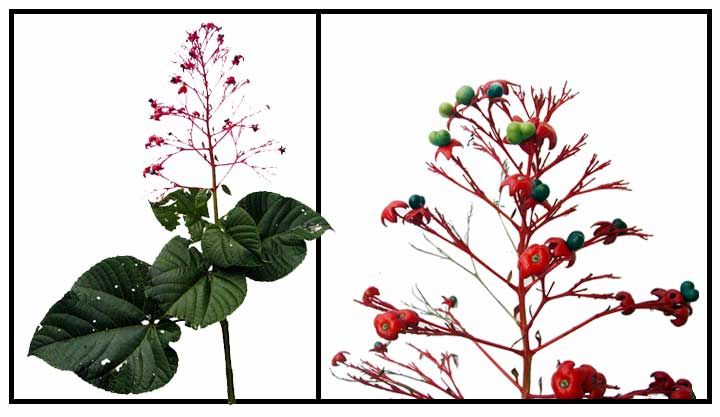
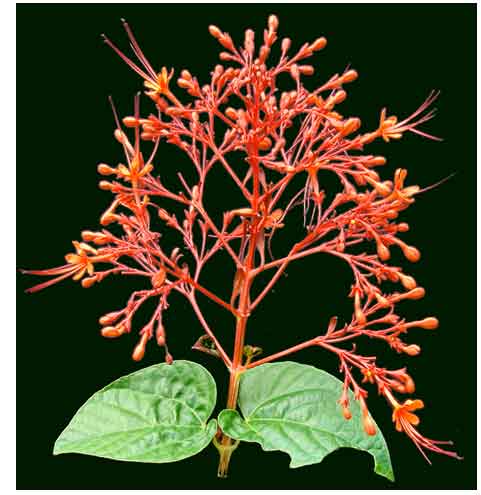
Gen info Botany • Clerodendrum intermedium is similar to Clerodendrum paniculatum, but the latter has bigger inflorescences and lobulate leaves. (3)
Constituents Properties Parts
utilized Uses Studies Availability |
Updated May 2025 / September 2019 / March 2015

 |
PHOTOS / ILLUSTRATIONS |
Photos © Godofredo Stuart / StuartXchange |
Additional
Sources and Suggested Readings |
• |
DOI: It is not uncommon for links on studies/sources to change. Copying and pasting the information on the search window or using the DOI (if available) will often redirect to the new link page. (Citing and Using a (DOI) Digital Object Identifier) |
| List of Understudied Philippine Medicinal Plants |
| New plant names needed The compilation now numbers over 1,500 medicinal plants. While I believe there are hundreds more that can be added to the collection, they are becoming more difficult to find. If you have a plant to suggest for inclusion, native or introduced, please email the info: scientific name (most helpful), local plant name (if known), any known folkloric medicinal use, and, if possible, a photo. Your help will be greatly appreciated. |
• |
 |
|
 Distribution