
|

Family •
Moraceae
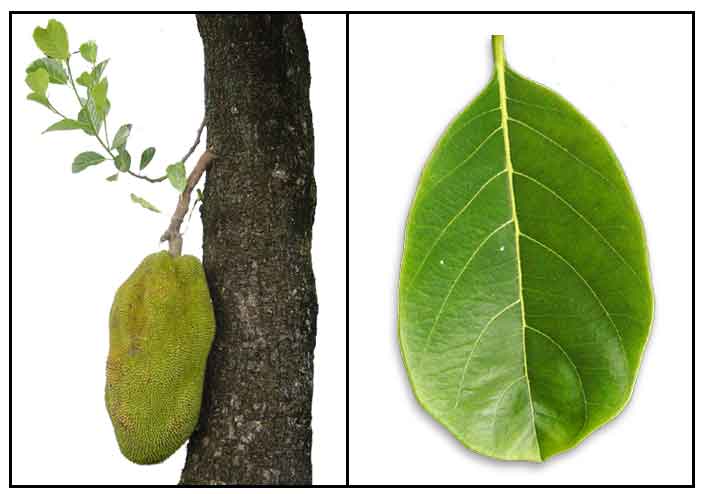
Langka
Artocarpus heterophyllus Lam.
JACKFRUIT
Mu bo luo
| Scientific names | Common names |
| Artocarpus brasiliensis Gomes | Lanka (Ilk.) |
| Artocarpus grandis Linden ex Cazzuola & Nencioni | Langka (Ilk., Tag., Bis.) |
| Artocarpus heterophyllus Lam. | Nangka (Bis. Tag., Ibn.) |
| Artocarpus integrifolius var. glaber Stokes | Nanka (Bis., Sul.) |
| Artocarpus integrifolius var.heterophyllus (Lam.) Pers. | Jack fruit (Engl.) |
| Artocarpus maximus Blanco | Jack tree (Engl.) |
| Artocarpus nanca Noronha | Jack (Engl.) |
| Artocarpus philippensis Lam. | Jak (Engl.) |
| Polyphema jaca Lour. | |
| Saccus heterophyllus (Lam.) Kuntze | |
| Artocarpus heterophyllus Lam. is an accepted species. KEW: Plants of the World Online | |
| Other vernacular names |
| ASSAMESE: Konthal, Konto phol, Kontok phol, Kontoki. |
| BENGALI: Kanthal. |
| BURMESE: Khnaor, Peignai. |
| CHINESE: Shu bo luo, Niu du zi guo, Bo luo mi, Mu bo luo. |
| DANISH: Jackfrugttrae. |
| DUTCH: Nangka. |
| FRENCH: Jacquier. |
| GERMAN: Indischer Brotfruchtbaum, Jackfrucht, Jackfruchtßaum. |
| GUJARATI: Phannasa. |
| HINDI: Cakki, Katahal, Kathal, Kanthal, Panas. |
| ITALIAN: Falso albero del pane. |
| JAPANESE: Nagami pannoki, Paramitsu. |
| KANNADA: Halasina hannu, Halasu, Panasero. |
| KHMER: Khnor. |
| KOREAN: Baramil |
| LAOTIAN: Mai mi, Mak mi, Mi. |
| LUGANDA: Yakobo, Kifenensi. |
| MALAY: Nangka, Nongko (Indonesia, Bali), Nangka bubor, Keledang (Timor). |
| MALAYALAM: Chakka. |
| MARATHI: Phanas. |
| NEPALESE: Rukh kutaherr. |
| ORIYA: Panasa. |
| PERSIAN: Derakhte nan. |
| PORTUGUESE: Jaca. |
| SANSKRIT: Panasah, Panasam. |
| SINHALESE: Jak, Kos. |
| SPANISH: Arbol del pan, Fruta del pobre, Jaca, Jaka, Jaqueiro. |
| SWAHILI: Fenesi. |
| SWEDISH: Jacktrad. |
| TAMIL: Palaa, Palavu. |
| THAI: Banun, Khanun, Makmee, Maak laang. |
| VIETNAMESE: Mit. |
|
Gen info
Distribution Constituents Parts
utilized Edibility - The young fruit is also a vegetable. - Fruit has a high carbohydrate content. - Seeds are very rich in starch, but a poor source of calcium and iron. - The pulp or flesh (lamukot) surrounding the seeds is rich, yellow, sweet and aromatic, rich in vitamin C, eaten fresh or cooked or preserved. - The seeds are boiled or roasted. - The unripe fruit can be pickled. - In India, the unripe fruit used in the preparation of pickles. Folkloric · Skin diseases, ulcers and wounds: Ash of burnt leaves applied on wounds and ulcers as cicatrizant. · Burnt ashes of leaves (preferably fresh) with coconut oil, and as ointment, also used for ulcers and wounds. · Diarrhea, fever and asthma: A decoction of the root (preferably chopped into small pieces before boiling) of the tree, three to four cups daily. · Glandular swelling and snake bites: Apply the milky juice of the tree. · When mixed with vinegar, it is especially beneficial for glandular swelling and abscesses, promoting absorption and suppuration. · Leaves used for fever, wounds, abscesses, · The ripe fruit is laxative; in large quantities, it produces diarrhea. · The roasted seeds believed to have aphrodisiac properties. · Pulp envelopes or arils of seeds considered cooling, tonic and nutritious China. · In India, the leaves and bark of Artocarpus heterophyllus and Mangifera indica, boiled in water, are used as postpartum bath, to rejuvenate the mothers after delivery. · Starch of seeds given in bilious colic. · In China, roasted seeds used as aphrodisiac. · Root extract used for asthma , fever and diarrhea. · Bark is considered sedative. · In Sri Lanka and India, extracts of mature leaves used for treatment of diabetes. · In China, pulp of fruit also considered useful in suppressing alcohol in the body. · In Indian medicine, bark used in fever, boils, wounds, skin diseases. · In Mauritius, used for diabetes. · In Ayurvedic medicine, hot water extract of mature leaves used for treatment of diabetes. · In Cambodia, wood considered a nervous sedative; used for convulsions. Pith taken internally as abortifacient. In Bihar India, plant used for toothache, stomach complaints, sores and sterility in women. (57) Others · Lambanog additive: Fruit used to flavor and age lambanog; locals believe it increases alcohol potency. · Alcohol: Can be fermented and distilled. · Adhesive: Tree latex is used as bird lime; and when heated makes a good cement for china. · Rope: Bark sometimes used for making rope and cloth. · Dye: Wood has limited use as source of yellow dye. (•) Wood chips yield a dye, which gives the famous orange-red color to robes of Buddhist priests. (62) · Wood: Wood is termite resistant. Considered superior to teak; used for furniture, construction, turnery, inlay work, making of oars, implements and musical instruments. (46) · Gum / Resin: Latex yields 71.8% resin of 63.3 % fluavilles (yellow) and 8.5% albanes (white). Resins may have valuable application in varnishes. (46) Studies • Isoflavonoids / Anti-Inflammatory: Study of Artocarpus heterophyllus and A. communis for anti-inflammatory activities isolated 15 isoflavonoids. Many of the compounds exhibited varying degrees of anti-inflammatory activities–inhibitory effects on chemical mediator release from mast cells, neutrophils and macrophages, inhibition of ß-glucoronidase and histamine release from rat peritoneal mast cells, inhibition of lysozyme release from rat neutrophils, inhibition of superoxide anion formation, inhibition of NO production, among others. (see constituents above) (1) • Inhibition of Melanin Biosynthesis / Artocarpanone: Study showed the extract of AH to be one of the strongest inhibitor of tyrosinase activity. Study isolated Artocarpanone, which inhibited both mushroom tyrosinase activity and melanin production in B16 melanoma cells and presents as a potential as a remedy for hyperpigmentation in human skin. (2) • Inhibition of Melanin Biosynthesis / Melanoma Cells: Study evaluated the structure-activity relationship of prenyl-substituted polyphenols from Artocarpus heterophyllus as inhibitors of melanin biosynthesis in cultured melanoma Cells: Study isolated flavone-based polyphenols which were found to be active inhibitors of the in vivo melanin biosynthesis in B16 melanoma cells. (3) • Antibacterial / Natural Dye Material: Dye from heartwood of Artocarpus heterophyllus Lamk: Material isolated could be used as a direct dye for wool and silk. Study showed antibacterial activity against B. subtilis, B. cereus, S. aureus, E coli, K pneumonia. (4) • Source of Provitamin A carotenoids: Analysis of carotenoids in ripe jackfruit (Artocarpus heterophyllus) kernel and study of their bioconversion in rats: Study showed jackfruit to be a good source of provitamin A carotenoids (not as good as papaya). (5) • Antioxidant activity / Scavenging Activity: Study showed prenylated flavonoid with more antioxidant than non-prenylated flavonoid. (•) Study isolated prenylflavones cycloheterophyllin and artonins A and B which inhibited iron-induced lipid peroxidation and also show radical scavenging activity. (6) • Hypoglycemic / Anti-Diabetic: Screening of traditional antidiabetic medicinal plants of mauritius for possible -amylase inhibitory effects in vitro: Of several medicinal plants studied in Mauritius, only Artocarpus heterophyllus significantly inhibited a-amylase activity in vitro indicating that AH could act as a starch blocker to decrease post-prandial glucose peaks. (7) Study in male Wistar rats showed the flavonoid fraction of the leaf of AH to have a higher hypoglycemic effect than the sulfonylurea drug tolbutamide with no significant effects on the liver, kidney and heart. (8) Study of jackfruit extract showed potential as antidiabetic agent with antioxidant activity and inhibition of hemoglobin glycation lowering HbA1c. (30) • Sexual Competence Inhibition: Study sought to resolve the conflicting beliefs on the roasted seeds of AH - its aphrodisiac activity vs the claim that use of the seeds prior to coitus disrupts sexual function. Study in rats utilizing a seed suspension markedly inhibited libido, sexual arousal, sexual vigor and performance while also causing mild erectile dysfunction. The results suggest that AH seeds do not have aphrodisiac activity, at least, in rats.(10) • Cytotoxicity / Anti-Tumor: Study showed the methanol extract to have maximum cytotoxicity on HEp2 cells with cell aggregation, cell rounding and cell death. Results suggest a potential use of the crude extract from the tegumen of AH as an antitumor agent. (12) • Anti-Inflammatory / Bark: Study of a methanolic extract of A. heterophyllus on a carrageenan-induced model in albino rats showed dose-dependent anti-inflammatory activity. (13) • Hypoglycemic / Hypolipidemic / Leaves: Study of ethyl acetate fraction of A. heterophyllus leaves in STZ-induced diabetic rats showed significant lowering of serum glucose, cholesterol and triglyceride levels. Study concludes the EA fraction contains one or more hypoglycemic and hypolipidemic principles with a potential for further development for diabetes treatment. (14) • Improved Glucose Tolerance / Type-2 Diabetes: Study showed the extracts of both Artocarpus heterophyllus and Asteracanthus longifolia significantly improved glucose tolerance in both normal subjects and diabetic patients. • Hypoglycemic / Hypolipidemic / Antioxidant Pathway: Ethanol and butanol extracts showed hypoglycemic and hypolipidemic effects in STZ-induced diabetic rats through an oxidative pathway that may be attributed to flavonoid contents. (18) • Jacalin / Seed-Derived Lectin / Immunobiologic Applications: Jacalin, a major lectin protein from the jackfruit seed has been found strongly mitogenic for human CD4+ T lymphocytes. It has been found to have diverse applications: as a tool for evaluation of immune status in HIV-1, isolation of hum plasma glycoproteins, investigation of IgA -nephropathy, and detection of tumors. (19) • Seed Starch Binding Property: Study showed the starch obtained from A. heterophyllus fruit seeds showed comparable binding properties. (20) • Latex / Protease 48-kDa / Antimicrobial: A protease isolated and purified from crude latex of a jackfruit tree, designated as antimicrobial protease-48 kDa or AMP48 inhibited the growths of Pseudomonas aeruginosa ATCC27853 and clinical isolated Candida albicans. (21) • Nutritional Assessment of Jackfruit Meal/ Protease / Antimicrobial: In Sri Lanka, the jackfruit is consumed either as main meal or supplement. A nutritional assessment of a meal composed of flesh (80% available carbohydrate) and seeds (20% available carbohydrate) showed it to be a good source of starch (22%) and dietary fiber, and categorized as a low GI meal. (see constituents above) (22) • Antitumor / Tegmen: Study evaluated crude extracts from the tegmen of Artocarpus heterophyllus for in vitro antitumor activity. A methanol extract yielded the maximum polyphenol content and showed maximum cytotoxicity on HEP2 cells, with cell aggregation, cell rounding, and cell death. Results suggest a potential as an antitumor agent. (23) • Cytotoxicity / A549 Cell Line: A methanolic extract of A. heterophyllus showed excellent cytotoxicity against A549 cell line, but had no activity against HeLa and MCF-7 cell lines. Results showed potential cytotoxicity against lung cancer, with no toxicity to normal cells (HEK293 cell line) as compared to methotrexate. (24) • Wound Healing / Leaves: Study of a methanol leaf extract on excision would healing model showed significant wound healing activity, comparable with standard (Betadine). The period of epithelization of the extract treated group was higher than the control group. (25) Study showed ex-vivo wound healing activity of flavonoid rich fraction of an ethyl acetate extract of leaves using porcine skin wound healing model. (see constituents above) (29) • Cartotenoid Composition / Bioconversion: Study of fruit kernels yielded six carotenoids: β-carotene, α-carotene, β-zeacarotene, α-zeacarotene and β-carotene-5,6-epoxide and a dicarboxylic carotenoid, crocetin. Serum retinol concentrations in rats supplemented with jackfruit carotenoids were significantly higher than control. Study suggest a satisfactory biological conversion of provitamin A in jackfruit kernel. (28) • Adsorbent for Methylene Blue: Methylene blue is the most common of dyes in its category, generally used for dyeing cotton and silk. Study evaluated removal of methylene blue in batch sorption experiments using jackfruit leaf powder. Results showed JLP can be effectively used for the removal of MB from aqueous solutions. The desorption increased by decreasing the pH of the solution (32) • Mucilage / Sustained Release Tablets: Study evaluated the release modifying potential of mucilage extracted from A. heterophyllus in the formulation of oral sustained release tables of diclofenac sodium. Results showed AH mucilage can be used as drug release modifier in a particular concentration range and as binding agent in formulating sustained release tablets. (33) • Adsorbent / Activated Carbon from Peel: Study evaluated the effectiveness of an adsorbent prepared from jackfruit peel, an agricultural waste, for removal of phenol, 2‐chlorophenol, 4‐chlorophenol, 2,4‐dichlorophenol from aqueous solutions. Results showed the activated carbon can be economical for removal of phenols. (34) • Latex / Antimicrobial / Dental Application: Study evaluated the potential use of different components of jackfruit in dental health. Results showed the antibacterial and antifungal activities of protease isolated from jackfruit latex. Potential less expensive dental applications are presented i.e., as cementing medium, irrigation solution, denture cleaning solution, and use for dental microbiology. (35) • Gold Nanoparticles / Antimicrobial / Fruit: Study reported on the cost-effective end ecofriendly synthesis of gold nanoparticles using aqueous fruit extracts of AH. The gold nanoparticles showed antimicrobial activity against investigated microbes, esp. E. coli and Streptobacillus. (36) • Jacalin / Seed Lectin / Anticancer: Study evaluated jacalin, a protein extract from AH seed, against human breast cancer (MCF7) and non-small cell lung carcinoma (H1299). Results showed jacalin was more effective than crude protein and was more active against MCF7 compared to H1299 cancer cells. (37) • Hepatoprotective / Inhibition of FeCl3 induced Hepatic Lipid Peroxidation / Peel: Study evaluated three vegetables viz., A. heterophyllus, Colocasia esculenta (taro) and Cucurbita pepo (pumpkin) for in-vitro inhibition of FeCl3 induced LPO. Jackfruit peel showed the maximum inhibition at lowest concentration. The hepatoprotective potential was attributed to polyphenol and flavonoid contents. (38) • Silver Nanoparticles / Antimicrobial / Leaves: Study reports on a simplistic method for synthesis of colloidal silver nanoparticles using a leaf extract. The silver nanoparticles demonstrated potent antibacterial activity against E. coli, S. aureus, and Bacillus subtilis and antifungal activity against A. niger and the yeast, Pichia pastoris. (39) • Pectin from Jam: Study reports that jackfruit is a promising industrial source of pectin which can be successfully applied in food gel system such as fruit jams. It can significantly reduce wastage and waste disposal problems associated with handling jack fruits.(40) • Jackfruit Wine: Study reports on the process optimization for the fermentation of wine from Jackfruit. The wine also showed good antioxidant activity while also exuding a sweet aroma Wine production provides value addition while decreasing post harvest loss. (41) • Jackfruit Seed Starch as Thickener and Stabilizer: Study showed jackfruit seed starch is suitable as a thickener and useful as a stabilizer in a high acid sauce. (42) • Toxicity Study: Study evaluated various leaf extracts of A. heterophyllus on hepatic, hematological, and reproductive parameters and histology of heart, kidney, lung, intestines, and pancrease on experimental rat models. Administration of extracts to rats for one months no toxic effects of importance, with no significant histological effects. AH appears to be free of any major toxic or unacceptable effects. (43) • Immunomodulatory / Analgesic / Leaves: Study evaluated the analgesic and immunomodulatory activities of leaves by Eddy's hot plate method and Swimming Endurance test in Swiss albino mice. Results sowed significant analgesic and immunomodulatory effect by paw-licking and increased endurance and swimming time (p<0.001). (45) • Anti-Ulcer / Indomethacin Induced Ulcers / Acute Toxicity Study / Leaves: Study evaluated the anti-ulcer activity of A. heterophyllus leaves extract on indomethacin induced ulcers on Swiss albino rats. Results showed anti-ulcer effect probably through reduction of gastric acid secretion. Acute toxicity study showed no mortality with extract doses above 5000 mg/kg. (47) • Nephroprotective / Bark: Study evaluated methanolic and aqueous extracts of A. heterophyllus bark against gentamicin induced nephrotoxicity. Treatment reduced the elevations in uric acid, urea and creatinine levels in a dose dependent manner along with histopathological confirmation of the activity. (48) • Anticancer / Leaves: Study evaluated methanolic crude extracts of leaves of A. heterophyllus for anticancer activity by cytotoxicity and antiproliferative effects in MCF-7 and MDA-MB-231 cells. Methanolic crude extract showed significant cytotoxic effects (p<0.05). Highest cytotoxicity was seed at 1000 µg/ml (20.81±0.36% of viable cells) with IC50 199 µg/ml. Results suggest potential use of methanolic extract of leaves as anti-cancer agent. (49) • Hepatoprotective / Thioacetamide Induced Toxicity / Acute Toxicity Study / Leaves: Study evaluated the hepatoprotective activity of A. heterophyllus leaves against thioacetamide induced hepatotoxicity in Wistar albino rats. Results showed a remarkable decrease in hepatic enzyme markers with only minimal inflammation with moderate portal triaditis and normal lobular architecture. Acute toxicity study showed no mortality or adverse events at 2000 mg/kg. (50) • Ameliorative Anti-Diabetic Effect / Pancreatic ß-Cell Dysfunction / Stem-Bark: Study evaluated the ameliorative effects of an ethanol extract of A. heterophyllus stem bark in alloxan induced diabetic rats. Results showed reduction in FBS and peroxidation levels and increased serum insulin levels and antioxidant activities. Study demonstrated the ability of stem bark extract to ameliorate pancreatic ß-cell dysfunction. (51) • Prenylated Flavone / Antioxidant / Antibacterial / Roots: Study of roots isolated a new prenylated flavone, 2,8-dihydroxy-3,10-dimethoxy-6-(2-methyl-1-propen-1-yl)-6H,7H-[1]benzopyrano[4,3-b][1]-benzopyran-7-one, along with 23 known compounds. The new compound showed potent antioxidant activity against DPPH and superoxide with IC50 of 0.033 and 0.125 mg/mL, respectively. Significant antibacterial activity was seen against Acinetobacter baumannii with MIC of 50 mg/mL. (52) • Antidiarrheal / Antioxidant / Seeds: Study evaluated the antidiarrheal and antioxidant activities of a methanolic extract of A. heterophyllus seeds. In DPPH method, the extract showed moderate dose dependent antioxidant activity with IC50 of 116.04 µg/ml. Phenolic content was 437±0.006 mg GAE/gm dried extract. Total antioxidant capacity was 170.01 ± 0.001 mg/gm equivalent of ascorbic acid. In a castor oil induced diarrhea model in mice, there was reduction in frequency and severity of diarrhea. (53) • Cycloheterophyllin / Photoprotective Against UVA-Induced Damage and Oxidative Stress in Human Dermal Fibroblasts: UV radiation is a cause of skin aging and may cause pathological skin changes. Study evaluated the protective effect of cytoheterophyllin against UV-induced damage on human dermal fibroblasts. Results showed cycloheterophyllne significantly increased cell viability and attenuated the phosphorylation of MAPK after UVA exposure. Study suggests photoprotective effect which may be beneficial in the prevention of skin photoaging. (55) • Artoindonesianin / Tyrosinase Inhibitor / Roots: Tyrosinase inhibition guided fractionation of EA extract of roots yielded a stilbene derivative, artoindonesianin F. The compound exhibited potent mushroom tyrosinase inhibition activity. (56) • Ag@Au Nanoparticles / Bimetallic Synergism / Antioxidant / Antibacterial / Fruit Latex: Study reports on the green, economical, and quick synthesis of Ag@Au nanoparticles using Artocarpus heterophyllus fruit latex as capping and reducing agent. Phytochemical screening of crude extract of AHL showed random presence of bioactive constituents like alkaloids, flavonoids, phenolics anthraquinones, tannins and proteins. The NPs showed significant antioxidant activity at lower dosage compared to the crude extract. It was attributed to the synergistic effect of latex bioactive components and the metal ions in bimetallic NPs on on dilution. the Ag@Au NPs showed higher antibacterial activity against gram-negative strain K. pneumonia and negligible effect on all gram-positive strains. Results showed superior collective effect of bimetallic NPs and latex bioconstituents. (58) • Nutritional and Biologic Potential / Shell Powder: Study evaluated Artocarpus heterophyllus shell powder for nutritional and biological potential. Results showed potential as a source of minerals, ß-carotene and dietary fiber. There was 3.05 g/100g DW of alkaloids, followed by saponins and tannins. Of all extracts, the methanol extract showed highest antioxidant activity by DPPH, FRAP and ABTS assays, which substantially correlated with phenolic and flavonoid contents. On antimicrobial testing, L. monocytogenes was more susceptible to all extracts. Major polyphenols were catechin, ascorbic and chlorogenic acids. Study suggests AH shell is a good source of natural antioxidants and other bioactive compounds and can be used in cosmetics, medicines and functional food applications. (59) • Anthelmintic / Shoots: Shoots have shown nematicidal activity against various nematodes viz., Rotylenchulus reniformis, Tylenchorhynchus brassicae, Tylenchus filifofmis, and Meloidogyne incognita. (62) Availability - Wildcrafted. - Commercial fruiting. |
Updated February 2025 / May 2022 / January 2018 June 2017 / October 2015

 |
PHOTOS / ILLUSTRATIONS |
| Photos © Godofredo Stuart / StuartXchange |
Additional
Sources and Suggested Readings |
• |
DOI: It is not uncommon for links on studies/sources to change. Copying and pasting the information on the search window or using the DOI (if available) will often redirect to the new link page. (Citing and Using a (DOI) Digital Object Identifier) |
| List of Understudied Philippine Medicinal Plants |
| New plant names needed The compilation now numbers over 1,500 medicinal plants. While I believe there are hundreds more that can be added to the collection, they are becoming more difficult to find. If you have a plant to suggest for inclusion, native or introduced, please email the info: scientific name (most helpful), local plant name (if known), any known folkloric medicinal use, and, if possible, a photo. Your help will be greatly appreciated. |
• |
 |
|
 Botany
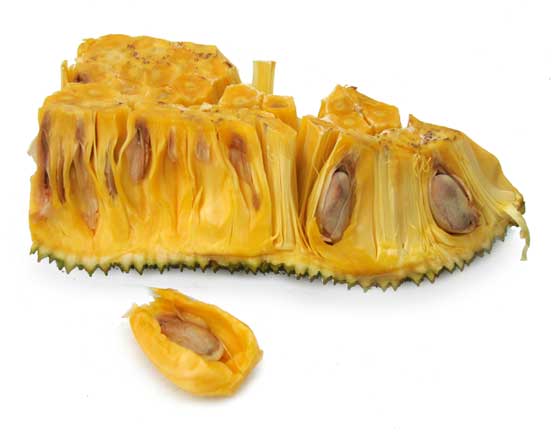
 · Pulp (lamukot) of the fruit contains
  Properties