Gen info
- Lansium domesticum, commonly known as lansones or langsat, is a species of tree in the family Meliaceae, commercially cultivated for its edible fruits.
- There are many cultivars, the two most commonly grown as 'Duku' and 'Langsat'.
- In the Philippines, the most commonly cultivated cultivars are the 'Paete' and the 'Jolo'. 'Duku' and 'Longkong' are also commercially cultivated. Other notable varieties include 'Concepcion', named after Concepcion, Talisay, Negros Occidental from the Philippines, and 'Uttaradit', a cultivar that is a regional specialty of Uttaradit province, Thailand. (29)
 Botany Botany
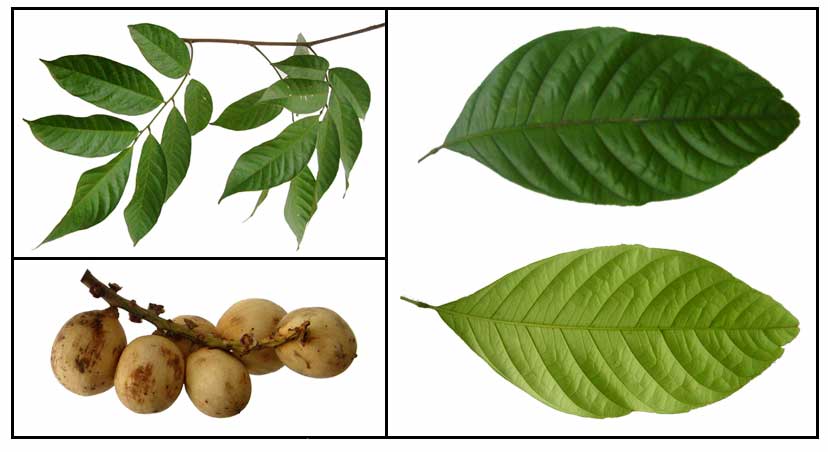
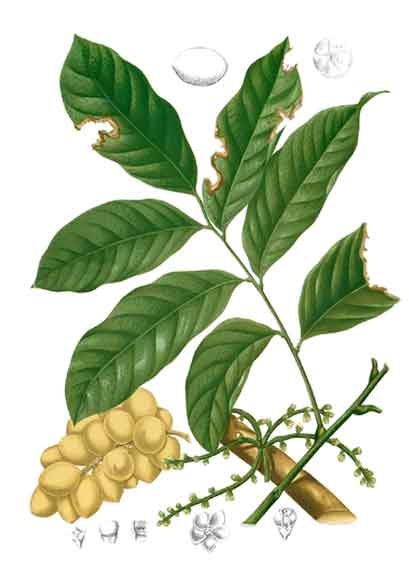
• Lansones is a tree growing to a height of 4 to
15 meters. Leaves are alternate, 20 to 40 centimeters long, with 5 to 7 leaflets,
oblong to oblong-elliptic, 7 to 18 centimeters in length, and pointed at both ends. Flowers are small,
yellow and borne on spikes, solitary or fascicled on the trunk or
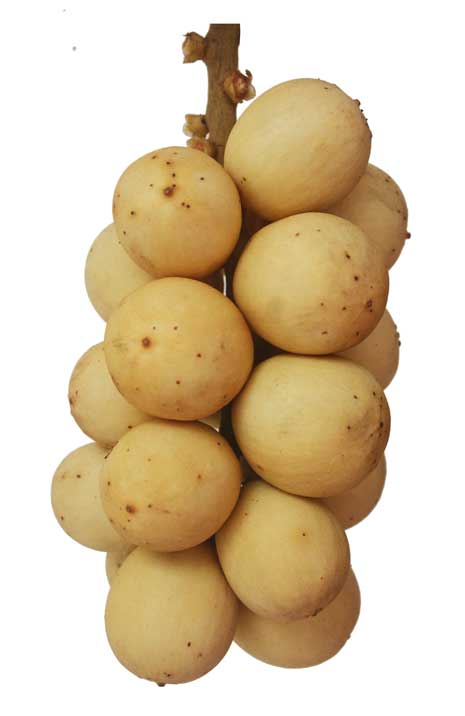
larger branches. Fruit is yellowish-white, occurring in bunches on
a single stem, ellipsoid or globose, 2 to 4 centimeters long, with bitter seeds
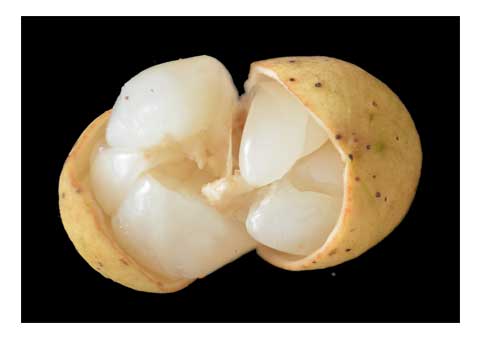
that are surrounded by a translucent pulp (arillus). The outer skin is thin
and tough, abundant in a milky juice. The pulp occurs in five sections
with one well-developed seed.
• The tree is average sized, reaching 30 meters (98 ft) in height and 75 centimeters (30 in) in diameter. 30 years old trees grown from seed and planted at 8 × 8 meter spacing can have a height of 10 meters and diameter of 25 cm. The trunk grows in an irregular manner, with buttress roots showing above ground. The tree's bark is a grayish color, with light and dark spots. Its resin is thick and milk colored. Pinnately compound leaves are odd numbered, with thin hair, and 6 to 9 buds at intervals. Buds are long and elliptical, approximately 9 to 21 centimeters (3.5 to 8.3 in) by 5 to 10 centimeters (2.0 to 3.9 in) in size. Upper edge shines, and the leaves themselves have pointed bases and tips. Stems of the buds measure 5 to 12 millimeters (0.20 to 0.47 in). Flowers are located in inflorescences that grow and hang from large branches or the trunk; the bunches may number up to 5 in one place. They are often branched at their base, measure 10 to 30 centimeters (3.9 to 11.8 in) in size, and have short fur. Flowers are small, with short stems, and are perfect. Sheathe is shaped like a five lobed cup and is colored a greenish-yellow. Corona is egg-shaped and hard, measuring 2 to 3 millimeters (0.079 to 0.118 in) by 4 to 5 millimeters (0.16 to 0.20 in). There is one stamen, measuring 2 millimeters (0.079 in) in length. Top of the stamen is round. Pistil is short and thick. Fruit can be elliptical, ovoid or round, measuring 2 to 7 centimeters (0.79 to 2.76 in) by 1.5 to 5 centimeters (0.59 to 1.97 in) in size. Fruits look much like small potatoes and are borne in clusters similar to grapes. Larger fruits are on the variety known as duku. It is covered by thin, yellow hair giving a slightly fuzzy aspect. Skin thickness varies with the varieties, from 2 millimeters (0.079 in) to approximately 6 millimeters (0.24 in). With the skin removed, the fruit resembles peeled garlic in appearance, with around five white, translucent lobes, some of which contain a flat, bitter tasting seed. Seeds are covered with a thick, clear-white aril that tastes sweet and sour. (29)
Distribution
- Native to the Philippines.
-
Cultivated for its fruit in Luzon, particularly the Quezon and Laguna Provinces, and occurs wild in Mindanao and Basilan.
-
Also native to Borneo, Jawa, Lesser Sunda Is., Malaya, Sulawesi, Sumatera, Thailand. (28)
 Constituents Constituents
- The rind yields 6% lansium
acid which is toxic.
- The fresh peeling yielded a volatile oil, a resin, and some reducing
acids.
- The resin is believed to be nontoxic and protective to the stomach
against alcohol.
- The outer skin of the fruit is rich in tannin.
- From the seeds, two toxic and bitter substances and traces of
an alkaloid.
- The fruit pulp contains sucrose, saccharose, fructose and glucose.
- Study isolated a new tetranortriterpenoid from the seeds: methyl 2-[4-(3-furyl)-6b,10a-dihydroxy-3a,7,9,9-tetramethyl-6,10-dioxo-2,3,3a,6b,7,8,9,10,10a,11-decahydro-1aH,4H,6H-benzo[h][1]benzoxireno[3,2,1a-de]isochromen-8-yl]acetate, C27H32O9. (22)
- Study yielded five tetranoterpenoids, domesticulide A-E (1-5)
from the seed. The seed extract was rich in limonoids.
- Yields triterpenoid lansiolides with antimalarial activity.
- Seeds yielded two tetranortriterpenoids, kokosanolide A (1) and C (2), together with 3 onoceranoid-type triterpenoid: kokosanolide B (3), 8,14-secogammacera-7,13-diene-3,21-dione (4) and a mixture of 8,14-secogammacera-7,14(27)-diene- 3,21-dione (5) and compound 4 isolated from the bark. (see study below) (13)
- Food value per 100 g of edible portion: Moisture 86.5 g; protein 0.8
g; carbohydrates 9.5 g, fiber 2.3 g; calcium 20 mg; phosphorus 30
mg; vitamin A 13 IU; thiamine 89 mcg; riboflavin 124 mcg; ascorbic
acid 1 mg. (3)
- Phytochemical screening of stem bark infusion showed presence of flavonoids, terpenoids/steroids, tannins, phenols, and saponins. (31)
Properties
- Bark is considered antipyretic, anthelmintic, and astringent.
- Studies have shown anti-malarial, antioxidant, antimelanogenesis, antibacterial, anticancer, antipyretic, repellent, pigmentation reducing, diuretic, larvicidal, wound healing, skin whitening properties.
Parts
utilized
Bark, fruit, leaves, seeds.
 Uses Uses
Edibility
-The fruit pulp is succulent and
delicious, eaten fresh out of hand; candied or preserved in syrup.
Folkloric
- Decoction of bark and leaves used
for dysentery.
- Peel, rich in oleoresin, used for diarrhea and intestinal spasms.
- Crushed seeds used for fevers.
- Astringent bark used for dysentery and malaria.
- Powdered bark used for scorpion stings.
- Bark resin used for flatulence and gastrointestinal colic, for swellings,
and as antispasmodic.
- Grounded seeds mixed with water as vermifuge and antipyretic.
- Tincture prepared from the dried rind used for diarrhea and abdominal
colic.
- In Java. seeds are used as vermifuge and antipyretic.
- In East Kalimantan, Indonesia, decoction of bark used
for malaria.
- In Thailand, peel and flesh used as facial toners, wash gels, and masks, as well as skin moisturizer and whitening cream.
- In the Pakuli region of Palu, bark used for treatment of malaria. Bark decoction used to reduce pain and fever.
Others
- Repellent: The dried fruit skins when burned
emit an aromatic smell which repels mosquitoes. In Java, used as incense in room of sick people. (3)
- Wood: Light brown wood is tough and durable; used as house pots and for making tools and handles. (3)
- Poison: The juice of the bark and fruit is recorded as used for poison arrow.
Studies
• Anti-Malarial / Skin and Leaf Extracts: Lansium domesticum: skin and leaf extracts of this fruit
tree interrupt the life cycle of Plasmodium falciparum, and are active
towards a chloroquine-resistant strain of the parasite (T9) in vitro:
Study indicates extracts of LD are a potential source for compounds
with activity against chloroquine-resistant strains of P. falciparum. (1)
• Anti-Malarial / Tetratriterpenoids: Study yielded five tetratriterpenoids –
domesticulide A-E from the seeds of Lansium domesticum together with
11 known triterpenoids. Eight of the compounds showed antimalarial
activity against Plasmodium falciparum. (6)
• Antioxidant:
Extract of LD was shown to have antioxidant activity against
DPPH free radical and anti-tyrosinase activity.
• Cosmeceutical: Review focuses on its medicinal, nutritional, and cosmeceutical value from its antioxidant,
moisturizing, whitening and lightening effects. Dry extract
of fruit, re-dissolved in propylene glycol is used for skin depigmentation
and as a moisturizer. (3)
• Skin Moisturizing
/ Lightening Effect: Study showed LD extract can significantly
increase skin moisture and decrease the skin melanin index. (3)
• Antimelanogenesis:
LD methanol extract was one of the study extracts that showed
strong inhibition of melanin production of B16 melanoma cells without
significant cytotoxicity, presenting as a potential ingredient for
skin-whitening cosmetics if their safety can be confirmed. (4)
• Antibacterial:
The air-dried fruit peel of LD yielded five onoceroid triterpenes;
the air-dried seeds yielded one onoceroid triterpene (lansionic acid)
and germacrene D. Studies of the compounds showed varying degrees
of activity against P. aeruginosa, B subtilis, C albicans, A niger
among others. (5)
• Anti-Skin Tumor / Cycloartanoid Triterpene / Leaves: Study isolated a new cycloartanoid triterpene from the leaves of LD. Some of the natural product derivatives show significant inhibitory activity on skin-tumor promotion on the basis of Epstein Barr virus activation. (7)
• Onoceramoid Triterpenes / Cytotoxicity: Study isolated three new natural onoceranoid triterpenes from the fruit peel of LD together with two known triterpenoids. The triterpenoids exhibited mild toxicity against brine shrimp (Artemia salina). (8)
• Onoceranoid-type Triterpenoids / Antibacterial: Study yielded a rare class of onoceranoid-type triterpenoids, lamesticumin a, lamesticumins B-F, lansic acid 3-ethyl ester and ethyl lansiolate and four known analogues from the twigs of LD. Compounds 1-9 exhibited moderate antibacterial activity against Gram-positive bacteria. (9)
• Fruit Peels / Nutrition and Medicinal Potential: Study evaluated the phytochemicals present in peels of selected fruits from Manila. All studied fruit peels (rambutan, lanzones, pomelo, longgan, mangosteen) showed the presence of reducing sugars and glycosides. In phytochemical screening, lanzones yielded highest in alkaloids and sugars. (11)
• Anticancer / Young Fruit Extract: Study evaluated the antiproliferative activities and phytoconstituents of Longkong extracts. Highest total phenolic and flavonoid content were seen in the cold and hot methanol extract of stalks. Hot and cold chloroform young fruit extracts exhibited cytotoxic effect against cancer cells. Cold chloroform young fruit extracts showed the highest apoptotic effect against KB cells. (12)
• Antifeedant / Triterpenoids: Study isolated two tetratriterpenoids and three onoceranoid-type triterpenoids. Triterpenoids 1-5 exhibited moderate to strong antifeedant activity against 4th stage instar larvae of Epilachna vigintioctopunctata. (see constituents above) (13)
• Mosquito Repellent: Study evaluated the repellant effect of Lansium domesticum (lanzones) peel on mosquitoes. Results revealed that the effect of Lanzones peel as repellant is comparable to commercially available "katol," a popularly used insecticide vaporizer. (14)
• Non-Genotoxic / Antioxidant: Study investigated the antioxidant and genotoxicity property of L. domesticum fruits, particularly seeds and skins. Results showed the skin of fruits possessed higher antioxidant potential than seeds. On genotoxicity study on TK6 human lymphoblasts using cytokinesis-blocked micronucleus assay, the ethanol extract of seeds were non-genotoxic to TK6 cells. (15)
• Antipyretic: Study investigated the antipyretic activity of LD seed extract on male rabbits with Brewer's yeast induced fever. Results showed a dose dependent antipyretic effect. (16)
• Lansioside D / Antibacterial: Study isolated a major antimicrobial compound, lansioside D, from the fruit peel of L. domesticum. Evaluation showed remarkable activity against Gram-positive bacteria Staphylococcus aureus and Bacillus subtilis and moderate activity against Gram-negative bacteria E. coli. (17)
• Repellency of Peels to Nilaparvata lugens on Oriza sativa: Study evaluated the repellent potential of various concentrations of Lansium domesticum peel extract (0.1% to 0.5%) to Niloparvata lugens on Oryza sativa. Results showed repellent activity with the highest repellent activity was at 0.2% and the lowest, at 0.1%. (19)
• Antioxidant / Seed: Study evaluated the antioxidant potential of L. domesticum seed extract
in while male rats. On measures of glutathione (GSH) and malondialdehyde (MDA), Lansium domesticum seed extract showed antioxidant potential with the optimum dose of 100 mg/kg. (20)
• Adsorption of Methylene Blue / Peel: Wastewater discharge from textile industries includes residual dyes which are no bio-degradalbe. Acute exposure to methylene blue may cause some harmful side effects. Study showed Lansium domesticum peel has good potential as adsorbent for methylene blue dye removal from aqueous solution. (21)
• Lamesticumin G / α-Glucosidase Inhibitor / Fruit Peels: Study of ethyl acetate extract of fruit peel isolated a novel onoceranoid triterpene, lamesticumin G, along with four known compounds (2-5). Lamesticumin G inhibited α-glucosidase with IC50 of 2.27 mM. Compounds 2-5 showed no inhibition. (24)
• Onoceranoid Xyloside / Radical Scavenging / Fruit Peels: Study isolated a novel onoceranoid triterpene xyloside, methyl lansioside C (1) along with two known glycosides (2,3) from the polar fraction of fruit peels. Compounds 1 and 3 exhibited moderate radical scavenging activity with SC50s of 14.5 and 13.7 mM, respectively. None of the compounds exhibited inhibition of α-glucosidase. (25)
• Reduction of Skin Pigmentation / Invention / Leaves: Invention relates to the use of extract of leaves for reducing pigmentation of the skin and/or appendages, and/or for reducing pigment stains on the skin. (26)
• Silver Nanoparticles / Antibacterial / Leaves: Study reports on the green, ecofriendly, less toxic synthesis of silver nanoparticles using Langsat leaf extract as bioreductor. The AgNPs successfully inhibited the growth of E. coli and S. aureus in concentrations of 6.25 and 25% respectively. The AgNPs showed bactericidal activity against E. coli at 25%, with no actiivity on S. aureus. (27)
• Antioxidant / Analgesic / Stem Bark: Study evaluated the effectiveness of stem bark infusion of langsat as antioxidant and analgesic in male Swiss mice. Antioxidant activity test by DPPH with infusion at concentration showed IC50 of 2820 µg/ml. Percentage of writhing protection at doses of 65, 130, and 195 mg/kbw was 57.52, 42.48, and 24.51%, respectively. The effective dose of stem bark infusion as analgesic was 65 mg/kbw from 30-60 minutes. (31)
• Antioxidant / Anticancer / Leaves: Study evaluated the antioxidative and cytotoxic properties of various extracts of Lansium domestica and Manilkara sapota leaves. Hexane extract of L. domesticum yielded flavonoids, steroids, sugars, anthraquinones, indoles, triterpenes, and sterols. L. domesticum methanol extract showed antioxidant activity of 0.183 µmol TE/100 g. Using MTT assay for anticancer activity against human lung adenocarcinoma cells, crude hexane extract of L. domesticum showed highest percent growth inhibition (70%). Extracts showed potential as antioxidant and anticancer agents. (32)
• Wound Healing / Seed: Study evaluated an ointment formulation of seed extract for promotion of wound healing in rats. Ointment concentrations of 2.5, 5, and 10% were used for three days. Results showed significant wound closure for all groups (p<0.05). Best wound closure was in the 10% extract group with average wound size decreasing by 0.3 cm. For invitro activity, only the 10% ointment showed inhibitory zone of 3 mm diameter. (33)
• Larvicidal Against Ae. aegypti / Leaves: Study evaluated the effective concentration of Lansium domesticum leaf extract and its mechanism in causing Aedes aegypti death. LC50 value of extract was used for fractionation. L. domesticum leaf extract caused mortality of Ae. aegypti larvae with LC50 of 0.22% and LC90 of 0.32% for 24 h exposure. The L. domesticum leaf extract cause histopathological midgut alterations of the Ae. aegypti larvae with apical protrusion in the epithelial cells and swelling or irregular cell structures and elongation of midgut cells. (34)
• Diuretic / Fruit Peel: Study evaluated the diuretic effects of ethanol extracts of L. domesticum fruit peels on Mus musculus domesticus. Acute toxicity testing in mice with dosages of 250 mg to 2000 mg/kg showed no signs of mortality. Extract showed little (500 mg/kg) to moderate (1000 mg/kg and 1500 mg/kg) diuretic effect on mice. (35)
• Anti-Proliferative / Human Colorectal Adenocarcinoma Cell Line / Fruit: Study evaluated the possible anticancer activity of various extracts and fractions of duku fruit extracts by inhibition of proliferation of human colorecatal adenocarcinoma (HT29). Using MTT assay, a methanol extract showed antiproliferative effect (IC50 6.8 µg/ml. The ME was more effective inhibition of HT29 cell proliferation compared to ethanol and ethyl acetate extracts. (36)
• Anticancer Compounds Against NSCLC Cells Targeting Mitochondrial Processes: Study evaluated the specificity of lanzones hexane (LH) leaf extracts to non-small cell lung cancer cells (A549) compared to normal lung fibroblasts cells (CCD19-Lu) and normal epithelial prostate cells (PNT2). Bioassay guided fractionation of hexane leaf extract identified two bioactive fractions, LH6-6 andLH7-6, with IC50s of 2.694 and 2.883 µg/, respectively. GC-MS analysis identified 31 compounds. LC-TMS proteomics showed the compounds cause cytotoxic effects targeting mitochondrial processes in A549 lung cancer cells. (37)
• Alternative Plant-Based Insecticide / Enzyme-Targeting: The long-term use of chemical insecticides encourages the rapid development of resistant dengue vector population of Aedes aegypti. Study evaluate the effect of L. domesticum (Ld) methanol extracts and fraction on the activity of enzyme esterase and glutathione S-transferase and concentration of inorganic substances in Ae. aegypti larvae. Crude extract of Ld showed LD50 and LD90 of 2200 and 3200 ppm after 24 hours observation. Extract and fraction influenced the development of Ae. aegypti, reduced the activity of enzyme esterase, increase GST enzyme activity and affected the levels of inorganic substances in the Ae. aegypti larvae. Results suggest potential for a plant-based insecticide as alternative to vector control that is more selective and safer. (38)
• Combination of Lansium and Hibiscus as Cosmetic Skin Whitening Agent: Study evaluated the potency of a combination of Lansium (Lansium domesticum) fruit extract and Hibiscus (Hibiscus rosa-sinensis) flower extract (LHE) as cosmetic active ingredient. LHE showed tyrosinase inhibition of 49.37%, which suggests potency as lightening active ingredients in cosmetic products. The LHE contained lotion base significantly increased skin moisture and reduced melanin index. Safety evaluation of the lotion by SCPT and HET-CAM showed safety for human skin and eyes. The LHE is proven to be a safe and effective active cosmetic ingredient. (39)
• Anti-Aging / Tyrosinase Inhibitory / Antioxidant / Flesh and Peel: Study evaluated the bioactivity of L. domesticum as cosmetic ingredient, prepared by maceration with 96% ethanol and ethyl acetate to obtain an ethanolic extract of fruit flesh and fruit peel. Antioxidant capacity was measured by DPPH, ß-carotene bleaching, and FRAP. The inhibitory effect of skin-degradation enzymes (anti-aging) were done using elastase and collagenase assays. The extract yielded phenolic, flavonoid, terpenoids, and steroid compounds. Results suggest extracts of fruit flesh and fruit peel of L. domesticum can be used as cosmetic ingredient for anti-aging and anti-tyrosinase effects. (40)
• Mosquito Repellant / Peels: Study evaluated the effectiveness of lanzones peelings extract as mosquito repellent. The lazones peelings' extract showed a mean protection percentage of 93.99% while positive control containing 25% Diethyltoulamide (DEET) showed 96.19% protection percentage. Negative control showed 86.67%. (41)
Availability
Commercial cultivation.
|