 Gen info Gen info
- Sesame is a plant in the genus Sesamum, also called simsim, benne, or gingelly. It is widely naturalized in tropical regions of the world, and cultivated for its edible seeds. (65)
- Etymology: The plant name Sesamum indicum derives from Late Babylonian word shawash-shammu, which means "oil seed" or "plant oil". The word shawash-shammu passed through Phoenician to Greek to Lain as sesamum. Alternatively, sesame is also related to Greek word sesamon, which likely has Semitic origins.
. World production of sesame seeds in 2022 was 6.7 million tonnes, led by the Sudan, Myanmar, and India, together accounting for 41% of total. (65)
- Japan is the largest sesame importer. Sesame oil, particularly from roasted seed, is an important component of Japanese cooking, and its principal use of the seed. (65)
- Sesame seed is one of the oldest oilseed crops, domesticated well over 3,000 years ago. (65)
- Claim is made that Sesame was cultivated in Egypt during the Ptolemaic period; others suggest the New Kingdom. It is included in the list of medicinal drugs in the scrolls of the Ebers Papyrus dated over 3600 years ago. Tutankhamen excavations uncovered baskets of sesame, suggesting presence in Egypt by 1350 BC. Some believe it originated in Ethiopia.
(65)
-
According to Assyrian legend, the Gods drank wine made from sesame seeds when they met to create the world. (43)
- In early Hindu legends, seeds represented a symbol of immortality.
(43)
-
Liñga is one of the plants in the classic lowland Tagalog folk song "Bahay kubo" that celebrates the traditional bamboo and nipa house and the 18 vegetable plants around it - a song to delight all vegans, and each with a page in this medicinal plant compilation.
Botany
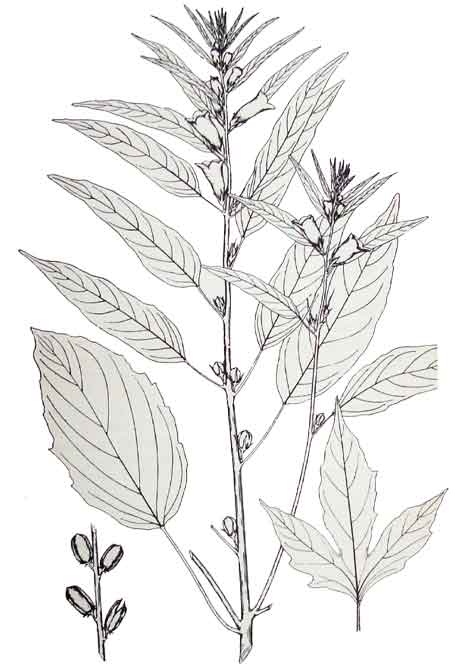
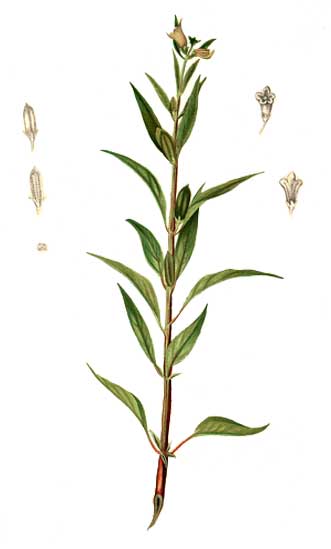
• Linga is an erect, annual, hairy herb,
50 to 80 centimeters in height. Leaves are oblong or ovate, 3 to 10 centimeters long, the lower ones lobed,
the middle ones toothed, and the uppermost subentire. Leaf stalks
are from 1 to 5 centimeters long. Sepals are lanceolate, 6 to 7 millimeters long and imbricate.
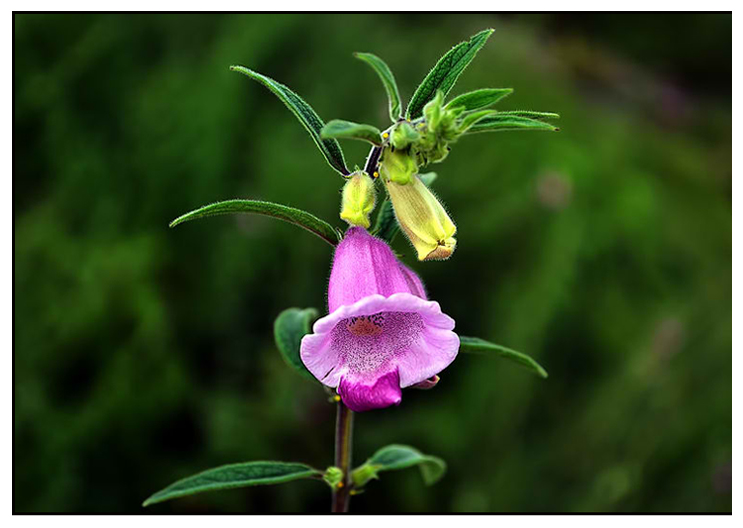
Corolla is about 3 centimeters long, hairy and whitish, or with purplish, red,
or yellow marks. Stamens are 4, inserted. Fruits are capsules, 2- or 4-celled, oblong, about 2.5
centimeters long, erect, and splitting halfway or quite to the base at maturity.
Seeds are small and black.
 • Sesame is a perennial plant growing 50 to 100 cm (1 ft 8 in to 3 ft 3 in) tall, with opposite leaves 4 to 14 cm (2 to 6 in) long with an entire margin; they are broad lanceolate, to 5 cm (2 in) broad, at the base of the plant, narrowing to just 1 cm (13⁄32 in) broad on the flowering stem. The flowers are tubular, 3 to 5 cm (1+1⁄8 to 2 in) long, with a four-lobed mouth. The flowers may vary in color, with some being white, blue, or purple. Sesame seeds occur in many colors depending on the cultivar. The most traded variety of sesame is off-white colored. Other common colors are buff, tan, gold, brown, reddish, gray, and black. The color is the same for the hull and the fruit. Fruit is a capsule, normally pubescent, rectangular in section, and typically grooved with a short, triangular beak. The length of the fruit capsule varies from 2 to 8 centimeters (3⁄4 to 3+1⁄8 in), its width varies between 0.5 and 2.0 centimeters (13⁄64 and 25⁄32 in), and the number of loculi varies from four to 12. The fruit naturally splits open to release the seeds by splitting along the septa from top to bottom or by means of two apical pores, depending on the varietal cultivar. The degree of dehiscence is of importance in breeding for mechanized harvesting, as is the insertion height of the first capsule. Seeds are small. Sizes vary with the thousands of varieties known. Typically, the seeds are about 3 to 4 mm long by 2 mm wide and 1 mm thick (15⁄128 to 5⁄32 × 5⁄64 × 5⁄128). The seeds are ovate, slightly flattened, and somewhat thinner at the eye of the seed (hilum) than at the opposite end. The mass of 100 seeds is 0.203 g. The seed coat (testa) may be smooth or ribbed. • Sesame is a perennial plant growing 50 to 100 cm (1 ft 8 in to 3 ft 3 in) tall, with opposite leaves 4 to 14 cm (2 to 6 in) long with an entire margin; they are broad lanceolate, to 5 cm (2 in) broad, at the base of the plant, narrowing to just 1 cm (13⁄32 in) broad on the flowering stem. The flowers are tubular, 3 to 5 cm (1+1⁄8 to 2 in) long, with a four-lobed mouth. The flowers may vary in color, with some being white, blue, or purple. Sesame seeds occur in many colors depending on the cultivar. The most traded variety of sesame is off-white colored. Other common colors are buff, tan, gold, brown, reddish, gray, and black. The color is the same for the hull and the fruit. Fruit is a capsule, normally pubescent, rectangular in section, and typically grooved with a short, triangular beak. The length of the fruit capsule varies from 2 to 8 centimeters (3⁄4 to 3+1⁄8 in), its width varies between 0.5 and 2.0 centimeters (13⁄64 and 25⁄32 in), and the number of loculi varies from four to 12. The fruit naturally splits open to release the seeds by splitting along the septa from top to bottom or by means of two apical pores, depending on the varietal cultivar. The degree of dehiscence is of importance in breeding for mechanized harvesting, as is the insertion height of the first capsule. Seeds are small. Sizes vary with the thousands of varieties known. Typically, the seeds are about 3 to 4 mm long by 2 mm wide and 1 mm thick (15⁄128 to 5⁄32 × 5⁄64 × 5⁄128). The seeds are ovate, slightly flattened, and somewhat thinner at the eye of the seed (hilum) than at the opposite end. The mass of 100 seeds is 0.203 g. The seed coat (testa) may be smooth or ribbed.
 Distribution Distribution
- Introduced into the Philippines.
- Naturalized.
-
Cultivated here and there throughout the Philippines.
- Often occurs in open waste places as an escape plant.
- Native to Assam, Bangladesh, India, West Himalaya. (21)
- Now pantropic.
Properties
- The white or yellow-seeded varieties provide the best grade of oil, while the dark red, brown, or black-seeded varieties give an inferior grade of oil.
- Has a high percentage of fixed oil
which can be used as an antirheumatic in massage treatment.
- Sesame oil, also known as pil or gingelly, has a pale yellow color, a pleasant odor and taste.
- Neither warming nor cooling.
- Seeds are considered emollient, nourishing, tonic, diuretic, and lactagogue.
- Oil considered demulcent, emollient, diuretic, emmenagogue, lactagogue and laxative.
- Allergen: It can trigger allergic reactions in some people. It is one of the nine most common allergens listed by the Food and Drug Administration (FDA). (65) Approximately 0.23% of US children and adults are allergic to sesame.
- Studies have suggested antioxidant, analgesic, neuroprotective, wound healing, fertility promoting, insecticidal, antihyperglycemic, antihyperlipidemic, anto-atherogenic, antimicrobial, hematinic, anthelmintic, antidiabetic, nephroprotective, anticancer, anti-inflammatory, anti-leishmanial, antioxidant, anticancer, vasorelaxant, immunomodulatory properties.
 Constituents Constituents
• Seed contain fixed oil,
47-59%; saccharose, pentosan, lecithin; choline; phytine; globuline, 22%; sesamin.
• The oil consists of olein, linolein, palmitin, and stearin; fatty acids consist of oleic, linoleic, linolenic, palmitic, palmitoleic,
stearic, eicosenoic.
• Study on the chemical constituents of the flowers of Sesamum
indicum yielded six flavones: apigenin, ladanetin, ladanetin-6-O-beta-D-glucoside,
apigenin-7-O-glucuronic acid, pedalitin, and pedalitin-6-O-glucoside.
• Seeds yield lignan, lignan glycosides, and sterols; phenylethanoid glycosides from the whole plant, and phenolic acids from the leaves and seeds.
• A petroleum ether fraction of an alcoholic extract yielded sesamin, sesamolin, stigmasterol, ß-sitosterol, and stigmasterol-3-O-ß-D-glucoside. A butanol fraction yielded ferulic acid, rhamnetin, verbascoside, kaempferol-3-O-ß-D-glucorunide, and mequelianin (quercetin-3-O--D-glucuronide).
• Study for nutritional value of sesame seeds (S. indicum) yielded: carbohydrates 23.45 g, protein 17.73 g, total fat 49.67 g, dietary fiber 11.8 g, carbohydrates 23.45 g, copper 4.082 mg,
iron 14.55 mg, magnesium 351 mg, manganese 2.460 mg, phosphorus 629, selenium 34.4 µg, zinc 7.75 mg, copper 4.082mg. Phytochemical screening of seeds yielded saponin, alkaloids, flavonoids, tannins, glycosides. (26) Dry whole sesame seeds are 5% water, 23% carbohydrates, 50% fat, and 18% protein. (65)
 • Study evaluated proximate, phytochemical, and mineral compositions of seeds, leaves, root and whole plant of S. indicum. Roots yielded appreciable levels of moisture (6.60 ± 4.39%), crude fiber (12.80 ± 8.53%), and total carbohydrate (67.90 ± 45.26%). Protein content was highest (21.44 ± 14.29%) in the whole plant.
Percentage flavonoids, alkaloids, and tannins of the samples ranged between 16.20-4.80, 10.04-1.96, and 3.32-1.18%, respectively. (33) • Study evaluated proximate, phytochemical, and mineral compositions of seeds, leaves, root and whole plant of S. indicum. Roots yielded appreciable levels of moisture (6.60 ± 4.39%), crude fiber (12.80 ± 8.53%), and total carbohydrate (67.90 ± 45.26%). Protein content was highest (21.44 ± 14.29%) in the whole plant.
Percentage flavonoids, alkaloids, and tannins of the samples ranged between 16.20-4.80, 10.04-1.96, and 3.32-1.18%, respectively. (33)
•
Ethanol extract of sesame seeds yielded phenols, tannins, saponins, glycosides, alkaloids, coumarins, and flavonoids, with an absence of terpenes and steroids. (see study below) (40)
• Study of young sesame leaves yielded three iridoids, lamalbid (11), sesamoside (12) and shanzhiside methyl ester (13) and seven polyphenols, cistanoside F (1), chlorogenic acid (2), pedalitin-6-O-laminaribioside (3), pedaliin (4), isoacteoside (6), pedalitin (7), and martynoside (8). Compounds 5 and 6 sowed high DPPH radical scavenging and oxygen radical absorbance capacity. The compounds were examined at six different growth stages. (see study below) (42)
• Study showed eight primary metabolites and 16 secondary metabolites in white and black sesame seeds. Preliminary study of the white and black seeds yielded primary metabolites like proteins, fats, volatile oils, carbohydrates and secondary metabolites like alkaloids and flavonoids. White sesame seeds yielded phlobatannins, coumarins, leucoanthocyanins, while black seeds yielded anthraquinones and emodins. (45)
• Study of seeds for phytochemicals and fatty acid content yielded the presence of terpenoids, tannins, cardiac glycosides, and saponifiable lipids in aqueous extracts of black seeds. Qualitative fatty acid analysis yielded palmitic acid, stearic acid, oleic acid, linoleic acid, and a-linolenic acid. The Soxhlet extract yielded high amount of linoleic acid (21.25). (48)
• Like many seeds, whole sesame seeds contain a
significant amount of phytic acid, an antinutrient that binds to nutritional elements consumed at the same time, especially minerals, and prevents their small intestinal absorption. Heating and cooking reduces the amount of acid in the seeds. (65)
• Study of methanolic extract of waste seeds of S. indicum by chromatographic fractionation isolated an alkyl benzene identified as 1,3-bis (pentadecyl)benzene (1) along with three known fatty acids: oleic acid (2), linoleic acid (3), and palmitic acid (4); one monosaturated cardanol, 3-pentadecylphenol (5) and two phytosteroids identified as sitostanol (6) and campestanol (7). (see study below) (67)
Parts used
· Seeds, leaves.
· Collect seeds as soon as the fruits
ripen, harvest the above ground portion, sun-dry and collect the seeds,
dry again.
 Uses Uses
Edibility / Culinary
· Whole seeds used by bakers in making cakes and sweetmeats.
- in India, seeds are roasted in various traditional confections, i.e, laddus, chikki, tiggulpoli, etc. (52)
- Seeds are used as major ingredient in many international cuisines like Tahini, Daqqa, Gyintholik, etc. (52)
- Used for cooking; for margarine; also used to adulterate olive oil.
Folkloric
· For chronic constipation, roasted seeds are taken alone, with honey, or
mixed liberally with other foods.
· Oil extracted from seeds used as antirheumatic in massage therapy.
· Burned stalks applied to hemorrhoids.
· Leaves, which abound in the gummy matter, mixed with water to form a bland mucilage used for infantile cholera, diarrhea, dysentery, catarrh, cystitis, and strangury.
· Plaster of ground seeds applied to burns and scalds.
· Leaves with equal parts of sesame
oil and lime water are a popular dressing for burns and scalds.
· Decoction of seeds
with linseed used for coughs and as aphrodisiac.
· Lotion made from roots and leaves used as a hair wash; also used to promote hair growth and make it black.
· Decoction of seeds laxative for children.
· The oil of seed used for treatment of ulcers and suppurating wounds.
· White seeds promote menstruation.
· Diseases of the kidney or liver associated
with dizziness, tinnitus, and haziness of vision: get see preparation
from 8 to 14 gms and mix with equal volume of Morus leaf preparation.
Powder, add honey and water and drink.
· Seeds ground to a paste with water, given with butter, for bleeding piles.
· In large quantities, seeds capable of producing abortion.
· Alopecia (baldness) due to prolonged illness: fry seeds, crush
and add sugar, then eat 1 to 2 tbsp daily.
· In Sierra Leone the mucilaginous juice of the plant is used by women to destroy
headlice.
· In India, seeds
used for wound healing.
· In Yucatan, seeds given as laxative to children.
· Seeds and oil used as emmenagogue.
· Malays use the oil in tonics.
· In Africa, decoction of leaves used as aphrodisiac. Decoction of plant used for malaria. Leaves chewed as alternative to tobacco. Powdered leaf applied to snake bites. Decoction of seeds used for hemorrhoids and regulation of the menstrual cycle.
· In European medicine the oil was once used pulmonary tuberculosis.
- In Laos, herbal tea made from the seeds
considered diuretic and tonic. Seed oil rubbed on the head to dissipate migraines and dizziness, on the joints to relieve pain. Also used as abortifacient in friction on the stomach. Eating sesame considered good for the memory. (64)
Others
· Perfumery: Oil use in perfumery in Europe, North America and India.
· Hair uses: Lotion from leaves and roots used for healthy hair growth and color
restoration.
· Oil: Cultivated for centuries in Asia and Africa for its edible oil and protein. Oil used in the preparation of hair oil, skin conditioning lotions and moisturizers. (•) Oil from the seed is in a proportion of 40 to 50% of volume; yellow and sweet and pleasant in flavor. (64)
· Ritual: In Laos, some ethnic groups add the sesame to ceremonial cakes and offer spirits a maceration of its seeds. (64)
- Fodder: In Laos,
cattle-cakes obtained after oil extraction feed livestock and fish. Also used as first-rate fertilizer. (64) The by-product that remains after oil extraction from sesame seeds, sesame oil meal, is rich in protein (35-50%), and used as feed for poultry and livestock. (65)
Studies
• Free Radical Scavenging / Antioxidant: Study evaluated the free radical scavenging capacity of antioxidants from sesame cake extract using a DPPH kinetic model. (1)
• Antioxidant / Analgesic: Study observed antioxidant and analgesic activity
of the ethanol extract of seeds of SI with inhibition of writhing response
comparable to ibuprofen. Study also showed an antioxidant activity compared
to standard antioxidant ascorbic acid. (7)
• Antioxidant / Neuroprotective: Lignans and tocopherols, identified as major antioxidants in Sesamum indicum have also been reported to have protective effects against neurodegenerative disease. Sesame seeds and its antioxidants may be a potent natural agent with both therapeutic and preventive applications in neurodegenerative diseases in humans. (9)
• Lipid Effects: Effect of Sesame
Oil on Serum Lipids in Rats: Sesame oil increased S cholesterol and
LDL-C in hypercholesterolemic diet fed rats, with no significant effects
on serum lipids of normocholesterolemic rats. (2)
• Acetylcholine-like
Substance: Alcoholic extract of seeds of Sesamum indicum
caused hypotensive effects in anesthetized rats. It also caused decreased
rate and force of atrial contractions; contractile responses in rat
uterus. The results indicate that the alcoholic extract of SI contain
acetylcholine-like constituents that explains its folkloric use. (3)
• Wound Healing / Seed and Oil:
Sesamum indicum seeds and oil applied topically showed wound
healing activity with significant reduction in period of epithelization
and wound contraction. (4)
• Health Effects of
Sesame Oil: Study on the effect of SI in hypertensive
diabetics on atenolol and sulfonylurea showed reduction in systolic
and diastolic BP, decrease in glucose, HbA1C, LDL and TC, with increase
in activities of enzymic and non-enzymic levels of antioxidants. (5)
• Fertility Effects: Study of the ethanolic extract of Sesamum indicum, vitamin C and SI+VC promote fertility from their testosterone-increasing effects and their antioxidant effects. (10)
• Insecticidal: Sesamin has been shown to be insecticidal and is synergistic to pyrethrum.
• Physiochemical Properties of Sesame Oil: Study showed (1) the acid value which is the index of free fatty acid content due to enzymatic activity was very low (2) No potential for soap making (3) High peroxide value (4) seed oils were cyanide free (5) seeds are a good source of oil, with a seed content of 50% light yellow crude oil with a pleasant smell. (12)
• Residual Aerial Parts Composition / Antihyperglycemic / Antioxidant: A petroleum ether fraction of an alcoholic extract yielded sesamin, sesamolin, stigmasterol, ß-sitosterol, and stigmasterol-3-O-ß-D-glucoside. A butanol fraction yielded ferulic acid, rhamnetin, verbascoside, kaempferol-3-O-ß-D-glucorunide, and mequelianin (quercetin-3-O--D-glucuronide). Tested extracts exhibited a reductive effect on blood glucose of diabetic rats, attributed to possible inhibition of free radicals and inhibition of tissue damage induced by alloxan. ß-sitosterol and ferulic acid may have contributed to the hypoglycemic activity of the alcoholic extract. The alcoholic extract has a potential as an alternative natural antioxidant, antihyperglycemic and anticoagulant. (13)
• Antihyperlipidemic: Study investigated the anti-hyperlipidemic effect of sesame in a high-fat fed rabbit model. Results showed supplementation with sesame oil, but not sesame seed, can ameliorate serum levels of lipids and hepatic enzymes in rabbits under a high-fat diet. (15)
• Toxicity Study / Leaves: Study investigated the toxic effect of an ethanolic leaf extract of Sesamum indicum on the histomorphology of adult Wistar rats liver. The experimental groups received 200 mg/kg and 400 mg/kg of leaf extract for two weeks. The leaf extract caused an phased architectural pattern with atrophic hepatocytes and dilated sinusoid suggesting toxicity to the liver of Wistar rats. (16)
• Ardeh / Anti-Atherogenic / Decreased CVD Risks: Study investigated the effects of Ardeh, paste of ground unhulled sesame seeds, on lipid profiles and atherogenic lipid parameters on 41 patients with type 2 diabetes mellitus. Results showed significant decrease in serum triglycerides and atherogenic index of plasma (AIP) with slight decreases in other atherogenic lipid parameters and a mild increase in HDL-C. Results suggest Ardeh could have favorable effects in decreasing CVD risk factors in T2DM.
(17)
• Hepatoprotective / Seeds / CCl4-Induced Hepatic Damage: Study of ethanolic extracts of S. indicum seeds showed potent hepatoprotective action against carbon tetrachloride induced hepatic damage in rats. (18)
• Plant Gum / Formulation and In Vitro Release Properties: Study evaluated the properties of a plant gum obtained from S. indicum. Moisture content was found to be low. All formulations released the drug in the hydrated matrix through polymer relaxation. The findings suggest the gum can be used for intestinal drug delivery. (19)
• Antioxidant / Seeds: Study evaluated ethanol extracts of white and black varieties of S. indicum. Results showed sesame seed extracts possess high antioxidant activity and that the white variety elicit better antioxidant activity than the black one. (20)
• Seed and Seed Oil: Seeds yield two unique substances, sesamin and sesamolin, reported to prevent high blood pressures and have a cholesterol lowering effect in humans. Oil is reported to increase HDL and lower LDL. Seed oil has reported antibacterial activity Staphylococcus and Streptococcus and common fungi (athlete's foot fungus). (22)
•
Prophylactic Effect on Ethanol Induced Toxicity: Study evaluat3d the prophylactic effect of aqueous extract of of S. indicum on ethanol induced hepatotoxicity in rats. S. indicum possesses antioxidant and hepatoprotective properties that eliminate the deleterious effects of toxic metabolites of ethanol. SI treatment simultaneous with ethanol exhibited similar effects to those of SI pretreated groups, while SI post-treatment group did not show the same level of protection. (23)
• Reduction in Severity of Post-Traumatic Pain / Topical Sesame Oil: Study evaluated the effects of topical sesame oil on pain severity and frequency of NSAIDs patients with trauma. Results showed topical application of sesame oil could reduce pain severity and frequency of NSAIDs treatment in patients with upper and lower extremity trauma. Results recommend complementary use of the oil for relief of pain with its low cost, easy usage, and lack of side effects. (24)
• Antibacterial /
Leaves: Study evaluated ethanol and aqueous leaf extracts for anti-microbial activities on bacterial pathogens viz., K. pneumonia, S. typhii, E. coli, and S. aureus. The ethanolic extract strongly inhibited E. coli growth with mild inhibition of of K. pneumonia and S. typhi. The aqueous extract showed no activity on the test pathogens. (25)
• Herbal Treatment of Oligomenorrhea / Clinical Trial: Single-blind clinical trial in 56 women evaluated the efficacy of S. indicum in inducing menstrual bleeding in women with oligomenorrhea (infrequent menstrual flow at intervals of 36 days to 6 months or 5-7 cycles in a year). Results showed S. indicum was well-tolerated and partially effective in inducing and maintaining regular bleeding, and can be considered as an alternative therapy for patients who are not suitable candidates for hormone therapy. (27)
• Anti-Diabetic Synergism
with Glibenclamide / Sesame Oil: Studies have reported blood pressure and antioxidant benefits with sesame oil. Open-label study evaluated the effectiveness of sesame oil with anti-diabetic (glibenclamide) medication as combination therapy in mild to moderate diabetes. Results showed sesame oil exhibited synergistic effect with glibenclamide—a safe and effective option for combination therapy for the treatment of diabetes. (28)
• Effect on Hepatic and Renal Mineral Concentrations on Hypercholesterolemic Rats / Seed Oil: Hypercholesterolemia reduced both hepatic and real concentrations of sodium, potassium, phosphorus, magnesium and calcium but reduced the hepatic and not renal concentrations of magnesium and zinc. 5% supplementation with sesamum indicum seed oil reversed the effects and restored reduced ion concentrations. (29)
• Antioxidant / Antibacterial
/ Roots, Leaves and Seeds: Study evaluated methanol and aqueous extracts of leaves, seeds, and roots of S. indicum for antibacterial and antioxidant (DPPH, TBA) activities. The methanol extract showed promising antimicrobial and antioxidant activity. (30)
• Anthelmintic / Seeds: Study evaluated the anthelmintic activity of methanolic extract of seeds of sesame (S. indicum) and fruits of Capsicum frutescens on aquarium worms Tubifex tubifex. Results showed both alcoholic extracts exhibited significant anthelmintic activities at 10mg/ml concentration. Levasimole was used as standard. (31)
• Silver Nanoparticles / Antibacterial / Seed: Study reports on the simple, green, eco-friendly synthesis of silver nanoparticles from S. indicum seed extracts. The AgNPs showed inhibitory activity against multi-drug resistant Klebsiella pneumonia. (34)
• Preservative Effects on Mashed Potatoes / Seed Oil: Study evaluated the biopreservative efficiencies of different levels of sesame seed oil on mashed potatoes. Results showed sesame seed oil was more efficient in preserving stored potato paste than sodium benzoate. Organisms found associated with spoilage of stored potatoes included fungi Aspergillus flavus, A. fumigatus, A. niger and Fusarium spp. and bacteria such as Bacillus coagulant. (35)
•
Effect of S. indicum and Vitamin C in Promoting Fertility in Male Wistar Rats: Study showed an ethanolic extract of S. indicum + vitamin C as well as ESS and VC promote fertility due to both their testosterone-increasing effects and their antioxidant effects. (36)
• Nephroprotective in STZ-Induced Diabetic Rats / Seeds: Study evaluated the effect of ethanolic extract of S. indicum on kidney function in STZ-nicotinamide induced diabetic rats. Results showed a significant decrease in levels of serum total protein, albumin, and globulin, and significant increase in blood urea, serum creatinine and uric acid when compared to normal rats. Normalization of marker enzymes in the serum and histopathological results revealed the protective effect and potential to control hyperglycemia in STZ induced diabetic rats. (37)
• Prevention of Chemotherapy-Induced Phlebitis / Sesame Oil: Study evaluated the effect of external use of sesame oil in the prevention of phlebitis in 60 patients with colon or rectal cancer. Results showed external use of SO is effective, safe, and well tolerated prophylaxis for phlebitis. (38)
• Sesamin / Plant Lignan / Seed: Study evaluated whether plant lignans in sesame seeds, particularly sesamin, could me metabolized to the mammalian lignans. Some plant lignans may have a protective effect against hormone-related diseases such as breast cancer. Study showed sesame seed is a rich source of mammalian lignan precursors and sesamin is one of them. (39)
• Cytotoxicity / Seeds: Study evaluated the active constituents in an ethanolic extract of S. indicum defatted seeds and its effect on lipid and cytogenetic changes in bone marrow in laboratory mice, and cytotoxic effects on three types of cancer cell lines. Concentration of sesamin the the ethanolic extract was 79.9% ethanolic extract. Results showed significant in vitro growth inhibition against the tested cancer cell lines (Hep-2, AMN-3, and RD). (40)
• Effect of Supplementation on Creatine Kinase, Stress Markers and Aerobic Capacity of Soccer Players: Randomized and placebo-controlled study evaluated the consumption of sesame on muscle damage markers, oxidative stress, systemic inflammation, and aerobic performance in male semi-professional soccer players. Athletes received 40 g (2 tablespoons) per day or placebo. Results showed sesame consumption may reduce muscle damage and oxidative stress while improving aerobic capacity in soccer players. (41)
• Biological Activity / Antioxidant / Iridoid and Polyphenol Content at Different Growth Stages: Study of young sesame leaves yielded three iridoids, lamalbid (11), sesamoside (12) and shanzhiside methyl ester (13) and seven polyphenols, cistanoside F (1), chlorogenic acid (2), pedalitin-6-O-laminaribioside (3), pedaliin (4), isoacteoside (6), pedalitin (7), and martynoside (8). Compounds 5 and 6 sowed high DPPH radical scavenging and oxygen radical absorbance capacity. The compounds were examined at six different growth stages. (42)
• Sesame Before and During Pregnancy: Review focused on the role of sesame seeds before and during pregnancy. Studies have suggested that sesame seeds possess essential nutrients, minerals, fatty acids, antioxidants, and vitamins. They are considered beneficial during pregnancy and lactation without any side effects at a certain level. They also possess pharmaceutical, nutraceutical and therapeutic properties which contribute to safe pregnancy and boost postnatal growth. (44)
• Antidepressant / Seeds: Study of methanol extract of seeds showed robust and dose-dependent antidepressant-like activity with statistically significant (p<0.05) reductions in duration of immobility time in both forced swimming and tail suspension test. In open field test, there was statistically significant (p<0.05) increase in locomotion, rearing and defecation of mice. (46)
• Menstrual Bleeding Cessation / Oligomenorrhea / Seeds / Pilot Study: In Avicenna traditional medicine, Sesame indicum is a well known medication to induced menstrual bleeding in women with oligomenorrhea. This pilot study evaluated the effect of S. indicum in the treatment of oligomenorrhea. Patients received oral therapy for seven days. 85% experienced menstrual bleeding after treatment. Results showed S. indicum may be an effective therapy in inducing bleeding in women with oligomenorrhea, with insignificant side effects compared to current hormonal therapies. (47)
• No Antifungal Activity / Oil / Review and Study: Study evaluated the antifungal susceptibility patterns of three antifungals, methanolic extracts, and n-hexane oil of sesame seeds on C. albicans and C. glabrata, isolated from oral cavity of liver transplant recipients. Study showed the methanolic and n-hexane extracts of seeds were not effective on C. albicans and C. glabrata. Study showed no antifungal activity in the oil extract, and similarly, no antifungal activity was reported in literature. (49)
• Enhanced Wound Healing / Seeds: Study evaluated the wound healing activity of S. indicum seed extract in novel ethosomal vesicles in incision and excision wound models in wistar rats. The optimized ethosomal vesicles were incorporated into a gel base. Results showed enhanced percentage of wound contraction and period of epithelization in excision model. (50)
• Histological Effects on Mammary Gland Tissue / Seeds: Study evaluated the effects of sesame seeds on the growth and development of mammary glands in white female rats during various stages i.e., virginity, pregnancy, lactation using histological and histochemical parameters. Results showed effect on growth and development of mammary gland tissues. In virgins there was an increase in number of lobules filled with large number of expansive alveoli; in the pregnant group, increased number and diameter of alveoli filled lobules; and in lactating group, more numerous lobules with more expansive and numerous alveoli. (51)
• Effect on Thyroidectomy Induced Erectile Dysfunction / Oil: Study evaluated the effect of S. indicum on thyroidectomy induced erectile dysfunction in rat. Results showed that although the oil did not produce any significant effect on the levels of thyroid hormones, the oil restored sexual competence to a reasonable degree, with the highest dose of 5 mg/kbw producing maximum response. A combination of S. indicum oil and thyroxin may be recommended for hypothyroidism associated sexual impairment. (53)
• Antimicrobial / Sesame Oil: Study evaluated the effectiveness of some Yemeni sesame oils against pathogenic bacterial and fungi i.e., E. coli, S. aureus, S. typhi C. albicans, A. niger and A. flavus. Results showed sesame oil can form the basis for development of novel broad spectrum antimicrobial formulations. (54)
• Safety Assessment / Sesame Oil: Sesamum indicum seed oil and related cosmetic ingredients are derived from Sesamum indicum. Sesamum seed oil unsaponifiables and hydrogenated sesame seed oil are used as conditioning agents. Sesame seeds functions as cleansing agent, emulsifying agent and as non-aqueous viscosity increasing agent. The CIR Expert Panel concluded that these ingredients are safe in present practices of use and concentration as described in the safety assessment. (55)
• Antioxidant / Anti-Inflammatory / Assessment / Sesame Oil: Study summarized the antioxidant and anti-inflammatory effects of sesame oil, identified compounds, fatty acid profile and molecular docking and correlated the interaction of constituents with COX2, non-enzymatic defense mechanisms, inhibition of pro-inflammatory cytokines, NF-kB or MAPK signaling or prostaglandin synthesis pathways. Gas chromatography identified 9 known fatty acids which showed binding efficiency with COX2. Study suggests sesame oil can be used in the prevention and management of diseases associated with oxidative stress and inflammation. (57)
• Hematinic / Antioxidant / Seeds: Study evaluated the hematinic and antioxidant potential of supplementation with aqueous extract of seeds. in a rodent model of hemolytic anemia induced by phenylhydrazine (PHZ). Results showed significant reversal of the deteriorating effects of PHZ on RBC, HGB, and HCT, along with reversal in the decreased levels of glutathione ad activities of SOD. (58)
• Sesame Allergy: The number of people with sesame allergy is unknown. Reports have suggested the allergy has increased worldwide. A 2010 survey in America suggest hundreds of thousands affected by sesame allergy. FARE supports the addition of sesame to the list of "major food allergens.} Avoid foods that contain sesame of any of these ingredients: Benne, benne seeds, benniseed; gingelly, gingelly oil' gomasio (sesame salt); halvah; sesame oil, flour, paste, salt, seed; Sesamol; Sesamum indicum; sesemolina, sim sim; tahini, tahina, tehina; and til. Foods that may contain sesame are: Asian cuisine (sesame oil), bread crumbs, cereals, chips, crackers, dipping sauce, dressings and sauces, falafel, hummus, flavored rice, goma-dofu (Japanese dessert), herbs, margarine, protein and energy bars, snack foods, sushi, and tempeh, etc. Non-food items that may contain sesame include: cosmetics, medications, nutritional supplements and pet foods. (59)
• Hepatoprotective / Ethanol Induced Toxicity: Study showed Sesamum indicum pretreatment significantly TBARS, restored GSH levels, enhanced CAT, GPx, SOD and GST activities, and significantly decreased elevated levels of TG, AST, and ALY Results showed S. indicum possesses antioxidant and hepatoprotective properties that eliminate the deleterious effects of alcohol metabolites. (60)
• Anthelmintic / Seeds: Study evaluated the in vitro anthelmintic activity of ethanolic extract of Sesamum indicum seeds using Indian earthworm, Pheretima posthuma. Results showed less time to paralysis and death. (61)
• Anti-Inflammatory, Analgesic, Antipyretic / Leaves: Study evaluated the effects of standardized ethanol extract of leaves on inflammation, fever, and pain in mice and rats. Results showed Anti-inflammatory and antipyretic properties using formalin-induced rat paw edema and Brewer's yeast-induced pyrexia models in rats, and analgesic effect using acetic acid-induced abdominal writhing and tail flick tests in mice. The activities may be mediated by peripheral inhibition of prostaglandins. Results support its use as remedy for malaria symptoms. (62)
• Effect of Seed Consumption on Biochemical Parameters in Type2 Diabetes / Clinical Trial: Study evaluated the effect of sesame seed consumption on some biochemical parameters in type 2 diabetic patients. Sixty type2 diabetic patients were randomly divided into two groups, and one group given 60 grams of sesame seeds a day for two months. Results showed statistically significant decrease (p<0.05) in FBS, HbA1C, cholesterol, TG, LDL, ALT, and ALP. (63)
• Anti-Inflammatory / Anticancer / Review: Review discusses the anti-inflammatory and anticancer activities of sesame. Bioactive components such as sesamin, sesaminol, sesamol, and sesamolin play essential roles in combating various biological and phramacological concerns. One of the notable properties of sesame lignans is anti-inflammation, which hinder the propagation of inflammatory cytokines and inflammatory mediators, alleviating inflammatory-related diseases such as osteoarthritis, cardiovascular disease, neurodegenerative disease, inflammatory bowel disease, diabetic eye disease, lung and liver diseases. Lignans also manifest anticancer actiivities against different cancer cell lines via various mechanisms. such as down-regulation of protein expressions, suppression of production of gene products, and cell cycle arrest. Lignans also induced necrosis or apoptosis of cells, causing an antiproliferation effect. (66)
• Antileishmanial Activity / Seeds: Study of methanolic extract of waste seeds of S. indicum by chromatographic fractionation isolated an alkyl benzene identified as 1,3-bis (pentadecyl)benzene (1) along with three known fatty acids: oleic acid (2), linoleic acid (3), and palmitic acid (4); one monosaturated cardanol, 3-pentadecylphenol (5) and two phytosteroids identified as sitostanol (6) and campestanol (7). Compound 1 moderately inhibited the promastigote form of Leishmania donovani L:G13 with IC50 of 16.9 µM. (67)
• Neuroprotective / Enhancement of Human Neuroblast Cell Viiability Via Anti-Apoptotic Mechanism Activity / Seeds: Defatted sesame seed flour is a recovered waste by-product after oil extraction. Previous study showed water-soluble fraction purified from defatted white and gold sesame seed flour exhibited good invitro antioxidant activity. Ferulic acid and vanillic acid were identified from both white and gold sesame water-soluble fractions (WS-wsf and GS-wsf, respectively) Study hypothesized that WS-wsf and GS-wsf may have neuroprotective effect due to antioxidant potential. Treatment with WS-wsf enhanced human neuroblastoma SH-SY5Y cell viability and proliiferation. WS-wsf (1-3 mg/mL) significantly and dose-dependently protected SH-SY5Y cells against camptothecin-induced apoptosis suggest an anti-apoptosis mechanism in its neuroprotective effects. Study sugggests neuroprotective potential via an anti-apoptotic mechanism, which is independent of its antioxidant capacity. (68)
• Bioactivities of Seed Oil / Review: Review identified ethnobotanical indications and proven biological activities of sesame oil (SO). Sesame has cardioprotective effect related to its high percentage of lignans. Immunomodulatory and anti-inflammatory activity may be due to sesamin and sesamol. Antioxidants may reduce oxidative stress in the kidney. Omega-6 fatty acid in the oil has neuroprotective properties. Plant properties provide for its potential as a possible functional food. (69)
• Wound Healing / Seed and Oil: Study evaluated the effect of seeds and its oil on experimentally induced excision wound, incision wound, burn wood, and dead space wound models in rats. Aloe vera was used as standard wound healing agent. A formulation of seed and oil in carbopol at 2.5 and 5% concentrations were applied to wounds. In excision and burn wound models, animals showed significant reduction in period of epithelization and wound contraction (50%). In incision wound model, there was significant increase in breaking strength. Seeds and oil treatment (250 and 500 mg/kg p.o.) in dead space wound model produced significant increase in breaking strength, dry weight, and hydroxyproline content of granulation tissue. Results suggest wound healing activity of seeds and oil topicall applied or orally administered. (70)
• Pedaliin / Anti-Colon Cancer / Leaves: Study evaluated the in vitro antioxidant and anti-colon cancer efficacy of ethanol extract of S. indicum leaves (SLE) and its major bioactive component. SLE contains appreciable phytochemicals i.e., total polyphenols, total flavonoids, and carotenoids, with corresponding antioxidant activities, such as radical scavenging and ferric reducing power (FRAP). A cell viability assay showed SLE time- and dose-dependently attenuated the growth of human colon cancer cells, HT29 and HCT116. SLE increased Sub-G1 and G2/M cell populations, suggesting growth inhibition via apoptosis and G2/M cell cycle arrest. HPLC analysis yielded pedaliin (6-hydroxylueolin 7-methyl ether 6-glucoside; pedalitin-6-O-glucoside) as a major constituent of SLE. Pedaliin showed FRAP, growth-inhibitory, anti-invasive, and anti-migratory activities. Results suggest SLE possess invitro antioxidant and anti-colon cancer activities for which pedaliin may a major contributory component. (71)
• Vasorelaxant / Roots: Study evaluated a petroleum ether soluble fraction (SIPE) of root extract of S. indicum for vasorelaxant activity using isolated rat aorta. SIPE up to 180 µg/ml concentration significantly inhibited phenylephrine- and KCl-induced contraction up to 98.13 and 70.19%, respectively in isolated rat aorta in a concentration dependent manner. Vasorelaxant activity was not blocked by propranolol, atropine, indomethacin, and glibenclamide. SIPE at 180 µg/ml could elicit partial relaxation in presence of L-NAME or methylene blue. In absence of functional endothelium, SIPE exhibited little relaxation to extent of 6.70%. Results suggest vasorelaxant activity chiefly mediated via endothelium-dependent pathway. (72)
• Enhancement of NK Anti-Cancer Activity / Seeds: Study evaluated the potential immunomodulatory effects of aqueous extract of S. indicum seeds with regard splenocyte proliferation, Th1/Th2 balance, macrophage function, and cytotoxic activity of natural killer (NK) cells. JAM assay examined the cytotoxic activity of NK cells against YAC-1 tumor cells. Results showed S. indicum significantly enhanced splenocyte proliferation in a dose-dependent manner, increased and suppressed secretion of Th1 and Th2 cytokines by splenocytes, inhibited secretion of key pro-inflammatory mediators IL-6,
TNF-α, and nitric oxide by primary macropahges. S. indicum also increased the cytotoxic activity of NK cells against YAC-1 tumor cells. Results showed potent immunomodulatory, anti-inflammatory, and anti-cancer effects. (73)
• Efficacy with Rosa damascena Oil in Uncomplicated Pelvic Inflammatory Disease / Seeds / Clinical Trial: A double-blind, double-dummy, randomized standard-controled study in 60 participants evaluated the therapeutic efficacy and safety of S. indicum seeds with Rosa damascena Mill Oil in uPID with standard control. Black sesame powder ( 5 gm) mixed with rose oil (10cc) was administered per vaginum at bedtime once daily for 14 days. Standard group received doxycycline and metronidazole plus placebo per vaginum for the same direction. Study concluded the SR (sesame/rose oil) group is cost-effectiive, safer, and efficacious for curing uPID. (74)
Availability
- Wild-crafted.
- Cultivated for culinary use.
- Whole seeds, seed oil, and meal in the cybermarket, |







.jpg)