 Gen info Gen info
- Diospyros is a genus of over 700 species of deciduous and evergreen trees and shrubs. The majority are native to the tropics. Individual species valued for hard, heavy, and bark timber are commonly called ebony trees, while species valued for their fruit as called persimmon trees. (36)
- Etymology: The generic name Diospyros derives from Greek words dios, meaning "divine," and pyros, meaning "wheat", literally meaning "Zeus wheat", or more generally, "divine food" or "divine fruit". (36) The species epithet blancoi honors Francisco Manuel Blanco, a Spanish friar and botanist who contributed greatly to the knowledge of and illustration of Philippine flora. (37)
-
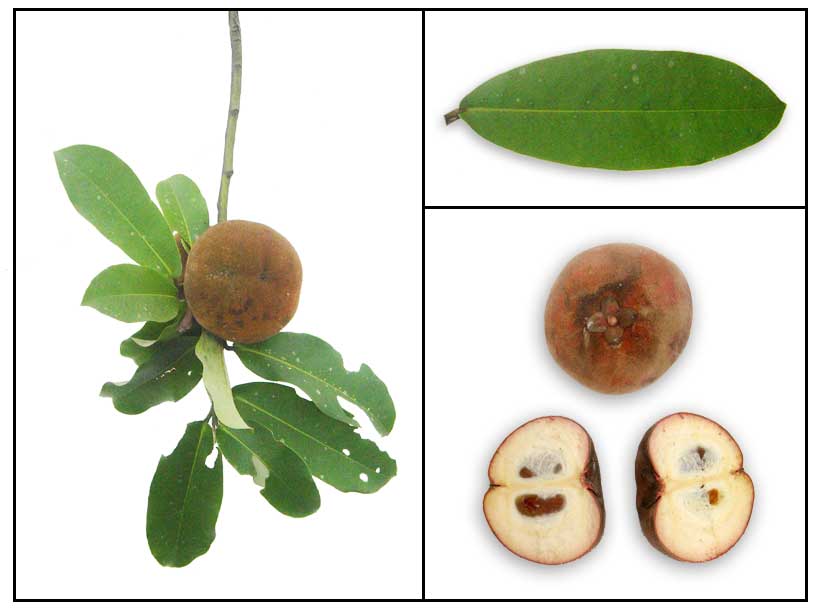
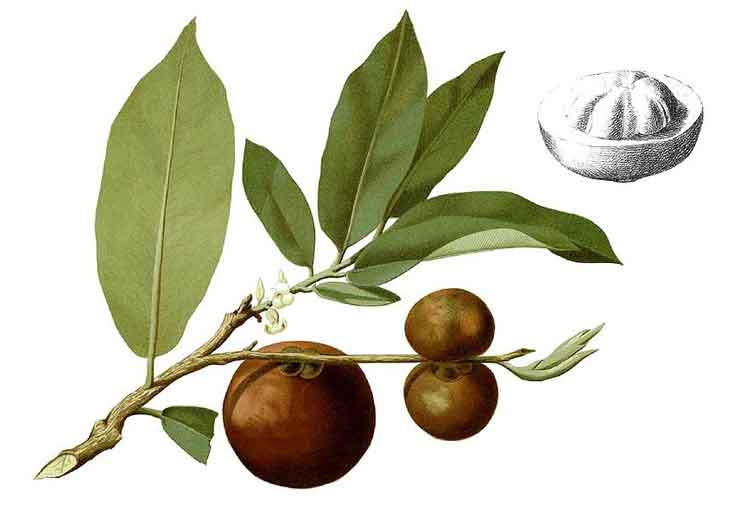
Diospyros discolor is a tree of the genus Diospyros of ebony trees and persimmons. It is indigenous to the Philippines, where kamagong refers to the tree and mabolo or talang refers to the fruit.
- It is an endangered tree species and protected by Philippine law—It is illegal to export kamagong timber from the country without special permission from the Bureau of Forestry / Department of Environment and Natural Resources. (28)
 Botany Botany
• Mabolo is a medium-sized tree growing to a height
of 20 meters. Leaves are leathery, oblong, up to 20 centimeters long, with a round
base and acute tip. The blade is glossy green, smooth above and softly
hairy below. Female flowers are axillary and solitary, larger than the
male. Fruits are fleshy, globose, up to 8-10 centimeters in diameter, densely covered
with short brown hairs. The pulp is edible. The fruit hairs have to
be rubbed off before eating as it can cause peri-oral itching and irritation.
• An evergreen tree, 7-15 m tall, with a conical crown. Crown: Conical in shape. Trunk: Trunk diameter about 50 to 80 cm wide.
Foliage: Stalked, leathery, alternate leaves are oblong in shape, 8-30cm long by 2.5-12 cm wide, with rounded base and pointed tip. The upper surface is dark-green and shiny, while the lower surface is silvery and hairy. The young leaves are pinkish in color. Flowers: A dioecious plant, with separate plants bearing male or female flowers. The urn-shaped male flowers are borne on axillary cymes, in small clusters of 3-7 flowers. The corolla is four-lobed and creamy white in color. The urn-shaped female flowers are similar in appearance to the male flowers, except that they are solitary, and slightly larger than the male flowers. Fruit: Fleshy berries that are round or slightly flattened on one side. 5-12 cm by 8-10 cm, with a reddish brown velvet skin and creamy white to yellow flesh that is sweet and aromatic. The fruits are said to emit a strong odor that resembles cheese. (37)
Distribution
-
Native to the Philippines.
-
In forests, at low and medium altitudes.
- A shade tree, it is planted along roads and parks.
- Also native to Borneo and Taiwan.
Constituents
• Ethyl acetate extract of air-dried leaves yielded (1) isoarborinol methyl ether, (2) a mixture of α-amyrin palmitate, α-amyrin palmitoleate, ß-amyrin palmitate and ß-amyrin palmitoleate and squalene. (2)
• Yields triterpenes.
• Leaf extract yielded alkaloids, reducing sugar, gum, flavonoids, and tannins.
• Fruit is high in tannin .
• Analysis for phenolic compounds yielded predominant amounts of rosmarinic acid followed by luteolin and hispidulin.
 • Study of methanol extract of twigs yielded four new lanostane-type triterpenes, 24-ethyl-3beta-methoxylanost-9(11)-en-25-ol (1), 3beta-methoxy-24-methylenelanost-9(11)-en-25-ol (2), 3beta-methoxy-25-methyl-24-methylenelanost-9(11)-en-21-ol (3) and 3beta-methoxy-24-methyllanosta-9(11),25-dien-24-ol (4) together with three known triterpenes, betulinaldehyde, betulinic acid methyl ester, and ursaldehyde. (18) • Study of methanol extract of twigs yielded four new lanostane-type triterpenes, 24-ethyl-3beta-methoxylanost-9(11)-en-25-ol (1), 3beta-methoxy-24-methylenelanost-9(11)-en-25-ol (2), 3beta-methoxy-25-methyl-24-methylenelanost-9(11)-en-21-ol (3) and 3beta-methoxy-24-methyllanosta-9(11),25-dien-24-ol (4) together with three known triterpenes, betulinaldehyde, betulinic acid methyl ester, and ursaldehyde. (18)
• Nutritional analysis per 100 g of edible fruit yields 113 kcal, 26.6 g carbohydrates, 1.5 g fiber, 0.1 g fat, 58 mg calcium, 2.8 g protein, 18 mg phosphorus, 0.6 mg iron, 35 IU vitamin A, 0.02 mg thiamine, 0.03 mg riboflavin, 0.03 mg niacin, and 18 mg vitamin C.
(19)
• GC and GC-MS study of mabolo fruit for volatile compounds identified 96 compounds characterized the the presence of many esters, especially benzyl butyrate (33.9% of total composition), butyl butyrate (12.5%) and (E)-cinnamyl butyrate (6.8%) (3)
• Nutrient analysis showed the mabolo fruit to be rich in dietary fiber (3.2%) yielding nutrients malic acid (227.1 mg/100g), vitamin B2 (0.075 mg/100g), vitamin B3 (0.157 mg/100g), folic acid (0.623 mg/100g), pantothenic acid (0.19 mg/100g), and choline chloride (62.52 mg/100g), and rich in mineral, calcium (42.8 mg/100g) and zinc (3.6 mg/100g).
(see study below) (21)
• Study of methanol extract of leaves yielded alkaloids, tannins, flavonoids, and phenols while an ethyl acetate extract showed similar phytochemicals except for an absence of alkaloid.
(see study below) (27)
• Study of leaves and stem bark extracts (n-hexane, diichlormethane, and methanol) isolated a new flavonol, 7,4'-dihydroxy-5,3',5'-trimethoxyflavonol (1), along with five known flavonoids and six known triterpenes (7-13).
(see study below) (31)
Properties
• The fruits vary greatly in shape, color, hairiness and taste, suggesting significant genetic variation in the plant. There are seedless cultivars, much preferred, because the large seeds in the common varieties occupy a considerable volume of the fruit. (28)
•
It has an unpleasant, foul cheesy odor which can be dissipated by skin removal and processing.
• Considered astringent, antidiarrheal, anti-inflammatory, antimicrobial.
• Studies have suggested antioxidant, analgesic, anti-inflammatory, anti-microbial, anti-diarrheal, anti-tumor, anti-asthma, vasorelaxant, acetylcholinesterase inhibitory, antidiabetic, analgesic, anti-angiogenic, antiaging properties. Parts utilized
Bark, roots, fruit and leaves.
Uses
Edibility
- Fruit is edible, the tannin content
declining as it ripens. It has a taste and aroma comparable to peach.
- A good source of vitamins A, C, and minerals.
- Studies show the fruit has good nutritive value and suggest use for making cakes and tarts. (14)
 Folkloric Folkloric
- Bark and leaves used for itchy skin
ailments.
- Decoction of bark for coughs.
- Bark used for fevers, dysentery and diarrhea.
- In Southeast Asia, juice
of unripe fruit used for wounds.
- Oil from seeds used for diarrhea and dysentery.
- Infusion of fruit used as gargle in aphthous stomatitis.
- In Bangladesh, juice of
bark and leave used for snakebites.
- The Kavirajes of Balidha village in Jessore, Bangladesh, use seeds as aphrodisiac.
- Bark and leaves used as eyewash.
- In Siddha medicine, gum is used to consolidate watery semen.
Others
- Wood: Wood is extremely dense and hard, sometimes referred to as "iron wood",and famous for its dark color. Wood is used for house construction including flooring, posts, doors, windows, furniture and decorative items. It is a popular wood used for martial arts training implements such as bokkens and eskrima sticks. (28)
- Insect repellent: Fresh wood used as insect repellent. (29)
Studies
• Antioxidant:
Twelve selected indigenous Taiwanese plants, including Diospyros discolor,
were studied for their antioxidant activity, superoxide radicals scavenging
and reducing power activities. D discolor extracts, among others, showed
to contain abundant phenolic constituents suggesting a potential source
of natural antioxidants. (1)
• Bioactive Triterpenes / Antibacterial / Analgesic / Anti-inflammatory / Dried Leaves: Ethyl acetate extract of air-dried leaves yielded (1) isoarborinol methyl ether, (2) a mixture of α-amyrin palmitate, α-amyrin palmitoleate, ß-amyrin palmitate and ß-amyrin palmitoleate and squalene. Compounds 1 and 2 showed antibacterial activity against E coli, P aeruginosa, C albicans, Staph aureus and T. mentagrophytes. Sample 2 showed analgesic and anti-inflammatory activities. (2)
• Chemical Composition / Volatile Components: Study yielded 96 compounds of which the fruit characterized by the existence of many esters – benzyl butyrate (33.9%), butyl butyrate (12.5% and (E)-cinnamyl butyrate (6.8%). (3)
• Constituents / Antioxidant / Antimicrobial: Leaf extract yielded tannins and alkaloids. It showed statistically significant free radical scavenging activity. It showed antidiarrheal property with an increase in latent period of diarrheal induction. Extract also showed significant antimicrobial activity and significant lethality in brine shrimp assay. (5)
• Anti-Asthma: Methanolic extract showed anti-inflammatory activity in an airway inflammation mouse model. Histological exam of lung tissue showed marked attenuation of allergen-induced eosinophilic inflammation and mucus-producing goblet cells in the airway. (6)
• Biofuel Potential: Mabolo, a much neglected fruit in the Philippines, was studied as a possible inexpensive source of biofuel. An ethanolic extract proved to be as effective as alcohol fuel. On emission testing, it emitted the least amount of carbon monoxide and carbon dioxide, compared with commercial regular and unleaded gasoline. (7)
• Antidiarrheal: Evaluation of antidiarrheal potential was done on ethanolic extracts of three Bangladesh medicinal plants. Results on ethanolic extracts of leaves of D. blancoi and bark of Acacia nilotica suggest antidiarrheal activities. Results were comparable to standard antidiarrheal drug loperamide. (8)
• Antidiarrheal / Antioxidant: Study showed antidiarrheal activity in a castor-oil induced mice model, with significant reductions in faecal output. Extract also showed dose-dependent antioxidant activity in a DPPH-scavenging assay. (9) In a study designed to evaluate the antidiarrheal activity of ethanolic extracts of three Bangladesh medicinal plants, Diospyros blancoi leaves significantly inhibited the mean number of defecation, increased the latent period and significantly decreased the number of stools. (12) Methanol extract of leaves showed significant (p<0.001) dose-dependent antioxidant activity using DPPH assay. In a castor oil-induced diarrhea model in mice, the extract exhibited significant reduction in faecal output compared to standard loperamide. (22)
• Antitumor Activity / Apoptosis Induction: Study investigated various extracts of aerial parts of Salvia plebeia for antitumor activity and apoptosis induction. The dichloromethane extract may inhibit cancer cell proliferation by inducing cell apoptosis. (11)
• Vasorelaxant / Leaves: Study evaluated various extracts for vasorelaxant activity and total phenolic content. Analysis showed all the extracts and fractions contain polyphenols expressed as gallic acid equivalent. The ethyl acetate fraction of leaf extract exhibited 52% relaxation of isolated rat aortic rings, while the methanol extract produced almost 100% relaxation at the same concentration. Results suggest the extract possess endothelium-dependent and NO-mediated vasorelaxant effects. (15)
• Antimicrobial / Fruit Juice: Study evaluated the antimicrobial effect of D. discolor juice on bacteria and fungi (P. aeruginosa, S. aureus, and C. albicans). Results showed the juice contains alkaloids, terpenes, reducing sugars and tannins. The mabolo juice showed concentration dependent antimicrobial activity attributed to the alkaloids and tannins. (16)
• Comparative Antioxidants Activity of Different Plant Parts: Study evaluated the antioxidant activity of methanol extracts from different parts of the plant including leaf, fruit and bark. The bark showed the highest antioxidant activity, followed by the fruit and leaf. (17)
• Aroma Compounds / Nutrient Contents / Peel and Fruit: Study of intact fruit and peel yielded 24 compounds while the pulp yielded 28 compounds. The most important aroma compounds were esters and α-farnesese. (see constituents above) (21)
• Analgesic / Seeds: In a study of four medicinal plants for analgesic activity, methanol extract of D. blancoi seeds showed moderate analgesic activity using acetic acid-induced writhing and tail immersion tests. (22)
•
Cholinesterase Inhibitory Potential for Alzheimer's Disease / Antioxidant / Leaf and Bark: Oxidative stress and decreased neurotransmitter (especially acetylcholine) are main characteristics of Alzheimer's disease, a progressive neurodegenerative disease. The CME extracts of both bark and leaf exhibited cholinesterase inhibitory activities and thrombolytic activities that suggested potential in the treatment of AD and clotting disorders. (25)
• Anticancer / Free Radical Scavenging / Stem Bark: Study evaluated the effects of various extracts of leaves, root bark, and stem bark of Diospyros blancoi on free radicals and cancer. Extracts of stem bark showed the highest total antioxidant capacity and reducing capacity on ferrous ion, with significant (p<0.05) radical scavenging activity than standards. The stem bark also showed moderate cytotoxicity using brine shrimp nauplii and moderate anticancer activity testing using Ehrlich ascites carcinoma cells. The anticancer activity was attributed, in part, to its phenolic contents and significant free radical scavenging properties. (26)
• Antibacterial
/ Leaves: Study evaluated methanolic and ethyl acetate extracts of leaves of Diospyros discolor for antibacterial activity against both gram positive (B. cereus and S. aureus) and gram-negative (S. typhi and E. coli) bacteria. The ME showed maximum antibacterial activity compared to the EA extract. (see constituents above) (27)
• Anti-Inflammatory / Thrombolytic / Analgesic / Seeds: Study evaluated the in vivo and in vitro bioactivities of methanolic extract of Diospyros blancoi seeds. On formalin induced licking and biting in mice, the extract showed dose-dependent significant analgesic activity, 55.47 and 73.47% at 100 and 200 mg/kg extract, respectively. In thrombolytic testing, it showed 38.17% clot lysis with 10 mg/mL. Anti-inflammatory testing using carrageenan induced paw edema method, the extract produced 24.81 and 27.23% inhibition with 200 and 400 mg/kg dose. (30)
• Acetylcholinesterase Inhibitory Activity / Leaves and Stem Bark: Diospyros discolor leaves showed high (95.80 ± 1.57%) AChE inhibitory activity at concentration of 100 µg/mL. Study of leaves and stem bark extracts (n-hexane, diichlormethane, and methanol) isolated a new flavonol, 7,4'-dihydroxy-5,3',5'-trimethoxyflavonol (1), along with five known flavonoids and six known triterpenes (7-13). Compound 7, stigmast-4-ene-3-one, showed the lowest inhibition concentration with IC50 of 11.77 ± 2.11 µM. The extracts showed high percent inhibition against AChE enzyme, while isolated compounds showed moderate inhibition. (31)
• Effect of Coconut Water on Germination and Initial Seedling Growth: Study evaluated the effect of coconut water on pre-sowing treatments additive on seed germination and initial growth performance of kamagong. Results showed 100% coconut water had highest germination mean value (78.33%), mean seedling height (11.80 cm), and mean number of leaves (2.04). (32)
• Comparative Antioxidant Activity / Peel, Flesh and Seeds: Study evaluated the antioxidant activity of peel, flesh and seeds of velvet apple using three solvents: n-hexane, ethyl acetate, and ethanol. The highest antioxidant activity as well as total phenolic (20.872 ppm and 80.837 mg/TAE/g extract) was found in the ethyl acetate seed extract. Seed extract also yielded highest total flavonoid with 3.448 mg QE/g extract. (33)
• Antidiabetic / Antioxidant / Leaves: Study evaluated the antioxidant and antidiabetic activity of leaf extracts of D. blancoi in alloxan-induced white mice. Phytochemical screening yielded alkaloids, flavonoids, tannins, terpenoids, saponins, anthraquinones, steroids, and glycosides in both ethanol and water extracts The ethanol extra ct showed better antioxidant activity using DPPH assay. Both extracts showed significant antidiabetic effects as evidenced by reduction in blood sugar levels. (34)
• Antileukemic / Stems: Study evaluated the methanol extract of stems of four medicinal plants (Baccaurea macrocarpa, Syzygium jambos, Bouea macrophylla, and Diospyros discolor) for antileukemic activity. Diospyros discolor showed antileukemic activity (survived HL60 cell percentage) of 37.3% with concentration of 100 µg/mL. (35)
• Comparative Antioxidant Activity and Phenolic Content / Seeds: Study evaluated the effects of methanol, acetone, and ethyl acetate solvents on phenolic content and antioxidant activity in D. blancoi seed extracts. Total phenolic content was found higher in the acetone extract (603.43 mg GAE/g dry powder) compared to methanol and EA extracts. Highest antioxidant activity was in the methanol solvent (IC50 2.72 µg/mL) compared to positive control ascorbic acid (IC50 3,34 µg/mL). (38)
• Anti-Elastase / Antioxidant Activity / Leaf and Stem Bark: Study evaluated the anti-elastase and antioxidant properties of mabolo leaf extract (LE) and stem bark extract (SBE). Results showed LE and SBE have strong anti-elastase and antioxidant activities with 50% inhibitory concentration (IC50s) below 50 µg/mL. LE and SBE antielastase IC50s were 41.06 and 26.52 µg/mL, respectively. DPPH and ABTS IC50s were 4.34 and 2.95 µg/mL for LE, and 3.73 and 1.96 µg/mL for SBE. The SBE demonstrated stronger anti-elastase and antioxidant activity than LE. Results suggest potential for development as an anti-aging agent. (39)
• Anti-Angiogenic: Study evaluated the antiangiogenic properties of Diospyros blancoi extracts by chick allantoic membrane (CAM) assay. Forty-nine one-day old fertilized eggs were used. Extract doses of 100, 200, 300, 400, and 500 mg were applied on the 19th day of incubation. The average number of branch points were counted on the 12th day. Results showed the greater the dose, the lesser the branch points. Results suggested antiagiogenic potential. (40)
• Analgesic / Antidepressant / Leaves: Study evaluated the neuuropharmacological and analgesic activities of methanolic extract of D. blancoi leaves on Swiss albino mice. Neuropharmacologic testing were conducted using hold cross, forced swimming and tail suspension test. Analgesic activities were evaluated using acetic acid-induced writhing and hot plate tests. Results showed significant (p<0.05) dose dependent antidepressant and analgesic activity. (41)
Availability
- Cultivated.
- Wild-crafted.
|




_of_Bangladesh_02.jpg)

