|
 Gen info Gen info
- Phyllanthus is the largest genus in the flowering plant family Phyllanthaceae. The number of the species in the genus vary widely, from 759 to 1200. (41)
- Despite the variety, almost all Phyllanthus species has a specific type of growth called "phyllanthoid branching" in which the vertical stems bear deciduous, floriferous (flower-bearing), plagiotropic (horizontal or oblique) stems. Leaves on main vertical areas are reduced to scales called "cataphylls", while others develop normally. (41)
- Phyllanthus reticulatus is a plant species in the family Phyllanthacea. It was described by Jean Louis Marie Poiret.
(42)
Botany
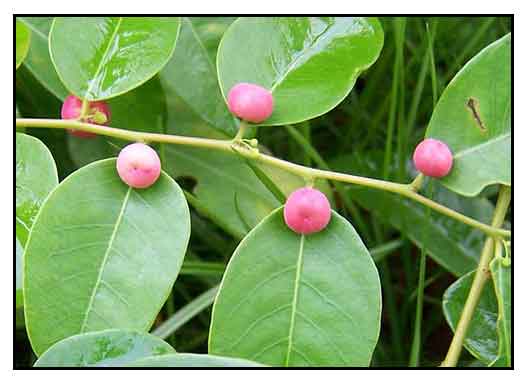
• Malatinta is an erect or somewhat climbing and many-branched
shrub, 1.5 to 5 meters high, or a small tree growing up to 5 meters high. Leaves are alternate along slender branches, pale beneath,
oblong to elliptic-oblong, 1.5 to 4 centimeters long. Flowers are solitary or few in each axil,
2 to 3 millimeters long, green and tinged with purple. Fruit is depressed-globose,
5 to 7 millimeters in diameter, soft, fleshy, smooth and purple-black when mature.
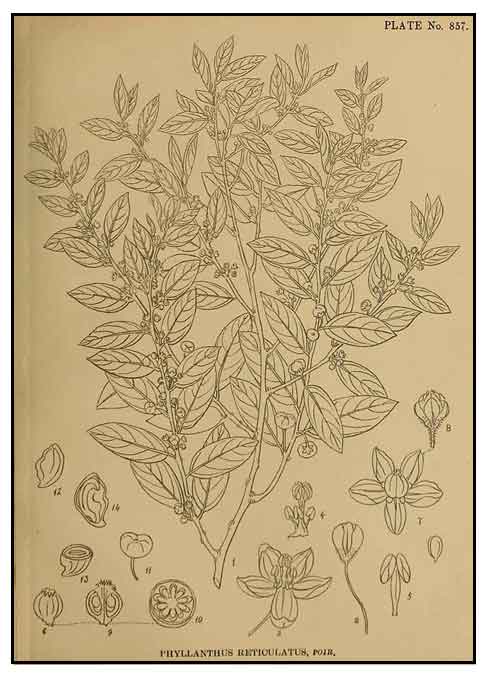 • A monoecious scandent shrub or small bushy tree, up to 5 m tall (in Africa rarely up to 18 m tall); trunk up to 15 cm in diameter, bark rough, brown to gray, branchlets slender. Leaves differently shaped; spirally arranged scale-like, ca. 1.5 mm long on the orthotropic shoots; plagiotropic shoots with normally developed, distichous, elliptic to (ob)ovate leaves, 1—3(—5) cm x 0.5—2(—2.5) cm, entire, cuneate to rounded at base, obtuse to emarginate at apex, glabrous and shortly petiolate. Flowers in few-flowered fascicles or solitary in leaf axils, unisexual, often a single female flower and some male flowers together, sometimes arranged on leafless shoots and those then seemingly long racemes, with 5(—6) perianth lobes and 5(—6) disk glands; male flowers with 5(—6) stamens; female flowers with a superior subglobose ovary, crowned by 2-lobed styles. Fruit a depressed-globose berry, up to 7 mm in diameter, usually blueish-black when ripe with dark purplish pulp, 6—many-seeded. Seeds trigonous, up to 2 mm long, blackish. Phyllanthus reticulatus generally flowers throughout the year. The indumentum of leaves, stems and flowers is variable, from glabrous to densely pubescent. In Africa, 2 varieties have been distinguished: var. reticulatus with pubescent flowering shoots and sometimes also leaves and stems, and var. glaber (Thwaites) Muell. Arg. with all parts glabrous. (PROSEA) (43) • A monoecious scandent shrub or small bushy tree, up to 5 m tall (in Africa rarely up to 18 m tall); trunk up to 15 cm in diameter, bark rough, brown to gray, branchlets slender. Leaves differently shaped; spirally arranged scale-like, ca. 1.5 mm long on the orthotropic shoots; plagiotropic shoots with normally developed, distichous, elliptic to (ob)ovate leaves, 1—3(—5) cm x 0.5—2(—2.5) cm, entire, cuneate to rounded at base, obtuse to emarginate at apex, glabrous and shortly petiolate. Flowers in few-flowered fascicles or solitary in leaf axils, unisexual, often a single female flower and some male flowers together, sometimes arranged on leafless shoots and those then seemingly long racemes, with 5(—6) perianth lobes and 5(—6) disk glands; male flowers with 5(—6) stamens; female flowers with a superior subglobose ovary, crowned by 2-lobed styles. Fruit a depressed-globose berry, up to 7 mm in diameter, usually blueish-black when ripe with dark purplish pulp, 6—many-seeded. Seeds trigonous, up to 2 mm long, blackish. Phyllanthus reticulatus generally flowers throughout the year. The indumentum of leaves, stems and flowers is variable, from glabrous to densely pubescent. In Africa, 2 varieties have been distinguished: var. reticulatus with pubescent flowering shoots and sometimes also leaves and stems, and var. glaber (Thwaites) Muell. Arg. with all parts glabrous. (PROSEA) (43)
Distribution
- Native to the Philippines.
-
Common in thickets
at low and medium altitudes throughout the Philippines.
- Also native to Andaman Is., Assam, Bangladesh, Borneo, Cambodia, China South-Central, China Southeast, East Himalaya, Hainan, India, Jawa, Laos, Lesser Sunda Is., Malaya, Maluku, Myanmar, Nansei-shoto, New Guinea, Nicobar Is., Northern Territory, Pakistan, Queensland, Santa Cruz Is., Solomon Is., Sri Lanka, Sulawesi, Sumatera, Taiwan, Thailand, Vietnam, West Himalaya, Western Australia. (18)
 Constituents Constituents
- Leaves contain
a tannic acid, but no alkaloid.
- Studies have yielded tannin acid, octocosanol, teraxerol, friedeline, teraxerone, betulin, sitosterol, scopoletin, stigmasterol, lupeol.
- Phytochemical studies isolated three compounds: lupeol acetate, stigmasterol and lupeol.
- A methanol extract study yielded 3 triterpenoids: glochidonol, stigmast-22-en-3-ol, and stigmast-5-en-3-ol. (15)
- Phytochemical screening of leaves yielded tannins, phenols, and quinone. (19)
- Study of essential oil constituents of leaves yielded monoterpenes (64.9%) as dominant compound, followed by sesquiterpenes (23.0%), with major monoterpene constituents of α-pinene (6.0%), sabinene (7.6%), β-pinene (18.1%), linalool (6.9%) and camphor (7.7%) and sesquiterpene constituents of β-caryophyllene (11.9%) and germacrene D (8.6%). (22)
- Phytochemical screening of P. reticulatus leaf (L), stem bark (SB) and root bark (RB) yielded: alkaloids (L, SB, RB), anthocyanins ( L, SB, RB),
anthraceneglycosides (trace RB), carotenoids (L), catacholic compounds (L), coumarins (L), dihydrochalcones (L), emodins (L), flavonoids, (L, SB, RB), flavonols ( SB, RB), flavones (L, SB, RB), glycosides (L), lignans (L), phenols (L, SB, RB), polyoses (L), saponins (L, RB, SB), steroids (L), triterpenoids (L, SB, RB). (28)
-
Study of 95% EtOH extract of whole plant isolated two new arylnaphthalene lignan glycosides, named reticulatusides A and B (1 and 2), together with eight known compounds. (39)
- Phytochemical analysis of methanolic leaf extracts yielded secondary metobolites such as flavonoids, phenols, alkaloids, steroids, tannins, saponins, glycosides, with absence of terpenoids. Elemental concentrations of leaves yielded: N 1.475%, P 0.210%, K 1.69%, S 0.193%, Ca 1.7%, Mg 0.66%, Na 0.078%, Zn 480.5 ppm, Fe 1132 ppm,, Mn 84 ppm, Cu 13.9 ppm, B 26.9 ppm. Phenolic content average at 93.44 mg/g, while flavonoids averaged at 55.06 mg/g. (see study below) (44)
Properties
- Bark is astringent, diuretic, alterative and attenuant.
- Studies suggested antiplasmodial, analgesic, anti-diabetic, anti-plasmodial, hypolipidemic, cytotoxic, antibacterial, antifungal, analgesic, nootropic, anticancer, antidiarrheal, CNS depressant, antiarthritic, immunostimulant, anti-inflammatory, hepatoprotective, antiulcer activities.
Parts
utilized
Leaves, stems, roots, fruit.
 Uses Uses
Edibility
· Fruit reported to be eaten in times of scarcity in East Africa.
Folkloric
· Decoction
or infusion of dried bark used for dysentery.
· Powdered leaf used for sores, burns, suppurations.
· Fruit is astringent to the bowels; used for diarrhea
in infants.
· Leaves and roots used for fractures and traumatic injuries.
· Astringent, used in treatment of liver and splenic diseases; also used for rheumatism.
· In Zambia, the plant is used as a remedy for anemia and intestinal hemorrhages; the roots and fruit have been used for criminal poisoning.
· European farmers have used the powdered leaf as application for sores, burns and venereal sores. Bark and leaf used as diuretic.
· In Ashanti, leaves mixed with palm nuts (Elaeis guineensis) and made into a broth and given to new delivered women.
· In the Konkan, juice of leaves made into pills with camphor and cubebs, and allowed to dissolve in the mouth as a remedy for bleeding gums.
· In Bangladesh, used for treatment of gastric problems, colic, constipation.
· In the Gold Coast, stems used for sore eyes, the juice blown into the eyes.
· In India, leaves and stems used as antidiarrheal, astringent, diuretic, anti-inflammatory; used for anemia, bleeding gums and burns. (13) Root decoction with honey used two spoonfuls daily for bronchodilation in asthma or bronchitis. (37)
· In Andhra Pradesh, leaf decoction used daily for piles. Leaf juice used for dysentery in cattle. Leaves crushed with Celosia argentea and applied externally for skin diseases. (17)
· In Zululand, root bark infusions used as emetic.
· Frayed twig used as toothbrush.
· In Sudan, used as diuretic and refrigerant. In South Africa, powder of leaves applied to sores, burns, suppurations and chafed areas. In West Africa, juice of stem used for sore eyes and twigs as chew sticks. (24)
· Tribal people in Vekkuangiri hills in Tamil Nadu use the plant for a wide range of oral problems including oral cancer, tooth decay, gingivitis, periodontitis, dental plaque, bad breath, xerostomia (dry mouth), oral candidiasis, stomatis, cold sores, cancer sores, leukoplakia. Leaves are powdered and combined with cubebs and camphor and made into tablets to be sucked for bleeding gums. Twigs used as chew-sticks and toothbrushes to help clear plaques and leukoplakia. Leaf decoction drunk for sore throat. Leaf and bark infusion used as gargle for toothaches. (31)
· In Ghana, twigs used as chew sticks; sap from stem blown into eyes to cure soreness. Soup made from leaves boiled with palm oil given to women after childbirth. (35)
· Malasar healers of the Nilgiri Biosphere use various plant parts for a wide variety of health problems: chewing of leaves for mouth ulcers and cracked tongue, paste of leaves for diabetic foot ulcers, decoction of leaves for carpal tunnel syndrome; chewing of leaves and twigs for bleeding gums; decoction of whole plant for oral cavity cancer and anemia; juice of fresh leaves and fruits for body tremors; decoction of leaf, fruit, and stem for liver disorder; root extract for dysmenorrhea. (46)
· In southern Africa, powdered leaves applied to sores, venereal sores, burns, suppurations and chafes; leaves and bark used as diuretic. In Tanzania, crushed leaves rubbed on body of malaria patients. In Zanzibar, plant used as remedy for anemia and intestinal hemorrhage. Sap from pounded roots used as drops for ear infection. Powdered root sprinkled on infected wounds and chancre. Root decoction drunk to treat dysmenorrhea and to increase fertility; also for treatment of abscesses, pain and spasms, as purgative, and for treatment of hookworms. Sukama of Tanzania drink water mixed with pounded roots for treatment of headache. Leaves and roots used for paralysis. In India, powdered leaves are pounded with cubebs (Piper cubeba) and camphor into tablets for sucking against bleeding gums; leaves used for treatment of diabetes. In Malaysia, stem and leaves rubbed on the chest for treatment of asthma; leaf decoction drunk for treatment of sore throat, snakebites, mental problems, and diarrhea. (47)
Others
· Dye: Filipinos use the juice of ripe fruit as ink. The Zulus use the root in making a dark brown or black dye, for coloring fishing lines to make them less conspicuous in water. • In East Africa, roots and bark used as red to black dye. In Kenya, bark used as dye for tanning fishing lines. (24) In Indonesia, decoction of stems and leaves used for dyeing cotton black; also used as a mordant. In India, root is reported to produce a red dye. (43)
· Toothbrush: Frayed twig used as toothbrush.
· Wood / Stems: Stems used in Northern Nigeria as roof-binders in conical huts. Wood is very hard and used by tribes in East Africa for threshing flail. (•) Wood sometimes used for making utensils. (43)
· Firestick: In Australia, aborigines of the Moyle River area use the wood for firesticks.
Studies
• Antiplasmodial Activity:
In a study of 16 extracts of four Kenyan medicinal plants being screened for phytochemicals and antiplasmodial activity, P reticulatus and S zanzibariensis showed the most activity against the tested strains. (1)
• Analgesic / Anti-Inflammatory Activity: Study showed extracts of P reticulatus using acetic acid-induced writhing test and carrageenan-induced rat paw edema model, showed significant analgesic and anti-inflammatory properties. (2)
• Antidiabetic Activity: Study of petroleum and ethanolic extracts of P reticulatus showed antidiabetic activity at dose of 1000 mg/kg. Phytochemical screening revealed terpenoids glycosides, protein, carbohydrates and absence of alkaloids and steroids.
• Hepatoprotective Activity / Aerial Parts: Study of fat free ethanol extract of the aerial parts of P reticulatus showed promising hepatoprotective activity evidenced by changes in pentobarbital-induced sleeping time, changes in liver enzymes and histopathologic changes. (5)
• Cytotoxic Activity: In a study screening the cytotoxicity of some medicinal plants, Phyllanthus reticulatus exhibited strong brine shrimp lethality. (6)
• Hypocholesterolemic / Oxidative Stress Effect: Study evaluated the effect of P. reticulatus aqueous extract on lipid profile and oxidative stress in hypercholesterolemic albino rats. It was effective in controlling total cholesterol, lipid profile and oxidative stress in the animals. Results suggest a preventive potential for prevention of atherosclerosis in hypercholesterolemic patients. (8)
• Antinociceptive / Hypoglycemic: Methanol extract exhibited beneficial effects as a pain reliever and in reducing the elevated blood glucose level of hyperglycemic mice. (9)
• Antioxidant / Hypoglycemic: Methanol extract exhibited potent antioxidant activity. Its natural origin and potent free radical scavenging activity presents a potential preventive intervention for free radical mediated diseases.
• Anti-Hepatitis B Viral Activity: Study of two organic fractions of a fat free ethanolic extract showed anti-HBsAg (hepatitis B surface antigen) activity at high concentrations. The activity may be due to binding of the agents with the antibody binding sites on HBsAg. (11)
• Anti-Inflammatory / Fruit: Study evaluated a hydroalcoholic extract of
ripe fruit for anti-inflammatory activity by carrageenan-induced hind paw edema in rats. Results showed significant anti-inflammatory activity with significant (P<0.01) reduction of paw volume when compared to diclofenac sodium. (12)
• Anti-Inflammatory / Leaves: Study evaluated petroleum ether and methanolic extracts of leaves of P. reticulatus for anti-inflammatory activity in carrageenan-induced paw edema in rats. Results showed the PE extract to have significant and higher activity than the methanolic extract. (13)
• Radical Scavenging Activity: Study evaluated a methanolic extract of the plant for free radical scavenging activity in different in vitro models. Results showed antioxidant activity attributed to the presence of methanol extractable phenolic compounds and other constituents. (14)
• Hypoglycemic / Roots: Study evaluated
petroleum ether and ethanolic extracts of roots for hypoglycemic activity in alloxan-induced diabetic rats. Results showed good hypoglycemic activity at 1000 mg/kg dose. Phytochemical screening yielded terpenoids glycosides, protein, carbohydrates, with an absence of alkaloids and steroids. (16)
• Antidiabetic / Antidiarrheal / Leaves: Study evaluated the anti-diabetic and antidiarrheal activity of a methanol extract of leaves in alloxan induced diabetic mice. Results showed significant hypoglycemic activity in OGTT. There was significant effect in controlling diarrhea in castor oil and magnesium induced diarrheal tests. (20)
• Antimicrobial / Cytotoxicity / Scopoletin / Stem Bark: Study isolated scopoletin from the chloroform fraction of methanol extract of stem bark. All partitionates tested showed moderate to strong inhibitory activity to microbial growth while the chloroform soluble fraction showed strongest cytotoxicity in brine shrimp lethality assay. (21)
• Anti-Inflammatory / Antinociceptive / CNS Depressant / Leaves: Study of methanol extract of leaves showed significant dose dependent CNS depressant activity (hole cross test and open field test), anti-inflammatory (carrageenan induced paw edema), and analgesic (acetic acid induced writhing) properties. (23)
• Natural Indicator in Acid Base Titration: Study showed the fruit extract can be useful, economical, simple, and accurate for acid base titration. (25)
• Antibacterial / Leaves: Study evaluated the antibacterial activity of various (ethanol, PE, and choloroform) extracts of P. reticulatus leaves against four gram negative (S. dysenteriae, S. typhi, P. aeruginosa, and S. sonnei) and six gram positive bacteria (Sarcina lutea, Bacillus megaterium, B. subtilis, B. cereus, S. aureus, and Streptococcus ß-hemolyticus). All the extracts produced various zones of inhibition against all tested bacteria with the ethanol extract showing better potency. (26)
• Nootropic Effect / Fruit: Study evaluated the nootropic effect of ethanolic extract of P. reticulatus on cognitive functions, brain antioxidant enzymes, and acetylcholinesterase activity in aluminum-induced impairment and oxidative stress in Swiss albino rats. Results showed the fruit extract at 100 and 200 mg/kbw markedly (p<0.01 and p<0.01) decreased the level of AChE activity and showed excellent nootropic effect on cognitive performance and brain antioxidant markers. Results suggest a potential for the management of neurodegenerative diseases especially Alzheimer's disease. (27)
• Anti-Cancer Activity / Colon Cancer Cell Line: Study evaluated the anti-cancer properties of P. reticulatus by MIT assay of in-vitro colon cancer cell lines-HT-29. Results showed an anti-cancer effect with the aqueous extract showing 50% cell viability at 15.6 mg/ml, while an ethanol extract showed 31.2 mg/ml. (29)
• Antiarthritic / Polyprenol: Study evaluated the in vitro, in vivo, and in silico antiarthritic activity of polyprenol, a phytoconstituent isolated from the leaves of Kirganelia reticulata. The isolated polyprenol showed potent dose-dependent antiarthritic effect possibly through maintenance of synovial membrane and vascular permeability with subsequent inhibition of cytokines and leukotrine infiltration inhibition. (30)
• Antimicrobial / Analgesic / Leaves: Study evaluated leaf extracts for antimicrobial and analgesic activities in Swiss albino mice. Antimicrobial screening of methanol and water soluble fractions showed 11 mm zones of inhibition against gram-positive bacterium, Staphylococcus aureus, compared to standard gentamicin of 16 mm. Analgesic evaluation of methanolic, petroleum ether and dichlormethane fractions showed significant activities with inhibition of writhing of 74%, 77%, and 65%, respectively. Results suggest peripheral analgesic activity via inhibition of local peritoneal receptors or arachidonic acid pathways, involving cyclo-oxygenases and/or lipoxygenases. (32)
• Immunostimulant /
Leaves and Fruits: Study evaluated hydroalcoholic extract of fruit and leaves for immunostimulant activity on albino mice by neutrophil adhesion test, carbon clearance, and cyclophosphamide induced myelosuppression. Results showed both plant parts trigger specific and non-specific responses. (33)
• Antioxidant / Whole Plant Powder: Study evaluated the antioxidant activity of the entire plant by in vitro assays i.e., DPPH, ß-carotene bleaching, superoxide radical scavenging, reducing power, and metal chelating assays. The entire plant showed good antioxidant activity of about 90% compared with standard BHT with 85%. The methanolic extract showed higher antioxidant activity than ethanolic extracts. (34)
• Hepatoprotective / Paracetamol Toxicity / Aerial Parts: Study evaluated the antioxidant and hepatoprotective effect of P. reticulatus aerial parts again paracetamol induced hepatitis. An ethanol extract brought back the altered biochemical markers to near normal levels comparable to standard Silymarin. Extract also showed significant antioxidant activity and total phenolic content. (36)
• Antifungal / Inhibition of Ergosterol Synthesis / Leaves: An ethanol et of P. reticulatus leaves showed good antifungal activity compared to other extracts, with MIC and MFC of 62.5 and 250 µg/mL against M. pachydermatitis and T. rubrum, respectively. The extract significantly lowered the release of ergosterol by 16.37%. Results showed potential for future development as antidermatophytic. (38)
• CuO Nanospheres / Antioxidant / Antibacterial / Leaves: Study reports on the eco-friendly, cost-effective and easy synthesis of CuO NSP using leaf extracts of Phyllanthus reticulatus and Conyza bonariensis. The methanolic extract of plant exhibited excellent antioxidant property compared to CB. The CB based CuO NSP showed amazing antibacterial activity. (40)
• Anticancer / HCT-116 Colon Cancer Cell Line / Leaves: Study of methanolic leaf extract yielded significant phenolic content of 93.44 mg/g and flavonoids content of 55.35 mg/g. DPPH and PM (phospho-molybdenum) assay showed 28.56% cell growth inhibition on HCT-116 colon cancer cell line at 24 h in a dose-dependent manner. (see constituents above) (44)
• Antidiabetic / Leaves: Study evaluated the antidiabetic activity of petroleum ether and ethanolic extracts of leaves of P. reticulatus in alloxan-induced diabetic mice, using oral doses of 500 and 1000 mg/kg. Phytochemical screening of residues revealed terpenoids glycosides, protein, carbohydrates, and absence of alkaloids and steroids. Results showed antidiabetic activity at 1000 mg/kg dose. (45)
• Antiulcer / Leaves: Study evaluated the protective effect of methanol extract and ethyl acetate and n-hexane fractions of P. reticulatus leaves extract on ethanol-induced gastric ulcer in Sprague-Dawley rats. Pretreatment with P. reticulatus raised the gastric pH and improved all evaluated histopathological parameters viz. ulcer score, erosion score, hemorrhage, fibrinoid necrosis, inflammatory infiltrate, and edema scores. P. reticulatus significantly reduced mRNA expression levels of TNF-α and IL-8. Results showed antiulcer activity which may be attributed to downregulation of TNF-α and IL-8 expression levels. (48)
 • Phytochemicals in Various Plant Parts: Study evaluated O. reticulatus for phytochemicals in various parts of the plant viz. roots, stems, leaves, flowers, and seeds extracted in different solvents (water, ethanol, and methanol). Phytochemical analysis included phenolic compounds, flavonoids, tannin, alkaloids, glucoside, steroid, saponin, protein, and carbohydrate. Roots showed highest % of moisture and ash contents with 48.0% and 16.0% respectively. Methanol extract of leaves, flowers, and seeds showed appreciable amounts of different compounds. Highest mean concentration of protein was found in ME of all plant parts. Leaves showed highest concentration of flavonoids, protein, and phenolic compounds. The methanol extract showed highest concentration of analyzed compounds, except carbohydrates. Water extract of roots showed highest flavonoids. Seeds showed higher concentration of analyzed compounds. (49) • Phytochemicals in Various Plant Parts: Study evaluated O. reticulatus for phytochemicals in various parts of the plant viz. roots, stems, leaves, flowers, and seeds extracted in different solvents (water, ethanol, and methanol). Phytochemical analysis included phenolic compounds, flavonoids, tannin, alkaloids, glucoside, steroid, saponin, protein, and carbohydrate. Roots showed highest % of moisture and ash contents with 48.0% and 16.0% respectively. Methanol extract of leaves, flowers, and seeds showed appreciable amounts of different compounds. Highest mean concentration of protein was found in ME of all plant parts. Leaves showed highest concentration of flavonoids, protein, and phenolic compounds. The methanol extract showed highest concentration of analyzed compounds, except carbohydrates. Water extract of roots showed highest flavonoids. Seeds showed higher concentration of analyzed compounds. (49)
• Weak Insecticidal / Leaves: Study evaluated a crude methanol extract of P. reticulatus leaves for cytotoxic and insecticidal activity. (5R*,6R*)-4,6-Dimethoxycarbonyl-5-[2′,3′,4′-trihydroxy-6′-(methoxy carbonyl) phenyl]-5,6-dihydro-2H-pyran-2-one (1) along with 3,4,3′-tri-O-methylellagic acid, and methyl gallate were isolated from a dichloromethane extract. Compound 1 showed very weak insecticidal activity against Spodoptera frugiperda (Sf9) with IC50 of 27.27 µg/mL. (50)
Availability
Wild-crafted. |





.jpg)