 |

Family • Vitaceae
Mali-mali
Leea aculeata Blume ex Spreng
| Scientific names | Common names |
| Leea aculeata Blume ex Spreng | Amamali (Sul.) |
| Leea sandakanensis Ridl. | Anmamali (S.L. Bis.) |
| Leea serrulata Miq. | Bulinaunau (P. Bis.) |
| Ticorea aculeata Blanco | Garadat (Bik.) |
| Gemamali (Buk.) | |
| Humamali (Mbo.) | |
| Hara (Tag.) | |
| Kemamali (Buk.) | |
| Lumali (Sub.) | |
| Mali-mali (Pamp., Tag.) | |
| Mamalig (Mag.) | |
| Pamangkilon (Bis.) | |
| Sipit-kahig (Tag.) | |
| Sipit-kayin (Tag.) | |
| Leea aculeata Blume ex Spreng. is an accepted name. The Plant List | |
| Other vernacular names |
| BORNEO: Bundong, Denigirut, Kenyupiang, Kruang, Mali-mali beduri, Mali-mali bini, Njebo. |
| INDONESIAN: Kemali. |
Botany
Constituents Availability |
Updated Nov 2020 / Nov 2018 / Nov 2017 / Aug 2016

 |
| PHOTOS / ILLUSTRATIONS |
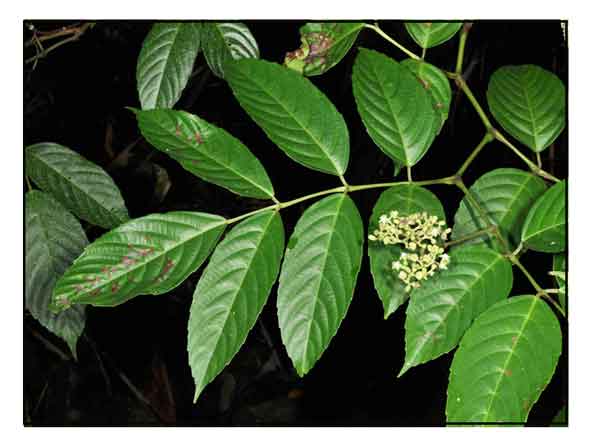
| IMAGE SOURCE: Photo / Leea aculeata / Leaves /Copyright © 2012 by P B Pelser and J F Barcelona (contact: pieter.pelser@canterbury.ac.nz) @berkeley.edu) [ref. DOL42430] / Non-Commercial Use / click on image to go to source page / Phytoimages.siu.edu |
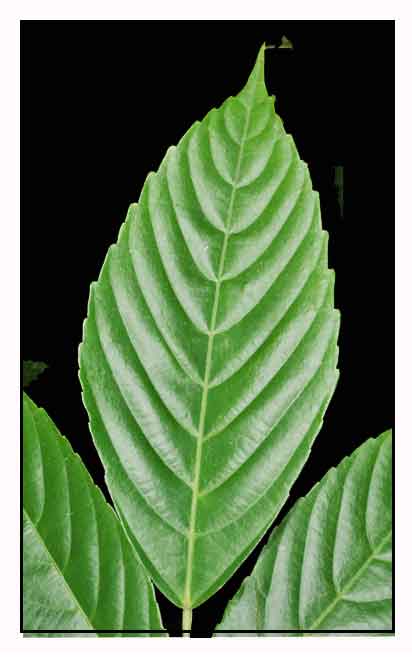
| IMAGE SOURCE: Photo / Leea aculeata / Close-up of Leaf /Copyright © 2012 by P B Pelser and J F Barcelona (contact: pieter.pelser@canterbury.ac.nz) @berkeley.edu) [ref. DOL42431] / Non-Commercial Use / click on image to go to source page / Phytoimages.siu.edu |
Additional
Sources and Suggested Readings |
DOI |
• |
| List of Understudied Philippine Medicinal Plants |
 |
• |
|
