Gen info
- Jujube plum is indigenous to China with a history of over 4,000 years of use. China is the site of 90% Z. jujuba production in the world. (30)
- Jujube (Ziziphus jujuba Mill.) is the most important species of Rhamnaceae, and is one of the oldest cultivated fruit tress in the world. Its utilization and cultivation history dates back to the Neolithic age, 7000 years ago. It has spread all over China, with a cultivation area of about 2 million hectares and an annual production of 8 million tons, and reported to be the main income source of about 20 million farmers in China.(37)
Botany
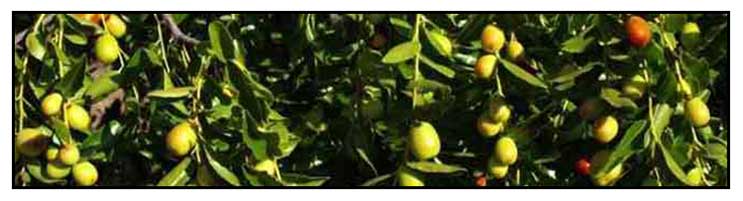
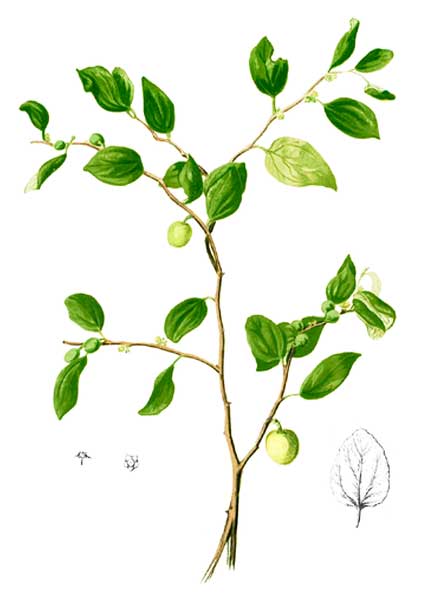
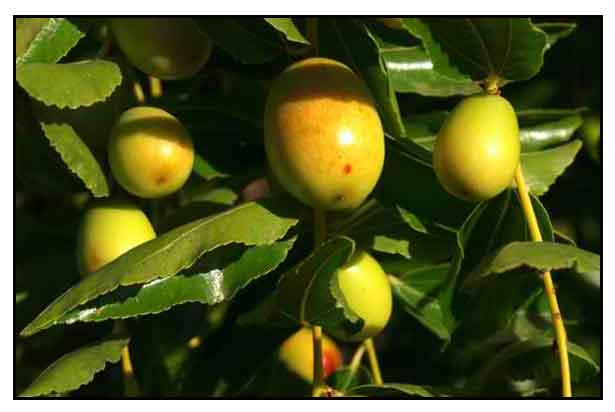
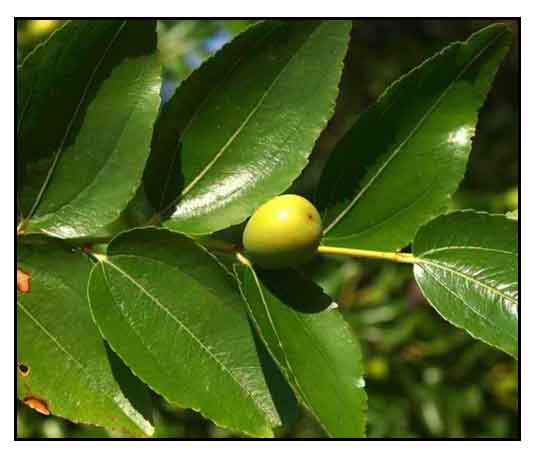
Mansanitas is a small tree 5 to 10 meters high. Branches are armed with short, sharp spines. Leaves are elliptic-ovate, 5 to 8 centimeters long, 3 to 5 centimeters wide, rounded at the base, green and smooth on the upper surface and densely covered with woolly, pale hairs beneath. Flowers are greenish white, about 7 millimeters in diameter, borne on axillary cymes 3 centimeters in diameter or less. Fruit is fleshy and mealy, smooth, orange or red, ovoid or somewhat rounded, 1.5 to 2 centimeters in diameter, with a bony and irregularly furrowed stone within.
 Distribution Distribution
- Widely scattered in the Philippines as a semi-cultivated tree.
- Introduced from tropical Asia.
- It originated from the middle and lower reaches of the Yellow River, the 'mother river' of the Chinese people, and is distributed in at least 48 countries on all continents except Antartica. (37)
Constituents
- Bark contains much tannin and a crystalline principle, ziziphic acid.
- Tannin in the bark is called ziziphotannic acid.
- Fruit contains mucilage, fruit acids and sugar.
- Bark contains 4.1 % tannin; the root 2.6 to 9.3% tannin.
- Studies have yielded various chemical substances like Mauritine-A; Amphibine-H; Jubanine-A; Jubanine-B; Mucronine-D and Nummularine-B. Sativanine-E. Frangufoline, Ziziphine-A to Q, betulinic acid colubrinic acid, alphitolic acid, 3-O-cis-p-coumaroylalphitolic acid, 3-O-transpcoumaroylalphitolic acid, 3-O-cis-p-coumaroylmaslinic acid, 3-O-trans-pcoumaroylmaslinic acid, oleanolic acid, betulonic acid, oleanonic acid, zizyberenalic acid and betulinic acid, jujubosides A, B, A1 B1 and C and acetyljujuboside B and the protojujubosides A, B and B1, saponin, ziziphin, from the dried leaves of Z. jujube - 3-O-a-L-rhamnopyranosyl (1-2)-aarabinopyranosyl-20-O- (2,3)-di-O-acetyl-a-L-rhamnopyranosyl jujubogenin.
- Study evaluating leaves and bark of ZJ for catechins and proanthocyanidin isolated 16 compounds, including 8 monmeric catechins—
(−)-epiafzelechin, (−)-epicatechin, (−)-epigallocatechin, (−)-epicatechin gallate, (−)-epigal-locatechin gallate, (+)-catechin, (+)-catechin gallate, and (+)-gallocatechin; 4 dimeric proanthocyanidins — (−)-epiafzelechin-(4β-8)-(−)-epicatechin, proanthocyanidin B-2, (−)-epicatechin-(4β-8)-(−)-epigallocatechin, and (−)-epiafzelechin-(4β-8)-(−)-epigallocatechin; and 4 oligomeric proanthocyanidins consisting of epiafzelechin, epigallocatechin, catechin, and epicatechin. (20)
- Nutrient analysis of fresh, raw fruit (per 100 g) yielded: (Proximates)
water 77.86 g, energy 79 kcal, protein 1.20 g, total lipid (fat) 0.20 g, carbohydrate 20-23 g; (Minerals) calcium 21 mg, iron 0.48 mg, magnesium 10 mg, phosphorus 23 mg, potassium 250 mg, sodium 3 mg, zinc 0.05 mg; (Vitamins) vitamin C 69.0 mg, thiamin 0.02 mg, riboflavin 0.04 mg, niacin 0.900 mg, vitamin B6 0.081 mg, vitamin A 40 IU; (Lipids) No cholesterol and trans fatty acids. (31)
 Properties Properties
- Bark is bitter.
- Root is considered purgative.
- Fruit of wild variety
is acid and astringent; cultivated fruit is less acid.
- Fruit is considered anodyne, nourishing, mucilaginous, pectoral, styptic, digestive and blood purifying and tonic.
- Considered tonic, aphrodisiac, anxiolytic, hypnotic-sedative, anticancer, antifungal, anti-ulcer.
- Studies on fruit have suggested anticancer, anti-inflammatory, antiobesity, immunostimulating, antioxidant, hepatoprotective and gastroprotective properties.
Parts used
Bark, leaves, fruit, roots.
Uses
Edibility / Culinary
- Fruit is edible, eaten fresh or dried; used as condiment in a flour meal, butter, or cheese-like paste. (36)
- In Persian cuisine, dried fruit is known as "annab." (30)
- In China, leaves boiled and consumed as tea. (36)
Folkloric
- In the Philippines, a decoction of the bark and leaves is an effective astringent in dysentery and diarrhea. Also, used in all kinds of bowel problems.
- Root, taken in excess, is a drastic purgative.
- In Angola, used to promote menstruation.
-
Decoction used for fevers.
- Powdered root used for ulcers and wounds.
- Juice of root bark used as purgative; externally, for gout and rheumatism.
- Bark is emetic in larger doses. Sometimes, used for colic.
- Bark, powdered or in decoction, is astringent and used for diarrhea.
- Powdered bark used as dressing for old wounds and ulcers.
- In Cambodia, bark is used for dysentery and gingivitis.
- Some Benue tribes use the leaves as ingredient in a prescription for gonorrhea.
-
Pounded leaves are applied as dressing to wounds. Leaves, in plaster form, used in strangury. Paste made from tender leaves and twigs applied to boils, abscesses and carbuncles to promote suppuration.
- Dried and ripe fruit used is mildly laxative; also, used as expectorant.
- In China, fruit used for coughs. Also, used for insomnia and anxiety.
Others
- Cosmetics: Extracts used in a variety of skin care products, anti-wrinkles, moisturizers, and sunburn lotions.
- Tanning: Used for tanning in India.
- Fishing: In Abyssinia, fruit used to stupefy fish.
- Honey: In China, flowers used as source of high quality honey. (36)
- Fodder: Leaves used as feed in Indonesia and North Africa. (36)
- Food: Invertebrate food for lac/wax and silkworms. (40)
 Studies Studies
• Anxiolytic / Sedative: Study showed the ethanolic extract of seed of ZJ possessed anxiolytic effect at lower dose and sedative effect a higher doses. (1)
• Treatment for Chronic Constipation: Study showed jujuba extract to be an effective and safe treatment for chronic constipation. (2)
• Anti-Diabetic / Hypolipidemic: Study evaluating the hypoglycemic and hypolipidemic effects of a hydro-alcoholic extract of ZJ leaves in rats showed significant reductions of glucose, cholesterol, triglyceride and elevation of HDL. LDL reduction was not as significant. (3)
• Hepatoprotective / Antioxidant / Fruits: Study investigating the hepatoprotective effect of methanolic extract of Zizyphus jujuba fruits in rat models of paracetamol- and thioacetamide-induced hepatic damage showed significant inhibition of biomarker elevation. Histopathological studies supported the biochemical findings. Study concludes a hepatoprotective activity probably due to its antioxidant effect. (4)
• Antioxidant: Study showed the fruit extracts from Zizyphus jujuba had higher antioxidant activity than Hydrangea paniculata leaf extracts. (5) Study evaluated four ecotypes of Jujubes from the South Khorasan province of Iran for antioxidant and free radical scavenging activities. Results showed varying degrees of antioxidant activities. All extracts showed dose dependent reduction in hemolysis induced by AAPH. Results showed a potential booster for antioxidant capacities. (33)
• Spatial Memory Improvement / Antioxidant : Study showed the co-treatment of Z. jujuba extract ameliorates ethanol-induced memory deficits, both in the acquisition process and retrieval process of spatial memory performance in rats. The improvement is attributed to the antioxidant properties of flavonoids present in the extract. (6)
• Rat Testes Reproductive Benefits: Study in male Wistar rats evaluated the antioxidant effects of aqueous fruits extracts of Ziziphus jujuba on ethanol-induced oxidative stress. Results showed beneficial effects on ethanol-induced sperm toxicity, with enhancement of sperm motility and plasma membrane integrity. (8)
• Essential Oil / Hair-Promoting Effects: Study evaluated the efficacy of essential oil from seeds of ZJ for hair growth. Applied to rats over shaved skin at different concentrations, results concluded ZJEO possesses hair growth promoting activity. (9)
• Weight-Reducing / Hypolipidemic / Hypophagic: Study of hydroalcoholic extract of ZJ leaves showed the leaf extract to possess significant weight reducing, hypophagic and hypolipidemic properties in sucrose-induced obese rats.
• Neurodegenerative Disease Preventive: Study evaluated the role of jujube in bran benefits, its effect on neuronal differentiation of PC12 cells. Results showed jujube water extract induced neurite outgrowth of PC12 cells, induced phosphorylation of cAMP responsive element binding protein on PC12 cells. Results support the use of jujube as food supplement for the prevention of neurodegenerative diseases in which neurotrophin deficiency is involved. (13)
• Antimicrobial: Study evaluated an aqueous-ethanol extract of jujuba seeds for antimicrobial activity against six bacterial strains. Results showed the extract is potent in inhibiting both gram-positive and gram-negative bacteria. (15)
• Benefits in Dyslipidemia in Obese Adolescents: Study evaluated the effect of ZJ fruit in controlling dyslipidemia in obese adolescents. A triple-blind randomized placebo-controlled trial of 86 obese adolescents aged 12--18 with dyslipidemia. Results showed the fruits to be generally well tolerated, with potential favorable effects on serum lipid profile. (16)
• Antimicrobial / Fruits: Study of crude extract of ZJ fruits showed a wide antimicrobial activity against tested microbes, with E. coli showing to be the most susceptible. Results suggest potential used for microbial infections, especially pediatric infectious diseases. (17)
• Hypolipidemic / Antiobesity: Study of Z.. jujuba powder showed hypolipidemic and anti-obesity properties and did not show any negative impact on liver function as measured by ALT and AST. (18)
• Antipyretic / Leaves: Study evaluated Z. jujuba for antipyretic activity in Brewer's yeast induced pyrexia in rats. The antipyretic activity of the extract was comparable to paracetamol. (19)
• Anticancer / Human Hepatoma Cells: Study evaluated the anti-cancer activity of ZJ and its mechanisms of action in human hepatoma cells (HepG2). Results showed the extract decreased the viability of the cells. The chloroform fraction was most effective, inducing a concentration dependent effect on apoptosis and a differential cell cycle arrest in HepG2 cells. (22)
• Antidiarrheal / Leaves: Study evaluated the anti-diarrheal activity of an aqueous extract of leaves of ZJ in a castor oil and MgSO4 induced diarrhea model. Results showed significant inhibitory activity against castor oil and magnesium sulfate induced diarrhea. There was significant reduction in gastrointestinal motility by charcoal meal test in rats. (23)
• Antitumor / Breast Cancer / Fruit: Study evaluated the beneficial effects of an aqueous extract of ZJ fruit on proliferation of breast cancer cells. Treatment caused dose- and time-dependent cytotoxic effect against an MDA-MB-468 cell line and significantly increased the total antioxidant capacity. In some groups, there was a preventive effect against anemia, lymphocytosis, and neutrophilia or significant decreased in enzyme markers. Results suggest ZJ ameliorates the adverse effects of NMU carcinogenesis and suggests potential in the treatment of mammary tumors in humans. (24)
• Immunomodulatory / Fruit: Study investigated the role of jujube in regulating immune response. The IL-1ß and IL-6 cytokines in LPS-induced macrophages were suppressed by jujube water extract in both mRNA and protein levels. In parallel, the inhibition on transcriptional activity of nuclear factor-kappa B was revealed in LPS-induced macrophages. Results showed bidirectional immunomodulatory activity by regulating expressions of pro-inflammatory cytokines in macrophages. (25)
• Cell-Mediated Immune Stimulation / Effect on Neutrophil Phagocyte Function / Leaves: Study evaluated a hydroalcoholic extract of Ziziphus jujuba leaves on its effect on different in vitro methods of phagocytosis such as neutrophil locomotion and chemotaxis test, and in vitro immunostimulant activity by slide method and nitro blue tetrazolium test using human neutrophils. Results showed the extract stimulated cell-mediated immune system by increasing neutrophil phagocytic function. (26)
• Alpha-Amylase Inhibition / Anti-Diabetic Effect / Antioxidant: Study investigated the inhibitory effect of H. persicum and Ziziphus jujuba on the activity of alpha-amylase. The methanolic extracts of HP and ZJ showed high inhibitory effect on alpha-amylase enzyme with IC50 of 307 and 867 µg/mL, respectively. The effect was comparable to acarbose in lowering the blood sugar levels in diabetic patients. Both plants showed high polyphenolic content suggesting a potent capacity in clearing of oxidants. (27)
• Effect on Peripheral Blood Cells / Fruit Extract: Study evaluated the effect of a hydroalcoholic extract of the fruit of ZJ on peripheral blood cells in male Balb/c mice. Results showed a significant reduction in percentage of monocytes and neutrophils and an increase in the percentage of lymphocytes. (28)
• Effect on Neonatal Jaundice: Clinical trial of 121 neonates aged 2-14 days evaluated the effect of Zizyphus jujuba as treatment of neonatal jaundice compared to phototherapy. Results indicate Z. jujuba was effective for treatment of neonatal jaundice in the first 12 hours which could be due to higher effect of the extract of reduce bilirubin concentration. It was not found effective in consecutive days. (29)
• Review / Anticancer / Effect on Chemoresistance: Studies have shown the fruits to be rich in bioactive compounds beneficial to human health. Among the bioactive compounds in the fruit, triterpenic acids and polysaccharides have antiproliferative and anticancer effects on various cancer cell lines. One of the mechanisms is induction of apoptosis. (30)
• Wound Healing / Bark: Study evaluated the wound healing activity of topically applied bark extract of Ziziphus jujuba in an excision wound model in albino rat. A high dose methanolic extract (10%) showed highly significant (p<0.001) activity with the most wound shrinkage and organization. (32)
• Effect on Cardiovascular Parameters / Hypotensive: Study evaluated the effect of hydroalcoholic extract of ZJ on cardiovascular parameters in normotensive rats. Dose of 200 mg showed significant decrease in heart rate, systolic blood pressure and mean arterial blood pressure. (34)
• Effect on Acetic Acid Induced Ulcerative Colitis: Study evaluated the effects of hydroalcoholic extract of ZJ on acetic acid induced ulcerative colitis in male rat (Rattus norvegicus). Results showed a healing effect in damaged colonic tissue, more reduced glutathione peroxidase and IL-1ß level. Transrectal administration showed more potent effect than oral administration. (35)
• Antiproliferative and Apoptotic in Thyroid Carcinoma / Fruitc: Study evaluated the antimutagenic and anticancer effects of aqueous extract of Z. jujube on C643 human thyroid carcinoma cells. The extract inhibited the growth of C643 cells in a concentration range of 0.5-2 mg/mL and exhibited cytotoxic effects in a concentration-dependent manner (IC50 1.671 mg/mL). Mechanism was via induction of apoptosis in the cells. Results showed the fruit extract exerted antiproliferative and apoptotic effects on C643 thyroid carcinoma cells and potential as an anticancer agent. (38)
• Antioxidant / Fruit Seeds and Peel Pulp: Study evaluated the antioxidant properties of various fruit parts. Jujube peel pulp showed best antioxidant capacity by DPPH radical scavenging activity (p.3 mg/mL), total phenolic content (38.3 mg GAE / gm DW) total flavonoid content (43.8 mg QE / gm DW) and reducing power (41.9 mg ascorbic acid equivalent / gm DW. Results showed the peel pulp is a more potential antioxidant than the seeds. (39)
• Effect of High Doses on Biochemical and Hematological Parameters: / Fruits: Study evaluated the effects of high doses of Jujube fruits and Saffron petals on biochemical and hematological parameters in rats in a 14-day treatment study. No mortality was observed. There were no differenced in FBS, lipid profile, total protein, albumin, bilirubin, and hematological parameters. BUN, creatinine, urate and liver enzymes levels were increase in both extracts—changes more noticeable in Saffron compared to Jujube. Results suggest Jujube was nearly safe up to 5000 mg/kg, without hepatic or nephrotoxicity in rats. (40)
• Cholinesterase Inhibitory Activity // Antioxidant / Snakin-Z / Fruits: Study of fruit isolated a new peptide, Snakin-Z. The peptide displayed considerable cholinesterase inhibition against AChE (acetylcholinesterase) and BChE (butyrylcholinesterase). The Snakin-Z also showed high antioxidant activity with IC50 0.75 ± 0.09 mg/mL. Study suggests the Snakin-Z may be beneficial for the treatment of Alzheimer's disease. (42)
• Effect on Breast Fissure in Breast Feeding Women / Fruit Lotion: Nipple fissure is common during breastfeeding. This double-blind clinical trial in 100 primiparous lactating women compared the effect of jujube fruit lotion vs breast milk applied 5 times daily after breastfeeding. Results showed Ziziphus jujube fruit lotion heals nipple fissure faster and better than breast milk. (43)
v
Availability
- Wild-crafted.
- Seeds, tinctures, extracts and capsules in the cybermarket.
|