 Gen info Gen info
- Name derives from the Greek work helios, meaning sun; and anthos, for flower.
- Although the sunflower seed is popularly used as a snack, salad garnish or bakery goods ingredient, it is cultivated for its seeds and harvested for oil production, ranking 4th globally (8% of 186 Mt oil in 2012) after palm (29%), soybean (22%) and oilseed rape (13%).
(23)
- A 1975 study ranked it as one of the world's leading oilseed crops, second only to soybean oil in world vegetable oil production. It's high ratio of polyunsaturated fatty acids and good stability make sunflower oil highly attractive for use as cooking oil, in salad oils and margarine. (33)
- Study presents data that demonstrates sunflower (H. annuus) entered the repertoire of Mexican domesticates by ca. 2600 BC, that its cultivation was widespread in Mexico, extending as far south to El Salvador. It was well known to the Aztecs, and is still in use by traditional Mesoamerican cultures today. (34)
Botany
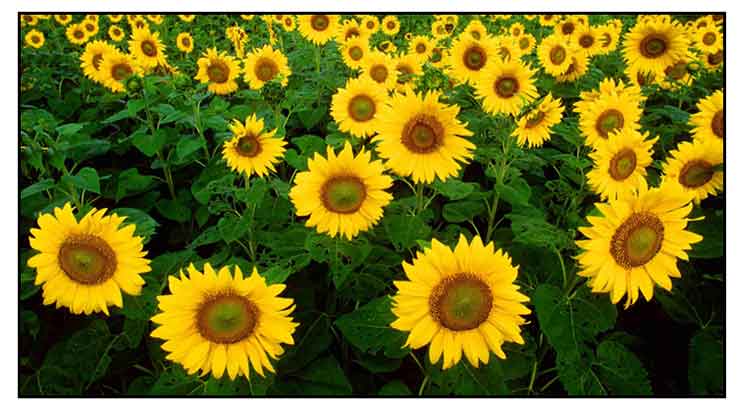
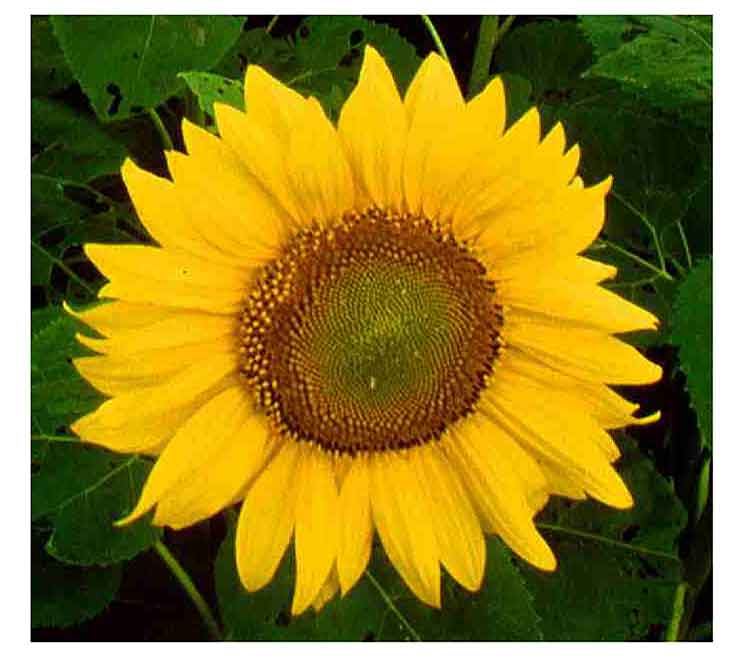
Mirasol is a coarse, stout and erect annual plant, up to 1 to 3 meters high. Stems are straight, rarely branched. Leaves are opposite at the lower part of the stem, alternate above, ovate, rough, hairy, with toothed margins, long-stalked, 10 to 25 centimeters long. Lower leaves are somewhat heart-shaped. Flower heads are solitary or in clusters, up to 40 centimeters across, made up of 1,000 to 2000 individual flowers connected at a common receptacle. Disk flowers are yellow to brown, with tubular, 5-limbed corolla. Ray flowers are yellow and spreading. Involucral bracts are ovate or oblong.
 Distribution Distribution
- Introduced to the Philippines during the Spanish times.
- Cultivated for ornamental purposes and for its seeds.
- Profuse seasonal growth in certain places, like the Mountain
Province.
- Planted in all warm countries.
Constituents
- Plant contains an oleic acid and triacyl glycerol, alkaloids, cyanogenic
glycosides, saponins, cardiac glycosides, tannins, fixed oils, phenolics.
- Oil contains 44-72% linoleic acid.
- Leaves contain a glucoside, C11H19N204.
- Flowers contain quercimeritrin, C21H20O12, a monoglucoside of quercetin; anthocyanin; and abundant amount of cholin and betain.
- Seeds contain 45 to 48 percent fixed oil.
- Aqueous and ethanol extracts yielded
tannin+++, saponin+++, alkaloid+++, terpenoid++, flavonoid+++, glycoside+++, and phenolic compounds++ in varying concentrations. Quantitatively, study showed alkaloid 1.23%, glycosides 0.04%, saponin 1.46%, flavonoids 0.02%, terpenoids 0.64%, and phenolic compound 0.34%. (see study below) (20)
- Sunflower seed contains 35-42% oil, rich in linoleic acid (55-70%), and poor in oleic acid (20-25%). It is a rich source of polyunsaturated fatty acids (approximately 31.0%), compared to safflower 28.2%, sesame 25.5%, flax 22.3%, cottonseed 18.1%, peanut 13.1%, and soy 3.5%. (23)
- Sunflower seeds and sprouts have yielded flavonoids (heliannone, quercetin, kaempferol, luteolin, apigenin), phenolic acids (caffeic acid, chlorogenic acid, caffeoylquinic acid, gallic acid, protocatechuic acid, coumaric, ferulic acid and sinapic acid). (23)
- On phytochemical analysis of leaves, the hexane fraction yielded glycosides and flavonoids, the chloroform fraction yielded saponins, tannins, and glycosides, while the methanol fraction yielded saponins, tannins, glycosides, flavonoids, and alkaloids. (see study below) (31)
Properties
- Seed
considered diuretic and expectorant.
- Seeds and flowers considered febrifuge and stomachic.
- Also considered as aphrodisiac, emollient, anti-malarial and anti-cancer.
- Studies suggest antimicrobial, antiasthma, anti-diabetic, antidiarrheal, antihistamine, antioxidant, analgesic, phytoremediative properties.
Parts
used
Seeds, flowers,
roots, bark.
Uses
Edible
- Flower, seed, stem.
- Seeds, raw or cooked; difficult to use because of small size.
- Roasted seed used as coffee or chocolate substitute.
- The oil is low in cholesterol, considered olive-oil quality and used for salads and cooking.
- Disk of the flower-head can be eaten like an artichoke.
Folkloric
- Boiled flower heads once used by Amerindians for pulmonary affections.
-
Tea from flowers, dried
or fresh leaves is used for facilitating expectoration, relieving coughs,
colds.
- For whooping cough, an infusion of the brown seeds, drink the tea 4
to 5 times daily.
- For asthma, an infusion of the leaves.
- Decoction of seeds used as diuretic and expectorant; used for bronchial and pulmonary affections, coughs and colds.
- An infusion of oven-browned seeds used for whooping cough.
- For diabetes, tea from decocted roots (10 gms to half a glass of water).
- When flowers and leaves are mixed with oil, let stand for 5-10 days
before using.
- Seeds are diuretic, used to increase the flow of urine.
- The bark (boiled) and flowers (steeped) used for fevers, 3- 4 tbsp 3-4
times daily.
- Poultice of leaves used for sores, insect bites and snake bites.
- Elsewhere, flower decoction used for malaria and lung problems.
- Tincture of flowers and leaves mixed with balsamics used for bronchiectasis.
- In China, seeds used for dysentery.
- Tincture prepared from seeds, rectified with wine, used for fevers and ague, in lieu of quinine.
- In Brazil, leaves used as substitute for Datura stramonium for treatment of asthma.
- Infusion of roots used for diabetes.
- In Bangladesh, crushed seeds and flowers used for snake bites, scorpion bites, vaginal burning and worms in the ears.
(39)
- Tincture of bark and flowers employed for intermittent fevers resistant to quinine.
- Tincture prepared from seed with rectified spirit of wine used for treatment of ague and fevers.
(23)
- Tincture used in treatment of malarial fever: Leaves are spread on a bed and covered with cloth, moistened with warm milk, and the patient wrapped in it--perspiration ensues and the procedure repeated until the fever abates. Tincture of flowers and leaves used in combination with balsamic for treatment of bronchiectasis. (24)
- Juice of freshly crushed sunflower stems used for cuts and wounds. The juice is mottled abundantly over wounds and bandaged. (24)
- Sunflower oil applied to face and neck to treat and prevent acne breakouts. (24)
- In Pakistan, flowers, root, seeds, and leaves used for the treatment of bronchial asthma.
(29)
Others
- Dye: A purple dye is obtained from some varieties.
- Fiber: Outer part of the stem has a little fiber, when freed from the pith can be made into paper. Also used for making blotting paper.
- Kindling: Dried stems and empty seed receptacles make excellent kindling.
- Food source: Seeds are used for bird food. Hulled seed press cake used as high protein feed for livestock.
- Oil: Oil mixed with a drying oil (as linseed) to make soap, candles, varnishes, paint, etc.
Studies
• Antimicrobial:
Antimicrobial activity of some medicinal plants against some
Gram positive, Gram negative and fungi: Study showed the methanol
extracts of HA showed low activity against B subtilis and pronounced
activity against Proteus vulgaris. (1)
• Antiasthma / Seed:
Study of the aqueous extract of Helianthus annuus seed on an in vivo anti-asthmatic model showed a decrease of CD4 cells, IL-4/IL-13 expression and IgE secretion levels in the lung. Results suggest the HAS extract has considerable potential in reducing asthma-like symptoms in a mouse model and suggests further purification of the extract to determine the factors responsible for antiasthmatic activity. (2)
• Allergenic Potential / Occupational Allergy:
Study showed that sunflower pollen has high allergenic potential, especially with close contact, as in workplace exposure which can result in impairment of lung function. (4)
• Antioxidant / Seed:
Study showed high antioxidant capacity in the aqueous extract of the sunflower seed and suggests a potential for preventing in vivo oxidative reactions involved in diseases, such as cancer. (5)
• Antiglycative / Antioxidant / Cynarin / Diabetes Benefits:
In a study of four edible sprouts in Chinese markets, the sunflower sprout H. annuus exhibited the strongest inhibitory effects against the formation of glycation end products. The antioxidant capacity of H. annuus was much stronger than the other samples. Study yielded cynarin (1,5-dicaffeoylquinic acid), an active ingredient with a novel function of intervening against glycooxidation. Results suggest sunflower sprouts of H. annuus may have benefits as food supplement in diabetic patients. (8)
• Antimicrobial / Mediated Gold Nanoparticles: Gold nanoparticles have become an important tool in the development of novel biological and chemical processes. Study showed H. annuus mediated gold nanoparticles could be an effective antimicrobial agent and present a potential alternative for the development of new antimicrobials for resistance problems. (9)
• Effect of Caffeine on Growth: Study evaluated the effect of nine different concentrations of caffeine (0.05% to 2.00%) on the seeds of Helianthus annuus L variety Modern. Results showed caffeine in its lower doses has a stimulatory effect on growth and yield while higher doses have inhibitory effect and reduce the growth. (10)
• Antidiabetic / Seeds: Study of an ethanolic extract of seeds in STZ-induced T2 diabetic rats showed the potential antidiabetic property. Chlorogenic acid in seeds is reported to have an antidiabetic effect. (11)
• Phytochelatins / Roots and Leaves: Study showed cadmium exposure induces the formation of phytochelatins in root tissues and leaves. Phytochelatins may play an important role in removing heavy metals from polluted environments and bioremediation. (12)
• Antidiarrheal / Antihistamine / Leaves: Study evaluated ethanol extract of leaves of H. annuus for antidiarrheal activity using castor oil induced diarrhea and gastrointestinal transit model and antihistamine activity using histamine induced bronchoconstriction on guinea pigs and microshock model on rabbits. The extract showed remarkable antioxidant activity when compared to ascorbic acid. Results showed decrease in the severity of diarrhea and antihistaminic potential to treat allergic disorders. (14)
• Sunflower Oil / Potential as Biodiesel: Sunflower oil is an important oil seed crop, a triglyceride derived from the seeds of sun flower. Study evaluated the physico-chemical properties of sunflower oil biodiesel blends 10% (B1O) and 20% (B2O). Blend B20 is found to be within the ASTM standard and could be used as alternative energy source as biodiesel. (15)
• Antioxidant from Sunflower Seeds: Study reports on the production of antioxidant from ground, dehulled, and partially defatted sunflower seeds. Results suggest dephenolization of sunflower seeds could be economically convenient, not only as a useful antioxidant, but also as raw material for other uses. (16)
• Phytoremediation Potential: Study evaluated the phytoremediation potential of H. annuus in sewage-irrigated Indo-Gangetic alluvial soils. Results suggest H. annuus fulfills the necessary condition for efficiently increasing species bioaccumulation after soil treatment with humic acid in Cr-polluted sewage-irrigated soils through soil-plant rhizospheric processes. (17)
• Antioxidant / Seeds: Study evaluated the antioxidant capacity of striped sunflower seed cotyledon extracts in three differed in-vitro methods: FRAP, DPPH, and ORAC assays. In the three methods, the aqueous extract at 30 µg/ml showed higher antioxidant capacity value than the ethanolic extract. Results suggest intake of the seed may prevent in-vivo oxidative reactions responsible for the development of several diseases, such as cancer. (18)
• Phytoremediation Potential / Lead: Study reports on the potential of H. annuus for treating industrial waters contaminated with lead. The absorption and accumulation of lead without any major effect on normal growth of sunflower at 15 ppm concentration. Easy availability and high mass production presents a potential as phytoremediation agent for lead removal. (19)
• Antibacterial: Study evaluated B. alba and H. annuus for phytochemicals and antibacterial activity. Results showed antibacterial activity against the test organisms, with the ethanol extract showing strong activity than the water extracts. (see constituents above) (20)
• Analgesic / Seeds: Study evaluated a methanol extract of seeds of Helianthus annuus for analgesic activity in mice model using acetic acid induced writhing and hot plate methods. Results showed central and peripheral effects with significant (p<0.05) analgesic potential in acetic acid-induced writhing test and an increase (p<0.05) of latency period in the hot plate method. (21)
• Safety Assessment of Sunflower-Derived Ingredients for Cosmetic Use: Review of scientific literature and unpublished data for assessing safety of 12 H. annuus-derived ingredients use in cosmetics concluded that nine H. annuus (sunflower) seed- and flower-derived ingredients are safe as used in present cosmetics use and in concentrations described in the safety assessment. (22)
• Value of Sunflower Pollen Against Bee Pathogens: Global decline in pollinators, including bees, can have major consequences for ecosystem services. Sunflower pollen can dramatically and consistently reduce a protozoan pathogen (Crithidia bombi) infection in bumble bees (Bombus impatients) and also reduce a microsporidian pathogen (Nosema ceranae) of the European honey bee (Apis mellifera) indicating a potential for broad anti-parasitic effects. (25) Study tested whether cultivars from nine H. annuus cultivars, four wild H. annuus populations can reduced Crithidia in B. impatiens compared to mixed wildflower pollen and buckwheat pollen as controls. All Helianthus and Solidago pollen reduced Crithidia by 20-40-fold compared to buckwheat pollen, and all three taxa reduced Crithidia compared to wildflower pollen. Results suggest an important role of pollen diet for bee health and potential broad options within Asteraceae for pollinator plantings to manage bee disease. (37)
• Safety Assessment of Sunflower-Derived Ingredients Used in Cosmetics / Review: Clinical reports have suggested exposure to sunflower seeds can cause allergic reactions in sunflower seed-sensitized individuals. Seeds have been reported to cause anaphylactic reactions after ingestion and rhinitis and asthmatic reactions after occupational exposure to sunflower seed dust in susceptible people. Sunflower seeds contain 2S albumins that in other seeds and nuts have been shown to be allergenic. This is a review of scientific literature and unpublished data relevant for assessing the safety of 12 Helianthus annuus-derived ingredients as used in cosmetic. (26)
• Antileishmanial / Leaves: Study evaluated five medicinal plants belonging to the Asteraceae family for activity against Leishmania donovani promastigotes. Helianthus annuus leaves and Pulicaria crispa aerial parts petroleum ether and chloroform extracts showed significant antileishmanial activity at 50 µg/mL in the general screening test, while the other three plants i.e., Geigeria alata aerial parts, Acanthospermum hispidum aerial parts and Sonchus oleraceus leaves showed activity in only one solvent system. (27)
• Anti-Inflammatory / Analgesic / Leaves: Study evaluated H. annuus methanol extract of leaves in rats for anti-inflammatory activity using formalin and egg albumin-induced paw edema and analgesic activity using acetic acid-induced writhing reflex and tail flick models. Results showed significant (p<0.05) dose-dependent anti-inflammatory and analgesic activities. (28)
• Profile of Sensitization to Sunflower Seeds: Sunflower seeds are used extensively in snacks and condiment. Few studies of hypersensitivity reactions have been reported. Three proteins i.e., Hel a1, Hel a2, and Hel a3 have been reported as potential allergens. Study evaluated the relevance of sunflower allergens in sensitized subjects. Specific IgE to roasted sunflower extract was detected in 70% of patients. Major pan-allergens like LTPs, profilin and others may contribute to the allergenic components of sunflower extract. (30)
• Antibacterial / Antioxidant / Leaves: Study evaluated the antibacterial activity of H. annuus leaves on some bacterial pathogens (E. coli, Salmonella spp., Shigella spp., and S. aureus). While all test organisms were susceptible to the extract, S. aureus showed highest susceptibility and Shigella spp. showed least susceptibility. On DPPH assay, the extract showed concentration dependent increase in antioxidant activity with the chloroform extract showing greater antioxidant activity. (31)
• Phenolics and Flavonoid Content / Leaves: Among representatives of genus Helianthus, leaves of H. annuus yielded highest content of flavonoids (2.46 mg QE mg DW) and total phenolics (0.928 mg g DW) with antioxidant activity of 78.12±0.31%. (32)
• Genes Involved in Biosyntehsis of Caffeoylquinic Acid in Sunflower Sprouts: Sunflower sprouts accumulate high amounts of CQAs including chlorogenic acid (5-CQA) and 1,5-diCQA. These are compounds found in many plants, including tomato, glove artichoke, and chicory, with health benefits including antioxidant, antihepatotoxic, and antiglycative properties. Gene involved in CQA biosynthesis were Ha1HQT1, HaHQT2, HaHQT3, HaHCT1 and HaHCT2. This study reports on and increases the understanding of CQA biosynthesis in sunflower sprouts and its potential for plant breeders to enhance accumulation of the plant's health-promoting CQAs. (35)
• Comparative Hypoglycemic Activity: Study evaluated the hypoglycemic effects of four plants i.e., Anacardium occidentale stem bark (CS), Moringa oleifera (ML), Vernonia amygdalina (BL) and Helianthus annuus seeds (SF) on alloxan induced diabetic rats. All extracts yielded alkaloids, tannins, saponins, cardiac glycosides, terpenes, steroids, phenol and resins. Significant reduction (p<0.05) in glucose level of diabetic rats compared favorably with reference drug metformin. At 150 mg/kbw, aqueous extracts significantly reduced levels of LDL, RF, and cholesterol except for BL. Hypoglycemic potential was in the order of BL > ML > SF > CS. (36)
• In Vivo Anti-Obesity Activity / Seeds: Study investigated the constituents and anti-obesity activity of methanolic extract of seeds in a mice model. There was significant increase in locomotor activity (rearing, grooming, ambulation), significant decrease in food consumption, body weight, BMI, LIO, TC, triglyceride, LDL and glucose. Results showed significant anti-obesity activity. (36)
• Comparative Antimicrobial Effect / Leaves: Study compared the antimicrobial effects of leaf extracts of Azadirachta indice, Helianthus annuus, and Momordica charantia on the growth of E. coli under laboratory conditions. While the effect of A. indica was insignificant, the effects produced by H. annuus and M. charantia were considered significant when compared to antibiotic standard Nalidixic acid. Authors recommend a higher concentration of extracts (75%), and methanolic extracts instead of aqueous extracts. (38)
• Antifungal / Essential Oil / Aerial Parts: Study evaluated the essential oil of aerial parts of two cultivars of Helianthus annuus, Chianti and Mammoth, and-wild-growing H. strumosus. Essential oils were dominated by monoterpene hydrocarbons, in particular α-pinene (50.65%, 48.91%, and 58.65%, respectively), sabinene (6.81%, 17.01%, and 1.91%, respectively), ß-pinene (5.79%, 3.27%, and 4.52%, respectively), and limonene (7.2^, 7.1%, and 3.8%, respectively). On screening against three opportunistic pathogenic fungal species, Aspergillus niger, Candida albicans, and Cryptococcus neoformans, C. neoformans showed highest sensitivity with MIC values of 78, 156, and 78 µg/mL, respectively. (39)
Availability
Wild-crafted.
Cultivated for ornamental use. |