| 
Gen
info
- Nypa fruticans, nipa palm, is a species of palm native the the coastlines and estuarine habitats of the Indian and Pacific Oceans. It is the only palm adapted to the mangrove biome.
- The genus Nypa and subfamily Nypoideae are monotypic taxa, the species being the only member. (3)
- Monotypic now, the genus Nypa once had a nearly global distribution in the Eocene (56-33.4 million years ago). Fossil mangrove palm pollen from India has been dated to 70 million years ago. (3)
-
The nipa palm is one of
the most important economic Philippine crops. It differs from most palm in the lack of an upright stem, trunkless, developing inflorescences at 1 meter height. The leaves are commonly
use for thatching. Leaflets are used for making hats, baskets, mats,
raincoats, wrappings for suman. The midribs are used for making brooms;
the petioles for fuel.
 Botany Botany
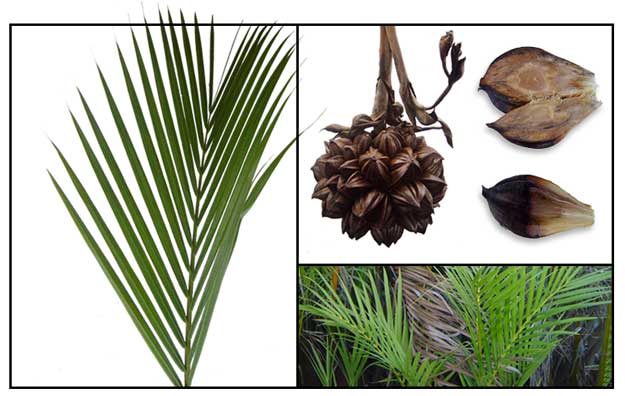
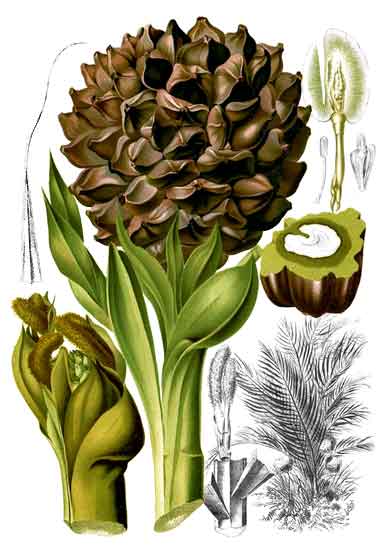
Nipa is a monoecious palm, with stout, subterranean, trunkless and thornless
rootstock. Leaves are at the ends of the rootstocks, large, rosette
and compound, 5 to 10 meters long, arising from the stout underground stem
(rhizome). Leaflets are numerous, rigid, lanceolate, up to 1 meter long,
2 to 7 cm centimeters wide. Male inflorescence is brown, erect, up to 1 meter high.
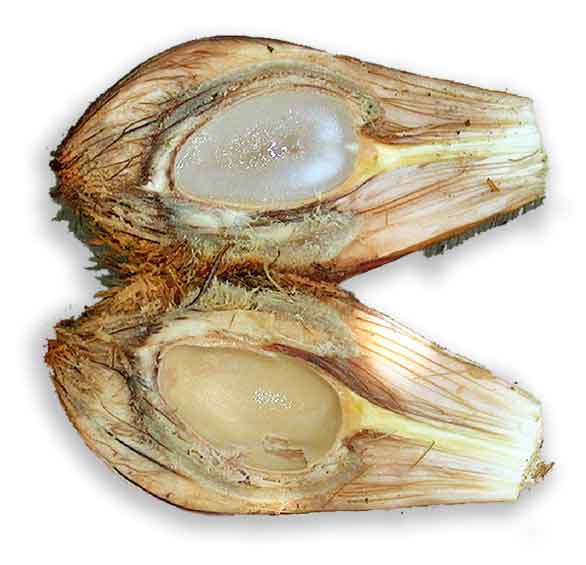
Female inflorescence is stout, 1 meter high or less. Fruit is globose, nodding, up to 30 centimeters in diameter. Carpels are numerous, dark-brown, striate, smooth, 10 to 14 centimeters long, compressed, obovate. Seeds are hard, white, and as large as a hen's egg.
Distribution
- Native to the Philippines.
-
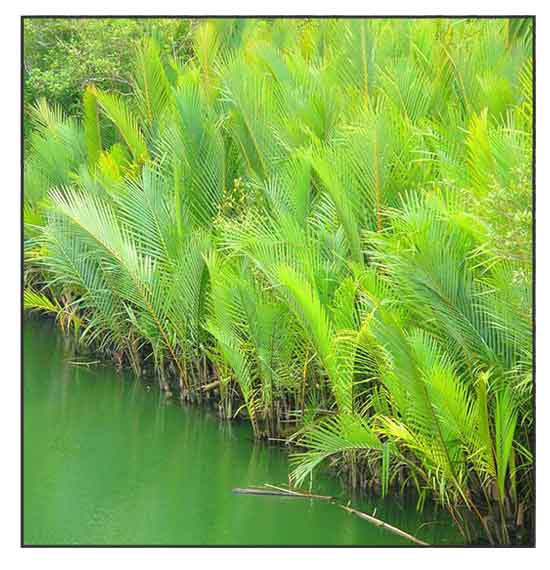
Along tidal streams in brackish swamps
and muddy banks throughout the Philippines.
- Gregarious over large areas of favorable habitats.
- Also native to Andaman Is., Bangladesh, Bismarck Archipelago, Borneo, Cambodia, Caroline Is., Hainan, India, Jawa, Lesser Sunda Is., Malaya, Maluku, Myanmar, Nansei-shoto, New Guinea, Nicobar Is., Northern Territory, Philippines, Queensland, Solomon Is., Sri Lanka, Sulawesi, Sumatera, Thailand, Vietnam. (11)
 Constituents Constituents
- Fermented nipa sap contains high amount of ethanol, together with higher alcohols, esters, diacetyl, and acetoin.
-
Proximate analyses of husk showed moisture (65.14 ± 0.04% DM), fat (1.5 ± 0.13% DM), crude protein (2.00 ± 0.64% DM), fiber (2.47 ± 0.09% DM), ash (4.20 ± 0.14% DM), carbohydrate (24.63 ± 0.17% DM). The seeds contained moisture (41.96 ± 0.28% DM), fat (0.94 ± 0.01% DM), crude protein (1.27 ± 0.01% DM), fiber (2.50 ± 0.19% DM), ash (2.7 — 0.11% DM), and carbohydrate (51.0 ± 1.71%DM). (19)
- Toxicant composition of husk yielded (mg/100g DM) hydro cyanide (0.63±0.02), oxalate (6.50±0.025), and phytate contents (4.03±0.09). Seeds yielded 0.08±0.01, 9.90±0.08 and 8.50±0.64mg/100g DM of hydrocyanide, oxalate, and phytate, respectively. (19)
- Mineral analysis yielded potassium of 147.28 ±0.65mg/100g DM for the husk and 128.52±0.6mg/100g DM for the seeds. Vitamin A content was higher in the seeds than the husk.(19)
- Study of ripe and unripe endosperm extracts yielded eight phenolic compounds viz., gallic acid, hydroxybenzoic acid, chlorogenic acid, rutin, cinnamic acid, quercetin, and kaempferol. Chlorogenic acid, protocatechuic acid, and kaempferol were the major compounds. (see study below) (12)
- Flavonoid content in unripe and ripe fruits were 56.85 and 42.83 mg QE/g, respectively. Total phenolic contents in unripe and ripe fruit were 29.27 and 28.25 mg GAE/g. Results showed unripe fruit extracts contained higher total phenolic and flavonoids than ripe fruit extract. (45)
Properties
- Sap is highly fermentable.
- Fresh sap has a sweet and fruit-like odor..
- Studies have suggested antioxidant, antidiabetic, antinociceptive, anti-UVB-induced photoaging, antibiofilm, antileukemic, melanogenesis inhibitory, anti-inflammatory properties.
Parts
used
Roots, shoots, sap, and leaves.
 Uses Uses
Edibility
- Young seeds are edible.
- Young flower stalk and seeds are a good source of water and food.
- Nipa sap is used for making an alcoholic drink (sasa lambanog, for one), sugar, syrup, and vinegar.
- The fermented juice, tuba, is extensively used as beverage.
Folkloric
- Decoction of fresh
leaves used for indolent ulcers.
- In Malaya, the juice of young shoots, with coconut milk, used as a drink for treating herpes.
- Ash of roots and leaves used for headaches and toothaches.
- Fresh leaves, in cataplasm or lotion form, used for treatment of ulcers.
- The fermented sap diluted with water used as eyewash in eyelid
and conjunctival inflammations.
- In traditional Malay medicine, nipa palm vinegar used for diabetes.
- Karo traditional healers of Indonesia use the plant for treatment of diabetes. (32)
- In Bangladesh, used as a tonic and stimulant for debility.
Others
- Thatching: Leaves are one of the most commonly used material for thatching. In Bangladesh, leaves are the primary product from Nypa, used as thatching materials and source of income (quarter percent of household total income) for the forest-dependent communities in the Sundarbans Impact Zone. (42)
- Crafts: Leaflets are used for making hats, raincoats, baskets, bags, mats, suman wrappers. Midribs used for making brooms.
- Petioles used for fuel.
- Nipa is a source of alcohol (sasa lambanog), vinegar and sugar.
- Fuel: Historically, alcohol from Nypa sap was used as fuel before World War II, but the local industry collapsed at the arrival of the oil economy. (27)
Nipa palm sap
- Sap has a very high sugar-rich sap yield (NIRA). Fermented, the palm's large amount of sap may yield 8,480-15,,000 liters per day of
ethanol/butanol per hectare. (see: lambanog)
(23)
Studies
• Antidiabetic / Glucose Lowering / Stems and Leaves: Study evaluated the effect of methanol extract of stems and leaves on serum glucose lowering ability in glucose-induced hyperglycemic mice. At 120 minutes after glucose loading, the extract demonstrated highly significant glucose lowering activity. At 250 mg/kbw, it exhibited activity comparable to glibenclamide. (1)
•
Zinc Corrosion Inhibition: Study showed Nypa fruticans leaves extract and DPC (diphenyl carbazone) inhibit the corrosion of zinc comparatively, possibly through the protonation of the hydrogen evolution process or formation of a soluble complex on zinc surface by molecules of N. fruticans or DPC. (5)
• Antioxidant Capacity: Evaluation for antioxidant capacity showed total phenolic and flavonoid content of immature fruits were higher than mature fruits. The immature fruits showed a high DPPH radical scavenging activity and antioxidant capacity, even higher than BHT and mature fruits. (6)
• Ethanol Production from Sap: Study evaluated the production of ethanol from the sap. With its incredibly high sugar-rich sap yield, researchers estimated 15,000 to 20,000 liters of biofuel yield per hectare (compared with sugar cane at 5000-8000 liters, and corn at 2,000 liter), on a continuing basis, year-round, for up to 50 years.
• Volatile Compounds in Fresh and Fermented Sap / Aroma and Taste: GC-MS study evaluated the volatile compounds (VOCs) responsible for the aroma in fresh and fermented nipa sap. Natural fermentation of fresh nipa sap will lead to changes in aroma and taste, due to its highly fermentable nature. There were differences in VOCs in fresh and fermented sap. Fresh nipa sap, with a sweet and fruit-like odor, does not contain any higher alcohols and acetic acid. Fermented sap contains high amount of ethanol, as well as higher alcohols, esters, diacetyl, and acetoin. (7)
• Biology and Sap Yield Estimate: An April-May 2009 survey done in the Philippines to study the biology of nipa with emphasis on potential for alcohol production showed the estimates of sap yield to be much lower than the ones reported in literature. (10)
• Biofuel Energy: Study evaluated the optimum bacterial concentration for fermentation to produce high concentration of bio-fuel. Results showed the highest yield of bio-ethanol (8.98%) was produced with 7.5% of starter concentration and 6 days of incubation time. (9)
• Phenolics and Flavonoid Content / Antioxidant Capacity: Study evaluated endosperm extracts of ripe and unripe fruits for total phenolics, flavonoid content, and antioxidant capacities. Endosperm extract of unripe fruits (EEU) exhibited the highest phenolics (135.6 ± 4.5 GAE/g), flavonoid content (68.6 ± 3.1 RE/g), and antioxidant capacity. The extract also showed radical scavenging activity by DPPH assay and high antioxidant capacity by phosphomolydenum method and ferric reducing antioxidant power values. Chlorogenic acid, protocatechuic acid, and kaempferol were the major phenolic compounds. (see constituents above) (12)
• Anti-Diabetic / Antioxidant / Nipa Palm Vinegar: Study evaluated the antidiabetic and antioxidant activities of nipa palm vinegar in normal and STZ-induced diabetic rats. Results showed an aqueous extract of NPV to possess antihyperglycemic activities comparable to metformin, while an ethyl acetate extract precipitated significant antioxidant effects attributable to its high phenolic contents. (14) Study evaluated the effect of an aqueous extract of nipa palm vinegar (NPV) on postprandial hyperglycemia. Results showed an antidiabetic effect and with delayed glucose absorption in isolated rat jejunum, suppression of postprandial hyperglycemia, weak inhibitory activity against both α-glucosidase and α-amylase activities. (20)
• Antimicrobial / Midvein, Leaves and Husks: Study evaluated various extracts of Nypa fruticans against E. coli, K. pneumonia, S. aureus, S. epidermis and P. aeruginosa. Aqueous and ethanolic extracts of midveins, leaves, and husks showed good antimicrobial activity against all the test organisms. (16)
• Antihyperglycemic / Antinociceptive / Leaf and Stem: Study evaluated the anti-hyperglycemic and antinociceptive potential of methanolic extract of leaf and stem. Results showed significant oral anti-hyperglycemic activity on glucose loaded mice, with maximum effect observed at 500 mg MENF/kbw, better than that observed with standard drug glibenclamide. Significant antinociceptive activity was demonstrated by MENF in acetic acid induced writhing mice model, at 600 mg/kbw was better than that obtained with aspirin. (18)
• Comparative Phenolic Content and Antioxidant Activity: Study evaluated the total phenolic content and antioxidant activity in matured leaves, young leaves, and husk of mature fruits of Nypa fruticans. The matured leaf showed the highest total phenolic content (299.06±0.02 mg/g dry weight), followed by young leaf (205.97±0.02 mg/g dw) and fruit husk (30.77±0.01 mg/g dw). Both mature and young leaf contained high antioxidant activity with IC50 of 0.42 and 0.32 mg/ml, respectively. (21)
• N. Fruticans Flour / Fruit: Nypa produces considerable amount of fruit with high content of carbohydrate. The mesocarp of the mature fruit is an underutilized potential source of energy. Study reports on the production of flour from the mature fruit mesocarp. Mesocarp processing produced flour with low fat content (1.45%) and high crude fiber content (17.68%). It exhibited low swelling power and solubility. (22)
• Stimulation of Insulin Secretion / Hepatoprotective: Study evaluated an aqueous vinegar extract from Nypa fructans on its effect on postprandial glucose levels in normal normoglycemic rats. Results showed significant reduction (p<0.05) of blood glucose, serum cholesterol and triglyceride levels, with improvement in serum insulin levels. Immunochemical testing suggested no ß-cell regeneration despite the increase in insulin production. Histoarchitecture of STZ-induced liver damage suggested a possible hepatoprotective effect. The pancreatic effect may be through a positive stimulatory release at basal glucose concentration. (24)
• Antibiofilm Activity: Study evaluated the antibiofilm activity of ethanolic extracts from Nypa fructicans and Pleurotus ostreatus against biofilm attached on Polyvinylchloride (PVC) slides. The use of both extracts showed more effectiveness in reducing 65% of biofilm mass. The difference before and after application was significant (p<0.05). Results suggest potential for both plants in the control of biofilms and that utilization of more than a single extract will be more potent. (25)
• Hydrocyanic Content of Components / Husk: Study evaluated the hydrocyanic acid (antinutrition) content in nipa plant components i.e., husk, seed, and sap collected from three sampling locations. Results showed the husk of Nypa fruticans has higher content of hydrocyanic acid all all sampling locations, followed by seed and sap, ranging from 0.03-0.06, 0.03-0.05, and 0.02-0.03 mg/100 g husk, seed, and sap, respectively. (26)
• Potential as Biomass Crop, Fuel Alternative, and Feedstock: In Malaysia, the main biomass source is oil palm (94%). Study explored the potential of Nypa palm (Nypa fruticans) as novel biomass crop to mitigate the over-dependence on oil palm as a source of biomass. Recent studies have suggested Nypa sap has potential to become a bioethanol feedstock. With its high sugar content, it has a potential ethanol yield higher than commercial sugarcane or maize. Nypa also has potential as a lignocellulosic feedstock for conversion into multiple products i.e., industrial (green chemicals) and medicinal applications. (27)
• Antileukemic Activity / Acute Lymphoblastic Leukemia / Sap: Study evaluated antileukemogenesis properties of concentrated Nypa fruticans (nisaan) by focusing on adiponectin expression. Results showed increase concentration of nisaan treatment reduced cell viability and cell proliferation and enhanced the adiponectin level in leukemic cells. Preliminary data suggest that N. fruticans might have anti-leukemogenesis effect on acute lymphoblastic cells by regulating the adiponectin expression. (28)
• Optimization of Vinegar Production / Antioxidant / Sap: Study reports on the optimized vinegar production from nipa sap using a two-step surface culture fermentation process. Good antioxidant activity was reported for the vinegar using DPPH assay. Organoleptic properties scored more than "neither liked nor dislike" in each sensory attribute studied. Results suggest high quality vinegars can be produced from nipa sap using surface culture fermentation process. (29)
• Functional Properties of N. fruticans Flour / Fruit: Nypa produces considerable amount of fruit with high content of carbohydrate. The mesocarp of the mature fruit is an underutilized potential source of energy. The study evaluated the production of flour from the mesocarp of mature nypa fruit and determined its functional properties. Mesocarp processing produced flour with low fat content (1.45%) and high crude fiber content (17.68%. The flour exhibited low swelling power and solubility, with highest swelling power and solubility achieved at 85ªC with value of 4.5g/g and 10.56%, respectively. (30)
• Sustainable Feedstock for Ethanol Production / Sap: Study evaluated the potential of sugar saps from nipa palm as sustainable feedstock for ethanol production. Plantations on four sites with palms 8-100 years of age were chosen. Preliminary batch fermentative assays using Saccharomyces cerevisiae showed nipa sap can be converted to ethanol within 30-48 hours. Analysis of inorganic elements before and after fermentation showed specific elements of Mg, Ca, P, and S were significantly reduc3ed and could have assisted fermentation. Study suggests nipa sap has characteristics which make it a potential feedstock for ethanol production. (31)
• Inhibition of Melanogenesis in Melanoma: Malignant melanoma is responsible for 3.0 and 1.7% of tumor incidence and tumor-associated mortality, respectively. Study evaluated the inhibitory effect of an ethyl acetate fraction of NF on melanogenesis-related factors in isobutylmethylxanthine-treated B16F10 melanoma cells. Extract significantly suppressed the expression of tyrosinase (TYR) and TYR-related proteins 1 and 2 (TYRP-1/2), which are the main factors involved in melanogenesis. ENF inhibited melanogenesis by suppressing MITF (microphthalmia-associated transcription factor), which controls TYRP-1/2 and TYR. Results suggest ENF has potential as a natural resource that can inhibit excessive melanin expression by regulating various melanogenesis pathways. (34)
• Protection Against UVB-Induced Photoaging: Ultraviolet B (UVB) irradiation is a major causative factor in skin aging. Study evaluated the protective effect of a 50% ethanol extract from Nypa fruticans (NF50E) against UVB-induced skin aging. HPLC of extract revealed pengxianencin A, protocatechuic acid, catechin, chlorogenic acid, epicatechin, and kaempferol. NF50E protected against UVB-induced HaCaT cell death and strongly suppressed UVB-stimulated cellular reactive oxygen species generation without cellular toxicity. Topical application of NF50E mitigated UVB-induced photoaging lesions including skin erythema and skin thickness in BALB/C mice. Results suggest the NF50E exhibits potent antioxidant potential and protection against photoaging by attenuating MMP-1 activity and collagen degradation possibly through downregulation of MAPK/NF-kB/AP-1 signaling and SIRT1 activation. (35)
melanin expression by regulating various melanogenesis pathways. (35)
• Anti-Inflammatory: Study evaluated an ethyl acetate fraction of N. fruticans extract for a modulatory role in MAPK signaling pathway and inhibition of the IUkB/NF-kB signaling pathways. Results showed the extract exhibited antioxidant capacity, attenuated the cytokine levels and blocked nitric oxide production. The inhibitory effect of the extract treatment was attributed to the inhibition of MAPK and Akt/IkB/NF-kB signaling pathways. (36)
• Alpha-Amylase Inhibitory Activity / Nypa Palm Sugar: Nypa palm sugar or "Gula Apong" is substitute sweetener. Study evaluated the antidiabetic activity of nypa palm sugar extracts by inhibition of alpha-amylase. Water, methanol, and ethanol extracts showed IC50s of 545.1, 124.2, and 109.4 mg/mL compared to acarbose with 44.37 mg/mL. The EtOH extract showed highest inhibition at concentration of 100 mg/mL. (37)
• Neuroprotective / Sciatic Nerve Crush Injury: Nypa fruticans extract has been shown to have antinociceptive and anti-inflammatory effects by suppressing TRPV1 in sciatic nerve injury. Study investigated the effects of NF on the control of TRPV1 in relation to neuroprotective effects in a sciatic nerve crush injury. The NF and NF+SB (SB366791; TRPV1 antagonist) treated group showed neuroprotective and functional recovery effects from sciatic nerve crush injury. The expression of NF-kB and iNOS showed a significant suppressive effect on NF, SB, and NF+SB groups. Results establish the effect of NF as a neurotherapeutic agent to protect peripheral nerve after sciatic nerve crush injury. (38)
• Neuroprotective / Sciatic Nerve Crush Injury: Study evaluated the antinociceptive and anti-inflammatory effects of NF extracts by controlling the neurological function of TRPV1. In sciatic crush injury rat models, a significant level of antinociceptive effect was observed in the thermal hyperalgesic test with NF extracts administered 500 mg/kg orally daily. Protein quantification of sciatic nerve and L4-L6 spinal cord showed decrease of TRPV1 expression, the inflammatory expression factor, COX2, and pro-inflammatory factors in the NFE treated group. (39)
• Chemopreventive for Colon Cancer / COX2 Inhibition / Leaves: Study evaluated the inhibitory activity of polyisoprenoids from N. fruticans leaves on expression of cyclooxygenase 2 (COX2) against colon cancer cells. Results showed anticancer activity through inhibition of COX2 expression with IC50 of 180.186 µg/mL. Result showed promise for polyisoprenoids as chemopreventive for colon cancer through COX2 inhibition. (40)
• Silver Nanoparticles / Antibacterial / Waste Fruit Husk: Study reports on the synthesis of silver nanoparticles using aqueous extract of waste Nypa fruticans fruit husk as reducing and stabilizing agents. The AgNPs exhibited selective antibacterial activity against Bacillus cereus. The AgNPs also demonstrated potentially recyclable catalysts in reduction of nitrophenols into corresponding aminophenols. (41)
• Xanthine Oxidase Inhibitory Activity / Anti-Gout / Antioxidant / Fruit Endocarp: Study evaluated crude extracts of NF fruits for xanthine oxidase inhibitory activity. Most of the extracts yielded similar phytochemicals viz., phenolic compounds, flavonoids, terpenoids, and steroids, with absence of alkaloid, anthraquinone, and iridoid glycoside. The ethanol extract of endocarp showed highest phenolic content (102.85 mg GAE/g), flavonoid content (531.02 mg QE/g), and strongest antioxidant activity (26.79 mg VCE/g). Ethanol and water extracts of endocarp showed strong inhibition of xanthine oxidase with IC50 0.029 mg/mL and0.14 mg/mL, respectively. Results suggest a potential for development of an herbal medicine or supplementary food for gout in the form of tea or other products. (42)
• Anti-Cancer / MCF-7 Breast Cancer Cells / Leaves: Study evaluated the bioactivity of ethanol extract of N. fruiticans leaves against MCF-7 breast cancer cells. GC-MS analysis yielded 54 phytochemical compounds, some with anticancer bioactivity including sitosterol, tocopherol, and phytol. Brine Shrimp Lethality Assay showed potent activity with LC50 of 84.25 µg/mL. MTT assay showed low IC50 of 88.77 µg/mL indicating high anticancer activity by growth inhibition of MCF7 breast cancer cells. (44)
• Flavonoids and Phenolics / Fruits: Study evaluated total flavonoids and phenolics in Nipah fruit extract as bioactive candidates for glycemic control. Flavonoid content in unripe and ripe fruits were 56.85 and 42.83 mg QE/g, respectively. Total phenolic contents in unripe and ripe fruit were 29.27 and 28.25 mg GAE/g. Results showed unripe fruit extracts contained higher total phenolic and flavonoids than ripe fruit extract. (45)
• Pure Cellulose from Frond Waste: There is a continuing search for alternative methods for production of new materials or fuel from renewable and sustainable biomass feedstock. Study evaluated Nypa fruticans fronds from agricultural residues for production of pure cellulose by combining prehydrolysis, sulfure-free soda cooking, use of soluble anthraquinone catalyst, and three-stage chlorine-free bleaching. Results showed nipa palm fronds can be used to produce pure cellulose, serving as dissolving pulp grade for viscose rayon and cellulose derivatives. (46)
• Antibacterial / Leaves: Study a leaf extract if N. fruticans for antibacterial activity using disc diffusion method showed growth inhibition of pathogenic bacteria A. hydrophila and P. aeruginosa with inhibition zones greater than 20 mm. Inhibition zone against E. coli was weak (<5mm). (47)
• Comparison of Nutrient Composition of Ripe and Unripe Fruits: Study showed significant differences for all proximate values (moisture, ash, carbohydrate, crude protein, crude fat, and insoluble and soluble fiber between ripe and unripe fruit flesh. The flesh of ripe fruit has higher (p<0.05) total phenolic content. The ripe and unripe flesh of N. fruticans have potential as functional food ingredients. (48)
Availability
- Wildcrafted.
- Cultivated.
|