|
Gen info
- Abelmoscus esculentus is a flowering plant in the mallow family.
- The plant is a cultigen of uncertain origin; its geographical origin long disputed.Okra may have originated somewhere around Ethiopia, and was cultivated by Egyptians by the 12th century BC.
- Etymology: The genus name Abelmoschus is Neo-Latin from Arabic "abu l-misk" meaning "father of musk", or "jabb-el-misk", meaning musk seed, alluding to its scented seeds.The species epithet esculentus is Latin for "edible" - being fit for human consumption.
(63)
- The word okra first appeared in 1679 in the Colony of Virginia, derived from the igbo word okuru. The word gumbo first appeared in American vernacular around 1805, deriving from Louisiana Creole, but originating from either Umbundo word ochinggombo or Kimbundu word ki-ngombo. In most of the U.S., the word gumbo refers to the dish gumbo, but for many in the Deep South the word refers to the pods and plants. (63)
Botany
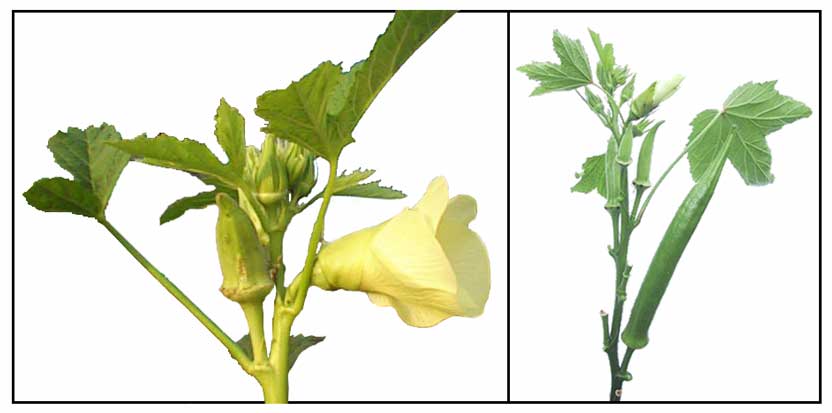
Okra is a coarse, erect,
branched, more or less hairy, annual herb, 0.6 to 1.5 meters high. Leaves are long-petioled,
orbicular or orbicular-ovate, about 25 centimeters long or less; with a heart-shaped
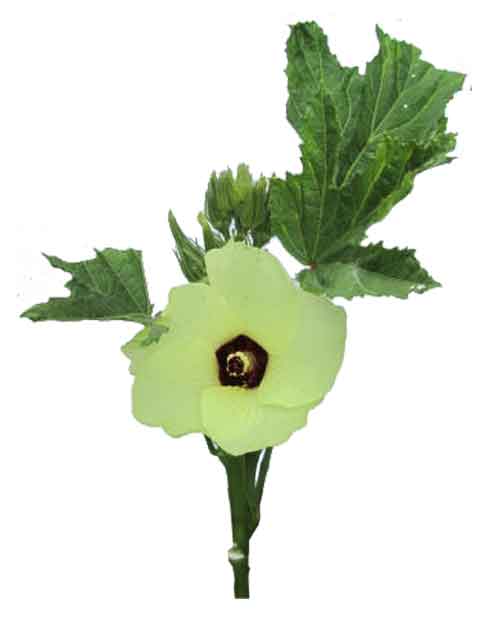
base; the margins, 3- to 5-lobed. Petioles are equal to the blade in length or longer. Flowers are axillary and solitary;
corolla, large and yellow, and inside, deep purple at the base.
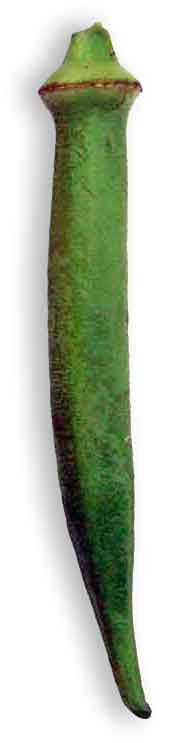
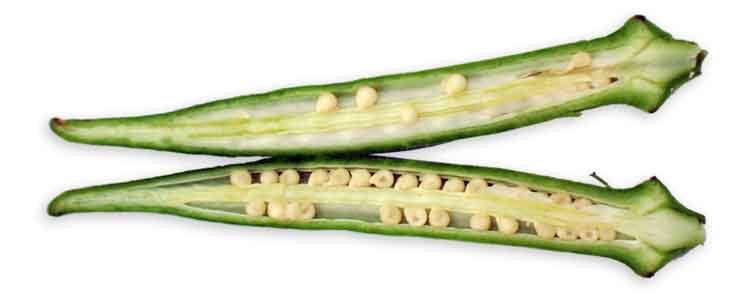
Fruit is elongated, 10 to 25 centimeters long, 1.5 to 3 centimeters in diameter, tapering
to a blunt point and containing rows of rounded, kidney shaped
seeds.
Distribution
- Cultivated for its edible fruit.
- Nowhere naturalized.
- Pantropic.
 Constituents Constituents
- Fruit contains abundant pectin; mucilage; starch; some fat, 4%; water, 80.7%; and ash, 1.41%.
- Seeds yield: palmitic acid, 27.33%; stearic acid, 2.75%; arachidic acid, 0.05%; oleic acid, 43.74%; linoleic acid, 26.62%; unsaponifiable matter, 0.37%.
- Roots yield gum, 16%; and the seeds yield vitamin C.
- Distillation of leaves with water yield an essential oil, which in time solidifies as a crystalline camphor allied to menthol and called 'Basil-camphor.
- Nutrient analysis of raw okra (per 100 g of edible portion) showed: (Proximates) water 89.58 g, energy 33 kcal or 138 kJ, protein 1.93 g, total lipid (fat) 0.19 g, ash 0.86 g, carbohydrates, by difference 7.45 g, total dietary fiber 3.2 g, total sucrose 0.60 g, glucose 0.32 g, fructose 0.57 g, starch 0.34; (Minerals) calcium 82 mg, iron 0.62 mg, magnesium 57 mg, phosphorus 61 mg, potassium 299 mg, sodium 7 mg, zinc 0.58 mg, copper 0.109 mg, manganese 0.788 mg, selenium 0.7 µg; (Vitamins) vitamin C 23.0 mg, thiamin 0.20 mg, riboflavin 0.06 mg, niacin 1.0 mg, pantothenic acid 0.245 mg, vitamin B6 0.215 mg, total folate 60 µg, total choline 12.3 mg, vitamin A RAE 36 µg, ß-carotene 416 µg, alpha carotene 27 µg, vitamin A 716 IU, lutein + zeaxanthin 280 µg, vitamin E (alpha-tocopherol) 0.27 µg, vitamin K 31.3 µg; (Lipids) total saturated fatty acids 0.026 g, total monosaturated FA 0.017 g, total polyunsaturated FA 0.027 g, trans FA 0 mg, cholesterol 0 mg, phytosterols 24 mg. (33)
- Nutrient analysis (per 100 gram of edible portion) yielded: (Amino Acids) tryptophan 0.017 g, threonine 0.065 g, isoleucine 0.069 g, leucine 0.105 g, lysine 0.081 g, methionine 0.021 g, cystine 0.019 g, phenylalanine 0.065 g, tyrosine 0.087 g, valine 0.091 g, arginine 0.084 g, histidine 0.031 g,
alanine 0.073 g, aspartic acid 0.145 g, glutamic acid 0.271 g, glycine 0.044 g, proline 0.045 g, serine 0.044 g; (Flavonols) quercetin 21.0 mg. (33)
- Phytochemical analysis of fruits and leaves of aqueous and ethanolic crude extracts yielded tannins, steroid, flavonoids, saponin, alkaloids, anthraquinones, phenol, terpenoids and cardiac glycosides, while resin was present in aqueous extracts of leaves and absent in ethanolic extracts of fruits. (39)
- In a study
of food plants from Cote d'Ivoire, Abelmoschus esculentus yielded a mucilage content of 34.86 ± 5.27%. Physiochemical analysis of mucilage content yielded ash 10.71 ± 0.20%, polyphenols 13.09 ± 1.14 mg/100g, lipids 0.17 ± 0.04%, proteins 3.29 ± 0.16%, insoluble fibers 3.22 ± 0.04%, soluble fibers 72.86 ± 7.63%, carbohydrates 9.57 ± 7.69%, and energy 44.29 ± 26.79 Kcal/100g. (57)
Properties
- Whole plant is aromatic, with an odor resembling cloves.
- Demulcent, emollient,
sudorific, cooling, carminative, stimulant, cordial, antispasmodic.
- Very mucilaginous when cooked.
- Mucilage considered to have an aphrodisiac effect.
- Seeds considered antispasmodic, cordial and stimulant.
- Studies have suggested antiulcer, antioxidant, hepatoprotective, antidiabetic, antihyperlipidemic,
analgesic, CNS depressant, diuretic, anti-Helicobacter, antitumor, antimicrobial, nootropic, anti-inflammatory properties.
Parts
utilized
- Roots,
leaves, young pods, seeds.
 Uses Uses
Edibility / Nutrition
· Fruit is edible.
· Prepared in a variety of ways; an ingredient of soups and stews.
· Very mucilaginous when cooked.
· Fair source of iron, vitamin A and C; good source of calcium.
· Also contains thiamine and riboflavin.
· Seeds occasionally used a coffee substitute.
Folkloric
· Decoction of roots
and leaves as a tea or for washing.
· Decoction of young fruit useful for catarrh, urinary problems.
· Syrup from mucilaginous fruit used for sore throat.
· Infusion of roots used for syphilis.
· Poultice of roots and leaves for wound healing.
· Young pods for fevers, difficult urination and diarrhea.
· Decoction of roots for headaches, varicose veins, arthritis,
fevers.
· Decoctions of leaves for abdominal pain.
· Decoction of immature fruit used as demulcent and emollient poultice.
· Decoction of leaves and flowers used for treatment of bronchitis and pneumonia.
· Leaves also useful as emollient poultice.
· Mucilage prepared from roots and leaves used for gonorrhea.
· Infusion of fruit mucilage used for treating dysentery and diarrhea, inflammation and stomach irritation.
· Fruit used as demulcent in gonorrhea and dysuria.
· Paste of seeds, mixed with
milk, used for pruritic skin lesions.
· In Turkey, leaves used in preparation of medicine to reduce inflammation.
· In India, decoction of young fruit used for catarrh and urinary troubles. Also used for fevers, catarrhal attacks, genitourinary irritations such as dysuria, gonorrhea and leucorrhea, and in cases associated with scaling, pain, and difficulty passing urine.
· Bland mucilage used for dysentery, usually as soup.
· Seeds and tender pods eaten for spermatorrhea.
· Mucilage from from fruits and seeds of fresh, bruised capsules make an efficient, emollient poultice.
· Fruit decoction used as soothing demulcent remedy for throat irritations associated with coughing.
· Infusion of toasted seeds used for sudorific effect.
· Hindus consider the aromatic seeds as cooling, tonic, and carminative.
· In Annam, seeds considered antispasmodic.
· In the Antilles and Guiana, seeds considered stimulant, cordial, and antispasmodic.
 Studies Studies
• Anti-ulcer: Anti-ulcerogenic activity
of some plants used as folk remedy in Turkey: Five herbal remedies, including H esculentus, were studied for anti-ulcerogenic
activity. All extracts exhibited significant gastroprotective effects. (1)
• Anti-Helicobacter Pylori Adhesion / Antiadhesive Property: Glycosylated compounds from
okra inhibit adhesion of Helicobacter pylori to human gastric mucosa: A polysaccharide isolated from
the fresh juice showed strong inhibitory effects and an antiadhesive
activity with blocking of the Helicobacter
surface receptors. (2) Standardized aqueous fresh extract from immature okra fruits was evaluated for a quantitative in vitro adhesion assay. Results showed dose-dependent inhibition of H. pylori binding to AGS cells. Non-specific interactions between high molecular compounds from okra fruits and the H. pylori surface lead to strong antiadhesive effects. (18)
• Antioxidant / Hepatoprotective:
(1) Antioxidant and hepatoprotective effect of the roots of Hibiscus esculentus
Linn: The ethanol extract
of HE roots showed excellent scavenging effect on free radicals and
hepatoprotective effects. (2) In antioxidant assays of five vegetables, strong activity was seen with okra fruit. (3)
• Mucilage / Suspending Agent / Disintegrating Property: Study showed that the mucilage of A esculentus may be used as a pharmaceutical adjuvant and as a suspending agent and other pharmaceutical applications, as a gelling, emulsifying or disintegrating agent. (4)
• Reversible Male Reproductive Effects: Study results showed the oral administration of methanol fruit extract of A esculentus produced a reversible reduction in male fertility in rats. There was significant reduction of gross sperm motility, count and life/dead ratio with an increase in abnormal sperm cell in the semen sample. (5) Mucilage extracted from the pods was shown to be devoid of toxicity. The mucilage powder was effective as disintegrant in low concentrations (4%) and was found superior to disintegrating agent Ac-Di-Sol®. Results suggest the extracted mucilage may be a good source of pharmaceutical adjuvant, specifically as disintegrating agent. (58)
• Review / Nutritional Healing Properties in Diabetes: In a literature review, the healing properties of AE were: (1) Alkaline reaction, soothes irritated membrane of the intestinal tract, lowering of blood sugar, facilitates healing of burns and any kind of skin rashes (2) Mucilaginous texture soak up the unhealthy cholesterol, toxin and mucous waste from the GI tract; acts as a laxative, facilitating ulcer healing and reduction of gastric reflux, antioxidant, anticancer and promoting cardiovascular health. (8)
• Hypoglycemic: In a research framework to study the hypoglycemic effects of a water extract of AE in streptozoticin-induced diabetic rats, the findings of expected results from the experiment may reveal underlying mechanism of diabetic pathophysiology, suggesting a new potential target for drug discovery. (9)
• Antidiabetic / Antihyperlipidemic / Toxicity Study / Peel and Seed: Study of peel and seed powder of Abelmoschus esculentus showed antidiabetic and antihyperlipidemic effects in streptozotocin-induced diabetic rats. Toxicity study showed no signs and mortality at dose level of 2000 mg kbw. (11) Okra helps in the management of the human body's high cholesterol level. It is also used to stabilize blood sugar by regulating the rate by which sugar is absorbed from the intestinal tract. (30)
• CNS Depressant / Analgesic / Root: Study evaluated a root extract of A. esculentus for CNS depressant and analgesic activity. Significant decrease in locomotor activity was observed. There was significant and dose-dependent reduction of writhing reflex in the acetic acid-induced writhing test and linking response in the formalin induced inflammatory pain. Results suggest analgesic and CNS depressant activity. (12)
• Hepatoprotective / CCl4-Induced Injury: Study evaluated a root extract for hepatoprotective effect on CCl4-intoxicated HepG2 cell line and Wistar rats. Results showed a hepatoprotective effect attributed to its antioxidant capacity. (13)
• Analgesic / Fruit: Study of methanolic and aqueous extract of fruit showed significant analgesic activity using tail immersion method in rats. (14)
• Anti-Helicobacter pylori Activity: Study evaluated the anti-Helicobacter pylori activity of methanol and hexane extracts of AE dried fruits on 41 clinical isolates. The methanol extract showed inhibitory effects against Helicobacter strains, with zones of inhibition between 13 and 28 mm on 32 isolates. Results suggest a potential for alternative antimicrobial agents to be isolated by bioassay-guided fractionation from edibles like A. esculentus for the treatment of H. pylori infections. (16)
• Hepatotoxicity Concern: Study showed exposure to Abelmoschus esculentus (500 mg/kbw) and Piper guineense (20 mg/kbw and above) induced adverse and detrimental effects on the liver architecture in rat model. (19)
• Diuretic Potential: Study evaluated the diuretic potential of plant decoctions of A. esculentus, C. frutescens and C. olitorius in white rats. Results showed all three had diuretic potential comparable to furosemide and suggest further studies and potential as alternative to commercial diuretic. (20)
• Anti-Diabetic / α-Amylase and α-Glucosidase Enzyme Inhibitory Effects / Peel and Seed: Study evaluated aqueous extracts of okra peel and seed for antidiabetic activity through inhibition of α-glucosidase and α-amylase enzymes. Results showed concentration dependent inhibitory effect. (21)
• Anti-Diabetic / Fruit Extract: Stud of fruit extract in alloxan induced diabetes in rabbits. A gradual decrease in blood glucose levels was observed after feeding of fruit extract for ten days. (32)
• Alteration of Gastric Mucus Secretion / Gastroprotective / Seed Mucilage: Study showed mucilage of A. esculentus significantly inhibits ulcer induced by indomethacin, ethanol, and water immersion stress. The cytoprotection may be through the formation of a protective layer with increase in mucous secretion from the superficial epithelial cells. (22)
• Antitumor Effect / Human Breast Cancer Cells / Lectin: Study evaluated a newly discovered lectin isolated from okra for anti-tumor effects. Results showed the AEL induced significant cell growth inhibition (63%) in MCF7 cells, with increased expression of pro-apoptotic caspase-3, caspase-9 and p21 genes. Findings suggest a potential therapeutic for human breast cancer. (23)
• Antiproliferative and Pro-Apoptotic in B16F10 Melanoma Cells: Study studied the effects of okra RG-1 (rhamnogalacturonan) obtained from okra pods on melanoma cell growth and survival in vitro. Results showed okra RG-1 induces apoptosis in melanoma cells by interacting with Gal-3. The interaction suggests potential for new melanoma therapies. (24)
• Antimicrobial / Fresh Pods: Study evaluated the antimicrobial properties of lyophilized and fresh water extracts of fresh okra pods against Rhodococcus erythopolis, R. opacus, Mycobacterium sp. and M. aurum, Staphylococcus aureus, Escherichia coli and Xanthobacter Py2. The extracts were effective against all bacterial strains except for R. erythropolis, and the fresh water extract was better than the lyophilized extract. Activity was attributed to the two major constituents of the lipid fraction, palmitic and stearic acids. (25)
• Anticancer and Antimicrobial Effect / Gold Nanoparticles: In vitro findings suggest that pulp synthesized Au NPs can significantly elevate intracellular reactive oxygen species and diminish mitochondrial membrane potential, indicating effective involvement of apoptosis in cell death. The Au NPs also showed sufficient degree of antimicrobial activity against different types of bacteria. (26)
• Safety Evaluation / Pod Extracts: Study evaluated various extracts of pod extract polysaccharides (OKPs) in vitro and in vivo toxicity studies in mice. Findings of the preliminary study suggest that in both acute and sub chronic studies OKPs is a safe pharmaceutical excipient. (27)
• Analgesic/ Anti-Inflammatory / CNS Depressant / Seeds: Study of methanolic extract of seeds showed analgesic (acetic acid induced writhing model and formalin induc4d licking and biting in mice), anti-inflammatory (carrageenan induced model) and CNS depressant activity (locomotor and exploratory activities in hole cross and open fields testing). (28)
• Nutritional benefits / Seeds, Oil, Mucilage: Okra mucilage has medical applications when used as a plasma replacement or blood volume expander. The mucilage binds cholesterol and bile acid carrying toxins dumped into it by the liver.
Okra is a potential source of oil, varying from 20% to 40%, with up to 47.4% linoleic acid, a polyunsaturated fatty acid essential for human nutrition. The amino acid composition of okra seed protein is comparable to that of soybean but with a protein efficiency ration higher than that of soybean. Okra also yields insoluble and soluble fiber. (30)
• Antioxidant / Antistress / Nootropic / Seeds: Study evaluated the in vitro antioxidant capacity and in vivo protective effects of aqueous and methanolic seed extracts against scopolamine-induced cognitive impairment using passive avoidance test and acute restraining stress-induced behavioural and biochemical changes using elevated plus maze (EPM) and forced swimming test (FST) in mice. Results showed significant antioxidant activity and no signs of toxicity or death up to a dose of 2000 mt/kg p.o. Results showed A. esculentus possess antioxidant, antistress and nootropic activities. (31)
• Immunomodulatory / Antitumor: Aqueous extraction and purification yielded a water polysaccharide (OFPS11) from flowers. The OFPSS11 was evaluated for immunomodulating activity. Cells pretreated with OFPS11 significantly inhibited the proliferation of HepG2 cells and also enhanced phagocytic ability and induced elevation of NO production, TNF-a and IL-1ß secretion of RAW264.7 cells. It can also increase NF-kB levels in nuclei to modulate expressions of iNOS, NO and TNF-α. Results suggest OFPS11 exerts antitumor activity possibly by stimulating macrophage activity through nuclear NF-kB pathway. (Zheng et al 2014). (34)
• Total Flavonoids / Neuroprotective on Transient Cerebral Ischemia-Reperfusion Injury (TCI-RI) / Flowers: Study
of various plant parts showed the flower extract to yield the highest total flavonoids content (788.56 mg/g) with 122.13 mg/g of quercetin-3-O-[ß-D-glu-(1>6)]-ß-D-glucopyranoside. Study of effects of total flavonoids of flowers on TCI-RI showed significant reduction of neurologic deficits, infarct area,and histologic changes in brain tissue. Results suggest flower total flavonoids protects against TCI-RI by scavenging free radicals and activating Nrf2-ARE pathway. (35)
• Wound Healing: Study evaluated an ointment formulation of an aqueous extract of A. esculentus in Wistar albino rats against excision and incision wound models. Results showed faster epithelization in the excision model and significant (p<0.001) increase in breaking strength. Results suggest potent wound healing activity with potential for use in different wound healing models like burn wound, dead space wound, XR radiation injury and ultraviolet light injury. (36)
• Cytotoxic / Antifungal / Fruit: Study of A. esculentus fruit extract for phytoconstituents yielded monomer compounds. Results showed monomer compounds 1-4 possessed antifungal and cytotoxic activities. (37)
• Nutraceutical Benefits of Subfractions in Treatment of T2DM: A recent study on subfractions of AE reported on attenuation of adverse effects of high glucose and fatty acid in vitro. This study explored the effect on AE subfractions on the metabolic disturbances caused by insulin resistance in vivo in STZ-induced diabetic male Sprague-Dawley rats. All of the subfractions lowered triglycerides and free fatty acid, but not total cholesterol. Subfraction FR significantly increased HDL/LDL lipoprotein ration. F1 subfraction showed anti-obesity effect. Results suggest AE has potential as adjuvant therapy for diabetes, whether as vegetable or as nutraceutical. (38)
• Antibacterial / Dental Caries Derived Streptococcus mutans: Study evaluated the antibacterial effect of extracts of various parts of okra vegetable on S. mutans. Highest inhibition zone (4 mm) was seen in the combination of peel and seed. All combinations of the plant extract exhibited antibacterial activity equal or highest than control Ofloxacin. Results suggest potential use as natural antibacterial agent against cariogenic bacteria like S. mutans. (40)
•
Cardioprotective Activity / Mucilage: Study investigated the effect of mucilage of okra fruit (crude water extract and water fraction) on lipid parameters in high-fat diet fed rats. Results showed potential to reduce (p<0.01) different lipid fractions (TC, triglycerides, LDL, and VLDL) and the atherogenic index. The mucilage also showed potential to increase HDL fraction (p<0.01) of the test group. Study suggests crude eater extract and water fraction of fruit modulate blood lipid levels favorably and has potential as a "heart-friendly" vegetable. (41)
• Neuroprotection / Hypoglycemic / Diabetic Neuropathy: Study evaluated the neuroprotective effect of Abelmoschus esculentus L. on alloxan-induced neuropathy in alloxan-induced diabetic rats. Treatment with extract significantly reduced (p<0.05) hyperglycemic and thermal hyperalgesia and significantly increased (p<0.05) rotarod performance. At 200 mg/kbw, there was no nerve fiber swelling and lesser demyelination observed. (42)
• Immunomodulatory / Polysaccharides: Study yielded crude okra polysaccharide (RPS) by water extraction and alcohol precipitation. Fractionation yielded three purified fractions of RPS i.e., RPS-1, RPS-2, and RPS-3. RPS and the three purified fractions significantly increased RAW264.7 cell proliferation, NO production, iNOS expression, and tumor necrosis factor (TNF)-a, interferon (IFN)-y, and interleukin (IL)-10 secretion (p<0.05). RPS-2 also increased spleen index, splenocyte proliferation, and cytokine secretion in vivo. Results suggest potential of the polysaccharides as novel immunomodulators. (43)
• Antidiabetic / Seeds: Study of seed extract for antidiabetic property showed increasing activity with increase in dose and gradual decrease in blood glucose level with increased period of exposure to the test drug. (44)
• Protective Against Glucocorticoid-Induced Hyperglycemia and Hyperlipidemia / Peel: Study evaluated the effect of an aqueous extract of peel on hyperglycemia and hyperlipidemic induced in rats by dexamethasone (DEXA). At 200 mg/kg, results showed significant reduction in effects of DEXA on blood glucose, cholesterol, triglycerides and LDL. (45)
• Functional and Antioxidant Properties of Mucilage: Study evaluated pods of eight okra accessions grown in Western Ethiopia. The mucilage contents of pods ranged from 1.25 to 3.45 g/100 g. Functional properties varied significantly (p<0.05) in measures of bulk density, emulsion stability, emulsifying ability, foaming capacity and foam stability. Total phenolic and flavonoid contents ranged from 4.66 to 39.93 mg GAE/g and 8.18 to 18.72 mg CE/g, respectively. Effective EC50 for DPPH scavenging and metal-chelating activity varied from 3.15 to 6.60 and 1.10 and 1.85, respectively. Results demonstrate pod mucilage is a source of natural antioxidant and has potential in various food systems. (46)
• Antioxidant / Leaves: Study evaluated A. esculentus aqueous extract of leaves for phytochemicals and antioxidant activity using various assays. Total phenolics, flavonoids, and flavonols i the leaf extract were 9.61 mg Gallic Acid Equivalent (GAE)/g, 9.25 mg of Quercetin Equivalent (QE)/g and 6.12 mg of QE/g of dry extract, respectively. Significant antioxidant activity was confirmed by IC50 values of DPPH, NO and superoxide anion radical scavenging assays of 53.96, 59.15, and 52.50 µg/ml, respectively. Results were almost at par with ascorbic acid. (47)
•
Emulsifying Properties / Application in Coconut Milk Emulsion: Study evaluated the emulsifying properties of extracted okra mucilage at different maturity indices (1, 2, and 3). Okra with maturity index 2 showed the highest percentage of mucilage (1.46%). Okra mucilage (maturity index 2) at 1.0% percentage in coconut milk showed the highest emulsion capacity (EC) and emulsion stability (ES). Study suggests okra plant has potential for use as emulsifying agent in food emulsion system. (48)
• Hypolipidemic / Tyloxapol-Induced Hyperlipidemia: Study evaluated the hypolipidemic activity from dichlomethane and methanol extracts from whole plant and fruit of A. esculentus in tyloxapol-induced hyperlipidemia in mice and compared to simvastatin (Zocor). Cholesterol levels decreased in range of 41.13 to 56.45% (simvastatin 53.63%).Results showed hypolipidemic activity which may be due to interference with cholesterol biosynthesis. (49)
• Effect of Powder on Ovarian Histology, Expression of Apoptotic Genes and Oxidative Stress: Study evaluated the effect of Okra powder on serum oxidant/antioxidant status, ovarian structure and expression of apoptotic/antiapoptotic related genes in ovary of experimentally induced high fat diet in diabetic rats. Effects were similar to metformin. Results suggest Okra powder could be used in intervention for improvement of ovarian dysfunction in diabetic rat via three possible mechanisms: attenuation of glucotoxicity, down regulation of ovarian apoptosis related gene and reduction of oxidative stress. (50)
• Effect of Chronic Consumption of Okra and Black Pepper on Gastric Mucosa / Histomorphological Study: Study investigated the effects of okra (Abelmoschus esculentus) and black pepper (Piper guineense) on histomorphology of gastric mucosa of the fundic stomach on adult Wistar male rats. Results showed marked significant effect of single extract of AE, PG, and the combination of both extracts. Histopathology showed glandular atrophy, intestinal metaplasia, superficial gastritis, gastric erosion, erosive gastritis and gastric ulcer in all the experimental groups. Results suggest that use of the two extracts, singly or combined, posed a degree of gastric mucosal pathology. (51)
• Inhibition of Growth / Induction of Differentiation / Colon Cancer Cells / Okra and Moringa oleifera: Study evaluated if methanolic and ethanolic extracts from okra and drumstick can inhibit growth and induce synthesis of differentiation markers in colon cancer cells. In okra, phenolic molecules and antioxidant activity were associated primarily with seeds. Small effects on colon cancer cell differentiation were seen with extracts of okra seed and with pulp and seed extract from drumstick as evidenced by induction of alkaline phosphatase activity. In okra seed extracts the effect was additive with the action of butyrate. Results suggest a potential for okra and drumstick for cancer chemopreventive activity. (52)
• Anti-Inflammatory / Analgesic / Anti-Nociceptive / Fruit Peel: Study evaluated the anti-inflammatory, analgesic, and anti-nociceptive activities of methanolic and water extracts of fruit peels of A. esculentus in Swiss albino mice. Results showed statistically significant anti-inflammatory activity n carrageenan induced inflammation, analgesic activity in acetic acid inducted writing test, and anti-nociceptive activity in formalin induced pain test. (53)
• CNS Stimulant and Antidepressant / Seeds: Study evaluated the CNS stimulant and antidepressant activity of A. esculentus using different solvent extracts of defatted seeds. Among all extracts, decoction and aqueous extracts showed maximum CNS stimulant and antidepressant activities. The decoction showed 115.56 ± 9.49 % increase in CNS stimulating activity compared to standard caffeine (112.54 ± 11.03%). (54)
• Method of DNA isolation from Highly Mucilage-Rich Okra: Study reports on a protocol for highly purified DNA isolation from fresh leaves of A. esculentus and PCR analysis for resultant DNA. A modified Doyle and Dolye (1987) protocol utilizing polyvinylpolypyrrolidone yielded a high quality DNA found suitable for PCR and RAPD analysis. The study opens doors for molecular characterization and genetic improvement works for the promising vegetable and medicinal plant. (55)
• Benefits of Biofield Energy Treatment on Vegetative Growth Parameters: Study evaluated the growth contributing characters of bottle gourd and okra seeds subjected to biofield energy treatment (BET). Vegetative growth of okra plants after BET was found to be stout with small canopy, strong steam, and more fruits per node. Overall results suggest BET treatment on seeds of bottle gourd and okra improves overall growth of plant and yield, which may enhance flowering and fruiting per plant. BET can be an alternate method to improving crop yield in agriscience. (56)
• Antiproliferative
/ Breast, Cervical, and Prostate Cancer Cell Lines: Study evaluated the phytochemical constituents of Annona muricata and Abelmoschus esculentus and their antiproliferative activity on breast, cervical and prostate cancer cell lines. The pods of A. esculentus and fruit of A. muricata were rich in secondary metabolites viz. saponins, tannins, alkaloids, terpenoids, glycosides, flavonoids, and phenols. Abelmoscus esculentus showed high antiproliferative activity on Hela (cervical cancer cells) with IC50 of 22.507 µg/m, whereas the ICC50s of DU145 (prostate cancer) and HCC (breast cancer) were 50.413 µg/ml and 178.319 µg/ml, respectively. Both plants inhibited the growth of cancerous cells tested (SI>3). (59)
• Use as Binder for Poorly Water Soluble Drug: Study evaluated a gum extract from pods of Abelmoschus esculentus as a granulating agent for suphaguanidine granules and tablets, using concentrations of 0. 2. 4. and 6% (w/w) and measures of loose densities, flow rate and angle of repose, hardness and friability, disintegration time and dissolution profiles. Granules showed good flow characteristics and the polymer showed higher binding capacity in sulphaguanidine tablets than maize starch and gelatin. Results suggest the gum can be employed as granulating agent at concentration levels of 2 and 4% (w/w). (60)
• Okra Mucilage for Nasal Drug Delivery: Study evaluated okra polysaccharide for use as a safe mucoadhesive gel for nasal drug delivery. Okra gel formulation showed good properties in measures of pH, viscosity and mucoadhesion, and showed superior permeation properties to gels prepared with synthetic polymers. Results suggest okra mucilage has potential as a natural and safe gel former and alternative to synthetic gel formers for nasal drug delivery. (61)
• Comparative Antidiabetic Effect / Mucilage vs Seed Extract: Study compared the antidiabetic effect of mucilage and seed extract of A. esculentus against streptozotocin-induced rats. Okra mucilage extract and okra seed crude extract were used at dosages of 150 mg/kg, 200 mg/kg, and 200 ml/kg. FBG, JbA1c, liver function tests, oxidative stress, and histopathology were analyzed. The okra mucilage extract showed significant advantage over okra seed crude extract. Results suggest a solid oral formulation can be used using okra-derived mucilage crude extract and aqueous seed extract as a pharmaceutical excipient. (62)
Availability
- Wild-crafted.
- Commercial cultivation.
|