|
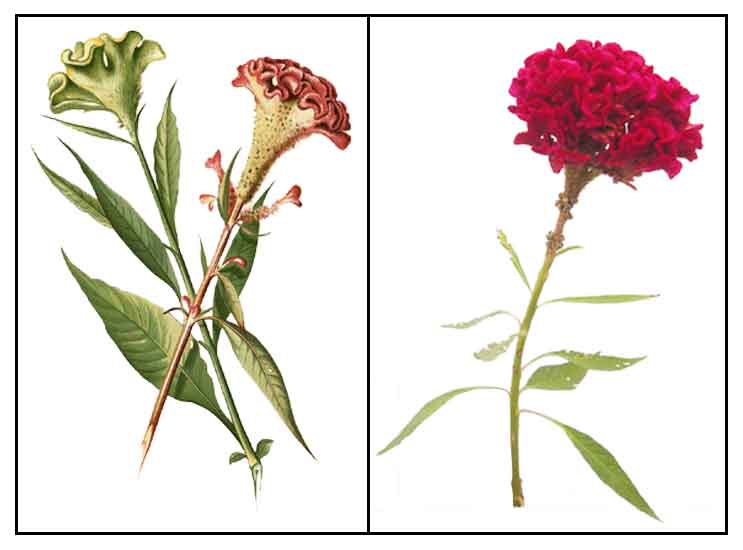
Etymology
- Celosia derives from Greek word "kelos" which translates to "burning," referring to the brightly colored flowers; cristata means crested.
- The common name cockscomb could be from the flower suggesting the head on a rooster (cock).
Gen info
- There are about 60 species of annual or perennial Celosia. Three common forms of celosia belong to only two different species: Celosia argentea (C. cristata L.) and Celosia spicata.
 Botany Botany
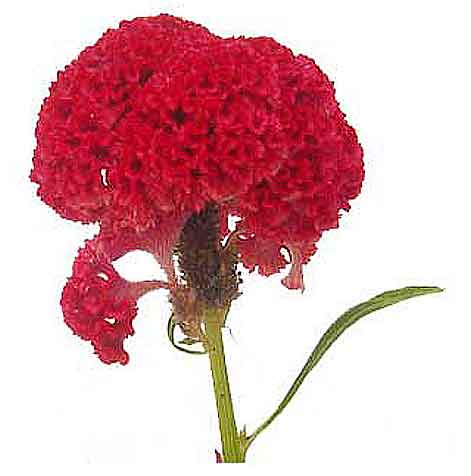
Palong-manok is an annual, erect, branching, smooth
herb, 1 meter or more in height. Leaves are variable in shape, usually
ovate-lanceolate, up to 23 centimeters in length, 8 centimeters wide, sometimes cordate-ovate. Flowers are
in panicles or spikes, of varied colors, from white to yellow, purple
and different shades of red. Seeds are minute, black, shining, and lens-shaped.
Distribution
- Ornamental cultivation; rarely spontaneous.
- Certainly introduced.
- Occurs in all warm countries.
Constituents
- Seeds contain a fatty oil.
- Ethanol extract of seeds yielded 6 compounds viz. 4-hydroxyphenethyl alcohol (1), kaempferol (2), quercetin (3), β-sitosterol (4), 2-hydroxyoctadecanoic acid (5), and stigmasterol (6). (6)
- Phytochemical screening of stem, leaf and root yielded starch, protein, tannin, flavonoids, saponin, fat and sugar. Total ash content in root, stem and leaf is 16.2%, 16%, and 12.6%, while insoluble ash content is 6.3%. 6.5%, and 5.6%. Protein was higher in the leaf than root and stem; carbohydrate more in the root than leaf and stem; and flavonoid more in the leaf than root and stem. (11)
- Proximate and amino acid analysis of leaves yielded crude fat 1.10, fiber 3.53, protein 5.17%, and ash content of 22.43%. Amino acid analysis yielded high amino acid content with methionine as the limiting amino acid. Essential amino acid analysis yielded arginine 4.91 6/16gN, histidine 2.14, isoleucine 2.99, leucine 6.51, lysine 5.09, methionine 1.08, phenylalanine 4.32, threonine 3.33, and valine 3.95. Mineral composition (mg/100g) showed calcium 178.08±0.05, chromium 1.98±0.01, copper 3.75±0.30, iron 15.25±0.23, lead 0.83±0.01, magnesium 39.64±0.08, manganese 1.73±0.04, nickel 1.03±0.04, phosphorus 38.41±0.42, potassium 62.34±0.38, sodium 35.25±0.30, zinc 7.25±0.25. (16)
- Various extracts of leaves yielded the presence of alkaloids, flavanoids, triterpenoids, phenolic compounds, and tannins.
(see study below) (19)
- Study
isolated three new oleanane-type triterpenoid saponins viz., celosins H, I and J from the seeds of Celosia argentea. (41)
- Study isolated three new triterpenoid saponins, namely: celosin E (1), celosin F (2) and celosin G (4), along with a known compound, cristatin (4) from the seeds. The compounds were tested for invitro antitumor and anti-inflammatory activities. (54)
Properties
- Considered antibacterial, anti-diarrhea, anthelmintic, aphrodisiac, astringent, demulcent, haemostatic, hypotensive, ophthalmic.
- Seeds considered cooling, antiscorbutic, vulnerary, tonic, demulcent, hypotensive, and ophthalmic.
- Flowers and seeds considered astringent, hemostatic, ophthalmic, parasiticide.
- Stems and leaves considered astringent and anti-inflammatory.
- Studies have shown antidiabetic, hepatoprotective, phytoremediative, anti-inflammatory, antidiarrheal, wound healing, anthelmintic, analgesic, anti-trichomonas, hepatoprotective, anticancer, antiurolithiatic, vasodilatory, hypotensive, anti-allergic properties.
Parts used
Bark, leaves, seeds, stems, flowers.
Uses
Edibility
- Tender leaves and young shoots are eaten as a vegetable; a good source of protein and carbohydrate.
- In West Tropical Africa, considered an excellent pot-herb and a slightly bitter spinach alternative, rich in protein and vitamins.
- In the Moluccas, cultivated as a vegetable.
- In the Philippines, eaten as vegetable, but not given to women during menstruation.
Folkloric
- In the Philippines, seeds, finely powdered or in decoction, used for diarrhea or as an aphrodisiac.
- For redness and swelling of the eyes, photophobia, and frequent
lacrimation with intense headache, a 6-gm seed preparation is mixed with
6 gms each of Morus alba and individual flower preparation of Chrysanthemum
sp. and a stem preparation of Equisetum is boiled and drunk as decoction once daily.
- Used in the treatment of headaches, ulcers, dysmenorrhea, ulcers, eye inflammation.
- Malays used the plant internally and externally. Decoction used roots used for cough and dysentery..
- Kroo people mix the ashes of burnt plant with water to smear on the body for craw-craw, scabies, etc.
- Seeds used for emollient lotions for eye problems.
- Flowers and seeds used for bloody stools, hemorrhoidal bleeding, hemoptysis, abnormal uterine bleeding, and
diarrhea.
- In the Cameroons, plant used in prescriptions for rheumatism and dysentery.
- Poultice of seeds used on broken bones.
- Flowers used for menorrhagia.
- Seeds are used for dysuria, coughs, dysentery, hypertension.
- In India, seeds are used
for dysuria and flowers for diarrhea. Seed paste used to treat ovarian and uterine diseases.
- Madugga tribes of South India use the flowers and seeds crushed in water for cough and diarrhea. Plant also useful for asthma and bronchitis. (9)
- In Indian folk medicine, used for treatment of diabetes mellitus.
- In Chinese medicine, used to arrest bleeding leukorrhea and diarrhea. Used for hematemesis, abnormal uterine bleeding, hemorrhoidal bleeding, chronic dysentery with persistent diarrhea.
- In Mexico, considered antiscorbutic and antiblennorrhagic.
- In Indian folk medicine, used
for diabetes. Seeds traditionally used for treatment of jaundice, diarrhea, gonorrhea, wounds and fever.
- Powdered seeds of decoction used as antidiarrheal and aphrodisiac. Juice of seeds forced into nostrils for nosebleeds. Roots used for colic, gonorrhea, and eczema.
- In Sri Lanka, leaves used for inflammations, fever and itching. Seeds used for fever and mouth sores.
- In China, flowers and seeds used in treatment of gastroenteritis and leucorrhea.
- In Antilles, decoction of flowers used for phthisis.
- In India, curry dish is prepared with fried leaves and eaten for constipation. Infusion of crushed roots also given for constipation. Powdered roots used for stomachache. (43)
- In Nigeria, poultice of stems and leaves sued for infected sores, wounds, and skin eruptions. Poultice of leaves, smeared with honey, used as cooling application to buboes and abscesses. Seeds used to relieve fever and improve vision.
- In Brazil, used for diuretic and hypotensive effects.
Others
- Ornamental: Flowers in popular
use for the making of wreaths for All Saint's Day.
Studies
• Betaxanthins / Colorant Property: Study isolated three betaxanthins. The yellow inflorescences exhibited bright yellow color with high color purity. The three betaxanthins had higher pigment retention than amaranthine / isomaranthine. (2)
• Anti-Diabetic / Seeds: Study for antidiabetic activity of chronic administration of alcoholic extract of Celosia argentea seeds showed reduction of blood glucose in alloxan-induced diabetic rats. (3)
• Hepatoprotective Saponin / Cristatain: Study of seeds yielded a new saponin, cristatain, together with four other saponins, celosin A, B, C, and D. Cristatain exhibited hepatoprotective effect on CCl4- and DMF-induced hepatotoxicity in mice with decreases in ALT, AST and ALP. together with histopath evidence. (4)
• Lead / Phytoremediation: In a study of three ornamental plants for phytoremediation of Pb-contaminated soil, only Celosia cristata pyramidalis could be identified as a Pb-accumulator. (7)
• Antioxidant / Phytoremediation: Study of antioxidant compounds of a methanolic extract and solvent fractions of flowers showed the total polyphenol, flavonoids, and tannins contents were 6.80, 2.34, and 6.23 mg/g extract residue, respectively. DPPH and ABTS radical scavenging assays showed notable antioxidant activity. (8)
• Corrosion Inhibitor / Phytoremediation: Study of methanolic extract of CA showed antioxidant activity using DPPH and hydroxyl radical scavenging assay methods, similar to standard ascorbic acid. CA showed to be an efficient, eco-friendly, and low-cost corrosion inhibitor for MS (mild steel) in industrial water medium. (10)
• Anti-Inflammatory / Leaves: Study evaluated the anti-inflammatory activity of C. argentea leaves by carrageenan paw edema volume method in albino rats. Methanol and chloroform extracts showed maximal anti-inflammatory activity when compared to standard drug. The highest anti-inflammatory activity was observed in methanolic extracts. (12) Study isolated a flavonoid fraction from Celosia argentea. Flavonoid was evaluated for anti-inflammatory activity using carrageenan-induced rat paw edema and cotton pellet induced chronic inflammatory models. Results showed the flavonoid content possesses
significant dose-dependent anti-inflammatory activity in both models. (23)
• Wound Healing / Leaves: Study evaluated the healing efficacy of a 10% leaf ointment formulation using a rat burn wound model. Results showed a salutary action of the extract on wound healing which may be due to mitogenic and motogenic promotion of dermal fibroblasts. (13) Study for wound healing activity showed wound closure occurred earlier in treated rats. The salutary effect may be due to mitogenic and motogenic promotion of dental fibroblasts. (27)
• Antidiarrheal / Leaves: Study evaluated the anti-diarrheal effect of alcoholic leaf extract on castor oil-induced diarrhea, charcoal meal test and PGE2-induced diarrhea. Results showed dose related anti-diarrheal effect via a central effect and PGE2 inhibition. (14)
• Antibacterial: Study evaluated the antibacterial activity of different plant parts of Phyllanthus maderaspatensis and Celosia argentea extracted with different solvents. Of all the extracts Phyllanthus shoot (methanol) and Celosia inflorescence (ethanol) exhibited the maximum antimicrobial activity.
Pseudomonas was found to be more sensitive, while alcohol and ethyl acetate extracts exhibited the more significant inhibition. (15) Study of crude extracts of Datura alba and Celosia argentea leaves showed significant lysis zone against all pathogens, results comparable with antibiotic cream Silver Sulphadiazine. (•)
• Betalains / Leaves: Study evaluated the betalains of yellow, orange, and red inflorescences of common cockscomb (Celosia argentea var. cristata). Besides the known compounds amaranthin and betalamic acid, the three yellow pigments were elucidated to be immnonium conjugates of batalamic acid with dopamine, 3-methoxytyramine, and (S)-tryptophan. The detection of high dopamine concentration may be of toxicological relevance in use of yellow inflorescences as vegetable. (18)
• Anthelmintic / Leaves: Study evaluated various extracts of leaves for anthelmintic activity against adult earthworms Pheretima posthuma. Albendazole was used as standard. Aqueous and methanol extracts showed significant dose dependent paralysis and mortality. Aqueous extract showed more significant activity than the methanolic extract. Chloroform extract showed no significant activity. (19)
• Antinociceptive / Whole Plant: Study evaluated the antinociceptive activity of methanol extract of whole plant of C. cristata in mice pain models using thermal (hot plate, tail immersion test) and chemical (acetic acid, formalin, and glutamate-induced nociception test). Results showed significant antinociceptive effect associated with both central and peripheral mechanisms. The antinociceptive effect was significantly reversed by naloxone and glibenclamide, suggesting opioid and ATP-sensitive K+ channel system involvement. MECC also showed involvement of cGMP pathway in its antinociceptive action. (20)
• Effect on Trichomonas vaginalis In-Vitro: Study evaluated the effect of aqueous extract of Celosia cristata on Trichomonas vaginalis in vitro. The mortality rate of T. vaginalis increased with prolonged drug action and increased concentration of the drug. Treatment with CC aqueous extract showed a relatively potent effect of T. vaginalis—the cytoplasm of T. vaginalis was filled with granules and vacuoles, some rupturing with overflowing of cellular contents. (21)
• Impact on Adipogenesis of Native Human CD34+/CD31- Cells: Study evaluated the in vitro capacity of C. cristata extract to impact the adipogenic potential of native human adipose tissue progenitor cells, i.e., commitment and differentiation towards adipogenic lineage. C. cristata extract reduces lipid content of progenitor cells undergoing differentiation correlating with reduced expression of C/EBPα. Under commitment-inducing conditions, the extract induces a more potent reduction of lipid content. Results showed C. cristata extract decreases adipogenesis. Study suggests the extract impact the commitment of human adipose tissue progenitor cells. (22)
• Anti-metastatic / Immunomodulating Properties: Water extract
of CA showed an anti-metastatic effect based on immunomodulating properties
including induction of cytokines such as IL-12, IL-2 and IFN-gamma which may provide the basis for its inhibition of cancer metastasis. (24)
• Celosian / Antihepatotoxic and Immunostimulating: Study isolated an antihepatotoxic polysaccharide,
celosian, from Celosia argentea: Study showed antihepatotoxic
and immunostimulating effects. (26)
• Prooxidant / Antioxidant: Study of the methanolic extracts of nine edible vegetables in Southwest Nigeria showed C argentea to be pro-oxidant. The antioxidant activity was supported by the membrane stabilizing capacity of the extracts. On cytoprotectivity effect, all demonstrated a very low hemagglutination titer value.(28)
• Intraepithelial Lymphocyte Effect / Dietary Caution: Study showed that although a CA diet in normal mice did not affect the small intestine there was a increase in the intraepithelial lymphocytes (IEL). Further studies are suggested before using it it as minor cereals. (29)
• Celogentins / Antimitotic Peptides / Seeds: Study yielded three new bicyclic peptides, celogentins A, B and C together with a known-related peptide, moroidin, from the seeds of C. argentea. The new celogentins inhibited the polymerization of tubulin, with celogentin C being four times more potent than moroidin. (30)
• Anti-Diarrheal / Leaves: Study of the alcoholic extract of leaves of Celosia argentea showed dose-related anti-diarrheal effect. Results suggest it may act centrally and may inhibit PGE2. A charcoal meal test also suggests an anti-muscarinic activity. (31)
• Cytogenotoxic / Nutrient Composition: In a study of three commonly consumed vegetables in South-Western Nigeria, an aqueous extract of Celosia argentea yielded carbohydrate of 31.41%, protein 30.79%, ash 19.98%, and fat 0.22%. Mineral analysis yielded magnesium, zinc, lead, and iron. It showed concentration dependent mitotic inhibitory effect on mitosis of A. cepa, an indication of cytotoxicity. The antimitotic potential of the extract presents a potential for use in drug development for use in prevention of uncontrolled proliferation of cancer cells. (32)
• Antiurolithiatic Activity / Seeds / Roots: Study evaluated the antiurolithiatic activity of an ethanolic extract of CA seeds. Results showed antiurolithiatic activity, more efficacious at dose of 500 mg kbw. Results suggest a potent prophylactic effect on stone formation, a mechanism unrelated to its diuretic effect. (33) Study evaluated the antiuroliithiatic activity of methanolic extract of roots in male albino rats in ethylene glycol induced urolithiasis. Cystone was used as standard. Treatment significantly prevented the rise in promoters like calcium, oxalate, uric acid and inorganic phosphate. Renal function impairment and oxidative stress was prevented as evidence by measures of BUN, creatinine, MDA, proteins catalase, and histopathology. (52)
• Benefits in Benign Prostatic Hyperplasia / Effect on PSA: Study evaluated the effect of leaves of CA on antioxidant status, PSA (prostatic specific antigen) and hematological parameters in prostatic rats. Results showed significant decrease in PSA levels with considerable improvement in prostatic histology. Findings suggest potential for CA-supplemented diet to prevent or suppress development of BPH in rats. (34)
• Anti-diabetic / Roots: Study evaluated the anti-diabetic hypoglycemic activities of an ethanolic extract of roots of C. argentea in streptozotocin induced diabetic rats. Results showed reduction of blood sugar together with reduction in cholesterol, triglycerides and urea, with restoration of decreased level of proteins and liver glycogen. (35)
• Hepatoprotective / Paracetamol Induced Toxicity: Study evaluated an ethanol extract of C. argentea for hepatoprotective activity against paracetamol induced liver injury in rat. Results showed hepatoprotective activity comparable to standard drug, silymarin. (37) Study evaluated the hepatoprotective effects of C. argentea on acetaminophen-induced liver damage in rats.
Results showed amelioration and protection against acetaminophen-induced liver damage, comparable to silymarin. (51)
• Anticancer
/ Antioxidant / Aerial Parts: Study sought to isolate bioactive compounds of aerial parts of C. argentea and evaluate their anticancer potential. Isolated compounds were confirmed as: (1) Luteolin-7-O-glucoside and (2) phenolic, 1-(4-hydroxy-2-methoxybenzofuran-5-yl)-3-phenylpropane-1,3-dione.
Both compounds exhibited significant antioxidant activity by DPPH assay (p<0.001). Both compounds exhibited potent cytotoxicity against SiHa, HCT, MCF-7 cancer cell lines. (38)
• Inhibitory Potential on Tyrosinase, Acetylcholinesterase, and Butyrylcholinesterase Enzymes: Study of crude methanolic extract of C. argentea var. cristata showed significant tyrosinase inhibitory activity (63.6%), acetylcholinesterase inhibitory activity (80.3%) and butyrylcholinesterase inhibitory activity (68.3%) with IC50s of 268.5 ± 0.2 µg/mL, 73.6 ± o.1 µg/mL, and 132.8 ± 0.9 µg/mL, respectively. Results suggest potential for use in skin hyperpigmentation, Parkinson's disease, and neurodegenerative disorders like Alzheimer's disease and dementia. (39)
• Nutritional Analysis: Proximate analysis showed protein and fat content were highest in the leaf; crude fiber, ash and moisture were highest in the stem, and vitamin A and C were highest in the leaf. Mineral analysis showed zinc, phosphorus, and iron were highest in the leaf. Study indicated C. argentea leaf, roots and stems are highly nutritious and should be included in the diet. (40)
• Modulates Glucose Homeostasis / Abates Oxidative Hepatic Injury / Leaves: Study evaluated the effect of a methanolic extract of C. argentea var. cristata on blood glucose, SOD, CAT, ALT and AST, ALP and MDA levels in alloxan induced male diabetic rats. Extract significantly lowered the high level of serum enzymes and increased levels of CAT and SOD. Results indicated anti-hyperglycemia and antioxidative protective effect of C. argentea leaves. (42)
• Immunomodulatory Activity / Aerial Parts: The aerial parts of C. argentea have been reported to be rich in flavonoids that play a role in the body's defense mechanisms. This study evaluated the effectivity of the compounds isolated from aerial parts i.e., Luteolin7-0 glycoside (1) and 1-(4-hydroxy-2-methoxybenzofuran-5-yl)-3- phenylpropane-1,3-dione (2) for in-vivo immunomodulatory activity using Mice Paw Sensitivity test, Phagocytic Index, and HA Titre parameters. Compound 1 exhibited impressive immunomodulatory activity (p<0.001) and compound 2 (p<0.01) for the three assays. Results suggest potential as alternative or adjuvant for immunomodulation. (44)
• Celosian / Hepatoprotective / Induced Liver Injury / Seeds: Study evaluated the hepatoprotective effects of water extracts from 12 crude drugs. Among them, Cassia obtusifolia Celosia argentea, Cucurbita moschata, and Curcuma aeruginosa water extracts showed significant hepatoprotective effect on carbon tetrachloride induced liver injury in rats and D-galactosamine (D-galN)/lipopolysaccharide (LPS) induced liver injury in mice. The water extract of C. argentea seeds was found to be most effective. Fractionation isolated the active constituent celosian. (45) Study evaluated celosian, an acidic polysaccharide isolated from a water extract of seeds of Celosia argentea. Celosian, for hepatoprotective effect using chemical and immunological liver injury models. Celosian inhibited elevation of liver enzymes GPT, GOT, and LDH and bilirubin levels in CCl4-induced liver injuries in rat. It also suppressed rises in GPT or mortality on fulminant hepatitis induced by D-galactosamine/lipopolysaccharide (D-GaIN/LPS) or Propionibacterium acnes/LPS in mice. (62)
• Zinc Oxide Nanoparticles / Antioxidant / Leaves: Study reports on the low cost, simple, green synthesis of ZnO nanoparticles using a leaf extract of Celosia argentea. The extract yielded alkaloid, flavanoids carbohydrate, and saponins which may be responsible for the reducing property for the formation of ZnO NPs. The leaf extract showed good anti-oxidant potential on DPPH assay. The ZnONPs have shown antibacterial activity against E. coli, Salmonella, Acetobacter with different efficiencies. The NPs also showed potential use for sustained drug release formulations. (46)
• In-vitro α-amylase and α-glucosidase inhibitory activity: Study evaluated the in-vitro inhibitory activity of extracts and fractions of Adiantum caudatum and Celosia argentea on α-amylase and α-glucosidase enzymes. Fraction 2 of A. caudatum and F4 of C. argentea showed highest α-amylase and α-glucosidase inhibitory activity with IC50s of 0.241, 0.211 and 0.294, 0.249 mg/ml, respectively, (47)
• Moroidin / Antimitotic / Seeds: Study reports on a unique bicyclic peptide, moroidin, isolated from the seeds of C. argentea. Moroidin strongly inhibited the polymerization of tubulin. (48)
• Triterpenoid Saponins / Hepatoprotective / Seeds: Study isolated two new triterpenoid saponins, celosin I and celosin II from the seeds of C. argentea. The compounds exhibited significant hepatoprotective effect on carbon tetrachloride-induced and N,N-dimethylformamide-induced hepatotoxicity in mice. (49)
• Cobalt Nanoparticles / Antioxidant / Antibacterial / Hemolytic: Study reported on the safe and economical synthesis of cobalt nanoparticles using secondary metabolites of C. argentea plant extract. The CoNPs showed good antioxidant activity against DPPH, with increasing radical scavenging with increasing concentration. The NPs exhibited good antimicrobial activity against test microbes, showed very less toxicity and efficient activity toward dye degradation. (50)
• Vasodilatory / Hypotensive / Cardiovascular effects: Study evaluated an ethanol soluble fraction using male and female Wistar rats for hypotensive and and diuretic effects using doses of 30, 100, and 300 mg/kg. The ESCA caused no toxic effects in female rats nor increased urinary excretion in male rats on acute administration. Dose of 100 mg/kg promoted significant acute hypotension and bradycardia (slowing of heart rate). The cardiovascular effects seem to involve the voltage-dependent K+ channels activation in MVBs. The hypotensive effects involve activation of the voltage-sensitive K+ channels, which contribute to the reduction of peripheral vascular resistance and cardiac output. (53)
• Antinociceptive / Anti-Inflammatory / Antidepressant / Leaves: Study evaluated the antinociceptive, anti-inflammatory and antidepressant activity of methanolic extract of leaves of C. argentea in healthy Swiss albino mice. Results showed antinociceptive effect evidenced by increase in reaction time by Eddy's hot plate method and tail flick method in albino mice and anti-inflammatory effect by significant reduction (p<0.001) in carrageenan induced paw edema in mice. Extract also showed significant antidepressant effect compared to standard drug imipramine (55)
• Analgesic / Flowers: Study evaluated the analgesic effect of ethanolic extract of flowers of C. argentea
using acetic acid induced writhing method and tail flick latency method in albino mice. Results showed dose-dependent significant analgesic activity in both models of pain. (56)
• Hepatoprotective / Antioxidant / Rifampicin Induced Toxicity // Flowers: Study evaluated the antioxidant and hepatoprotective effects of C. argentea against tissue injury caused by rifampicin administration. Extract treatment significantly reversed all rifampicin induced changes on AST, ALT, ALP, and cholesterol, along with decrease in MDA and elevation of HDL and SOD activity.
The extract was rich in phenolic content and showed no toxic effects on rats at dose of 400 mg/kg/day. (57)
• Neuroprotective / Vitamin E / Mercury Induced Oxidative Induced Brain Injury: Environmental mercury contamination is an increasing environmental concern associated with mining and possible toxicological and neurotoxicity effects. Study evaluated the ameliorative effects of flavonoid-rich aqueous extract of C. argentea and vitamin E in the brain of male Wistar rats treated with mercuric chloride. Results suggest both Celosia argentea and vitamin E protected against mercury-induced gross, oxidative, cerebral and cerebellar damage. (58)
• Effect on Anti-DNP IgE Antibody Production: Study evaluated extracts of Celosia argentea (CAE) and Cucurbita moschata (CME) on anti-DNP responses in mice. The extracts were injected intraperitoneally before primary immunization of DNP-ovalbumin. Anti-DNP antibody production was markedly suppressed. On secondary immunization, anti-DNP IgE production was markedly suppressed, while IgG responses were not affected. Mitogenic activity occurred in both extracts dose dependently in vitro. Results suggest potential for suppression of IgE antibody in certain allergic disorders. (59)
• Natural Disintegrating Agent / Antidiabetic: Study evaluated the formulation of glicazide (GLZ) fast disintegrating tablets (FDTs) using fenugreek seed mucilage and Celosia argentea powders as natural disintegrating agents as well as sodium starch as synthetic agent. Among all formulations, 7& argentea powder produced least disintegrating time of 19 sec resulting in higher drug release rate of 98.13%. It showed better disintegrating property than the most widely used synthetic disintegrant sodium starch glycolate in the formulations of FDTs. Results suggest the C. argentea powder will act as a good disintegrating agent, as well as a promising additive with anti-diabetic activity with GLZ. (60)
• Antidiarrheal / Whole Plant: Study evaluated
the antidiarrheal effect of an ethanolic extract of whole plant in Wistar rats using castor oil induced diarrhea and castor oil induced enteropooling models. Loperamide was used as standard. Results showed antidiarrheal effect which may be due to a central action or due to inhibition of PGE2. (61)
• Oviposition Deterrence / Ovicidal / Larvicidal: Study evaluated the potential of C. argentea on pest control studying oviposition deterrence and ovicidal activity on Tirathaba rufivena Walker. Methanol and petroleum ether extracts showed highest activity against 1st instar larvae. The diethyl ether extract showed best activity on oviposition deterrence, ovicidal activity, and 1st instar larvae lethality of T. rufivena. (63)
Drug interactions
• Moderate Interactions: (1) Adenosine: The caffeine in cocoa might block the effects of adenosine (Adenocard), a drug often used in cardiac stress testing. Advise is to abstain from cocoa or other caffeine containing products at least 24 hours before a cardiac stress test. (2) Clozapine: Caffeine in cocoa may decrease the rate of break down of clozapine. (3) Dipyridamole (Persantine): Dipyridamole is used in cardiac stress testing. Stop the drug 24 hours before the stress test. (4) Ergotamine: Caffeine can increase the absorption of ergotamine. (5) Estrogen: Estrogen can decrease the breakdown of caffeine. (6) Lithium: Cocoa caffeine may increase the rate of lithium elimination. (7) MAO Inhibitors: Consumption of cocoa with MAO inhibitors (medications used for depression) might cause increased stimulation, increased heart rate, high blood pressure, nervousness, etc. (8) Hypoglycemics: By increasing blood sugar, cocoa might decrease the effectiveness of some antidiabetic medications. (8) Theophylline: Cocoa can decrease the rate of elimination of theophylline and augment its effects and increase its side effects. (36)
• Minor Interactions: Minor interactions may occur with antibiotics, birth control pills, cimetidine, disulfiram (Antabuse), fluconazole, mesiletine, verapamil. (36)
Availability
- Wild-crafted.
- Seeds in the cybermarket. |