|  Gen
info Gen
info
- Corchorus is a genus plant
of about 40-100 species in the family Malvaceae. Jute is confusingly
applied to any plant of the genus Corchorus and to its fiber. The chief
sources of the fiber are the two species of Corchorus plant: C olitorius
and C capsularis. In the Philippines, three Corchorus species
are recorded with medicinal uses: Pasau, Pasau na bilog,
and pasau na hapay. Another pasau, Pasau-na-hapai, Jussiaea
erecta belongs to the family Onagraceae.
- The plant may have been cultivated by Jews in the Near East, which gives the plant its name.
(37)
 Botany Botany
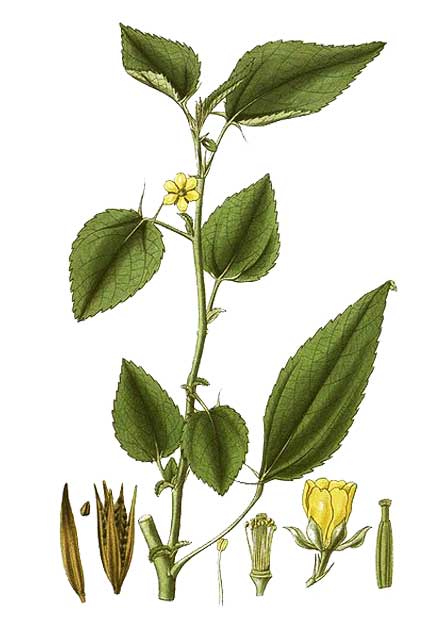
• Pasau-na-haba is an erect, branched, smooth or nearly smooth, half-woody shrub, 1 to 1.5 meters high.
Leaves are ovate-lanceolate, 5 to 12 centimeters long, pointed at the tip, blunt
at the base, bearing a pair of tail-like projections, and toothed at the margins. Flowers are
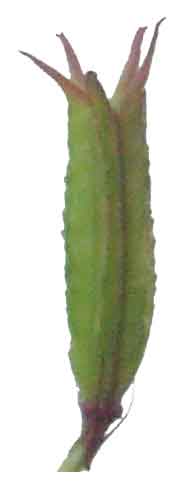
axillary, solitary, yellow, and about 6 millimeters long. Capsules are elongated, cylindric,
about 3 to 3.5 centimeters long, with 10 ribs, 3 to 6 valves, with transverse partitions between
seeds. Seeds are dark, bluish green, angular, about 2 millimeters long, and very bitter.
• Corchorus olitorius is an erect herbaceous plant, fairly branched and grows about 1.5 meters (5 ft) high. However, if grown for fiber production, it can reach heights up to 4 m (13 ft). The taproot leads to a sturdy and hairless stem, which is green with a faint red-brownish hue and sometimes turns a little woody on ground level. The serrate acute leaves alternate, are 6 to 10 centimeters (2+1⁄4 to 4 in) long and 2 to 4 cm wide. The plant carries the flowers solitary or in two-flowered cymes opposite of the leaf. The flowers sit on the end of a short stem, count 5 sepals, 5 petals and 10 free and yellow stamina. The fruit is spindle-shaped, dehiscent and divided into transversal sections through five valves. The fruit measures 2 to 8 cm in length and colors vary from grayish-blue to green or brownish-black. Every seed chamber contains 25 to 40 seeds, which sum up to 125 to 200 seeds per fruit. (37)
 Distribution Distribution
- Native to the Philippines. (30)
-
In and near settlements, on rice-paddy banks, in fallow paddies, etc., throughout the Philippines.
- Also native to Afghanistan, Andaman Is., Angola, Assam, Bangladesh, Botswana, Burundi, Cambodia, Cameroon, Cape Verde, Central African Republic, China South-Central, China Southeast, Congo, Djibouti, DR Congo, Eritrea, Ethiopia, Gambia, Ghana, Guinea, Guinea-Bissau, Gulf of Guinea Is., Gulf States, Hainan, India, Iran, Ivory Coast, Kenya, KwaZulu-Natal, Laos, Lebanon-Syria, Lesser Sunda Is., Liberia, Malawi, Malaya, Mali, Mozambique, Myanmar, Namibia, Nepal, Niger, Nigeria, Northern Provinces, Oman, Pakistan, Palestine, Philippines, Senegal, Sierra Leone, Sinai, Somalia, South China Sea, Sudan-South Sudan, Tanzania, Thailand, Togo, Turkmenistan, Uganda, Uzbekistan, Vietnam, West Himalaya, Zambia, Zimbabwe. (30)
Constituents
• Japanese study isolated an acidic polysaccharide, Moroheiya.
• Leaf study has yielded anthocyanin.
• Leaf extracts yielded alkaloids, terpenoids, tannins, flavonoids, cardiac glycosides. (19)
• Seed extract yielded alkaloids, tannins, flavonoids, glycosides, saponin, cardiac glycosides, anthraquinones, steroids, and volatile oil. (20)
• Six phenolic antioxidative compounds were identified, the most
dominant was 5-caffeoylquinic acid.
• 100 g of leaves yield 43-58 calories, 80.4-84.1 g H2O,4.5-5.6 g protein, 0.3 g fat, 7.6-12.4 g total carbohydrate, 1.7-2.0 g fiber, 2.4 g ash, 266-366 mg Ca, 97-122 mg P, 7.2-7.7 mg Fe, 12 mg Na, 444 mg K, 6,410-7,850 µg beta-carotene, 0.13-0.15 mg thiamine, 0.26-0.53 mg riboflavin, 1.1-1.2 mg niacin, and 53-80 mg ascorbic acid.
(15)
• Leaves yield a significant amount of mucilaginous polysaccharide. (see study below) (22)
• Phytochemical screening of ethanolic extract of leaves revealed presence of alkaloids, anthraquinone, cardiac glycosides, saponins, tannins, phenols, phlobatannins and flavonoids. (see study below) (41)
Properties
- Considered demulcent, diuretic,
febrifuge, purgative, tonic.
- Studies have suggested antibacterial, anticonvulsant, antinociceptive, anti-inflammatory, cardiotonic, hypertensive, antipyretic, antifungal, antiobesity, gastroprotective, wound healing, anticancer, apoptosis-inducing, anti-obesity, skin-hydrating, bioadsorbent, antidiabetic, hypolipidemic properties.
Parts used
Whole plant, especially the. seeds and leaves.
 Uses Uses
Edibility / Nutritional
- Growing wild, leaves and young fruits extensively eaten as a green vegetable in
the Philippines, especially by the Ilokanos.
- Cooked, it is mucilaginous and slimy, with a good flavor.
- Dried leaves used as soup thickener and for tea.
- Shoots are an excellent source of iron, calcium, phosphorus and vitamin C.
-
An excellent source of vitamins A and C, fiber and minerals. A good source of vitamin B.
- Contains high levels of all amino acids except methionine.
- In many part of the world, the plant has become a vegetable source. In Bengal, in spring, shoots are pulled from the fields and eaten with rice as a vegetable.
- In Nigeria and Zambia, leaves boiled to make a sticky, mucilaginous sauce served with balls of cassava. In Vietnamese cuisine, known as rau day, it is made into soup with shrimp. In Egypt and Palestine, mulukhiyah dish is made from boiled leaves. In Tunisia, powdered leaves cooked with beef or lamb. In classical antiquity, Pliny recorded that jute plants were used as food in ancient Egypt. (37)
Folkloric
- Seeds are used as purgative.
- In India infusion of leaves used as tonic and febrifuge.
- Leaves are demulcent, tonic, and diuretic; used for chronic cystitis, gonorrhea, and dysuria.
-Cold infusion of leaves used as bitter tonic, used by patients recovering from dysentery, to restore the
appetite and improve strength.
- Powdered seeds with honey and ginger for diarrhea.
- Grains of the powder mixed with equal amounts of Curcuma longa used for acute dysentery.
- Infusion of seeds for fever and liver congestion.
- Hindus reduce the plant to ashes, mix it with honey, and use it for obstruction of the abdominal viscera.
- In South India, the dried plant is used as demulcent. Powder of leaves, 5 - 10 grains, mixed with powdered tumeric in equal parts, used for dysentery.
- In India, the tribal people of Bolangir use the plant as remedy against threatened miscarriage: equal quantities of tender leaves of C. olitorius and Carica papaya are cooked to boiling point, cooled, then used one tumbler 3x daily. (29)
Others
- Jute: Jute fiber is made from the bark tissue of C. olitorius and C. capsularis. A source of commercial jute
but not as abundant as that from Pasau-na-bilog (Corchorus capsularis) and considered to be of lesser quality. Many textiles are made from jute, such as yarn, twine, sacking, carpet backing cloth, and other blended textiles. Also used as raw material for cords and strings. (37)
Studies
• Moroheiya / Acidic Polysaccharide:
Japanese study isolated an acidic polysaccharide, Moroheiya from dried
leaf extract of CO which showed proliferative activity toward murine
splenocyte. (1)
• Antibacterial / Seeds:
Study of methanol extracts of C olitorius seed and Cuscuta reflexa stem showed a broad spectrum
of antibacterial activity. (2)
• Antibacterial / Leaves:
Study of leaf extract showed high potency against E coli supporting its use for gastroenteritis.
• Anticonvulsant:
Study of the methanolic extracts of C reflexa stem and C olitorius seed showed marked protection against convulsions induced by chemoconvulsive agents in mice probably through alterations of the catecholamines and amino acids in mice brain.
• Phenolic Antioxidants:
Six phenolic antioxidative compounds were identified from the leaves
of CO. Results showed that 5-caffeoylquinic acid was a predominant phenolic
antioxidant in CO leaves. (3)
• Antinociceptive / Anti-Inflammatory:
Extract study exhibited significant antinociceptive and anti-inflammatory
activities confirming its traditional claims in inflammatory and painful
ailments.
(4)
• Cardiotonic / Hypertensive:
The total alkaloid extract of C olitorius and the cardenolide mixture isolated from it showed cardiotonic, laxative, ecbolic and hypertensive properties. (10)
• Anti-Inflammatory / Antipyretic:
Study in rats evaluated an aqueous extract showed anti-inflammatory and antipyretic effects using carrageenan-induced paw edema and brewer's yeast induced pyrexia in rats. Results support its folkloric use in the treatment of inflammation and fever.
(7)
• Anti-Obesity / Polyphenolic Compounds:
Study demonstrated an anti-obesity effect of polyphenolic compounds from molokheiya leaves. The effect was associated with a reduction in oxidative stress and enhancement of B-oxidation in the liver. Results suggest the consumption of molokheiya leaves may be beneficial for preventing diet-induced obesity.
(8)
• Arsenic-Induced Toxicity / Protective Effect:
Study showed a protective effect of the aqueous extract of C olitorius leaves against arsenic-induced brain toxicity in experimental animals. Prior treatment showed dose-dependent increase in antioxidant markers. Histopath exam of the brain tissue supported the protective activity.
 • Antibacterial / Antifungal / Leaves:
Study evaluated 3 extracts of leaves for antifungal and antibacterial activities. All three -- petroleum ether, ethyl acetate -- exhibited varies levels of antibacterial and antifungal activities. (11) • Antibacterial / Antifungal / Leaves:
Study evaluated 3 extracts of leaves for antifungal and antibacterial activities. All three -- petroleum ether, ethyl acetate -- exhibited varies levels of antibacterial and antifungal activities. (11)
• Blood Chemistry Effects:
Study of aqueous extract of Corchorus olitorius showed both harmful and beneficial potentialities on the blood chemistry of male albino rats. Effect on human blood chemistry is unknown, but because of findings in the animal model, caution is recommended in its consumption by people with blood disorder. (12)
• Synergism and Antagonism with Antibiotics: Study described the in-vitro interaction of an ethanol extract of leaf of Corchorus olitorius with five antibiotics on Methicillin sensitive and Methicillin resistant Staphylococcus aureus. The extract synergized the antibacterial potential of ciprofloxacin and ampicillin/cloxacillin mixture and antagonized gentamycin, streptomycin, and erythromycin on S. aureus. (13)
• Antimicrobial: Study evaluated alcoholic extracts of leaves, aerial parts, and roots in powder form against various gram negative and gram positive pathogenic bacteria. Results showed varying degrees of inhibition which was concentration dependent. There were also significant differences among the alcoholic extracts of leaves, aerial parts and roots on the growth of some types of bacteria at level (p<0.05). (14)
• Gastroprotective / Leaves: Study evaluated the gastroprotective effect of an ethanolic leaf extract of C. olitorius against ethanol-induced gastric ulcers in adult Sprague Dawley rats. Results showed a gastroprotective property comparable to reference control drug omeprazole. (16)
• Topical Application / Leaves / Atopic Dermatitis: Study evaluated the effects of topical application of Corchorus olitorius leaf extract on atopic dermatitis in mice. Findings suggest CO has a therapeutic potential for AD due to its suppression of the plasma IgE level and degranulation of mast cells. (18)
• Wound Healing / Leaves: Study evaluated a methanol extract of leaves of C. olitorius for antioxidant and wound healing activity. Results showed a high degree of antioxidant activity on FRAP and DPPH assays. Study also showed wound healing activity by excision model. (19)
• Anti-Diabetic / Seed: Study evaluated an ethanolic seed extract of pulverized seeds for antidiabetic effect in alloxan induced diabetic albino rats. Results showed significant reduction of blood sugar, with reduction in glycosylated hemoglobin and increase in insulin level. (20)
• Induction of Apoptosis / Human Hepatocellular Carcinoma: Study of an ethanolic leaf extract showed potential against hepatocellular carcinoma through induction of apoptosis via mitochondria-dependent pathway. (21)
• Skin Hydrating Effect / Atopic Dermatitis / Leaves: Study evaluated the hydration efficacy and skin barrier protection of C. olitorius extract in mice. Results suggest the COEW has the ability to maintain skin hydration, reduced transepidermal water loss, prevent disruption of skin barrier function, with potential as adjunct treatment for atopic dermatitis. (22)
• Deleterious Reproductive Effects: Study evaluated the reproductive effects of aqueous extracts of C. olitorius on re reproductive parameters in male albino rats. Results showed deleterious effects on reproductive functions with a significant decrease in testosterone levels, sperm motility, sperm count, sperm viability, with an increase in percentage of abnormal cells. (24)
• Bio-Adsorbent: Study evaluated the potential use of Corchorus olitorius L. Nano Carbon as adsorbent for removal of Rhodamine-B dye (dye contaminated waste water passed out from industries). Results suggest ACONC may be utilized as a low cost adsorbent for Rhodamine-B dye removal from aqueous solution. (25)
• Anti-Nutrients: In a study of anti-nutrient composition of several plants, Corchorus olitorius yielded the highest level of phytate (0.06 ± 0.00%)—ideally, phytate should be 25 mg or less per 100 grams or about 0.03% of the phytate containing food. CO also showed the highest percentage concentration of tannin and the highest concentration of phenols. (26)
• Cytotoxicity and Genotoxicity on Human Multiple Myeloma Cells: Study investigated the cytotoxic and genotoxic effects of leaf and seed extracts on multiple myeloma-derived ARH-77 cells. Results showed high cytotoxic potential of the seed extract and genotoxic potential of both seed and leaf extracts. (27)
• Anticonvulsive / Brain Biogenic Amines / Seed: Methanolic extract of both C. reflexa stem and Corchorus olitorius seed showed marked protection against convulsion induced by chemoconvulsive agents in mice. Results suggest significant increases in catecholamines and GABA systems, both considered to have significant roles with respect to CNS depressant and anticonvulsive properties of the processed extracts. (28)
•
Enhancement Effect on Hepatotoxic Potential of CCl4 / Leaves: Study evaluated the effect of leaves of C. olitorius in CCl4-induced liver damage in male wistar rats. Results suggest that regular consumption of unprocessed C. olitorius may further enhance the hepatotoxic potential of CCl4 in humans. (31)
• Antidiabetic Potential /Jute Leaf Diet Supplementation: Study evaluated the antidiabetic potential of jute leaf on low dose STZ/high fat diet induced diabetic rats. Supplementation of 10% jute leaf showed a significant reduction (p<0.05) in biochemical parameters compared to the diabetic control group. Furthermore, inclusion of the supplementation of the vegetable diet in T2 diabetic rats showed antihyperglycemic, antihyperlipidemic, and antiperoxidative effects. (32)
• Antioxidative / Leaves: Study evaluated a methanol leaf extract for anti-oxidative and biochemical indices in in-vivo and in-vitro experiments. Results showed antioxidant activities with scavenging of hydroxyl and DPPH radicals and inhibition of lipid peroxidation in-vitro. Extract modulated sodium arsenite induced hepatotoxicity in rats. Study showed C. olitorius has potential to enhance nutrition and health as a rich source of dietary antioxidants for biological systems susceptible to free radicals-mediated reactions leading to diseases associated with oxidative stress.(33)
• Toxicological Study / Seeds: Study evaluated the acute, subacute and chronic toxicological effects of ethanolic seed extract in white albino rats. No deaths were recorded with a single dose of 5g/kg—the LD50 was therefore estimated to be greater than 5000 mg/kg. In subacute toxicity testing, there were also no deaths recorded, indicating a safety profile for 250, 500, and 1250 mg/kg doses. However, there was significant (p<0.05) and dose-dependent increase in renal and hepatic biochemical parameters supported with histological evidence of renal tubular necrosis and hepatic changes. Chronic toxicity study recorded deaths in doses of 1250, 2500, and 3750 mg/kg over 90 days, with probably cause of death attributed to cardiotoxic effect of the seed. Toxic effect have been attributed to olitorisides and corchoroside which have been shown to possess a stropanthin-like action on the heart. (34)
• Hydrocolloid / Leaves: Study evaluated the rheological properties of a hydrocolloid from the leaves of Corchorus olitorius obtained by modified ammonium sulfate fractionation. The hydrocolloid showed 'gel-like" quality at concentrations higher than 0.5% (w/w). The viscosity was better than other food hydrocolloids like guar gum and locust bean gum, suggesting food industry potential. (35)
• Absorbent / Rhodamine-B Dye Removal: Study evaluated the removal of Rhodamine-B dye from aqueous solution by using C. olitorius Leaves Nano Carbon (ACONC). Results showed the use of C. olitorius to produce activated nano carbons potentially provide less expensive raw material, a highly effective adsorbent as well as production activated nanocarbons from renewable sources instead of non-renewable ones. (36)
• Antibacterial / Enzyme Inhibition / Cytotoxic / Leaves, Stems, Roots: Study evaluated root, stem, and leaf of Corchorus olitorius for acetylcholinesterase (AChE) and Glutathione-S-Transferase (GST) enzyme inhibition, antibacterial effects using Mueller Hinton broth microdilution assay, and cytotoxicity by MTT assay. Quantitative study of leaf extract yielded largest concentration of bioactive compounds, with cynarin (6.680 mg/g extract) and chlorogenic acid (5/605 mg/g extract) as major products. Leaf extract exhibited antibacterial activity against P. aeruginosa with IC50 of 2.2 µg/mL, and displayed good antiproliferative activity against Skov-3 cancer cell line with values of 37.1% and 42.1% at 250 and 500 µg/mL concentrations, respectively. Extract also exhibited significant AChE and GST inhibition activity. (38)
• Antidiabetic / Antioxidant / Leaves and Seeds: Study evaluated the effects of Corchorus olitorius as antioxidant and antidiabetic. Results showed dose dependent increase in alpha-amylase activity and alpha-glucosidase inhibitory activity. Extract also showed dose-dependent increase in DPPH free radical scavenging activity with concentration ranging from 100-500 micro/ml. The ethanolic seed extract showed great potential as novel innovative natural medication for use as antidiabetic and antioxidant. (39)
• Anticancer / Human Cancer Cell Lines: Study evaluated the anticancer properties of aqueous extract of C. olitorius and bioactive compounds, chlorogenic acid (CGA) and isoquercetin (IQ) against human melanoma (A-375), gastric cancer (AGS) and pancreatic cancer (SUIT-2) using invitro and in ovo biological assays. CO, CGA, and IQ significantly inhibited proliferation of the cells lines in a dose-dependent manner after 48 h treatment. Tumor angiogenesis of A-375 and AGS tumors was significantly inhibited by CO, CGA, IQ, and a CGA-IQ combination. Growth of implanted A-375 and AGS tumors was significantly was significantly reduced. Results suggest CO has promising anticancer effects on various types of human cancer cells. (40)
• Hypoglycemic / Hypolipidemic / Food Supplement: Study evaluated the hypoglycemic and hypolipidemic effects of C. olitorius leaves given for 14 days as food supplement to alloxan-induced diabetic rats. Results showed significantly (p<0.01) decreased plasma glucose, LDL-cholesterol, total cholesterol and triglyceride levels. (see constituents above) (41)
Availability
- Wild-crafted.
- Tablets, supplements in the cybermarket. |







_(5146536490).jpg)
