|
Gen info
• Luffa is a genus of tropical and subtropical vines in the pumpkin, squash, and gourd family, Cucurbitaceae.
• Loofa (loofah, loofa), the familiar non-technical
common name, usually refers to the fruits of the species Luffa acutangula and Luffa aegyptiaca. The fruit it its young stage of development is edible; fully ripened, it is very fibrous and becomes the source of the loofah scrubbing sponge. (41)
• Luffa acutangula is commercially grown for its unripe fruits as vegetable. The fruit resembles cucumber or zucchini with ridges.
• Etymology: The genus name Luffa, or loofah, derives from the Arabic name louff for Luffa cylindrica. The species epithet acutangula means "with sharp edges", referring to the prominent rides of the fruit. (51)
Botany
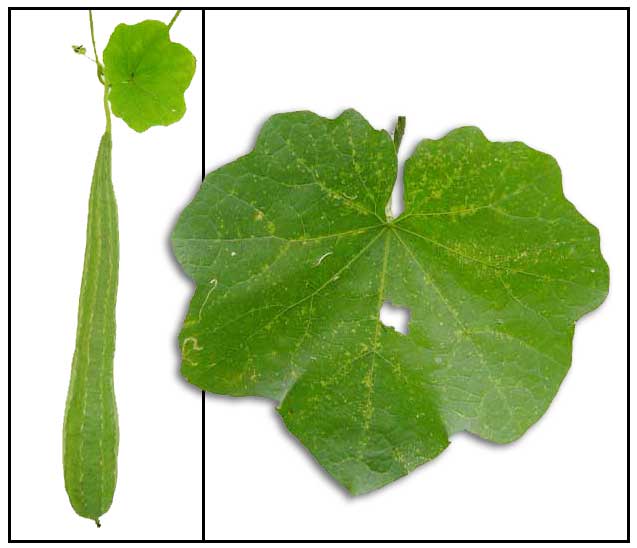
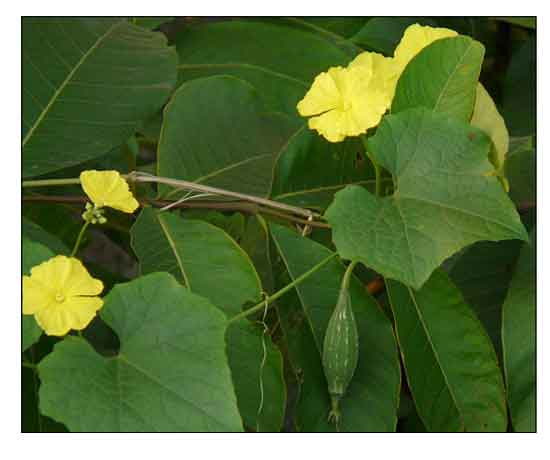
• Patola, a vegetable, is a coarse, annual, herbaceous vine. Leaves are subrounded-ovate,
10 to 20 centimeters long, shallowly five-lobed, and heart-shaped at the base. Female
flowers are pedicelled, occurring singly in the axils of the leaves. Male flowers
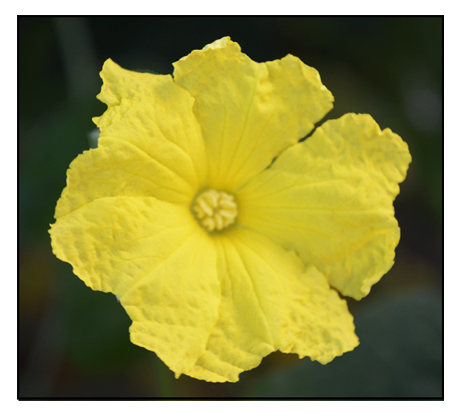
are yellow, 2 centimeters long, borne in axillary 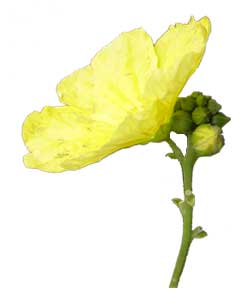 racemes. Calyx lobes are lanceolate
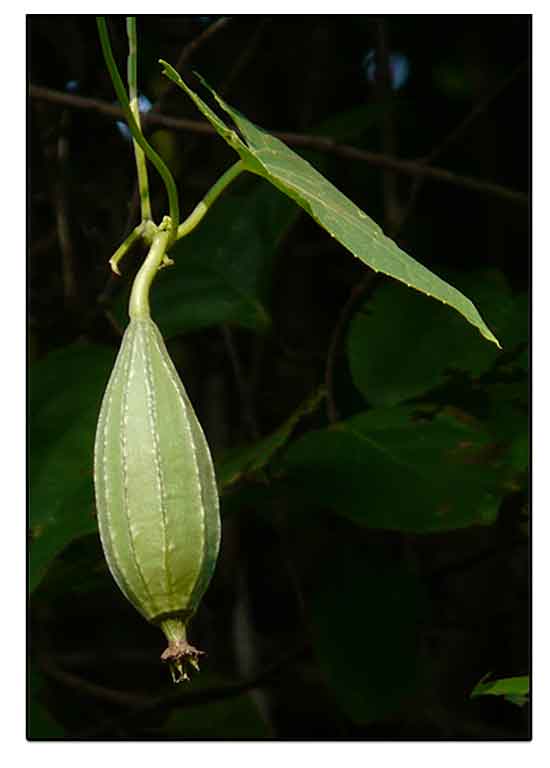
and pointed. Fruit is oblong-oblanceolate, 20 to 25 centimeters long, about 5 centimeters
in diameter, green, and characterized by 10 prominent, longitudinal sharp angles. Seeds are
numerous and close-packed. racemes. Calyx lobes are lanceolate
and pointed. Fruit is oblong-oblanceolate, 20 to 25 centimeters long, about 5 centimeters
in diameter, green, and characterized by 10 prominent, longitudinal sharp angles. Seeds are
numerous and close-packed.
•
It is an annual herbaceous climber. Foliage: Leaves pale green, simple, 5-7-angled or shallowly lobed with rough surfaces. Stems: Stem acutely five-angled with three or more hairy tendrils at each point where tendrils extend. Flowers: Flowers are pale yellow, 4-5 cm in diameter and unisexual. Male flowers are borne on stalks on unbranched elongated inflorescences, known as racemes, while female flowers are solitary and borne in the same leaf-axils as the male flowers. Flowers are fragrant, opening in the evening. Fruit: Matured fruit is dry and fibrous, splitting from a lid-like structure, known as an operculum, located at the apex of the fruit. Club-shaped and with ten prominent ribs running along its length, the fruit has a fibrous spongy skeleton network inside, containing numerous flattened seeds that are pitted and black without a narrow wing-like margin. Green in color when young, the fruit turns dry and brown when mature, together with the disappearance of its soft internal tissue. (51)
Distribution
- Introduced; naturalized.
-
Cultivated for its edible
fruit.
- In cultivation in the Old World Tropics.
- Native to Assam, Bangladesh, East Himalaya, India, Pakistan, Sri Lanka, West Himalaya. (21)
Cultivation & Yield
- Commercial cultivation required good care. NPK fertilizer is used to enhance growth. Pruning of lateral stems and leaves done for growth control or promotion of fruit or flower development.
- Landraces produced 10-15 t/ha. Good management have reported an average yield of 27 t/ha of young fruits for hybrid cultivars in the Philippines.
(36)
 Constituents Constituents
- Fruit contains a bitter
principle, luffeine.
- Seed contains a fixed oil of glycerides of palmitic, stearic, and myristic
acids.
- Study
isolated seven oleanane-type triterpene saponins, acutosides A-G. Acutoside A was identified as oleanolic acid 3-O-β-D-glucopyranosyl-(1→2)-β-D-glucopyranoside. Acutosides B, D, E, F and G have a common prosapogenin structure, acutoside A, and only differ in the structures of the ester-linked sugar moieties. (5)
- Nutrition assessment of fruits of L. acutangula var. amara (gm/100 g fruit powder) yielded high moisture 94.6%, crude fiber 42.94%, carbohydrates 3.86, fat content 0.1, and energy 18.18 Kcal/100g. Vitamin constituents per 100 gm were: vitamin A 0.0001 µg, thiamine (B1) 0.7692 mg, riboflavin (B2) 0.2061mg, niacin (B3) 3.1282 mg, and vitamin C 0.083mg. Mineral constituents (mg/100gm) yielded Cu 0.9, Fe 34.1, Mg 27.38, Mn 2.34, Ca 99.78, and Zn 9.52. (27)
- Phytochemical screening of ethanol extract of fruit yielded alkaloids, saponins, carotenoids, and terpenoids with the absence of flavonoids, tannins, and anthraquinones. GC-MS analysis yielded six compounds: 2,3-dihydro,3,5-dihydroxy-6-methyl-(4H)-pyran-4-one; 3,7,11,15-tetramethyl-2-hexadecen-1-ol; (3β, 20R)-cholest-5-en-3-ol; n-hexadecanoic acid; 9, 12, 15-octadecatrienoic acid methyl ester and citronellyl
tiglate. (33)
 - Phytochemical screening have isolated and identified about 50 compounds, such as flavonoids, anthraquinones, proteins, fatty acids, saponin triterpene, volatile compounds, among others. Nutritional evaluated of seed showed the presence of fats, proteins, and minerals. Protein and fat from the kernel were 39% and 44% of total weight, respectively. (34) - Phytochemical screening have isolated and identified about 50 compounds, such as flavonoids, anthraquinones, proteins, fatty acids, saponin triterpene, volatile compounds, among others. Nutritional evaluated of seed showed the presence of fats, proteins, and minerals. Protein and fat from the kernel were 39% and 44% of total weight, respectively. (34)
• Seed oil yielded total saturated (32.1%) and unsaturated (67.9%) fatty acids, identified as myristic (0.45%), palmitic (20.9%), stearic (10.8%), oleic (24.1%), and linoleic (43.7%) acid. (34)
- Proximate analysis of leaf extract yielded moisture content of 10.6%. crude protein 2.6%, crude fiber 4.0%, fat5.1%, and carbohydrate of 71.4%.
Phytochemical screening yielded alkaloids, phenols, saponins, tannins, terpenoids, and triterpenoids. Elemental analysis of dried leaf revealed 58.6 mg/g calcium, 0.6 mg/g copper, 12.4 mg/g magnesium, 0.9 mg/g manganese, 0.6 mg/g zinc, 14.4 mg/g sodium, and 143.6 mg/g potassium. (see study below) (41)
- Preliminary phytochemical screening of aqueous extract of L. acutangula peel showed presence of flavanoids, carbohydrates, amino acids, proteins, phenols, quinones, terpenoids, coumarins, saponins, tannins and leucoanthocyanidines. GC-MS analysis yielded six bioactive compounds. Major compounds included hexadecanoic acid (the predominant compound), pectolinaringenin, benzofuran, 4-methyl-2-4-bis (p-hydroxyphenyl) pent-1-ene, cis-13-cctadecenoic acid and ethanone, 1 (2-hydroxyl-5-methyl phenyl). (48)
- LC-MS analysis of peel extract revealed presence of kaempferol-3-O-rutinoside, kaempferol-O-neohesporoside, quercetin, cinnammic acid ethyl ester, caffeic acid derivatives such as 4-O-caffeyol quinic acid, 3-sinapoylquinic acid and 4,5-dihydroxyprenyl caffeate, orientin, and sinapic acid. (see study below) (50)
Properties
- Fruit is considered demulcent, diuretic, nutritive.
- Seeds considered purgative and emetic.
- Studies suggest antioxidant, antimicrobial, anticancer, anthelmintic, cardioprotective, gastroprotective, antidiabetic, hypolipidemic, hepatoprotective, cytotoxic, apoptosis-inducing, anti-thyroid properties.
Parts
utilized
Leaves, fruit, seed oil.
 Uses Uses
Edibility
· Edible; cooked or fried, used in soups and sauces.
• Occasionally, stem tops with young leaves and flower buds used as leafy vegetable.
• Young fruits of cultivars, eaten raw or pickled.
• Unripe fruit is a good source of calcium, iron and phosphorus.
• Fruit considered a fair source of vitamin B.
Folkloric
• Decoction of leaves for amenorrhea.
• Poultice of leaves for hemorrhoids.
• Juice of fresh leaves for granular conjunctivitis in children. Also used to prevent the lids from adhering at night from excessive meibomian secretion.
• Juice of leaves also used externally for sores and various
animal bites.
• Pulp of fruit used internally, like calocynth, to cause vomiting and purging.
• Powdered dried fruit made into snuff for use by those afflicted with jaundice.
• Seed oil used for dermatitis.
• In Russia, roots is used as a purge.
• In Iran and Iraq infused seeds used as purgative and emetic.
• In India, roots is used for dropsy
and as laxative; leaf and fruit juice used to treat jaundice.
• In Java, leaf decoction used for
uremia and amenorrhea.
• In Bangladesh, pounded leaves used
for hemorrhoids, splenitis, leprosy. Juice of leaves used for conjunctivitis
in children.
• In West Africa, leaf extract of ridged gourd applied to sores caused by guinea worms; leaf sap used as eyewash in conjunctivitis; fruits and seeds used in herbal preparations for treatment of venereal diseases.
In Mauritius, seeds eaten to expel intestinal worms; leaf juice applied to eczema.
• Seed used as insecticidal.
• In India, seed kernel used for dysentery; juice of fruit applied locally to cure a headache. Pulverized leaves locally applied to treat splenitis, hemorrhoids, ringworm infection, and leprosy. Leaf juice instilled on eyes for treatment of granular conjunctivitis in children. Dried fruit powder used to prevent premature graying of the hair. Root of the plant used in dropsy and as laxative. (34)
Others
• Sponge/Brush: Fibrous nature
of the mature fruit, devoid of pulp, dries into a matrix of stiff vascular bundles and used as a bath brush or sponge.
• Pesticide: In China, has been used as a pesticide.
• Weaving: Fibers sometimes used for making hats.
Studies
• Trypsin Inhibitors: Study isolated two trypsin inhibitors, LA-1 and LA-2, both consisting of 28-29 amino acid residues, respectively. Both strongly inhibit trypsin by forming enzyme-inhibitor complexes. (4)
• Constituents: Study isolated seven oleanane-type triterpene saponins, acutosides A-G. ( see constituents above) (5)
• Antioxidants : An antioxidant-guided assay yielded eight compounds. Results showed consumption of sponge gourds can supply some antioxidant constituents to the human body. (6)
• Antimicrobial / Water Disinfectant : Study showed the some antimicrobial potential of seeds and fruits of Lc as a disinfectant of drinking water. However, the disinfection performance was less that would be required to be considered reliable. (7)
• Antimicrobial / Fruit: A fruit extract of Luffa acutangula was found to have more potent antibacterial and antifungal activity than leaf extract. Staph aureus and Pseudomonas aeruginosa species showed higher sensitivity to the leaf and fruit extracts. (10)
• Hepatoprotective / CCl4 and Rifampicin Induced Toxicity : Study evaluated a hydroalcoholic extract for hepatoprotective activity against carbon tetrachloride (CCl4) and rifampicin- induced hepatotoxicity in rats. Results showed significant hepatoprotection. Results suggest the contribution of endogenous antioxidants and inhibition of lipid peroxidation of membrane to its hepatoprotective property. (11)
• Antidiabetic / Antihyperlipidemic: Study evaluating methanolic and aqueous fruit extracts of L. acutangula fruits showed antihyperlipidemic and antidiabetic activity, with the methanol extract superior to the water extract. (12)
• Cardioprotective / Nephroprotective / Doxorubicin Induced Toxicity: Study evaluated the protective effect of a hydroalcoholic extract of L. acutangula o doxorubicin induced cardio- and nephrotoxicity in mice. The protective activity was attributed to its antioxidant property with resulting membrane stabilization. (13)
• Anticancer / Apoptosis / Leaf Extracts: Study evaluated leaf extracts of Luffa acutangula and Lippia nodiflora for in vitro anticancer effect against human lung cancer cell line (NCI-H460). Results showed high antiproliferative activity against the cell line tested. (14)
• Gastroprotective / Anti-Ulcer: Study evaluated various extracts of L. acutangula for gastroprotective effect on type 2 diabetic rats. A methanolic extract produced significantly increase mucosal glycoprotein and antioxidant enzyme levels in gastric mucosa of diabetic rats. The ulcer healing effect was better than glibenclamide and the water extract. (15)
• Attenuation of Oxidative Damage in Human Erythrocyte: Study evaluated the ability of L. acutangula to attenuate t-BPH induced oxidative damage in human erythrocyte. A methanolic extract exhibited higher antioxidant activity compared to other extracts. Results showed the aqueous fraction of fruit possess a beneficial role in mitigating t-BPH induced oxidative stress in erythrocyte. (16)
• Apoptosis Inducing Activity in Leukemia Cells: Study showed partially purified methanolic extract, F-3, dose dependently induced apoptosis in leukemia cell line HL-60, probably mediated by an intrinsic pathway. (17)
• Antioxidant / Anti-Inflammatory / Analgesic / Seed: Study on L. acutangula Roxb. var. amara ethanolic seed extract showed potent antioxidant activity by DPPH assay, significant anti-inflammatory activity (diclofenac as standard) and significant analgesic activity. (18)
• Antiproliferative / Antiangiogenic / Fruit Extracts: Study evaluated L. acutangula fruit for its potential as anti-cancer agent. Results showed significant antiproliferative activity on human lung adenocarcinoma epithelial cell line (A-549). (19)
• Antioxygenic Activity on Peroxidation Models: Ridge gourd pulp and peel powders and various fractions were evaluated for antioxygenic activity. Peel powder and its extracts showed slightly higher antioxygenic activity than gourd pulp powder and its extracts, probably because of higher phenolic and flavonoid contents. (20)
• Anthelmintic: Study showed moderate anthelmintic activity against adult earthworm Pheretima posthuma. Anthelmintic activity increased with concentration. (22)
• In Vitro Cytotoxicity / Human Neuronal Glioblastoma and Human Lung Adenocarcinoma Cell Lines: In vitro studies evaluated the cytotoxic potential of aqueous and ethanolic extracts of L. acutangula against human neuronal glioblastoma cells and human lung cancer cells. Results showed significant concentration dependent decrease of cell viability in both MTT and SRB assay. In brine shrimp lethality bioassay, the aqueous extract showed more potent cytotoxicity than the ethanolic extract. (23)
• Antioxidant: Study evaluated the antioxidant activity of various extracts of Luffa acutangula fruit and its derived fractions. Phytochemical screening yielded phenolic and flavonoid compounds in all fractions except the n-hexane fraction. The highest antioxidant activity was shown by the n-hexane fraction. and the highest total phenolics/flavonoids contents were seen with the ethyl acetate extract. Results suggest the fruit as a potential rich source of natural antioxidant for use in food, cosmetic and pharmaceutical products. (24)
• Silver Nanoparticles / Antimicrobial: Study reports on the green synthesis of silver nanoparticles by aqueous extract of Luffa acutangula. Antimicrobial activities of the AgNPs were investigated against Escherichia coli and Saccharomyces cerevisiae. (25)
• Zinc Nanoparticles: Study reports on the green synthesis of zinc nanoparticles using a leaf extract of Luffa acutangula. (40)
• Manganese Peroxidase / Fruit Juice: Study evaluated the enzymatic properties of the manganese peroxidase present in L. acutangula fruit juice. Results report the second manganese peroxidase reported from a plant source. The enzymatic properties are similar to the manganese peroxidase from Musa paradisiaca stem juice and other fungal manganese peroxidases. (26)
• Immunomodulatory / Free Radical Scavenging / Pericarp: Bioactive ethanolic extracts of pericarp showed potent in vitro antioxidant activity by various assays. Immunomodulatory activity was evidenced by increased phagocytic index (0.028 ± 0.002) and increased % neutrophil adhesion (24.63 ± 0.87%). Isolated phenolic acid constituents i.e., gallic acid and p-hydroxybenzoic acid could be responsible for the potent antioxidant and immunomodulatory activity. (28)
• Abortifacient: Study evaluated the abortifacient effect of L. acutangula in 11 pregnant Wistar rats. Results showed ingestion of L. acutangula during pregnancy may inhibit normal development in exposed rat pups as suggested by reduced fetal weight and occurrence of a single cleft palate. (29)
• Antihyperglycemic / Antinociceptive / Fruits: Study evaluated a methanolic extract of L. acutangula fruits for antihyperglycemic and antinociceptive potentials in Swiss albino mice. Results showed significant and dose-dependent reduction of blood sugar concentrations. In an acetic acid-induced gastric pain model in mice, the extract significant dose-dependent reduction in number of abdominal constrictions. (30)
• CNS Depressant Activity / Fruits: Study of ethanol extracts of L. acutangula var. amara fruits exhibited dose-dependent CNS depressant activity. (31)
• Removal of Acid Yellow / Seed Hull: Study reports on the removal of acid yellow 24 (AY24) dye from aqueous solution using the low cost activated carbon of L. acutangula seed hull. Results showed L. acutangula seed hull is a potential adsorbent for the removal of AY24 through a chemical adsorption process rather than phytosorption. The high adsorption capacity suggests an alternative to commercially activated carbon for the removal of various anionic dyes. (32)
• Antiproliferative / Apoptogenic Compound / Aerial Parts: Study evaluated five major fractions for anti-proliferative activity against non-small cell lung cancer cells (NCI--H460). Fraction L/FII (1,8 dihydroxy-4-methylanthracene 9,10-dione) exhibited apoptogenic activity confirmed by cell shrinkage, membrane blebbing and formation of apoptotic bodies. (35)
• Hepatoprotective / Paracetamol Induced Toxicity / Fruits: Study evaluated an alcoholic extract of fruits and its fractions for hepatoprotective activity against paracetamol induced toxicity in rats. An ethyl acetate fraction at 100 mg/kg showed maximum hepatoprotective activity on basis of enzyme parameters. (38)
• Anti-Inflammatory / Bronchodilator / Antimicrobial / Seeds: Study evaluated the phytochemical constituents of seeds, and their anti-inflammatory, bronchodilator, and antimicrobial activities. Study isolated compounds Cu-1, Cu-2, Cu-3, and Cu-4. Extracts yielded sugar, protein, alkaloids, flavonoids, sterols and glycosides. Cu-1 showed moderate and Cu-3 showed significant anti-inflammatory activity by carrageenan induced paw edema method. Cu-2 and Cu-4 showed significant antibacterial and antifungal activity against S. aureus and C. albicans. Cu-4 showed significant bronchodilator activity. (39)
• Antimicrobial / Leaves: Study evaluated the phytochemical constituents , antimicrobial resistances and mineral contents of leaf extracts. The highest zone of inhibition for the alcoholic extracts of LA leaves was against Streptococcus pyogenes (20.0 ± 0.35 mm), followed by Candida albicans 18.0 ± 0.65 mm. Lowest combined MIC and MBC of 70 and 80 mg/ml was against Streptococcus pneumonia and S. pyogenes. (see constituents above) (41)
• Antitumor against Dalton's Lymphoma Ascites Cells: Study evaluated the antioxidant activity of methanolic and aqueous extracts and anticancer activity of ethanolic and aqueous extracts of Luffa acutangula in Swiss albino mice against Dalton's Lymphoma Ascites cells. Methanol and aqueous extracts exhibited antioxidant activity in in-vitro models. Using doses of 200 and 400 mg/lkbw orally, both ethanol and aqueous extracts showed significant decrease (p<0.0001) in tumor volume and weight. Results showed potent dose dependent anticancer activity comparable to that of cisplatin. The aqueous extract at both doses (200 and 400 mg/kg) and ethanolic extract at 400 mg/kg showed potent anticancer activity. (43)
• Silver Nanoparticles / Antibacterial / Anticancer / Leaves: Study reports on the green biosynthesis of Luffa acutangula silver nanoparticles of flavonoid O-glycosides (FOGs) in the anisotropic form isolated from aqueous leaves extract. FOGs are provent antioxidant, antimicrobial, antiobesity, and medicinal agents. Flavonoids present in the leaves viz., cosmosioside and cynaroside are FOG2 orginated from O-glycosidic linkages. The AgNPs showed significant activities against bacteria and cancer cell lines. Study suggests the AgNPs have potential for treatment of various types of cancers and boosting the immune system functions. (44)
• Antiproliferative Activity of Anthraquinone Derivative / Cytotoxic and Apoptosis Inducing: Study evaluated the in-vitro antiproliferative activity of 1,8-dihydroxy-4-methylanthracene-9,10-dione (DHMA) isolated from Luffa acutangula against human non-small cell lung cancer cell line (NCI-H460). The DHMA inhibited the cell viability of NCI-H460 cells in a dose-dependent manner with IC50 about 50 µg/ml. It significantly reduced cell viability correlated with induction of apoptosis, which was associated with ROS generation. DHMA significant increased the expression of anti-apoptotic protein such as p53, p21, Bax, and caspase-3, and down-regulated the expression of NF-kB in MCI-H460 cell line. Results suggest DHMA induces apoptosis in NCI-H460 via a p53-dependent pathway. Study suggests DHMA has therapeutic potential for cancer treatment. (45)
• Carbonic Anhydrase Inhibitory: Study analyzed the phenolics content of the most potent carbonic anhydrase-inhibiting fraction from an extract of L. acutangula using UPLC-QTOF-MS analysis. The ethyl acetate fraction of the aqueous ethanol extract showed highest carbonic anhydrase inhibition activity. Enzyme kinetics showed a mixed mode of inhibition. UPLC-QTOF-MS analysis of the EA fraction revealed a number of phenolic acids, hydroxycoumarins, flavones, flavanones, and flavonoids. The correlation of total phenolic content with carbonic anhydrase inhibition suggested potential therapeutic benefits against carbonic anhydrase-related disorders. (46)
• Antioxidant / Antibacterial / Antifungal / Pericarp: Study evaluated the biological activities of pericarp of L. acutangula using petroleum ether, chloroform, and methanolic extracts for comparative study. Methanolic extract showed highest phenolic (45.0 mg GAE/g extract) and flavonoid content (4.5 mg rutin/g extract). Methanol extract also showed most potent antioxidant activity using DPPH, NO, and H2O2 scavenging assays compared to other extracts and solvents. Antimicrobial activity was studied against strains of E. coli, P. aeruginosa, S. aureus and culture of Candida albicans. All three pericarp extracts showed significant antimicrobial activity. (47)
• Titanium Nanoparticles / Antimicrobial / Leaves: Study reported on the synthesis of titanium dioxide (TiO2) nanoparticles using L. acutangula leaf extract. The TiO2NPs were highly toxic against bacterial strains of B. subtilis, E. coli, E. faecalis, K. pneumonia, S. aureus, P. aeruginosa and fungal strains of A. flavus, A. niger, R. oryzae, and Sclerotium rolfsii. Results suggest potential for the TiO2NPs as a novel type of antimicrobial material for treatment of microbial infections. (49)
• Antithyroid Potential / Peel: Study evaluated the potential activity of Luffa acutangula peel extract in T4-induced hyperthyroid female mice with pre-standardized dose of L-thyroxin (L-T4 at 0.5 mg/k/day) for 12 days. Administration of test peel extract at 25 and 50 mg/kg for 15 days decreased the levels of serum thyroid hormones, glucose, and tissue LPO (lipid peroxidation) suggesting antithyroid, antihyperglycemic, and antiperoxidative potential. The antithyroid and anti-hyperglycemic actions of the test plant extract could be due to antioxidative properties of the extract phytochemicals. (see constituents above)
(50)
Availability
- Cultivated.
- Common market vegetable.
- Seeds and sponges in the cybermarket.
|




.jpg)
_(2810805876).jpg)
