|  Gen info Gen info
- Passiflora, known as passion flowers or passion vines, is a genus of about 550 species of flowering plants in the family Passifloraceae. Most are tendril-bearing vines' some shrubs or trees. They can be woody or herbaceous. Flowers are usually showy with a distinctive corona, and are pentamerous, ripening into an indehiscent fruit with numerous seeds. (41)
- Scientific and common names are rife in reference to Christian theology. The 'passion' in passion comes from Latin 'passio', meaning 'suffering', referring to the passion of Jesus Christ in Christian theology. Various flower parts are symbolic elements of Jesus' last days and crucifixion.
- Etymology:
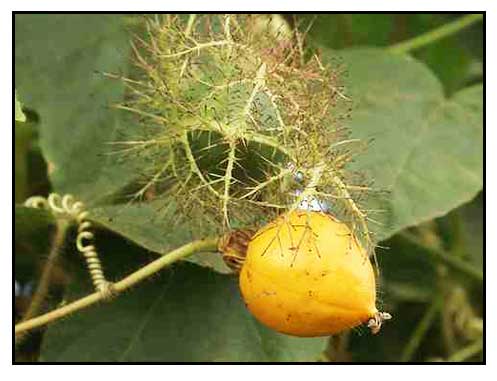
The genus name Passiflora derives from Latin passio (suffering) and flos (flower), referring to the "passion of Jesus Christ," as early missionaries believed parts of the flower symbolized the elements of his crucifixion. (•) Species epithet foetida derives from Latin, meaning "stinking", referring to the strong aroma emitted by damaged foliage. (48) In the Philippines, the fruit of Passiflora foetida is called marya-marya (Little Mary), balabalecua (kapangpangan), kurombot, utot-utot (literally, fart-fart), and Santo Papa due to its resemblance to the Pope's mitre. (44)
 Botany Botany
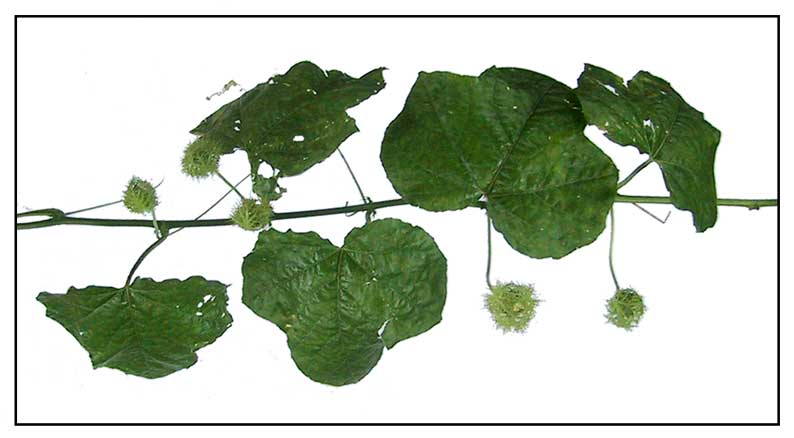
• Pasionaryang-mabaho is a herbaceous vine with slender and rounded
stems, covered with prominent villous hairs. Leaves are ovate to oblong-ovate,
6 to 9 centimeters long, shallowly 3-lobed, often sinuate and ciliate, with pointed
tip and heart-shaped base. Flower is solitary, white or pinkish, 3 centimeters
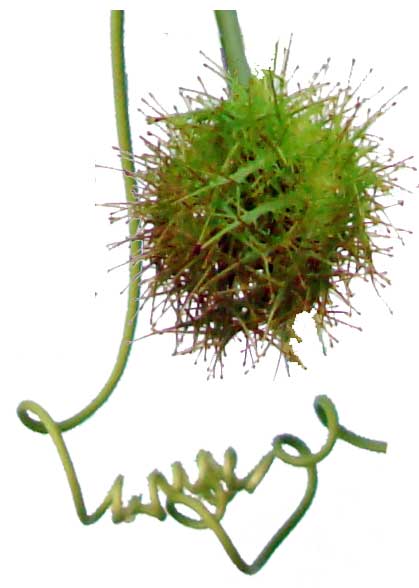
in diameter, subtended by a prominent involucre of 3 bracts. Fruit is
dry, inflated, ovoid, orange, 3 to 5 centimeters long. All parts of the plant have a
disagreeable odor.
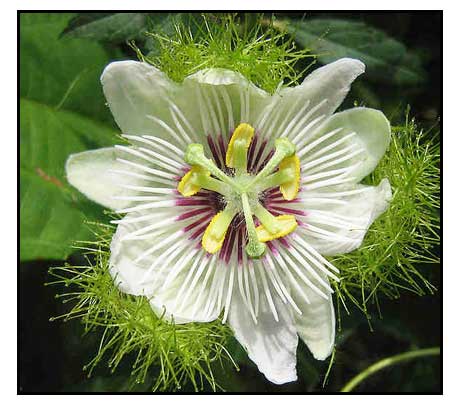
• Growth form: Herbaceous climber grows up to 1.5-6 m tall. Foliage: Large, hairy leaves are usually tri-lobed with ovate to angular lobes. They are spirally arranged with one leaf per node. Crushed leaves produce an unpleasant odor. Leaves are cyanogenic (produces cyanide) and toxic. Stems: Stems are round and hairy. Flowers: White flowers are marked with a ring of radially oriented purple streaks. Blossoms open in the morning, but close by about noon. This species is free-flowering. They have a minty fragrance. Fruit: Red or orange, ellipsoid fruits have fleshy pulp and small, black seeds. Fruits are surrounded by finely dissected, needle-like bracts. Although young fruits are toxic and cyanogenic, ripe fruits are edible and taste like Passiflora edulis fruits. (Flora & Fauna Web)
 Distribution Distribution
- Introduced to the Philippines. (18)
- Naturalized along roads and trails through forest. (5) In waste places at low altitudes, esp.
in the Laguna, Rizal and Quezon provinces.
- In Luzon: Isabela, Rizal, Zambales; Mindanao, Mindoro, Palawan, Panay, Samar, Siargao. (17)
- Native Argentina Northeast, Argentina Northwest, Aruba, Bahamas, Belize, Bolivia, Brazil North, Brazil Northeast, Brazil South, Brazil Southeast, Brazil West-Central, Chile North, Colombia, Costa Rica, Cuba, Dominican Republic, Ecuador, El Salvador, French Guiana, Guatemala, Guyana, Haiti, Honduras, Jamaica, Leeward Is., Mexico Central, Mexico Gulf, Mexico Northeast, Mexico Southeast, Mexico Southwest, Netherlands Antilles, Nicaragua, Panamá, Paraguay, Peru, Puerto Rico, Suriname, Texas, Trinidad-Tobago, Uruguay, Venezuela, Venezuelan Antilles, Windward Is. (18)
- Widely introduced to tropical regions around the world.
- Ornamental cultivation.
- In some areas, considered an invasive species.
- Plant has a large production of seeds, consumed and transported over long distances by birds. There are nearly 500,000 seeds per heactare in the soil of dry forest (New Caledonia).
(62)
 Constituents Constituents
- Before maturity, the leaves and green fruit contain a cyanogenetic glucoside, and in excess can be dangerous
to stock.
- Study yields maltol, phytosterols, cyanogenic glycoside, flavonoids and their glycosides.
- Phytochemical screening of leaves yielded sterols, polyterpenes, flavonoids, alkaloids, and saponosides. (7)
- Screening for nutritive value yielded crude protein (25.83 to 26.05%), crude fiber (9.55 to 9.61%), crude fat (2.87 to 2.98%), ash (28.55 to 28.84%), carbohydrate (40.46 to 40.69%), and moisture (1.79 to 1.96%).
(20)
- Phytochemical screening of ethanol extract of leaves yielded saponins, tannins, cardiac glycosides, alkaloid, anthraquinones, steroid, and flavonoid.
(20)
- P. foetida has yielded several active constituents like hydrocyanic acid, groups of flavonoids, harman alkaloids, passifloricins, α-pyrones, and vitexin.
- Phytochemical screening yielded the presence of alkaloids, flavanoids, tannins, phenols, steroids, cardioglycosides, saponins and terpenoids. GC-MS analysis yielded 27 bioactive compounds in seed ethanolic extract
of Passiflora foetida. (see study below) (30)
 - Phytochemical screening of ethanol extract
yielded saponins, tannins, cardiac glycosides, alkaloids, anthraquinones steroids, and flavonoid. (32) - Phytochemical screening of ethanol extract
yielded saponins, tannins, cardiac glycosides, alkaloids, anthraquinones steroids, and flavonoid. (32)
- Study for essential oil yielded 76 constituents with hexahydrofarnesyl acetone (14.2%) as dominant compound. Other constituents in sizable amounts are ß-eudesmol (6.5%), germacrene D, caryophyllene oxide, and ß-cedrene. (36)
- Analysis of fruit pulp yielded: total carbohydrates 1.6 mg/g,
fat 8.3 mg/g, soluble protein 60 mg/g, reducing sugar 0.041 mg/g, ascorbic acid 5.77 mg/g, flavonoid 9.066 mg/g, phenolic compound 24.1mg/g, cholesterol 1.4 mg/g, alkaloid 32.96 mg/g, amino acid 36 mg/g, calorific value 0.360 calorie/g, calcium 1923 mg/kg, magnesium 1749 mg/kg, phosphorus 0.35 mg/g. (40)
- The methanolic extract of leaves revealed presence of alkaloids, coumarins, flavonoids, glycosides, oils and fats, phenols, resin, sterols, steroids and saponins, tannins and quinones. (see study below) (51)
- Study of aerial parts of P. foetida isolated 7 phenolic compounds, including a new phenylethanoid, named passifoside (1), and 6 previously described compounds, syringaresinol (2), berchemol (3), threo-guiacylglycerol (4), p-hydroxybenzaldehyde (5) 3,4,5-trimethoxy-phenyl-O-ß-D-glucopyranoside (6), and trans-p-coumaric acid. (see study below) (52)
- Study of fruit and flowers isolated 14 compounds: four 2-pyrones, passifetilactones A-D (1-4), one furanone, passifetilactone E (5), and five previously undescribed fatty acid lactones. (see study below) (56)
Properties
- Leaves and roots are emmenagogue.
- Flowers are pectoral.
- Studies have shown antibacterial, hepatoprotective, estrogenic, antioxidant, anti-osteoporotic, antidiabetic, antiproliferative, analgesic, cytotoxicity, anti-inflammatory, neuroprotective, antiepileptic, antiulcer, nootropic, antihypertensive, anthelmintic, antidermatophytic, anxiolytic, nitric oxide inhibitory, wound healing, hemolytic, anticancer properties.
Parts used
Leaves, fruits, roots, and flowers.
 Uses Uses
Edibility
- The sweetish pulp is edible
when ripe.
- Young leaves and plant tips are also edible.
Folkloric
- Infusion of leaves and roots used for hysteria.
- Plant used for itchy conditions.
- Decoction of fruit used for asthma and biliousness.
- Decoction of leaves and roots used as emmenagogue.
- Fruit used as emetic.
- Leaves applied to the head for headaches and giddiness.
- In India, traditionally used for diarrhea,
throat and ear infections, liver disorders, tumors, itches, fever and skin diseases and for wound dressing.
- In Malaysia, used for treatment of asthma.
- In Argentina, used to treat epilepsy.
- In Africa, used gas, colds, and pregnancy
to keep the baby active.
- In French Guiana, decoction of leaf and
bark mixed with the same of Annona glabra as anthelmintic for flatworms
and nematodes. Decoction of fresh whole plant drunk as children's anthelmintic, for intestinal nematodes and flatworms. Decoction of dried plant used for colds and chest colds. In NW guyana, used for treatment of tuberculosis, worms, coughs and colds. (6)
- In Brazil, used as lotion or poultice for erysipelas and skin diseases with inflammation. (7)
- In Vietnam, dry leaves used in making tea to help induce sleep. (44)
- Used in Sri Lankan traditional medicine for treatment of diabetes.
- In Indonesia, roots, flowers, stems, fruit and leaves used by the Dayak people of Central Kalimantan for various diseases, ranging from asthma, infections, hypertension, and diabetes.
(61)
Others
- Soap: Because of high saponin content, used as substitute for soap in the manufacture of soap-free detergents.
(44)
- Agroforestry: In the Philippines and Papua New Guinea, plants as a soil cover in crop fields to reduce erosion and prevent spread of weedy grasses, such as Imperata cylindrica. (48)
- Veterinary toxicity concern: In northeastern Brazil, mentioned by farmers as a toxic plant. An experiment done with goats led to discovery of high levels of cyanide in P. foetida, which caused poisoning after ingestion of fresh leaves, mostly during the dry season.
(48)
- Animal interactions: The plant is a larval host and nectar source for Gulf fritillary (Agraulis vanillae).
(48)
- Fodder toxicity concerns: The plant could be toxic to cattle due to presence of cyanidic acid in young leaves and immature fruits, usually with high consumption. (62)
Studies
• Antibacterial / Leaves:
Study of PF showed the
leaf extracts to have remarkable activity against all four tested bacterial pathogens
(Pseudomonas putida, Vibrio cholerae, Shigella flexneri, and Streptococcus pyogenes) compared to the fruit extracts. Study supports the traditional use of
the herbal extracts against a variety of diseases – diarrhea, fever, skin diseases, ear and throat infections. (1)
• Antibacterial / Roots: Study for in vitro antibacterial activity of roots of P foetida showed the methanol extract to have significant activity against K pneumonia, P aeruginosa and E coli with levofloxacin, amikacin and sparfloxacin as standard antibiotics. (4)
• Antiproliferative: One of nine
selected Thai medicinal plants tested, the aerial parts of Passiflora
foetida showed antiproliferative activity against SLBR3 human breast
adenocarcinoma cell line. (2)
• Hepatoprotective: The ethanolic extract of fruits of Passiflora foetida significantly reduced the biomarkers of hepatic injury (SGOT, SGPT, alkaline phosphatase, GGTP). Results indicate the fruits of Pf possess hepatoprotective activity, a property that may be attributed to the presence of flavonoids. (3)
• Estrogenic Effects / Toxicity Study: Study evaluated oral acute toxicity and potential estrogenic activity of various extracts of Passiflora foetida leaves in female Wistar rats. Oral LD50 of three extracts were greater than 5000 mg/kg with no observed behavioral abnormality. Results showed an estrogenic effect with disruption followed by blockage of estrous cycle at the estrous phase, with uterotrophic activity and increase of 17ß estradiol-induced uterotrophic effect. (7)
• Analgesic / Anti-Inflammatory / Leaves: An ethanolic extract of leaves showed highly significant analgesic activity and highly significant anti-inflammatory effect. (8)
• Neuroprotective Against Cerebral Ischemia: Study evaluated an alcoholic extract for neuroprotective effect against brain damage and impairment in cerebral ischemia induced by MCA occlusion in male Wistar rats. Results showed decreased brain infarct volume in both cortical and subcortical structures, together with enhancement of neurological score and improved sensory response to both mechanical and temperature stimuli. (9)
• Harmaline / Monoamine Oxidase Inhibitory Effect: Harmaline, a beta carboline alkaloid was extracted from Passiflora leaf material. Harmaline was found to have monoamine oxidase inhibitory effect, useful for antidepressant activity. Study presents an economic, rapid, and effective separation method of harmaline from Passiflora. (10)
• Antiepileptic / Analgesic / Leaves: Study evaluated a leaf extract for antiepileptic and analgesic activity. A methanol extract of leaves showed dose-dependent anti-epileptic activity in Maximum electricshock induced and pentylenetetrazole-induced convulsions. Extract showed good analgesic activity with peripheral and central nervous system mechanisms. (11)
• Antidepressant / Leaves: Study evaluated methanolic extract of leaves of P. foetida for possible CNS effect in mice using behavioral tests. The extract at doses of 100, 200, and 300 mg/kg administered intraperitoneally was able to decrease immobility time in a dose dependent manner in both tail suspension and forced swim tests with effects comparable to standard drugs fluoxetine (20 mg/kg) and imipramine (15 mg/kg). In vivo results suggest antidepressant effects with potential for use in treatment of depressive disorders. (12)
• Antimicrobial: Study evaluated the antimicrobial activity of ethanol and ethyl acetate extracts of leaf, root, and fruits of P. foetida against various pathogenic microorganisms. Results showed both extracts to have broad spectrum activity and very effective activity against both gram positive and gram negative organisms. (13) Disc diffusion study yielded secondary metabolites that showed potent inhibitory activity against multidrug resistant pathogenic microorganisms like S. aureus. (see constituents above) (32)
• Antihypertensive: Study evaluated various extracts of P. foetida for antihypertensive activity. An ethyl acetate extract showed significant anti-hypertensive activity, which may be due to activation of NO-dependent vasodilation and also due to the presence of flavonoids in the EA extract. (14)
• Memory Enhancement: Study evaluated the effect of P. foetida on spatial memory both in normal and cognitive deficit conditions. Results showed the Passiflora foetida extract is a potential cognitive enhancer in both normal and cognitive deficit conditions. However, the underlying mechanism and active ingredients have yet to be determined. (15)
• Antiulcer / Antioxidant / Whole Plant: Study evaluated the effects of ethanolic extract of P. foetida whole plant on gastric ulcer on ethanol- and aspirin-induced gastric ulcer models in rats using measures of antioxidant parameters and histological changes in gastric tissue of ulcer rats. P. foetida treatment significantly (p<0.001) increased gastric pH of both ethanol and aspirin-induced ulcer rats, with significant (p<0.001) reduction in lipid peroxidation and increase in reduced glutathione levels. Results confirmed antiulcer and antioxidant activities. (16)
• Vitexin / Leaves: Vitexin has been reported to have antioxidant, anti-inflammatory, anti-thyroid, anti-arteriosclerotic, antihypertensive, and antihepatotoxic properties. Study reports on a a simple, rapid, precise accurate high performance thin layer chromatography method for determination of vitexin from the extract of P. foetida leaves. The contents of vitexin in P. foetida leaf extracts were within the range of 0.03%-0.310%. (21)
• Chronic Toxicity Study: Study evaluated the safety of an ethanolic extract of Passiflora foetida containing 0.84% vitexin in Wistar rats given doses of 16, 160, 800, and 1600 mg/kg/day for six months. Results showed the ethanolic extract in the given doses did not induce any harmful effects in the rats. Although fatty infiltration in the adrenal cortex was noted, it is possibly physiological rather than pathological change. (22)
• Anti-Dyslipidemia / Leaves: Study evaluated ethanol extracts of P. foetida leaves for anti-dyslipidemia effect in dextrose-induced diabetic Wistar rats. A 500 mg/kb body weight of ethanol extract showed significant effect with lowering of the total cholesterol, triglycerides, LDL, and VLDL together with an HDL boosting effect. The effect may be attributed to glucose utilization and depressed mobilization of fat. (23)
• Anthelmintic / Leaves: Study evaluated the in-vitro anthelmintic activity of ethanolic extract of leaves against Indian earthworm Pheretima posthuma. Results showed significant anthelmintic activity compared to standard albendazole at 10 mg/ml concentration. Phytochemical screening yielded alkaloids, cyanogenetic glycosides, tannins, phenolic compounds, flavonoids, among others. (24)
• Harmaline / Leaves: Study of a hydroalcoholic extract of Passiflora foetida leaves identified harmaline, a betacarboline alkaloid. Harmaline is found to have monoamine oxidase inhibitory effect and useful for antidepressant activity. Study reports on a simple, rapid, economic, and effective method for the separation of harmaline from Passiflora. (25)
• Antibacterial / Passiflora foetida Activated Carbon: Study evaluated activated carbon prepared from Passiflora foetida for bacterial efficacy against 12 different microorganisms. Results showed effective antibacterial activity with effective and high zones of inhibition against almost all the microorganisms tested. Activity was considerably more against Shigella flexneri (MTCC 1457) and Klebsiella pneumoniae (MTCC 10309). (26)
• Antidermatophytic / Leaves: Study evaluated the in-vitro antifungal activity of leaf and fruit extracts of P. foetida against three fungi viz., Trichophyton rubrum, T. mentagrophytes, and yeast fungus Candida albicans. An ethanolic leaf extract showed better antifungal activity against T. rubrum, followed by T. mentagrophytes and C. albicans. (27)
• Silver Nanoparticles / Antidiabetic: Study evaluated an ethanolic extract of P. foetida aerial parts and silver nanoparticles on carbohydrate metabolic enzymes of dextrose induced diabetic rats. Results suggest that P. foetida extracts and silver nanoparticles maintained glucose homeostasis and has potential in the management of diabetes mellitus. (28)
• Protective to Thyroid Function in Met-Amphetamine Receiving Rats: Study evaluate the effects of passiflora extract on serum T3 and T4 levels in Shisheh receiving male Wistar rats. Serum T3 and T4 significantly increased in rats receiving amphetamine. Passiflora extract showed protective effects on thyroid function in met-amphetamine receiving animals. (29)
• α-Glucosidase and α-Amylase Inhibitory Activity / Roots and Seeds: Study evaluated Passiflora foetida for potential bioactive compounds and α-amylase and α-glucosidase inhibitory activity. Maximum α-amylase inhibitory activity was seen with 100 µg/ml of aqueous and ethanolic extract of root with inhibition of 80.3% and 83.3% respectively. In α-glucosidase inhibitory activity, the aqueous extract of seed showed maximum inhibition of 72.3% followed by ethanolic root extract with 65.7%. Results suggest α-amylase and α-glucosidase inhibitory activity and supports its use in the management of diabetes. (see constituents above) (30)
• Analgesic / Antidiarrheal / Cytotoxic: Study evaluated the ethanol extract of P. foetida by three experimental models: analgesic by acetic acid-induced writhing inhibition in mice; diarrheal by castor oil-induced diarrhea in mice, and cytotoxic activity by brine shrimp lethality bioassay. Results showed 68.75% and 30% inhibition of writhe at doses of 500 and 250 mg/kbw, respectively. There was increased mean latent period to diarrheal onset and decreased mean number of stools. There was cytotoxic activity in BSL assay and median lethal concentration of 80 µg/mL. (31)
• Cytotoxic / Apoptotic / HeLa Cancer Cell Line: Study evaluated the cytotoxic and apoptotic effect of methanol extract of P. foetida on HeLa cell line cultured. Results showed apoptosis and dose-dependent cytotoxic activity with inhibitory concentration of 21.55 µg/ml . Phytoanalysis confirmed the presence of alkaloids, flavonoids, saponins, steroids, terpenoids, phenols, and cardiac glycosides. (33)
•
Hypoglycemic Potential: Study evaluated the hypoglycemic potential of methanolic extract of P. foetida in alloxan-induced diabetic albino mice. Results showed significant reduction of blood glucose levels (p<0.001) along with significant lowering of kinetic parameters. (34)
• Antiproliferative / Human Cervical Cancer Cell Line / Antioxidative / Leaves: Study evaluated the antiproliferative and antioxidant activities of P. foetida leaves methanollic extract against MCF-7, MDA-MD-231, HeLa, and HepG2 cancer cell lines. The ME showed high antiproliferative activity against HeLa, high antiradical properties (EC50 1.37 ± 1.17 µg/ml) and moderate antioxidant reducing power (0.42 ±0.03 mM Fe), with 82.09 mg GAE/g of TPC and 205.59 mg QE/g of TFC values. Results showed antiproliferative effect on human cervical cancer cells and moderate amount of antioxidant activity. (35)
• Nutritional Composition / Antioxidant / Fruit: Study evaluat3d the main nutrients and antioxidant properties of P. foetida fruit. Fruits were found rich in amino acids (1097 mg/100 g), minerals (595.75 mg/100g), and unsaturated fatty acids (74.18 g/100 g total fat). Study for phenolic content yielded 65 compounds including 39 free phenolics, 14 insoluble-glycoside-phenolics, and 22 insoluble-ester-phenolics. The non-extractable phenolics exhibited significant antioxidant activities by DPPH and ABTS radical scavenging assays. (37)
• Antidiabetic / Leaves: Study evaluated the antidiabetic activity of leaf extract of P. foetida in a model of dextrose-induced experimental diabetes in rats. Results showed significant antidiabetic activity as evidenced by alterations in the measured biochemical parameters i.e., plasma insulin, creatinine, glycosylated hemoglobin, serum protein, and enzymes. (38)
• Anti-Osteoporotic Effect: Study evaluated the skeletal effects of butanolic fraction from P. foetida in an estrogen deficient ovariectomiy-induced bone loss mice model. Results showed an anti-osteoporotic effect likely through simulation of osteoblast function and inhibition of osteoclast function. (39)
• Anti-Inflammatory: Study evaluated the anti-inflammatory effect of methanolic extracts of P. foetida and involvement of nuclear factor-kkB (NF-kB) signaling in the regulation of inflammation. The ME prevented production of prostaglandin E2 (PGE2) and expression of inducible cycloxygenase-2 (COX-2) in LPS-induced macrophage cells, and suppressed the phosphorylation of MAPKKs in LPS-induced RAW264.7 cells. The ME also reduced the release of pro-inflammatory cytokines and inhibited NF-kB activation induced by LPS. Results showed the ME inhibited LPS-induced inflammatory and oxidative responses and may be a therapeutic option for treating inflammatory diseases. (42)
• Anti-Inflammatory / Flavonoids / Stem Bark: Study
of soluble ethyl acetate fraction and chemical components of stem bark of P. foetida isolated ten flavonoids (1-10) by various chromatographic methods.
Luteolin (2) and chrysoeriol (3) showed most potent inhibition of nitric oxide (NO) production in macrophage cell line, RAW264.7, with half maximal inhibitory concentration (IC50) of 1.2 and 3.1 µM, respectively. The compounds suppressed LPS-induced NO synthase (iNOS) expression at the transcription level. The inflammatory benefits were attributed to the flavonoids. (43)
• Analgesic / Acute Toxicity Study / Stems: Study evaluated the invivo analgesic activity of ethanol extract of stems of P. foetida. Phytochemical screening yielded carbohydrates, glycosides, flavonoids, and steroids. Acute toxicity study showed safety up to 2000 mg/kbw. Results showed statistically significant dose dependent analgesic activity by tail flick method in rats and acetic acid induced writhing in mice. (45)
• Free Radical Scavenging Activity / Leaves: Study evaluated the total phenol content, in vitro lipid peroxidation and radical scavenging activities of various extracts of P. foetida. The flavonoid and phenol content was high in the aqueous and ethanol extract of leaves. A 500 µg/ml concentration showed strong reducing power. Highest free radical scavenging activity was seen in the ethanolic extract of leaf. Activity was attributed to phenol and flavonoids. (46)
• Antimicrobial / Leaves: Study evaluated the antimicrobial activity of aqueous leaf extract of P. foetida against Escherichia coli, Staphylococcus aureus, Bacillus spp., and Pseudomonas aeruginosa, which are known to be resistant to various antibiotics. By measuring the diameter of inhibition zones, results showed P. foetida leaves possess antimicrobial activity. (47)
• Antimicrobial / Leaves: Study evaluated the potential antimicrobial efficacy of Passiflora foetida leaf extract against both MDR bacterial and American Type Culture Collection (ATCC) strains. The MIC value of the leaf extract varied between 5-10 mg/ml in different ATCC and MDR bacteria. The well known plant in traditional medicine with safety and efficacy can be used as antimicrobial in infectious disease of human beings. (50)
• Anxiolytic / Leaves: Study screened a methanolic extract of P. foetida leaves for secondary metabolites and evaluated for anti-anxiety activity using Elevated Plus Maze (EPM) animal model. For anxiolytic activity, doses of 200 and 400 were used orally in mice. Diazepam was used as standard. Results showed increased number of entries as well as time spent in open arm in a statistically significant and dose dependent manner. (see constituents above) (51)
• Nitric Oxide Inhibitory / Anti-Inflammatory / Syringaresinol / Aerial Parts: Study of aerial parts of P. foetida isolated 7 phenolic compounds , including a new phenylethanoid, named passifoside (1), and 6 previously described compounds, syringaresinol (2), berchemol (3), threo-guiacylglycerol (4), p-hydroxybenzaldehyde (5) 3,4,5-trimethoxy-phenyl-O-ß-D-glucopyranoside (6), and trans-p-coumaric acid. Compound 2 (syringaresinol) inhibited nitric oxide production in lipopolysaccharide-activated RAW264.7 cells, with IC50 of 9.45 µM. (52)
• Antihypertensive / Leaf Decoction: Study evaluated the effects of P. foetida leaves decoction on blood pressure and its correlation with demographics of hypertensive patients. Decoction was prepared by boiling 10 fresh cut leaves (6-7 g) in 400 mL of water, and reducing the water to half volume. Treatment dose of 100 cc was administered twice daily (9 AM and 5 PM) for 7 days. Results showed the leaf decoction significantly reduced blood pressure in hypertensive patients (p<0.01). The decoction improved blood pressure profile of hypertensive patients, reducing number of patients with second-degree hypertension from 57.69% to 7.69% and 30.77% to 7.60% for systolic and diastolic blood pressure respectively. The decoction eliminated the correlation between age, occupation, body weight, and blood pressure. Results suggest P. foetida leaves decoction has potential as herbal tea to maintain blood pressure among hypertensive patients. (53)
• Effect on Wound Healing / Antidiabetic / Fruit: Study evaluated the antidiabetic and wound healing potential of P. foetida fruit extracts. Treatment with P. foetida extract led to significant reduction in fasting blood glucose and enhanced wound healing in an excision model over a 21-day period. The ethanolic and ethyl acetate extracts at 400 mg/kg showed significant wound contraction, with percentages increasing from 25.52% to 97.37% and 21.34% to 96.87% respectively on the 15th day. Study highlights potential of P. foetida fruit extracts, particularly at higher doses, as effective in managing diabetes and promoting wound healing. (54)
• Anthelmintic / Whole Plant: Study evaluated the anthelmintic activity of ethyl acetate and hydroalcoholic extracts of whole plant powder against Pheretima posthuma using three doses (25, 50, and 100 mg/ml), using measures of death and paralysis times. Albendazole was used as standard. Results showed dose dependent death and paralysis times. Both extracts exhibited significant anthelmintic activity, with the hydroalcoholic extract showing more activity than the EA extract. (55)
• Passifetilactones / Cytotoxicity / Fruit and Flowers: Study of fruit and flowers isolated 14 compounds: four 2-pyrones, passifetilactones A-D (1-4), one furanone, passifetilactone E (5), and five previously undescribed fatty acid lactones. The previously undescribed lactones were cytotoxic against cancer cell lines HeLa, A549, PC-3, KKU-055, KKU-213A and two normal cell lines, Vero and MMNK-1. Passifetilactones B and C (2,3) showed good to mild cytotoxic activity with IC50s of 3.7-25.9 µM and 12.2-19.8 µM, respectively, against six cell lines. Compounds 2 and 3 also showed cell apoptosis induction on KKU-055 cell line. (56)
• Essential Oil / Antioxidant / Flowers: GC-MS study of P. foetida flowers for essential oil identified 42 constituents dominated by ß-caryophyllene (17.2%), cedrol (11.5%), and
α-humulene (11.5%). The n-butanol fraction was the most active with 70% inhibition in DPPH and ferric reducing power assays. Chromatographic analysis isolated vitexin (8-C-ß-d-glucosylapigenin) from the butanol fraction of P. foetida. Vitexin exhibited good antioxidant activities (75% inhibition and absorbance 0.424; 100 µg/mL) compared with ascorbic acid. (57)
• Hemolytic Oil / Antioxidant / Flowers: Plants are rich sources of hemolysins and cytolysins. Passiflora hemolysin markedly increased the conductance of planar lipid bilayers containing cholesterol but was ineffective in cholesterol-free bilayers. Successive extraction of crude hemolysin with n-hexane, chloroform, ethyl acetate, and n-butanol resulted in 10-fold purification, with hemolytic activity being recovered in the n-butanol fraction. (58)
• Antimicrobial / Leaves: Study evaluated the potential antimicrobial efficacy of P. foetida leaf extract against MDR bacterial and ATCC (American Type Culture Collection) strains. Extract MIC ranged between 5-10 mg/ml in different ATCCand MDR bacterial studied. Results suggest potential for use as topical applications. (59) Antimicrobial / Leaves: Study evaluated the potential antimicrobial efficacy of P. foetida leaf extract against MDR bacterial and ATCC (American Type Culture Collection) strains. Extract MIC ranged between 5-10 mg/ml in different ATCCand MDR bacterial studied. Results suggest potential for use as topical applications. (59)
• Antihyperglycemic / Leaves: Study evaluated the antihyperglycemic effect of aqueous leaf extract of P. foetida in normoglycemic Wistar rats. At dose of 433 mg/kg showed an effect not significantly different (p<0.05) from glipizide at dose of 10 mg/kg 90 min after a glucose load. Preliminary screening showed presence of flavonoids, steroids, and saponins as major constituents. (60)
• Reduction of Blood Sugar / Leaves: Study evaluated the blood sugar levels of male Wistar rats after administration of ethanol extract of rambusa leaves. Results showed reduction of blood sugar of male Wistar rats at doses of 1.5 and 2 mg/kw by 4 mg/dL and 25.7 mg/;dL respectively. (61)
Availability
- Wild-crafted.
- Seeds, capsules and extracts in the cybermarket. |