|
 Gen info Gen info
- Amorphophallus is a large genus of about 200 tropical and subtropical tuberous herbaceou plants from the arum family (Araceae), native to Asia, Africa, Australia, and various oceanic islands. (67)
-
Amorphophallus paeoniifolius, the elephant foot yam or white spot giant arum, is a tropical plant native to Southeast Asia.
- Etymology: The genus Amorphophallus means 'misshapen phallus', alluding to the shape of the inflorescence and corms in some species. The specific epithet paeoniifolius means having leaves like Peony (Paeonia), referreing to the ancient Greek physician Paeon, who was supposed to be the first to use the plant medicinally. (65)
-
In some countries, it has gained status as a cash crop due to high production potential, market acceptability, and good economic returns with productivity potential of 59-80 t/ha.
- Although considered a highly nutritious tuber crop in the Aroid family
with great potential as a cash crop, it has not gained gastronomic acceptance in the Philippines. Indeed, an underutilized crop with its nutritional and economic potential.
Botany
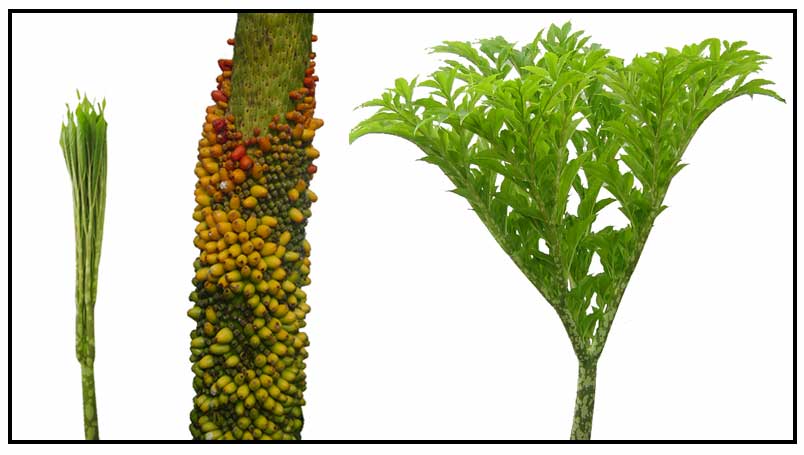
• Pungapung is a perennial, stemless herb. Corm is depressed-globose, up to 30 centimeters in diameter, flowering before leafing every year from the previous year's corm. Stem-like structure, which bears the lamina, is merely the petiole, 1 meter or more high, radically developed from the corm. Leaves are usually solitary, the blades up to 1 meter in diameter,
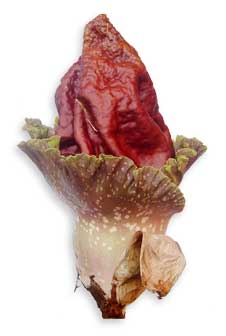
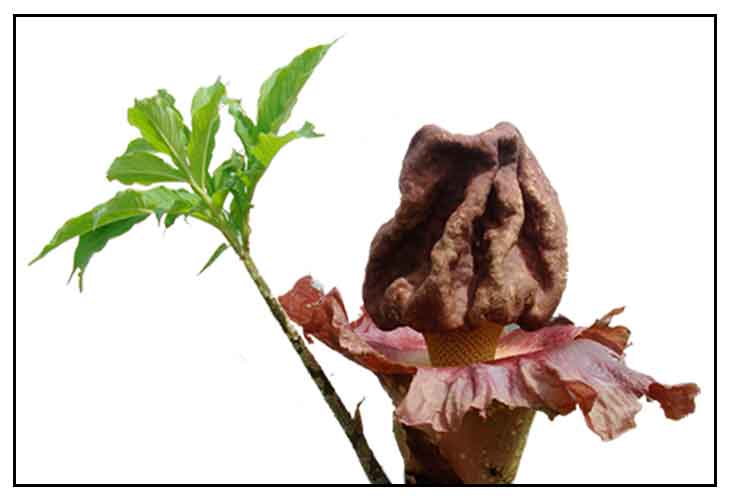
trisected, the segments dichotomous, the ultimate ones pinnately divided into oblong to oblong-obovate, acuminate lobes. Spathe is sessile, broadly campanulate, dull-purplish, the margins somewhat spreading or recurved, waved and crenulate, up to 30 centimeters
in diameter. Spadix (a spike of flowers contained in the spathe)
is hardly longer than the spathe, the appendage ovoid, variously sulcate or depressed, up to 15 centimeters long, are malodorous when
flowering.
 • Growth form:It is a deciduous, herbaceous aroid with a single leaf (rarely two) that grows up to 2.5m tall. The leaf is often mistaken for the entire plant, resembling a miniature tree. Roots: Roots are borne at the top of the corm just below the leaf. The leaf and roots usually grow simultaneously; as the leaf dies down, the roots stop growing and eventually die as well. Foliage: The leaf resembles a miniature tree, with a petiole (leaf stalk) reaching up to 1.5 m tall and 1.5 m across, with a highly dissected leaf blade. The petiole is often smooth, fleshy, green, and patterned with paler green spots or blotches. The cataphyll (a protective scale-like leaf that precedes the leaf shoot or subtends an inflorescence) is lanceolate and usually dull pink to purple and patterned in spots. The leaf eventually dies down and regrows from the corm during the following season. Several leaves may be produced from accessory corms at the base. Stems: The stem is an underground corm (thick, often round, modified stem), reaching 40 cm in diameter and 25 kg in weight. The corm is dark brown, hemispherical, and covered in root scars. Offsets may be borne around the main corm. Flowers: The leaf resembles a miniature tree, with a petiole (leaf stalk) reaching up to 1.5 m tall and 1.5 m across, with a highly dissected leaf blade. The petiole is often smooth, fleshy, green, and patterned with paler green spots or blotches. The cataphyll (a protective scale-like leaf that precedes the leaf shoot or subtends an inflorescence) is lanceolate and usually dull pink to purple and patterned in spots. The leaf eventually dies down and regrows from the corm during the following season. Several leaves may be produced from accessory corms at the base. Roots: The infrutescence is a cylindrical cluster of elongated berries that matures from green to bright red. (Flora & Fauna Web) • Growth form:It is a deciduous, herbaceous aroid with a single leaf (rarely two) that grows up to 2.5m tall. The leaf is often mistaken for the entire plant, resembling a miniature tree. Roots: Roots are borne at the top of the corm just below the leaf. The leaf and roots usually grow simultaneously; as the leaf dies down, the roots stop growing and eventually die as well. Foliage: The leaf resembles a miniature tree, with a petiole (leaf stalk) reaching up to 1.5 m tall and 1.5 m across, with a highly dissected leaf blade. The petiole is often smooth, fleshy, green, and patterned with paler green spots or blotches. The cataphyll (a protective scale-like leaf that precedes the leaf shoot or subtends an inflorescence) is lanceolate and usually dull pink to purple and patterned in spots. The leaf eventually dies down and regrows from the corm during the following season. Several leaves may be produced from accessory corms at the base. Stems: The stem is an underground corm (thick, often round, modified stem), reaching 40 cm in diameter and 25 kg in weight. The corm is dark brown, hemispherical, and covered in root scars. Offsets may be borne around the main corm. Flowers: The leaf resembles a miniature tree, with a petiole (leaf stalk) reaching up to 1.5 m tall and 1.5 m across, with a highly dissected leaf blade. The petiole is often smooth, fleshy, green, and patterned with paler green spots or blotches. The cataphyll (a protective scale-like leaf that precedes the leaf shoot or subtends an inflorescence) is lanceolate and usually dull pink to purple and patterned in spots. The leaf eventually dies down and regrows from the corm during the following season. Several leaves may be produced from accessory corms at the base. Roots: The infrutescence is a cylindrical cluster of elongated berries that matures from green to bright red. (Flora & Fauna Web)
Distribution
- Native to the Philippines.
-
Common in most or all, provinces of Luzon and in Mindoro, in thickets
and secondary forests, along roads, trails, etc., at low and medium altitudes in settled
areas.
- Also native to Andaman Is., Assam, Bangladesh, Borneo, Cambodia, China South-Central, China Southeast, East Himalaya, Hainan, India, Jawa, Laos, Lesser Sunda Is., Malaya, Maluku, Myanmar, New Guinea, Northern Territory, Sri Lanka, Sulawesi, Sumatera, Taiwan, Thailand, Vietnam. (25)
 Constituents Constituents
• Corm analysis: 74% moisture; 0.73% ash; 5.1% protein; 18% carbohydrate, 0.61% crude fiber, giving 1,000 calories per kilo. In food value, comparable to kalabasa, superior to sinkamas. •
• Yields amblyone, a tritepenoid with antibacterial and cytotoxic activities.
• Phytochemical screening of various tuber extracts yielded alkaloids, carbohydrates, coumarins, steroids, saponins.
• Tubers yielded an active diastatic enzyme- amylase, betulinic acid, B-sitosterol, stigmasterol, B-sitosterol palmitate, lupeol, triacontane, amino acids, carbohydrates, saponin, thiamine, riboflavin, niacin and carotene.
• Study evaluated methanol (ME) and 70% hydroalcoholic (AE) extracts of tubers for flavonoidal and total phenolic content. Flavonoidal content was 46.33 mg/g (ME) and 36.88 mg/g (AC). Total phenolic content were 12.67 mg/g (ME) and 6.25 mg/g (AE). (24)
• Major nutrient and constituent analysis of corm suggests a good source of energy, sugar, starch, proteins and minerals, with average nutritional profile of starch 11-28%, sugar 0.7-1.7%, protein 0.8-2.6%, fat 0.07-0.40%, mean energy value 236-566.7 Kj/100g. Ranges of macro minerals and soluble oxalates from different varieties in mg/100g were: K 230-417, P 129-247, Ca 131-247, Fe 1.97-5.56, Mn 0.19-0.65, Zn 1.12-1,92m soluble oxalate 6.65- 18.50. The mean soluble oxalate content of 13.53 mg/100g was safe from the viewpoint of urinary oxalate accumulation that may lead to kidney stones. (38)
- Phytochemical analysis of methanol, ethanol, ethyl acetate, and aqueous extracts of tubers yielded polysterols, phenols, flavonoids, tannins, terpenoids steroids, gum and mucilage, carbohydrates. Saponins were present only in the methanol and aqueous extracts. None yielded alkaloids. (see study below) (45)
- Qualitative phytochemical screening of ethanol and water extracts of tubers
yielded alkaloids, glycosides, saponins, phenolics, flavonoids, and gums/mucilages in both. The ethanol extract also yielded carbohydrates; the water extract, glycosides. Proteins, tannins, and terpenoids were absent in both. (59)
- Quantitative analysis of ethanol and water extracts of tubers yielded: alkaloids 7.60 and 4.97 mg/g, flavonoids 18.03 and 11.23 mg/g,
phenols 25.85 and 18.78 mg/g, saponin 3.85 and 2.08 mg/g, and terpenoids 2.68 and 1.69 µg/g, respectively. (59)
Corpse flower odor
• Flower odor has been described as "evil", similar to decaying meat; hence, its well-deserved name "corpse flower." (see study below) (55)
• If one chances upon the corpse flower plant on its putrefyingly malodorous stage, it becomes difficult to imagine its edibility.
• The top part of the flower is responsible for secreting mucus that gives off the putrid, pungent smell that attracts pollinating insects. (58)
• See study below on Inflorescence odors. (55)
• Phytochemical screening of aqueous and ethanolic extracts of dried and ground tubers revealed alkaloid, flavonoid, reducing sugar, carbohydrate, tannin, steroid and triterpenoids. (see study below) (67)
 Properties Properties
-
Corms are caustic, stomachic
and tonic.
- Corms considered acrid, astringent, thermogenic, irritant, anodyne, anti-inflammatory, anti-hemorrhoidal, haemostatic, expectorant.
- Raphide crystals on the corm, petiole and leaves produce irritation upon contact with the skin.
- Tubers are considered appetizer, antibacterial, antifungal, anodyne, aphrodisiac, anti-inflammatory, antihemorrhoidal, cytotoxic, emmenagogue, hemostatic, expectorant, carminative, digestive, stomachic, anthelmintic, liver tonic, rejuvenating and tonic.
- Studies have suggested antibacterial, cytotoxic, antioxidant, hepatoprotective, analgesic, immunomodulatory, anthelmintic, anticolitic, anticancer, anticonvulsant, antidepressant, anthelmintic, chemopreventive, gastroprotective, antihemorrhoidal, antidiarrheal, antihyperglycemic, antineuropathic, natural starch binding, anti-diabetic. biopesticidal, anti-histaminic, gastrokinetic, anti-steatohepatitis, lipid lowering, laxative, disintegrant, anti-inflammatory, analgesic, anti-anxiety properties.
Parts
utilized
Corm, roots, leaves.
Uses
Edibility
• Leaves, stems, roots.
• Good source of protein and starch.
• A vegetable in various ethnic cuisines.
• Rhizomes preferably cooked, acrid when raw. May cause
perioral burning and itching.
• Petioles of young unexpanded leaves are edible when thoroughly
cooked.
• In time of scarcity, corms are sometimes eaten. Corms provides about 1,000 calories per kilo; comparable in food value
to kalabasa, superior to singkamas.
• In India, corms used in curries and pickles.
• In the Indian state of West Bengal, Assam, and in Bangladesh, eaten mashed or fried or added to curries; rarely, pickled or made into ol chips. In Bihar, used in making oal curry, oal bharta or chokha, pickles and chutney. In Chaattisgarh, called zimmikanda or zaminkand, eaten as curry. (58)
- In Tripura, called batema, paste is shaped into buns and boiled with sodium bicarbonate (baking soda) and water to remove the raphids (calcium oxalate crystals), and buns as cut into pieces and combined with fresh garlic paste and made into mosdeng (a spicy paste of dried fish/shrimp and chili). (58)
Folkloric
• Poultices of corm are antirheumatic. Also used for hemorrhoids.
• Plants used for cough.
• Roots are used for boils and hemorrhoids.
• Tubers are also used for hemorrhoids.
• In India, corm is considered stomachic and tonic; used in piles and given as restorative in dyspepsia and debility. Tuberous roots are used for treatment of piles, abdominal
pains, tumors, spleen enlargement, asthma and rheumatism. Also, corms used as restorative in dyspepsia, debility, etc. Roots used for boils and ophthalmia; also as an emmenagogue. Petioles used in scorpion bites and dysmenorrhea. Tubers also used for post delivery problems, migraine, and neck swelling.
• In Ayurveda, traditionally used in arthralgia, elephantiasis, tumors, inflammations, hemorrhoids, hemorrhages, vomiting, cough, bronchitis, asthma, dyspepsia, colic, constipation, hepato-splenopathies, amenorrhea, dysmenorrhea, seminal weakness, fatigue and general debility.
• In Unani medicine, given as vegetable in sluggish liver.
• Corms applied externally to relive the pain of rheumatic swellings. When fresh, acts as acrid stimulant and expectorant.
- In Kerala, India, dried and powdered corm mixed with curd and hot water, and drunk for treatment of jaundice by the kurichia, adiya, and kuruma tribes in Wayand. Cooked corm with curd used for treatment of hemorrhoids. Leaf and stem juice used for treatment of ulcers. (54)
Others
• Fodder: Leaves and corms are common feed for hogs.
Studies
• Antibacterial / Cytotoxic / Amblyone:
Amblyone, a triterpenoid isolated from A campanulatus showed to
have good antibacterial activity and moderate cytotoxic activity. (1)
• Antibacterial / 3,5-diacetylambulin: 3,5-diacetylambulin, a flavonoid isolated from A. campanulatus showed antibacterial activities against 4 gram positive and 6 gram-negative bacterial. (6)
• Hepatoprotective / CCl4-Induced Damage / Antioxidant: Study on
ethanolic and aqueous extracts of Amorphophallus campanulatus showed antioxidant activity. Results showed potent hepatoprotective action against carbon tetrachloride-induced hepatic damage. The possible mechanism of antioxidant activity may be due to the free radical scavenging potential from the flavonoids in the extracts. (2)
• Hepatoprotective / Acetaminophen-Induced Damage Study of dried tuber on acetaminophen-induced hepatic injury in albino rats showed increase in levels of superoxide dismutase (DOS), catalase (CAT) and glutathione peroxidase (GPx) suggesting hepatoprotective and antioxidant properties.
• Analgesic / Tubers: Study in mice was done on a methanol extract of A campanulatus tuber for in-vivo analgesic activity using a tail flick and acetic acid induced writhing methods. Results showed significant dose-dependent analgesic activity. Effect might be due to plant phytoconstituents which inhibit cyclooxygenase enzyme or through an effect on central opioid receptors (µ-receptors). (3) An aqueous extract of Am paeoniifolium showed analgesic activity attributed to peripheral and central inhibition of prostaglandin synthesis. The extrach may have phytoconstituents that inhibit COX enzyme peripherally or act on central opioid receptors (µ-receptors) for producing analgesic. (66)
• Immunomodulatory: Study of a methanol extract of AC tuber on immunological function in mice exhibited immunomodulatory activity by causing a decrease in charcoal clearance, spleen index and delayed-type hypersensitivity (DTH) response. (7)
• Anthelmintic / Corms: Corms yielded steroids, alkaloids, tannins, glycosides, carbohydrates, phenols, flavonoids, saponins, starch and proteins. Results showed the corm chloroform and methanol extracts and crude tannins showed good anthelmintic activity close to the standard drug albendazole. (8) Corms were extracted with petroleum ether, chloroform, and methanol. Crude tannins were isolated from the methanol extract. Chloroform, methanol extracts and crude tannins showed very good anthelmintic activity. Paralysis and time of death of crude tannins were close to standard drug Albendazole.(•) Anthelmintic activity of methanol extract was evaluated against Pheretima posthuma and Tubfex tubifex. Extract showed significant anthelmintic activity at concentration of 100 mg/ml. The extract exhibited both vermifuge (paralyzing) and vermicidal (killing) activity. Piperazine citrate was used as standard and distilled water as control. (60)
• CNS Depressant Activity / Acute Toxicity Study / Tuber: Study showed a dose-dependent decrease in CNS activity with sedation and decrease in locomotor activity of the experimenting animal. Acute toxicity studies showed mortality at 2500 mg/kg body weight. Results suggest that petroleum ether extract can be safely used up to dose of 1500 mg/ kg body weight. (9)
• Antioxidant / Tubers: Study evaluated the antioxidant activity of a methanolic and aqueous extract of tubers for free radical scavenging property on DPPH, NO, and reducing power assays. Results showed the aqueous extract with more antioxidant activity compared to the methanolic extract. (13) Study evaluated the in-vitro antioxidant activity of various solvent extracts of A. paeoniifolius tubers. A methanol extract of AP tuber showed maximum in-vitro antioxidant activity in comparison to other solvent extracts which may be attributed to its higher phenolic content. (41)
• Hepatoprotective in Paracetamol-Induced Liver Damage: Study of methanol and aqueous extracts of tubers in paracetamol-induced liver damage in rats showed hepatoprotective activity. There was significant reduction of hepatic enzyme values, almost comparable to silymarin. The hepatoprotective activity was confirmed by histopathologic examination of control and treated animals. (14)
• Cytotoxicity / Anticancer Potential: Study evaluated the cytotoxic property of different solvents of A. paeoniifolius tuber using Allium cepa root tip cells and HEp-2 cell line invitro models. Results exhibited cytotoxic activity, predominant in the petroleum ether and ethanolic extracts with dose-dependent antiproliferative activity on HEp2 cells. (15)
• Antioxidant Against Thioacetamide-Induced Oxidative Stress: Study evaluated the protective effect of extracts against thioacetamide-induced oxidative stress in rats. Silymarin was used as control. Results showed a methanolic extract to have higher antioxidant and radical scavenging activity than an n-hexane extract, attributed to higher phenolic and flavonoid content. There was histopathological support for the dose-dependent effects. (16)
• Anticonvulsant: Study evaluated petroleum ether extracts of A. paeoniifolius for anticonvulsant activity. Diazepam was used as standard drug. Results showed dose-dependent activity regarding onset of convulsion. (18)
• Cytotoxic / Apoptotic / Tubers / Human Colon Carcinoma Cell Line: Study evaluated dose-dependent cytotoxic and apoptosis inducing effects of sub fractions of methanolic extract of tubers on colon cancer cell line, HCT-15. Among the subfractions, the chloroform fraction showed potent cytotoxic and apoptotic activity. Results suggest the fractions dose-dependently suppress proliferation of HCT-15 cells by inducing apoptosis. (20)
• Antioxidant / Protective Against H2O2 Induced Oxidative Damage: Study evaluated tuber extracts against H2O2 induced oxidative damage in human erythrocytes and leucocytes. Results showed benefits of the tuber extracts in preventing H2O2 oxidative human RBC damage and improving RBC membrane permanence. The methanol extract was more effective than others. (21)
• Chemopreventive / Tuber / Induced Colon Carcinogenesis: Study evaluated a tuber methanolic extract on aberrant crypt foci (ACF) formation, colonic cell proliferation, lipid peroxidation damage and antioxidant status in a long term preclinical model of DMH-induced colon carcinogenesis in rats. Results showed significant chemopreventive effect. (22)
• Synergistic Depressant Activity with Diazepam: Study of a petroleum ether extract was found to have CNS depressant activity. A significant synergistic effect of the PE extract with diazepam was found, with little synergistic effect with phenobarbitone. PE extract components may bind with the α subunit and facilitate the GABA mediated Cl- channel opening causing cell hyperpolarization and CNS depressant action. (23)
• Gastroprotective / Corms: Study evaluated the gastroprotective activity of a methanolic extract of corms against pylorus ligation induced gastrotoxicity in albino rats. Results showed significant dose dependent reduction in the elevated gastric parameters with significant restoration of protective GSH levels and suppression of LPO levels in tissues. Lansoprazole was used as standard. The activity may be due to the polyphenolic compounds known to possess anti-ulcer activity. (24)
• Oral Toxicity Evaluation / Tuber: Study evaluated acute and subacute oral toxicity studies of methanolic and aqueous extracts of A. paeoniifolius tuber in Swiss albino mice. In acute toxicity testing with single 2000 mg/kg dose of the extracts, there was not treatment related mortality and morbidity in any group. In subacute testing withe repeated dose of 1000 mg/kg daily for 28 days, there were not significant changes in behavior, body weight, hematologic and histological parameters, and no treatment related mortality or morbidity with doses used. (26)
• Underutilized Crop / Synopsis: Synopsis reports on Amorphophallus paeoniifolius as an underutilized crop with remarkable nutritional quality and potential as a valuable food source for human consumption. Despite its economic potential as food material, there is very limited scientific information on post-harvest characteristics and marketing potential. The research evaluates and assesses the complete utilization of A. paeoniifolius and its potential in the food industry. The article also examines and presents the economical techniques for product development: processing of raw ingredients, development of edible products, screening and application of enzymes, and utilization of waste peel. (27)
• Gastrokinetic Activity / Tubers: Study evaluated the effect of Amorphophallus paeoniifolius tuber on gastrointestinal motor functions. Pretreatment of extracts significantly increased the number of feces, wet and dry weight of feces, moisture content, gastric emptying and intestinal transit. Results were comparable to metoclopramide. The aqueous and methanol extracts also showed contraction of fundus and ileum in isolated preparations. Extracts yielded fair amounts of glucomannan, total phenolics and flavonoids. The gastrokinetic potential of the tuber extracts may be attributed to glucomannan and betulinic acid in the extracts. (28)
• Antidiarrheal / Leaves: Study evaluated the anti-diarrheal activity of A. paeoniifolius leaves in a castor oil-induced diarrhea model in Swiss albino mice. At doses of 100, 200, and 400 mg/kg, there was a statistically significant (p<0.05) dose dependent reduction of total number of diarrheic feces. (29)
• Antioxidant / Tuber: Study evaluated the antioxidative and radical scavenging potential of a tuber extract of A. paeoniifolius. The extract showed a maximum of 68.6% of DPPH scavenging activity and maximum inhibition of 74% and 67.2% in ABTS and H2O2, respectively. The antioxidant efficiency and inhibition of oxidation was found to be dose-dependent. HPTLC profile of the extract yielded the presence of polyphenols such as gallic acid, resveratrol, quercetin, and two unidentified compounds. (30)
• Diabetic Neuropathy / Tubers: Study evaluated the effect of methanolic extract of tubers of Amorphophallus paeoniifolius in the treatment of diabetic neuropathy in STZ-induced diabetic rats using tail flick test, swim endurance test, and Rota-road methods. Results showed significant improvement in the measured parameters compared to negative control group and suggest potential use in the management of diabetic neuropathy. (31)
• Population Structure / Potential for Breeding for Global Acceptance: Corms and leaves of elephant foot yams are important foods in the local diet of many Asian regions. The crop has high agroecological adaptation and suitability for agroforestry system. Study suggests regional action should be incorporated in genetic conservation and breeding efforts to develop new varieties with global acceptance. (32)
• Combined Effect of Vigna radiata and A. paeoniifolius / Lipid Lowering Potential and Antiatherogenic Effect: Study evaluated the combined effect of Mung bean (V. radiata) and elephant foot yam (A. paeoniifolius) on serum lipids and atherogenic indices in albino rats and compared it with standard drug Cholestyramine. Results showed lowering of total cholesterol, triglycerides, LDL and VLDL (p<0.01) along with a significant increase (p<0.01) in HDL in rats. The combination of powdered sprouted mung bean and yam powder showed excellent lipid lowering potential and reduced atherogenic indices. (33)
• Antihyperglycemic / Antinociceptive / Corms: Study evaluated the antihyperglycemic and antinociceptive potential of methanol extract of A. campanulatus corms in Swiss albino mice. At highest dose level using oral glucose tolerance tests in glucose loaded mice, results showed a near equivalent antihyperglycemic potency as that of glibenclamide. In acetic acid induced pain model in mice, the extract, even at lowest dose, was more potent than the lower dose of aspirin. (34)
• Beneficial Effect on Experimental Ulcerative Colitis / Tuber: Study evaluated the effects of methanol (APME) and aqueous (APAE) tuber extracts of A. paeoniifolius on acetic acid induced ulcerative colitis in Wistar rats compared to standard drug prednisolone. APME and APAE pretreatment showed a preventive effect on UC, and ameliorated inflammation and oxidative damage in colon. The effects may be attributed to presence of phytochemicals, betulinic acid, ß-sitosterol, and glucomannan. Results suggest the tubers exhibited an anticolitic effect through anti-inflammatory and antioxidant action. (35)
• Antihyperlipidemic / Tuber: Study evaluated the antihyperlipidemic activity of amorphophallus paeoniifolius tuber in Triton WR-1339 induced hyperlipidemic rats. Tubers contained high concentration of total phenols which possess strong anti-hyperlipidemic activity. Results showed significant decrease in serum cholesterol, triglycerides, LDL, and VLDL along with a significant increase in HDL. Results suggest a potential protective role in coronary heart disease. (36)
• Curative Effect on Experimental Hemorrhoids / Tuber: Study evaluated the effect of methanolic and aqueous extract of A. paeoniifolius tuber on hemorrhoids in rats induced by croton oil applied in the ano-rectal region. Results showed aqueous extract showed more pronounced effect than methanolic extract. Effect was attributed to antioxidant and anti-inflammatory properties. Results validate its ethnomedicinal use of tuber in hemorrhoids. (37)
• Hepatoprotective Secondary Metabolite / Flavonoid Quercetin / Corm: Study isolated the flavonoid from an ethyl acetate fraction of corm and screened for hepatoprotective activity on CCl4-induced model. Results showed significant reduction of elevated enzymes, increased protein level, and attenuation of damaged hepatocytes toward normal texture. (39)
• Extract Syrup Formula as Nutritive Antioxidant Drink: Extract of elephant foot yam (EFY) contains a antioxidant flavonoid compound that has potential to be utilized as functional food beverage. Study evaluated the antioxidant activity, pH value, viscosity and sensory properties of EFY extract syrup with various extract formulas. Results showed variations in extract concentration in the formula have effects on the measured properties. Syrup with 4% extract concentration (F3) exhibited favorable properties with highest antioxidant activity (71.39 ppm), pH 4.97, 0.265 c. viscosity. In terms of consumer preference, syrup with 0.6% extract (F1) is most preferable in color, flavor, and aroma. Study suggests potential as an antioxidant source as syrup added to healthy drink. (40)
• Laxative Effect / Glucomannan and Betulinic Acid / Tuber: Study evaluated the effect of tubers of A. paeoniifolius and its active constituents on experimentally induced constipation. Isolated phytoconstituents by FT-IR, NMR, and MS were identified as betulinic acid and ß-sitosterol. Constipation was induced by loperamide. Treatment with tuber extracts, glucomannan and betulinic acid showed significant (p<0.05) increase in fecal parameters and intestinal transit in constipated rats. Effects were comparable to laxative drug, sodium picosulfate. The principal constituents, glucomannan and betulinic acid may have played an important role in relieving the constipation. (42)
• Anticancer / Breast Cancer Cell Lines / Tuber: Study evaluated the anticancer efficacy of extract of A. paeoniifolius tuber against estrogen positive MCF-7 and triple negative MDA-MB-231 breast cancer cell lines. The extract showed significant cytotoxic activity in both cancer cell lines in a dose- and time-dependent manner. The extract significantly reduced migration in both cell lines while the effect on inhibition of adhesion and invasion was higher in MDA-MB-231 cells. Staining suggested that the extract induced apoptosis in the cells which was further validated by attenuation of antiapoptotic Bcl-2 and induction of pro-apoptotic Bax, Caspase-7 expression and cleavage of PARP. (43)
• Silver Nanoparticles / Antibacterial / Leaves: Study reports on a one-step, eco-friendly green synthesis of AgNPs using a leaf extract of A. paeoniifolius as reducing agent. The synthesized AgNPs showed potential antibacterial activity against both gram positive and gram negative bacteria. (44)
• Antibacterial / Tubers: Study evaluated ethyl acetate, methanol,aqueous, and ethanol extracts of A. paeoniifolius for activity against human bacterial pathogens using agar-well diffusion assay. The ethyl acetate extract showed maximum activity for Bacillus subtilis (7.5mmZOI) and Staphylococcus aureus (7mmZOI). (see constituents above) (45)
• Diabetic Effect / Beneficial or Detrimental / Review: There have been concerns on elephant foot yam tubers being detrimental for diabetic patients. A literature review showed the tuber to be a good source of carbohydrates, protein, fiber, and minerals but low in fat. Secondary metabolites of the tuber have significant anti-hyperglycemic effect. Study concludes the elephant foot yam tuber is safe and beneficial for patients with diabetes. (46)
• Amblyone / Anticancer: Study evaluated the anticancer activity of Amblyone, a phytochemical from the tuber of elephant foot yam and compared its activity with commonly used antiapoptotic drug Tetrahydro-isoquinoline amide substituted phenyl pyrazole derivative. In silico analysis showed a docking score of -12.2 kcal/mol for amblyone compared with 7.7 kcal/mol for the tetrahydroisoquinoline amide substituted phenyl pyrazole derivative. The better docking score indicates that amblyone can bind firmly on the groove of Bcl-2 protein which regulates activity of pro-apoptotic proteins by direct binding and sequestration. (47)
• Antibacterial / Tuber and Peel Extracts: Study evaluated the antibacterial activity of ethanol extract of tuber and peel of Amorphophallus paeoniifolius. The ethanolic tuber extract showed inhibitory effect on four bacterial species viz. S. aureus, P. aeruginosa, E. coli, and S. mutans, with diameter of ZOI ranging from 6mm-18mm. The ethanolic extract of peel showed inhibitory effect only on two bacterial species, S. aureus and P. aeruginosa. The water extract of peel and tuber inhibited only one species each, S. mutans and S. aureus, respectively. (48)
• Antihyperlipidemic / Stem: Study evaluated the antihyperlipidemic efficacy of stem powder of Amorphophallus paeoniifolius in lowering elevated serum lipids in adult male albino rats. Triton-X-100 increased the total cholesterol, reduced HDL level and atherogenic index. Treatment reduced total cholesterol, increased HDL, reduced both weight and AI index. (49)
• Antidiabetic / A. paeoniifolius and Borassus flabellifer: There have been concerns among diabetic patients that the use of germinated endosperm of sugar palm (GESP-Borassus flabellifer) and elephant foot yam tuber (EFYT) will further deteriorate existing hyperglycemia. Study evaluated the effect of supplementary feeding of powder of GESP, EFYT, and their mixture in addition to regular diet in alloxan induced diabetic rats. Results showed the foodstuffs significantly (p<0.001) reduced FBG. The mixture of GESP and EFYT showed maximum antidiabetic effects followed by GESP and EFYT, respectively. Study suggests the foodstuffs may restore damaged pancreatic ß-cell functions. Nutrient contents like fiber, zinc, and antidiabetogenic phytochemicals in the foodstuffs could contribute to these effects. (50)
• Peroxidase Source / Corms: Peroxidases have wide applications viz. chemical synthesis, medicine, food industry, bioremediation of wastewater, biosensing, and biotechnology. Elephant foot yam (EFY) is an attractive source of enzymes. Study evaluated the peroxidases from corms of elephant foot yam, roots of Daucus carota (carrot), and Aramoracia rusticana (horseradish). Elephant yam corm peroxidase (ECP) demonstrated 4.5 times higher specific gravity compared with carrot root peroxidase (CRP(. ECP showed retention of high activity over a broad pH range and higher temperature optima and thermal stability compared to CRP and horseradish peroxidases. Peroxidases are used for bioremediation of wastewater contaminated with hazardous aromatic compounds along with Cd, Pb, and toxic compounds like sodium azide. Results suggest elephant foot yam can be used as a rich and convenient source of peroxidase. (51)
• Anti-Inflammatory / Mechanism / Tubers: Study evaluated the anti-inflammatory activity of various extracts of dried and powdered tubers using carrageenan induced paw edema model in rats. Results showed only the methanol extract showed prominent anti-inflammatory activity. The ME also showed anti-histaminic effect. (52)
• Mutagenicity / Corm: Study evaluated the toxicity of A. paeoniifolius corm extracts to Allium cepa chromosomes. Results showed that as corm concentration increases, the number of root germination of A. cepa decreases. Interestingly, the mitotic index also decreased while chromosomal aberrations increased. Prominent chromosomal aberrations in treated samples were laggards, vagrant chromosomes, bridge with fragments, sticky chromosomes, disoriented chromosomes, and chromosomal breakage. The study may be the first evidence of mutagenicity and root growth inhibition of A. paeoniifolium corm extracts to A. cepa. (53)
• Inflorescence Odors: The chemical composition of inflorescence odors of 80 species of Amorphophallus (Araceae) were determined by headspace-thermal desorption GC-MS. Dimethyl oligosulphides were found as common constituents of Amorphophallus odours and were the most abundant components in almost half of the species studied. Species producing 1- and 2-phenylethanoids cluster in two unrelated clades. Some species with gaseous odors were found closely related to species producing odors more reminiscent of rotting meat in which the dominant dimethyl oligosulphides were accompanied by various minor components. Rotting meat odors are usually found in species of darker inflorescences. Some have pleasant odors, from fruity to anise-like, Presence of pollinator resource has been a factor in influencing the evolution of odors in Amorphophallus. (55)
• Potential Biopesticide / Increased Shelf Life of Stored Food Grains: Food grain losses due to insect infestation during storages is a serious problem. Bioactive flavonoids from EFY against α-amylase were isolated. The acetone extract yielded the highest flavonoid content of about 544.8 µg quercetin equivalent/g compared to other extracts. The AE also yielded lesser α-amylase activity (30.836 IU) which signifies a-amylase inhibition. Flavonoid constituent, 9,12-octadecadienoic acid showed highest peak in GC-MS analysis of the AE. Whole grains and moong dal treated with the AE of 0.25% concentration was 100% efficient in repelling S. oryzae and T. castaneum from wheat and moong dal (p<0.001) with flour disc bioassay FDI-90.47%. Results suggest potential as a biopesticide against insects that infest stored food grains and thereby increase shelf life and restore nutritional value of grains. (56)
• Gastrokinetic Effects / Tuber: Study evaluated the effect of A. paeoniifolius tuber on gastrointestinal motor functions. Metochlopramide was used as reference prokinetic drug. Isolated tissue preparations were used to check the effect of the extracts on fundus and intestinal contractility. Pre-treatment with extracts significantly increased the number of feces, wet and dry weight of feces, moisture content, gastric emptying and intestinal transit. Results were comparable to MET. Methanol and aqueous extracts showed contraction of fundus and ileum in isolated preparations. The gastrokinetic potential of the tuber extracts may be attributed to the presence of glucomannan and betulinic acid. (57)
• Starch as Natural Binder: Study evaluated the starchy components of A. paeoniifolius tuber and its potential as a binder. Tuber starch was extract and characterized. Cyproheptadine was used as model drug. Drug excipient compatibility studies were done. The drug was found compatible with excipients. Tablets were found to be in the standard limits in measures of hardness, friability, disintegration time and in-vitro dissolution. Results showed A. paeoniifolius starch can be used as tablet binder and can be utilized as a multi-functional natural excipient. (61)
• Nutrient Analysis / Antihyperglycemic Effect / Yam Tuber: Study evaluated the nutrient content and antihyperglycemic effect of elephant foot yam tuber on diabetic and non-diabetic rats. Proximate analysis showed the yam to be a food source of dietary complex carbohydrate, fiber, minerals such as calcium, phosphorus, potassium and zinc, and phytochemicals. Fasting blood glucose was remarkably reduced (p<0.05) in diabetic rats after 1 week and highly significant (p≤0.001) after the 3rd week of experimental feeding. Results suggest potential as medicinal food for the treatment of diabetes mellitus. (62)
• Effect on Experimental Steatohepatitis / Tuber: Study evaluated the effect of aqueous extract of A. paeoniifolius tuber (APT) on experimental nonalcoholic steatohepatitis (NASH). NASH was induced by a methionine and choline deficient diet to Wistar male rats for 8 weeks. Histopathological testing of liver samples showed APT aqueous extract treatment abated the severity of NASH in MCD-fed rats. There was significant reduction in ALT and AST activities, along with dose-dependent reduction in elevated hepatic TNF-α and TGF-ß mRNA and MDA levels along with increase in GSH content. Results suggest the aqueous extract of APT have beneficial effects on NASH, mainly due to its antioxidant and anti-inflammatory activities. (63)
• Disintegrant in Tablet Formulation: Study isolated the starch from elephant foot yam and evaluated its potential as a disintegrant in tablet formulation as compared to standard corn starch. Disintegration time for the yam starch was 24 to 84 sec, and 40 to 90 sec for corn starch. Results showed elephant foot yam starch showed a similar dissolution profile to that of corn starch, and was found stable for three months. (64)
• Anti-Anxiety / Comparative Effects of Ethanolic and Aqueous Extracts / Tuber: Study evaluated the potential of aqueous and ethanolic extracts of dried and ground tubers in alleviating anxiety in Swiss albino mice. Doses of 100, 150, and 250 mg/kg were used in open field test, elevated plus maze test, and light and bark dark box test. The ethanol extract exhibited more significant anxiolytic activity than the aqueous extract, with the 250 mg/kg dose showing highest anxiety amelioration. (see constituents above) (67)
Availability
Wild-crafted.
Capsules, supplements in the cybermarket.
|