 Botany Botany
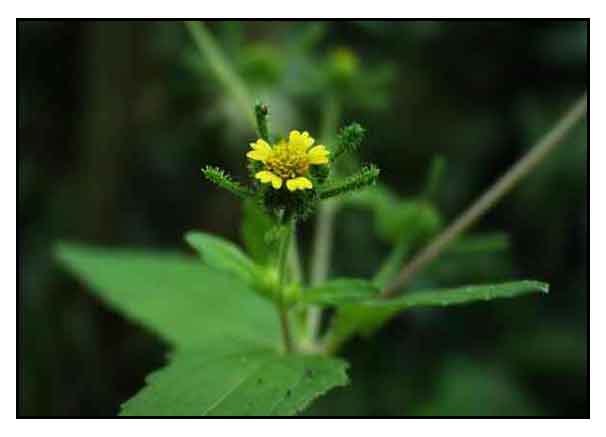
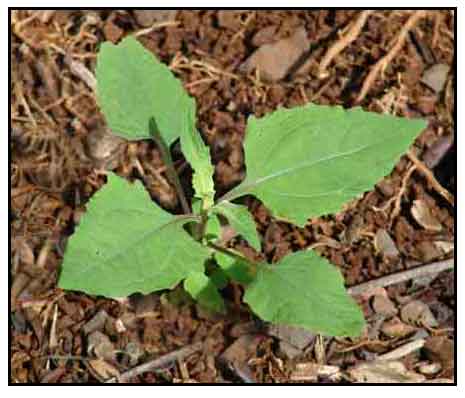
Put is an erect, hairy herb about 60 centimeters in height, with spreading branches below. Leaves are opposite, somewhat arrow-shaped, 3 to 10 centimeters long, and pointed at the tip, the base running down on the petioles. Flowering heads are yellow, small, somewhat rounded, and 5 to 6 millimeters in diameter. Involucral bracts are very dissimilar. Ray flowers are red beneath, very short, recurved and 3-toothed. Achenes are each enclosed in a boat-shaped bractlet which is hairless and slightly rough.
Distribution
- In open, waste places, fallow fields, etc., chiefly at medium altitudes, ascending to 2,100 meters.
- In the Philippines, found in the Batan Islands; In Benguet and Bontoc Subprovinces, Abra and Rizal Provinces in Luzon; and in Mindanao.
- Introduced by the New World.
- Found in the Old World Tropics.
 Constituents Constituents
- In 1885, a crystalline bitter principle, darutyne (darutine), was isolated from the plant.
- Study of aerial parts yielded liposoluble constituents: Two new natural products, siegesesteric acid and siegesetheric acid, with known compounds: ent-16 beta, 17-dihydroxy-kauran-19-oic acid, kirenol, beta-sitosteryl glucoside, heneicosanol, methyl arachidate and beta-sitosterol. (2)
- Study of ethanol extract yielded six new ent-pimarane diterpenoids: ent-14β,16-epoxy-8-pimarene-3β,15α-diol, 7β-hydroxydarutigenol, 9β-hydroxydarutigenol, 16-O-acetyldarutigenol, 15,16-di-O-acetyldarutoside, and 16-O-acetyldarutoside. (6)
- Study isolated four crystalline substances and a flavanoid, 3,7-dimct/ylquercetin(I), together with inorganic salts, potassium nitrate, and two unknown terpenoids.
- Study yielded eight new ent-pimarane diterpenoids and diterpenoid glycosides, namely, ent-12α,16-epoxy-2β,15α,19-trihydroxypimar-8-ene (1), ent-12α,16-epoxy-2β,15α,19-trihydroxypimar-8(14)-ene (2), ent-2α,15,16,19-tetrahydroxypimar-8(14)-ene (3), ent-15-oxo-2β,16,19-trihydroxypimar-8(14)-ene (4), ent-2-oxo-15,16-dihydroxypimar-8(14)-en-16-O-β-glucopyranoside (5), ent-2-oxo-15,16,19-trihydroxypimar-8(14)-ene (6), ent-2-oxo-3β,15,16-trihydroxypimar-8(14)-en-3-O-β-glucopyranoside (7), and ent-2β,15,16,19-tetrahydroxypimar-8(14)-en-19-O-β-glucopyranoside (9), together with seven known diterpenes (8, 10−15). (9)
- Study of aerial parts yielded two new compounds, namely β-D-glucopyranosyl-ent-2-oxo-15,16-dihydroxy-pimar-8(14)-en-19-oic-late (compound 1) and [1(10)E,4Z]-8β-angeloyloxy-9α-methoxy-6α,15-dihydroxy-14-oxogermacra-1(10),4,11(13)-trien-12-oic acid 12,6-lactone (compound 2), as well as five known ent-pimarane diterpenes (compounds 3–7). (10)
- Phytochemical screening for secondary metabolites yielded phenolics, tannins, flavanoid saponins, glycosides, and triterpenoids in in vitro and in vivo developed plants. (12)
- GC-MS analysis yielded at least 20 compounds and 10 constituents were identified by mass spectrometry. Major compounds were quantified as caryophyllene oxide (46.9%), [-]-spathulenol (25.7%), and hexadecanoic acid ethyl ester (9.6%). (see study below) (13)
- Study of aerial parts for essential oil yielded 56 constituents representing 98.72% of total peak area. Essential oil of SO was dominated by hydrocarbon sesquiterpenesx (45.93%), oxygenated sesquiterpenes (44.99%), and oxygenated monoterpenes (1.53%), among which trans-a-bisabolene (24.41%), caryophyllene oxide (16.68%), caryophyllene (14.13%), and spathulenol sesquiterpenes (12.46%) were the main components. (17)
- Bioassay guided study of an ethyl acetate fraction yielded twelve compounds: 16β-hydro-ent- kauran-17,19-dioic acid (1), 16α,17-dihydroxy-ent-kauran-19-oic acid (2), 16β,17,18- trihydroxy-ent-kauran-19-oic acid (3), 17,18-dihydroxy-ent-kauran-19-oic acid (4), siegesmethyletheric acid (5), 2-oxo-15,16,19-trihydroxy-ent-pimar-8(14)-ene (6), 3, 16-dihydroxyl-15-one-ent-pimar-8(14)-ene-3-O-β-d-glucopyranoside (7), quercetin (8), ursolic acid (9), β-sitosterol (10), stigmasterol (11) and uracil (12). (see study below) (18)
- A 1979 study reported on the isolated of a melampolide, closely related acanthospermals from S. orientalis. (22)
Properties
- Seeds and flowers are sticky.
-
Considered alterative, antiseptic, aperient, depurative, sialagogue, tonic, vulnerary.
- Studies have suggested immunosuppresant, antibacterial, antiallergic, anticancer, anti-inflammatory, analgesic, wound healing, antihyperuricemic, phytoremediative, antimetastatic, neuroprotective properties.
Parts used
Leaves, shoots, whole plant.
Uses
Folkloric
- In the Philippines, leaf decoction used as alterative; in lotion form, used as vulnerary.
- Used for diseases of the urethra.
- Aqueous extract, in syrup, sometimes combined with potassium iodide, used as alterative, sudorific, and antisyphilitic.
- Roots used for abscesses.
- In Europe, mixture of equal parts of a tincture and glycerine used externally for ringworm and other parasitic eruptions.
- As antiseptic, fresh plant applied to unhealthy ulcers. Decoction of leaves and young shoots, used as lotion for ulcers and parasitic skin diseases.
- In La Reunion, reputed as sialagogue, vulnerary, tonic, aperient, and depurative.
- Juice of fresh herb used as a dressing for wounds, where it dries leaving a varnish-like coating.
In China, long known as a remedy for ague, rheumatism and renal colic. Used for worm fever, loss of appetite, to relieve wound pains, chronic malaria and extremity numbness. Also, used as anthelmintic, tonic antidote, analgesic, and for treating gout and rheumatism.
- In Perichon's Sirop depuratif vegetal, used for venereal and scrofulous affections.
- In Indo-China, whole plant prescribed as cardiotonic.
- In Tahiti. plant is an ingredient for herbal preparations used for wounds, sprains, dislocations, and contusions.
- Used to induce menstruation.
- In Britain, with glycerine, used for ringworm.
- In Marutius Islands, used for syphilis, leprosy and other skin diseases.
- Used externally to soothe inflammation and facilitate wound healing.
- Used by Creoles as protective covering for wounds, burns, etc. Leaves applied to the skin provides a covering similar to collodion, called 'colle colle' - stick stick.
- In India, powdered dried roots made into a paste with water, mixed with cooked vegetables, and used to cure eczema, mouth, throat, and other skin diseases. (23)
New Uses
- Skin / Stretch Mark Remover:
An ingredient in many skin care products with claims made as stretch mark remover.
Studies
• Immunosuppressant: Study showed the ethanol extract of Sigesbeckia orientalis could suppress the cellular and humoral response to ovalbumin in mice, and presents a potential for development as immunosuppressant. (4)
• Inhibition of Immunoglobulin E Production / Antiallergic: Elevated levels of immunoglobulin E (IgE) are associated with immediate-type allergic reactions. SO inhibited the plasma levels of IgE induced by antigens and inhibited the IL-4 dependent IgE production of lipopolysaccharide (LPS)-stimulated whole spleen cells. Results show SO have antiallergic activity by inhibition of IgE production by the B cells. (5)
• Anti-Stretch Marks: Study claims SO extract is beneficial in restructuring the collagen matrix, aids in wound healing, tissue regeneration, restoring skin elasticity, with claims of a more than 50% decrease in length and degree of indentations of stretch marks, a decrease in depth and increase in smoothness.
• Anticancer: Study on the cyclostatic action of S. orientalis on human cervix cancer HeLa cell showed remarkable in vitro inhibition of the growth of HeLa cells. (3)
• Kirenol / Topical Anti-Inflammatory and Analgesic: Study evaluated the several topical formulations of kirenol, a constituent isolated from Siegesbeckia orientalis, for anti-inflammatory and analgesic effects using carrageenan induced acute inflammation model, complete Freund's adjuvant (CFA)-induced chronic inflammation and formalin test in rats. Piroxicam gel and methyl salicylate were used as positive control. Results showed anti-inflammatory and analgesic effect. The anti-inflammatory effect of kirenol 0.4-0.5% (w/w) was similar to the effect of piroxicam gel 4 hors after carrageenan injection. (8)
• Phytoremediation / Selenium: Study evaluated the ability of plants to take up Se from soil. Siegesbeckia orientalis showed relatively high root concentration, 2.48. The stem also accumulated Se with BCFs more than 1. (11)
• Anti-Inflammatory: Study investigated anti-inflammatory responses and related mechanisms in inflammatory cells or mice pretreated with S. orientalis ethanol extract. In vitro and in vivo evidence indicates that SOE can attenuate local and systemic inflammation by inhibiting inflammatory mediators, such as NO and IL-6, via suppression of MAPKs- and NF-kB-dependent pathways. Kirenol, an active ingredient was demonstrated to exhibited significant anti-inflammatory activity. (see constituents above) (13)
• Kirenol from Roots / Antimicrobial: Study investigated the antimicrobial activities of kirenol, hairy root, and S. orientalis. High level of kirenol contents was obtained from hairy roots of S. orientalis. Kirenol was effective against gram-positive bacteria. The extract from hairy roots showed a diverse antimicrobial effect from that of kirenol and S. orientalis. (14)
• Wound Healing: Study investigated the effects of S. orientalis on the proliferation of fibroblasts and wound healing in rats. Results showed external application of extract accelerated cutaneous wound healing probably through stimulation of fibroblast proliferation. (15)
• Anti-Hyperuricemic / Anti-Inflammatory / Analgesic / Aerial Parts: Study evaluated crude ethanolic extracts of aerial parts of S. orientalis for antihyperuricemic and anti-inflammatory effects. Results showed anti-hyperuricemic activity and the BuOH fraction was the most active portion. The fraction showed a 31.4% decrease of serum uric acid levels, 32.7% inhibition of xanthine oxidase, and 30.4% reduction of paw edema, symptomatic relief in urate-induced synovitis, and significant analgesic effect at dose of 120 mg/kg. Activity was attributed to the XO inhibition effect of phenolic components. (16)
• Anti-Inflammatory / Antitumor / Essential Oil / Aerial Parts: Study did a comparative analysis of chemical composition, anti-inflammatory, and antitumor activity of essential oil of aerial parts of three plants viz., Sigesbeckia orientalis, S. glabrecens, and S. pubescens. Essential oil of SO showed better inhibition of LPS-induced release of cytokine IL-6. Caryophyllene oxide peak area percentages of the three plants showed high negative correlation coefficients with IC50 values of Hep3B and Hela cytotoxicity. (see constituents above) (17)
• Antimicrobial / Antioxidant / Cytotoxic: Bioassay guided study of ethyl acetate fraction yielded twelve compounds. Compounds 1-4 exhibited striking antimicrobial activity against test organisms, especially against methicillin-resistant Staphylococcus aureus. Compound 8 exhibited antioxidant and cytotoxic activities. Compound 9 also exhibited cytotoxic activity. (see constituents above) (18)
• Anti-Metastatic Against Human Endometrial Tumors: Type II endometrial carcinoma typically exhibits aggressive metastasis and has a poor prognosis. Study investigated the inhibitory effects of S. orientalis ethanol extract on migration and invasion of endometrial cancer cells. which were stimulated by transforming growth factor ß (TGFß). SOE showed potential anti-metastatic activity as evidenced by inhibition of TGFß-induced cell wound healing, cell migration, and cell invasion in a dose dependent manner in RL95-2 and HEC-1A endometrial cancer cells, along with reversal of TGFß-induced epithelial-mesenchymal transition. (19)
• Neuroprotective / Attenuation of Post-Operative Cognitive Dysfunction, Systemic Inflammation and Neuroinflammation: Study evaluated the effect of pretreatment with S. orientalis before surgery for neuroprotective effects in postoperative animals in measures of reduction of inflammation and mitigation of cognitive impairment. Pretreatment showed neuroprotective effect as evidenced by memory improvement in a dose-dependent manner. There was also attenuation of systemic and neuroinflammation found in pretreated animals, along with inhibition of inflammatory pathways and significant reduction of tau phosphorylation in the hypocampus. (20)
• Antibacterial / Leaves: Study of leaf extract of S. orientalis showed broad antibacterial activity against tested pathogens. A benzene extract showed higher activity against S. aureus followed by a chloroform extract against V. cholerae. Earlier studies of a petroleum ether, dichlormethane, ethyl acetate and unfractionated ethanol extracts showed moderate activity against S. aureus, E. coli, K. pneumonia, P. aeruginosa and S. typhi. Leaf extracts also showed antifeedant activity against Crocidolomia binotalis. (21)
• Inhibitory Effect on Advanced Glycation End Products / Use in Metabolic Syndromes: Metabolic syndrome includes type 2 diabetes associated with hyperglycemia, central obesity, dyslipidemia and hypertension. and related to oxidative stress, formation of AGE products, and carbohydrate digesting enzymes (pancreatic a-amylase and intestinal a-glucosidase, pancreatic lipase and ACE). Study showed an ethanol extract had highest total phenolic content (76.9 mg/g) and total flavonoid content (5.3 mg/g), with significant antioxidant activity by DPPH, ABTS, and reducing power assays. The ethanol extract also showed inhibitory activities against AGEs, a-glucosidase, and a-amylase, with significant suppression of pancreatic lipase activity and strong inhibitory effect against angiotensin 1-converting enzyme. Overall, results suggest therapeutic potential for prevention and treatment of metabolic disorders. (24)
Availability
Wild-crafted.
Creams and extracts in the cybermarket.
|