 Gen info Gen info
Salvia is the largest genus of plants in the mint family, Lamiaceae, with about 900 species of shrubs, perennials and annuals.
Botany
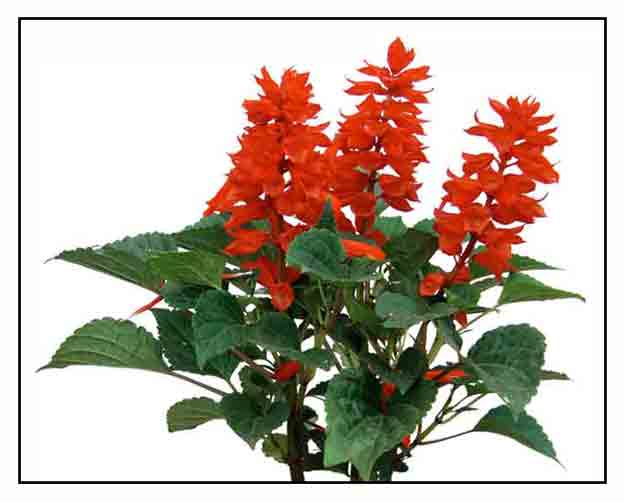
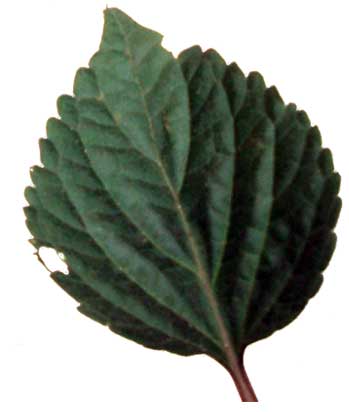
Salvia splendens is a small tender herbaceous perennial shrub, growing to a height of 90 centimeters. Leaves are ovate, acuminate and light green with toothed margins. Flowers are glabrous, bilabiate and bright red.
Distribution
- Recently introduced to the Philippines.
- Grows well in Baguio City and other elevated regions.
- Popular ornamental bedding or pot plant.
- Native to Brazil.
Constituents
• Study of methanol extract of aerial parts yielded three new diterpenes named splenolide A, B and C.
• Contains neo-clerodane diterpenoid compounds – salviarin and splendidin – believed to have psychoactive effects.
• Study identified figments of flowers as pelargonidin 3-caffeoylglucoside-5-dimalonylglucoside and pelargonidin 3-p-coumaroylglucoside-5-dimalonylglucoside.
 • Study of leaves yielded 12 phenolic metabolites including three phenolic acids: caffeic acid (1), rosmarinic acid (2) and methyl rosmarinate (3); four flavone glycosides viz the new compound luteolin 7-O-(4″,6″-di-O-α-L-rhamnopyranosyl)-β-D-glucopyranoside (4), apigenin 7-O-β-D-rutinoside (5), cosmosiin (6) and cinaroside (7), together with four flavones aglycone, luteolin (8), apigenin 9, pedalitin (10) and crisiliol (11) in addition to one coumarin, 6,7-dihydroxycoumarin (12). (see study below) (12) • Study of leaves yielded 12 phenolic metabolites including three phenolic acids: caffeic acid (1), rosmarinic acid (2) and methyl rosmarinate (3); four flavone glycosides viz the new compound luteolin 7-O-(4″,6″-di-O-α-L-rhamnopyranosyl)-β-D-glucopyranoside (4), apigenin 7-O-β-D-rutinoside (5), cosmosiin (6) and cinaroside (7), together with four flavones aglycone, luteolin (8), apigenin 9, pedalitin (10) and crisiliol (11) in addition to one coumarin, 6,7-dihydroxycoumarin (12). (see study below) (12)
• Study of acetone extract of flowers yielded four clerodane diterpenoids A-D (1-4), together with an artifact (5) from salvisplendin (4), together with known clerodane olearin (6). (14)
- Phytochemical screening of methanol extract of leaves yielded alkaloids ++, anthocyanins +++, carbohydrates +, flavonoids +++, phenols ++, glycosides ++, reducing sugar +, saponins +, sterols +, terpenoids +++, and tannins +. (see study below) (16)
- Study for essential oil
from aerial parts yielded 0.13%, with six identified compounds, accounting for 100% of the essential oil, with main components of phytol (41.46%), cyclooctasulfur (24.88%), and 2,2'-methylene-bis[6(1.1-dimethylethyl]-phenol (12.42%). (see study below) (17)
Properties
• Reports of anxiolytic and psychotropic effects.
• Studies have suggested antimicrobial, antihyperglycemic, anticoagulant, anti-inflammatory, wound healing, mosquito larvicidal properties.
Parts
utilized
Bark, leaves.
Uses
Folkloric
• No reported folkloric medicinal use in the Philippines.
• In Indian traditional medicine, used in the treatment of diabetes mellitus.
• Leaves used for dressing wounds,
treating colds and coughs.
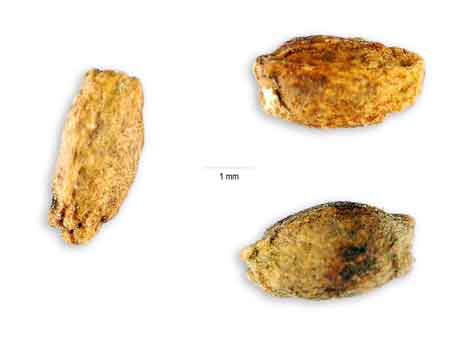
• Seeds used as emetic, for dysentery, colic, hemorrhoids.
Others
• Used for psychoactive effects.
• Tincture used by some in combination with Salvia divinorum for meditative effects.
 Studies Studies
• Splenolides:
Study of aerial parts yielded three new diterpenes: splenolide A, B and C. (1)
• Antimicrobial:
Study isolated three major compounds – compound 1 showed larger zones of inhibitions against Gram-positives (B pumilus, B subtilis, S aureus), Gram-negatives (P vulgaris, E coli, P aeruginosa) and Candida albicans. (2)
• Anticoagulant / Toxicity Study:
Results showed anticoagulant property. An aqueous root extract increased clotting time of dog's plasma by increasing the prothrombin time from 10-15 to 35 seconds, an effect that was plant part-dependent, i.e., aerial parts and roots. Toxicological study showed the drug is toxic only in higher doses and causes hemorrhages. LD50 was 1287.3 mg/kg. (3)
• Antihyperglycemic / Aerial Parts:
Study showed both aqueous and methanolic extract from the aerial parts produced significant r(p<0.001) reductions of glycemia in streptozotocin (STZ)-induced diabetic rats. Results showed antihyperglycemic potential in ameliorating diabetic conditions in rats. (7)
• Salvinorin A / Neoclerodane / Opioid Affinity:
Salvinorin A, a neoclerodane diterpene from the hallucinogenic Salvia divinorum, is the only known non-nitrogenous and specific k-opioid agonist. Study yielded structural congeners of salvinorin A together with semisynthetic derivatives. One compound showed modest affinity for k receptors suggesting other natural neoclerodanes from different Salvia species may possess opioid affinity. (9)
• Antioxidant Activity:
Study evaluated methanolic extracts of Salvia splendens and Pterospermum acerifolim for antioxidant property. Results showed significant decreases in the DPPH radical, hydrogen peroxide, and superoxide anion in various concentrations tested. Results were comparable to standards I-ascorbic acid and BHA. S. splendens quantitatively showed lesser activity. Antioxidant activity of SS were attributed to phytoconstituents terpenoids and anthocyanins. (11)
• Polyphenolic Profile / Hypoglycemic and Anti-Inflammatory / Toxicity Study / Leaves:
Study evaluated a new flavone triglycoside, together with 11 phenolic metabolites from an 80% aqueous methanol extract of S. splendens leaves. Hypoglycemic activity was assessed by measuring blood glucose in STZ-induced diabetic rats, while anti-inflammatory activity was evaluated using carrageen-induced paw edema test. Antioxidant activity was evaluated in vitro using DPPH test. The extract was non toxic to mice up to 5 g/kbw. Study showed significant hypoglycemic and anti-inflammatory activity, together with markedly significant scavenging activity against DPPH. (see constituents above) (12)
• Wound Healing Activity / Ointment Formulation:
Study evaluated the in vivo wound healing effect of various strengths of herbal ointment formulated with Salvia splendens in excision and incision wound healing model models on experimental albino mice. SS was embedded in the ointment bases. Results showed wound healing activity better than the standard antibiotic Nitrofurazone. (13)
• Clerodane Diterpenoid / Splendidin / No k-Opioid Receptor Effect:Salvinorin, the clerodane diterpenoid, is considered the main active component of the psychotropic herb Salvia divinorum, reported a potent agonist at the k-opioid receptor. Splendidin from S. splendens, as well as related compounds, was tested for possible similar activities. However, none of the compounds showed any significant binding to any of the opioid-receptor subtypes. (15)
• Antimicrobial / Antioxidant / Leaves: Study evaluated the phytochemical constituents, antioxidant, and antimicrobial activities of S. splendens leaves. The leaf extract showed antimicrobial effects against selected microorganisms. A methanolic extract showed highest flavonoid content (117.4 mg Quercetin equivalent per 1 gm and phenolic content of 17 mg of gallic equivalent per 1 gm. (see constituents above) (16)
• Acute Oral Toxicity: Study evaluated the acute oral toxicity of petroleum ether, ethyl acetate and methanol fractionate of Salvia splendens in Swiss mice based on OECD guidelines 423 using single doses of 5, 50, 300, and 2000 mg/kbw. The highest dose of 2000 mg/kbw did not produce mortality or changes in general behavior on the test animals. (17)
• Mosquito Larvicidal / Essential Oil: Study evaluated essential oils from aerial parts of four Salvia taxa species against fourth instar larvae of Aedes albopictus Skuse. At dosage of 200 ppm, S. splendens Scarlet Sage Red essential oil induced 75% larval mortality, and at decrease dose of 50 ppm, the larval mortality was 27.5%. Among the EO, S. elegans was most effective. (see constituents above) (18)
Availability
Wild-crafted.
Tinctures in the cybermarket. |