 General info General info
-
There are about 500 species in the genus Ixora. A few are in cultivation. There are numerous cultivars differing in flower color (yellow, pink, orange) and plant size. Several cultivars are dwarfs, under 3 feet. Other noteworthy ornamental
santans: santan puti (Ixora finlaysoniana Wall), a shrub 2-4 m high,
with white fragrant flowers; and Philippine santan (Ixora philippinensis
Merr), a shrub or small tree, with white to pink flowers.
- Ixora coccinea is a species of flowering plant in the family Rubiaceae.
- Etymology: Genus Ixora is supposed to be derived from the Sanskrit word "ikvana", after a Malaysian deity, or, possibly, from the name "Iswara", the other name of the Lord Shiva to whom the flowers are offered during worship. The species name "coccinea" means scarlet. (63) Ixora is Latinized from Sanskrit Ishwara, one of the names of the Hindu god Shiva. (64) The name derives from the word 'Isvara' or Ishwara, a name variously meaning God, Supreme Being, Supreme Soul, lord, in India, (65) The species epithet coccinea derives from Latin, meaning 'scarlet', referring to its bloom color.
- Ixora coccinea was first described in 1753 by Carl Linnaeus in his Species Plantarum.
- Ixora coccinea is the national flower of Suriname.
 Botany Botany
• Santan is an
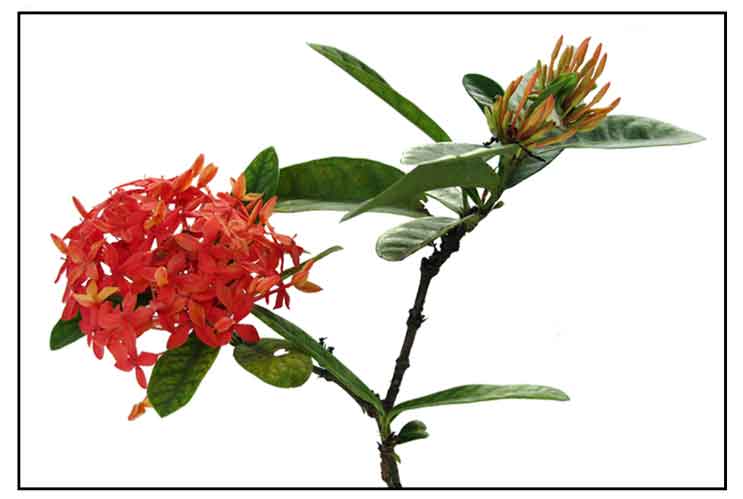
erect and smooth ornamental shrub, growing to a height of 2 to 3 meters. Leaves
are stalkless or on very short stalks, oblong, 5 to 9 centimeters long, heart-shaped
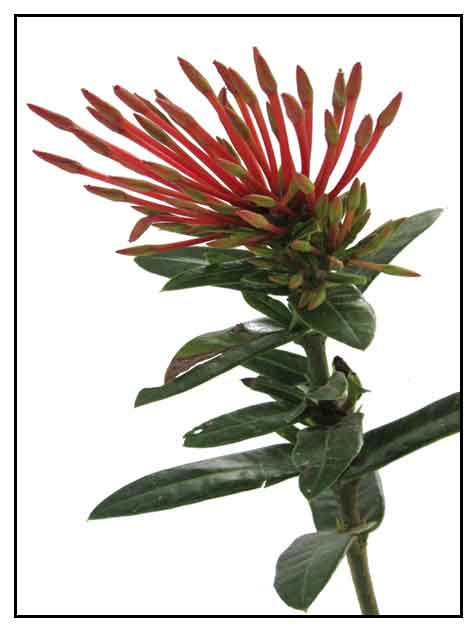
or rounded at the base and blunt-tipped. Flowers are many, pink or
red, and borne in terminal, stalkless or shortly stalked, hairy cymes. Calyx teeth are short and pointed.
Corolla-tube is slender, 2.5 centimeters long; lobes are spreading and oblong,
about half the length of the tube. Fruit is reddish, almost round, about
5 millimeters in diameter.
• Ixora coccinea is a branched shrub, up to 1 m tall; branches hairless. Leaves are mostly stalkless, opposite deccussate, 4-8 x 1.5-6.5 cm, entire, apiculate, blunt or with a short sharp point, 8-15 pairs at lateral nerves, hairless; stipules triangular, cuspidate or awned. Flowers are borne at branch-ends, in dense corymb-like cymes, flower-cluster-stalk very short or absent; bracts about 8 mm long. Flowers are stalkless, bright scarlet, hypanthium 1-1.5 mm long, becoming hairless, teeth, about 0.5 mm long. Flower-tube is prominently long, 2.5-4.0 cm long, 1.5 mm wide, hairless, petals 8-10 x 4-5 mm, twisted in bud, throat hairless. Stamens are 4, inserted on the throat of flower-tube, filaments very short. Style protruding; stigma 1.5 mm long. Fruit is spherical, red when ripe, crowned with the sepal-cup teeth. (66)
Distribution
-
Cultivated for ornamental purposes.
- Nowhere established in the Philippines.
- Native to Bangladesh, Cambodia, India, Sri Lanka, Thailand, Vietnam. (44)
- Now pantropic.
 Constituents Constituents
- Root contains an aromatic
acrid oil, tannin, fatty acids, and a white crystalline substance.
- Leaves yield flavonols kaempferol and quercetin, proanthocyanidins and
phenolic acids and ferulic acids.
- Flowers contain cyanidin and flavonoids, and a coloring material related
to quercitin.
- Flowers yielded tannins, lupeol, fatty acids, ß-sitosterols, cycloartenol esters and flavonoids.
- Preliminary phytochemical screening yielded alkaloids, carbohydrates, flavonoids, glycosides, tannins, resins, saponins, triterpenoids and steroids. Roots yielded six phytoconstituents, viz. 9, 12- octadecadienoic acid, di-n-octyl phthalate, β- amyrin, kaempferol-7-o-glucoside, kaempferitrin and quercitrin.
(31)
- Plant yields lupeol, ursolic acid,
oleanolic acid, sitosterol, rutin, lecocyanadin, anthocyanins, proanthocyanidins, glycosides of kaempferol and quercetin. (45)
- Hexane extract of flowers yielded a mixture of α- and ß-amyrin. (47)
- Phytochemical screening of flower extracts yielded tannins and phenols in the methanol extract and tannins, phenols, flavonoid, and terpenoids in the ethyl acetate extract.
(see study below) (53)
- GC-MS analysis of leaves for essential oil yielded 43 compounds representing 94.67% of the oil constituents, with eight classes of compounds i.e., hydrocarbons, alcohols, carboxylic acids, esters, aldehydes, ketones, sesquiterpenoids, and triterpenoids.
Dominant compounds were malonic acid, 2-heptyl tetradecyl ester 10.26%, decane 11.12%, and linalool 10.54%. (see study below) (56)
- Phytochemical studies have yielded important phytochemicals such as lupeol, ursolic acid, oleanolic acid, sitosterol, rutin, lecocyanadin, anthocyanins, proanthocyanidins, glycosides of kaempferol and quercetin. (63)
- Preliminary screening of methanolic extract of flowers revealed secondary metabolites like flavonoids, phenols, steroids, and tannins. Total estimated phenolic content of flowers was 30.6 mg/g dry weight. (see study below) (69)
- Methanolic extract of flowers revealed glycosides, flavonoids, terpenoids, tannins, and saponins. (see study below) (71)
Properties
- Considered internally sedative, stomachic, tonic, antiseptic, cholagogue; externally, astringent and antiseptic.
- Stimulates gastric secretions.
- Flowers considered cytotoxic, hepatoprotective, antimicrobial.
- Studies have showed hepatoprotective, chemoprotective, antimicrobial, antioxidant, antinociceptive, anti-inflammatory, wound healing, analgesic, anti-mutagenic, antitumor, anti-diarrheal, anxiolytic, antidiabetic, CNS depressant, skin whitening, antityrosinase, antiulcer, phytosomal potential, carcinogenesis-inhibitory, antimicrobial soap properties.
Parts utilized
Leaves, roots, stems and
flowers
 Uses Uses
Edibility
- In India and Sri Lanka, the fruits are eaten and the flowers are used as flavoring.
Folkloric
- In the Philippines, root decoction used as sedative in the treatment of nausea, hiccups, and loss of appetite.
- Used for dysenteric diarrhea and associated colic pains.
- Flowers used for dysentery and leucorrhea.
- Poulticed fresh leaves and stems for sprains, eczema, boils and contusions.
- Diluted tincture of roots for mouthwash and gargles for sore throat.
- Flower decoction used for hypertension, amenorrhea and irregular menstruation, hemoptysis, catarrhal bronchitis.
- Decoction of leaves for wounds and skin ulcers.
- In Bengal, roots are used
for dysentery.
- In Bombay, flowers used for dysentery.
- Flowers and bark used for blood-shot eyes.
- Root, ground into pulp, mixed with water and pepper, or as tincture,
used for diarrhea and dysentery.
- Externally, powdered roots moistened with a little water on a piece of lint is applied to sores and chronic ulcers.
- In Indo-China, root decoction
used to clarify the urine.
- In India, flowers are ingredient to Ayurvedic cancer formulations.
(47)
- In Sri Lanka, flower juice used as drops for redness of the eyes. Flower infusion used as bathing for infants to protect against skin disease. Used as sedative for hiccups, loss of appetite, fever and gonorrhea. Used for dysentery, hemoptysis, catarrhal bronchitis, and dysmenorrhea.
Others
- Agroforestry: Cultivated and used as ornamental hedge.
- Dye: Yields a natural dye. (see study below) (74)
Studies
• Wound healing / Flowers:
Study evaluated an alcoholic extract of Ixora coccinea flowers for effect on wound healing in a rat model using a dead space wound model. Results showed increase in granuloma tissue weight,
tensile strength and glycosaminoglycan content. The prohealing activity
was attributed to increased collagen deposition, alignment and maturation. (1)
• Antimicrobial:
Extract studies of EC for antimicrobial activity showed the ethyl fraction
to be more active than the methanol fraction. (2)
• Antioxidant: Phytochemical
screening showed the flower extract to possess flavonoids, steroids,
tannin. IC showed strong reducing power and total antioxidant capacity. (3)
• Pharmacologic evaluation / Electroconvulsive Protective:
Evaluation showed that IC has protective property against electroconvulsions,
anti-inflammatory and hemostatic properties. (4)
• Hepatoprotective / Flowers:
Extract of IC flowers showed significant hepatoprotective effect against
paracetamol overdose-induced hepatotoxicity in rats. (5)
• Chemoprotective / Modulatory / Flowers: The active fraction of Ixora coccinea flowers showed chemoprotective effects on cyclophosphamide-induced
toxicity in mice as evidenced by increase in life span of treated mice, prevention of body weight loss, and maintenance of hemoglobin and leucocyte levels to near normal. Decreased SGPY and serum AKP indicated protection against hepatic toxicity. Active fraction was identified as the triterpenoid, ursolic acid. (6)
• Chemoprotective / Cisplatin-Induced Toxicity: Active fraction from Ixora coccinea flowers prevented a decrease in body weight, hemoglobin levels and WBC counts of mice treated with cisplastin with significant prolongation of life span of cisplatin-treated mice. (14)
• Antinociceptive :
Study showed the aqueous leaf extract of IC possesses considerable antinociceptive
activity mediated centrally via a dopaminergic mechanism. In addition, the antioxidant activity may play a role in inducing antinociception. The dopaminergic and antioxidative activities may arise from alkaloid and flavonoid constituents, respectively. (7)
• Anti-Inflammatory / Anti-mitotic / Lupeol / Leaves:
Lupeol, isolated from the leaves of IC, was shown to have anti-inflammatory
activity in carrageenan induced paw edema in rats. Anti-mitotic activity
was also noted in a preliminary cytotoxic study. No toxicity was observed for lupeol up to a dose level of 600 mg/kbw. (8)
• Cytotoxic / Antitumor / Flowers: Study evaluated the antitumour activity of I. coccinea flowers in comparison to intraperitoneally transplanted Dalton's lymphoma (ascitic and solid tumors) and Erhlich ascites carcinoma (EAC) tumors in mice. Intraperitoneal administration of 200 mg/kg of active fraction (AF) of flower extract increased the life-span of DLA and EAC ascitic tumor-bearing mice by 113 and 68%, respectively. The AF showed greater activity on ascitic tumors than solid tumors. It had no toxicity to normal lymphocytes but was toxic to transformed lymphocytes from leukemic patients, acute lymphoblastic leukemia (ALL), chronic myelogenous leukemia (CML), and K=-562 suspension cell cultures. The AF inhibited tritiated thymidine incorporation in cellular DNA.(9)
• Anti-Inflammatory / Leaves: Study of the aqueous leaf extract of Ixora coccinea showed strong antihistamine and antioxidant activity that can account for its anti-inflammatory potential. In addition, the inhibition of prostaglandins and bradykinins may play a role in its anti-inflammatory effect. (10)
• Anti-Ulcer / Leaves: Study of the fresh leaf extract of Ixora coccinea was found to possess potent anti-ulcerogenic property and could be a potential therapeutic agent against ulcer disease. (11)
• Antidiarrheal / Leaves: Study of aqueous extract of leaves of Ixora coccinea showed significant inhibitory activity against castor oil-induced enteropooling in rats. There was significant reduction in gastrointestinal motility by the charcoal meal test. (12)
• Bioactive Peptides / Anticancer / Platelet-Aggregation Inhibition: Study of methanol extract of Ixora coccinea yielded ixorapeptide I and ixorapeptide II, in addition to 28 other known compounds. Compound 1 exhibited selective potency against Hep3B liver cancer cell line. Compound 2 showed superoxide anion generation and elastase release. Kaempferol and luteolin from the plant showed inhibition of collagen-induced platelet aggregation. (13)
• Anthelmintic / Roots: Study evaluated the anthelmintic activity of different extracts of Ixora coccinea roots on earthworm Pheretima posthuma. Results showed good anthelmintic activity with the chloroform extract showing better activity than petroleum ether, ethyl acetate and methanol extracts. Albendazole was used as standard. (15)
• Antidiarrheal / Flowers: Study evaluated the antidiarrheal effect of an aqueous extract of I. coccinea in experimental models of diarrhea in albino Wistar rats. The plant extract showed significant (p<0.001) inhibitory activity against castor oil induced diarrhea and castor oil induced enteropooling in rats. There was significant reduction in gastrointestinal motility in the charcoal meal test. (16)
• Anti-asthmatic / Leaves: Study of an hydroalcoholic leaf extract in ovalalbumin-induced asthmatic rat model showed anti-asthmatic activity suppressing airway inflammation and airway hyperactivity. It also showed inhibitory effect on immediate allergic reactions probably mediated by reducing the release of mediators such as histamine from mast cells. (17)
• Cardioprotective / Doxorubicin-Induced Toxicity: Study of a methanolic extract of leaves showed dose-dependent cardioprotection against doxorubicin-induced toxicity. The cardioprotection was attributed to to antioxidant properties. (19)
• Anti-Inflammatory / Leaves: Study of a methanolic leaf extract showed dose-dependent anti-inflammatory activity probably mediated via inhibition of NO production, phagocytic cell infiltration, anti-histamine effect, scavenging of free radicals, membrane stabilizing activity and lipid peroxidation. (20)
• Wound Healing / Antibacterial: Study of an root extracts showed pronounced wound healing and antibacterial activity. It is proposed the external application of the extract prevented microbes from invading the wound. An aqueous extract showed moderate inhibition against all bacterial strains tested. (21)
• Anti-Tyrosinase / Antioxidant / Cosmetic Applications: Study evaluated different parts of Ixora coccinea in various solvents for antityrosinase and antioxidant activities. A methanolic extract of bark exhibited the highest inhibition of DPPH when compared to flowers and leaves. The antioxidant potential of leaves and flowers were comparable to the bark. Results suggest Ixora coccinea is a potential source of ingredients for cosmetic products. (22)
• Anxiolytic / Whole Plant: Study evaluated the anxiolytic activity of extract of shade-dried pulverized whole plant of Ixora coccinea using an Elevated plus maze model and Hole board test in Swiss albino mice. The ethanolic extract showed significant (P <0.01) anxiolytic effect in a dose-dependent manner when compared with standard dose of diazepam. (23)
• Analgesic / Anti-Inflammatory / Flowers: Study showed all flower extracts tested with significant analgesic and anti-inflammatory activities. Results suggest the plant can be developed as a good hepatoprotective, anti-inflammatory and analgesic agent. (24)
• Wound Healing / Anti-Inflammatory / Flowers: Study showed an Ixora coccinea methanol extract to have potent antimicrobial and antioxidant properties, with significant fibroblast proliferation. The ME stimulated the fibroblast growth factor and Smad mediated collagen production in wound tissue. (25)
• Analgesic / Anti-Inflammatory / Antipyretic / Leaves: Study showed an ethanolic extract of leaves with analgesic, anti-inflammatory, and antipyretic activities. Phytochemical screening yielded flavonoids, tannins, and triterpenes. (26)
• Anti-Leishmanial / Leaves: Study evaluated the in vitro antileishmanial activity of leaves from Ixora coccinea. Both ethyl acetate and methanol extracts markedly inhibited growth of L. donovani promastigotes in vitro in a dose-dependent manner. (27)
• Anti-Diabetic / Hypolipdemic / Leaves: Study evaluated the hypoglycemic and hypolipidemic activity of aqueous extracts of leaves in alloxan induced diabetic albino rats. Results showed significant reduction (p<0.01) in blood glucose levels and serum lipid profile levels. (28)
• Quercitrin / Antioxidant / Leaves: Quercitrin isolated from air-dried leaves of Ixora coccinea showed potency in scavenging DPPH free radicals and nitric oxide free radicals with very low IC50 values. (29)
• Antibacterial / Leaves: Study evaluated the antimicrobial activities of leaf extracts of Ixora coccinea and Commelina benghalensis against various Gram-negative (E. coli, P. aeruginosa, S. typhi) and Gram-positive organisms (S. aureus). Hexane and chloroform extracts exhibited comparable antimicrobial activity with the standard. (30) Study evaluated leaf extracts of different colored varieties of Ixora coccinea against drug resistant pathogenic bacterial. An ethyl acetate extract of all varieties showed significant concentration-dependent antibacterial activity, especially against Gram-negative bacteria. (32)
• Antifungal / Leaf Extract: Study evaluated a crude leaf extract for antifungal potential against Botrytis cinerea. A diethyl ether fraction yielded bioactive phytochemicals with potential as ecofriendly alternative to control the spread of Botrytis cinerea. (33)
• Antimicrobial / Flowers: Study evaluated various extracts of Ixora coccinea flowers for antibacterial activity. An ethanol extract showed greater concentration-dependent activity than methanol and distilled water extracts, and greater activity Gram-negative bacteria than Gram-positive bacteria. (34)
• Natural Indicator in Acid Base Titration / Flowers: Study reported on the use of Ixora coccinea flower extract as an acid base indicator in different types of acid base titrations. Results showed the use of I. coccinea to be very useful, economical, simple, and accurate for said titration. (35)
• Anthocyanin / Colorant / Flowers: Study reports on a simple and efficient microwave oven extraction for maximum yield of colorant from Ixora coccinea flowers. Results provide information to tap its potential as a colorant in acidic foods or cosmetics. (36)
• Silver Nanoparticles / Antitumor / Antimicrobial / Flowers: Study reports on the synthesis of silver nanoparticles using aqueous extract of Ixora coccinea flowers. The synthesized nanoparticles showed inhibitory zones to bacterial cultures (Pseudomonas putida, E. coli, S. aureus, K. pneumonia and B. subtilis).The biologically synthesized nanoparticles showed potent anti-proliferative activity against Colo205 cell line, which is less cytotoxicity than the positive control, Etoposide. (37)
• Zinc Oxide Nanoparticles / Leaves: Study reports on the inexpensive, convenient, and ecofriendly synthesis of nanostructured zinc oxide particles using zinc acetate and I. coccinea leaf extract. The ZnOx nanoparticles presents varied potential applications in biomedical, cosmetic, biotechnology, drug delivery, water remediation, among others. (54)
• Extraction of Natural Colorant / Flowers: Study reports on the use of an extract isolated from the flower petals of Ixora coccinea aqueous and methanol extracts as a natural dye for cotton fabric coloration. (38)
• Comparative Antibacterial Activity / Flower Colors: Study evaluated the comparative antibacterial activity of Ixora coccinea plants with red, orange, pink, and white flowers against tested bacteria E. coli, S. aureus, B. subtilis, K. pneumonia. Both methanolic and aqueous extracts of all four types of flowers exhibited considerable antibacterial activity against the test bacteria. Methanolic extracts of red and pink flowers showed high antibacterial activity while orange flowers showed moderate activity and white flowered showed low activity. Methanolic extracts showed higher inhibitory effects than aqueous extracts. (39)
• Comparative Free Radical Scavenging Activity / Leaf Extracts: In a study of free radical scavenging activity of chloroform, methanolic, and aqueous leaf extracts by DPPH free radical, NO, OH radical scavenging assay, reductive ability and total antioxidant activity, the methanol extract showed better scavenging and antioxidant property. (40)
• Lipid Lowering / Leaves: Study of coccinea leaf extracts in Triton-X100 induced hyperlipidemia in rats showed a significant decrease in plasma lipid levels. Results suggest potent lipid lowering and antioxidant properties suggesting a cardioprotective and antiatherosclerotic role. (41)
• Immunomodulatory / Flowers: Study investigated the immunomodulatory potential of a methanolic extract of flowers of I. coccinea in rats through cell mediated and humoral immunity responses. Findings showed a significant increase in neutrophil adhesion and a significant increase in phagocytic index. Results demonstrated a profound immunostimulant activity in a male albino rat model. The activity may be attributed to the presence of flavonoids, alkaloids, steroids, and tannin compounds. (42)
• Antibacterial / Acne / Leaves and Flowers: Study investigated the antibacterial effectiveness of Santan against Propionibacterium acnes that cause pimples. Results showed the antibacterial efficacy of Santan was less than commercialized antibacterial. (43)
• Anti-Inflammatory / Antioxidant / Roots: Study evaluated the anti-inflammatory potential of an ethanolic extract of Ixora coccinea roots. In carrageenan induced paw edema all extracts caused a significant (p<0.05 to 0.001) and marked reduction (28-59%) in paw edema. Cotton pellet granuloma testing showed marked inhibition (36.1%) of granuloma weight. Extract also showed promising dose-dependent antioxidant activity compared to Butylated hydroxyl toluene (BHT) which may account for it anti-inflammatory potential, together with inhibition of prostaglandins and bradykinins. (46)
• Anti-Tumor / Flowers: Flowers have shown antitumor activity in murine models. Inhibition of tumor growth and increased life span were noted in Dalton's lymphoma and Ehrlich ascites carcinoma-bearing mice. (Latha et al) Ixorapeptide I from I. coccinea exhibited cytotoxicity against Hep3B liver tumor cell line. (Lee Cl et al) (47)
• Analgesic / CNS Depressant Activity: Study of chloroform solvent extracts of Ixora coccinea in Swiss albino mice showed good CNS depressant (open field and hole cross method) and analgesic (acetic acid induced pain method) properties All results were statistically significant (p<0.001). (48)
• CNS Depressant Activity / Leaves: Neurophamacological studies of n-hexane and methanol extracts of leaves showed slight CNS depressant activities. The aqueous extracts of shoots showed the most potent CNS depressant activity. (49)
• Antibacterial / Leaves: Study evaluated the antibacterial property of various solvents of leaves of Tecoma stans, Ixora coccinea, and Aerva lanata against drug-resistant cattle pathogenic bacteria, Streptococcus sp. and Pseudomonas aeruginosa. All bacterial strains were found to be sensitive to most of the solvents. I. coccinea had maximum antibacterial potential against Streptococcus sp. and significant zone of inhibition against Pseudomonas aeruginosa. Results suggest a potential for livestock pharmaceutical applications. (50)
• Copper Oxide Nanoparticles / Leaves: Study reports on a new simple and eco-friendly synthesis of copper oxide nanoparticles using Ixora coccinea leaves. Results suggest a potential for large scale commercial production. (51)
• Antioxidant Activity / Flower: Study evaluated the total phenolic content and antioxidant capacities of edible flower tea drinks. Ixora coccinea exhibited a high level of TPC (total phenolic content) and high FRAP value. (52)
• Antioxidant / Cytotoxicity / Flowers: Study evaluated flower extracts for phytochemicals, antioxidant and cytotoxic activities. Antioxidant activity was evaluated using DPPH, superoxide anion radical scavenging, LPO assay, H2O2, NO scavenging assays, and MTT assay. Study showed EAE and ME possessed antioxidant activity. EAE exhibited potent cytotoxic activity on human cancer cell line, HeLa, and suggests a potential for the treatment of cancer. (see constituents above) (53)
• Hepatoprotective / Antioxidant: Study evaluated the protective effects of three herbal ethanolic extracts (roots of Ixora coccinea and Rhinocanthus nasuta and whole plant of Spilanthes ciliata) on aflatoxin B1 (AFB1)-intoxicated livers of albino male Wistar rats. Results showed pre-treatment with the ethanolic extracts prior to AFB1 provided significant protection against toxin-induced liver damage as evidenced by lowering of serum enzymes and enhanced hepatic reduced GSH status. The three extracts exhibited significant antilipid peroxidant effects in vitro. (55)
• Antimicrobial / Essential Oil / Leaves: Study evaluated the chemical constituents and antimicrobial activity of leaf essential oil of Ixora coccinea. GC-MS analysis yielded 43 compounds representing 94.67% of the oil constituents, with eight classes of compounds i.e., hydrocarbons, alcohols, carboxylic acids, esters, aldehydes, ketones, sesquiterpenoids, and triterpenoids. The EO showed significant antimicrobial inhibitory activity against test organisms i.e., A. aureus, P. aeruginosa, E. coli, C. albicans, and Mycobacterium tuberculosis, with MICs ranging from 50 to 200 µg/mL. (see constituents above) (56)
• Antibacterial / Flowers: Study evaluated the antibacterial activity of methanol and aqueous extracts of flower of Ixora coccinea against fish virulent strains of bacterial isolates viz., S. aureus, E. coli, K. pneumonia, V. cholera, A. hydrophila, and P. aeruginosa using Agar well diffusion method. The ME showed maximum ZOI compared to aqueous extract. Activity was attributed to presence of phytochemical compounds like alkaloids, tripenoids, saponins, flavonoids, phenols, tannins, protein, carbohydrates, and glycosides. (57)
• Antidepressant: Study evaluated the antidepressant activity of I. coccinea extracts in mice using tail suspension test, forced swimming, and open field tests. A methanol extract showed antidepressant properties in mice with reduced total duration of immobility in the TST, without any significant effect on locomotor activity in the OFT. (58)
• Antifertility / Bark: Study evaluated the antifertility effect of Ixora coccinea ethanol extract of bark in female Wistar albino rats. Results showed dose dependent anti-implantation and abortifacient activity. Results were supported by hormone estimation and histological evaluation. (59)
• Antifungal / Botrytis cinerea / Herbal Mixture: Study evaluated the antifungal property of crude rhizomatous extract or Curcuma caesia and leaf extract of Ixora coccinea against Botrytis cinerea. Results showed higher antifungal efficiency than either of the plant used alone. The diethyl ether fraction contained bioactive phytochemicals with ecofriendly potential for use against the plant pathogen. (60)
• Antihypertensive / Essential Hypertension / Flowers: Study evaluated the antihypertensive effect of a flower decoction on 28 patients aged 45-65 diagnosed with essential hypertension. Results showed a significant difference between mean arterial pressure between treatment and control group. Results suggest potential as adjunct therapy in patients being treated for essential hypertension. (61)
• Anti-Dandruff / Nanoparticles / Flowers: Study reports on the ecofriendly synthesis of nanoparticles using flower extracts of Ixora coccinea as reducing and stabilizing agent. Malassezia furfur was isolated and identified from the dandruff sample. The nanoparticles showed significant antidandruff activity. Results showed potential for a formulated herbal shampoo that is eco-friendly and effective, with comparable results to commercially available shampoo. (62)
• Wound Healing / Antimicrobial / Hydrogel Formulation / Leaves: Study evaluated the antimicrobial and wound healing property of preformulated hydrogel containing the methanolic leaf extract of Ixora coccinea on a wound excision model in rats. The preformulated hydrogel was effective against S. aureus (p<0.001) but resistant to P. aeruginosa and S. epidermis. The wound contraction rate in preformulated treated group was significantly higher than in groups treated with hydrogel base and povidone-iodine. In acute dermal irritation test showed no dermal erythema and edema with albino rabbits. Results showed the preformulated hydrogel from ME of leaves is non-irritating and effective against Staphylococcal infections common found in wounds, and has potential as substitute for povidone iodine in wound treatment. (65)
• Potential as RTS (Ready-to-Serve Beverage) / Antioxidant / Anticancer / Fruits: Study evaluated fruits of Ixora coccinea for phytoconstituents, bioactivities, invitro antioxidants, anticancer activities for development of ready-to-serve beverage. Phytochemical screening of fruits yielded total phenolics, flavonoids, and anthocyanin contents of 128, 20.63, and 30 mg/100g FW, respectively. HPLC revealed sinapic acid (21.96 mg) and myricetin (0.13 mg) as major phenolics. A methanol extract showed highest invitro antioxidant activity. The fruit extract exhibited anticancer activity against LNCaP.FGC cells with IC50 34.09 mg/ml. A RTS beverage was developed with 15% fruit pulp having the highest sensory acceptability. The beverage retained total phenolic, flavonoid, and anthocyanin content of 35.51, 9.12, and 3.51 mg/100 ml, respectively. (67)
• Analgesic, Antidiarrheal, CNS Depressant / Flowers: Study evaluated the pharmacological effects of methanolic flower extract of Ixora coccinea in Swiss albino mice. The ME (50 and 100 mg/kbw) showed good analgesic activity by acetic acid-induced writhing method and tail immersion test. The ME showed significant and dose dependent antidiarrheal activity against castor oil induced diarrhea on mice. Open field test and hole cross test showed maximum depressant effect at dose of 100 mg/kg. (68)
• Antidiabetic / Flowers: Study evaluated the phytochemical bioactive compounds of 80% methanolic extract of I. coccinea flowers and its invitro antidiabetic activity by
α-amylase and α-glucosidse inhibition. Assay results showed dose dependent (20-100 µg/ml) increase in inhibitory effect on α-glucosidase (up to 70%) and α-amylase enzyme (up to 72%). The invitro antidiabetic activity may be attributed to high amount of bioactive compounds such as polyphenolics. (see constituents above) (69)
• Antityrosinase / Skin Whitening / Antioxidant / Roots: Study evaluated the antioxidant and antityrosinase activities of Ixora coccinea roots.
Methanolic extracts of Ixora coccinea exhibited highest DPPH radical scavenging activity with IC50 of 26.88 µg/ml compared to aqueous and ethyl acetate extracts. The antioxidant activity was comparable with standard ascorbic acid. The ME also exhibited potent tyrosinase inhibition with IC50 of 120.03 µg/ml using Kojic acid as reference standard. Results showed ME of roots have superior skin whitening and antioxidant activities and potential source of natural ingredient for formulating cosmetic products. (70)
• Anti-Ulcer / Polyherbal Formulation / Flowers: Study evaluated the antiulcer and invitro antioxidant activities of methanolic flower extract of Ixora coccinea (MEIC) and methanolic polyherbal extract (MPE) of Ixora coccinea flowers, Psidium guajava roots, and Neolamarckia cadamba leaves. Ulcers were induced by pyloric ligation and aspirin.
All extracts of MEIC and MPE dose dependently reduced volume of acid secretion, free acidity, and total acidity in both ulcer models. The MPE showed highly significant (79%) ulcer curative potential and decreased ulcer formation in both models. Results showed potent antiulcer and antioxidant potential in MEIC and MPE in both animal models. Synergistic effect was seen with MPE. (see constituents above) (71)
• Phytosome Formulation Potential / Anticancer / Leaves and Flowers: Study evaluated leaf and flower parts of Ixora coccinea and Ixora alba for isolation of active fractions, and determined invitro antitumor activity against malignant melanoma cell lines for phytosome formulation.
Ixora coccinea ethyl acetate extract of leaves revealed significant total flavonoid content and presence of high QCE (quercetin) by HPTLC analysis. Invitro skin anticancer activity of ICLEA was confirmed by MTT assay, and was selected as potent fraction to develop a phytosome. (72)
• Inhibition of Chemical Carcinogenesis / Flowers: Topical application of 100 mg/kbw of active fraction of Ixora coccinea flower inhibited the growth and delayed the onset of papilloma formation in mice, initiated and promoted with 7,12-dimethylbenz(a)anthracene (DMBA) and croton oil, respectively. The active fraction at the same dose, orally administered, inhibited the growth of subcutaneously injected 3-methylcholanthrene-induced soft tissue fibrosarcomas.
(73)
• Natural Dye for Textile and Cosmetics: Study evaluated the application of natural dye from Ixora coccinea in the field of textiles and cosmetics. Dyeing with I. coccinea colorant with different combinations of mordants resulted in different shades, such as pink, lilac, and grey shades.
Samples dyes with combinations of stannous chloride/ferrous sulphate and stannous chloride/ammonium ferrous sulphate showed good wash, rubbing, and light fastness properties. An effort was made to formulate a lip balm. The product showed excellent properties of smoothness, spreadability and stability at 25°C. (74)
• Medicated Soap / Root: Study evaluated the formulation of a medicated soap for dermal infections using an ethanolic extract of dried roots of I. coccinea. Formulations were prepared using three types of oil: coconut oil, olive oil, and peanut oil. The emulgel was evaluated in measures of physical appearance, pH, % free alkali content, foam height, moisture content, total fatty matter, alcohol insoluble content, antimicrobial activity and stability. The F2 formulation with 58.4 g of coconut oil was found most promising. Results showed the herbal soap of ethanolic extract of I. coccinea possess significant antimicrobial activity and potential for use in dermal infections. (75)
• CNS Depressant / Analgesic / Leaves: Study evaluated
the CNS depressant and analgesic activity of methanolic extract of leaves of I. coccinea in Swiss albino mice. CNS depressant activity was evaluated by open field method and hole cross method, and analgesic activity was evaluated by acetic acid induced writhing. Results showed the IC methanol extract of leaves possesses strong CNS depressant activity in open field test and considerable pain inhibition activity in the writhing test. (76)
Availability
- Wild-crafted.
- Common garden cultivation.
- Seeds in the cybermarket. |





.jpg)
