 Botany Botany
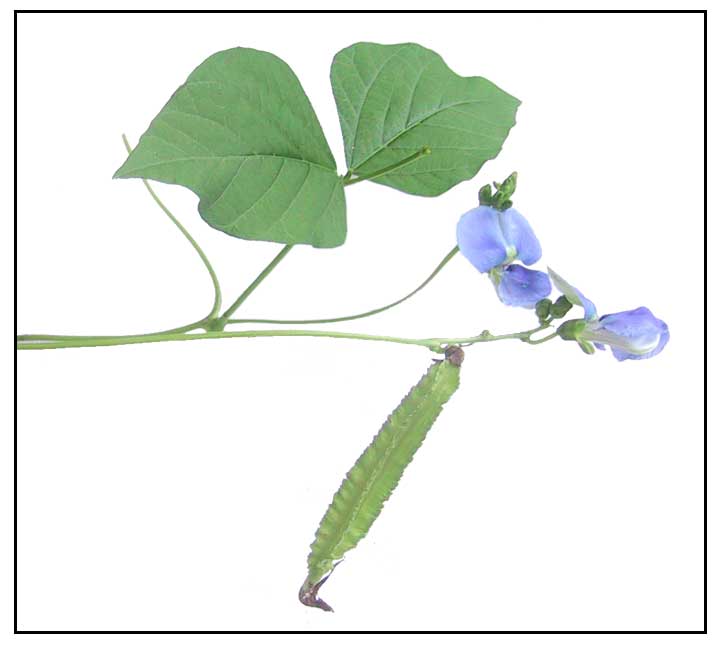
Sigarilyas is a vine with climbing stems
and leaves, to a height of 3-4 meters. Leaves are pinnate or palmate
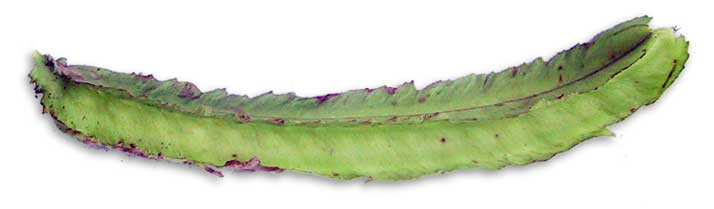
to trifoliate. Bean pod is about 6 to 8 inches long, four-angled. Flowers
are large and pale to bright blue.
Distribution
- Seasonal cultivation.
Constituents
- Rich in oil (up to 17%), protein, vitamin E and calcium.
- Proximate analysis showed P. tetragonolobus to be rich in proteins (33.83%), with considerably high amount of carbohydrate (22.30%). Fat content was 17.51%; crude fiber, 12.23%; water content, P>0.05. (see study below) (6)
- Mineral composition (mg/kg) of winged beans yielded magnesium, 2238.18 ±0.04; zinc, 364.76 ±0.64; copper, 90.79 ±0.72; calcium, 889.86 ±0.63, sodium, 1972.34 ± 0.69; potassium, 4219.30 ± 0.81. (6)
 - Study showed that fatty oil from fully mature seeds had a higher proportion of unsaturated fatty acids (75.5%); immature seeds yielded a higher percentage of saturated FA (61.3%). Unsaponification of fatty oil yielded stigmasterol (66.4%) and ß-sitosterol (25.1%). Total lipids of fully mature seeds yielded neutral, glyco- and phospholipids. Fatty oil of fully mature seeds yielded mono-saturated FA (38.6%) and polyunsaturated FA (36.9%) without trans-fatty acids, thereby meeting the edible oil standard.
(10) - Study showed that fatty oil from fully mature seeds had a higher proportion of unsaturated fatty acids (75.5%); immature seeds yielded a higher percentage of saturated FA (61.3%). Unsaponification of fatty oil yielded stigmasterol (66.4%) and ß-sitosterol (25.1%). Total lipids of fully mature seeds yielded neutral, glyco- and phospholipids. Fatty oil of fully mature seeds yielded mono-saturated FA (38.6%) and polyunsaturated FA (36.9%) without trans-fatty acids, thereby meeting the edible oil standard.
(10)
- Nutritional analysis of raw immature seeds per 100 g. yielded: (1) Principle: energy
49 Kcal, carbohydrate 4.31g, protein 6.95g, total fat 0.87g, cholesterol 0 mg; (2) Vitamins: folates 66 µg, niacin 0.900 mg, pantothenic acid 0.059 mg, pyridoxine 0.113 mg, riboflavin 0.100 mg, thiamin 0.140 mg, vitamin A 128 IU, vitamin C 18.3 mg; (3) Electrolytes: sodium 4 mg, potassium 240 mg; and (5) Minerals: calcium 84 mg, copper 0.051 µg, iron 1.5 mg, magnesium 34 mg, manganese 0.218 mg, phosphorus 37 mg, selenium 1.5 µg, zinc 0.39 mg. (13)
Properties
- Studies have suggested antimicrobial, anti-inflammatory, anti-nociceptive, antioxidant, platelet aggregation inhibitory, hepatoprotective properties.
Uses
Culinary
- Whole plant is edible,
the beans used as vegetable; but the other parts –leaves, flowers
and roots–are also edible. Immature seeds used in soups.
- Young pods can be eaten raw or added to salads.
-
Flowers used as rice and pastry colorant; eaten raw or cooked; a sweet flavor that makes an appealing addition to salads.
- Young leaves can be pickled or prepared as vegetable, like spinach.
- Leaves and young shoots, raw or cooked, are surprisingly delicious.
- Good source of vitamins A and C, calcium and iron.
- Roasted seed used as coffee substitute.
Folkloric
- No reported folkloric medicinal use
in the Philippines.
Studies
• Antimicrobial / Pods / Leaves:
Results of study of extract of PT pods showed activity against B. subtilis
and B. cereus, P mirabilis, E coli, S typhi, K pneumonia and C albicans
and suggested a potential source for antimicrobial compounds. (1) Methanol extract of Psophocarpus tetragonologus leaves exhibited
bactericidal effect on Pseudomonas aeruginosa.(3) Study of a methanol extract of P. tetragonolobus leaves for antimicrobial activity against Pseudomonas aeruginosa showed favorable activity with MIC of 2.55 mg/mL. SEM studies showed complete collapse of the bacterial cells. The extract exhibited no significant toxicity (LC50=1.30 mg/mL) against Artemia salina. (15)
• Fungicidal: Study of methanol
extract of PT root showed no toxicity and a favorable antimicrobial
activity against Candida albicans. (2)
• Aluminum Content of Edible Portion: Study was done to evaluate the accumulation of aluminum in the edible parts of the plant: leaves, pods, seeds and tubers. Results showed all edible portions of the plant accumulate aluminum from high to very high levels compared to an average of less than 300 ppm in other crop plants; the accumulation was highest in the youngest tissues, especially the roots, recording as high as 25,000 ppm. (4)
• Phytohemagglutinins / Seeds: One of the drawbacks in the utilization of winged bean protein is the presence of anti-nutritional factors typical of legumes. Study evaluated the seeds from eleven cultivars of Psophocarpus tetragonolobus for phytohemagglutinin activity. Levels ranges from 3,200 to 25,600 hemagglutinating units/g sample, on a fresh weight basis. Seeds showed greater activity than tubers and leaves. Phytohemagglutinins were found to be thermolabile. (5)
• Proximate Analysis: Winged beans is unique among leguminous crops in that many plant parts—leaves, pods, seeds, and tubers—are edible and rich in protein. Based on findings on proximate analysis, winged beans could be useful in the formulation of infant formula. (see constituents above) (6)
• Isolectins / Leaves: Study isolated two isolectins from the leaves of winged bean, differing from each other in immunological properties, hemagglutinating activities, sugar inhibition patterns, and amino aid compositions. (7)
• Anti-Candidal / Pod Extract: Study evaluated a pod extract of Psophocarpus tetragonolobus for antimicrobial activity against Candida albicans. Results showed alteration in morphology and complete collapse of yeast cells after 36 hours of exposure. Study confirms the possible antimicrobial potential of the pod extract. (8)
• Anti-Inflammatory / Antioxidant / Anti-Nociceptive: Study evaluated the anti-inflammatory, antioxidant and anti-nociceptive properties of six Malaysian medicinal plants, including Psophocarpus tetragonolobus. All plants showed significant nitric oxide inhibitory activity without causing cytotoxicity to RAW 264.7 cells. All plants showed different degrees of antioxidant activities, attributed to phenolic compounds. All plant species suppressed writhing response of mice at different degrees of inhibition. (9)
• Hepatoprotective / Seeds: Study evaluated the hepatoprotective and antioxidant effects of total flavonoids from P. tetragonolobus seeds in vitro and in vivo in carbon tetrachloride induced acute liver injury in mice. Results showed significant hepatoprotective effect, possibly by scavenging of free radicals and inhibition of lipid peroxidation and TNF-α expression. (14)
• Antibacterial / Leaves:Study of a methanol extract of P. tetragonolobus leaves for antimicrobial activity against Pseudomonas aeruginosa showed favorable activity with MIC of 2.55 mg/mL. SEM studies showed complete collapse of the bacterial cells. The extract exhibited no significant toxicity (LC50=1.30 mg/mL) against Artemia salina. (15)
• Platelet Aggregation Inhibition Activity / Pod: Study evaluated the antiplatelet activity of pods of P. tetragonolobus in vitro. A 4mg/mL concentration showed the highest average percent platelet aggregation inhibition of 69.58% and greatest average percent antiplatelet activity of 75.49% among the pod extracts. (16)
• Biodiesel Potential / Seed Oil: Paper presents preliminary studies on biodiesel from two novel sources of oil: fruit pulp of C. ovatum (pili) and seed of P. tetragonolobus (winged bean). The kinematic viscosity of the FAME from sigarilyas was above maximum limit for Philippine standard. Initial results suggest acceptable FAME may be obtained from these two new potential sources of feedstocks. (17)
• Effect on Heat Treatment on Nutritional value of winged bean: Autoclaving suggested that autoclaving at 124 c within minutes should be adequate to remove protease inhibitors and can improved digestibility of winged beans. (18)
Availability
Cultivated. |