|

Gen info
- The species probably comes from southeaster Asia. It was first described by Linnaeus in 1753 using specimens from Italy, and may have been introduced to Italy from the east before 1500. (49)
- The 1491
Ming Dynasty text, Precious Secrets of the Realm of the King of Xin, describes how to locate underground copper deposits by extracting trace elements of copper from the plant. (49)
- Etymology: The scientific name derives from the words Oxalis referring to the abundance of oxalic acid in the plant and corniculata referring to horny appendages.
 Botany Botany
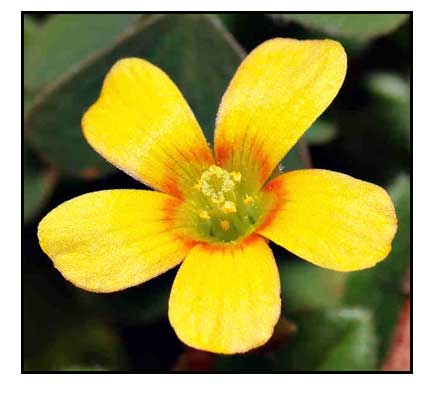
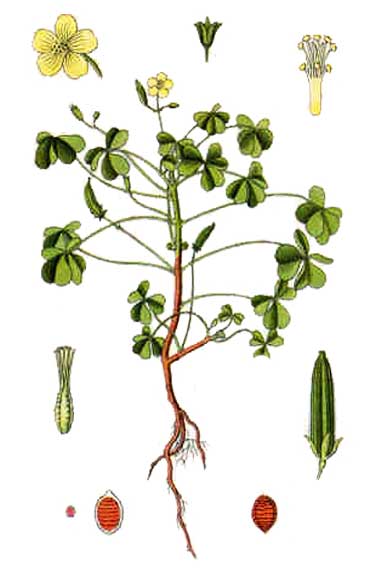
Taingang-daga is a small variable,
prostrate, creeping herb, somewhat pubescent with long, scattered
hair, the stems creeping, up to 50 centimeters in length, usually rooting
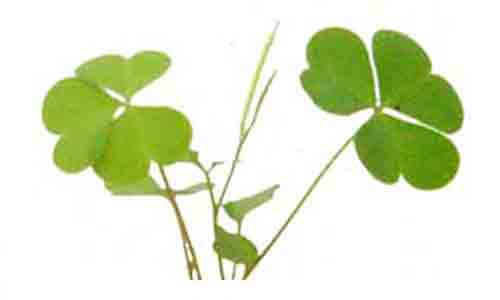
at the nodes. Leaves are trifoliate, with three small heart-shaped leaflets,
their petioles 5 centimeters long or less, sessile. Leaflets are obcordate, 0.5 to 1.5 centimeters long and stalkless. At noontime, the leaflets
droop like folded umbrellas. At night, the leaflets close and
fold together. Flowers are yellow, one to several on each peduncle, subumbellately
disposed, nearly 1 centimeter long. Petals are obcordate. Fruits are capsules, hairy, tomentose, subcylindric, 1 to 1.8
centimeters long, divided into minute segments with numerous black seeds
the size of sand grains.
Distribution
- Introduced.
-
In waste places, open grasslands,
etc., from sea level to an altitude of 2,200 meters throughout the Philippines.
- Native range is Mexico to Venezuela and Peru, Carribean. It grows primarily in the subtropical biome. (22)
 Constituents Constituents
- Phytochemical study yielded tannins, palmitic acid, a mixture
of oleic, linoleic, linolenic and stearic acids.
- Methanolic and ethanolic extracts have yielded carbohydrates, glycosides, phytosterols, phenolic compounds, flavanoids, proteins, amino acids, and volatile oil.
- Phytochemical studies have yielded flavanoids, tannins, phytosterols, phenol, glycosides, fatty acids, galacto-glycerolipid and volatile oil. Leaves yield flavonoids, iso-vitexine and vitexine-2"-O-betaD-glucopyranoside. Plant is rich in essential fatty acids like palmitic acid, oleic, linoleic, linolenic, and stearic acids.
(23)
- Study of an
ethyl acetate soluble fraction of whole plant yielded a new flavonoid glucoside, corniculatin A, along with luteolin, luteolin-7-O-ß-D-glucoside and ß-sitosterol-3-O-ß-D-glucoside. (33)
- Methanolic and ethanollic extracts of plants showed presence of carbohydrate, glycosides, phytosterols, phenolic compounds, flavonoids, proteins (12.5%), amino acids, and volatile oil. It also yielded calcium, fiber, and tannin. (37)
- Quantitative phytochemical analysis yielded ash 4.52%, organic carbon 1.56%, nitrogen 1.89%, phosphorus 0.25%, potassium 3.15%, sodium 0.19%, calcium 5.63%, magnesium 2.63%, sulphur 0.25%, zinc 1.59 ppm, copper 0.12 ppm, iron 89.16 ppm, boron 0.05 ppm, molybdenum 0.01 ppm, alkaloids 0.86 mg kg, flavonoids 1.26 mg kg, phenol 3.46 mg/kg, tannin 0.22 mg kg, lignin 0.22 mg kg, glycosides 0.02 mg kg, serpentines 0.01 mg kg. (41)
- Methanol extract of leaves (80%) yielded a polyphenol content of 910 mg gallic acid equivalent GAE/gm DW (yield of 8%), and flavonoid content of 2.353 g
quercetin equivalent QE/100 g extract. (see study below) (51)
- Phytochemical screening of root, stem and leaf extracts yielded alkaloids, steroids, flavonoids, tannins, saponins, phenolic compounds, reducing sugars, terpenoids, and cardiac glycosides, with absence of carbohydrates, anthraquinones and anthocyanosides.
(53)
- Study of 75% EtOH extract of Oxalis corniculata isolated a new arylnaphthalide lignan, corniculin. (54)
Properties
- Acidic tasting, cooling effect, astringent, appetizing, febrifuge, antibilious, antiscorbutic, blood refrigerant, tranquilizer.
- Acid taste is attributed to high content of oxalate in the leaves and stems.
- Studies have shown
antioxidant, anticancer, anthelmintic, anti-inflammatory, analgesic, steroidogenic, antibacterial, antifungal, antiamoebic, diuretic, emmenagogue, styptic, cardioprotective, anti-urolithiatic, hepatoprotective, antidiabetic, anxiolytic properties.
Parts
utilized
· Entire plant.
· May be collected throughout the year.
· Rinse, sun-dry, compress.
· Propagate by seeds or vegetative propagation.
 Uses Uses
Edibility
· Leaves are edible, with a tangy taste.
· In the Philippines, leaves used as salad ingredient.
Folkloric
· Juice of leaves used for cleansing wounds and for itches.
· Cold-fever, enteritis-diarrhea,
infection of the urinary tract, neurasthenia: Decoction of 30 to 60
gms of the prepared material.
· Sprains, bruises, poisonous snake bites: Apply poultice of
pounded fresh materials.
· Burns, dermatoses of the lower limb, skin eczema: Rub fresh
sap over afflicted area or use decoction of the fresh material as external
wash.
· Used for removing corns, warts, and other excrescences on the skin.
· Poultice of bruised leaves, with or without water, applied over inflamed parts.
· Fresh juice of leaves used to relieve intoxication produced by Datura.
· Juice of leaves also used as application to remove fiber over the cornea or opacities of the cornea.
· Expressed leaf juice, made into sherbet with sugar, used for dysentery and rectal prolapse, and to allay thirst.
· Leaves boiled in buttermilk, used for chronic dysentery and enteritis.
· Juice considered antidotal to mercurial and arsenical poisoning; also used for burns, insect and scorpion bites, and eruptions.
· Plant considered antiscorbutic in China and India.
· Paste from leaves pounded with a little rice-flour applied to prickly heat. Also used for mouth and gum sores.
· In Java, leaves mixed with onion and salt, used for stomachaches. Juice used for coughs.
· In Nepal, leaves used
ritually for stomachaches.
· In Zairean
pharmacopoeia, used as anti-venom: (1) Paste of whole
plant of O corniculata rubbed on the wound; swallow the juice of the
masticated plant (2) Make paste with a salted mixture of O corniculata
and Aframomum sanguineum, and cover the bite.
· In traditional Indian medicine, used to treat epilepsy, dysentery and diarrhea, piles, ophthalmia, anemia, digestive disorders.
· In Siddha and Ayurvedic medicine, used for liver and digestive problems; also for piles, dyspepsia, anemia and skin diseases.
· In Assam, Boro tribals use the herb juice as eye drops for conjunctivitis. In Madhya Pradesh, leaf decoction used for fever and diarrhea. In Pakistan, plant sap used for skin diseases and for snake bites. (37)
· The Anyi-Ndenye women of eastern Cote d'Ivoire, O. corniculata is one the plants used to secure pregnancy and facilitate delivery. (47)
· Used for treatment of convulsions in children and for healing fractured bones. (53)
· Kota tribal women of Tamil Nadu consume the plant to augment breast milk in new mothers. Leaves are also eaten during pregnancy to maintain good health of the fetus, provide warmth and increase immunity. Paste of leaves is also applied on the belly of the new mother to diminish postpartum pains. (56)
· In Ayurvedic medicine, use for treatment of snakebites. (58)
Studies
• Antibacterial:
(1) In a study of the traditional medicinal plants from North East India,
OC showed antibacterial activity against E. coli. (2) In a study of aqueous extracts of leaves of 46 plants, Oxalis corniculata was one of only 12 that exhibited antibacterial activity against test pathogens.
• Antibacterial / Leaves: Leaf material was tested for antibacterial activity against three important pathovars of Xanthomas and fourteen human pathogenic bacteria. Results revealed significant antibacterial activity attributed to the presence of phenolic compounds. (7)
• Anti-fertility:
Report on the post-coital antifertility activity of the whole plant
of Oxalis corniculata in female albino rats.
• Abortifacient:
Report on the abortifacient activity of O corniculata.
• Antifungal: Study
on the water extract of Oxalis corniculata showed it to be active against
Aspergillus niger. (4)
• Anti-Urolithiasis / Antibacterial: Of 17 plants studied, O corniculata was one of six with antibacterial efficacy that showed promising roles in the prevention and cure of urolithiasis. (6)
• Antitumor / Antioxidant: Study
of ethanol extract of Oxalis corniculata showed significant antitumor and antioxidant activities in Ehrlich ascites carcinoma (EAC) induced in Swiss albino mice. There was effective inhibition of tumor growth in ascitic and solid tumor models. (10)
• Antibacterial / Cream Formulation: Study
of aqueous extract OC showed strong antibacterial activity especially with increased extract concentration. A cream formulation showed potential as a topical to protect the skin against S. aureus and E coli. (11)
• Cardioprotective: In vitro studies confirmed that O. corniculata extract could protect the myocardium against ischemic insult and the protective effect can be attributed to its antioxidative and antihyperlipidemic activities. (12)
• Novel Galacto-Glycerolipid / Anti-Amoebic / Anti-Giardia: Study of extracts identified several compounds that showed anti-amoebic activity in axenic cultures of E. histolytica. Of the different compounds, the strongest anti-amoebic activity was found with GGL (galacto-glycerolipid). GGL was also found to be effective in killing Giardia lamblia, another protist pathogen that causes diarrhea in humans. (13)
• Anxiolytic: Study evaluated an ethanolic extract for anxiolytic effect in mice using the open field test, elevated plus maze test, and anti-fighting test. Results suggest anxiolytic activity, consistent with the anxiolytic effects of diazepam. (16)
• Anti-Inflammatory / Antioxidant: Study evaluated the anti-inflammatory and antioxidant activity of a methanol extract of whole plant. There was significant antioxidant activity by scavenging DPPH and NO radicals and TBARS method. There was significant biphasic response in the paw edema induced by carrageenan. (17)
• Antibacterial / Leaves and Seeds: In a study of three medicinal plants for antimicrobial activity, the leaves and seeds extracts of Oxalis corniculata showed high antibacterial activity against E coli and Bacillus subtilis. (18) Study evaluated leaf extracts of Oxalis corniculata and Ocimum sanctum against clinical isolates from urine, stool, and sputum. Among the solvent extracts, the methanol extract of O. corniculata showed higher activity compared to erythromycin and nalidixic acid against Staphylococci sp. The ethanol extract of O. corniculata showed best MIC value (256 µg/ml) against Salmonella typhi. (39)
• Antidiabetic / Antihyperlipidemic: Study evaluated the antidiabetic, antihyperlipidemic, and antioxidant effect of O. corniculata in alloxan-induced diabetic mice. Results showed free radical scavenging, and antidiabetic and antihyperlipidemic effects. Effects were compared to glibenclamide as reference drug. (19)
• Hepatoprotective / CCl4 and PHH Induced Toxicity: Study showed a hydroalcoholic extract of Hummaz (O. corniculata) counteracted the hepatotoxic effect induced by CCl4 and PHH. Although the protection by Silymarin seemed relatively greater, Hummaz can be used as hepatoprotective agent in some liver disorders. (20)
• Gastroprotective / Antiulcer: Study investigated a methanolic extract of O. corniculata in pylorus ligated and indomethacin-induced gastric ulcerations in Wistar rats. Results suggest OC possesses significant antisecretory and antiulcer effects. (21)
• Antioxidant / Hepatoprotective / Stem and Leaves: Methanolic extracts of stems and leaves lower oxalates on sequential extraction and showed good antioxidant activity by DPPH and ß-carotenenoleate models and in vivo hepatoprotective activity in isoniazid and rifampin-induced oxidative stressed rats (p<0.05). (24)
• Acute and Chronic Toxicity Studies: Study evaluated a methanolic extract of whole plant for acute and chronic toxicity in rats. On acute toxicity testing, the extract was safe at doses of 2000 mg/kbw orally, with no toxicity or deaths. In chronic toxicity study, no significant treatment changes were seen in hematologic, renal, and hepatic parameters. Results suggest the methanol extract of whole plant to not have significant toxicity, with a wide margin of safety for therapeutic use. (25)
• Antibacterial / Antifungal / Insecticidal: Study evaluated various extracts and fractions of Oxalis corniculata for antimicrobial and insecticidal properties. Crude, chloroform, and n-butanol soluble fractions showed excellent activities against E. coli, Shigella dysenteriae, S. typhi and B. subtilis and significant activities against fungal strains including Fusarium solani, A. flexneri, and A. flavus. Crude extract and chloroform fractions showed high mortality rate against Tribolium castaneum. Of two isolated compounds, compound 2 (5,7,4′-trihydroxy-6,8-dimethoxyflavone) showed more activity than compound 1 against tested bacterial strains and insects. (26)
• Hepatoprotective / Thioacetamide Intoxication: Study evaluated the hepatoprotective activity of aqueous and ethanolic extract of leaves against thioacetamide-induced hepatotoxicity. Results showed significant reductions in SGOT, SGPT, GGTP, ALP, and total bilirubin. Histopathologic evaluation of the liver showed dose-dependent reduction of necrosis. (27)
• Hepatoprotective / Paracetamol Induced Toxicity: Study evaluated an ethanolic extract of whole plant showed hepatoprotective and antioxidant potential against paracetamol induced hepatotoxicity in Wistar rats. (28)
• Nutritional Benefits of Food Products Enriched by Sorrel Leaves: Study analyzed the proximate constituents of value added products from underutilized fresh Indian sorrel leaves. Results showed products enriched with fresh sorrel leaves are rich in protein, energy, carbohydrate, iron, calcium, and vitamin C. Incorporation of Indian sorrel leaves in various food items can improve nutritional qualities. (29)
• Anti-Inflammatory / Inflammatory Bowel Disease: Study of ethanolic extract of O. corniculata leaves in experimentally induced inflammatory bowel disease in rats showed significant (p<0.01) anti-inflammatory activity. (30)
• Proteinaceious Alpha Amylase Inhibitor / Antidiabetic Potential: Study evaluated the alpha amylase inhibitory potential from the leaves of Oxalis corniculata. A previous work with solvent extraction of leaves showed maximum inhibition against porcine pancreatic alpha amylase. The inhibitor AI-1 isolated from OC showed a molecular weight of 30kda. Further study can elucidate the complete structural structure of the inhibitor and prove important in the development of a plant based medication for treatment of T2DM. (31)
• Antidiabetic: Study evaluated the antidiabetic action of ethanolic extract of Oxalis corniculata in streptococci induced diabetic albino rats. Results showed antidiabetic effect with increased trend with increase in dose and gradual decrease in blood glucose levels with increase period of exposure to the test drug. Glibenclamide was used as standard drug. (32)
• Neuroprotective / Antioxidant / Potential Benefit in Parkinsonism Disease: Study evaluated the effects of O. corniculata extract against MPTP induced oxidative stress in a mouse model of Parkinson's disease. Treatment showed significant restoration of peroxides and antioxidant levels to near normal in the brains of test animals. Standard drugs were L-dopa+ carbidopa combination also significantly restored the peroxides and antioxidant levels to near normal. (34)
• Amelioration of Carbon Tetrachloride-Induced Pulmonary Toxicity: Study investigated the antioxidant potential of methanolic crude extract of Oxalis corniculata against lung injuries initiated by carbon tetrachloride (CCl4) in rats at histological and biochemical level. Treatment with the ME dose-dependently prevented the alterations in the measured parameters. The OCME protected via its intrinsic properties by scavenging of free radicals generated by CCl4. (35)
• Phytochemicals / Antioxidant / Antibacterial: Study evaluated various parts of Oxalis corniculata viz. leaves, stems, roots, and seeds for phytochemicals, antioxidant, and antimicrobial potential. Phytochemical screening yielded alkaloids, phenols, tannins, flavonoids, terpenoids, and sulphates, with an absence of carbohydrates, steroids and carbonates. Methanol extracts of leaves showed higher antioxidant activity on DPPH and H2O2 assays than seeds. Leaves showed higher antibacterial activity against Rhodococcus species and Pseudomonas species than seeds. (36)
• Potential Antidiabetic / a-Amylase Inhibitory Activity: Study evaluated Oxalis corniculata for a-amylase inhibitory activity. A cold water extract showed a-amylase inhibitory potential against starch as substrate. (38)
• Neuroprotectiive / Antidepressant: Study evaluated the neuroprotective activity of a methanolic extract of O. corniculata on animal models of depression. Results showed antidepressant activity using mice models of depression, i.e., FST (forced swimming test) and TST (tail suspension test) as evidenced by decreased duration of immobility. Activity was attributed to phytochemical content and potent antioxidant property. (see constituents above) (40)
• Memory Enhancing Activity
/ Dementia Model: Study evaluated the memory enhancing activities of a methanolic extract of O. corniculata on dementia in experimental models using Morris water test and elevated plus maze test. Phytochemical analysis yielded alkaloids, flavonoids, tannins, phenolic compounds, saponins, sterols, carbohydrates, proteins and amino acids. Results showed the ME possess significant memory enhancing effect which may be of benefit in dementia and other related cognitive disorders. The protective effect may be attributed to antioxidant activity due to rich flavonoid content. (42)
• Analgesic / Anti-Inflammatory / ?-Sitosterol / Leaves: Study of ?-sitosterol from a petroleum ether extract of leaves showed analgesic activity using hot plate test and acetic acid induced writhings and anti-inflammatory activity using carrageenan induced paw edema method. Naloxone reversed the antinociceptive effects of the extract and isolated ?-sitosterol. Activity worked through a central mechanism. (43)
• Antioxidant: Study evaluated the antioxidant activity of three different solvent extracts of whole plant of O. corniculata by phosphomolybdate method. Major antioxidant constituents were total crude phenolic content (6.424 mg gallic acid equiv./gm dw), phenolic acid (0.738 mg gallic acid euiv./ gm dw), total flavonoids (0.814 mg rutin equiv./gm dw), and glutathione (948.143 µM/gm fresh weight). Vitamin C yield was 0414 mg/gm fw and vitamin E was 137.36 mg/gm. (44)
• Antipyretic / ß-Sitosterol / Leaves: Study evaluated the antipyretic activity of various extracts of Oxalis corniculata leaves and ß-sitosterol isolated from the petroleum ether extract using yeast-induced pyrexia method. At five hours, the PE extract at 100 mg/kg showed significant inhibition of pyrexia by 91.23 and 94.41%, respectively. (45)
• Anticonvulsant / Leaves: Study evaluated the effect of methanolic extract of leaves on antioxidant enzymes in rat brain after induction of seizures by MES and PTZ. The decreased SOD, GP, GR, catalase and lipid peroxidation on rat brain due to seizure was significantly restored by administration of ethanol extract of O. corniculata. Similar dose dependent effect was obtained in the PTZ model. The ME significantly decreased lipid peroxidation in both models. The anticonvulsant activity can be attributed to antioxidant properties and the delay in the generation of free radicals in MES and PTZ induced epilepsy. (46)
• Antioxidant / Antiarthritic / Antidiabetic / Leaves: Study evaluated petroleum ether, ethyl acetate and ethanol extracts of dried leaves of O. corniculata. Using DPPH assay, a petroleum ether extract exhibited potent antioxidant activity followed by the EE and EA extracts. An ethanol extract showed potent anti-arthritic activity with significantly (p<0.05) inhibiting the denaturation of egg albumin. The ethanol extract showed significant inhibition of both α-amylase and α-glucosidase enzymes (p.<0.05) suggesting potential antidiabetic activity. (47)
• Molecular Mechanism in Treatment of Hepatitis: Study evaluated the mechanism of O. corniculata in the treatment of hepatitis by network pharmacology. Rhw "drug-active ingredient-target-disease" network was constructed, and signal pathway and biological process of target analyzed by DAVUD database. Target proteins are TP53, AKT1, ALB, and IL6. 42 biological processes and 39 signaling pathways were screened. It exerts anti-hepatic effects by regulating signaling pathways (cancer pathways, hepatitis B and P13K-Akt signaling pathways). Network Pharmacology provides new ideas and methods for revealing the anti-hepatic mechanism of O. corniculata and provides scientific basis for research and development of O. corniculata. (50)
• Molecular Mechanism in Treatment of Hepatitis: Study evaluated methanolic extract of Oxalis corniculata leaves for invitro antibacterial and invivo anti-colonizing effect against common intestinal pathogenic bacteria. The extract inhibited numerous pathogenic bacteria like S. aureus, E. coli, S. dysenteriae, S. flexneri, S. boydii, and S. sonnie. Results suggest simultaneous administration of extract along with bacterial inoculums promoted good anticolonization activity. (see constituents above) (51)
• Potential in Ulcerative Colitis: Study evaluated the potential of O. corniculata leaf extract in the treatment of acetic acid induced ulcerative colitis in mice using petroleum ether, chloroform, ethyl acetate and methanol extracts of dried and powdered leaves. Treatment with ethyl acetate extract showed superior antiulcer, antioxidant activity and better protective effect than other extracts. Myeloperoxidase and malondialdehyde level in blood and tissue was decreased significantly. (52)
• Neuroprotective / Effect on MPTP Induced Behavioral Changes: Parkinson's disease (PD) is a neurodegenerative disease characterized by postural instability, resting tremors, and poverty of movements. Study evaluated the neuroprotective effect of alcoholic extract of O. corniculata of behavioral features induced by MPTP (1-methyl,4-phenyl-1,2,3,6-tetrahydropyridine mouse model. Treatment with O. corniculata reversed the alterations in locomotor and muscle coordination in MPTP induced parkinsonic mouse. Different doses significantly increased memory retention and retrieval, which may be due to presence of antioxidants such as flavonoids, coumarins, tocopherols, and phenolic acids and their ability to scavenging reactive oxygen species. (55)
• Anthelmintic / Whole Plant: Study evaluated in vitro comparative anthelmintic effect of various extracts (petroleum ether, ethyl acetate, and methanol) of whole plant using three different concentrations (100, 200, and 400 mg/ml) on Eisenia foetida on measures of time of paralysis (P) and time of death (D). At 400 mg all extracts showed significant activity compared to standard levamisole (0.55 mg/ml). Each extract showed dose-dependent effect. The methanol extract was most potent effect, with P at 11.33 and D at 41.22 min, respectively. (57)
• Antivenom / Whole Plant: Study reports on the use of the plant against snake envenomation. Extracts of shade-dried whole plant were tested for in-vitro anti-toxic effects against Najanaja and Daboiarusselli venoms. The methanol extract showed ability to inhibit hemolytic activity by 85.6% and 95%, PLA2 activity by 84% and 75%, hyaluronidase activity by 85.6% and 65%, acetylcholinesterase activity by 73% and 84%, and caseinolytic activity by 7% and 95% of Najanaja and Daboiarusselli venom, respectively. Studies on active components may provide potential treatment against venom-induced toxicities. (58)
• Anti-Biofilm against Staphylococcus aureus / Leaves: Inappropriate used of antibiotics can cause bacterial resistance. Staphylococcus aureus is one of the strong biofilm-forming bacterial than can cause antibiotic resistance. Study evaluated the effectiveness of ethanol extract of leaves of O. corniculata in inhibiting and eradicating S. aureus biofilm formation. The ethanol extract of 1& OC leaves gave 76.23 0.01 antibacterial activity of S. aureus and 71.32 0.01 of mid-phase antibiofilm activity, and 69.33 0.01 maturation phase. Results indicate the ethanol extract of O. corniculata can eradicate S. aureus biolfilm formation. (59)
• Apigenin / Antihypertensive: Study sought to a receptor-ligand binding energy and interaction through molecular docking for O. corniculata phytocompounds against angiotensin converting enzyme (ACE). Among 16 phytochemicals and 4 antihypertensive synthetic drugs, highest binding energy was obtained in apigenin (-8.9) compared to other four drugs, Lisinopril (-7.7), Temocapril (-7.6), Enalapril (-7.5), and Captopril (-5.7). The binding interaction of target protein may be considered as competitive inhibitor. Results suggest the phytoligand Apigenin has potential as a lead compound for antihypertensive agent and alternative synthetic drug as per binding energy value and molecular interaction. (60)
Availability
- Wild-crafted.
- Capsules and supplements in the cybermarket. |






.jpg)