|
Gen info
- Canna indica is a plant species in the family Cannaceae. It is native to much of South American, Central America, the West Indies, and Mexico. It is naturalized in the southeastern United States, much of Europe, sub-Saharan Africa, Southeast Asia, and Oceania.
- Seeds are small,globular, hard and heavy that sink in water. They resemble black shotgun pellets that gave the name "Indian Shot." Seeds are small,globular, hard and heavy that sink in water. They resemble black shotgun pellets that gave the name "Indian Shot."
- Etymology: The genus name Canna derives from the Greek word for cane or reed. (25) The specific epithet indica refers to India, where Linnaeus, the father of modern taxonomy, thought the plant to have originated from.
- Historical snippet: Seeds are small, globular black pellets, hard and dense enough to sink in water. They resemble shotgun pellets, thus, the common name, Indian shot. Seeds are hard enough to shoot through wood and still survive and later germinate. A BBC story tells that during the 19th century Indian Mutiny, soldiers used the seeds when they ran out of bullets. (37)
- Cultivation: it has been cultivated by indigenous peoples of Tropical America for thousands of years. There is archaeological evidence of cultivation in 3000 BCE by people of the Las Vegas culture of coastal Ecuador, and cultivation by people of the Casma/Sechin culture in 2000 BCE. (37)
Botany
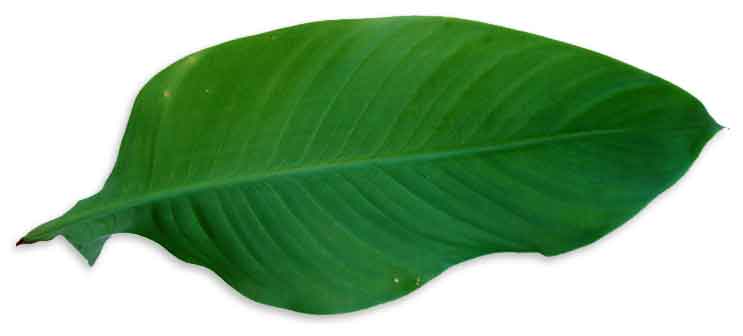
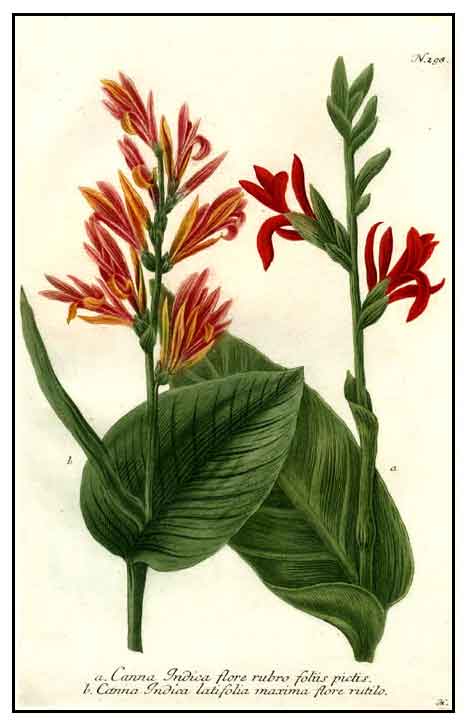
• Tikas is stout herbaceous plant with a tuberous rootstock. Whole plant is green
and smooth, growing 1.5 meters high. Leaves are lanceolate or ovate, 10 to 30 centimeters long, 10 to 20 centimeters
wide. Inflorescence is somewhat waxy-glaucous, erect, with a peduncle about 30 centimeters long. Flowers are red, solitary or in pairs, the bracts about 1.3 centimeters long. Sepals are 1 to 1.5 centimeters long, greenish-white though sometimes tinged with red, and lanceolate or oblong.
Corolla tube about 1 cm long, the involute lobes being red or reddish,
2.5 to 3 centimeters long. The staminodes are bright-red, petal-like, the outer one
being about 4 centimeters long, somewhat spatulate, acute, or slightly acuminate,
and the others somewhat smaller, though the anther-bearing ones are
as long as the outer one, about 4 centimeters wide, and recurved about the insertion
of the anther. Inflorescence somewhat waxy-glaucous, erect, with a peduncle
about 30 centimeters long. Fruits are capsules, bright green, oblong-ovoid, softly echinate (spiny),
and 2 to 2.5 centimeters long. Seeds are about pea-sized, somewhat spherical,
with shining, black seed-coat.
 Distribution Distribution
- Introduced.
-
Throughout the Philippines
in settled areas, occurring in waste places and near settlements.
- Native of tropical America, and now pantropic in distribution.
- Invasiveness: Canna indica has been included in the Global Invasive Species Database, and has been declared invasive in South Africa, Australia, the Pacific islands, Tanzania, Ghana, and Ghana. (37)
 Constituents Constituents
- Rhizomes yield fat, traces of an alkaloid, gum and starch.
- Phytochemical screening yielded phenols, sterols, flavonoids and saponins.
- Study of red flowers yielded four anthocyanin pigments apart from quercetin and lycopene: Cyanidin-3-O-(6''-O-α-rhamnopyranosyl)-β-glucopyranoside, Cyanidin-3-O-(6''-O-α-rhamnopyranosyl)-β-galactopyranoside, Cyanidin-3-O-β-glucopyranoside, and Cyanidin-O-β-galactopyranoside. (8)
- Solvent extracts yielded alkaloids, flavonoids, carbohydrates, glycosides, phytosterols, fixed oils and fats, proteins, phenolic compounds, tannins and saponins. Further analysis by UV-Vis and FT-IR suggest the presence of proto alkaloids, 9-amino 3,4 dihydroxy 2 methoxy non-6-yne. 78% gave positive results for proto alkaloids, and 33% gave a positive reaction for isoquinolines. (21)
- GC and GC-MS study of essential oil of rhizome of Canna indica (yellow flower variety)
yielded 43 compounds representing 95-32% of the oil. Sesquiterpene hydrocarbons and derivatives form the major part (52.56%). The major terpene/terpenoid constituents are y-eudesmol (9.79%), δ-cardinol (6.33%), y-selinene (5.23%), and luciferin (5.05%). (24)
- Phytochemical analysis yielded alkaloids, cardiac glycosides, anthocyanin pigments, flavonoids, steroids, terpenoids, tannins, phlobatannins, saponins, carbohydrates, proteins, oils, among others.
(25)
- Root yields cannagenins; rootstock contains enzymes, triacontanal and mixture of stigmasterol,
ß-sitosterol, campestrol, and ß-lectin.
Rhizomes yield alkaloids, flavonoids, phenols, sterols, saponins, gum, fat and starch, along with unsaponifiable matter 5,8 henicosdiene 7-henicosyne, 3,15-dihydroxy-2-octadecene, 6-hydroxy eicosane, tricosane, tetracosane and essential oils. (25)
- Leaves yield sucrose amino acids, organic acids, citric, malic, glyceric, succinic, and lactic acids, and aspartic, glutamic, glutamine, and alanine, along with lignin, furfural and hemicelluloses. (25)
- Seeds contain flavonoids (4.76 µg/g) and total polyphenols (13.79 µg/g). (25)
-
Flowers yield flavonoids, phenols, lutein, ß-carotene, violaxanthin, zeaxanthin, ß-cryptoxanthin terpenes paraffin, hydrocarbons, and a toxic red termed cannabinol as major constituents. (25)
- Study reported on the nutritional
composition of leaf, rhizome, and seed. Rhizomes yielded 50.66% moisture, 4.17% carbohydrate, 4.81% protein, 2.85% ash, 4.35% lipid, and 33.16% fiber. Leaf yielded 87.54% moisture, 2.19% carbohydrate 4.59% protein, 3.40% ash, 1.08% lipid, and 1.18% fiber. Seed yielded 13.95% moisture, 41,15% carbohydrate, 11.60% protein 1.99% ash, 7.50% lipid, and 23.90% fiber. (27)
- Chemical analysis of aerial parts yielded betulinic acid, oleonolic acid and traraxer-14-en-3-one. (41)
Properties
- Sweet-tasting, slightly
cooling-natured, antipyretic, relieves gastrointestinal disorders.
- Rhizomes considered demulcent, diaphoretic, diuretic, antipyretic.
- Seeds considered cordial and vulnerary.
- Roots considered acrid and stimulant.
- Studies have suggested hepatoprotective, molluscicidal, antioxidant, cytotoxicity, anticancer, antinociceptive, anthelmintic, phytoremediative, anti-HIV, antidiarrheal, hemostatic, anticonvulsant, antimicrobial, antiulcer, immmunomodulatory, neuroprotective properties.
Parts
utilized
· Rhizomes, flowers, leaves.
· May be collected during any time of the year.
· Rinse, remove appendage or roots, section into pieces
sun-dry or use fresh.
 Uses Uses
Edibility
· Fruit reportedly edible. However, the info is dubious as the fruit is a dry capsule containing very hard seeds. (22)
- Arrowroot obtained by rasping the root to a pulp, washing, and straining to rid of fibers. Young tubers are eaten cooked. (22)
- Rhizomes used for making starch. It was a food source during the Great Chinese Famine of the 1950-1960s.
- Large rhizomes are edible; raw, but usually baked. Cooked, the rhizomes become translucent, mucilaginous, and sweet. (37)
-
Leaves reportedly edible.
Folkloric
· Principally used
in the treatment of acute jaundice type of hepatitis. Use 15 to 30 gms
dried material or 60 to 90 gms fresh rhizome material in decoction.
Commonly, recovery from jaunditic symptoms may be observed after one
week of administration.
· In the Philippines, decoction of rhizome used as diuretic. Also, when macerated in water, used to alleviate nosebleeds.
· In Costa Rica infusion of leaves used as diuretic; rhizomes used as emollient.
· Decoction of rhizomes used in fevers, dropsy and dyspepsia.
· Flowers may be used for external wound bleeding - use 10 to
15 gm dried material in decoction.
• In Bangladesh,
paste of plant used for tonsillitis.
• In Thailand,
rhizome has been used with other herbs for cancer treatment.
• In southwest Nigeria,
leaves used for malaria.
• In Southern India,
stems and leaves used in mixture with various herbal plants for wound healing. Stem juice of canna indica is mixed with stem of Cyanotis villosa and applied externally to heal wounds. Mixture of Trichodesma zeylanicum leaf, G. glabra rhizome, Canna indica stem and P granatum bark are mixed and ground to a paste and applied topically to wounds. Stem juice of C. indica mixed with stem juice of Commelina benghalensis and fruits of Areca catechu applied topically to wounds. (16)
• In Barak Valley, Assam, India,
crushed fresh root used for treatment of fever. (33) In Tamil Nadu, root extract used as diuretic. (34) Roots used to cure chronic digestive upset: roots mixed with small amount of cow dung, burned in a charcoal-oven overnight, filtered, and mixed with a little amount of water. (36)
• Root decoction used for treatment of fever, dropsy, and dyspepsia. Seed juice used
for earaches. Flowers used for treatment of eye diseases.
Others
• Food wrap: Leaves reportedly used for wrapping tamales.
• Craft: Seeds used in making jewelry. Seeds used as mobile elements of the kayamb, a musical instrument from Reunion, and the hosho, a gourd rattle from Zimbabwe, where the seeds are called "hota" seeds. (37)
• Fiber: Stems are source of fiber. Reported use for making paper.
• Starch: C. indica has been used as an emergency crop in cause of shortfalls due to long durability in the ground. The crop is dug out, and the rhizomes separated from the stems. Rhizomes for starch extraction should be processed within days of harvest due to perishability. Traditional starch production is dependent on a significant supply of fresh water. Starch is produced by grinding and pounding of roots, soaking in water, and separating of starch granules from the root fibers. The starch is sometimes marketed as "arrowroot". It was an ingredient of mid-19th century cake recipe, called tous-les-mois. (37)
• Biodegradable plastics: In China, Canna indica starch and polyethylene are used as raw materials for production of biodegradable plastics. The product is affordable and degradable for later use as fertilizer for crop production. The method involves fusing 60-80% of C. indica starch and 20-40% of polyethylene uniformly at 240°C. (37)
Studies
• AIDS / HIV1-RT Inhibition:
Canna indica was one of twenty Thai medicinal plants used to treat AIDS
tested for their HIV type 1 reverse transcriptase inhibitory activity.
C indica rhizomes showed HIV-1 RT inhibition ratio higher than 90% at 200 bug/ml concentration. Further study of C indica and two proteins isolated showed significant
HIV-1 RT inhibition.(1)
• Cannagenin / Molluscicidal: Study yielded cannagenin, which had a highly synergistic with chlorophyll on the morality of snails. (2)
• Molluscicidal / Bark: Study showed C indica to have time and dose dependent molluscicidal activity in a dose that was not toxic for the fish Colisa fasciatus, which shares the same habitat as the snail L acuminata.(3)
• Hepatoprotective: Study showed the methanol extract of aerial parts of Canna indica has liver protective effect against carbon tetrachloride-induced hepatotoxicity. (4)
• Hepatoprotective / Antioxidant: Study of hydroalcoholic extract showed significant antioxidant and hepatoprotective activity. Results were compared with reference drug Silymarin.
• Cytotoxicity / Anticancer: Study yielded two pure compounds, stigmasterol and 6-beta-hydroxystigmasta-4, 22-diene-3-one and two other toxic minor components. They showed cytotoxicity against P388 leukemia cells. (5)
• Antioxidant: Study results clearly indicate the aerial parts of C indica is effective in scavenging free radicals and has the potential to be a powerful antioxidant.(6)
• Flower Anthocyanins / Antioxidant / Pigment Source: Study of red flowers of Canna indica isolated anthocyanins. Four anthocyanin pigments were isolated from quercetin and lycopene. The compounds showed good antioxidant activity. Results suggest a promising pigment source for food applications.(8)
• Antinociceptive / Anthelmintic: Study of benzene and methanol extracts of C. indica showed significant central and peripheral analgesic activity. Anthelmintic activity, evaluated on Pheretima posthuma, showed a methanolic extract of rhizomes taking less time to cause paralysis of the earthworms.(10)
• Phytoremediation of Triazophos: Study showed the potential of C. indica in a hydroponic system for phytoremediation of triazophos (O, O-diethyl-O-(1-phenyl-1, 2, 4-triazole-3-base) sulfur phosphate, TAP) from contaminated water.(11)
• Anti-HIV 1 Protein / Plastocyanin / Leaves: Study isolated a novel 10kDa protein with anti-HIV-1 reverse transcriptase (RT) inhibitory activity from the leaves of Canna indica. The leaf protein was shown to be a plant plastocyanin with HIV-1 RT inhibitory property. (13)
• Silver Nanoparticles / Leaves: Nano biotechnology is a field that applies the Nano scale principle and techniques to understand and transform bio systems (living and non -living), using biological principles and materials to create new devices and systems integrated from the nanoscale. Plant mediated synthesis of nanoparticles is gaining importance because of simplicity and ecofriendliness. In the study, silver nanoparticles were synthesized from the leaf extract of Canna indica. (14)
• Phytoremediation / Heavy Metal Contaminated Soils: Contamination of soils with heavy metals mainly result from industrial activities, i.e., mining and smelting, energy and fuel production, disposal of pharmaceutical wastes, fertilizers and pesticide application. Study showed Canna indica effectively translocated lead and chromium to aerial parts while the roots retained high quantities of cadmium, nickel and zinc. C. indica can be considered an effective accumulator of heavy metals and effective for the reclamation of heavy metal contaminated soils. (15)
• Antidiarrheal / Leaf Extract: Study of methanolic extract of of C. indica showed anti-diarrheal properties comparable to atropine and loperamide via reduction of fluid secretion, gastrointestinal motility and acetylcholine-induced contractions. (17)
• Natural Indicator in Acid Base Titration / Flowers: Study reports on the use of C. indica flower extract as a natural acid base indicator. Results suggest the natural indicator is useful, economical, simple, and accurate for acid-base titration use. (19)
• Hemostatic Effect / Flower: Study evaluated the hemostatic effect of C. indica flower extract in mice. Results showed a hemostatic effect with significant reduction in bleeding time, clotting time and permeability of abdominal capillary. (20)
• Antimicrobial / Essential Oil: Study evaluated the antimicrobial activity of essential oil isolated from the rhizome of C. indica. Results showed significant inhibitory activity against human pathogenic activity but no activity against tested fungi. The essential oil extract was bacteriostatic at lower concentrations and bactericidal at higher concentrations. (23) Study of rhizome of yellow flower variety yielded 43 components. The oil showed good antibacterial activity against S. aureus and mild activity against B. subtilis. (see constituents above) (24)
• Antimicrobial / Antidiabetic / Leaves: Study evaluated the antimicrobial and antidiabetic potential of Canna indica leaf extracts using agar well-diffusion method and alpha amylase and alpha glucosidase enzyme inhibition method, respectively. Results showed C. indica extracts contain metabolites with potent antimicrobial and antidiabetic properties. Maximum blood sugar reduction was shown by the ethanolic extract. (26)
• Nutritional Composition / Leaf, Seed, Rhizome: Study evaluated the nutritional composition of leaf, rhizome, and seed of C. indica. Protein, carbohydrate, lipid and fiber content of the seed were higher compared to rhizome and leaf. Study showed C. indica has high nutritional content differing among various parts. (see constituents above) (27)
• Antiulcer / Rhizomes: Study showed a methanol extract of rhizomes exhibited promising antiulcer effect on peptic ulcer models in pyloric ligation and aspirin induced models in rats. (28)
• Anticonvulsant / Aerial Parts: Study evaluated the anticonvulsant activity of methanolic extract of aerial parts of Canna indica in albino mice. Results showed decrease in duration of tonic hind leg extremities in MES-induced seizures. The anticonvulsant activity may be through interference with GABA, glutaminergic mechanism and Na+, Ca+ channels. However, the exact mechanism and active principles remain unclear. (29)
• Source of Components for Biosynthesis of Nanoparticles / Leaves: Qualitative screening of leaf extracts yielded saponins, alkaloids, terpenoids, phenols, and coumarins. Highest total phenolic content was observed in the aqueous fraction and least in the ethanol fraction Based on phytochemical, spectral, and chromatographic characterizations, components from C. indica leaves are a potential source for biosynthesis of nanoparticles such as iron oxide, silver, and gold. These nanoparticles have wide potential applications in drug delivery, environmental remediation and electronics. (30)
• Immunomodulatory / Anthocyanins / Flowers: Study evaluated the immunmodulatory activity of anthocyanins from Canna indica flowers. Acute toxicity study in male Swiss albino mice showed safety up to a dose of 1000 mg/kbw. Results suggest the flower extract at 500 mg/kbw p.o. increases the cellular and humoral immunity as indicated by increases in clearance of carbon from the blood stream in carbon clearance test. (31)
• Silver Nanoparticles / Antimicrobial / Leaves: Study reports on a novel approach for the synthesis of silver nanoparticles using leaf extract of C. edulis. The AgNPs showed excellent antimicrobial activity against various pathogens, including bacteria and some fungi. Testing to determine whether the AgNPs had necrotic or apoptotic effects on L929 cells, the concentration of AgNPs required for 90% inhibition of growth of mammalian cells is far more than that required for inhibition of pathogenic microorganisms. The Canna edulis leaf extract is a candidate for eco-friendly, clean, cost-effective and non-toxic synthesis of AgNPs. (32)
• Electricity Recovery / Potential for Biomass Energy Generation: Study demonstrated that using an air-cathode microbial cell (MFC) inoculated with rumen microorganisms, electricity could be directly produced with a maximum power density of 0.405 W/m3 from Canna indica, a lignocellulosic aquatic plant rich in cellulose, hemicellulose, and lignin, without pretreatment. The study attempts to understand how complex substrates like aquatic plants are decomposed in an MFC during electricity generation, which might provide a promising way to utilize lignocellulosic biomass for energy generation. (35)
• Neuroprotective / Leaves: Study evaluated the toxicological profile and neuroprotective potential of extracts from dried leaves of C. indica. Neuroprotective activity was assessed using anticholinesterase enzymatic inhibitory assay. The extract was found hemocompatible and showed absence of induction of behavioral changes. The ME showed significant upsurge in reduced glutathione level and showed comparable acetylcholinesterase inhibition in a dose dependent manner with IC50 of 14.53 µg/mL compared to standard Donepezil with IC50 of 13.31 µg/mL. (38)
• Biological Effects / Anti-Inflammatory / Leaves: Study evaluated extract preparation of leaves using multidisciplinary approaches to shed light on its therapeutic potentials. GC-MS/MS analysis identified 35, 43, 27, and 20 compounds in the dichloromethane (DCMSF), aqueous (AQSF), petroleum ether (PESF), and ethyl acetate (EASF) extracts, respectively. AQSF and DCMSF extracts showed notable antimicrobial activity, particularly against gram-negative bacteria. DCMSF showed highest analgesic activity and dose-dependent antidiarrheal activity. Molecular docking showed strong affinities of Ergostane-3,5,6,12,25-pentol, 25-acetate, (3.beta.,5.alpha.,6.beta.,12.beta).- for EGFR and Norgestrel for COX-2. The study highlights promising phytochemicals from C. indica leaf extracts that exhibit significant biological activities and their potential applications in drug development, with key compounds are emerging as candidates for anti-inflammatory, antimicrobial, and anticancer drug development. (39)
• Cytotoxic Against WiDr Colon Cancer Cell Line / Rhizomes: Study evaluated the potential of Canna indica against colon cancer WiDr cell lines. In Indonesia, edible canna is available in two cultivar groups: red edible canna and green edible canna. FTIR results revealed the red and green edible canna extracts contained 17 and 18 functional group compounds, respectively. Cell viability was lower in WiDr cells treated with dichloromethane extract of red rather than green edible canna or the ethanol extract of red edible canna. LC-HRMS results of dichloromethane extract of red edible canna revealed presence of fatty acid compounds. Results suggest the two cultivars have potential for colon cancer treatment. (40)
• Sunscreen Formulation Enriched with Antioxidant from C. indica / Flowers: Study evaluated the development of herbal sunscreen cream rich with antioxidants derived from Canna indica flowers and its in-vitro sun protection activity. The formulated herbal sunscreen cream showed promising sun screening and antioxidant activity, with potential to be commercialized as a novel herbal sunscreen. (42)
Availability
- Wildcrafted.
- Seeds in the cybermarket.
|