 Gen info Gen info
- Uvaria rufa is a species of vine or shrubs in the plant family Annonaceae. As of 2021, there are 168 listed accepted species.
- The genus name Uvaria is derived from Latin uva meaning grape, referring to the fruit's resemblance to grapes.
Botany
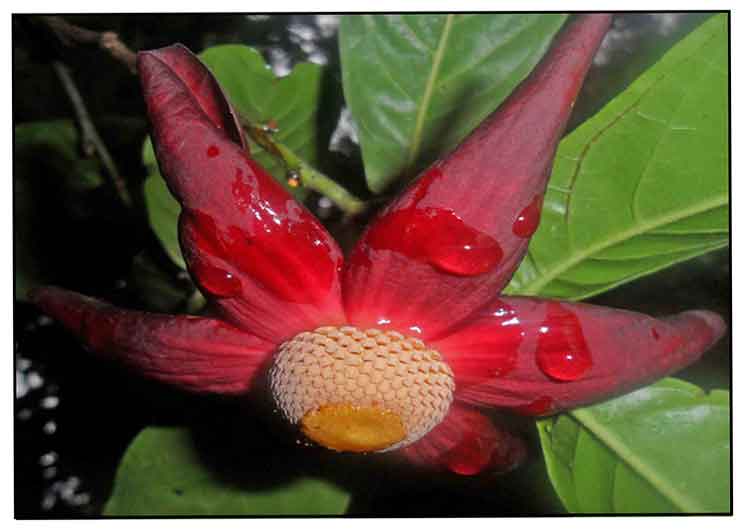
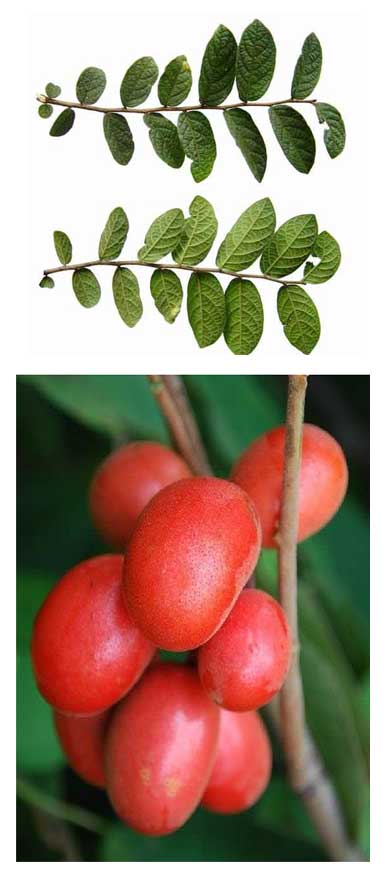
• Hilagak is a woody climbing shrub, 5 to 6 meters high. The younger and lower surfaces
of the leaves are rather hairy, with stellately arranged, rusty short hairs. Leaves are borne on
very short stalks, oblong-ovate to oblong-lanceolate, 8 to 16 centimeters long,
with pointed tip and rounded or heart-shaped base. Flowers are extra-axillary,
solitary, two or three in depauperate cymes, 1.5 to 2 centimeters in diameter.
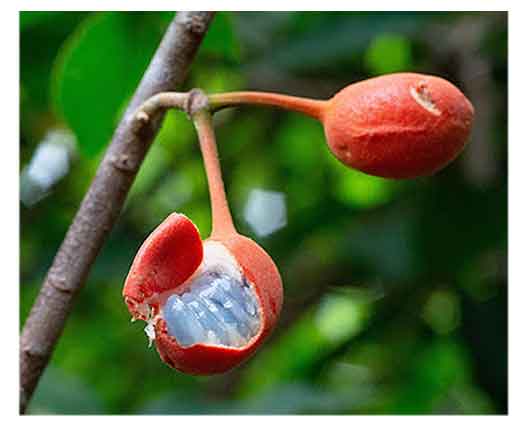
Fruit is fleshy and red when mature.
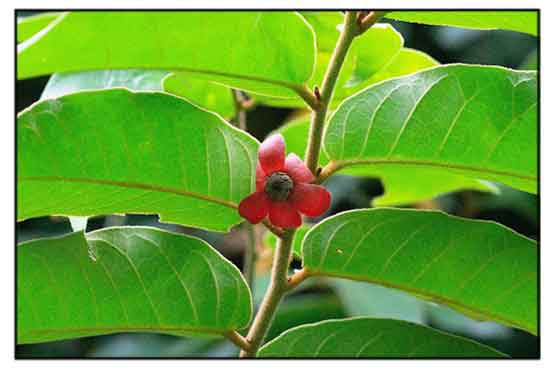 • Shrubs to 5 m tall, climbing. Branches stellate tomentose, hairs rust-colored when dry. Petiole 5-10 mm; leaf blade elliptic to ovate-oblong, 5-15 × 2.5-6 cm, thinly leathery, abaxially stellate tomentose, secondary veins ca. 12 on each side of midvein, base cordate, apex acuminate. Inflorescences leaf-opposed or extra-axillary, cymose, 1-4-flowered. Flowers ca. 1.5 cm in diam., stellate pubescent. Petals purple to dark red, ovate, 8-12 × 6-7 mm, apex rounded. Stamens oblong; connectives apically truncate, glabrous. Carpels oblong; stigmas apically 2-cleft. Monocarp stipes 1-2 cm; monocarps ovoid-ellipsoid to sometimes globose, ca. 2 × 1-1.5 cm, not constricted between seeds, apex rounded; epicarp not spiny. (Flora of China) • Shrubs to 5 m tall, climbing. Branches stellate tomentose, hairs rust-colored when dry. Petiole 5-10 mm; leaf blade elliptic to ovate-oblong, 5-15 × 2.5-6 cm, thinly leathery, abaxially stellate tomentose, secondary veins ca. 12 on each side of midvein, base cordate, apex acuminate. Inflorescences leaf-opposed or extra-axillary, cymose, 1-4-flowered. Flowers ca. 1.5 cm in diam., stellate pubescent. Petals purple to dark red, ovate, 8-12 × 6-7 mm, apex rounded. Stamens oblong; connectives apically truncate, glabrous. Carpels oblong; stigmas apically 2-cleft. Monocarp stipes 1-2 cm; monocarps ovoid-ellipsoid to sometimes globose, ca. 2 × 1-1.5 cm, not constricted between seeds, apex rounded; epicarp not spiny. (Flora of China)
Distribution
- Native to the Philippines.
- Also native to Andaman Is., Cambodia, China, Hainan, Jawa, Laos, Lesser Sunda Is., Malaya, New Guinea, Nicobar Is., Queensland, Sumatera, Thailand, Vietnam. (22)
-
In thickets in low and medium altitudes from northern Luzon to Palawan and Mindanao.
- Also occurs in the Malaysia, Laos, Indonesia, India, Cambodia and Thailand.
 Constituents Constituents
• The bark contains an alkaloid. The active principle is parasympathetic
of the atropine group with activity similar to artabotrine of Marañon.
• Study yielded an oil rich in sesquiterpenes in which the principal
component was alpha-humulene (50%). Also, benzyl benzoate (5%).
• Preliminary screening of ethyl acetate extract of leaves yielded five flavonol glycosides: rutin (1), isoquercitrin (2), kaempferol 3-O-ß-galacto-pyranoside (3), astragalin (4), and isoquercitrin-6-acetate (5). (see study below) (3)
• Bioassay-guided purification of crude methanolic extract isolated a mixture of 1:1 of flavanols kaempferol (1) and quercetrin (2). (see study below) (9)
• Study of essential oils hydrodistilled from leaves yielded main constituents of δ-3-carene (12.8 %), n-hexadecanoic acid (9.1 %), β- caryophyllene (5.9 %), (Z)-β-ocimene (5.7 %) and γ-terpinene (5.4 %); the stem oil yielded germacrene D (38.4 %), benzyl benzoate (18.1 %) and n-eicosane (5.5 %). (11)
• Study of stem bark yielded seven compounds: benzyl benzoate (1), caryophyllene oxide (2), glutinol (3), 5-hydroxy-7- methoxyflavone (4), 5-hydroxy-6,7-dimethoxyflavone (5), 2,5-dihydroxy-7-methoxyflavanone (6) and 5,7-dihydroxyflavanone (7). (12)
- Study of CHCl and butanolic extract of roots yielded 15 known compounds. The CHCl crude extract yielded six flavonoids, 2,5-dihydroxy-7-methoxy flavanone (1), tectochrysin (2), 5-hydroxy-7-methoxy flavanone (3), 6,7-O,O-dimethylbaicalein (6), 7-O-methylwogonine (7) and 2,5-dihydroxy-6,7-dimethoxy flavanone (8), together with two aromatic compounds, benzoyl benzoate (4) and 2-methoxybenzyl benzoate (5).
Butanolic crude extract yielded seven alkaloids, liriodenine (9), lanuginosine (10), oxoanolobine (11), roemerine (12), anonaine (13), xylopine (14) and roemeroline (15). (see study below) (14)
- Study of aerial parts yielded one new lignan glycoside, ufaside (1), along with six known compounds, oxoanolobine (2), ergosta-4,6,8(14),22-tetraen-3-one (3), catechin (4), epicatechin (5), daucosterol (6), and glutin-5-en-3-one. (see study below) (19)
- Study of twig and leaf extracts isolated a new C-benzylated flavone, uvariaruflavone (1) along with 13 known compounds (2-14). (see study below) (25)
Properties
- Studies have suggested anti-diabetic, anti-tubercular, antioxidant, anticancer, antibacterial, anti-prostatic hyperplasia, antispasmodic, relaxant, α-amylase and α-glucosidase inhibitory properties.
Parts utilized
Roots
 Uses Uses
Edibility
- Fruits are edible, with a tart and sweet flavor.
Folkloric
- Alcoholic tincture of the roots used as an ecbolic (promoting labor
by increasing uterine contractions.
- Ati Negritos use
decoction of dried stems for post-partum hemorrhage. Also, decoction of dried stems used postpartum as wash or external application. (15)
- In Asian traditional medicine, leaves used for treatment of diabetes.
- In Thailand, Uvaria rufa is macerated and mixed with Corvus macrorhynchus, Xanthophyllum glaucum, and Oryza sativa with potable water, and taken orally for skin allergy (rash and redness). (8) Decoction of wood drunk for fever. (16) Root decoction drunk during pregnancy. (17)
- Juice from the plant used by Amazonian indigenous peoples to cure "papa-din", a condition of "weakness" that may have an infectious bias. (Reis et al., 2016) (27)
Others
- Handicraft: Wood used as substitute for rattan in making furniture and handicrafts.
Studies
• Essential
Oil / Sesquiterpene: Uvaria
rufa yielded an oil rich in sesquiterpene, in which the principle component
as [alpha]-humulene (50%). Benzyl benzoate was also present at 5%. (1)
• Flavonoid Glycosides
/ Advanced Glycation End-Products Inhibition / Anti-Diabetic / Leaves: Study yielded five flavonol glycosides: rutin, isoquercitrin, kaempferol 3-O-ß-galacto-pyranoside, astragalin, isoquercitrin-6-acetate. Prolonged hyperglycemia in diabetic patients leads to the formation of advanced glycation ed products (AGEs), which contribute to the development and progression of diabetic complications and aging. Isoquercitrin (2) and its 6-acetate derivative (6) showed an ability to inhibit the formation of AGEs in the bovine serum albumin-glucose assay. (3)
• Polyoxygenated Cyclohexene Derivatives / Aerial Parts: Study yielded four new polyoxygenated cyclohexene derivatives, uvarirufone A, uvarirufols A-C, along with 10 known compounds from the aerial parts of Uvaria rufa. (4)
• Antitubercular: Study evaluated various extracts, fractions, and secondary metabolites against Mycobacterium tuberculosis H(37)Rv. Results demonstrated a potential source of compounds with promising antitubercular activity. Also, polar pigments enhanced inhibition against M. tuberculosis H(37)Rv. (6)
• Roots / Alkaloids: Study for alkaloidal compounds from the roots yielded compounds including oxoanolobine, lanuginosine, and roemeroline. (7)
• Flavanol Derivatives / Anti-tubercular: Study yielded a mixture of 1:1 flavonols kaempferol and quercetrin. Microplate Alamar Blue Assay showed moderately strong antitubercular activity from these flavonol derivatives. (9)
• Attenuation of Prostatic Hyperplasia: Study evaluated the therapeutic potential of Uvaria rufa on BPH using in vitro and in vivo models. UR-EtOAc exhibited highest potency of inhibition of 5aR and possessed potent antioxidants rich in phenolic and flavonoid contents. The active compound by HPLC analysis was ß-sitosterol. UR-EtOAc and finasteride treated groups showed increased prostatic and serum testosterone levels. At all treatment doses used, no toxic effects were observed on vital organs and serum biochemical parameters. (10)
• Antibacterial / Twigs: In a study of 31 samples of crude extracts from 24 species of mangrove and beach forest plants, Uvaria rufa (twigs) was one of the plants that showed potent antibacterial activity against Staphylococcus aureus. (13)
• Antioxidant / Roots: In a study of of 40 Thai medicinal plants for antioxidant activity using DPPH as stable radical, CHCl and butanolic extracts of Uvaria rufa roots showed promising activity. Chromatographic separation of the two extracts isolated 15 known compounds. Compound 8 (2,5-dihydroxy-6,7-dimethoxy flavanone) showed the highest scavenging activity on DPPH and superoxide radicals with IC50 of 0.16 and 1.03 mg/mL, respectively. (see constituents above) (14)
• Antioxidant / Leaves: Study evaluated ethyl acetate and hexane extract of leaves of Uvaria rufa for antioxidant activity. The EA extract showed strong antioxidant activity with IC50 57.87 µg/ml while the hexane extract showed weak antioxidant activity. DPPH radical scavenging of standard ascorbic acid was IC50 3.781 µg/ml. (18)
• Lignan Glycoside / Cytotoxicity / Roots: Study of aerial parts yielded one new lignan glycoside, ufaside (1), along with six known compounds, oxoanolobine (2), ergosta-4,6,8(14),22-tetraen-3-one (3), catechin (4), epicatechin (5), daucosterol (6), and glutin-5-en-3-one. In cytotoxic analysis using nine human cancer cell lines, compounds 2 and 3 exhibited moderate cytotoxicity against human lung adenocarcinoma cell line (LU-1) with IC50 of 9.22 ± 1.02 µg/mL 10.21 ± 1.16 µg/mL, respectively. (19)
• Antispasmodic / Stems: Study evaluated the antispasmodic activity of ethanolic extracts of stems of Uvaria rufa and Anomianthus dulcis on isolated rats' ilia, with atropine as standard drug. Both plants exhibited antispasmodic efficacy at all test concentrations on excised rats' ilia. Uvaria rufa produced highest relaxation of 98.53 ± 0.61%, compared to atropine standard of 112.84 ± 5.61% at concentration of 10.0 µg/ml. Results suggest potential for both plants as antispasmodic agents for IBS treatment. (20)
• Reprotoxicity / Effect on Male Reproductive Organs of Alopecia-Induced Rats / Stems: Study evaluated the effects of EA extract of stems of U. rufa on male reproductive organs of rats with androgenic alopecia induced by testosterone propionate. There was an increase in relative weight of epididymis and increased weight of seminal vesicles, with 4% and 2% UREtA concentrations, along with dead spermatozoa in the epididymis lumens. Results suggest 2% and 4% EREtA have adverse effects on male reproductive organs. (21)
• Relaxant Activity / Stems: Study evaluated the relaxant activity of various extracts of stems of Uvaria rufa and Caesalpinia sappan on rats' prostate strips in vitro. All extracts, as well as tamsulosin, exhibited relaxant effects (p<0.001) on prostate smooth muscles. The Uvaria rufa ethyl acetate extract exhibited most potency in relaxing prostate smooth muscle with maximal effect of 72.09%. The EC509 of UEA was 140.23 and UEOH 235.35 µg/mL, compared to tamsulosin at 86.83 µg/ml. Results suggest the UEA from stems showed greatest potency and may be useful in relieving urological symptoms caused by benign prostatic hypertrophy. (23)
• Antituberculosis / Free-Radical Scavenging / Leaves: Study evaluated the anti-TB and free radical scavenging activity of leaf extracts using MABA, TLC screening, and DPPH assays. The MABA showed the ChCl3 extract was most active against M. tuberculosis H37Rv with 94% inhibition at 128 mcg/mL. Polar sub-extracts contained more of the potential polyphenolic antioxidant compounds with free radical scavenging activity. The major free radical scavenging principles in the petroleum ether and chloroform extracts were attributed to tocopherol derivatives, while ethyl acetate and butanol extracts were due to polyphenolic compounds like glycosides of flavonoids and fallic acids. (24)
• α-Glucosidase and α-Amylase Inhibitory Activities / Uvariaruflavone / Twigs and Leaf: Study of twig and leaf extracts isolated a new C-benzylated flavone, uvariaruflavone (1) along with 13 known compounds (2-14). Compound 1, uvariaruflavone, showed highest α-glucosidase activity with IC50 of 44.3 µM, while ferrudion (2) showed highest α-amylase inhibitory activity with IC50 of 73,5 µM. (see study below) (25)
• Anti-Mitotic / Glutinol / Bark: Study of dichloromethane extract of air-dried bark of U. rufa afforded glutinol. Glutinol and ethanolic extract exhibited anti-mitotic activity (18.33% and 18.93%, respectively), comparable to methotrexate (19.07%), a well-known anti-cancer drug, which they surpassed by 0.74% and 0.14%. Results suggest great potential as a novel therapeutic agent for cancer. (26)
Availability
- Wild-crafted.
- Seeds in the cybermarket. |