 Botany Botany
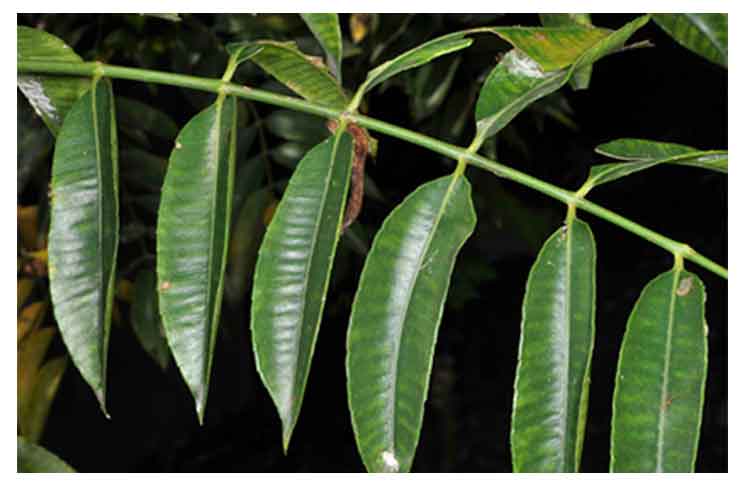
Libas is a tree reaching a height of about 25 meters and a diameter of about 60 centimeters. Bark surface is smooth, with irregular cracks, grey to pale reddish brown, exuding a clear, sticky sap with a turpentine smell. Leaves are alternate, pinnately compound, 20 centimeters or more in length. Leaflets are pointed at the apex, rounded or abruptly pointed at the base, 7 to 14 centimeters in length. Flowers are small and in panicles. Fruit is rounded, yellow, a one-seeded drupe, with a finely flavored, edible pulp.
 Distribution Distribution
- Native to the Philippines.
-
In primary forests at low altitudes.
- Cultivated.
- Occasionally planted as a shade tree.
- Also native to Andaman Is., Assam, Bangladesh, China, Hainan, Himalaya, India, Jawa, Laos, Lesser Sunda Is., Malaya, Maluku, Myanmar, Nepal, Pakistan, Philippines, Sri Lanka, Sulawesi, Thailand, Vietnam. (27)
Constituents
- Phytochemical studies have yielded flavonoids, tannins, saponins and terpenoids.
- Essential oil from the pulp yielded carboxylic acids and esters, alcohols, aromatic hydrocarbons. The major compounds were 9,12,15-octadecatrien-1-ol (36.78%), hexadecanoic acid (25.27%) and furfural (19.77%).
- Study isolated 24-methylene cycloartanone, stigma-4en-3one, lignoceric acid, β-sitosterol and its β-D-glucoside. (10)
- Fruits yield ß-amyrin, oleanolic acid, glycine, cystine, serine, alanine, and leucine. Aerial parts yield lignoceric acid, ß-sitosterol and its glucoside.
- Nutritive and mineral constituents of ripe fruits showed energy (189-203 kcal/g), crude fat 12.23-12.54%. crude fiber 3.13-4.03%, total carbohydrate 16.30-23.54%, sodium 0.96-1.38%, calcium 0.15-0.93%, iron 1.3-1.5%, copper 0.9-1.23%, protein 0.50-0.80%, acid 0.47%. (Purohit, V.K et al., 2010) (17) (31)
- Biochemical profiling of fruit yielded ascorbic acid 87.45±12.7 mg/100 g FW; antioxidant 518.8±1.7 IC50 µg ml, protein 18.92±1.9 mg/100g, total sugar 4.35±0.11 mg/100g, reducing sugar 1.51—0.25 mg/100g, non-reducing sugar 2.83±0.26 mg 100g, moisture 77.23±0.21 % content. (19)
- Phytochemical analysis of various extractives of fruit parts yielded alkaloids, tannins, flavanoid, saponins, reducing sugars, and glycosides. (28)
 - Phytochemical screening of resin extract yielded phytosterols, flavonoids, carbohydrates (-/+), fixed oil and fats (-/+), with absence of saponins, tannins, and proteins and amino acids. (see study below) (12) - Phytochemical screening of resin extract yielded phytosterols, flavonoids, carbohydrates (-/+), fixed oil and fats (-/+), with absence of saponins, tannins, and proteins and amino acids. (see study below) (12)
- Phytochemical screening of methanol bark extract yielded the presence of reducing sugar, flavonoids, peptides, phenolic compounds, and tannins. (see study below) (40)
- Phytochemical screening of unripe fruits afforded caffeic acid methyl ester (1) and rhamnetin 3-O-sophoroside (2). (see study below) (46)
- Phytochemical screening of seed extract yielded terpenoids, tannins and coumarins. GC-MS analysis yielded 29 compounds, including oleic acid amide, ß-sitosterol, linoleic acid, oleic acid, protocatechuic acid, syringic acid, and gallic acid. (51)
- Study of EtOAc extract of S pinnata fruit yielded five caffeoylquinic acid derivatives (1-5), three coumarin derivatives (6-8), two flavonoid glucosides (9,10), three organic acids (11-13) and one aromatic glycoside (14). The major constituent was 5-O-caffeoylquinic acid methyl ester, which on HPLC analysis yielded 258 mg/kg dry weight of fruits. (see study below)
(56)
Properties
- Used traditionally as anthelmintic, anti-inflammatory, anti-pyretic, anti-tumor, antibacterial, and to regulate menstruation.
- Bark considered astringent and refrigerant; bark gum, demulcent.
- Ripe fruit considered tonic, aphrodisiac and astringent to bowels.
- Studies have suggested hepatoprotective, laxative, diuretic, hypoglycemic, antihyperlipidemic, antioxidant, antibacterial, anthelmintic, thrombolytic, and antipyretic properties.
Parts used
Bark, leaves, fruits.
 Uses
Uses
Edibility
- Young leaves, flowers, and fruits are edible.
- Leaves and stems cooked and eaten as vegetable.
-
Leaves and fruits are sour and used in stews and the filling for the fish dish "sinanglay," a Bicolano delicacy.
- Dried young leaves used for laing.
- Fruits eaten raw; can be made into jams, jellies and juices.
Folkloric
- Bark, leaves and fruits used the treatment of burns, sores and wounds.
- Bark used for treatment of diabetes.
- Used for dysentery and diarrhea, rheumatism, vomiting.
- Unripe fruit used as aphrodisiac.
- Ripe fruits used as antiscorbutic.
- In Bangladesh, bark infusion used in dysentery and to prevent vomiting. Bark paste used as embrocation for articular and muscular rheumatism. (16)
- In Sri Lanka, widely used in the treatment of diabetes mellitus. (33)
- In Balinese traditional medicine, used for treatment of diabetes.
Others
- Wood: Used for various carpentry application – mouldings, interior finishing, turnery, carvings, etc. Because of lightness, suitable for manufacture of matchsticks, matchboxes, boxes and crates.
- Fodder: Leaves and fruits used as pig fodder.
Studies
• Hepatoprotective / Carbon Tetrachloride-Induced Hepatotoxicity: Study showed the ethyl acetate and methanolic extracts of the stem heartwood of Spondias pinnata possess hepatoprotective activity against carbon tetrachloride-induced hepatotoxicity in rats. The hepatoprotective activity could be due to the presence of bioflavonoids. (1)
• Laxative / Diuretic: Study on chloroform and methanol extracts of the bark of Spondias pinnata produced significant diuretic and laxative activity. The petroleum extract did not reveal significant activity. (2)
• Hypoglycemic / Bark / Fruit Pulp: Study on adult Wistar albino rats showed the methanol extract to have promising results comparable to standard reference glibenclamide. Phytochemicals showed the presence of flavonoids, tannins, saponins, terpenoids.(3) Study of aqueous extract of bark in alloxan induced diabetic rats showed improvement of glycemic control. (21) Study evaluated the hypoglycemic effect of fruit pulp extract of S. pinnata on an experimental model of diabetes in albino rats. Results showed hypoglycemic effect comparable to that of glibenclamide. (38)
• Antioxidant / Antibacterial / Cytotoxicity: Extract showed excellent scavenging of DPPH radical and reducing power. A chloroform extract showed moderate antibacterial activity against eight microorganisms. An ethanol extract showed cytotoxicity with an LC50 of 65 and LC90 of 160. (7)
• Anthelmintic : In a comparative extract study for anthelmintic activity, all extracts of both acetone and ethanol extracts showed anthelmintic activities than standard drugs, with the ethanol extract showing better activity than the acetone extract. (8) In vitro study of stem heartwood and bark of Spondias pinnata showed potent anthelmintic activity against earthworm Pheretima posthuma; the stem heartwood showing more potent effect than the bark extract. (22)
• Antioxidant: Study of methanol extract of stem-bark extract using various assays showed it to be a potential source of natural antioxidants. (9)
• Hepatoprotective / Iron Overload Liver Toxicity: Study of a methanol extract of Spondias pinnata showed hepatoprotective activity in iron-intoxicated mice, suggesting a potential use as iron chelating drug for iron overload diseases. (11)
• Antimicrobial / Resin: Antimicrobial activity of resin of S. pinnata tested on various organisms showed maximum activity on Bacillus subtilis, a Gram-positive bacteria. The extract showed no activity against Gram-negative bacteria and fungus S. cerevisiae. (see constituents above) (12)
• Antibacterial: Study of ethanolic extract of pulp showed antibacterial activity against S. aureus, E. coli, and Pseudomonas aeruginosa, and antifungal activity against C. albicans and Aspergillus flavus.
• Antibacterial / Stem Bark: Study of Methanolic extract of stem back showed antibacterial activity against B. subtilis, S. aureus, E. coli, and P. mirabilis at a concentration of 128 µg/ml. (13)
• Hypoglycemic Activity / Root: Study evaluated various extracts of roots of Spondias mangifera for hypoglycemic activity in adult Wistar albino rats, with glibenclamide as reference standard. Results showed dose-dependent reduction of blood glucose concentration. Results suggest extra-pancreatic effects and justifies the use of roots in the folklore treatment of diabetes. (14)
• Toxicity Study / Root / Bark: Study evaluated an ethanol extract of Spondias pinnata roots for potential toxicity in acute and chronic administration in rats. Results showed no significant toxicity, and provides a wide margin of safety in the dose used in traditional medicine. (15) Study evaluated the acute (0.25 - 2.00 g/kg for 14 days) and subchronic (1.00 g/kg for 30 days) toxicity of aqueous extract of bark of S. pinnata in healthy male wistar rats. Results showed the S. pinnata extract to be toxicologically safe at 1.00 g/kg as a potent antihyperglycemic in Wistar rats. (33)
• Antioxidant / Antimicrobial / Thrombolytic / Fruit: Study of crude ethanolic extract of fruit showed significant antioxidant activity. A chloroform soluble fraction exhibited moderate activity against Sarcina lutea, Staphylococcus aureus, Shigella boydii, Salmonella paratyphi and Salmonella typhi. The crude ethanolic extract exhibited clot lysis in in vitro thrombolytic assay. (17)
• Antimicrobial / Oleanolic Acid / Fruit: Study of a chloroform fraction of an ethanol extract yielded oleanolic acid (3 â-hydroxyolea-12-en-28-oic acid) as the major bioactive compound showing activity against Staphylococcus aureus, Bacillus subtilis, Escherichia coli and Candida albicans. (18)
• Lessens Iron Overload in Hemosiderosis / Stem Bark: Study evaluated the ameliorating effect of 70% methanol extract on iron overload induced liver injury in Swiss albino mice. Results showed an ameliorating effect with reductive release of ferritin iron. The effect was supported by histopathological studies. The hepatoprotective efficiency presents a potential iron chelating drug for iron overload diseases. (20)
• Anticancer / Bark / Human Lung and Breast Carcinoma: Study of a 70% methanolic extract of S. pinnata bark showed anticancer potential against human lung adenocarcinoma cell line (A549) and human breast adenocarcinoma cell line (MCF-7) by inducing apoptosis through modulation of Bcl-2 family proteins. (23)
• Prevention of Chemotherapy Induced Diarrhea: Study of a bark extract evaluated a bark extract in a rat model with induced rat mucositis from a single injection of ectoposide. Results showed a potential for prevention of the toxic effects of ectoposide which expedites to mucositis. (24)
• Antipyretic / Stem Bark: Study showed an ethanol bark extract to possess significant anti-pyretic activity using Brewer's yeast induced pyrexia in albino rat model. (25)
• Amylase and Lipase Inhibitory Activity / Leaves: Study of leaf extract showed α-amylase(57.85%) and lipase (31.04%) inhibitions suggesting a potential for use in the prevention of metabolic syndrome and treatment of diabetes and obesity. (26)
• Etoposide Induced Mucositis / Bark: Study showed etoposide exposure induced a mucositis as evidenced by a significant increase in cellular destruction compared with normal rats. Spondias pinnata bark extract was able to revert the mucositis. Antioxidant properties may have an impact on damaging reactive oxygen species generated in the first stage of mucositis. Results suggest SP bark extract has promise in promoting healing of damaged intestine following chemotherapy. (29)
• Nephroprotective: Study of an ethanolic extract for nephroprotective and hepatoprotective effect in STZ induced hyperglycemia rat model. Although the extract showed no significant antidiabetic activity, results suggest protective effects on the kidney. (30)
• Partial Antifungal Activity / Leaves / Ointment Formulation: Study evaluated the antifungal activity of active constituents from the ointment formulation of leaves of S. pinnata. Phytochemical screening yielded the presence of flavonoids, saponin glycosides, proteins, carbohydrates and tannins. Both 1% and 5% Libas ointment produced zone of inhibition but showed only partial inhibitory activity which means the extract can be used to slow down fungal growth but not for treatment of fungal infections. (32)
• Antibacterial / Antioxidant / Leaves: Study evaluated the antibacterial and antioxidant potential of various extracts of dried leaves of S. pinnata.
The ethanol extract showed highest free radical scavenging activity. The ethanol extract showed the highest total phenolic content (27.76 ± 1.11 mg GAE/g extract) while he EA extract showed highest flavonoid content (86.53 ± 1.95 mg QE/g extract). While all extracts showed antibacterial activity, the lowest MIC and MBC values were shown by the ethanol extract at 2.0 and 3.5 mg/mg, respectively against Staphylococcus aureus. (34)
• Hepatoprotective / Ethanol-Induced Oxidative Stress / DMA-Damage / Bark: Study evaluated the hepatoprotective and antioxidant effects of S. pinnata bark extracts against ethanol-induced liver injury in Wistar rats. Acetone and ethyl acetate extracts significantly (p<0.05-0.01) and dose-dependently prevented ethanol-nduced increase in liver enzymes and other biologic markers. There was also attenuation of ethanol-induced DNA damage. The hepatoprotective potential was less than standard drug silymarin. (35)
• Anxiolytic / Fruit: Study evaluated methanolic extracts of S. pinnata fruit for anxiolytic activities. The ME showed anxiolytic activity by hole board test (p<0.001) and elevated plus maze test (p<0.001) in mice. (36)
• Modulatory Effect in Combination with Whey Preparation / Mucoprotective on Etoposide-Induced Mucositis: Study evaluated the mucoprotective effect of an oral combination treatment of S. pinnata and whey preparation in a rat model of etoposide-induced mucositis. Results showed strong mucoprotective effect. Levels of antioxidant (TAO and GSH) were significantly higher in rats which received the combination treatment compared to the individually treated groups. (37)
• Analgesic / Fruit: Study evaluated a methanolic fruit extract of Spondias pinnata for analgesic activity in rats showed potent activity with acetic acid induced writhing (p<0.05) and formalin induced licking (p<0.05) tests. Results showed significant analgesic activity. (38)
• Phenolics / Amelioration of Iron Overload Induced Hepatic Damage / Bark: Study evaluated GA (gallic acid) and MG (methyl gallate) isolated from crude S. pinnata bark extract for in vitro iron chelation property and in vivo ameliorating potential in iron overload induced liver toxicity. While both MG and GA exhibited excellent reducing power activities, MG showed better iron chelation potential than GA. Results confirmed the curative effect of GA and MG against iron overload hepatic damage via potent antioxidant and iron-chelating potential. (39)
• Prevention of Etoposide Induced Mucositis / Bark: Chemotherapy-induced diarrhea is a common side effect of cancer treatment that can cause significant morbidity and mortality. Study evaluated the effect of oral treatment of S. pinnata bark extract on experimentally etoposide-induced rat mucositis. Results showed the bark extract has potential to prevent toxic effects of etoposide. The bark extract intervention was able to restore normal morphology and intestinal sodium potassium ATPase activity. (see constituents above) (40)
• Caridioprotective / Ischemia Reperfusion Injury / Stem Bark: Study evaluated the effect of ethanolic extract of stem bark of S. pinnata on ischemia-reperfusion injury and ischemic preconditioning of the heart. Results showed the stem bark ethanolic extract significantly reduced ischemia reperfusion-induced myocardial injury in vitro, but it did not enhance cardioprotective effect of ischemic preconditioning. Activity was probably through its antioxidant activity. (41)
• Methyl Gallate / Anticancer / Induction of Apoptosis: Study evaluated major compounds isolated from an ethyl acetate fraction for anticancer potential against U87 cells. Two of the four compounds were gallic acid and MG. Cytometric studies revealed that MG-induced apoptosis in U87 cells dose-dependently. MG is a potent antioxidant and induces sustained ERK1/2 activation and apoptosis in human gliobastoma U87. Results provide a basis for evaluation of MG for other brain carcinoma cell lines for the advancement of gliobastoma therapy. (42)
• Thrombolytic / Membrane Stabilizing Activity / Flavonoids / Aerial Parts: Study evaluated crude ethanolic extract of leaves of S. pinnata for thrombolytic and membrane stabilizing activities. All partitionates of the EA fraction showed highest % clot lysis (58.06%) compared to streptokinase (69.23%). The EA fractionates also significantly inhibited the hemolysis of human erythrocyte membrane induced by hypotonic solution and by heat. The activities correlated with total flavonoid content. (43)
• Antihyperlipidemic / Fruits: Study evaluated the antihyperlipidemic activity of methanolic extracts of fruits of SP against Triton-induced hyperlipidemic rats. Fenofibrate was used as reference drug. Results showed SP at doses of 100 and 200 mg/kg showed dose-dependent antihyperlipidemic effect. (44)
• Stress Relaxant / Antioxidant / Fruit: Study evaluated stress relaxant and antioxidant activities of ethanolic extract of fruit and its isolated compound (Sm-01). In vivo stress related activity was evaluated using anoxic stress tolerance, swimming endurance and cyclophosphamide-induced immune suppression mode and in vitro antioxidant activity using DPPH model. The extract and isolated compounds showed significant stress relaxant and antioxidant activities suggesting potential for use as adaptogenic. The activities may be due to Sm-01. (45)
• Radical Scavenging Activity / Unripe Fruits: Study evaluated phytoconstituents and free radical scavenging activity of 70% methanol extract of unripe fruits of S. pinnata. The fruit extract showed potent free radical scavenging activity by DPPH assay with IC50 of 2.75 µg/mL. TPC and TFC were 229.24 mg GAE/g and 192.58 mg QE/g, respectively. (see constituents above) (46)
• Hypoglycemic / Leaves: Study evaluated the hypoglycemic potential of S. pinnata leaves extract in normal and glucose-loaded rats. Phytochemical screening yielded saponins, phenolic compounds, flavonoids, and terpenoids. S. pinnata (500 mg/kg) and metformin (100 mg/kg) exhibited significant (p<0.05) decrease in blood glucose level with maximum effect at 3 hours after single dose administration. Results showed significant hypoglycemic activity in the animal model and support its traditional use to treat diabetes. (47)
• Anti-Inflammatory Quinoline / Bark: Study isolated the quinoline SPE2, 7-hydroxy-6-methoxyquinolin-2(1H)-one from the EtOAc fraction of S. pinnata bark. Anti-inflammatory activity was evaluated in a lipopolysaccharide (LPS)-stimulated murine macrophage RAW 264.7 model. SPE2 effectively suppressed LPS-induced overproduction of pro-inflammatory mediators such as nitric oxide (NO), tumor necrosis factor-α (TNF-α), interleukin-6 (IL-6), and IL-1ß, and reactive oxygen species. Western blotting showed dose-dependent reduction of NF-kB inside the nucleus and an increase in cytoplasmic NF-kB with SPE2 treatment. Results suggest anti-inflammatory effect via inhibition of NF-kB activation. (48)
• Antidiabetic / Antilipidemic / Fruit: Study evaluated the antidiabetic and antilipidemic effect of fruit extract of Spondias pinnata in alloxan-induced hyperglycemic Sprague Dawley rats. Results showed lowering of fasting glucose levels. Lipid parameters such as serum triglycerides, total cholesterol, LDL and VLDL were significantly reduced, whereas HDL was significantly increased. (49)
• Antidiabetic / Antilipidemic / ß-Cell Regenerative / Bark: Study evaluated the effect of bark extract of S. pinnata on antihyperglycemic, antihyperlipidemic activities and ß-cell regenerative potential in STZ-induced diabetic rats. Results showed decrease in percentage of glycosylated hemoglobin together with increase in serum insulin and C-peptide, and improvement in serum lipid parameters in extract treated rats (p<0.05). There was increase in islet cell regeneration evidenced by increase in insulin secreting ß-cells and increase in islet profile diameter in the pancreas. There was significant (p<0.05) dose dependent improvement in glucose tolerance. No toxicity was observed. Results showed the bark extract exerted antihyperlipidemic and insulinotropic effects through increased biosynthesis of insulin. Histopathology and immunohistochemistry confirmed S. pinnata extract induced ß-cell regeneration in the pancreas of diabetic rats. (50)
• Antimalarial / Seed: Study evaluated the in vivo antimalarial activity and toxicity of an ethanolic seed extract of S. pinnata against Plasmodium berghei ANKA strain in mice. Mice treated with 250, 500, 600, and 800 mg/kg doses showed significant parasitemmia suppression in a dose dependent manner, with 22.94, 49.01, 60.67, and 66.82% suppression, respectively. All the doses of seed extract significantly suppressed parasitaemia (p<0.05) during the curative activity test and prolonged the mean survival time. However, the extract displayed lower curative and prophylactic activities than standard drug artesunate. The seed extract showed no toxicity in mice at dose of 2,000 mg/kbw. (see constituents above) (51)
• Tyrosinase Inhibitory / Anticancer / Antioxidant / Fruit: Study of fruit extract exhibited anti-tyrosinase, antioxidant, and anticancer activity in vitro. A fraction showed very low cytotoxic effect in normal fibroblast cells (NHDF cells). (52)
• Anti-Tuberculosis Activity / Stem Bark: Study evaluated the anti-tuberculosis activity of stem bark of S. pinnata against multiple drug resistant (MDR) strain of M. tuberculosis. A chloroform extract yielded terpenoid, polyphenols, and flavonoids. The extracts were active against MDR strain of M. tuberculosis with 100% inhibition at concentration of 100 mg/L. The chloroform extract showed higher inhibition than the ethanol extract. Results suggest a potential natural source of an antituberculosis constituent. (53)
• Antimalarial / Leaves: Study evaluated the antimalarial effect of leaf extract of S. pinnata in increasing cellular immunity, especially phagocytosis activity of peritoneal macrophages against Plasmodium berghei infection in Balb/c mice. Results showed lowest parasitemia and highest capacity of macrophage to phagocytose latex in the treatment group that received 50 mg/kbw of leaf extract. There was a significant correlation between percent phagocytosis and parasitemia (p<0.05). The mechanism of how the leaf extract activate phagocytosis activity and reduce parasitemia remain require further investigation. (54)
• Anti-Inflammatory / Etoposide Induced Mucositis / Bark: Mucositis is one of the vulnerabilities of chemotherapy. Etoposide is a commonly used chemotherapeutic agent for various cancers. Study evaluated the anti-inflammatory effects of S. pinnata bark extract in an etoposide-induced mucositis rat model. Results showed significant decrease in TAO and GSH levels with a marked increase in NO, MPO, and Na+K+ATPase activity in the treated group, which suggests protective effects against increased levels in etoposide-induced mucositis group. The effect would decrease the pathological burden during chemotherapy and prevent hurdles in therapeutic modalities. (55)
• Potential Ingredient of Function Food and Medicine / Fruit: Study evaluated the chemical constituents of S. pinnata EtOAc fruit extract, which could be of benefit as an ingredient of functional food and medicines. Quantification of compound 1 could be helpful for quality control of S. pinnata. (see constituents above) (56)
• Anti-Cholangiocarcinoma / Fruit: Study evaluated the cytotoxic effect of ripe wild mango fruit extract, called 6A, in cholangiocarcinoma MO55 cells and a normal epithelial cell of the bile duct MMNK1 cells using MTT assay. The 6A exhibited cytotoxicity in MO55 cells with IC50 of 0.40 mg/mL, and low cytotocity against MMNK1 cells with IC50 2.70 mg/mL. Total phenolic content and total flavonoid content were 192.14 GAE/g extract and 73,13 mg QT/g extract, respectively. 6A phytochemical screen yielded tannin, gallic acid, flavonoids, terpenoids, and cardiac glycoside. Results suggest potential for the molecules in the development of new anticancer drugs for treatment and prevention of cholangiocarcinoma. (57)
Availability
- Wild-crafted.
- Seeds, plants in the cybermarket.
|