Gen info
- Abrus is a genus of flowering plants in the pea family, Fabaceae, and the only genus in the tribe Abreae. It contains 13-18 species, but is best known for a single species jequirity (Abrus precatorius).
- in Rajasthan, India, the Chirmi song is associated with the plant. Among the traditional Zulu people the beads is a source of craft economy. (78)
- During the Tang Dynasty, a poem by Wang Wei titled "One-Hearted" (Xang Si), is said to likely refer to Abrus precatorius as a "red bean" (hona dou).
(77)
- The seeds of Abrus precatorius or Gunjja are very consistent in weight, even under different moisture conditions due to the water-impermeable seed-coat. The Indians once used the seeds to weigh gold using a measure called a Ratti (gunjja), where 8 Ratti equals1 Masha
, and 12 Masha equals 1 Tola (11.6 grams). (84)
 Botany Botany
• Saga is a slender, twining,
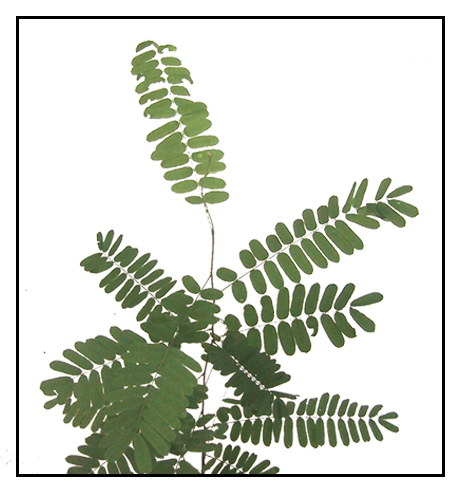
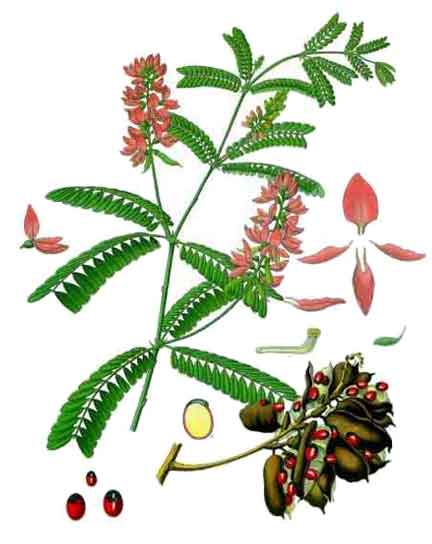
branched, annual vine that reaches a length of 9 meters or less. It is sparingly hairy or nearly smooth. Leaves are alternate, from 5 to 10 centimeters long and compounded into
pinnate arrangement of about 20 to 40 leaflets to each leaf; each leaflet
oblong, rather thin, from 1 to 3 centimeters long and with an abrupt terminal
point. Inflorescence is an axillary raceme, shorter than the leaves with numerous
crowded flowers. Flowers are pink to purple or salmon in color, attaining 1 centimeter
in length. Calyx teeth short and standard petal ovate, the wings narrow,
and the keel arched. Stamens are 9, the filaments of which united into
a tube with a slit above. Ovary with many ovules with a short style.
Fruits are pods, oblong and turgid, 2.5 to 5 centimeters long and about
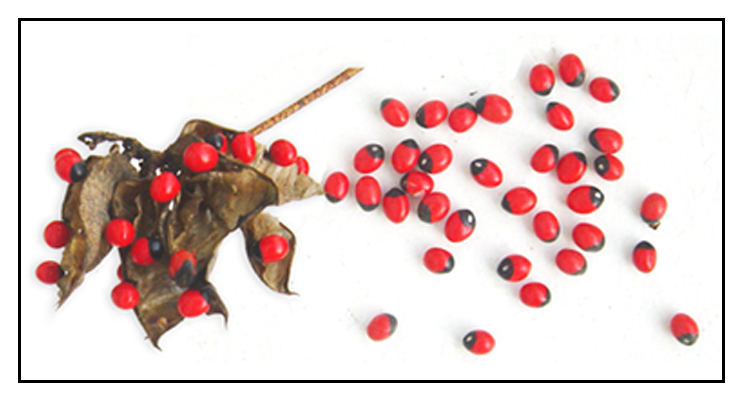
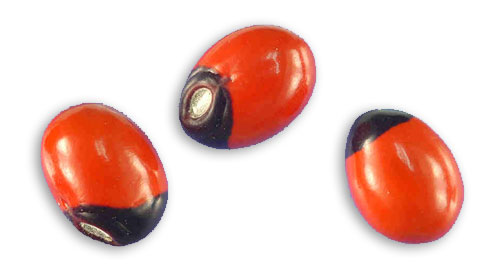
1.5 centimeters wide. Seeds are 3 to 5 in a pod, round and shiny, half-red and half-black.
Color of seeds is the the most recognizable characteristic of this species.
Distribution
- Introduced to the Philippines.
-
Common in thickets throughout
the Philippines, at low and medium altitudes.
- Native to Aldabra, Andaman Is., Angola, Assam, Bangladesh, Benin, Botswana, Burkina, Burundi, Cambodia, Cameroon, Cape Provinces, Cape Verde, Caprivi Strip, Central African Republic, Chad, China South-Central, China Southeast, Comoros, Congo, East Himalaya, Equatorial Guinea, Eritrea, Ethiopia, Gabon, Gambia, Guinea, Guinea-Bissau, Gulf of Guinea Is., India, Ivory Coast, Kenya, KwaZulu-Natal, Laos, Liberia, Madagascar, Malawi, Malaya, Mali, Mauritania, Mozambique, Myanmar, Namibia, Nepal, New South Wales, Nicobar Is., Niger, Northern Provinces, Northern Territory, Pakistan, Queensland, Rwanda, Saudi Arabia, Senegal, Seychelles, Somalia, South China Sea, Sri Lanka, Sudan, Swaziland, Taiwan, Tanzania, Thailand, Togo, Uganda, Vietnam, West Himalaya, Western Australia, Yemen, Zambia, Zaïre, Zimbabwe. (37)
 Constituents Constituents
- Study yielded Abrin A from the seeds, and similar to Abrin protein and
abrin C, is toxic to cell-free protein synthesis.
- The toxic principle chemically and pharmacologically resembles ricin.
- Active principle is the toxalbumin, abrin. Abrin consists of two fractions, a globulin and an albumose, two proteids.
- An analysis of the seed isolated two products: one, nitrogen-containing, and the other, a glucoside - abrin and abralin.
- Seeds contain the principle compound abrine, together with abraline, abrasine, abricin, abrin, abrusgenic-acid, abrusgenic-acid-methyl-ester, abruslactone, abrussic-acid, anthocyanins, calcium, campesterol, choline, cycloartenol, delphinidin, gallic-acid, glycyrrhizin, hypaphorine, N, N-dimethyl-tryptophan, N,N-dimethyl- tryptophan-metho-cation-methyl-ester, p-coumaroylgalloyl glucodelphinidin, pectin, pentosans, phosphorus, delphinidin, gallic-acid, glycyrrhizin, hypaphorine, N,N-dimethyl-tryptophan, N,N-dimethyl-tryptophan-metho- cation-methyl-ester, p-coumaroylgalloyl-lucodelphinidin, pectin, pentosans, phosphorus, picatorine, polygalacturonic-acids, precasine, precatorine and protein trigonelline. (50)
- Root, known as Indian liquorice, is said to contain glycyrrhizin. It should not be used as a liquorice substitute, as it might contain toxic properties similar to the seed.
- Study of seed yielded, besides abrin, poisonous proteins, a fat-splitting enzyme, abrussic acid, hemmaglutinin, and a quantity of urease.
- Phytochemical screening yielded abrin, abrusoside E, abrusgenic acid, cycloartenol, gallic acid and glycyrrhizin.
- Phytochemical screening of crude extracts yielded
tannins, triterpenes, glycosides, alkaloids, anthraquinones and carbohydrates.
- Studies on leaves have yielded various compounds, viz. abrine, trigonelline, abruslactone A, himiphloin, abrusosides (arbusosides A, B, C, and D), arabinose, galactose, xylose, choline hypaphorine, precatorine, glycyrrhizin, montanyl alcohol, inositol, D monomethyl ether, pinitol.
- Ethanolic extract of seeds showed alkaloids, flavonoids, phenols, tannins, and saponins. Ethyl acetate extracts yielded steroids and terpenes. (see study below) (46)
- Phytochemical analysis of aqueous extract of leaves yielded alkaloids, flavonoids (flavones), tannins, coumarins, sterols, triterpenoids, saponins, and reducing compounds. (see study below) (48)
- Studies on leaves have yielded abrine, trigonelline, abruslactone A, hemiphloin, abrusoside A, abrusoside B, abrusoside C, abrusoside D, arabinose, galactose, xylose, choline, hypaphorine, precatorine, glycyrrhizin, montanyl alcohol, inositol, D monomethyl ether, pinitol. (38)
- Phytochemical and proximate analysis of leaves (g/100 g dry basis) yielded: moisture 10.485 ± 0.049, protein 5.875 ± 0.08, fat 4.40 ± 0.14,
soluble fiber 6 ± 0.09, insoluble fiber 2 ± 0.15, ash 8.968 ± 0.97, calcium 1029.5 ± 5, phosphorus 183.20 ± 10.31, iron 54.58 ± 0.58, polyphenols 1.06 0.06, flavonoids 1.325 ± 0.085, flavonoids 1.325 ± 0.085, glutathione 375 ± 176.77, α-tocopherol 36.6 ± 3.05, tannins 1160 ± 0.076, ß-carotene 1260 ± 0.05, alkaloids 1100 ± 0.03, total saponins 0.244 ± 0.01, steroidal saponins 0.186 ± 0.028, vitamin C (fresh basis) 0.443 ± 0.011. (see study below) (52)
- Study isolated a new pterocarpan (2,3,4,8-tetramethoxy-6a,11a-dihydro-6H-benzo[4,5]furo[3,2-c]chromene-7,9-diol) from a dichlormethane extract of leaves. (see study below) (64)
- Study isolated a flavonoid glycoside compound from the leaves of A. precatorius. Phytochemical analysis identified vitexin, an apigenin flavonoid glucoside. (65)
- Proximate analysis of leaves yielded carbohydrate (65.50%) as largest component and crude fiber (2.00%) as lowest component; moisture 11.00%, ash 7.00%, crude protein 8.00%, and lipid 6.50%. Mineral analysis yielded (mg/100g) Na 94.10, Cu 00.07, Fe 24.14, Zn 6.09, K 246.94, Ca 231.84, and Mg 25.66. The best solvent for extraction of the sweet component of leaves is hot (soxhlet) methanollic extraction. (88)
 Properties Properties
- Roots are sweet-tasting,
neutral in effect, and antipyretic.
- Leaves have a sweet taste that lingers on the mouth upon ingestion.
- Seeds are exceedingly toxic (not to be taken internally).
- Insecticide, disinfectant and suppurative.
- Toxic actions of abrin are very similar to ricin. Although less toxic, it is more irritant to the conjunctiva than ricin.
- Considered anti-inflammatory, abortifacient, purgative, anodyne, aphrodisiac, emetic, expectorant, febrifuge, laxative, sedative and vermifuge.
- Studies suggested renoprotective, neuroprotective, abortifacient, anticonvulsive, antiviral, antimalarial, antifertility, nephroprotective, antidiabetic, antiproliferative, hypolipidemic, pancreato-protective, antioxidant, toxic, anthelmintic, antipyretic, analgesic, antimicrobial, immunomodulatory, anti-serotonergic, wound healing, anti-allergic, anti-asthmatic, mast-stabilizing, antihistaminic, anticataractic, antifungal, hair-growth promoting properties.
Parts
used
Roots and seeds.
 Uses Uses
Edibility
· In China, leaves use for making tea.
(81) In Jamaica, leaves used as tea substitute.(82) (While studies have mentioned "all" parts of the plant as poisonous, the leaves, some studies report on the tea made from leaves for the treatment of sore throat and dry coughs.(see toxicity below)
Folkloric
· In the Philippines, decoction of the leaves and roots used for cough.
· Juice of leaves used for hoarseness. Mixed with bland oils, applied to painful swellings.
· Decoction of dried roots used for swelling
pains in the throat. Zulus use a decoction for chest pains. Watery extract used for obstinate coughs.
· Seeds used as abortifacient.
· In Java, roots are considered demulcent and antidiarrhetic. Mixed with syrup, used for coughs in children.
· In Antilles, infusion of roots, leaves, stems and flowers used as pectoral.
· Leaves used for treatment of fever, asthma, and dental caries.
· For scabies and carbuncles, pulverized dried seeds are rubbed on
afflicted area.
· The roots may be administered as a cooling tea.
· Roots used to treat jaundice and hemoglobinuric bile. Paste of roots use to treat abdominal pains and tumors; also used as abortifacient.
· Root is chewed as snakebite remedy.
· Decoction of dried roots used to treat hepatitis and bronchitis. Hot water extract of dried roots used as antimalarial and anticonvulsant.
· In India, traditional
use for cancer, ulcers and fever. Seeds have been reportedly used for murder. Seeds also used as aphrodisiac. Used as antifertility and ecbolic. In Uttar Pradesh, roots used as anthelmintic. Root powder mixed with lemon juice used to cure sunstroke. In Bihar, paste of plant roots used for epilepsy. In Madhya Pradesh, roots used as emetic in poisoning; powder applied to snake bites. In West Bengal, plant roots used for body pain. In Bihar, root powder used for constipation.
· Seeds used with extreme caution as application in fistulas to stimulate inflammatory reaction.
· In Africa, seeds are sometimes used for urinary problems and venereal diseases. Internally, seeds used to disturb uterine functions and prevent conception.
· Several Central African tribes use seed preparations for intestinal worms and as oral contraceptive.
· In East Africa, decoction of aerial parts taken orally for sexually transmitted diseases, stomach problems, and to prevent vomiting.
· In Ghana, leaves used for asthma.
· In the Himalayas, leaves reportedly used for diabetes, cough, fever and asthma.
· Powdered seeds taken as snuff in cases of violent headaches associated with colds.
· In Ayurveda, plant used to promote hair growth. Plant is an ingredient in some Indian hair products. (50) In Ayurveda, leaves used as laxative, expectorant, and aphrodisiac. Seed considered as purgative, tonic emetic, antiphlogistic, aphrodisiac, and antiophthalmic.
· In China, plant use as folk medicine for treatment of bronchitis, laryngitis, and hepatitis. (50)
· In India, seed powder with rice starch reportedly used nightly for 15 days; seed paste applied to scalp for treatment of baldness; green leaf juice applied to buccal ulcers; seeds taken with ghee or butter for stomachache; seeds with milk taken for knee pain; decoction of young leaves taken orally for cough; seed extract used for sciatica. (73)
- In Nigeria, roots used for treatment of sexual diseases.
- Leaves, mixed with honey, are applied to swellings. In Africa, leaves are chewed by singers to moisten the throat. (82)
- Leaves, warmed or as paste, applied to relieve pain. Leaf paste with Plumbago. used for leucoderma. Leaves chewed with cubeb and sugar used for sore throat.
- Seeds applied as paste used to help hair growth, relief shoulder joint pain stiffness
- In Tanzanian traditional medicine,
crushed fresh leave or dried leaves soaked in water used for the treatment of oral candidiasis. (85)
- In northern Kalimantan, Indonesia, the Dayak tribe use leaves for the treatment of toothache. (86)
Others
· Handicraft / Seeds:
Seeds are gathered and strung into
various fancy articles. Used in the manufacture of rosaries, necklaces, decorating bags, and other ornaments. In some countries, concern for the seeds' toxicity has been cause of recall and caution for crafts such as necklaces, rosary beads, among others.
· Rope: Yields bast fibers suitable for cordage.
· Poison: (1) In India, reported use for suicide and murder. (2) Powdered seeds made into paste-like mash for use with darts and arrows. Wounds made by poisoned arrows are usually fatal within 24 hours.
· Love philter: Leaves used by suitors and lovers to prepare a drink, steeped in spirit, which is given to the father to induce him to give his daughter in marriage. (82)
Toxicity !
• Seeds, roots, and leaves are all poisonous. Toxin is released when the hard outer cover of the seed is pierced, the toxin released then absorbed in the intestine. Toxin is released by chewing or drilling holes in the seeds for beadwork, ornaments or jewelry. (51)
•
The plant is a common cause of accidental or intentional poisoning in the tropics. The estimated lethal dose for humans is 0.1-1.0 µg/kg. (43)
*
The seeds have yielded abrin A and C, both sharing the same toxic mechanisms.
• Abrin is an intensely poisonous albumin. A dose of 1/1000 mg to 1/2000 mg per kilogram body weight injected subcutaneously is considered poisonous.• Seeds are exceedingly toxic (not to be taken internally).
• Fatal poisoning has been reported in children chewing as little as half a seed.
• Intact seeds remain impervious to gastric fluid and pose less of a toxicologic potential. (51)
• The toxic principle chemically and pharmacologically resembles ricin.
• Toxicity case report after ingestion of 3-4 seeds of AP causing
acute demyelinating encephalitis, coma and death. (See below)
• Onset of toxicity may occur in 1 to 3 days; symptoms may persist for longer than 10 days. (51)
• Kansasaga
beans are extremely toxic, containing various types of toxic albumins.
Symptoms of poisoning include diarrhea, vomiting, debility, stoppage
of urine, hallucinations, etc. Observe extreme care in administering.
• An infusion of bruised seeds, when applied to the conjunctiva, may cause fatal poisoning from abrin absorption through the conjunctiva. It is a power irritant which can cause ecchymoses and edema at the site of inoculation. In high concentrations, it will cause severe conjunctivitis, permanent corneal opacities, and even destruction of the eye.
• Interestingly, it is reported that when injected into animals in infinitesimal doses, the animal rapidly acquires immunity to the poison.
• Necklaces made of pierced seeds can cause contact dermatitis. (51)
• Clinical Profile of A. precatorius Poisoning: Study reports on the incidence and clinical presentation of A. precatorius poisoning of 30 patients presenting with an alleged history of consumption of seeds to the RMMCH Emergency Room in India. Male to female ratio was 1:4—females indulge in greater number in deliberate self-harm. Mild hypokalemia, attributed to excess fluid loss, was seen in 40% of patients. Major symptoms were vomiting (100%) and diarrhea (67%) which may be bloody. There may be severe dehydration, low blood pressure, hallucinations, seizures, and hematuria. Severe cases may be associated with liver, splenic and renal failure. 7% of patients of patients may die following ingestion of the seeds. (41)
• Cerebral Venous Thrombosis Due to Abrin Toxicity: Study reports on a case of intentional A. precatorius poisoning in a young girl that caused cerebral venous thrombosis. While the mechanism for CVT is matter of speculation, the author suggests the possible cause of widespread vascular endothelial damage and a procoagulant state like dehydration. Treatment was supportive. Early first aid is gastric lavage and absorbents (activated charcoal). (43)
• A Case of Hemorrhagic Gastroduodenitis: Study reports on a case of acute hemorrhagic gastro-duodenitis following ingestion of bright red and black beans later identified as A. precatorius. With vigilant monitoring, the patient survived without residual illness. (47)
• Abrin Toxicity: LD50 of abrin given intraperitoneally to mice is 0.04 mcg. 5 mg of the alkaloid is reported to toxic to humans. In goats, ground seeds at 1 to 2 g/kg/day can cause death in 2 to 5 days. (51)
•
Retrospective Study on 112 Patients with A. precatorius Poisoning: Retrospective study reports on 112 cases of Abrus poisoning describing clinical features and outcome. Majority were females (78&), ages were between 13 and 30 years (81%), with diarrhea as most common symptom (66%) with blood present in the stools (33%). Six patients died with a mortality rate of 5.35%. (56)
• Survey: In a survey of 30 people, 83% were familiar with the peony seed; 40% uses it, and 67% ignores that the seed is toxic. (72)
- Seed Detoxification: (1) The Tamil Siddhas have suggested various methods called "suththi seythal" for for purification of the seeds
, which is done by boiling the seeds in milk and then drying them. (2) Seeds are soaked in water for ten hours and boiled. (3) In Ayurveda, seeds are purified by boiling them in milk or steamed with the help of buttermilk. (4) Swedana is a traditional Ayurvedic process of seed detoxification: seeds are boiled in water for 3 hours, followed by extraction of the seeds by cold maceration. (84)
(75)
Studies
• Renal
Protective: Study
of seed extract of AP on alcohol-induced renal damage in rats concludes
that the seed extract is protective on the kidney against alcohol-induced
parenchymal damage. (1)
• Antiplatelet / Anti-Inflammatory / Antiallergic / Isoflavanquinones / Roots: Study of roots isolated five iso-flavanquinones. Abruquinones D, E, and F exhibited remarkable inhibitory effects on platelet aggregation. Abruquinones A, B, D, and F showed strong anti-inflammatory and anti-allergic effects. Abruquinones A, B, D, and F showed an IC 50 of less than 03 µg/ml for inhibition of superoxide formation and IC50 of less than 1 µg/ml for inhibition of release of both ß-glucoronidase and histamine from mast cells. (2)
• Hypoglycemic
/ Hypolipidemic:
Study on the aqueous seed extract of AP showed strong hypoglycemic and
hypolipidemic effects with a reduction of atherogenic risk predictor
indices. The action of A precatorius was dose-dependent. (3)
• Antifertility
/ Sperm Antimotility:
(1) Extract study showed that AP possesses a reversible sperm antimotility
activity. (2) Methanol extract study of A precatorius seeds showed inhibitory effect on the motility of washed human spermatozoa. The effect of motility was essentially reversible. (3) Study of aqueous seed extract in male albino mice showed a male reproduction system with a dose-dependent reduction in testicular sperm count and motility.
• Antifertility
/ Ovulatory Blockage: Study of methanolic extract of Abrus precatorius seeds showed highly significant alterations in the pattern of estrous cycle, a significantly prolonged diestrous phase, a significant decrease in the proestrous phase and a total blockage of ovulation in one group. (7)
• Anti-Inflammatory
/ Antipyretic:
Extract study showed potent anti-inflammatory, antiarthritic and antipyretic
activities.
• Toxicity:
A case report of acute demyelinating encephalitis and death after ingestion
of peas of AP. A possible immunologic pathogenic mechanism is hypothesized.
• Anthelmintic / Root:
Anthelmintic study in Zimbabwe showed the extracts and root from Abrus
precatorius to be effective against tapeworms. (6)
• Antimicrobial: Extracts of A precatorius from leaves, stems and seed oil were tested against S aureus, S epidermis, E faecalis, Strep anginosus, B subtilis, Corynebacterium spp, E coli, K pneumonia, P mirabilis, P aeruginosa and C albicans. Results showed AP especially the seed oil has potent antimicrobial activity and substantiates the ethnobotanical use of AP for various bacteria-related diseases. Staph aureus was the most sensitive organism and the topical application of AP extracts in ointments may be recommended for treating superficial Staph aureus infections. (8) Study evaluated in vitro antibacterial activities of various crude extracts of seeds against ten clinical isolates. A methanolic seed extract showed greater potency when compared to hexane and chloroform extracts. The ME extract showed maximum antibacterial activity against K. pneumonia, followed by Staphylococcus aureus, Streptococcus mitis and Micrococcus luteus. (53)
• Immunomodulatory / Seeds: Study showed Abrus agglutinin could be a potential immunomodulator both in native as well as in heat denatured form. (10)
Study evaluated the immunomodulatory functions of aqueous extract of seeds. Results showed a dose related inhibitory effect on delayed type hypersensitivity. On hemagglutination titer (HT) test, the extract showed a suppressive effect at all doses. There was also a dose dependent increase in Phagocytic Index (PI). (44)
• Abrin A: Study purified Abrin A from the seeds of A. precatorius. Biological properties were similar to Abrus protein, abrin C, i.e., toxic to cell-free protein synthesis and binds D-galactose. Results show abrin A is a mixture of isolectins; and both abrin A and C are closely related with the same mechanism of toxic action. (12)
• Toxicity Study: Study of toxic effects of aqueous extract of A precatorius in white rats showed decreased in RBC, WBC, increased ALT and AST, testicular degeneration and sperm cell reduction. The results caution its use for medicinal purposes.(9)
• Toxicity / Demyelinating Encephalitis: Study reports a case of acute demyelinating encephalitis in 30-year old female attributed to ingestion of 3 to 4 seeds of 'ratti.' The patient developed bloody diarrhea and deep coma, and died in three days due to progressive central nervous system depression. (5)
• Hepatocelluar Carcinoma / Cytotoxic and Protective Effects: Study of the protective effects of an aqueous/ethanolic extract in NDEA-induced hepatocarcinogenesis in rats showed strong cytotoxic effects on HepG2 cells with dose-dependent reduction in various hepatic markers. (14)
• Anti-Serotonergic : Study of an EA extract of AP leaves on frog fundus strip using sumatriptan as standard showed antiserotonergic activity with a graded dose response in contraction. (15)
• Wound Healing / Antimicrobial: Study of crude seed and methanol extracts of white form of AP showed early wound healing activity in with and without infection. The wound healing was attributed to gums, mucilages, tannins or phenolic compounds in the seeds. (16)
• Mast Stabilizing / Anti-Allergic / Anti-Asthmatic: The ethanol extract of AP significantly protected against egg albumin induced degranulation of mast cell and inhibited area of leakage of dye in passive cutaneous anaphylaxis. Results concluded AP possesses anti-asthmatic potential. (21)
• Antioxidant / Antiproliferative: Study evaluated various leaf extracts for antioxidant and antiproliferative properties. The extracts showed strong antiradical properties, Fe++ chelating ability, and good inhibitory ability for lipid peroxidation. Tested on four different human tumor cells lines (human colon adenocarcinoma, human retinoblastoma cancer cells, human hepatocellular carcinoma cells and leukemia cells) the extract showed capabilities of inhibiting survival of tested cancer cell lines. Results showed high antioxidant and antiproliferative activity with potential applications in the treatment of diseases caused by ROS. (19)
• Anti-Oogenic / Fertility Regulator / Seed Extract: Study evaluated the seed extract for its effect of ova formation in Swiss albino mice. Results showed follicles in different stages of atresia and deviated oetrous cycle revealing a potential as antifertility agent and embodies Abrus to be a prolonged oral fertility regulator. (20)
• Antidiabetic / Seeds: Study evaluated the antidiabetic effect of chloroform-methanol extract of A. precatorius seed in alloxan diabetic rabbits. Results showed antidiabetic properties similar to chlorpropamide, with similar percentage reduction in blood glucose level. (22)
• Antioxidant / Effect of pH and Temperature / Leaves: Study evaluated a methanol extract of leaves for antioxidant activity by various assays. Leaves were found rich in polyphenols, flavonoids, ß-carotene, glutathione, α-tocopherol, and ascorbic acid. The AP exhibited more inhibition of oxidation in microsomes (73%) than oil emulsion (21%). Heat treatment increased the radical scavenging activity of the extract (28% to 43%). At pH 4.5, the extract exhibited more antioxidant activity and stability compared to pH 7 and 9.The ME showed varying degrees of antioxidant activity in a dose dependent manner in different in vitro models. Results suggest potential for use of Ap as natural antioxidant. (23)
• Antifertility / Seeds / Effect on Hypothalamopituitary Gonadal Axis: Study evaluated a crude mixture of A. precatorius seeds for antifertility effect. Results showed an antifertility effect with a sharp decrease in serum levels of testosterone, a significant reduction of epididymal sperm count, and marked atrophy of the testes with disruptions of the seminiferous epithelium and atrophy of Leydig cells. (24)
• Wound Healing / Leaves: Study evaluated different concentrations of ethanolic extract of Abrus precatorius for wound healing activity in rats. Results showed remarkable antibacterial wound healing properties and shows promise for use in a herbal formulation for treatment of wounds, sores, and boils. (25)
• Anticataractic / Antioxidant: Study evaluated in vitro anticataract and antioxidant activities of ethanolic seed extract of A. precatorius against calcium-induced cataractogenesis using goat lenses. Results showed the extract protected the lens against calcium-induced oxidative damage which might help in delaying the progression of the cataract. (26)
• Antihistaminic Activity in Clonidine Induced Catalepsy: Study evaluated an ethanolic extract of leaves for antihistaminic activity using clonidine induced catalepsy in mice. Clonidine induces catalepsy by releasing histamine from mast cells which is responsible for different asthmatic conditions. Results showed the extract of PA leaves and chlorpheniramine maleate inhibited clonidine induced catalepsy. (27)
• Effect on Androgenic Alopecia / Seeds: Study evaluated petroleum ether and ethanolic extracts of seeds for reversal of androgen (testosterone by I.M.) induced alopecia in male albino wistar rats. Rats treated with the extracts did not develop alopecia. Inhibition of 5α-reductase activity by extracts and finasteride suggest the reversal of androgen induced alopecia by inhibiting the conversion of testosterone to dihydrotestosterone. Study concludes the anti-androgenic alopecia activity was due to inhibition of 5α-reductase activity. (28)
• Neuroprotective / Hypoxic Neurotoxicity: Study evaluated the neuroprotective effects of a petroleum ether extract of aerial parts in hypoxic neurotoxicity induced rats. The extract showed neuroprotedtive effects. It significantly promoted spatial behavior and restored the decreased levels of enzymes (glutamate, dopamine, and acetylcholinesterases) which were reduced by the hypoxia. (29)
• Gastroprotective / Leaves: Study of ethanolic extract of leaves on ethanol-induced and aspirin+pylorus ligation-induced peptic ulcer in rats showed anti-ulcer activity attributed to its antioxidant, antisecretory, and cytoprotective mechanisms. (30)
• Abrine as Chemical Marker / Shodhana: Abrin is one of the most toxic compounds known to man, and collectively refers to five glycoproteins viz. abrus agglutinin and the toxic principles, abrins A-D, Seeds also contains the indole alkaloid, abrine. To be used in Ayurvedic formulations, seeds are treated by a process called "Shodhana", which denatures the toxin abrin. The presence of abrine in the seeds after "Sodhada" is used as a potential chemical marker in formulations or as indicator in cases of poisoning with AP seeds. (31)
• Hair Growth Promoter / Antifungal / Seed Oil: Study evaluated the hair growth promoting effect of A. precatorius seed oil and its effect on head fungal infection in female wistar albino rats. Results showed the seed oil to be a potent hair growth promoter comparable to minoxidil treated animals. It also showed antifungal effect comparable to Itraconazole. (32)
• Anti-Lice / Seed Oil: Study evaluated a petroleum ether fraction of AP seeds against head louse i.e. Pediculus humanus capitis. Results showed excellent anti-lice activity comparable with standard benzyl benzoate. (33)
• Antimalarial / Leaves: Study evaluated the antimalarial activity of aqueous extract of leaf in Swiss albino mice. Results showed potential antiplasmodial activity against Plasmodium berghei comparable to halofantrine at dose level of 25 mg/kg. (34)
• Detoxification of Seeds: Death has been reported in children from ingestion of one or two seeds. The human fatal dose of abrin—the toxalbumin is 0.1 - 1.0 microgram/kg. Detoxification to remove toxicity of the seeds may be achieved by boiling the pounded seeds in kanji or cow's milk for 3 hours. Heat denatured abrin looses its haemagglutinating toxicity. Research has showed retention of immunomodulatory activity of heat-denatured or tryptic-digested abrin, while loosing toxicity. Correspondence also mentions an Ayurvedic antidote: juice of Amaranthus (Tandulja) and sugar. (36)
• Antifertility / Suppression of Spermatogenesis / Seeds: Study evaluated ethanol seed extracts of Arbus precatorius seeds on male mice (Balb-C) fertility. Results suggest suppression of spermatogenesis with histomorphological evidence of decrease in epididymis tubule size and epithelial height, and reduction in sperm number in the tubular lumen. In higher doses, there was significant decrease in plasma testosterone. (39)
• Paradox of Human Equivalent Dose Formula / LD and Toxicity: Human Equivalent Dose (HED) which is equal to animal dose multiplied by animal km (metabolism constant) divided by human km was used to project LD50 of 15 monogastric animals. The LD50 of aqueous leaf extract of AP in mice was estimated between 2559.5 and 3123.3 mg/kbw. Therapeutic safe dose range for the animals was 1-12.5 mg/kbw for 7 days. At a dose ≤200 mg/kbw the leaf extract showed a hematinic effect. At higher dose ≥200 mg/kbw it showed hemolytic effect in rat. At dose of ≥25.0 mg/kg the extract might be organotoxic in hamster, guinea pig, rabbit, monkey, cat, dog, baboon, child and adult human if administered orally for a period of 7 days. (40)
• Contraceptive / Spermatogenesis Effect / Seed Oil: Study evaluated the contraceptive effect of seed oil in Wistar rats. Treatment showed a significant decrease in caudal sperm count and testosterone level. The antifertility effect was completely reversible on withdrawal of the drug. (42)
• Immunomodulatory / Seeds: Study evaluated the immunomodulatory activity of aqueous extract of Abrus precatorius seeds in Swiss albino mice. Results showed an inhibitory effect on immune functions in mice as evidenced by reduction in antibody titre, delayed hypersensitivity response and increase in phagocytic index. (44)
• Anthelmintic / Seeds: Study of ethanolic extract of red seeds showed anthelmintic activity against earth worms Pheretima posthuma. Albendazole was used as standard drug. (45)
• In Vitro Cytotoxicity / MCF-7 Cell Lines / Seeds: Study evaluated the in vitro cytotoxic effects of ethanolic and ethyl acetate extracts against MCF-7 cells lines. Tamoxifen was used as standard. Results showed that seeds of AP has cytotoxic properties and a potential source of antitumor agents. (see study above) (46)
• Anticancer / Murin Mastocytoma Cancer Cell Line (P815) / Leaves: Study evaluated the in vitro anticancer activity of aqueous extract of Abrus precatorius leaves against murin mastocytoma cancer cell line (P815). Results showed a dose dependent cytotoxic effect. (see constituents above) (48)
• Effect of A. precatorius and Amaranthus spinosus Combination on Male Fertility: Study evaluated the effect of A. precatorius and A. spinosus as male contraceptives independently and in combination. Study suggests A. precatorius showed sperm toxic effects. A. spinosus prevents cell death, and could improve sperm performance, even at a low dose. While A. spinosus showed no negative effect on male rat fertility, it normalized the infertility due to A. precatorius and the alteration of biochemical parameters induced by AP treatment, indicating a role in minimizing toxicity. The apparent reinforcement of action may be a possible means of avoiding undesirable side effects of A. precatorius which induces males infertility. (49)
• Toxicity Study / Leaves: Study evaluated the toxicity of aqueous extract of leaves in 20 male white rats over a period of 18 days at doses of 400, 800, and 1600 mg/kg of extracts. Results showed decrease levels of packed cell volume, Hb, RBC count, WBC count, together with increased levels of serum protein, ALT, AST, AP, and total bilirubin. Histologically, there was testicular degeneration as well as reduction in sperm cells with scattered Sertoli cells. Findings showed the aqueous extract of leaves was toxic and suggests caution in its use for medicinal purposes. (9)
• Potential Source of Antioxidants / Leaves: Study of leaves showed A. precatorius is a potential source of antioxidants with a potential for use in food and biological systems. A methanol extract exhibited varying degree of antioxidant activity in a dose dependent manner. The antioxidants can be used as food additives to delay oxidative deterioration of foods and as nutraceutical in food formulations against degenerative diseases. (see constituents above) (52)
• Antihyperglycemic / Insulin Secretagogue Activities / Leaves: Study evaluated a methanolic extract of leaves for in vivo antihyperglycemic activity and in vitro insulinotropic effect in streptozotocin induced diabetic rats. The methanol extract exhibited antihyperglycemic activity which might involve an insulin secretagogue effect by pancreatic beta cells physiological pathways via K+-ATP channel dependent and independently, along with an effect on Ca2+ channels. (54)
• Fertility Effects / Seeds and Leaves: Study evaluated the effect of methanolic extract of seeds and leaves of Abrus precatorius on implantation, hormonal profile, reproductive index and sexual behavior in adult female Wistar rats. Results showed A. precatorius seeds have an antifertility effect on female rats while leaf extracts were very effective as a fertility enhancing agent. (57)
• Antioxidant / Anti-Inflammatory / Analgesic / Seeds: Study evaluated the antioxidant, anti-inflammatory, and analgesic activity of A. precatorius ethanolic seed extracts. Results showed potent antioxidant activity by DPPH radical scavenging assay, significant anti-inflammatory activity with 62.68% at 375 mg/kg by carrageenan induced method, and significant analgesic activity by tail flick and tail immersion method. (58)
• Antidiabetic / α-Glucosidase Inhibitory Activity / Leaves: Study evaluated the potential of 80% methanolic extract of Abrus precatorius leaves for α-glucosidase inhibitory activity and glucose diffusion effect. Results showed a significant inhibitory effect on glucose diffusion. The inhibitory effect on glucose absorption was attributed to the plant's ability to inhibit intestinal α-glucosidase enzyme. (59)
• Acute and Subacute Toxicity Study / Seed: Study evaluated the acute toxicity of aqueous extract of Abrus precatorius seed in mice and Wistar rats by oral and intraperitoneal routs while subacute toxicity was evaluated in Wistar rats by IP route. LD50 was greater than 5000 mg/kg p.o. and 0.71 mg/kg i.p. in mice and 315.20 mg/kg p.o. and 0.35 mg/kg i.p. in rats. Results showed moderate toxicity and advises caution in its use in ethnomedicine. (60) Study evaluated the toxic effects of seeds from A. precatorius in experimental rats. Pathological and anatomic findings revealed the extract of peony seeds had a poisonous effect on the endothelial wall in the rats. The findings could be correlated with observed clinical manifestations. (72)
• Male Antifertility / Seeds: Study evaluated the antifertility activity of abrus precatorius ethanolic seed extract administered intraperitoneally in Swiss male albino mice. Lower concentration (40 mg/kbw) of extract showed temporary antifertility activity while higher dose (80 mg/kbw) gave relatively more permanent antifertility effect. (61)
•
Silver Nanoparticles / Antibacterial / Leaves: Study reports on the fast, easy, cost-effective, and eco-friendly green synthesis of silver nanoparticles using Abrus precatorius leaf extract with AgNO3 as reducing agent. The silver nanoparticles showed antibacterial activity against Escherichia coli and Bacillus thuringiensis. (62)
• Paradox of Human Equivalent Dose Formula / Toxicity / Leaves: The translated mouse-human LD50 is 197.9-241.5 mg/kbw, showing a high level of sensitivity of humans to Abrus precatorius leaf poisoning. The safe human therapeutic dose for a period of 3 days may be 1.0 mg/kbw, while the STDs for other animals are higher, for ex: hamster 9.1 mg/kg, rat 6.6 mg/kg, guinea pig 6.5 mg/kg, rabbit 3.0 mg/kg, monkey 2.9 mg/kg, cat 1.9 mg/kg and dog 1.8 mg/kg. (63)
• Antiplasmodial / Leaves: Study yielded a new pterocarpan from a dichlormethane extract of leaves. Crude extracts displayed brine shrimp lethality and in vitro antiplasmodial activity. A methanolic extract showed more toxicity against Plasmodium falcifarum than brine shrimp. (see constituents above) (64)
• Neuromuscular Blocking Effects: Study of ethanol extract of leaves, seeds, and roots of A. precatorius showed neuromuscular blocking effects. The extract showed a similarity to d-tubocurare vis-a-vis the pattern of neuromuscular blockade. (66)
• α-Amylase Inhibitory Triterpene / Lupenone / Leaves: In an Indonesian study of 18 plants screening for porcine pancreatic α-amylase inhibitors, extract of A. precatorius leaves showed potent inhibitory activity. Fractionation of the extract isolated a triterpene ketone, lupenone (1), a potent a-amylase inhibitor, together with 24-methylenecycloartenone (2) and luteolin (3). The mode of activity was mixed inhibition. (67)
• Renoprotective / Seeds: Study strongly indicated that the aqueous extract of seeds has a protective effect on alcohol-induced renal injury. Measurement of malondialdehyde level indicated the effect may be related to the attenuation of alcohol-mediated lipid peroxidation of renal parenchymal cells. (69)
• Antibacterial / Dried Seeds: Study evaluated the antibacterial properties of different extracts of dried seeds of Abrus precatorius by Agar well diffusion method against Gram-positive (Staphylococcus aureus, Bacillus subtilis) and Gram-negative (Escherichia coli, Klebsiella pneumonia) bacteria. Among the extracts, the isopropyl alcohol and ethyl acetate extracts of seeds showed significantly antibacterial activity compared with standard drug gentamycin. (71)
• Anthelmintic / Leaves: Study evaluated the anthelmintic potential of crude methanolic extract of leaves of Abrus precatorius on Indian earthworm Pheretima posthuma and Tubifex tubifex. Piperazine citrate was used as standard. Results showed the ME exhibited significant anthelmintic activity at all test doses as vermifuge and vermicidal with highest activity at higher concentration of 15 mg/ml. (74)
• Detoxification of Seeds / Anti-Inflammatory Potential of Detoxified Extract: Study reports on the Shodhana process, swedana (boiling) of Abrus precatorius seeds using water as medium. In hemagglutination assay, the non-detoxified extract showed higher agglutination of RBCs than detoxified extract suggesting removal of toxic hemagglutinating proteins by Shodhana. Cytotoxicity assay in HeLa showed higher reduction in growth percentage of cells with non-detoxified extract compared to detoxified extract indicating successful detoxification. In anti-inflammatory studies using carrageenan induced paw edema model in rats, the detoxified extract exhibited significant inhibition of rat paw edema comparable to Diclofenac sodium. Absence of toxicity and retention of anti-inflammatory activity of detoxified Abrus seed extract confirmed the Swedana process is effective for detoxification without affecting its therapeutic potential. (75)
• Fertility Disrupting Potential / Arresting Spermatogenesis and Suppressed Fertility / Seeds: Study evaluated the contraceptive potentials of various extracts of A. precatorius seeds in male albino rats. Methanol and aqueous soluble seed extracts caused infertility at varying degrees. Testes histology showed marked atrophy of seminiferous tubules with disruption of germinal epithelium and atrophy of Leydig cells. Homone assays showed significant decrease in serum testosterone, FSH and LH that likely caused suppressed spermatogenesis of male rats, which led to reduction of pregnancy rate of untreated fertile female rats. Results showed potential for regulation of male fertility. (76)
• Bronchodilator / Leaves: Study evaluated a methanolic extract of leaves of A. precatorius for bronchodilator activity using various in vivo and in vitro models in guinea pigs. The extract was effective against histamine and acetylcholine-induced contractions. The extract exhibited maximum relaxation relaxation effect at a concentration of 100 mg/ml. Results showed dose dependent bronchodilator activity justifying its traditional use in the treatment of asthma. (80)
• Saponins / Abrusosides / Oolong Tea Replacement / Leaves: Study of methanol extract of ginseng oolong tea yielded a new sweet-tasting cycloartane-type saponin, 3β-O-[β-D-glucuronopyranosyl(1→2)]-β-D-6-acetylglucopyranosyl)-(20S,22S)-3β,22-dihydroxy-9,19-cyclolanost-24-en-26,29-oic acid (9), along with five new compounds. The compounds showed different sugar chains connected to the abrusogenin molecule. Saponin profiles of four commercially available ginseng oolong samples and Abrus precatorius leaves were compared. Study showed the abrusosides could serve as replacement for the sweet taste. responsible for the sweet taste of the tea. (80)
• Seasonal Effects on Phytoconstituents of Leaves: Study evaluated the seasonal effects on photosynthetic pigments, nutrients, flavonoids, and polyphenol and antioxidant activities of Abrus precatorius. The highest foliar photosynthetic pigments and nutrients were observed in monsoon (June-August) and lowest in late monsoon (September to November). Maximum flavonoid content was detected in early monsoon while highest polyphenol content and antioxidant activity of the leaf extract was seen in late monsoon. (83)
• Antidiabetic Mechanisms and Pancreato-Protective Effects / Leaves: Earlier study showed the glucose lowering and pancreato-protective effects of A. precatorius leaf extract in STZ/nicotinamide-induced diabetic rats. Study elucidated the antidiabetic mechanisms and pancreato-protective effects of APLE in diabetic rats. The APLE dose-dependently decreased initial FBG by 68.67%, 31.07% and 4.39% compared to metformin at 43.63%. APLE increased serum insulin and GLP-1 and decreased serum glucagon relative to model. APLE produced concentration dependent inhibition of
α-amylase and α-glucosidase relative to acarbose.
APLE concentration dependently scavenged DPPH and NO radicals and increased FRAC relative to standards. Results suggest the antidiabetic effect of APLE is mediated through modulation of insulin and GLP-1 inversely with glucagon, noncompetitive inhibition of
α-amulase and α-glucosidase, free radical scavenging, and recovery of damaged/necro-apoptosized pancreatic ß-cells. (87)
• Antiproliferative on Cervical Carcinoma / Antioxidant / Seeds: Study evaluated the antioxidant and antiproliferative properties of ethyl acetate and 70% ethanol seed extracts against Heo2C and HeLa cells. Extracts were prepared from Soxhlet (SOX) and Maceration (MAC) extraction methods against Hep2C and HeLa cells. The APE (Sox) extract had significantly higher total flavonoid content, APA (Mac) extract had high total phenolic content, and APA (Sox) extract had higher total tannin content. HPLC analysis yielded tannic acid and rutin. APE (Mac) showed highest free radical scavenging activity. APE (Mac) showed best antiproliferative activity against Hep2C cells, while APA (Sox) showed best antiproliferative activity against HeLa cells. Study provides evidence of promising bioactive compounds in the seed extracts with probably anticancer and antioxidant properties against cervical cancer for restricting tumor growth. (89)
• Hematological Effects / Toxicity / LD50s / Seeds: Study evaluated the hematological and biochemical effects of A. precatorius seed extracts in Mus musculus. Hematology revealed increased PCV, Hb, MCV, and MCH and significantly decreased RBC and WBC (p<0.05). Biochemistry revealed significantly decreased (p<0.05) total protein, albumin, cholesterol, globulin, and albumin/globulin ration while creatinine and alkaline phosphatase were significantly increased. LD50s of aqueous and ethyl acetate extracts were 187.5 mg/kg and 175 mg/kg, respectively. Results suggest seed extracts are very toxic and may have immuno-inhibitory effects on hyperimmune disease conditions. (90)
• Oral Acute Toxicity / Leaves: Study evaluated the oral acute toxicity of aqueous, 70% methanol, petroleum ether, and acetone extracts of A. precatorius leaves. The acetone extract showed lowest LD50 at 187 mg/kg, indicating higher toxicity. The methanol extract was the least toxic solvent at 39042 mg/kg. Histopathological exam showed organ changes, suggesting possible hepatotoxicity, cardiotoxicity, and nephrotoxicity of extracts at the oral limit dose. (91)
• Antiasthmatic / Leaves: Study evaluated an ethanol extract of Ap leaves for antiasthmatic activity using carrageenan induced paw edema in rats (100-150 mg/kg), histamine induced bronchospasm in guinea pig (200-400 mg/kg) and histamine induced contraction of goat tracheal chain (2.5-25 µg/ml). The extract showed significant anti-inflammatory effects in rats, oral treatment on guinea pig significant increased histamine induced preconvulsive dyspnea times, and histamine induced contraction in goat tracheal chain. (92)
• Immunomodulatory / Antiproliferative / Roots: Study evaluated the antiproliferative activities of fractions of methanol root extract of A. precatorius on breast and cervical cancer cells and their immunomodulatory effect. An ethyl acetate fraction showed most significant antiproliferative activity
with IC50 of 18.10 µg/mL and 11.89 µg/mL against AU565 and HeLa cells respectively. Hexane fractions significantly inhibited (p<0.05) HeLa cells with IC50 18.24 µg/mL. All fractions showed no cytotoxicity against NIH-3T3 murine fibroblast normal cells. All fractions showed potent and significant (p<0.001) DPPH radical scavenging activity and suppressed phagocytic oxidative burst. Hexane (< 1 μg/mL), ethyl acetate (< 1 μg/mL), and butanol (5.74 μg/mL) fractions potently inhibited the cytokine TNF-α, hexane (< 1 μg/mL) and ethyl acetate (< 1 μg/mL) fractions also potently inhibited NO. The antiproliferative and suppressive effects on phagocytic oxidative burst, NO, and proinflammatory cytokines may be due to the synergistic actions of bioactive compounds, especially flavonoids, and together suggest chemotherapeutic use of A. precatorius in cancer treatment. (93)
Availability
Wild-crafted. |