Botany
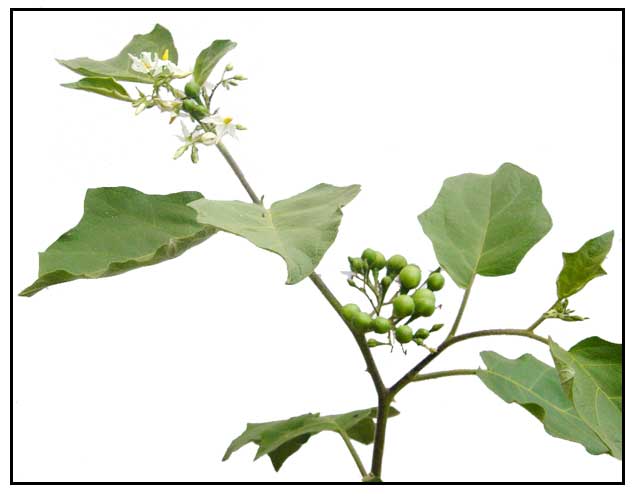
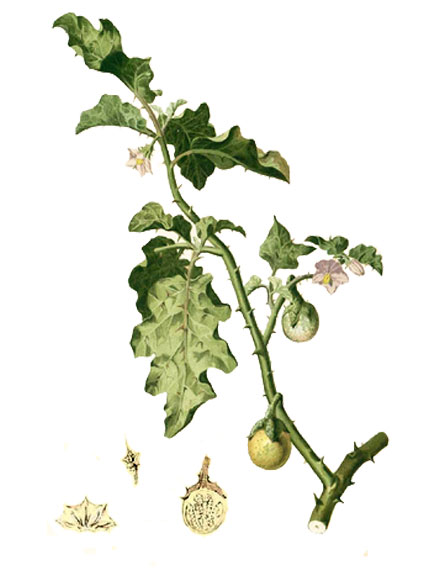
Talong-talongan is an ascending
or spreading weed, somewhat branched, hairy herb, 30 to 60 centimeters in height. Stems, petioles, and leaves are armed with scattered, sharp, rather stout spines, 3 to 6 millimeters in length. Leaves are oblong-ovate, 4 to 12 centimeters long, pointed at the tip, inequilateral at the base, with irregularly undulate-lobed margins. Flowers, 1 to 5, are borne in racemes in the axils of leaves.
Calyx is green, with a slightly spiny tube. Corolla is violet or purplish, rotate, and shallowly 5 -lobed,
about 2 centimeters in diameter.
 Distribution Distribution
-
Found in waste
places throughout the Philippines at low and medium altitudes.
Constituents
- Fruit yields solanine and related glycoalkaloids.
- Phytochemical screening yields crude protein, lipids, crude fiber, flavonoids, saponins, and oxalate.
- A rich source of mineral elements, sodium and zinc being the most abundant.
- Methanol extract of roots yielded alkaloids, polyphenols, flavonoids, glycosides, phytosterols, saponins, triterpenes, tannins, and steroids. (15)
- Phytochemical screening of roots yielded alkaloids, polyphenols, flavonoids, glycosides, phytosterols, saponins, triterpene, tannins and steroids. (16)
- Some phytochemicals isolated from S. incanum are Incanumine, solasodine, carpesterol, ß-sitosterol, stigmasterol, khasianine, adenosine, kaempferol 3-O-b-D glucopyranosyl, quercetin3-O-b-D-glucopyranosyl, kaempferol, chlorogenic acid, benzyl O-b-D-xylopyranosyl, quercetin, astragalin, isoquercitrin, protocatechuic acid, caffeic acid, baicalin, solasonine, solamargine, diosgenin, yamogenin, dimethylnitrosamine, vitamin B2, among others. (19)
- Mineral analysis of Solanum incanum fruits yielded a moisture content of 91.40%, crude fiber 7.10%. Other parameters yielded ash 21.20%, crude lipid 12.50%, crude protein 7.80%, carbohydrate 51.74%, and 308.90 kcal of energy. (22)
- Mineral analysis of fruits yielded (mg/100g) phosphorus 1082.50 mg, magnesium 38.99 mg, potassium 215.45 mg, manganese 147.00 mg, copper 256.05 mg, sodium 147.00 mg, iron 325.75 mg, calcium 15.00 mg, ascorbic acid 6.28 mg. (22)
- Phytochemical screening of fruits yielded alkaloids, steroids, cardiac glycosides, saponins, flavonoids, tannins, oxalates, and cyanogenic glycosides. (22)
- Study of aerial parts yielded 16 nonsteroidal constituents viz. ten flavonoids (1-10), chlorogenic acid (11), adenosine (12), benzyl-O-β-D-xylopyranosyl(1→2)-β-D-glucopyranoside (13), and three phenylalkanoic acids (14-16).
(26)
- Phytochemical screening of ethanolic extract of leaves (L), stem (S), roots (R) and fruit (F)
yielded alkaloids, flavanoids, saponins (SRF), phenols, polyphenols (SR), phytosterols with anoids (SRF), glycosides (RF), triterpenoids, tannins (LS), carbohydrates (R), steroids (LSR), with absence of anthraquinones. Maximum amount of phytochemicals and phytonutrients (Na, Al, Mg, Mn, P, Cl, K, Ca, Fe, Cu, and Zn) was recorded in fruit compared to leaves, stem, and root. (32)
- Qualitative phytochemical screening of fruit yielded alkaloids, steroids, cardiac glycosides, saponins, flavonoids, tannins, oxalates, and cyanogenic glycosides, with absence of anthraquinone. Proximate analysis (%) of fruit yielded moisture 91.40 ± 0.56, ash 21.20 ± 0.42, crude fat 12.50 ± 0.07, crude protein 7.80 ± 0.21, crude fiber 7.10 ± 0.38, carbohydrate 51.74 ± 0.32, and estimated calorific value 308.90 kcal. Mineral analysis yielded (mg/100g) phosphorus 1082.5 ±3/35, magnesium 38.99 ± 0.01, potassium 215.45 ± 0.63, manganese 147.00 ± 0.01, copper 256.05 ± 1.23, sodium 147.00 ± 0.42, iron 325.75 ± 0.32, calcium 15.00 ± 0.03, and ascorbic acid 6.28 ± 0.01. (35)
- Analysis of leaves showed very high protein content equal to 44.96% of total composition. Potassium was highest element at 1910 mg/kg and calcium in second with 668 mg/kg.
(41)
- Phytochemical screening of extracts of fruit, leaves, and stem showed a source of alkoloids, saponines, flavanoids, glycosides, terpenoids, and steroids.
(see study below) (44)
- Study of fruit for phytoconstituents isolated nine compounds, including three
steroidal glycoalkaloids (1-3), two neolignans (4-5), two simple phenolics (6-7), one monoterpene glycoside (8), and one coumarin glucoside (9). (46)
- Proximate analysis of fruit reveled the presence of crude fiber, carbohydrate, and crude protein while elemental analysis yielded magnesium, calcium, and sodium. The fruit yielded saponins, tannins, flavonoids, terpenoids, cardenolide, glycosides, reducing sugars, and phenolics. (see study below) (54)
Properties
- Leaf poultice resolvent.
- Seeds are sedating.
- Fruit is bitter, reducing its palatability, and may be due to the presence of cyanogenic glycosides.
- Studies have shown antinociceptive, antipyretic, anti-inflammatory, antioxidant, antispasmolytic, hypoglycemic, antibacterial, anti-schistosomal, anti-melanoma, acaricidal, anti-malarial, anti-protozoal, wound healing, glucose-lowering, and anticancer activities.
- Behavior and memory-enhancing, larvicidal, antiulcerogenic, antioxidant properties.
Parts
utilized
Leaves, fruit, seeds.
Uses
Edibility
- Unripe fruit eaten raw or cooked.
-
In Africa, fruit is used as a vegetable. Its bitter taste reduces its palatability. Salting and rinsing the preboiled fruit can soften and remove some of its bitterness.
- Leaves used as flavoring in soups.
- Fruit and seed used to curdle milk and to make cheese. (11) (12)
Folkloric
· Seeds
used as sedative; also used for toothaches.
· For toothaches, root infusion used as mouthwash; also roots or fruits rubbed on gums.
· Poultice of leaves are mitigating and resolvent; used for swelling and inflammation.
· Leaf paste, root infusions and pounded fruits applied to scarifications. (11)
· Mixture of ash of burned leaves and salt licked to suppress hiccups. Maceration of leaves used for ophthalmia. Fruit sap used for conjunctivitis. Decoction of roots drunk for snakebites. (11)
· In Kenya, fruits used for treatment of cutaneous mycotic conditions. Roots used for fever, wounds, toothache and stomach aches.
· In Ethiopia, roots used for amoebic dysentery; as vermifuge, anti-protozoal and antifungal.
· Used in treatment of venereal diseases.
· In eastern and southern Africa used as remedy for abdominal pains, dyspepsia, fever, stomachache, and indigestion. Also used for warts, snakebite wound, ringworm.
- In Kenya, stem or fruits cut into small pieces, sun-dried, pounded and powdered, and applied to snake bites. Sap of fruit also applied directly to snake bites. (42)
Others
· Soap / Tanning: Boiled fruits used as soap and in tanning leather. (Protabase: Plant resources of Tropical Asia) (11) (12)
· Veterinary: In African veterinary medicine, fruit juice instilled into sheep's nostrils as cure for cough. (13)
· Acaricidal: : Study showed that Solanum incanum possess some acaricidal effect against cattle ticks. (see study below) (39)
Studies
• Antibacterial / Fruits:
Study of berries isolated an antimicrobial substance with phosphorylated structure similar to purine adenine isolated from the berries. The crystals showed to be effective inhibitors of the growth of gram-positive and gram-negative bacteria, yeasts, dermatophytes and some pathogens of agricultural produce. (1)
• Hypoglycemic:
Study of three vegetables (Solanum incanum, V amygdalina and G latifolium) showed significant reductions of blood glucose levels at most post-prandial points. The bioactive antioxidant substances naturally occurring in stems, roots and leaves may possess an insulin-like effect. The rich NSP content of Solanum incanum is also likely to be a reducing factor. (2)
• Unripe Fruit Toxicity / Veterinary Study:
Study on ripe fruits of S incanum showed no toxicity effect in sheep and goats. Unripe fruits, however, showed toxicity, more in sheep than in goat, the goats probably having a way of reducing the toxic effects of the unripe fruits. (3)
• Anti-Malarial:
In a study of nine Ethiopian plants for anti-malarial activity, S incanum exhibited moderate activity. (4)
• Solamargine / Anti-Lung Cancer:
Solamargine has be found to be a powerful cytotoxic agent in four human lung cancer cell lines through SM-induced apoptosis of cells. SM was also found to increase the binding activities of TNF-alpha and TNF-beta to lung cancer cells. (5)
• Solamargine / Anti-Cancer:
Solamargine (SM), a steroidal glycoalkaloid, has been isolated from the Chinese herb Solanum incanum, and has shown inhibition in the growth of some cancer cell lines and induced significant apoptosis. Study showed SM effectively triggers apoptosis in MDR (multidrug resistant) tumor cells, which is associated with actin disruption and downregulation of MDR1 expression. (7)
• Immunological Effects / Antischistosomal Effects:
Study evaluated the effectiveness of Solanum incanum and Carica papaya extract as possible antischistosomal agents. In Swiss mice infected with Schistosoma mansoni cercariae, both extracts had immunological effects. However, S. incanum extracts had the greatest effect on worm reduction, worm recovery and IgG specific immunological responses compared to C. papaya. (7)
• Antinociceptive / Antipyretic:
Study of root extract showed significant antipyretic effect and significant antinociceptive activity. Results support the folkloric use of root extracts for pain and fever. (8)
• Antinociceptive / Anti-Inflammatory / Roots:
Study evaluated the antinociceptive and anti-inflammatory effects of a dichlormethane extract root extract of Solanum incanum. Results showed both acute anti-inflammatory and antinociceptive effects. The anti-inflammatory effect may involve inhibition of edema formation and leukocyte migration while the analgesic effect may be partly due to inhibition of stimulation of nociceptors as well as anti-inflammatory and neurogenic effects. (13)
• Acute Toxicity Study / Fruit:
Study evaluated the acute toxicity profile of ethanolic extract of fruit of Solanum incanum in female mice. Results suggest safety in oral administration—the highest dose administered was 2000 mg/kbw without producing mortality or changes in general behavior of the test animals. (14)
• Acute, Sub-Acute and Chronic Toxicity Study / Toxic to Sheep / Fruit:
Study evaluated the toxicity of unripe fruits of Solanum incanum in sheep at doses varying from 1,200 mg to 3,600 mg/day for 9 weeks. Clinical signs started on day 2 with bloating. Manifestations of cerebellar hyperplasia were noted in groups 2, 3, and 4. Mortality rate was 25% in group 2, and 100% for groups 3 and 4. Histopath showed necrosis of cerebellar Purkinje cells and Wallerian degeneration of neurons, renal tubular and hepatocyte necrosis, among others. Results indicate S. incanum to be highly toxic to sheep and grazing should be prevented. (17)
• Anti-Schistosomal Effects / Roots: Study evaluated the the antischistosomal activity of Solanum incanum roots and Carica papaya seed extracts in BALB/c mice infected with S. mansoni. S. incanum showed effects close to the drug of choice PZQ (Praziquantel), greatly reducing the number of worms which is crucial in schistosomes infection. Study verified the ethnic use of seeds of C. papaya and roots of S. incanum. Results form a strong basis for potential anti-schistosomal agents. (17)
• Antioxidant / Fruits: Study evaluated the antioxidant and total phenol and total flavonoid content of two fruits, Solanum anguvi and solanum incanum, by DPPH free radical scavenging activity, reducing power, iron chelation, anti-lipid peroxidation and nitric oxide scavenging activity. Solanum incanum showed higher antioxidant activity, with significant correlations between free radical scavenging capacity and TFC, indicating the flavonol group of metabolites as chief performers of antioxidant activity. (18) Antioxidant study of aqueous and ethanol fruit extracts of the S. incanum showed EC50 values for DPPH radicals of 0.02488 and 0.1000 mg/ml, respectively. The aqueous fruit extract may contain more antioxidant compounds than the ethanol extract. (see constituents above) ((54)
• Spasmolytic / Roots: Study evaluated the spasmolytic activity of aqueous extract of roots of S. incanum on contractions of isolated guinea pig ileum, induced by acetylcholine, and compared with the effect of atropine. The extract inhibited the response to acetylcholine in a concentration-dependent manner similar to atropine. The extract also inhibited charcoal travel in mice intestine. (Assefa et al. 2006) (19)
• Variations in Cytotoxic Glycoalkaloids / Solamargine and Solasonine: Solanum incanum is a rich source of important cytotoxic glycoalkaloids, such as solamargine and solasonine, and a potential source of compound for steroid synthesis. Study highlights the importance of developmental stages of particular organs and the overall age of the plant when harvesting these GAs from S. incanum plants. (20)
• Acaricidal / Cattle Ticks / Fruits: Study evaluated the efficacy of Solanum incanum and Strychnos spinosa aqueous fruit extracts against cattle ticks in on-station experiments and laboratory tick bioassays. Treatments were applied as surface sprays (5, 10 and 20% w/v). A 5% Solanum incanum treatment showed higher efficacy ration (p<0.05) than the other fruit extract concentrations of the same plant species. Results indicate S. incanum and S. spinosa both have acaricidal effect. (21)
• Anticancer / SR-T100 / Solamargine: Solanum incanum extract (SR-T100), containing the active ingredient solamargine, can induce apoptosis via upregulation of TNF receptor expression and activation of the mitochondrial apoptosis pathway. Study evaluated the novel molecular mechanisms underlying SR-T100-regulated stemness and chemoresistance. In the study, SR-T100 increased the sensitivity of chemoresistant ovarian cancer cells to cisplatin and paclitaxel in vitro. SR-T100 downregulated the expression of stem cell markers, including aldehyde dehydrogenase 1 (ALDH1), Notch 1, and FoxM1, and reduced sphere formation in ovarian cancer cells. Results suggest SR-T100 can enhance cell sensitivity to anticancer drugs and a potential against chemoresistant ovarian cancer cells. (23)
• Effect of Heat Treatment on Nutritive and Mineral Value / Fruit: Study examines the effect of heat on phytoconstituents, composition, and mineral elements of S. incanum. Results showed heat treatment reduces the proximate and flavonoid composition of fruit; however, such treatment does not affect the mineral composition. (24)
• Leaf Composition: Study evaluated the organic compound and element composition of Solanum incanum. Analysis revealed the leaves contain high protein content equal to 44.96% of total composition of leaves. Potassium yield was 1910 mg/kg and calcium, 668 g/kg. (25)
• Antiprotozoal / Cytotoxic /
Leaves: Study assessed the in vitro antiprotozoal and cytotoxic activity of S. incanum extract of leaves and fruit against Plasmodium falcifarum, Leishmania infantum, Trypanosoma cruzi and T. brucei and MRC-5 cell lines. Results showed S. incanum leaves has promising activity against T. cruzi, the effect contributed to by active constituents like flavonoid, solasonine, and solamargine. T. cruzi infection is inhibited by antioxidant effects through NRF2 upregulation. Possibly, the extracts inhibited T. cruzi through antioxidant activity. (28)
• Bioactivity of Fruit Extracts Against Oral Cavity Microorganisms: Tooth decay is an infection due to demineralization and destruction of hard tissues of the teeth by oral microbes, which results from acid production brought about by bacterial fermentation of food debris on the tooth surface. Study evaluated the effect of various concentrations of fruit extracts on the growth of oral microbes. Results showed no significant difference on inhibitory effects of both betadine mouth wash and Solanum incanum fruit extract on oral microbes. Closer observation of regression analysis models suggested betadine had more inhibitory effects than S. incanum. (29)
• Antimicrobial / Fruit: Study evaluated the antibacterial activity of S. incanum ethanol extract of fruit. Results showed MIC if 500 µg/ml against S. aureus, P. aeruginosa, S. paratyphi and V. cholera, and MIC of 250 µg/ml against B. subtilis, and zone of inhibition by ethanol extract ranged from 10-26 mm at concentration of 100 µg/disc. (30)
• Enhancement of Wound Healing and Tissue Regeneration in Burn Model: Study evaluated the topical efficacy of S. incanum for treatment of partial-thickness burn in mice model. The treated group showed 81% reduction in wound area compared to 22% in control. Histological analysis confirmed tissue regeneration and reepithelization. (31)
•
In-Vitro Antioxidant Potential / Fruit: An ethanolic extract of fruit was tested for in-vitro free radical scavenging activity by DPPH, hydroxyl radical, superoxide radical and reducing ability. The extract effectively scavenged free radicals and showed potent antioxidant activity in a dose dependent manner. Results were compared to BHT (butylated hydroxy toluene). (33)
• Nematicidal / Antimicrobial: In a study of methanol extract of leaves, aerial parts, fruits, and resins of 17 plants from the Arabian Peninsula screened for nematicidal, antibacterial, and anti fungal activities, Steinernema feltiae, Staphylococcus carnosus, Escherichia coli, and Saccharomyces cerevisiae were used as test organisms. Solanum incanum was one of five that exhibited most active with very high activities against two or more of the test organisms at low concentrations. (34)
• Effect on Postprandial Blood Sugar
of Normoglycemic Nigerians: Study evaluated the effect of S. incanum on postprandial blood glucose levels of normoglycemic Nigerians. Solanum elicited significant reductions (p<0.05) in blood glucose levels at most postprandial time points. The bioactive antioxidant substances that occur naturally inn stems, roots, and leaves of African plants may possess insulin-like effect. The rich NSP (non-soluble polysaccharide) content of S. incanum is also likely a reducing factor. (36)
• Antihyperlipidemic / Fruit: Study evaluated the effect of orally administered aqueous fruit extract of S. incanum on serum lipid profile of Wistar albino rats. Results suggest S. incanum was hypolipidemic and may be beneficial in the dietary management of cardiovascular complications associated with humans. (37)
• Regression of Vulvar Condyloma Acuminatum / Autophagic and Apoptotic Responses in HPV-Infected Cells: Solanum species have been used in the treatment of warts, tumor, and cancer in folk medicine. A pilot study evaluated the efficacy and safety of S. incanum extract for treatment of human condyloma and its anti-condyloma mechanisms. Nineteen (73%) of 26 patients using the SR-T100 gel exhibited a response, and 16 (61.5%) of patients achieved total clearance. One patient showed severe (grade 3-4_ skin-related side effects. The SR-T100 cell induced mitochondria-dependent apoptosis in HPV-infected cells. Results suggest SR-T100 is effective for treatment of human vulvar condylomata, with few side effects. Patients with low-risk HPVs were more sensitive to SR-T100 treatment. Autophagy played a protective role in SR-T100-induced apoptosis in HPV-infected cells. (38)
• Acaricidal / Cattle Ticks / Fruit: Study evaluated S. incanum and Strychnos spinosa fruit extracts against cattle ticks in on-station experiments and laboratory tick bioassays. A 5% Solanum incanum treatment showed higher efficacy ratio (p<0.05) than other fruit extracts. Results suggest acaricidal effect. Results indicate that both S. incanum and S. spinosa individually have some acaricidal effect. (39)
• Antibacterial / E. coli / Leaves: Study evaluated aqueous methanol extracts of S. incanum leaves for antibacterial activity. Activity detected was against E. coli, with highest activity against in KL16, HFRC and Y1090 followed by KL96, DH5a and C sub(2)H sub(5)a. Extracts were bacteriostatic at higher concentrations. (40)
• Induces Melanoma Cell Apoptosis / Inhibition of Established Lung Metastasis / SR-T100: Melanoma is one of the most chemoresistant cancers and has a tendency to metastasize. Study evaluated the efficacy of ST-T100 against melanoma and established metastasis. Results showed SR-T100 induces apoptosis, DNA damage, and G0G1 cell cycle arrest in murine B16 melanoma cells in vitro. Study highlights SR-T100 as a potential novel treatment for established tumors from regional and metastatic melanoma. (43)
• Antimicrobial / Fruit, Leaf and Stem: Study evaluated ethanol and aqueous extracts of fruit, leaf, and stem of Solanum incanum against Gram negative Escherichia coli and Salmonella typhi and Gram positive Bacillus subtilis and Staphylococcus aureus. Disc diffusion studies showed bacterial growth inhibition zones of 0.00 to 16.06 mm. Ethanol and aqueous leaf extracts showed inhibition ranging from 11.34 to 16.06 mm against all bacterial species. The ethanol leaf extract showed greatest inhibition zone of 16.06 against E. coli, and 16.04 mm against S. aureus. The ethanol leaf extract showed lowest MIC of 1.56 mg/mL in E. coli and S. aureus. Results suggest a good source of bioactive compounds. (44)
• Acaricidal / Cattle Ticks / Fruit: Study evaluated the efficacy of fruit extracts against cattle ticks in on-station experiments and laboratory tick bioassays. A 5% Solanum incanum treatment showed higher efficacy ratio (p<0.05) than other fruit extracts. Results suggest acaricidal effect. (45)
• Value Against Foodborne Disease / Review:: Paper reviews the medicinal value of Croton macrostachys and Solanum incanum against causative agents of foodborne disease. particularly E. coli and S. aureus. The two plants have different bioactive substances. Solanum incanum has been used for skin diseases, stomachaches, and indigestion, treatment of dandruff, wounds, sore throat, angina, ear inflammation liver disorders , ringworm, and treatment of cow driosis, dermatophilosis, foot rot, pasteurellosis, black leg, fasciolosis, and snake bite. Bioactive compounds include alkaloids, steroids, saponins, tannins, glycosides, flavonoids, and terpenoids. The plants have different medicinal value against foodborne diseases and drug resistance through their effects on cell division, enzyme inhibition of bacteria, bacterial membrane disruption, which affect virulence genes and and disruption of bacterial protein synthesis. (47)
• Enhancement of Wound Healing in a Burn Model: Study evaluated the topical ointment efficacy of S. incanum in the treatment of partial thickness burn in a mice model. The ointment was applied three times daily for 14 days with wound healing assessed through wound contraction and histological parameters. Results showed 81% reduction in wound area compared to control, reduced wound area to 22%. Histological analysis confirmed tissue regeneration and reepithelization. (48)
• Behavior and Memory Enhancing Effects / Fruits: Study evaluated the novelty-induced behavior, learning and memory enhancing activities of aqueous and ethanol fruit extracts of Solanum incanum Linn. using mice models. Intraperitoneal administration of the fruit extracts showed a significant decrease in locomotion, rearing and grooming. The tested doses significantly increased the percentage of spontaneous alternation and attenuated the learning and memory impairment induced by scopolamine as indicated in reduction of the transfer latency and escape latency. Results suggests both fruit extracts significantly improved learning and memory in mice and helps justify the ethnomedicinal use of this plant. (49)
• Antiulcerogenic / Leaves and Roots: Single and repeated dose study evaluated the antiulcerogenic activity of hydromethanol extracts of S. incanum leaves and roots in a pylorus ligation-induced ulcer model in mice. Results revealed the hydromethanol extracts of leaves and roots have antiulcerogenic activity. The activity is not related to acid anti-secretory action, suggesting a possible cytoprotective effect on the gastric mucosa. (50)
• Biogenic Silver Nanoparticles / Antimicrobial / Cytotoxic / Petioles and Leaves: Study reports on the green synthesis of silver nanoparticles (Ag-NPs) using a callus extract of leaves. The biological activities of Ag-NPs were dose-dependent. The Ag-NPs showed antimicrobial activity against S. aureus, B. subtilis, and E. coli. The Ag-Nps showed cytotoxic efficacy against cancerous cell lines HepG2, MCF-7 and normal Vero cell line. (51)
• Larvicidal / Tick Control / Leaves: Study reports on the larvicidal effects of crude aqueous extracts of the aboveground parts of S. incanum against Boophilus decoloratus. Fruit, leaf, and stem extracts were effective in killing the larvae at 5%, 10%, 20%, and 40% (w/v) concentration after 24 and 48 hours of treatment. Fruit crude aqueous extract at 40% (w/v) resulted in the highest mortality rate. Results suggest potential for use of leaf extracts by livestock owners in preparing formulation for tick control throughout the year. (52)
Availability
Wild-crafted. |