|
Gen inf
- Ehretia is a genus of flowering plants in the borage family, Boraginaceae. It contains about 50 species.
- The genus name Ehretia honors German botanical illustrator George Dionysius Ehret (1708-1770).
(39)
- Tsaang-gubat belongs to Secretary of Health Juan Flavier's 1992 brochure of 10 medicinal plants (akapulko, ampalaya, bawang, bayabas, lagundi, niyog-niyogan, pansit-pansitan, sambong, tsaang-gubat, yerba buena), which provided underpinning and roots for the 1977 TAMA (Traditional and Alternative Medicine Act).
 Botany Botany
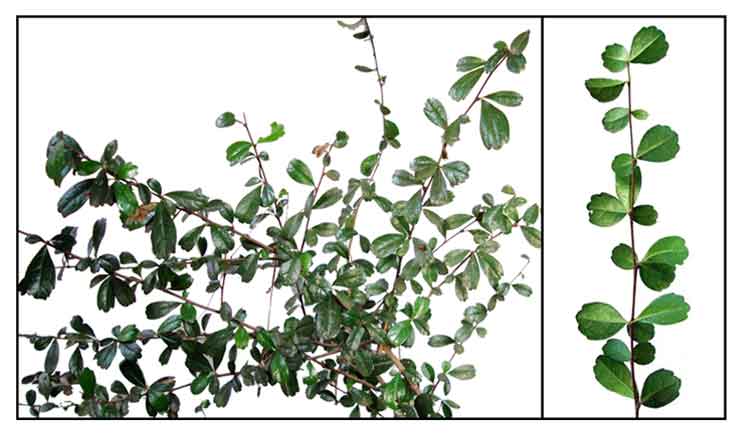
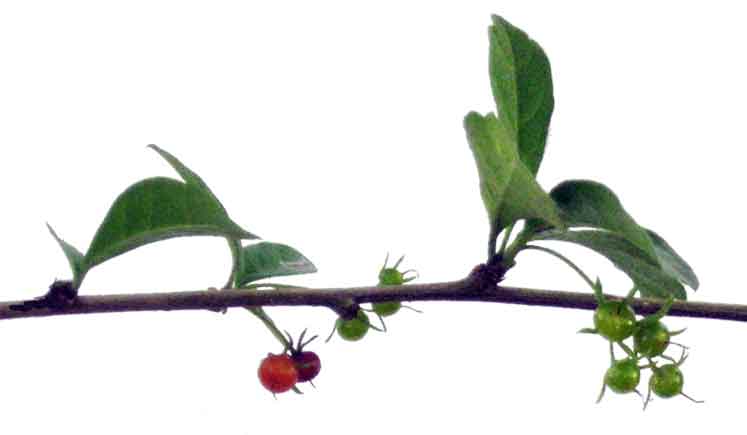
Tsaang gubat is an erect, very branched shrub growing up to 1 to
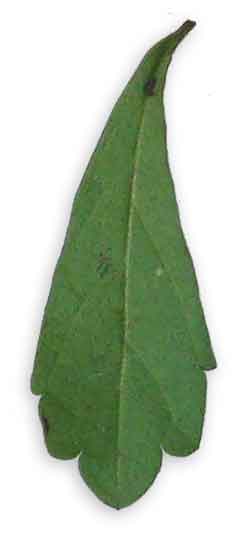
4 meters high. Leaves are in clusters on short branches, obovate to oblong-obovate, 3 to 6 centimeters long, entire
or somewhat toothed or lobed near the apex and pointed at the base,
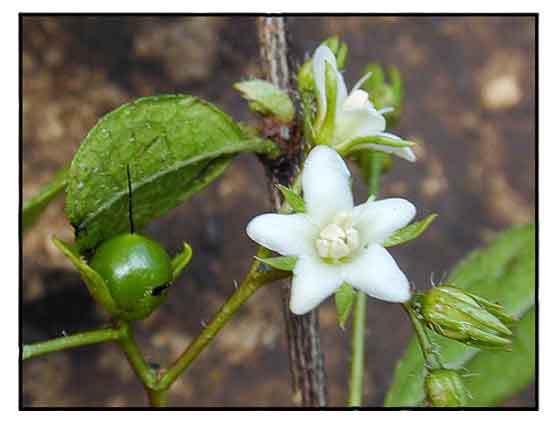
short stalked and rough on the upper surface. Flowers are white, small,
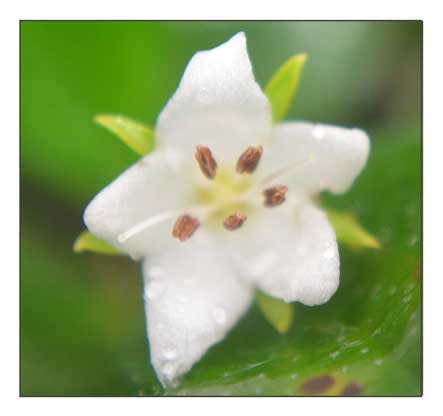
axillary, solitary, 2 or 4 on a common stalk, borne in inflorescences shorter than the leaves. Calyx lobes are green, somewhat hairy, and linear, about 5 to 6 millimeters long. Corolla is white, 5 millimeters long, and divided into oblong lobes. Fruit is a drupe, rounded, yellow when ripe,
4 to 5 millimeters in diameter, fleshy, with a 4-seeded stone, fleshy on the outer part, and stony inside.
Distribution
- Native to the Philippines.
-
Easily found from the Batan Islands and northern Luzon to Palawan and Mindanao, in most or all islands and provinces, in thickets and
secondary forests at low and medium altitudes.
- Also native to Bismarck Archipelago, Borneo, Cambodia, China, Hainan, India, Jawa, Laos, Lesser Sunda Is., Malaya, Maluku, Myanmar, Nansei-shoto, New Guinea, Solomon Is., Sri Lanka, Sulawesi, Sumatera, Taiwan, Thailand, Vietnam.
(15)
 Constituents Constituents
- Phytochemical screening yielded alkaloids, flavonoids, glycosides, tannins, terpenoids, and saponins.
- Major constituents of leaves yielded an intractable mixture of triterpenes, namely α-amyrin (43.7%), ß-amyrin (24.9%), and baurenol (31.4%).
(see study below) (2)
- Qualitative phytochemical analysis of petroleum ether (PE), methanol (M), and chloroform (C) extract of leaves yielded alkaloids (M), flavonoids (PE, M), saponins (M,C), phenols (PE,M), tannins (M), cardiac glycosides (PE,M,C), terpenoids (PE,M,C) and cardenolides (M,C). (see study below) (23)
- GC-MS analysis of crude extract of C. retusa yielded 14 phytochemical compounds. Main constituents were α-amyrin, (1H) naphthalenone, 3,5,67,8,8a-hexahydro-4-8a-dimethyl-6-(1-methylethenyl)- and 9,19-cycloergost-23(28)-en-3-ol,4,14-dimethyl-acetate, (3a,4a,5a). (27)
- Chloroform fraction of crude ethanol extract of fresh leaves
isolated triterpenoids viz. α -amyin (12-ursen-3-ß oI)ß, -amyin (12-oteanen-3ß-ol), and baurenot (7-bauren-3-01). (29)
- Wild fruit has a high sugar content (11.8%)
and protein content (4.1%). Copper content was 4.1 mg/100 g, (31)
Properties
- Considered analgesic, anti-diabetic, anti-inflammatory, anti-microbial, antispasmodic and anti-mutagenic.
- Studies have shown anti-allergic, anti-inflammatory, analgesic, antidiarrheal, antibacterial, antimutagenic, antitumor, antiproliferative, wound healing, antiangiogenic, antioxidant, hepatoprotective, anticancer, antiangiogenic, cardiotonic properties.
 Parts utilized Parts utilized
Leaves, roots.
Uses
Culinary
- Tea made from the leaves.
- Fruit is edible.
Folkloric
- In the Philippines, leaf decoction or infusion
used for abdominal colic, cough, diarrhea and dysentery.
- Root decoction used as an antidote for vegetable poisoning.
- For diarrhea: Boil 8 tbsp of chopped leaves in 2 glasses of water for
15 minutes; strain and cool. Use 1/4 of the decoction every 2 or 3 hours.
Decoction has also been used as a dental mouthwash.
- Decoction of leaves used as disinfectant wash after childbirth.
- In Sri Lanka, used for diabetes: 50 gm of fresh leaves or roots are chopped; 100 cc of water is added, and 120 cc of juice is extracted by squeezing, and given once or twice daily.
- In Vietnam, dry roots and stems used for treatment of back pain and numbness of hands and feet.
- In Tamil, India, juice of leaves taken internally for three to four months to induce fertility. (25)
- In India and Sri Lanka, roots used for treatment snake bite wounds. (33)
Others
- Grown as ornamental hedge.
New Application
• Being promoted by the Department of Health (DOH) as an antispasmodic for stomach/abdominal pains.
• One of a few herbs recently registered with the Bureau of Foods and
Drugs as medicine.
Studies
• Antiallergic Activity: Tsaang gubat, together with
Lagundi and Sambong, were studied for
possible anti-allergic substances to counter the histamine release from
mast cells that cause type-1 reactions. From tsaang-gubat, rosmarinic
acid and microphyllone were isolated. (1)
• Triterpene Bioactivities / Antinociceptive / Anti-inflammatory: Study of Carmon retusa leaves yielded an intractable
mixture of triterpenes, namely α-amyrin, ß-amyrin and baurenol. At a dose of 100 mg/kg mouse, the triterpene mixture exhibited 51% analgesic activity, but showed only 20% anti-inflammatory activity. (2)
• Antidiarrheal / Antibacterial: On charcoal tracing test, the triterpene mixture (α-amyrin, ß-amyrin and baurenol) showed a 29% anti-diarrheal activity, which increased to 55% at dosage of 250 mg/kg mouse. The triterpene mixture showed moderate antimicrobial activity against Staphylococcus aureus, Candida albicans, and Trichophyton mentagrophytes. (2)
• Antimutagen / Leaves: An antimutagenic principle was extracted from the leaves of C. retusa with ethyl alcohol.
(3)
• Anti-Tumor: Carmona retusa leaf extracts were tested for anticancer property and results showed it can be used as an anticancer agent. (5)
• Antiallergic Dimeric Prenylbenzoquinones: Bioassay-guided separation of an ethyl acetate-soluble portion of a methanol extract of Ehretia microphylla yielded microphyllone, a unique dimeric prenyl-benzoquinone and its congeners. Study showed inhibitory activity on exocytosis in antigen-stimulated rat basophils.
(10)
• Antibacterial / Constituents: Methanol, chloroform, and petroleum ether extracts yielded alkaloids, flavonoids, saponins, phenols, tannins, cardiac glycosides, terpenoids, cardenolides and phlobatannins. All the extracts exhibited moderate to appreciable antibacterial activities against Bacillus subtilis, K. pneumonia, Shigella flexneri and Pseudomonas aeruginosa.
(11)
• Anti-Inflammatory: Study of an alcoholic extract of Carmona retusa by in vitro assays (human RBC membrane stabilization method, heat induced hemolysis, and proteinase inhibitory activity) showed anti-inflammatory activity comparable to standard diclofenac.
(12)
• Triterpene Mixture from Leaves / Analgesic, Anti-Inflammatory, Anti-Diarrhea, Antimicrobial:The major constituent of Carmona retusa leaves is an intractable mixture of triterpenes viz. alpha-amyrin (43.7%), beta-amyrin (24.9%), and baurenol (31.4%). The mixture showed analgesic activity (51%) and anti-inflammatory activity (20%), antidiarrheal activity (29%) with the charcoal tracing test, and moderate activity against S. aureus, Candida albicans, and T. mentagrophytes.
(13)
• Antibacterial: In a study of crude ethanol extracts of 12 Philippine medicinal plants for antibacterial activity against multidrug resistant bacteria, favorable antagonistic activities were exhibited by Ehretia microphylla, together with P. guajava and P. niruri. Best activity was shown by P betle. (17)
Petroleum ether, methanol and chloroform extracts showed moderate to appreciable antibacterial activities against B. subtilis, K. pneumonia, S. flexneri, and P. aeruginosa. (see constituents above) (23)
• Antimicrobial / Roots: Study of chloroform and alcohol root extracts showed promising activity against Bacillus subtilis (26 mm), Bacillus cereus and Candida albicans ( 24 mm), Pseudomonas putida and Staphylococcus aureus (20 mm) and Escherichia coli (18 mm). The alcohol extract showed comparatively higher antimicrobial activity than the chloroform extract. (18)
• Effect on Folliculogenesis / Roots: Study evaluated the effect of E. microphylla on folliculogenesis, relative ovarian and uterine weight, and the number of ovarian surface follicles in female Wistar albino rats. Results showed a significant stimulatory effect on female reproductive activity which can enhance fertility in female adult rats. (20)
• Wound Healing / Roots, Stems, Leaves: Study evaluated the wound healing activity of various extracts of roots, stems and leaves of Carmona retusa with petroleum jelly as base in concentrations of 5% and 10%. Nitrofurazone (0.2%) ointment was used as standard drug. Results showed remarkable stimulation of wound closure at both 5% and 10% concentration, as evidenced by acceleration of the wound healing process and increased epithelization in the treatment groups. (21)
• Anticancer / Quercetin / Human Hepatoma Cell Line (HepG2): Study isolated quercetin from an ethanol extract of Carmona retusa and was analyzed for anticancer activity on HepG2 cells lines by MTT assay.
Results showed significant and concentration-dependent anticancer activity. Significant apoptosis was shown at 53 µg/ml concentration of extract yield of flavonoid quercetin. Results suggest promise for the flavonoid quercetin as an anticancer agent. (22)
• Antimitotic / Antiproliferative: Study evaluated the in vitro cytotoxicity, antiproliferative, anti-mitotic and DNA fragmentation assays of fresh stems of Carmona retusa. The alcoholic extract showed significant antimitotic and antiproliferative activity. The antimitotic index was 12.5 and 12.7 mg/mL respectively, near the standard 12.2 for lapachol. (24)
• Antioxidant / Aerial Parts:
Study evaluated the antioxidant potential, total flavonoid and phenolic content in extracts of aerial parts of Cordia retusa (Vahl.) Masam. Results showed C. retusa possesses potent antioxidant activity, high flavonoid and phenol content. The antioxidant property may be due to polyphenols and flavonoids in the extract. (26)
• Carbon Nanoparticles As Anode in Lithium Batteries: Study reports on the synthesis of carbon nanoparticles from tea leaves of Ehretia microphylla for application in lithium battery. Efficiency of charging and discharging was found to be more than 96%. (28)
• Antiangiogenic: Persistent upregulated angiogenesis is one hall mark of cancer and feature in atherosclerosis, diabetic retinopathy, atherosclerosis, and rheumatoid arthritis. The study focused on the search for natural based anti-angiogenic compounds. In this study, Carmona retusa showed the highest inhibition of blood vessel formation. Phytochemical screening identified alkaloids, carbohydrates, phenols, tannins, and sterols. Phenolic compounds are antioxidants known to elicit anti-angiogenic activity by preventing ROS from initiating the angiogenesis cascade. (30)
• Cardiotonic / Aerial Parts: Study evaluated the cardiotonic activity of aerial parts of whole plant of Carmona retusa using isolated frog heart perfusion technique. Major constituents revealed a mix of alkaloids, triterpenes, flavanoids and cardiac glycosides.
Results showed a significant increase in height of force of contraction along with a decrease in heart rate. (32)
• Effect on Blood Cholesterol
/ Leaves: Study evaluated the effects of aqueous leaf extract on blood cholesterol and weight of ICR mice using doses of 250, 500, and 1000 mg/kg and simvastatin as positive control. Results showed anticholesterolemic effect with no significant difference between low and mid dose. Simvastatin treated group showed significantly lowered chloesterol level compared to high-dose group.
(34)
• Tablet Formulation for Biliary and Gastrointestinal Colic / Clinical Trial: A tablet formulation of tsaang gubat has been granted full patent as in invention for treatment of biliary and gastrointestinal colic.
The tablet formulation is from a 10% aqueous leaf extract at 150 mg/kg/dose every 24 hours. In a Phase 1 clinical trial on five male patients with acute colic with secondary loose bowel movement, observed effects were relief or colic or spasm within 20-30 minutes of dosing and decreased frequency of bowel . In a Phase II trial with 110 out-patients, the 150 mg dose showed comparable efficacy, safety and acceptability. The effect was comparable to dicycloverine 200 mg.
(35)
• Use in Allergic Rhinitis / Compared to Loratadine / Clinical Trial: Twenty-four patients with mild allergic rhinitis were divided in a treatment groups of Ehretia microphylla decoction tea and placebo, and a control group of tea and loratadine, both taken for 7 days. Patients underwent pre- and post-intervention anterior rhinoscopy. Results suggest the Tsaang gubat decoction tea may improve symptoms of allergic rhinitis (sneezing, rhinorrhea, pruritus, and nasal congestion) and has potential as alternative to loratadine in patients with mild intermittent allergic rhinitis. (36)
• Hepatoprotective / Paracetamol Toxicity: Study evaluated the hepatoprotective activity of chloroform and ethyl acetate extracts of Ehretia microphylla against paracetamol induced liver toxicity in rats.
Doses were selected using OECD423 guidelines. Paracetamol intoxicated rats showed elevated SGOT, SGPT, and ALP, along with cholesterol and triglycerides. The parameters were significantly lower in Em treated rats compared with silymarin. Antioxidant makers including CAT, SOD, GSH and GPx were significantly increased in EM treated rats. Results showed significant hepatoprotective effect. (37)
• Cytotoxic Against Human Cancer Cell Lines: Study evaluated in vitro cytotoxicity of chloroform extract of E. microphylla against a panel of human cancer cell lines. The extract exhibited noteworthy cytotoxicity activity against breast (MCF-7) and lung (A-549) cells lines, with lower IC50 values and 85.55% and 77.93% inhibition, respectively.
DAPI staining revealed the chloroform extract exhibited apoptotic body formation in a dose dependent manner. The anticancer activity may be attributed to alkaloids, triterpenoids, and phenolic compounds noted on preliminary phytochemical screening. (38)
Availability
- Wild crafted.
- Tablets and tea bags in the cybermarket. |